
Oxford Events
Inside Homes: Astley House – a Georgian landmark at the heart of Faringdon


Set beside the ancient tower of All Saints’ Church and overlooking the historic Market Place, Astley House is one of Faringdon’s most distinguished private residences. Steeped in history and extending to more than 6,000 square feet, this remarkable Grade II listed Georgian home combines architectural grandeur with the comforts and flexibility demanded by contemporary family life.
Dating from around 1720, Astley House occupies a prominent position in the fabric of the town. Over the centuries it has served as the Dower House to Faringdon House and later as the town’s Vicarage, reflecting its longstanding importance within the community. Today, following a series of carefully considered enhancements, it remains an exceptional family home while preserving the elegance and character that define its Georgian heritage.
Approached through gates from the bustling Market Place, the property immediately conveys a sense of arrival. A gravelled forecourt leads to the original front entrance, where stone steps rise to a handsome façade characterised by sash windows, dormers and deep coved eaves. Inside, an impressive reception hall is centred around a striking early eighteenth-century staircase, setting the tone for the accommodation beyond.
Throughout the principal rooms, period detailing has been beautifully preserved. High ceilings, decorative cornicing, feature fireplaces and tall sash windows create spaces that are both elegant and welcoming. The drawing room is particularly impressive, bathed in natural light and perfectly suited to formal entertaining, while the dining room and study provide equally refined settings for family life, work and social occasions.
The most transformative chapter in Astley House’s story can be found within the former coach house. Sensitively converted and integrated into the main residence, it now provides an extraordinary kitchen and dining space approaching 480 square feet. Bespoke hand-crafted cabinetry, integrated appliances and generous proportions create a contemporary heart to the home, where family gatherings and entertaining naturally unfold. A conservatory extends the living space further, opening directly onto the gardens and strengthening the connection between house and landscape.
The accommodation is equally impressive upstairs. The first floor offers four generous bedrooms alongside family and en-suite bathrooms, while the principal suite occupies a particularly luxurious position within the converted coach house. Complete with dressing area, spa-like bathroom and a versatile adjoining studio or gym, it offers a private retreat within the home itself.
On the second floor, a collection of flexible rooms presents opportunities for a variety of uses. Currently arranged as additional living accommodation with a bedroom and bathroom, the space could readily support multi-generational living or an independent annexe arrangement, subject to the necessary permissions.
Outside, Astley House continues to impress. The south-west facing gardens have been extensively landscaped to create a series of attractive outdoor spaces designed for relaxation and entertaining. A substantial paved terrace now occupies the site of the former swimming pool, creating a private suntrap framed by mature planting, established borders and lawned areas arranged across two levels.
Practicality has not been overlooked. A recently constructed double garage provides extensive storage and parking, complete with electric vehicle charging facilities. The building also offers potential for future ancillary accommodation, further enhancing the property’s versatility.
What makes Astley House particularly special, however, is its setting. Faringdon remains one of Oxfordshire’s most appealing market towns, balancing historic character with everyday convenience. Independent shops, cafés, traditional pubs and a weekly charter market contribute to a strong sense of community, while excellent road and rail connections place Oxford, Swindon and London within easy reach.
For families, the area’s educational credentials add further appeal. St Hugh’s School is located nearby, with a range of highly regarded independent and state schools accessible across Oxfordshire and beyond.
Properties of this scale, provenance and position rarely come to market. Astley House represents an opportunity not simply to acquire a substantial period home, but to become custodian of a notable piece of Oxfordshire’s architectural heritage — one that has evolved gracefully across three centuries while remaining perfectly suited to modern living.

Where to go pumpkin picking in Oxfordshire in 2026
Here are our favourite places to pick your own PYO pumpkins in Oxfordshire and beyond.
It’s that time of the year. That’s right, pumpkin season is here. Whether you associate it with Halloween or not, Pumpkin picking, a somewhat American concept, has taken off in the UK, with patches and pick-your-own farms springing up all over the place.
Here are our favourite places to go to make the most of pumpkin season this year. Put on your wellies, and head to one of these pick-your-own PYO pumpkin patches in Oxfordshire and beyond. Due to the rural nature of these farms, you’re probably going to need a car to get to most of them.
And whilst some PYO pumpkin patches are all about the pumpkin picking experience, others have gone all out with playgrounds, bale mazes or maize mazes and Halloween trails so that you can have a fun family day out.
Rectory Farm, Stanton St John
Rectory Farm is delighted to bring back The Pumpkin Patch for 2026. Families can wander through the pumpkin field to pick their own farm-grown pumpkins and squashes in a rainbow of colours, perfect for Halloween. Tickets are priced at £8.50 per person. Children under 2 go free and require no ticket for entry.
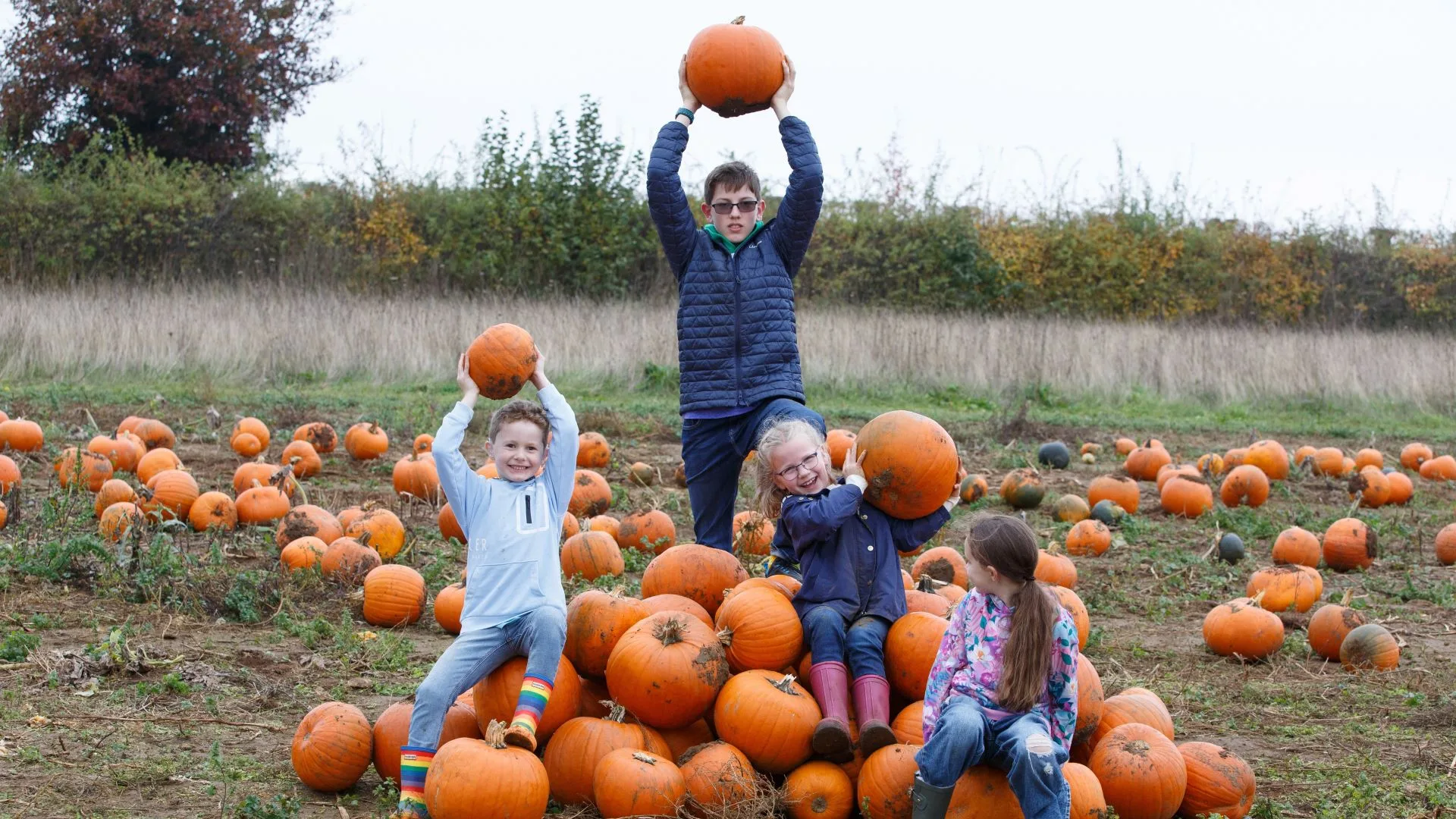
Millets Farm has been nurturing a large number of pumpkins in their fields this year, and now’s the perfect time for picking a pleasingly plump one. The pumpkin patches are open at weekends from Saturday 03 October, then daily from Thursday 22 October. The patch costs from £4.00 to enter, and then you pay for what you pick before leaving. Pumpkin and squash prices vary depending on the size and variety.

10&11 / 17&18 / 24 to 31 October
High Lodge Farm, Abingdon
The Midnight Moon Halloween Adventure at High Lodge Farm invites families to explore a spooky woodland trail, solve a magical mystery, pick pumpkins, enjoy crafts and games, ride the ghost train and discover plenty of autumn fun.

Put on your boots and head to the pop-up pumpkin picking event for 2026 at Hadsham Farm near Banbury. Collect a sledge and head to the pumpkin patch, where you can choose your perfect pumpkin. There are a variety of sizes which are priced between £1.00 and £10.00 each. Take your pumpkin back to the barns, where you can collect a carving kit to transform your pumpkins.
Pumpkin picking just beyond Oxfordshire
A selection of pumpkin picking experiences just beyond Oxfordshire, but close enough…
Cotswold Farm Park, Guilting Power, Cheltenham
Founded by Joe Henson in 1971 – to help protect some rare breed farm animals – Cotswold Farm Park is about an hour’s drive from Oxford and even closer to Chipping Norton. Wrap up warm and head over to the field. Explore the pumpkin trail and choose a spooky face paint design. Then grab yourself a plump pumpkin to take home for crafts and pies. The pumpkin patch is open on 02 to 04, 09 to 11, 16 to 18 and 21 to 31 October 2026.
Weedon Hill Farm, Aylesbury
Farmer Paul at Weedon Hill Farm – about half an hour from Bicester – has been nurturing beautiful pumpkins on his predominately beef and arable farm. As well as the classic orange Jack-o-lantern pumpkin, which looks fantastic when carved, you can get your hands on a whole gaggle of gourds that are delicious to eat as well. The pumpkins are displayed in ‘The Pumpkin Barn’ to keep them dry when it rains. No need to book. Free entry into the barn. Open on 03, 04, 10 to 11, 17 to 18 and 24 to 30 October 2026.
Bucks Goat Centre, Stoke Mandeville, Aylesbury
The Bucks Goat Centre is a friendly open farm situated in Stoke Mandeville (some 40 minutes from Bicester). They have a pop-up pumpkin farm with over 2,000 pumpkins to choose from. There will be pumpkins for sale from 17 to 31 October (priced from £4.00) and details on the Halloween Trail is coming soon on their website. They’ll have fun activites running all week, including Walk Wilbut the Pig and Childminder Wednesday. Book online or pay on arrival.
Roves Farm, Sevenhampton, Swindon
Roves Farm is a brilliant day out for all ages. Visit the Pumpkin Barn to choose your pumpkin. Then get creative carving your design. Bonus for the grown-ups – you get to leave the mess behind! Extra charge applies, and it’s subject to availability. Pre-booking is essential. Over the October half term (22 October to 01 November), they will be hosting a range of events and activities to run alongside the pumpkin carving event. You’ll find further details on their website.
Glebe Farm, Lower Brailes near Shipston-on-Stour
It’s PYO pumpkins time at Glebe Farm in Lower Brailes (OX15 5HR), on the edge of the Cotswolds about 10 miles from Chipping Norton and Banbury. We’re told the pumpkins are growing well with 20 varieties of pumpkin and winter squash to choose from this year – with plenty of colours and sizes from the little white “Ghost” Casperita pumpkins to the appropriately named “Warty Goblin”. You can book your entry tickets for our Pick Your Own Pumpkins by visiting their website.
Need more spooky activity inspiration? See our list of brilliant half-term & Halloween activities in Oxfordshire.

.pt-cv-ctf-event_fancy_date .pt-cv-ctf-value,
.pt-cv-ctf-event_fancy_venue .pt-cv-ctf-value {
font-style: italic;
}
.pt-cv-custom-fields.pt-cv-ctf-event_fancy_date,
.pt-cv-custom-fields.pt-cv-ctf-event_fancy_venue {
margin: 0;
}
.pt-cv-custom-fields.pt-cv-ctf-event_short_description div.pt-cv-ctf-value p {
margin-top: 0;
}
.pt-cv-ctf-event_ticket_link_label {
display: none;
}
document.addEventListener(‘DOMContentLoaded’, function () {
document.querySelectorAll(‘.pt-cv-ifield’).forEach(function (card) {
var urlField = card.querySelector(‘.pt-cv-ctf-_EventURL’);
var labelField = card.querySelector(‘.pt-cv-ctf-event_ticket_link_label’);
var details = card.querySelector(‘.pt-cv-content’);
if (!urlField || !details) {
return;
}
var link = urlField.querySelector(‘a’);
if (link) {
var label = labelField ? labelField.textContent.trim() : ”;
if (label) {
link.textContent = label;
}
link.classList.add(‘link-button’, ‘buy’, ‘external-link’);
link.setAttribute(‘target’, ‘_blank’);
link.setAttribute(‘rel’, ‘noopener noreferrer’);
}
var urlColumn = urlField.closest(‘.pt-cv-ctf-column’);
if (urlColumn) {
details.after(urlColumn);
}
});
});
Are you looking for what to do in Oxford and across Oxfordshire this October half term and Halloween?
Look no further. We’ve scoured the length and breadth of Oxfordshire and put together a list of the best October half-term and Halloween activities, events and things to do in Oxfordshire.
There are loads of things to do with kids – even if a downpour threatens to send you inside – including child-friendly shows and great things to do indoors with the kids over the October half-term in Oxford and across Oxfordshire.
And dare we mention that ‘Trick or treat’ season is also upon us. What to do with little ones dressed up for a celebration that may very well look and feel a little bit different this year due to the “rule of six”.
Have a look at our suggestions below and get planning. We hope this list will help you to find all the half-term and Halloween activities near you for a truly amazing half-term from Friday, 23 October through to Monday 02 November, including Halloween on Saturday, 31 October.

The Pumpkin Picking Patch at Rectory Farm
Rectory Farm is delighted to bring back The Pumpkin Patch for 2026. Families can wander through the pumpkin field to pick their own farm-grown pumpkins and squashes in a rainbow of colours, perfect for Halloween. Tickets are priced at £8.50 per person. Children under 2 go free and require no ticket for entry.
Pick your own Pumpkins at Millets Farm
Millets Farm has been nurturing a large number of pumpkins in their fields this year, and now’s the perfect time for picking a pleasingly plump one. The pumpkin patches are open at weekends from Saturday 03 October, then daily from Thursday 22 October. The patch costs from £4.00 to enter, and then you pay for what you pick before leaving. Pumpkin and squash prices vary depending on the size and variety.
The Midnight Moon – Halloween Adventure
The Midnight Moon Halloween Adventure at High Lodge Farm invites families to explore a spooky woodland trail, solve a magical mystery, pick pumpkins, enjoy crafts and games, ride the ghost train and discover plenty of autumn fun.

Halloween at Tumblestone Hollow
Children are invited to join Halloween at Tumblestone Hollow as they weave through Stonor’s gardens and into the woodland adventure playground, completing wild and mischievous challenges along the way, to win a Magical Mayhem Certificate, together with a chocolate treat.

Waterperry October Snake Hunt
Take part in the Waterperry Halloween Hunt throughout this October half term. It costs £4.50 per child with a prize. Children must be accompanied by an adult for whom the garden entrance fee applies. Open from 10.00am till 5.30pm daily.

IF Oxford Science + Ideas Festival 2026
IF Oxford returns in 2026 with events from 17 to 31 October. It is a thought-provoking and interactive science and ideas festival that creates an opportunity to bring together hundreds of researchers with thousands of people every year – with science, ideas and creative activities for everyone to explore.

Howl-O-Ween Half-Term at Stowe House
Howl-O-Ween Half-Term at Stowe House promises a frightfully fun family day out, with a Pug in a Pickle trail, Halloween treasure hunt and spooky make-and-take crafts to enjoy this October half-term.
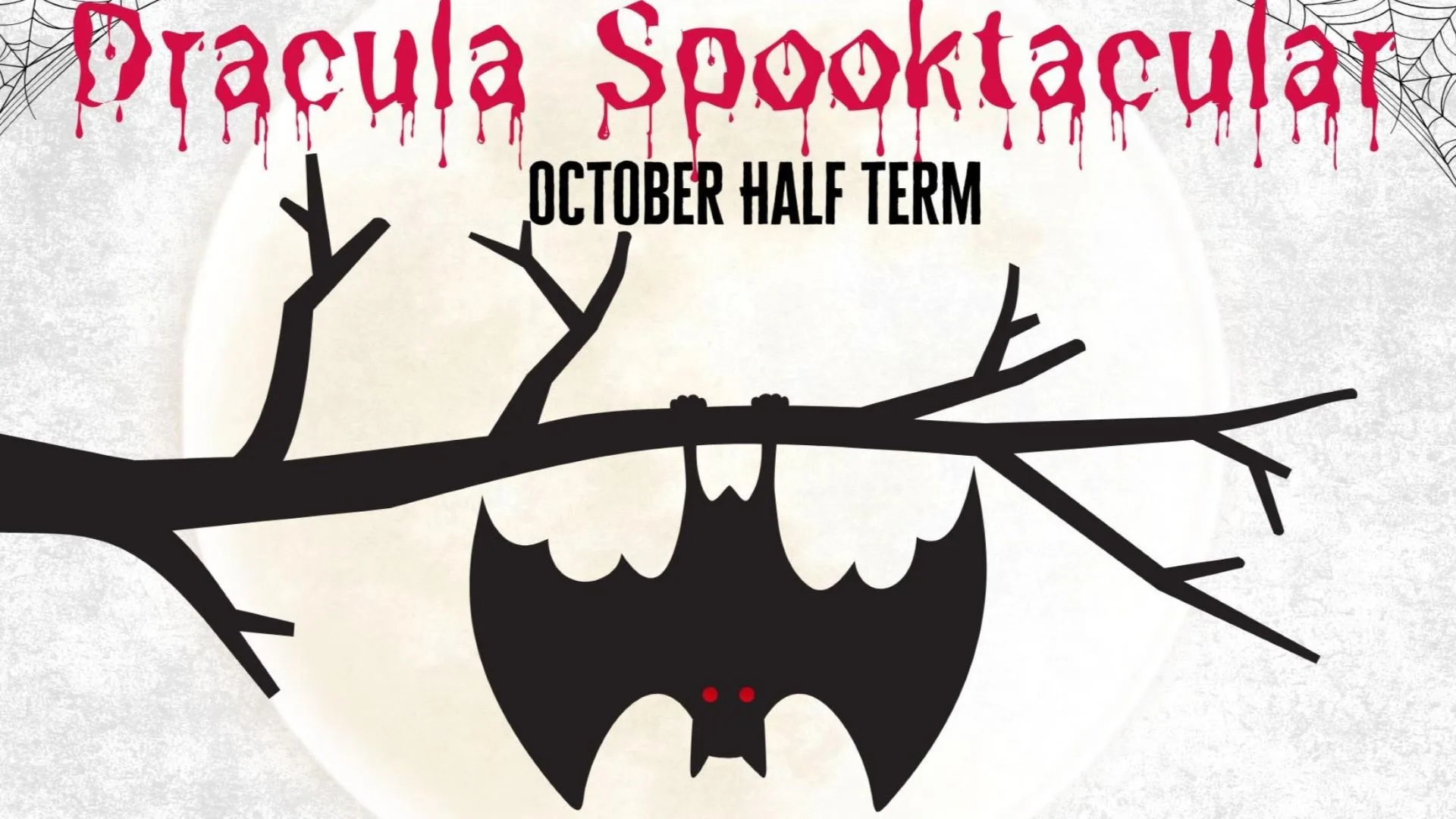
Dracula Spooktacular – Halloween at Cogges
The Manor House is mystically transforming into the home of the most famous Vampire in history – Dracula. Step inside his castle and enjoy an immersive experience as you journey from room to room, experiencing the daily life of the charismatic count and meeting some of his friends along the way. It’s a spooktacular and entertaining experience – perfect for all the family.

Halloween at Blenheim Palace
As Halloween creeps closer and the days shorten, there’s a chill in the air at Blenheim Palace, where ghosts, ghouls and witches get ready to deliver a whole host of tricks and treats along a spooktacular trail. Your very spookiest Halloween starts here…!

Didcot Railway Centre Steam Days
Experience the magic of historic rail travel at Didcot Railway Centre this season. Enjoy unlimited steam train rides during October’s family-friendly Pumpkin Express events, or book a timed slot in December to experience the festive Steam Into Christmas program.
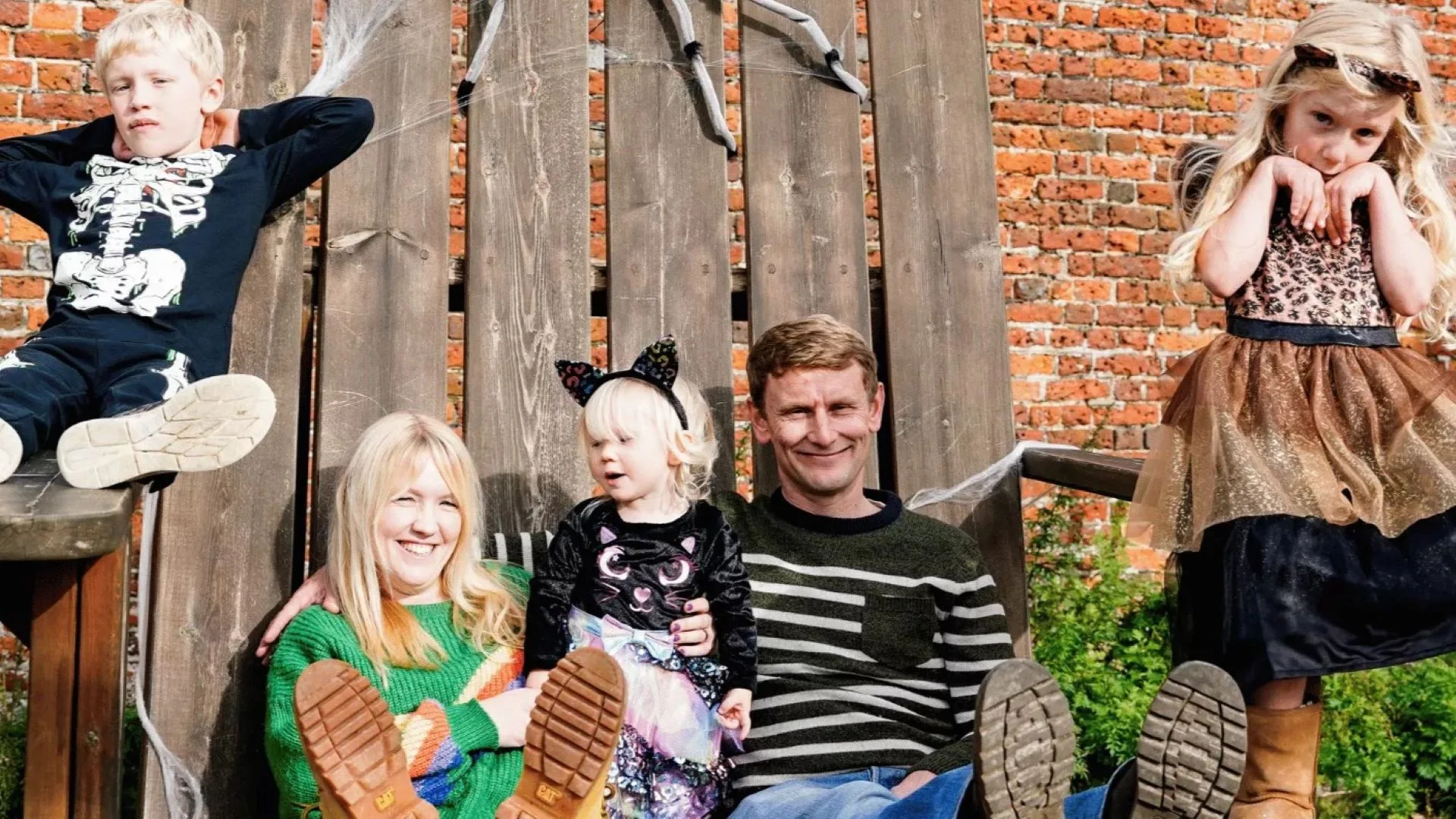
Haunted Half Term at Blenheim Palace
Get ready for a frightfully fun family adventure at Blenheim Palace this October. Haunted Half Term brings creepy creatures, magical activities and plenty of spooky entertainment to the Walled Garden. Meet friendly snakes, tarantulas, giant snails and frogs at the Zoolab show, then enjoy circus workshops, witchy storytelling, wizard walkabouts and more.

Ghost Fest: Potion Making
Ghost Fest: Potion Making at Oxford Castle & Prison invites families to uncover magical ingredients, solve clues and create drinkable potions with Merlin’s apprentice. You can also craft a wand, enjoy magical demonstrations and explore an interactive experience inside a real medieval crypt.

Mystic Pets: Halloween Crafting
Come along and create your own spooky friend based on the animals that appear alongside witches in tales from English folklore. Join in crafts and try out the new spooky Halloween gallery trail.

Fam Jam
This Halloween, families are invited to join a fun-filled, fancy dress Fam Jam. Guests can come dressed as their favourite spooky characters and enjoy Halloween-themed games, creative activities, and dancing — all set within a lively Halloween party atmosphere perfect for little ones and grown-ups alike.

Halloween Slime Lab at Stowe House
Halloween Slime Lab at Stowe House is a hands-on Halloween workshop perfect for creative children who aren’t afraid to get a little messy, mix their own gloriously gooey creation, choose between bubbling cauldron slime or playful pumpkin slime and then take their finished creation home to enjoy.

Ghost Fest: Spooky Tours
Oxford Castle & Prison’s annual spooktacular Ghost Fest is back with Spooky Tours! Do you dare visit for one of their evening Spooky Tours? Hear the haunting stories of their 1,000-year past and let their gruesome history come to life! It won’t be too long before their ghosts reveal themselves!

Musical Theatre Workshop – Annie
Join this Musical Theatre Workshop for an engaging and high energy musical theatre workshop run by Scott’s Performing Arts, where you will learn the number ‘Hard Knock Life’ from the musical Annie ahead of the show coming to New Theatre Oxford this December.

JukeBox: Halloween Special
JukeBox Halloween Special brings decades of feel-good music, singalong favourites and spooky fun to Oxford for a night of dancing with friends.

Dance in the Dark
Come in your favourite PJs for a slumber party in a giant sleepover den and a playful night-time adventure. You’ll meet friendly nocturnal creatures, some slithering slugs, magical moths, and fantastical fireflies. Discover the magic of the dark, whirl and twirl, catch a shooting star and learn to be brave at bedtime.
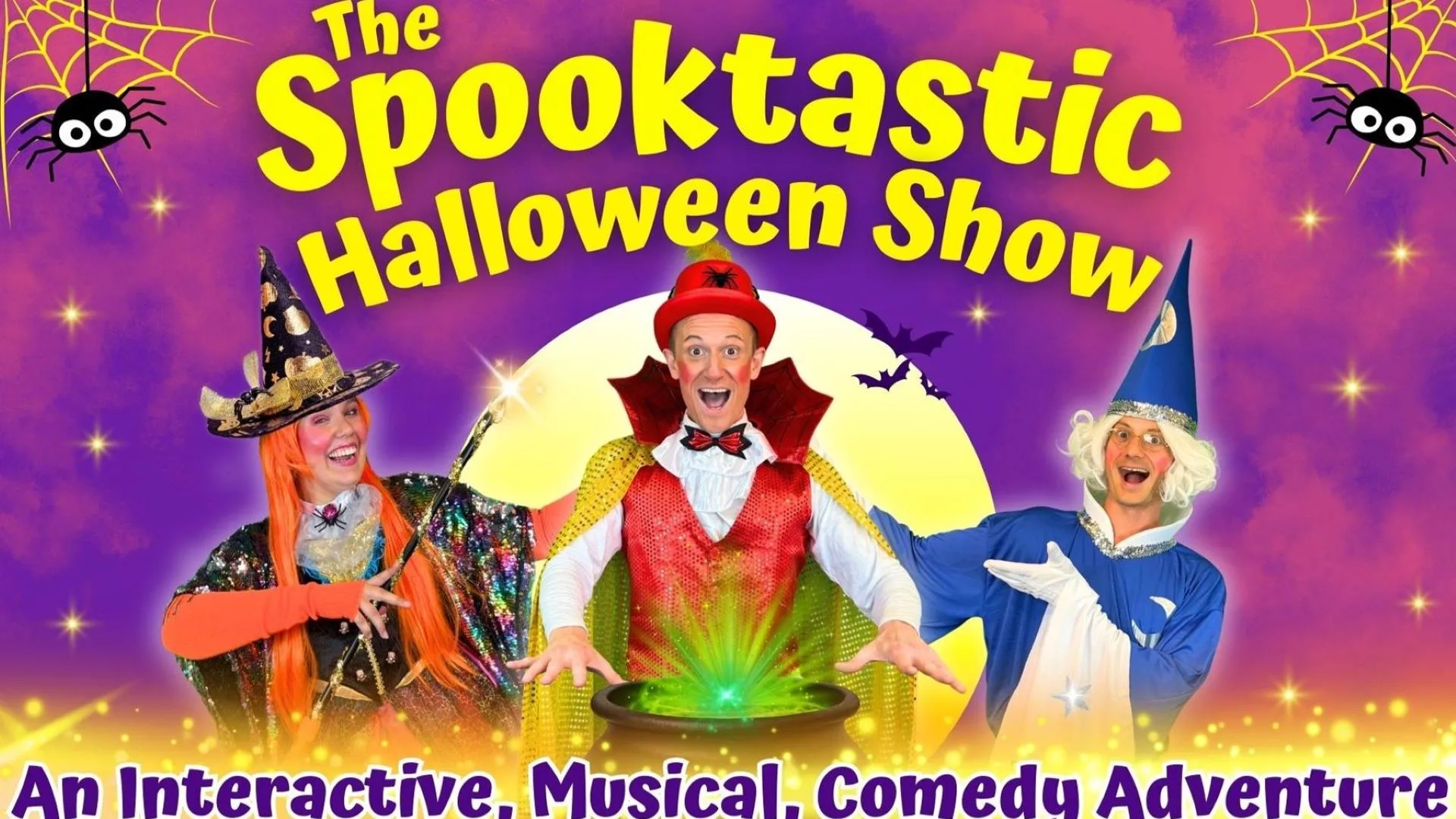
The Spooktastic Halloween Show
Dantastic Productions and the hilarious panto comic Dan Whitley return to the Kenton theatre with a brand new high energy, interactive, musical, Halloween adventure – The Spooktastic Halloween Show.
Half Term Halloween Crafternoon
Join a frightfully fun afternoon of creativity at this Halloween Crafternoon packed with Halloween-themed arts and crafts, creative activities and plenty of seasonal fun.

Stars at Stowe Stargazing
Experience an unforgettable night of stargazing at Stowe with UK Astronomy. Enjoy a captivating talk on the mysteries of our solar system, then explore the night sky through telescopes on the South Front. Perfect for astronomy enthusiasts and curious minds alike.

The Halloween Red Light Boiler
The Halloween Red Light Boiler is an adult-oriented indoor Halloween club night featuring techno and garage music.
#pt-cv-view-d67a4c26uc .pt-cv-ifield { padding-top: 32px !important; padding-right: 0px !important; padding-bottom: 32px !important; padding-left: 0px !important; }
#pt-cv-view-d67a4c26uc .pt-cv-ifield { border-width: 1px 0px 0px 0px !important; border-style: solid !important; border-color: #d8d8d8 !important; }
#pt-cv-view-d67a4c26uc[class*=’cveffect’] .pt-cv-thumb-wrapper, #pt-cv-view-d67a4c26uc:not([class*=’cveffect’]) .pt-cv-thumbnail, #pt-cv-view-d67a4c26uc .cvp-responsive-image[style*=background-image] { border-radius: 8px 8px 8px 8px }
#pt-cv-view-d67a4c26uc .pt-cv-taxoterm * { font-family: ‘Source Sans Pro’, Arial, serif !important; font-size: 16px !important; line-height: 1.3 !important; text-transform: uppercase !important; }
@media (min-width: 768px) and (max-width: 991px) {#pt-cv-view-d67a4c26uc .pt-cv-taxoterm * { font-size: 12px !important }}
#pt-cv-view-d67a4c26uc .pt-cv-readmore:hover { color: #ffffff !important; border-style: solid !important; }
#pt-cv-view-d67a4c26uc + .pt-cv-pagination-wrapper .pt-cv-more-inactive , #pt-cv-view-d67a4c26uc + .pt-cv-pagination-wrapper .pagination a, .pt-cv-pagination[data-sid=’d67a4c26uc’] a { font-family: ‘Source Sans Pro’, Arial, serif !important; font-size: 16px !important; line-height: 1.3 !important; padding: 8px 16px 8px 16px !important; }
@media (min-width: 768px) and (max-width: 991px) {#pt-cv-view-d67a4c26uc + .pt-cv-pagination-wrapper .pt-cv-more-inactive , #pt-cv-view-d67a4c26uc + .pt-cv-pagination-wrapper .pagination a, .pt-cv-pagination[data-sid=’d67a4c26uc’] a { font-size: 14px !important }}
@media (max-width: 767px) {#pt-cv-view-d67a4c26uc + .pt-cv-pagination-wrapper .pt-cv-more-inactive , #pt-cv-view-d67a4c26uc + .pt-cv-pagination-wrapper .pagination a, .pt-cv-pagination[data-sid=’d67a4c26uc’] a { font-size: 12px !important }}
Discover more

Pumkin picking in and around Oxfordshire
It’s that time of the year. That’s right, pumpkin season is here. Whether you associate it with Halloween or not, Pumpkin picking, a somewhat American concept, has taken off in the UK, with patches and pick-your-own farms springing up all over the place. Here are our favourite places to go to pumkin picking in and around Oxfordshire.
The post 20 (or so) brilliant October half term & Halloween activities in Oxfordshire appeared first on The Oxford Magazine.
Oxford Events
Stage Watch: John Partridge and Mollie Gallagher on bringing The Silence of the Lambs to Oxford

John Partridge has spent almost four decades inhabiting some of theatre’s most recognisable characters. Now, as The Silence of the Lambs comes to New Theatre Oxford, he is taking on one of the most indelible figures in modern popular culture — Hannibal Lecter — alongside Mollie Gallagher, making her professional stage debut as Clarice Starling.
We spent time with John and Mollie to explore the process of bringing these iconic characters to the stage, the complex relationship between them, the strange intimacy of performing behind glass and what happens when a cinematic classic is reimagined for the theatre.
There are roles for which an actor can draw upon a character’s established history, and there are those in which the history of the performance itself becomes part of the challenge. Hannibal Lecter belongs firmly in the latter category.
Since Anthony Hopkins’s Oscar-winning performance in the 1991 film adaptation of Thomas Harris’s The Silence of the Lambs, Lecter has become one of the most recognisable villains in popular culture: cultivated, articulate and unnervingly composed, his menace deriving as much from restraint as violence.
For John Partridge, who now takes the role in a major new stage adaptation, the problem was therefore not simply how to play Lecter, but how to make him his own.
“When I first heard about it being put on, I thought, ‘Ooh, that would be fantastic!’” he recalls. Ahead of his audition, Partridge was sent the script and asked to prepare two scenes. He enlisted his friend Tamzin Outhwaite to read with him; when she discovered what the material was, her reaction was immediate. “Oh my god!”
Partridge’s own reaction has proved rather more considered. He was a teenager when The Silence of the Lambs appeared in cinemas, part of the generation for whom Hopkins’s Lecter quickly became inseparable from the character itself. “I’m a child of the 70s, so when the film came out in 1991, I was one of those core Silence viewers,” he says. “It lives in our zeitgeist.”
That familiarity could easily become a constraint. Instead, Partridge found a way of using it as a starting point. He was intrigued to learn that Hopkins had drawn on such unexpected influences as Truman Capote, Katharine Hepburn and HAL from 2001: A Space Odyssey when constructing his Lecter. The revelation gave Partridge permission to undertake a similar act of imaginative disassembly.
“My three are Cary Grant, Elizabeth Taylor, and John Malkovich,” he says. “Lecter is intelligent, mocking and acerbic, but also serious and malevolent. Now, I try to forget any other version of Lecter and just put myself firmly in that cell.”
That cell is one of the defining features of the stage production. For much of the play, Lecter is physically confined behind glass, a visual image familiar from the story but transformed by the theatre’s particular relationship between actor and audience. Cinema can place the viewer wherever the director chooses; theatre leaves the audience in the room, sharing the same space and the same passage of time as the performers.
Partridge initially wondered how he could overcome the obvious theatrical limitation of placing his character inside a box. The answer, he says, was to stop thinking about projecting beyond it and instead draw the audience towards him.
“When I was first placed in the box, I thought, ‘Oh my goodness, how do I push my performance beyond it?’ Then I realised that rather than trying to push, I have to pull the audience into the box.”
It is an approach that also reveals something about Partridge’s interpretation of Lecter. The character is not merely a monster imprisoned for the protection of others; he is a man who considers himself intellectually and aesthetically superior to the people who have confined him. He loves music and art, possesses considerable social grace and remains capable of exquisite courtesy even while discussing acts of extraordinary brutality. His physical confinement therefore becomes part of the psychological contest.
The stillness required of him is also a significant departure for an actor whose career has frequently involved expansive physical and vocal performances. Partridge trained in ballet at the Royal Ballet School before studying musical theatre, and at 16 joined the original UK tour of Andrew Lloyd Webber’s Cats. His subsequent stage career has encompassed A Chorus Line, Grease, Starlight Express, Tommy, Cabaret and Everybody’s Talking About Jamie, alongside television work that includes his long-running role as Christian Clarke in EastEnders.
“Lots of the roles I’m known for are quite gregarious,” he says. “I’ve played a lot of larger-than-life characters. Lecter is larger-than-life, but it’s very, very different.”
At 55, Partridge sees the role as an opportunity to draw together experiences accumulated over a long career rather than discard them in favour of something entirely new. “If you’re lucky enough to be in this business for a long time — I’m 55 now, I went into Cats when I was 16 — parts like this come along where you can roll up everything you’ve done, and colour with all the crayons in your colouring box.”
His dance training has consequently become part of the performance in a more restrained form. Lecter’s movements are economical, but they are not without precision; the physical discipline of ballet can be repurposed as control. “I can use my dance background, my physicality, in a new way to inhabit Lecter,” Partridge says, while drawing on “the actor I am now, with all my experience” to bring him to life.
If Lecter is defined by his control, Clarice Starling enters the story having to learn how to establish her own authority. Mollie Gallagher, best known for playing Nina Lucas in Coronation Street, makes her professional theatre debut as the FBI trainee whose investigation brings her into Lecter’s orbit.
For Gallagher, the role carries its own cultural weight. She has always loved the film, and the character of Clarice was familiar long before she was asked to play her. “She’s such an iconic heroine,” she says. “You can’t get much cooler than Clarice. She’s a badass.”
Yet Gallagher has deliberately avoided simply reproducing Jodie Foster’s performance. Her preparation has involved changing the way she holds herself and speaks. Clarice’s voice sits lower, her physicality is more grounded, and her movements are more deliberate.
“I’m quite airy, whereas Clarice is the complete opposite,” Gallagher says. “She’s grounded at all times.”
The transformation has extended beyond technique. Gallagher describes Clarice as highly intelligent, articulate and psychologically disciplined, qualities that require her to move beyond the instincts she associates with herself. “Weirdly, she makes me feel stronger and more confident. Now, in any situation in life, I can just think, ‘What would Clarice do?’”
There is, however, a personal point of connection. Clarice is an outsider within the FBI, a woman from West Virginia who has not inherited the wealth, status or institutional authority surrounding her. Gallagher identifies with the character’s working-class origins and with the experience of having to establish credibility in environments where she feels she is being judged before she has spoken.
“I feel like I have to prove myself every day — coming from my background and also being northern,” she says. “When I’m speaking to someone, I feel I have to articulate more to make them listen to me — basically speak a bit more ‘proper’.”
That understanding gives the central relationship a particular texture. Clarice is not simply the investigator seeking information from an imprisoned killer. She is also someone who has spent much of her life learning how to be taken seriously, now confronting a man who seems almost unnervingly capable of seeing through the carefully constructed version of herself she presents to the world.
Gallagher describes her conversations with Lecter as the point at which Clarice becomes most vulnerable. Her history, particularly the death of her father, is something she rarely discusses, yet Lecter draws it out of her. “No matter how powerful, smart and strong you are, that is really scary,” she says.
The relationship therefore develops into something more complicated than the conventional opposition between detective and criminal. Gallagher describes an unusual friendship emerging between the two, with Lecter becoming something like a confidant and therapist for Clarice even as she remains determined to extract information from him. By the end, she suggests, there is a sense of loss when that relationship disappears.
For Partridge, the theatrical potential of that exchange is almost musical. “It’s inherently theatrical. It’s like a dance: I invite her to dance with me.” He describes the scenes between Lecter and Clarice as “a tight tennis match”, with each character attempting to anticipate the other’s next move.
The chemistry between the two actors appears to have developed quickly. Gallagher says that from the first read-through they could look at one another and immediately find the connection. Partridge describes her as an instinctive actor, noting that she, like him, did not follow the conventional route into drama training. Gallagher’s first professional theatre role is therefore opposite an actor with decades of stage experience, yet she says Partridge has made the process unusually easy.
“He’s amazing — I couldn’t ask for anyone better to do this with,” she says. “He is the loveliest man, and then he summons this darkness. Sometimes we’ll be chatting, and he’ll do this look, and I’ll be like, ‘Oh no, Hannibal’s here!’”
The production’s adaptation by Gina Gionfriddo is equally important to that dynamic. Rather than attempting to reproduce the film scene by scene, the playwright has created a version for the stage that combines Harris’s material with new writing. Partridge believes the two elements have been integrated almost invisibly. “She’s managed to weave her words in with Thomas Harris so seamlessly — it’s as if Buffalo Bill has stitched it together himself.”
That theatrical reinvention extends to some of the story’s more problematic elements. The production has changed Buffalo Bill’s treatment of gender identity from the original novel and film, removing the implication that a transgender identity itself is connected to the character’s violence. Partridge says the decision was important to the production’s contemporary perspective.
“We do not need to be villainising our trans brothers and sisters in that way,” he says. “Our story is much stronger for the changes we’ve made.”
The production also retains the story’s interest in behavioural science and criminal profiling, which occupies an intriguing position within its 1980s setting. The detectives who believe that violent offenders can be understood through their psychology are treated with scepticism, while Lecter dismisses profiling as a form of “junk science”. Yet the investigation depends upon precisely the kind of psychological understanding that the established authorities are reluctant to embrace.
For Partridge, the emergence of behavioural science is one of the story’s most interesting elements. “That science changed the world,” he says. “Profiling, understanding the mind of a killer, was a game-changer.”
The broader social context is also something Partridge has considered closely. He points to the production’s depiction of attitudes towards women, policing and gender during the 1980s, and draws connections to contemporary debates around misogyny, gender equality and the rights of LGBT people. These are his interpretations of the themes rather than a claim that the historical and contemporary contexts are identical, but they illustrate why the production is not being approached simply as a nostalgic recreation of a celebrated film.
For Gallagher, the enduring appeal is more direct. She is a committed fan of horror and thrillers, and says that when she was younger, “horror, horror, horror” was always her answer when asked what she wanted to perform. The opportunity to originate Clarice on stage therefore combines a character she has admired with the genre she already loves.
It also arrives at a moment when theatre audiences have shown an appetite for adapting familiar cinematic thrillers for live performance. Partridge sees The Silence of the Lambs as occupying a distinctive place within that trend.
“It’s the godfather of them all — the holy grail of psychological thrillers,” he says.
Whether that reputation can survive the transition from screen to stage is ultimately something the audience has to decide. The production’s task is not to compete with the film on its own terms, but to exploit what theatre can do differently: the proximity, the shared silence, the absence of an edit and the knowledge that the actors are performing the encounter in front of you, night after night.
That becomes particularly significant when the central figure is a character whose power has always depended on the sensation that he is studying the person watching him.
When The Silence of the Lambs arrives at New Theatre Oxford, John Partridge will once again enter Lecter’s glass cell. Mollie Gallagher will sit opposite him as Clarice Starling, bringing a character she has admired from the screen into an entirely different medium.
For Partridge, the attraction of the role may ultimately be its contradiction. Lecter has been seen before by millions, yet the theatre offers the possibility of seeing him anew — not through the camera’s eye, but at close range, in real time, with the audience sharing the same room.
The question is no longer simply what Lecter will do next. It is what happens when the audience is close enough to watch him think.
The Silence of the Lambs comes to New Theatre Oxford from 19 to 24 October 2026.



-

 Oxford united FC4 weeks ago
Chris Gunter steps away Wales role to focus on Oxford United
-

 Oxford University3 weeks ago
New to the Oxford English Dictionary this September
-

 Traffic & Transport2 weeks ago
Why should I have to pay more for buses if I don’t use a smartphone? | Bus fares
-

 Oxford united FC2 weeks ago
LIVE: Exeter City vs Oxford United – Jersey Mike's Trophy group stage
-

 Traffic & Transport2 weeks ago
How poor public transport policy is putting the brake on cities | Road transport
-

 Student Life3 weeks ago
Oxford partnership allows OpenAI to use rare Bodleian texts to train ChatGPT
-

 Oxford united FC3 weeks ago
Northern Ireland fans laud Oxford United defender Ciaron Brown
-

 Oxford united FC2 weeks ago
Oxford United lose to Exeter City on penalties in Jersey Mike’s Trophy