
UK News
IMF hails UK’s budget deficit improvement and warns global debt heading towards post-WW2 high – business live | Business

IMF hails UK’s budget deficit improvement
Newsflash: The International Monetary Fund has applauded the UK’s progress in reducing its budget deficit last year.
A day after slashing the UK’s growth forecasts, the IMF cited Britain as an example of an major economy which managed to trim its borrowings, after the UK’s deficit fell from 6.1% of GDP in 2024 to 5.4% in 2025.
In its latest Fiscal Monitor report, just released at its spring meeting in Washington, the IMF says:
In 2025, the headline deficit for advanced economies excluding the United States held broadly steady at 2.4% of GDP. The debt-to-GDP ratio for these economies fell only marginally to 95.3%, effectively unchanged from its 2019 level prior to the COVID-19 pandemic.
The United Kingdom recorded a notable improvement, reducing its deficit to 5.4% of GDP, with the change driven by tax increases, tax threshold freezes, and the expiration of temporary measures for energy support.
Canada and Japan also posted gains, reflecting spending restraint. These gains were partly offset by the use of some fiscal space by countries with historically strong fiscal positions, such as Korea and The Netherlands.
The IMF is forecasting that the UK’s annual budget deficit will drop to 3.9% of GDP this year, and continue falling until 2031 when it will be 1.6% of GDP, the second-lowest in the G7 after Canada.
In contrast, the US will need revenue and expenditure measures over the medium term to control its deficit, given “the persistence of primary spending and the scale of projected deficits”, the IMF says.

The Fund also warns Rachel Reeves not to stray from her fiscal rules, saying:
In the United Kingdom, adhering to established spending envelopes while strengthening the efficiency of value-added and property taxes is key to rebuilding buffers.
Key events
Finance ministers call for swift end to Iran war
A group of 11 finance ministers, including UK chancellor Rachel Reeves, are calling for a swift and lasting negotiated resolution to the conflict in the Middle East.
In a joint statement, finance ministers from the United Kingdom, Australia, Japan, Sweden, the Netherlands, Finland, Spain, Norway, Ireland, Poland and New Zealand warn that the Iran war will continue to weigh on global growth, inflation and financial markets even once it is durably resolved.
The group of finance chiefs are calling on all parties to implement the ceasefire in full, saying:
The past weeks have brought unacceptable loss of life and significant disruption to the global economy and financial markets, and the ceasefire will be crucial to protecting civilian populations and the security of the region.
They also call for a swift and lasting negotiated resolution to the conflict, and a return to free and safe transit through the Strait of Hormuz.
The group also call for an end to protectionist actions in hydrocarbon and other supply chains, adding “We commit to promoting cooperation and integration to support regional and global stability.”
And they conclude by reaffirming “unwavering support for Ukraine” and pledge to maintain economic pressure on Russia, saying:
Russia’s war in Ukraine, now in its fifth year, continues to negatively impact the global economy. Russia must not benefit from this conflict, and as market conditions allow to avoid exacerbating disruptions to supply chains and energy prices, we will continue collaborating on ways to increase pressure. We remain committed to upholding the rules based international system.
Revealed: How Donald Trump drives up geopolitical risk
Donald Trump has added to geopolitical risk today by threatening to row back on the trade deal the US signed with the UK last year.
Professor Costas Milas, of the Management School at University of Liverpool, has created a graph showing how Trump can inflame geopolitical risk, for months.
Professor Milas explains:
President Trump keeps on dominating the news with aggressive, contradicting, and often opaque statements. His latest one? That he might reconsider the US-UK trade deal.
There is no doubt, in my mind, that Trump himself is a big source of geopolitical risk. Why? Consider a Google measure of Trump dominating the news together with global geopolitical risk acts (from the website of Matteo Iacoviello). I collect monthly data from 2015 (first term of Trump as President) and show below how a “shock” to Trump news raises global geopolitical risk acts for as many as nine (9) months.
The impact is statistically significant using a 95% confidence interval. World leaders do take notice!
IMF: Support on energy or food costs should be ‘targeted and temporary’
The IMF is also warning governments to be careful when providing support to citizens through the cost of living pressures created by the Iran war.
In a blog post to accompany today’s Fiscal Monitor, they say:
If governments decide to help companies and families facing higher energy or food costs, this support should be targeted and temporary, focusing on those most exposed and least able to absorb price increases. Many countries built effective social safety nets during the pandemic; these mechanisms can—and should—be used again.
Countries with “narrow fiscal space” should avoid financing support measures with additional borrowing, the Fund argues, saying:
A better approach is to reallocate spending within the same limits and prioritize crisis-related spending (which could be more politically feasible).
The alternative is to lock in higher debt and higher interest costs, which will eventually force tougher choices—or worse, destabilize government debt markets and worsen conditions today.
IMF hails UK’s budget deficit improvement
Newsflash: The International Monetary Fund has applauded the UK’s progress in reducing its budget deficit last year.
A day after slashing the UK’s growth forecasts, the IMF cited Britain as an example of an major economy which managed to trim its borrowings, after the UK’s deficit fell from 6.1% of GDP in 2024 to 5.4% in 2025.
In its latest Fiscal Monitor report, just released at its spring meeting in Washington, the IMF says:
In 2025, the headline deficit for advanced economies excluding the United States held broadly steady at 2.4% of GDP. The debt-to-GDP ratio for these economies fell only marginally to 95.3%, effectively unchanged from its 2019 level prior to the COVID-19 pandemic.
The United Kingdom recorded a notable improvement, reducing its deficit to 5.4% of GDP, with the change driven by tax increases, tax threshold freezes, and the expiration of temporary measures for energy support.
Canada and Japan also posted gains, reflecting spending restraint. These gains were partly offset by the use of some fiscal space by countries with historically strong fiscal positions, such as Korea and The Netherlands.
The IMF is forecasting that the UK’s annual budget deficit will drop to 3.9% of GDP this year, and continue falling until 2031 when it will be 1.6% of GDP, the second-lowest in the G7 after Canada.
In contrast, the US will need revenue and expenditure measures over the medium term to control its deficit, given “the persistence of primary spending and the scale of projected deficits”, the IMF says.
The Fund also warns Rachel Reeves not to stray from her fiscal rules, saying:
In the United Kingdom, adhering to established spending envelopes while strengthening the efficiency of value-added and property taxes is key to rebuilding buffers.
IMF: Global debt still on track to hit 100% of GDP by 2029
Newsflash: The International Monetary Fund is warning that the war in the Middle East has added a new source of fiscal pressure to the global economy.
In its latest Fiscal Monitor report, just released, the IMF points out that global public debt dynamics did not improve in any material way in 2025, even before the Iran conflict drove up the oil price.
It says:
The conflict has material global reach, disrupting energy supplies, tightening financial conditions, and forcing governments to choose between shielding their populations from price spikes and preserving fiscal space.
The IMF also warns that the fiscal picture has worsened coompared with a year ago – when Donald Trump’s trade wars were causing instability.
Global gross government debt rose to nearly 94% of GDP in 2025, and is on track to reach 100% by 2029, for the first time since the aftermath of the second world war (as the IMF also warned last October).
The IMF says the the projected increase in global debt largely reflects the increase in debt in the world’s two largest economies, China and the US, explaining:
The United States is running a general government deficit of 7 percent to 8 percent of GDP despite operating near full capacity, with no debt consolidation plan in sight, and its gross debt is projected to reach 142 percent of GDP by 2031.
China’s near-term fiscal expansion, aimed at supporting domestic demand amid deflationary pressures, has widened the country’s overall deficit to nearly 8 percent of GDP, and persistent large deficits are expected to push its debt toward 127 percent of GDP by 2031.
Bessent: US will avoid long-term inflation hit from Iran war

Richard Partington
The US Treasury Secretary Scott Bessent says the economic shock from the Iran war will pass without driving up long-term inflation in the US, my colleague Richard Partington reports from Washington DC.
“This war will end. I don’t know if it’s 3 days, 3 weeks, 3 months, but we will get on the other side of this,” Bessent said.
“There’s always a catch-up, there’s pent-up demand.”
Speaking at the CNBC Invest in America conference in Washington on Wednesday, Bessent also said the US Fed was in danger of being caught out by falling inflation.
“I understand why they’re doing it [holding on rates]. It wouldn’t be necessarily my base case. I ‘d at least be ready to cut and I’d have an open mind that they may need to cut more because they’ve waited longer.”
Companies in New York state have reported a jump in costs this month, as the Iran war hits the US economy.
The Empire State Manufacturing Survey, just release, shows that “the pace of input price increases picked up sharply after slowing last month”.
Firms also reported that supply availability worsened this month too; however, they remain optimistic that conditions would improve in the months ahead.
Most European stock markets are resolutely flat today, as investors try to judge the Iran situation.
Germany’s DAX index has gained just 0.05%, while Italy’s FTSE Mib is up a mere 0.2%, and the UK’s FTSE 100 index is now 0.15% higher.
That’s countered by France’s CAC 40, which has slipped by 0.6% – pulled down by luxury goods firms Kering and Hermès following the latter’s results.
Fawad Razaqzada, market analyst at Forex.com, says there have been “some conflicting reports” from the Middle East today, adding:
Trump has just come out and said that Iran is about to reach an agreement, confirming earlier reports that two sides had agreed ‘in principle’ on extending the truce.
Other reports have quoted Iran’s military warning continued US blockade would break the ceasefire, while Iranian foreign ministry spokesperson has said that they do not confirm any details mentioned by western media about the negotiations.
Who do you believe? Well, markets certainly appear to be believing Trump. Though the dollar and oil prices rebounded slightly, markets still seemed to be leaning quite heavily toward a constructive outcome. That said, it still feels a touch premature to be pricing in a smooth resolution.
While I think a degree of caution is still warranted, markets are quite optimistic, judging by the big risk rally we have seen this week. Meanwhile a flurry of central bank speakers will no doubt keep things ticking over today, though it’s likely that any headlines out of the Iran negotiations will remain the dominant driver for FX.
Hermès reports Iran war hitting luxury goods sales
Miatta Mbriwa
The French luxury group Hermès has reported that the Iran war is hitting sales in France, as fewer tourists visit Paris and high-spending shoppers pull back on buying designer products amid growing concerns over the conflict’s toll on the global luxury sector.
Sales of its flagship Birkin and Kelly handbags as well as silk scarves and perfume rose by 6% in currency-adjusted terms, underperforming analysts’ expectations in the first-quarter of 7.1%. Currency fluctuations pulled the company’s revenue down by €290m (£250m), prompting a 1% drop in reported sales to €4.07bn compared to €4.13bn last year.
Hermès has said that sales in France have been “affected by a slowdown in tourist flows” owing to the US-Israeli war with Iran, adding that it is hitting sales in concession stores at airports and in other key markets such as the Middle East. Despite being the fastest-growing region for Hermès in 2025, sales in the Middle East dropped by 6% in currency-adjusted terms, to €160m, compared to €185m euros in 2025’s first quarter.
The company’s chief financial officer, Éric du Halgouët, cited “the geopolitical events affecting the region in March,” as playing a significant part in the downturn.
Hermès is the latest luxury group to report a slump in sales following the outbreak of the conflict in late February. Major rival in the sector LVMH, the world’s largest luxury group reported its seventh consecutive quarter of declines on Monday, rising just 1%. French luxury goods company Kering also reported an 8% tumble in sales at its key brand Gucci this week.
Executive chair of Hermès, Axel Dumas, said: “In a tense geopolitical environment, Hermès maintains its course, true to its long-term strategy…continuing its profitable growth in 2026 with confidence and conviction.”
Shares in Hermès are down 8%, having dropped by 14% at the start of trading.
Pizza chain Franco Manca shutting stores and cutting jobs

Sarah Butler
Pizza chain Franco Manca is to close 16 of its 70 restaurants via an insolvency process with the likely loss of about 225 jobs.
The company said “external cost pressures” including increases in the legal minimum wage, business rates and employers’ national insurance contributions, meant a number of its restaurants were “no longer sustainable.”
The casual dining chain, which is part of Fulham Shore, which also owns The Real Greek chain, is owned by Toridoll, the Japanese operator of Wok to Walk and Marugame Udon, and restaurant sector investment fund Capdesia.
It recently appointed advisory firm Alvarez & Marsal to look at options for the future of the business and is thought to have considered a number of takeover bids before deciding to implement a Company Voluntary Arrangement (CVA)a, an insolvency process under which a company can cut rents and exit leases.
A sale of The Real Greek is still under consideration, according to Propel, the industry newsletter which first reported the CVA.
Marcel Khan, the chief executive of The Fulham Shore which was bought by Toridoll and Capdesia for £93m in 2023, said:
“Over the last two years under our current management, we have been making strong progress against several key performance indicators, with productivity, customer satisfaction, happiness ratings, loyalty and frequency improving significantly.
However, even restaurant businesses that are doing all the right things from a customer and operational perspective are not immune to widely publicised pressures impacting the hospitality industry. This includes significant increases in National Insurance and the national living wage in recent history, as well as a lack of business rates relief for the restaurant sector and disproportionately high VAT in the UK compared with Europe.
As a result of these external cost pressures, we have to make sure that we are putting our business on a sustainable footing for long-term growth and development. This is why we have taken the difficult decision to undertake a CVA for Franco Manca, which will see a minority proportion of our restaurants closing where they are no longer sustainable in this cost environment.
“We are deeply saddened by the closures of a minority proportion of our restaurants, and will support our affected team members throughout this process in every way that we can.”
Bank of America posts 17% jump in profits
Bank of America has become the latest Wall Street bank to post a jump in profits after the Iran war created market volatility.
BofA has reported a 17% jump in net income in the first quarter of this year, up to $8.6bn from $7.4bn in January-March 2025.
Revenues rose by 7%, including a 21% jump in investment banking fees, and a 13% rise in sales and trading revenue at the bank’s global markets division.
Chair and CEO Brian Moynihan attributed the jump in earnings to “disciplined execution”, adding:
Revenue growth of 7% year-over-year included net interest income that was better than we expected, up 9%, as well as double-digit growth in sales and trading revenue, investment banking fees and asset management fees.
We remain watchful of evolving risks. However, we saw healthy client activity, including solid consumer spending and stable asset quality, indicating a resilient American economy.
Fox News are broadcasting an interview with Donald Trump now, in which he is being asked about the Iran war and its impact on the US economy.
The US president said the war would slow economic growth, saying: “There’s going to be a hit.”
But he added that gas prices are “coming down very soon and very big”, saying he believed they will be “much lower” before the midterm elections.
That’s from our Middle East liveblog:
Sanctioned tanker turns back to strait of Hormuz
A US-sanctioned tanker. which sailed through the strait of Hormuz yesterday has now pulled a u-turn and returned to the Gulf, shipping data shows.
Rich Starry, which had been placed under US sanctions for dealing with Iran, abruptly turned north last night and headed back towards the strait.
This indicates it failed to break through the US blockade on vessels calling at Iranian ports.
Another sanctioned tanker, Elpis, has stopped near the place where Rich Starry turned around…
Oil rises on report US sending thousands more troops to Mideast
The oil price has pushed higher, following a report that the US is sending “thousands” more troops to the Middle East.
According to the Washington Post, the Pentagon is sending thousands of additional troops to the region. The move is to put pressure Iran into agreeing a deal, but US officials have also said they are considering the possibility of additional strikes or ground operations if the ceasefire does not hold, they say.
The Washington Post reports:
The forces moving into the region include about 6,000 troops aboard the aircraft carrier USS George H.W. Bush and several warships escorting it, said current and former officials, who like some others spoke on the condition of anonymity to discuss military movements.
About 4,200 others with the Boxer Amphibious Ready Group and its embarked Marine Corps task force, the 11th Marine Expeditionary Unit, are expected to arrive near the end of the month.
Brent crude is now up 1.2% at around $96 a barrel.
Rogoff warns markets are ‘naive’ if they think it’s ‘mission accomplished’ in Iran
The financial markets are being ‘naive’ if they think the Middle East conflict is resolved, Harvard University professor Kenneth Rogoff has suggested.
Rogoff says it’s ‘puzzling’ that the markets are taking a ‘no problem’ approach to the war, with US stocks near record highs amid hopes that US-Iranian peace talks could resume in Islamabad later this week.
Speaking to Bloomberg TV, Rogoff says:
I think it’s naive to think it’s mission accomplished. I think it’s a temporary respite.
The Iranian regime is still in place, Frankly the US regime is still in place, and I think more things will happen.
But…the markets have just decided it doesn’t matter, everything’s going to be fine. I think it’s a little naive.
Rogoff warns that the war is already a “big stagflationary shock”, on top of the impact of Donald Trump’s tariffs which is still working its way through the system.
Over the medium term, this pushes interest rates up, not down, he explains.
After climbing most days since the Iran war started, UK mortgage rates may have reached a plateau.
The average 2-year fixed residential mortgage rate today is 5.89%, unchanged from Tuesday, data from Moneyfacts shows.
The average 5-year fixed residential mortgage rate today is 5.77%, which is also unchanged.
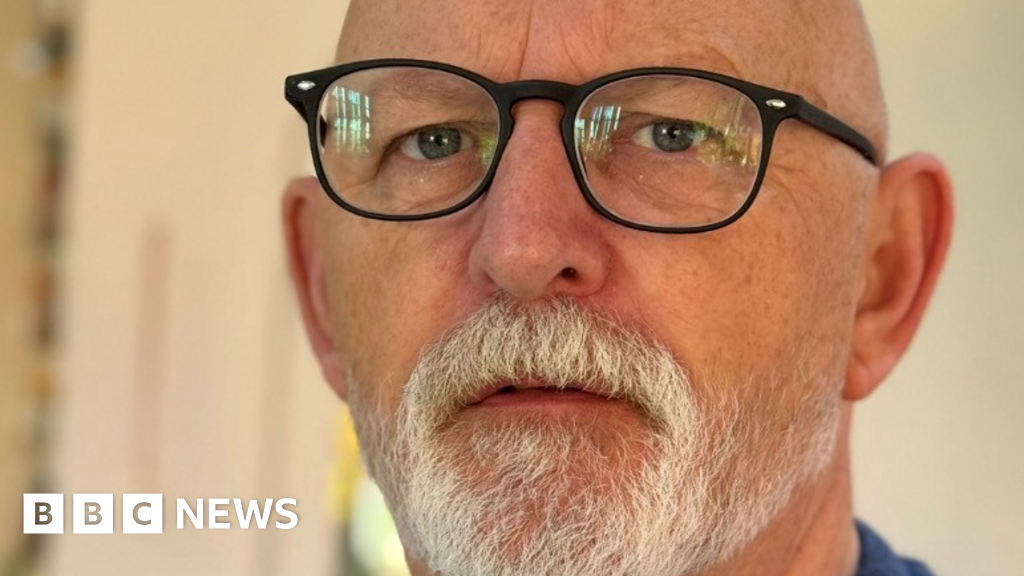
The family of Shaun Burton, say they are “devastated” by the loss.
Source link

Key events
In the opening half an hour against Cape Verde, Mikel Oyarzabal, the centre-forward, did not get a single touch.
Kyle Green gets in touch: “Your highlighting of Lalas and his absurdity is something that has prevented me from wanting to watch the coverage on Fox. While every channel has its pros and cons I just can’t.
“I’m 45 and probably the youngest of anyone who remembers him as a player instead of an opinionated insert insult here. As for the match this could be more competitive than it looks on paper Spain need a win the pressure is on them. Saudi Arabia could hold out for a draw and see what happens in their last match. “
News from the England camp, and it seems to be good news on Declan Rice.
“I’m ready and fit, raring to go. I was feeling a little bit of neural pain in my hamstring, which I was managing from after Christmas with Arsenal for a very long time. Obviously, not a lot of people would have known that. It was all behind-the-scenes stuff but it was a smart decision.
“In the end, that last 20 minutes is probably where you pick up the most, and it’s where you play a 70-minute match. But that last 20 is where you really feel your body going for it. And I think it was a smart decision because the last few days I felt really, really good.”
Alex Reid has penned today’s weekend special Football Daily.
Portugal v Uzbekistan on Tuesday enticingly pits the incredibly nice, incredibly 41-year-old-superstar-tolerant Roberto Martínez against Fabio Cannavaro, who’s won a Ballon d’Or as a player and the Chinese Super League as a coach. While the fixture following that game really does see the dream of Thomas Tuchel – in his first international job with England – taking on Queiroz, who is in charge of his ninth national side with Ghana.
The expected formations are 4-2-3-1 for Spain, and 5-3-2 for the Saudi Arabians.
The Saudi team features two Donis changes: Ali Lajami, a defender, and Nasser Al Dawsari, a midfielder, are preferred to Mohammed Abu Al Shamat and Mohamed Kanno. You may recall Salem Al Dawsari, the Saudi captain, as the man who scored the winner against Argentina.
An entertaining read, even for those of us who have just seen the clips.
In a conversation where his co-panelist is casually reminiscing about his days playing alongside Messi or exchanging shirts with Ronaldo Nazário at the World Cup, what exactly is Lalas going to talk about – coming on as a second-half substitute for Earnie Stewart in a friendly against Scotland in 1998? Helping the Kansas City Wizards finish last in the 1999 MLS Western Conference? Did Lalas enjoy an elite playing career? No. But does he do the background reading that could compensate for his relative lack of standing in a conversation with titans like Henry and Zlatan? Also no. But is he charming or funny or charismatic or otherwise magnetic on screen? Eh, no.
For the record, I once interviewed Alexi Lalas on the challenge of playing against Romario in the 1994 World Cup. He had this to say:
“He could kill you in so many different ways. If you remember from that World Cup, he scored so many types of goals. That ranged from solo adventures to an outside-of-the-right-foot half-volley off a corner kick. Romario was both the most difficult to play against and the best that I have faced.
“Roberto Baggio was doing his thing, but in terms of consistency and living up to the hype, he [Romario] was the best. As with all stars, there was a moment when the fans sit up in their seats, and that was a feeling I got with Romario. When it got close to him and the potential for his involvement in a play was there, everybody sat up in their seat. They knew that something spectacular would be happening.”
Saturday’s match reports here.
The Saudi Arabia coach, and Blackburn legend, Georgios Donis, spoke about the challenges facing his team: “Spain is not the same team when Yamal or Williams are on the bench.
“While they still have plenty of possession, they lack the individual one-on-one penetration when these two are missing. I’m not saying it’s a problem for Spain, but when those players are missing, they play in a different way. We saw this very clearly against Cape Verde.
“We are playing against one of the best teams in the world, and it’s very important that when you play against these kinds of teams, you should enjoy the experience and respect the opponent, but not too much.
“It is very hard for any team playing against Spain to have any time in possession. So what we must do is to be more in control of our movement and compact, and when the ball goes through the lines, be able to defend dynamically.
“It’s nice to see miracles in football, and we’ve seen favourites losing against underdogs. Of course, it’s great for Saudi football to have a great memory of the result against Argentina, but we aren’t drawing anything from that.
“I think we’ll feel more pressure in that [Cape Verde] game than we will against Spain.”
The Spain coach, Luis De La Fuente had this to say in his Saturday press conference: “This generation of footballers is highly competitive and really fired up… It’s going to be a completely different story,” he said at his pre-match press conference on Saturday. There is no drama or crisis. The bottom line is simply that we need to win tomorrow.”
Four changes for Spain: Lamine Yamal, Pedro Porro, Dani Olmo and Alex Baena also come into the side with Marcos Llorente, Fabian Ruiz, Ferran Torres and Gavi dropping out.
The teams – Lamine Yamal starts
Spain: Simon, Porro, Cubarsi, Laporte, Cucurella, Gonzalez, Rodri, Yamal, Olmo, Baena, Oyarzabal. Subs: Raya, Joan Garcia, Pubill, Grimaldo, Eric Garcia, Llorente, Merino, Torres, Fabian, Gavi, Pino, Williams, Zubimendi, Munoz, Iglesias.
Saudi Arabia: Al Owais, Abdulhamid, Tambakti, Lajami, Al Amri, Al Harbi, Nasser Al Dawsari, Al Khaibari, Al Juwayr, Al Buraikan, Salem Al Dawsari. Subs: Al Aqidi, Al Kassar, Majrashi, Yahya, Al Shehri, Al Boushal, Kadesh, Al Johani, Al Ghannam, Al Hajji, Al Hamdan, Mandash, Kanno, Thakri, Abu Al Shamat.
Referee: Raphael Claus (Brazil)
Perhaps one of the Saudi -players can write themselves into this high-grade selection?
Perhaps it can be their goalkeeper.
Madrid screening of Spain v Saudi Arabia cancelled due to heat
The public screening of Spain’s World Cup match against Saudi Arabia in Madrid on Sunday has been cancelled because of extreme heat forecast for the Spanish capital, officials said.
The match, due to kick off at 6pm local time on Sunday, had been scheduled to be shown on a giant screen installed by the Spanish football federation (RFEF) at a fan zone in Plaza de Colón in central Madrid.
Madrid city council and the federation decided to cancel the screening after national weather agency AEMET issued an orange heat warning – the second-highest level – for the Madrid region, with temperatures forecast to reach 40C.
“The decision has been taken with the aim of protecting the health of attendees, event staff and support services involved in the event,” Madrid city hall said in a statement, apologising for any inconvenience.
Officials urged supporters to watch the match indoors in air-conditioned spaces and avoid prolonged exposure to the heat.
Large parts of Spain are experiencing unusually high temperatures for June as a mass of hot air from North Africa moves across the Iberian Peninsula.
A total of 13 of Spain’s 17 regions are on orange alert for heat on Sunday, while the northern Basque Country bordering France is on red alert, the highest level.
Authorities advised residents and visitors to take precautions during the heatwave, including drinking water regularly, staying in cool environments, limiting outdoor physical activity during the hottest hours of the day and taking extra care of vulnerable people. AFP
Can Saudi Arabia repeat the magic of 2022?
Argentina arrived in Qatar on a 36-game unbeaten run. When Lionel Messi opened the scoring from the penalty spot after 10 minutes, a comfortable afternoon seemed in the offing. Saleh al-Shehri and Salem al-Dawsari had other ideas, Argentina had three goals disallowed for offside in the space of 13 minutes and the greatest comeback in Saudi Arabia football history was made. Argentina went on to lift the trophy, while defeats to Poland and Mexico meant the Saudis did not reach the knock-out stage.
Unai Simon over David Raya is a controversial choice for De la Fuentes. The Arsenal keeper could lay claim to being Europe’s best this season.
“Those at the Champions League final had a few more days, so I got there on the Wednesday night,” Raya says. “I arrived a bit before Fabián [Ruiz]. I was saying hello to some of the others in reception when he arrived. I went to say congratulations; that was almost the first thing I did. I couldn’t really talk [to him] after the final; I just didn’t have it in me. The next day we talked about the game properly. Just two mates chatting … I was happy for him that he could lift the trophy for a second time.”
A high pressure game for the European champions, as Sid Lowe reports.
“If we had scored one, the game would have changed,” Martín Zubimendi said. Immediately after the game, De la Fuente had offered a simple analysis: when the ball doesn’t want to go in it doesn’t want to go in, he insisted. Spain had racked up 27 shots, after all. Ferran Torres had hit the bar and seen another clear opportunity saved. Vozinha, the 40-year-old goalkeeper who stopped that, saved six more and was named the man of the match. “There’s nothing to reproach the team for,” Rodri said. “We generated chances but couldn’t put it away; the good thing is they created almost nothing.”
We wait to see what role Lamine Yamal will play today. His coach would surely like to be able to use him.
The worst mistake we could make would be to compare him to anyone. He is the midst of a process. He has exceptional footballing maturity and lives it all with total naturalness. He has great serenity and strength. We have to let him follow his path but those players who have something different are ready for that. They’re geniuses, like Dalí [who] can paint a picture, or Michelangelo. They’re different. What is exceptional to us, isn’t to them. In those extremes, they feel comfortable. Why? Because they are different. What we think is exceptional, they consider normal.
Preamble
Spain’s campaign did not get off to a flying start, and Luis de la Fuentes may wake up in the night to visions of Cape Verde’s Vozinha. He will have Georgia on his mind ever since Monday. Saudi Arabia are no pushovers and gave Uruguay a scare in their opening match. Memories of downing Argentina four years ago still abound, and so Spain might beware. They can ill afford to go into the final game with Uruguay at a disadvantage. All eyes on Lamine Yamal, whose fitness situation remains opaque, though Spain need their other forwards to come to the party.
Kick-off 5pm UK, 1pm ET, 2am AEST. Join me.

A topless man can be seen driving erratically in Edinburgh before abandoning his car and attacking a black man and a delivery rider.
Source link


Tuesday briefing: Can Andy Burnham beat Britain’s headphone dodgers? | UK news

Mark Harris targets more than 15 goals for Oxford United

New Bradford railway station will ‘transform travel across the north’ | Business
-

 Oxford united FC4 weeks ago
Chris Gunter steps away Wales role to focus on Oxford United
-

 Oxford University4 weeks ago
New to the Oxford English Dictionary this September
-

 Oxford united FC2 weeks ago
LIVE: Exeter City vs Oxford United – Jersey Mike's Trophy group stage
-

 Traffic & Transport3 weeks ago
Why should I have to pay more for buses if I don’t use a smartphone? | Bus fares
-

 Traffic & Transport3 weeks ago
How poor public transport policy is putting the brake on cities | Road transport
-

 Student Life3 weeks ago
Oxford partnership allows OpenAI to use rare Bodleian texts to train ChatGPT
-

 Oxford united FC2 weeks ago
Oxford United lose to Exeter City on penalties in Jersey Mike’s Trophy
-

 Oxford united FC3 weeks ago
Northern Ireland fans laud Oxford United defender Ciaron Brown