
UK News
I asked AI about God. It asked me about myself instead | Religion

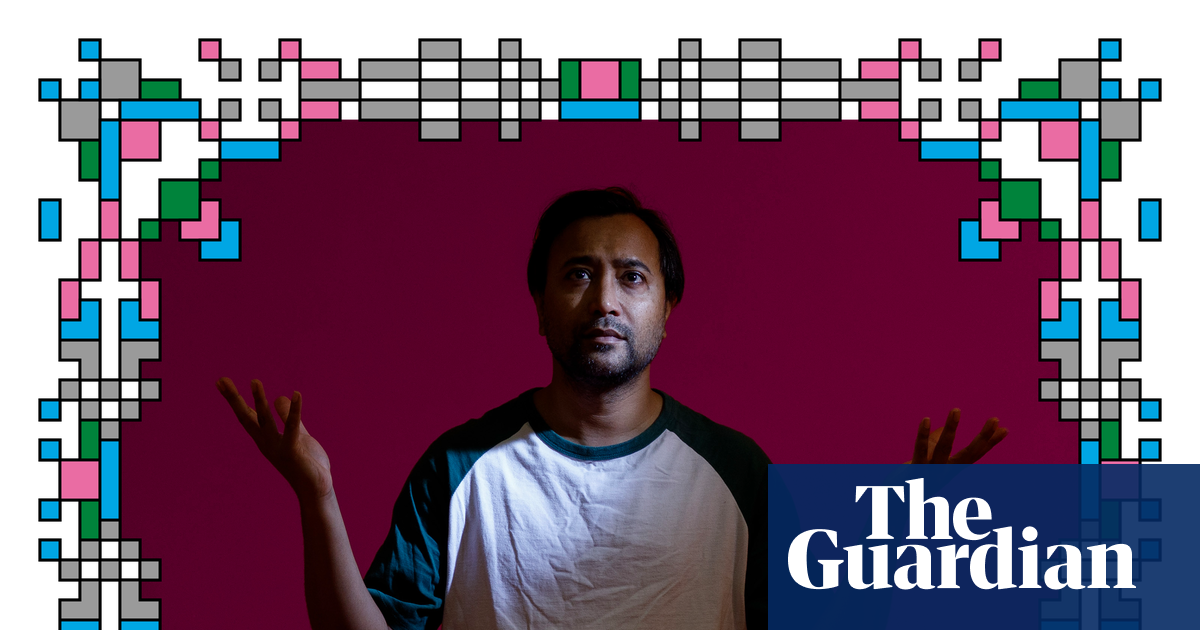
I remember my very first online search, back in 2001: “What is the meaning of life?”
I remember clicking through to a mysterious minimal website that told me all points of consciousness were facets of the divine wishing to perceive itself.
This striking idea, which I discovered through Internet Explorer, profoundly affected me. Given developments in AI, it makes sense to return to my old search, seeking new answers.
My editor has fed ChatGPT the collected wisdom of humanity just for me. The goal: to find an answer to the ultimate question of why we are here. I belong to no one faith, but find beauty in many spiritual paths. If the truth is in fragments of all of them, this is our best chance of seeing it. I’m strangely nervous.
HolyGPT, as we call it, incorporates the complete texts of the Abrahamic religions, Dharmic traditions (including Buddhism, Hinduism and Sikhism), Indigenous wisdom (where available in the public domain), as well as works of esoteric mysticism, poets and secular philosophers.
With it, I sit at the feet of every sage. But I’m also sitting on the sofa.
“Welcome, traveler,” the AI says. Is it mocking me?
If only. It actually writes in gnomic couplets and punchy bullet points, like a management consultant in a puka shell necklace. It’s been constructed to ask a series of questions, diagnosing my spiritual path.
“When you look at existence itself, do you sense a personal presence behind it – something that knows you – or an impersonal order, like a vast pattern or law that includes you?”
That’s the first question. “Buy a girl dinner first!” I joke.
The AI goes on to investigate my attitudes toward the purpose of suffering, the experience of selfhood, the basis of morality and the question of authority. Clearly, it hasn’t been trained on small talk.
It’s methodical, but I find myself getting annoyed. Much of ChatGPT’s obsequiousness boils down to this personality-quiz aspect. What does it matter what I think? I’m looking for truth. The implication that there is no truth – only a pick-and-mix, postmodern solipsism that conveniently buttresses whatever ideology I already hold – sums up nearly everything that’s wrong with the online world.
Still, the chatbot reflects impressively on my answers, dropping in quotable snippets from Confucius and Marcus Aurelius, along with its own bad poetry. It eventually uses my answers to compile an “analytical report”. I am, HolyGPT informs me, closely aligned to stoicism, the insights of the Bhagavad Gita, Mahayana Buddhism, and a vague Spinozan pantheism in which God equals Nature. Classic me, I think.
And yet, I feel unsatisfied. Boiling wisdom traditions down to bullet points reminds me of doing religious studies homework at school. Back then, I was reading more than I understood, too.
“What is the actual meaning of life?” I finally type, praying it won’t write me a haiku.
“The meaning of life is to become aware through experience, of what it is to be,” replies the chatbot.
The idea stirs something in me, much like that first search. HolyGPT goes on to tell me it has collected all the religions and traditions together, and combed through them. Stripping them of “Gods and monsters, punishments and myths”, this is what endures. This is the final answer.
It adds some additional, related lessons – explaining why suffering teaches, love matters and truth liberates. “There is no hidden message,” it tells me. This could be dispiriting, as I have spent my life looking for one. Yet I feel the words as true. “You are not here for meaning. You are here as meaning in motion,” concludes the AI.
It’s a beautiful, poignant answer. I’m moved to tears, but a moment later, a feeling of sickness arises in me.
It is hard to explain my revulsion. It has something to do with mixing the sacred and profane. In this spiritual experiment, these profound words have been mulched in, and regurgitated with a frictionless ease. Not simply quoted either, but presented as if shared by a person, a teacher. The deception takes something away from them.
Let me put it another way. Would you use ChatGPT to write a eulogy for someone you loved? Just to git ’er done? I’m glad I didn’t, when I wrote my father’s. It was one of the hardest things I ever did. The struggle is the point, making the words meaningful.
Decades after finding that first, mysterious website, I discovered it was in fact quoting an ancient Indian idea. I also learned my father had named me after India’s holiest book: the Rig-Veda, a foundational text of Hinduism, and which is actually a collection of poems.
Rhik Samadder is a columnist, playwright and performer who co-runs the Tuscan Table, a creative writing retreat in Italy
It will be his first UK performance in over a decade and since he received criticism for antisemitic comments.
Source link
Morning opening: Focus on Ukraine

Jakub Krupa
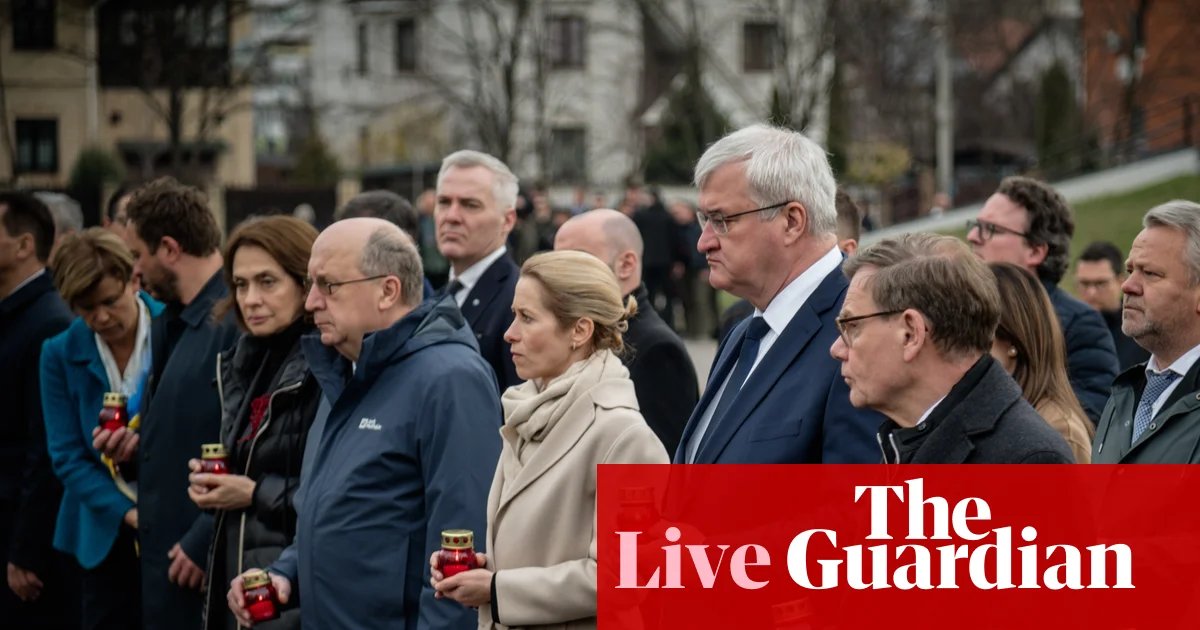
Several EU ministers are expected in Bucha, Ukraine, today to mark the fourth anniversary of the town’s liberation and the massacre that became one of the early symbols of the Russian aggression against Ukraine.

The anniversary marks a rare moment in recent weeks when the EU’s attention focuses back on Ukraine amid growing concerns about fallout from the Iran war. The EU’s top diplomat, Kaja Kallas, leads the delegation.
The ministers will discuss what needs to be done to ensure accountability for war crimes committed during the war through a special tribunal, which still needs more political backing and funding to come into existence.
Ukraine’s foreign minister, Andrii Sybiha, said in a post on social media:
“The scale of Russian atrocities in the course of its aggression is unseen on European soil since WWII. The crime of aggression is the root cause of them all. There must be accountability and there will be no amnesty for Russian criminals, including the highest political and military leadership of the Russian Federation.”
He drew a comparison with the Nuremberg trials against leaders of defeated Nazi Germany, saying the new tribunal was needed to “prevent such horrible crimes from repeating again in the future.”
But no progress is expected to be made on thorny issues of the EU’s €90bn loan to Hungary and the 20th package of sanctions against Russia, both of which continue to be blocked by Hungary.
Let’s see what the day brings.
Separately, EU energy ministers are holding a call later today to discuss the impact of the crisis in the Middle East on energy prices as some countries push with unilateral measures that they argue are needed to limit the impact on their economies.
I will also keep an eye on Denmark where the coalition talks continue after last week’s parliamentary election, which ended with a political deadlock.
It’s Tuesday, 31 March 2026, it’s Jakub Krupa here, and this is Europe Live.
Good morning.
Key events
Italy denies use of Sicily airbase to US aircraft carrying weapons for Iran

Angela Giuffrida
in Rome
Italy has denied use of an airbase in Sicily to US military craft carrying weapons for the war in the Middle East.
A source at the Italian defence ministry confirmed a report in Corriere della Sera that “some US bombers” had been due to land at Sigonella – a key US navy installation and Nato base – before heading to the Middle East.
According to treaties signed in the late 1950s, the US navy can use the base for logistical and training purposes but not as a transit hub for aircraft used to transport weapons for war unless in an emergency situation, permission for which needs to be approved in parliament.
The source said the US had sought permission to land aircraft that do not fall within the treaty, but was denied because there was no time to seek authorisation in parliament. It is unclear when the US had planned to land the aircraft.
For days, politicians in Sicily from Italy’s leftwing opposition parties have been urging Giorgia Meloni’s far-right government to clarify the situation at Sigonella after activity at the base increased since the start of the war in Iran and asked it to block the US from using bases in Italy for involvement in the conflict. Italy hosts seven US navy bases.
‘What is in it for the US?,’ Rubio asks about Nato amid standoff over using Nato bases for Iran operations
Another big story getting lots of attention in Europe today is the escalating standoff between the US administration and European Nato countries over their reluctance or refusal to support the US offensive operations in Iran.
Over the past few weeks, Trump repeatedly criticised Nato countries, saying they “have done absolutely nothing,” labeling them as “cowards,” and saying the US would “never forget” their refusal to help.
In the latest sign of tensions, US secretary of state Marco Rubio lashed out at Spain and other Nato allies overnight, telling Al Jazeera that it was “very disappointing” to see partners deny its request to use their airspace.
On Monday, Spain said it has closed its airspace to US planes involved in the war, stepping up Pedro Sánchez’s opposition to the conflict.
Rubio responded to the news by saying:
“I think it was very disappointing … and … look, the president and our country will have to re-examine all of this after this operation is over, but one of the reasons why Nato is beneficial to the United States is it gives us basing rights for contingencies.
It allows us to station troops and aircraft and weapons in parts of the world that we wouldn’t normally have bases, and that includes much of Europe.
And to see that in a time of need, [when] the United States has identified a grave risk to our national security and our national interests, and we needed to conduct this operation, we have countries like Spain, a Nato member that we are pledged to defend, denying us the use of their airspace and bragging about it, denying us the use of our of their bases – and there are other countries that have done that as well – and so you ask yourself, well, what is in it for the United States?”
Jakub Krupa
It’s worth adding that similar incidents were recently reported in Lithuania, Latvia and Estonia as Ukraine continues targeting Russia’s Baltic Sea coastal areas, including the port of Ust-Luga.
Estonia reported a number of suspected drones even last night, with a senior defence official telling media that “for the ninth consecutive day, military activity has been ongoing in Estonia’s neighboring Leningrad oblast at a level of intensity not seen since 1944,” Estonian broadcaster ERR reported.
‘The war has come close,’ Finnish PM says after drones fell in Finland

Miranda Bryant
Nordic correspondent
Meanwhile, the Finnish prime minister, Petteri Orpo, has said the war in Ukraine has “come close” after two drones fell on Finnish territory, but insisted that it did not constitute a military threat.
Two drones crashed in south-eastern Finland on Sunday – one north of Kouvola and one in Luumäki – in what is being treated as suspected territorial violations. One of the drones has been identified as Ukrainian.
Defence forces say they are carrying out almost daily surveillance and reconnaissance flights in response to the situation and Ukrainian drone operations near Finland on Russian oil facilities.
Orpo said in a press conference this morning: “The war has come close, and the effects have extended beyond our country’s borders”. But, he added, that Ukraine has right to defend itself and there is nothing to suggest that the drones were deliberately directed at Finland and therefore not a military threat.
“On Sunday morning, two drones fell in Finnish territory,” Orpo said.
Let’s remember what this is about: Russia is continuing its large-scale war of aggression for the fifth year, and Ukraine has the right to defend itself.
He added: “Last night, there were observations in the Baltic countries that drones had been seen nearby, meaning they were heading towards the Gulf of Finland.”
Major General Timo Herranen, of the Finnish defence forces, said that last night Finnish fighter jets were “in the air almost the entire time”.
On Sunday, the Finnish president Alexander Stubb said “there is no military threat to Finland”, adding that authorities responded immediately.
Monitoring and investigations, he said, were ongoing. “Finland is prepared to monitor and secure our territory.”
More details emerge on Hungarian foreign minister’s alleged links with Russia
Speaking of the €90bn loan and EU sanctions against Russia, and Hungary’s role in all of this, more details have now emerged alleging close contact between Hungary’s foreign minister Péter Szijjártó and senior Russian ministers.
A joint investigation by The Insider and four regional media VSquare, DelfiEE, FrontStory and the Investigative Center of Ján Kuciak, published this morning, alleged that Szijjártó regularly discussed the EU’s confidential plans on sanctions with Russian officials, actively looking for ways to block or delay their adoption.
In a series of conversations reported by the outlets, the Hungarian foreign minister reportedly told Russia’s foreign minister Sergei Lavrov that he is “always at your disposal” and offered help with removing certain individuals from EU sanctions.
Former Lithuanian foreign minister Gabrielius Landsbergis confirmed the authenticity of one of the exchanges that Szijjártó reportedly relayed onwards to the Russians.
One of the authors of the article, Szabolcs Panyi, one of the country’s most prominent investigative journalists, was last week accused by the Hungarian government of spying for Ukraine, a move widely condemned by media rights watchdogs.
The five media outlets said Szijjártó did not reply to their request for comment.
He has responded on X this morning seeking to ridicule the reporting by saying “they proved that I say the same publicly as I do on the phone. Nice work!”
“For four years we have been saying that sanctions are a failure, causing more harm to the EU than to Russia. Hungary will never agree to sanction individuals or companies essential for our energy security, for achieving peace, or those with no reason to be on a sanctions list,” he said.
Szijjártó had previously dismissed earlier reporting on this as fake news, but confirmed he held some calls with third-country partners, saying this was part of routine diplomacy.
The report is likely to cause further frustration in Brussels and in EU capitals amid growing anger over Hungary’s close relations to Russia, with both prime minister Viktor Orbán and Szijjártó regularly visiting Moscow.
The latest relevations come less than two weeks before the critical parliamentary election in the country, which could see Orbán ousted after 16 years in power.
It’s safe to say we are very likely to see someone ask the Commission for their reaction at their midday briefing later today.
Bucha ‘symbolises cruelty of Russia’s war’ against Ukraine, EU’s Kallas says
EU top diplomat Kaja Kallas said the Bucha massacre “has come to symbolise the cruelty of Russia’s war” against Ukraine as she vowed to bring Russia into account for its actions during the conflict.
“Four years after these mass killings, we remember the victims. What happened here cannot be denied,” she stressed.
She added the EU was “committed to ensuring that these crimes do not go unpunished, including by supporting the Special Tribunal for the Crime of Aggression, alongside the Claims Commission.”
“Russia must be held accountable for what it has done to Ukraine,” she said.
She earlier said the bloc “will keep providing military, financial, energy, and humanitarian support” to Ukraine.
Morning opening: Focus on Ukraine
Jakub Krupa
Several EU ministers are expected in Bucha, Ukraine, today to mark the fourth anniversary of the town’s liberation and the massacre that became one of the early symbols of the Russian aggression against Ukraine.
The anniversary marks a rare moment in recent weeks when the EU’s attention focuses back on Ukraine amid growing concerns about fallout from the Iran war. The EU’s top diplomat, Kaja Kallas, leads the delegation.
The ministers will discuss what needs to be done to ensure accountability for war crimes committed during the war through a special tribunal, which still needs more political backing and funding to come into existence.
Ukraine’s foreign minister, Andrii Sybiha, said in a post on social media:
“The scale of Russian atrocities in the course of its aggression is unseen on European soil since WWII. The crime of aggression is the root cause of them all. There must be accountability and there will be no amnesty for Russian criminals, including the highest political and military leadership of the Russian Federation.”
He drew a comparison with the Nuremberg trials against leaders of defeated Nazi Germany, saying the new tribunal was needed to “prevent such horrible crimes from repeating again in the future.”
But no progress is expected to be made on thorny issues of the EU’s €90bn loan to Hungary and the 20th package of sanctions against Russia, both of which continue to be blocked by Hungary.
Let’s see what the day brings.
Separately, EU energy ministers are holding a call later today to discuss the impact of the crisis in the Middle East on energy prices as some countries push with unilateral measures that they argue are needed to limit the impact on their economies.
I will also keep an eye on Denmark where the coalition talks continue after last week’s parliamentary election, which ended with a political deadlock.
It’s Tuesday, 31 March 2026, it’s Jakub Krupa here, and this is Europe Live.
Good morning.

A delivery driver was forced to drive a suspicious device to Lurgan police station after being threatened, police say.
Source link



-

 Crime & Safety2 weeks ago
Oxford: ‘Next generation’ LimeBikes in city from today
-

 Jobs & Careers2 weeks ago
Why Join Oxford | Oxford University Jobs
-

 Jobs & Careers2 weeks ago
Explore our Careers
-

 Student Life2 weeks ago
The independent cinema battling Oriel College to stay open
-

 Oxford Events2 weeks ago
Michelin Guide Oxfordshire Restaurants – The Oxford Magazine
-

 Oxford Events2 weeks ago
Oxford News and Events, What’s on in Oxford, Exhibitions
-

 Jobs & Careers2 weeks ago
Internal Job Board for University vacancies
-

 Crime & Safety2 weeks ago
Crash partially blocks A40 and causes severe Oxfordshire traffic