
Oxford News
How gardening helps not only physical but mental wellbeing

It’s a connection the charity has made since its founding almost a century ago to support the Queen’s Nursing Institute.
‘The National Garden Scheme has always been aware that health and gardening go together, which seemed to come as a surprise to everybody else in 2020,’ says Vanessa.
Lockdowns that year brought into sharp focus the importance of access to outdoor space, and the use of ‘green prescribing’ where patients are sent to gardens and other outdoor groups has become more widespread since.

The health benefit of gardening underpins much of the NGS’s work. It commissioned a King’s Fund report in 2016 on the links between gardens, gardening and health, runs an annual ‘Gardens and Health Week’, and publishes a Little Yellow Book of Gardens and Health.
Today, the charity supports not only The Queen’s Institute of Community Nursing, as it is now called, but a range of mainly health charities, including Macmillan Cancer Support, Parkinson’s UK and Marie Curie. Last year, gardens across England and Wales – Scotland has its own scheme – raised £3.5 million.
Little has changed since the original 1927 concept. A garden opens and visitors pay to look around, often with the chance to buy refreshments – the NGS is known for its cakes.

Originally, most of the gardens were inaccessible to the public and many are still private spaces, although some bigger gardens that open regularly also give over dates to the NGS.
It used to be that only larger gardens with 45 minutes of interest would be considered, but Vanessa has increased the number of smaller gardens that visitors can see.
She says a garden just needs to be well kept and have something different, a beautiful setting or a good story, and points out that access to these otherwise hidden gardens is what makes the charity special.

‘If it’s small, it’s got to be unusual or plant-filled,’ she says. ‘A lot of people want to go to a garden to look for ideas and will linger if they find them.’
Some gardens open ‘by arrangement’ rather than having a set date and these are popular with art, gardening and photography clubs.
‘The small ‘by arrangement’ gardens are also a nice opportunity for friends to go and have tea,’ says Vanessa, who has led the team of Gloucestershire volunteers for seven years – only around a dozen head office staff are paid.

Gloucestershire is usually in the top 10 counties for money raised with the best year so far in 2023 when it made almost £170,000.
In 1927, it had 28 gardens open for the NGS’s debut – Badminton, Sezincote, Stanway and Sudeley Castle still open – and today there are around 86 county gardens and more than 100 if you factor in individual gardens in village openings.
Yet, there is always room for more and the team welcomes newcomers.
‘People can be quite modest and say they are not sure their garden is good enough,’ says Vanessa ‘and then you go and it’s a lovely garden.’
For details of the National Garden Scheme visit the website www.ngs.org.uk

The National Garden Scheme’s work on gardens and health seems likely to be strengthened with the arrival of a new CEO, former GP Richard Claxton, who has taken over from George Plumptre who led the charity for 15 years.
Richard is the founder of Gardening4Health, a charity that helps healthcare professionals find therapy gardens and other schemes for their patients.
‘It started out as a map of therapy gardens that I slowly plotted and then kind of grew,’ explains Richard who worked as a GP in Tonbridge for 25 years.
‘I wanted a resource for a GP, social prescriber, practice nurse or psychiatrist to be able to access online. I also didn’t want it to be held in some private space online but freely available to potential punters, potential horticultural therapists and anyone who wanted to get involved.’

A lifelong gardener who remembers growing sweet peas with his grandfather, he turned to gardening to combat the stress of long hours as a junior doctor.
‘I very much started gardening for my own wellbeing,’ he says. ‘I liked the gentle physical exercise, the creativity, the productivity, the craft, the learning and the seasonality.’
He hopes to build on the existing drive to extend the NGS’s reach not just in terms of the type of green spaces that open – in Gloucestershire there are allotments, a hospice and prison garden – but also the diversity of visitors.
The NGS, as Richard points out, supports charities that often plug gaps in provision by the cash-strapped NHS.

‘I think of all the charities out there the National Garden Scheme is one of the pivotal charities for that shortfall.’
And he’s delighted to find a role that combines his two interests of health and gardening: ‘I don’t think there could be job out there that synergises the two strands better.’
Despite being on the outskirts of a busy town, the garden at Cheltenham’s Sue Ryder Leckhampton Court hospice is a tranquil space with long countryside views.
It’s this peace and link with nature that’s most loved by patients, their families and staff at the charity, which provides end-of -life care and support for those with life-limiting conditions.
‘Our beautiful gardens offer a peaceful sanctuary,’ says Louise Lucio, Regional Director of Healthcare Operations. ‘The outdoor space provides a calming escape from the challenges people are facing and a place for quiet reflection.’

The garden has opened for several years for the National Garden Scheme and was recently improved thanks to an NGS grant.
It enabled the hospice to bring to life plans by award-winning Gloucestershire designer Peter Dowle.
Peter had gifted the designs as a way of helping the hospice that cared for his grandmother. ‘It was an opportunity for a bit of giving back,’ he explains.
His first scheme, for the central courtyard, was funded by donations with families buying trees and plants as a way of commemorating their loved ones.

The most recent phase, funded by the grant, has seen more areas transformed, including a long bank alongside the main lawn, once part of a leisure garden when Leckhampton Court was a private house.
A north-facing part overlooked by several rooms was, Peter recalls, a ‘dingy little space when we first saw it’.
His team from Leaf Creative have added ferns, hakonechloa and Japanese maples to create a calming, green outlook.
Further along, beds in dappled shade have been planted with shrubs and perennials designed to give year-round interest. Working with existing plants, Peter has incorporated mahonia, daphne, acers and more hydrangeas.

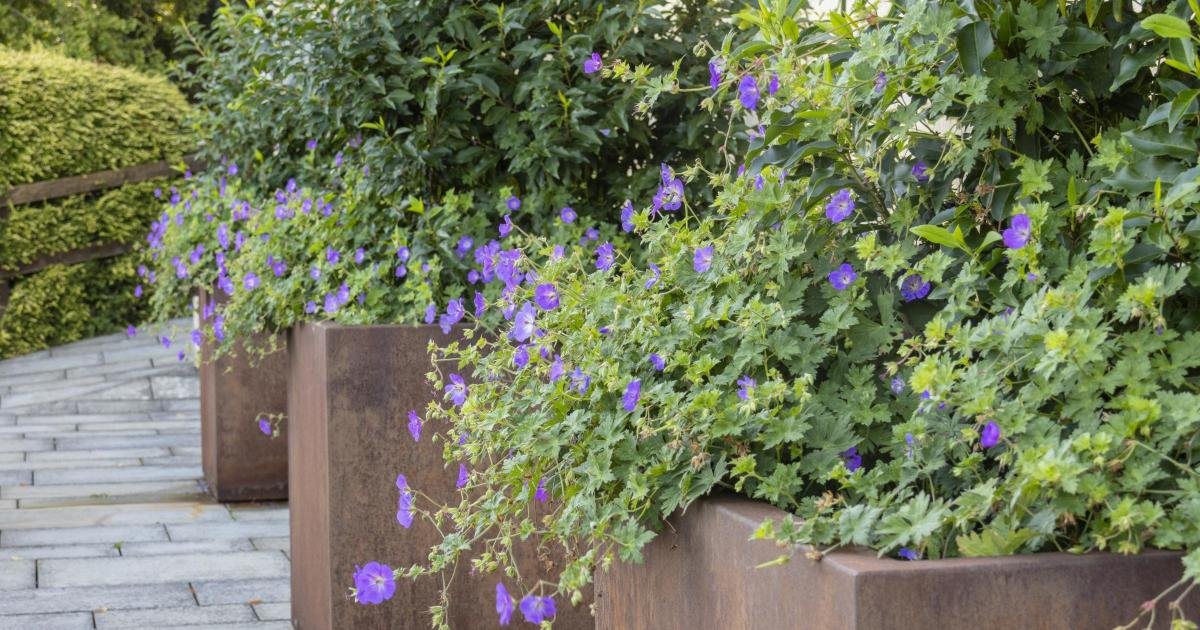
The terrace, where the view can be best appreciated, is now softened by large Corton steel containers planted up with specimen acers, carex and Geranium Rozanne (‘Gerwat’).
For Peter, a connection with nature has always been important and it’s something he hopes those who use the garden will experience.
‘It’s very much a space for families and for individuals,’ he says, ‘and if any of the planting can bring some calm and peace then that’s a good thing.’
Instagram: @thechattygardener
Facebook: The Chatty Gardener
Bluesky: @thechattygardener.bsky.social
© Mandy Bradshaw
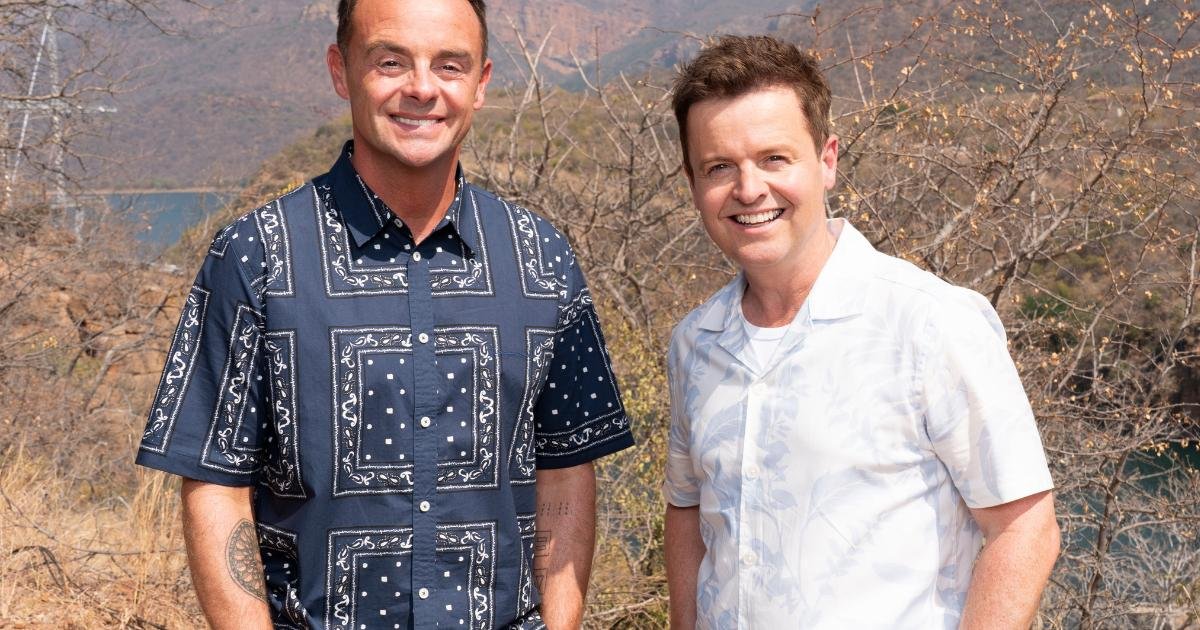
From soap star Beverley Callard to former football manager Harry Redknapp, the South African camp will see a group of famous faces take on even more challenges.
With the trials in South Africa being described as even tougher than those in Australia, you might be wondering how you can watch all the action in the new series.
I’m A Celebrity South Africa lineup 2026
The series, which is the second to be filmed in South Africa, will feature the following stars:
- Former football manager Harry Redknapp
- Reality star Gemma Collins
- Soap actress Beverley Callard
- Olympian Sir Mo Farah
- Former Gogglebox star Scarlett Moffatt
- Champion boxer David Haye
- Actor Adam Thomas
- Former Pussycat Doll Ashley Roberts
- Comedian Seann Walsh
- Pop star Sinitta
- Red Dwarf star Craig Charles
- Ex-footballer Jimmy Bullard
How did the lineup do in previous I’m A Celeb series’?
Scarlett Moffatt was crowned Queen of the Jungle back in 2016, while Harry Redknapp won the show in 2018.
Winners of I’m A Celebrity… Get Me Out of Here
David Haye made it to the final in 2012, but Jimmy Bullard had a less successful run in the camp in 2014 and was the first campmate to be voted off.
Is I’m A Celeb South Africa pre-recorded or live?
I’m A Celebrity South Africa is pre-recorded, so the show has already been filmed, unlike the Australian series, which sees Ant and Dec present it live with some pre-recorded elements.
Recommended reading:
However, ITV will include a live episode for the final of the show so viewers can vote for the winner of the series, according to the Radio Times.
How to watch I’m A Celeb’s new South Africa series
I’m A Celebrity South Africa’s first episode will air on Easter Monday (April 6).
ITV1 will broadcast the pre-recorded episode from 9pm until 10.30pm or you can watch it on ITVX.
What has been your favourite I’m A Celebrity series so far? Let us know in the comments below.
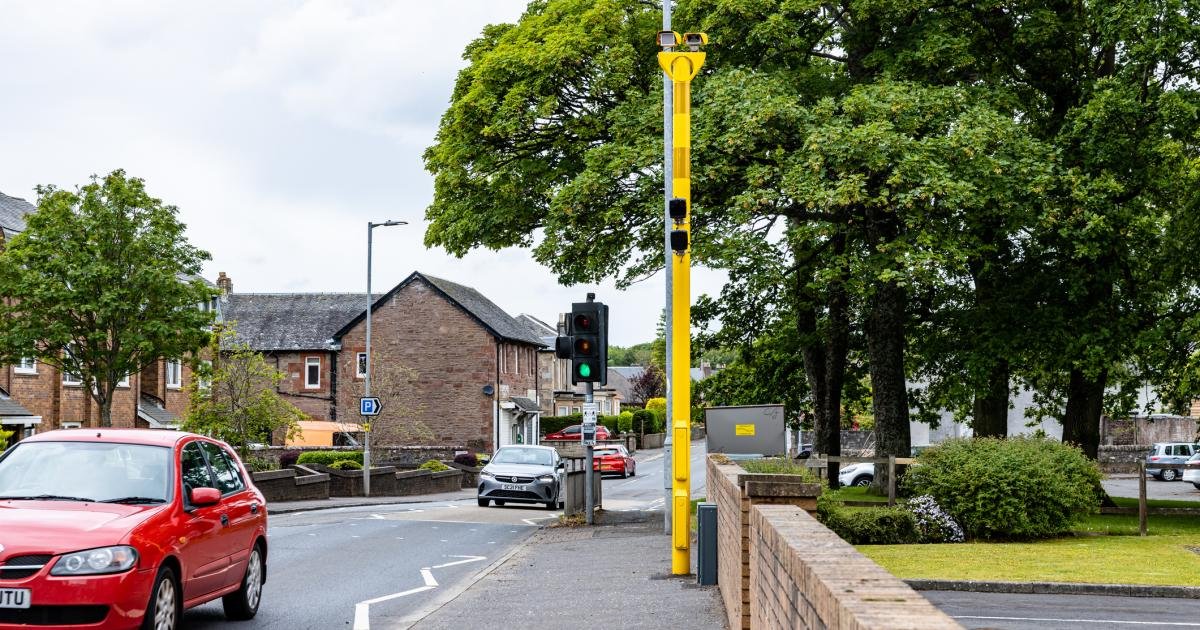
It is mainly due to high-resolution AI cameras catching ‘in-vehicle’ offences that may have previously gone unnoticed.
A widespread lack of awareness surrounds the advanced enforcement technology being rolled out on UK roads.
New research from temporary car insurance provider Tempcover reveals nearly three-quarters (72%) of motorists are unaware that AI cameras – designed to identify offences such as seatbelt violations and mobile phone use through the windscreen – are now active across the UK.
While the implementation of AI technology varies by region and specific trial periods, the data reveals an Easter peak for offences; spikes which are likely driven by the sheer number of vehicles on the road, increased holiday enforcement and the fatigue associated with longer holiday drives.
The data also revealed the ‘most caught’ vehicles** among these forces combined, with drivers of Audi, Ford, and Volkswagen models revealed as the most likely to be flagged for a penalty during the Easter holiday rush.
While specific recording requirements vary by force, these three make are consistently ranked in the ‘Top 10’ for recorded offences across all the pioneer regions analysed.
While the risk of offences over Easter increased last year, 2026 is set to see more oversight as the UK moves into an era of AI enforcement under the Government’s 2026 Road Safety Strategy.
Backed by a £115m National AI Centre initiative, ‘Precision Enforcement’ is being used to target leading causes of collisions, including distracted driving, failure to wear seatbelts, speeding, and impaired driving.
While the technology has evolved, Tempcover’s research of 2,000 UK motorists reveals a disconnect between road safety laws and actual driver behaviour.
Over one in eight (13%) admit to either personally driving or witnessing the driver use a phone or tablet behind the wheel to text, change music, or watch videos.
Furthermore, a quarter (25%) of motorists mistakenly believe that holding a phone in their lap or below dashboard level will escape detection.
In reality, AI sensors are positioned to capture high-resolution images through the windscreen, spotting devices even when tucked out of sight of traditional patrols.
The data also shows that comfort often comes at the cost of compliance. On long car journeys, nearly one in ten (9%) admit to either loosening their seatbelt while driving or witnessing the driver do so, while 7% report their seatbelt being removed entirely by themselves or the driver.
Meanwhile, a quarter (26%) say they have abandoned a safe seated position as a passenger or have seen someone else do so – including placing feet on the dashboard, a behaviour the new AI cameras are calibrated to detect.
The penalties for these ‘in-vehicle’ offences are severe
While a seatbelt violation carries an immediate £100 fine (rising to £500 in court), using a handheld mobile phone – even while stationary in traffic – results in a £200 fine and six penalty points.
Claire Wills-Mckissick, temporary car insurance expert at Tempcover, said: “The emergence of AI technology marks a shift in road safety enforcement, making it more important than ever for motorists to be mindful of their habits behind the wheel, especially during mass driving moments like Easter.
“The Easter getaway can be a test of driver endurance but our research also shows that fatigue often sets in in just over an hour.
“An effective way to stay safe and help avoid preventable fines on longer journeys is to recognise signs of exhaustion and share the load.
“Flexible options like temporary car insurance enable motorists to legally swap drivers at stops like service stations for just an hour or a day.”
Some of these elusive pieces can fetch prices far above their face value on resale platforms like eBay, where demand remains high.
Among the most sought-after are the iconic Kew Gardens 50p and a range of limited-edition alphabet 10p coins.
Mark Loveridge, director of UK currency at the Royal Mint, said: “The coinage of Queen Elizabeth II spanned 70 years and special designs issued into circulation celebrated some of the biggest events in history.
“Although the 2022 mintage figures mark the last time that Queen Elizabeth II’s portrait will appear on new coins, over 27 billion of her coins will remain in circulation.
“Coin collecting remains a popular hobby in the UK and the coins of Queen Elizabeth II’s reign are particularly coveted. By sharing the list of rare designs we hope people will look closely at their coins – if they’re lucky they might find a piece of history.”
What makes a coin valuable?
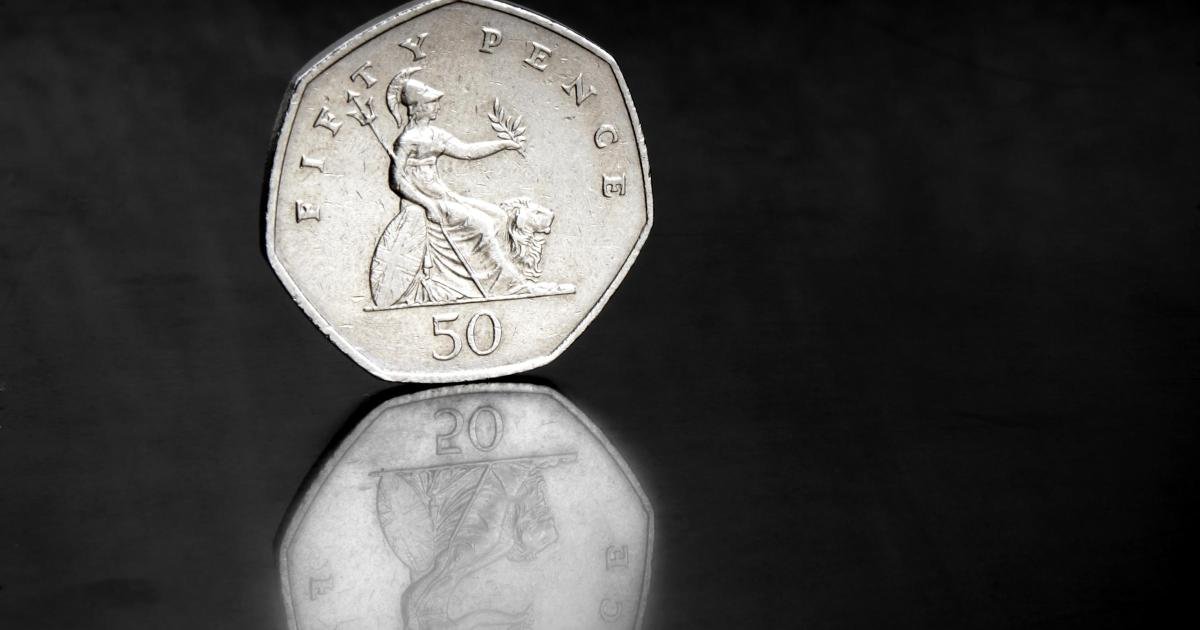
The 50 pence piece has become the most valued and collected coin in the UK, with many collectable designs appearing on its heptagonal canvas.
Recommended Reading:
Its 27.5mm diameter makes it the largest of any British coin, and allows space for decorative pictures. It has often been used to celebrate big events over the past 50 years of British history.
The rarest coins tend to be of the greatest value, with the mintage (number of coins with each design made) being the fundamental attraction for collectors.

Along with the design, other aspects of the coin which increase value are the condition of the coin and whether it has an error in its design.
The way in which it is sold can also determine the coin’s value – while some coin collectors will bid vast amounts of money on eBay or at auction, others opt for more robust valuations by selling via a coin dealer.
Royal Mint rarest coins from Queen Elizabeth II’s reign
Here is a list of rare coins compiled by the Royal Mint, with information about the year of release, denomination, design features and whether or not the coin is still in circulation:
- 2019, 10p, a set of “A to Z” coins celebrating Britain. Letters Y, W and Z each had a mintage of 63,000, yes.
- 2019, 10p, also from the A to Z collection, the letter R had a mintage of 64,000, yes.
- 2019, 10p, all other letters in the A to Z collection had a mintage of 84,000, yes.
- 1992-1993, 50p, the coin celebrated the UK’s presidency of the Council of Ministers and the completion of the European single market. The design included a representation of a table with 12 stars, linked by a network of lines and the mintage was 109,000. The Mint said this was the lowest number of its 50ps issued into circulation, no.
- 2009, 50p, the design features the Kew Gardens pagoda with a decorative leafy climber twining in and around the tower, 210,000, yes.
- 2018 dated, 10p, the A to Z 10p collection celebrating Britain, each letter in this year had a mintage of 220,000, yes.
- 2015, £2, this coin paid tribute to the Royal Navy and its role during the First World War, and had a mintage of 650,000, yes.
- 2015, £2, it featured Britannia for the first time on a circulating £2 coin, with a mintage of 650,000, yes.
- 1985, 50p, the coin featured a figure of Britannia, with a shield, with a mintage of 682,103, no.
- 2002, £2, four £2 coins celebrating each home nation for the Commonwealth Games. Mintage figures for Scotland were 771,750, for Wales, 588,500, for Ireland, 485,500, and for England 650,500, yes.
- 2012, £2, the coin celebrated the closing of the 2012 Olympics and had a mintage of 845,000, yes
- 2008, £2, the coin marked the centenary of the Olympic Games, with mintage of 910,000, yes.
- 2008, £2, the coin marked the end of the Beijing 2008 Olympics, with a mintage of 918,000, yes.
- 2011, £2, the coin commemorated 400 years since the King James Bible was published, with a mintage of 975,000, yes.
- 2018, 50p, a series of coins celebrated Beatrix Potter’s classic tales, with a mintage of 1,400,000 each for the Peter Rabbit and Flopsy Bunny designs, yes.
- 2011, 50p, a series of coins celebrating the London 2012 Olympics. Mintages included 1,454,000 for tennis, 1,161,500 for judo and 1,129,500 for wrestling, yes.
- 2010-2011, £1, a series of round pound coins featuring official badges of capital cities in the UK. They had mintages of 935,000 for Edinburgh, 2,635,000 for London and 1,615,000 for Cardiff, no.
- 2008, £1, the round pound coin featured the UK’s Royal Arms, with a mintage of 3,910,000, no.



-

 Crime & Safety2 weeks ago
Oxford: ‘Next generation’ LimeBikes in city from today
-

 Jobs & Careers3 weeks ago
Why Join Oxford | Oxford University Jobs
-
 Jobs & Careers3 weeks ago
Explore our Careers
-
 Oxford Events3 weeks ago
Oxford News and Events, What’s on in Oxford, Exhibitions
-
 Jobs & Careers3 weeks ago
Internal Job Board for University vacancies
-
 Student Life3 weeks ago
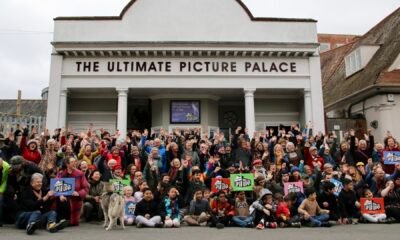
The independent cinema battling Oriel College to stay open
-
 Oxford Events3 weeks ago
Michelin Guide Oxfordshire Restaurants – The Oxford Magazine
-
 Crime & Safety3 weeks ago
Crash partially blocks A40 and causes severe Oxfordshire traffic