
UK News
How do I respond to my friends when they criticize their own weight and looks? | Well actually

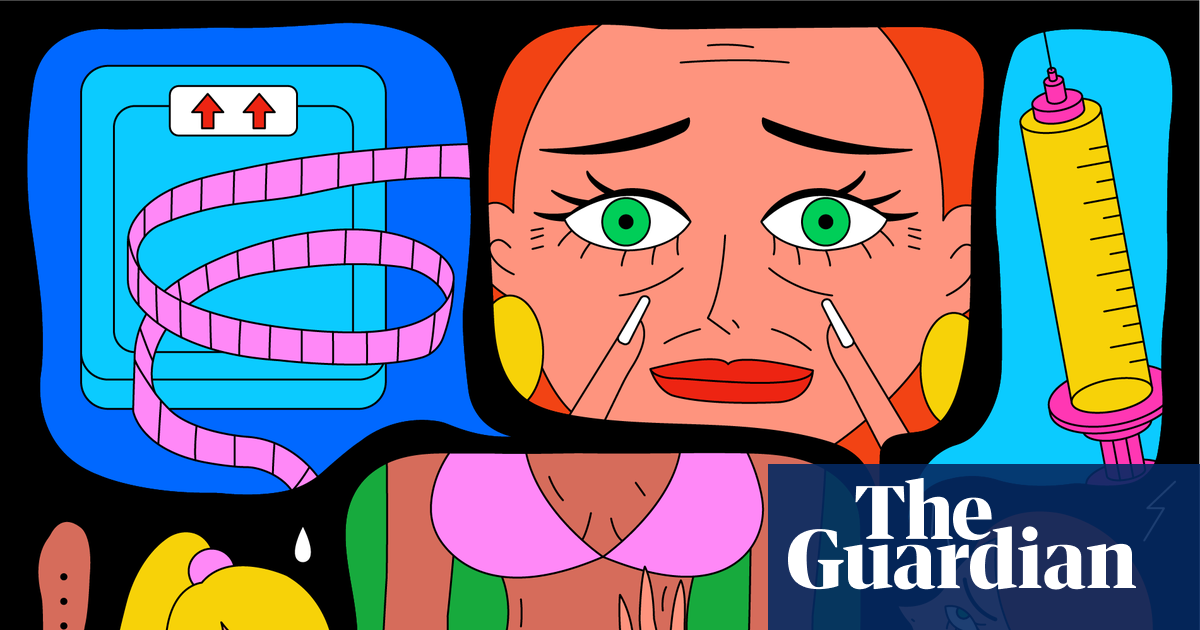
Hi Ugly,
How do I respond to my friends when they criticize their bodies, faces, skin?
One friend frequently complains about her weight. It would feel preachy to tell her that she’s supporting the beauty industrial complex and reinforcing a status quo that keeps women fixated on their physical appearance. But saying, “You’re beautiful!” feels shallow. Another friend told me she needs to get more Botox soon because she hates the lines in her forehead. I told her (honestly) that I don’t see any lines, but she blew me off, saying it was the wrong lighting and I was being too generous.
How do I navigate these conversations?
– Conversationally Confused
The only thing contemporary beauty culture hates more than an ugly woman? A judgy woman – particularly if she has an opinion about other women’s beauty behaviors. These days, any criticism of cosmetics must conclude with the disclaimer: “No judgment, though!”
I personally think we’d all benefit from harsher judgment of the oppressive standards sustaining the $427bn diet industry and $700bn beauty industry, but I also think you’re right. When a friend tells you she’s worried about her weight, “you’re an agent of the patriarchy” isn’t a helpful response.
“You’re beautiful!” isn’t great, either – it reinforces the idea that individual beauty is the solution to the insecurity that beauty culture breeds in us all. Yes, your looks do determine your worth, you might as well say. But you look good, so it’s not your problem!
It’s been a minute since I’ve had to navigate a situation like this myself. (When you’re a curmudgeonly industry critic, your community knows exactly where you stand on the subject of skin-plumping salmon sperm injections – works like a charm!) So I reached out to some colleagues to get their takes.
“These moments can feel like the perfect opening to challenge beauty standards,” says beauty reporter Zeynab Mohamed. “But in reality, they’re rarely the right time for that kind of conversation and can go very wrong.” Instead, she says, “listen without judgment, and without overcompensating with compliments.”
Exchanges like these are signs to strike up more beauty-related discourse. “The key is to make conversations more frequent, so they don’t feel like an attack,” Mohamed says. Rather than pegging these chats to their (or your) perceived aesthetic shortcomings, “be more intentional about having [general] conversations around the beauty industry, the pressure we internalize and the standards we work so hard to meet and maintain.”
Invite a friend over to watch The Substance or American Psycho and break down the beauty themes over a bottle of wine after. Drop a critical book or podcast episode in the group chat. (“Unshrinking by Kate Manne blew my mind! Anyone want to read and discuss?”) Share this Tressie McMillan Cottom video about the “everyday eugenics” of GLP-1s to your Instagram story and see who responds.
Another option: connect and commiserate. “I don’t try to dissuade them from their perspective … because I will never be more persuasive than the critical voice that lives in their head,” beauty journalist Val Monroe shares. “But I tell them how I respond to my own occasional dissatisfaction with my appearance, which, for the most part, involves turning outward.”
How have you dealt with your dissatisfaction? Share it with the class! It can be as simple as, I know what you mean. I was so fixated on my crow’s feet on a Zoom call once that I had to disable the mirror video function and meditate for 20 minutes after work. It actually helped! Cheaper than a red light mask, anyway.
Virginia Sole-Smith, writer of the body liberation newsletter Burnt Toast, recommends adopting a “hate the game, not the player” mentality. “I try to lean into responses like: ‘Wouldn’t it be cool if we didn’t have to devote so much time and money to all of this?’”
It’s also fine to not engage. “If the friend talks about these things in ways that you find triggering, I think it’s very valid to say: ‘Sorry, I love you but I’m just not the friend for Botox talk,’” Sole-Smith says. “Set that boundary.”
If your discussion partner seems down for debate, “try to move the conversation toward the politics behind it”, suggests Moshtari Hilal, author of Ugliness. “Instead of reassuring friends that they’re beautiful, I ask why it matters so much to them,” she says. “‘Would you love or respect me less if my appearance changed? Do you deserve to be treated better for having youthful skin or a symmetrical face?”
More from Jessica DeFino:
No, these aren’t easy questions. Yes, they could lead to some tough talks. Most modern beauty standards have roots in white supremacy, colonialism, capitalism, sexism and other destructive forces. But, as Hilal puts it, don’t you “expect a certain depth and integrity in [your] friendships?”
Breaking the pattern of “appearance talk” could benefit all involved. This negative commentary about bodies and faces permeates society. Think of your mother calling herself “bad” for ordering dessert or the self-critique-as-social-bonding scene in Mean Girls. But it isn’t innocuous. Research shows that participating in or simply listening to appearance talk can increase body dissatisfaction and anxiety, which may in turn lead to harmful diet and beauty behaviors.
“These ideas are contagious,” Hilal says.
Could shifting negativity away from individual bodies and faces and toward systems and structures be contagious too? Of course. Second-wave feminists called it “consciousness-raising”. Gabbing with your girlfriends about the ageism inherent in anti-ageing won’t change the world – organizing and legislating against discrimination does that – but it could help externalize the shame of beauty culture, challenge false beliefs and alleviate appearance anxiety.
Some friends might not be into analyzing Ozempic via text. Maybe your Botox-loving BFF wants a compliment on her freshly frozen forehead and nothing more. It’s up to you how to handle that.
Hilal finds it tough to be around people who fixate on, say, wrinkles or body shape. “If your fear of ‘ugliness’ doesn’t lead to care or compassion, but to reproducing those standards as its salesman, I need to take a step back from the relationship.”
Hey – no judgment here.

At the end of 2011, party season was under way but I was in no mood for festivities. Two years into fertility treatment, my body was pumped full of synthetic hormones and felt like a pin cushion, while my head was filled with both the fragile hope of having a baby, and the exhaustion of failed clinical attempts to do so.
I was in my late 20s. I met my husband when I was 22; we got married when I was 25. “I want to have kids young,” I’d told him. It was a feeling I’d harboured since my teenage years. But I’d also had the nagging sense that it might not come easily to me. As it turned out, my intuition was right. Approaching 28, I was a regular on the infertility merry-go-round.
I was recovering from my second miscarriage that year when I heard Sia’s raspy voice on the car radio belting out words that sounded emotionally weighty for an electronic dance number – her David Guetta collaboration, Titanium.
It’s not a song I would have necessarily rated or listened to again – I’m more likely to play 00s R&B and hip-hop – but it came at the perfect time in my life. I had forgotten how days felt before fertility drugs and the diarised cycles of administering them. I’d been constantly wearing a brave face and cramming in hospital appointments before and after work, going about my job through a fog of longing and hormones. It had left me in a “cry on the bedroom floor” kind of a heap. I needed something to drag the hope back into me.
I turned the radio up and listened to the lyrics: “I’m bulletproof, nothing to lose / Fire away, fire away.” It felt as if it was talking to and about me, issuing a riposte to all those shots of disappointment that had been fired our way. As Sia’s vocals ascended through the chorus with Guetta’s soaring synths – “Ricochet, you take your aim” – I cried, but I felt myself gaining power with her, too. “You shoot me down, but I won’t fall / I am titanium.” Those were the words I needed to hear.
I felt like a puppet pulled upright again. I streamed it on repeat in the days that followed. I might not have been able to face the work Christmas party but I wasn’t going to languish on the bedroom floor any more.
Over the next months, I spent a lot of time in my car, travelling to work and to fertility appointments to get my blood tested, hormones measured or insides scanned. Listening to Titanium became routine. Each time, its cinematic surge had the same empowering effect and I’d turn up the volume, wind down the windows and defiantly sing along in my terrible voice so it could wash over me.
The following May, when my husband and I headed to the clinic for another IVF embryo transfer, I let it motivate me; when we drove back from scans confirming we were six weeks, then 12 weeks pregnant, I celebrated with it. As I nervously made my way through my pregnancy, I turned to it when I needed the boost.
In January 2013, our first son was born. Today, he is the eldest of three: his brother arrived 15 months later, via IVF too (the last of our fertilised embryos) and four years later, another brother, without fertility treatment. We consider ourselves unspeakably lucky; for many, the outcome is not the same.
In our family, everyone knows Titanium is my fight song. It’s the only big commercial dance hit on my playlists, and a marker of something I overcame.
My kids call me in whenever it streams or plays on TV. When I made my husband a playlist for our 15th wedding anniversary, it’s the song that represented our 2011. And the other week, when he was out with friends, he sent me a voice note from the bar: he’d recorded it playing in the background.
There’s something all-consuming about fertility treatment: you view life only through the filter of your efforts to get pregnant. If you’re lucky, the filter lifts. It did for me, but the fight song remained. So, now, elsewhere in life, when I need a shot of strength and find myself alone in the car, down goes the window and on it goes.

Amy Gibney says she is one of eight families at her child’s school to find out that they don’t have a place for next year.
Source link
UK News
Edinburgh airport reopens after security alert but passengers warned of ‘knock on’ effect | Scotland

Edinburgh airport reopened on Saturday morning after parts of the terminal building were evacuated on Friday night because of a security alert.
An explosive ordnance disposal team was sent to the airport to investigate what Police Scotland described as a “potentially suspicious package” discovered at about 6.50pm on Friday.
An evacuation was ordered and a police cordon was set up, with roads closed.
Passengers faced disruption as result of the operation and the airport warned that schedules would continue to be affected on Saturday.
In a statement at about 3am on Saturday, the airport confirmed it had reopened and would work to restore normal services as quickly as possible.
“Following investigations by specialist teams, the airport has now reopened.
“This incident will have knock-on impacts throughout today and staff are working hard to address these and support passengers.
“Operational teams are continuing to work to restore normal services as quickly as possible.
“Please check with your airline for the latest information on your flight.”
The statement did not provide an update about the examination of the suspicious package.



-

 Oxford News3 weeks ago
Oxfordshire families invited to free day of fun in Bicester
-

 Crime & Safety4 weeks ago
New video call system to help domestic abuse victims
-

 Crime & Safety3 weeks ago
Photos as 1979 Pontiac Firebird ‘bursts in flames’ at Tesco
-

 Business & Technology3 weeks ago
New ‘high-quality’ mushroom business launched in Oxford
-

 Business & Technology4 weeks ago
NHS IT outages disrupt 274,620 patient interactions
-

 Student Life3 weeks ago
Transgender rights protest in central Oxford following updated EHRC guidance
-

 Crime & Safety4 weeks ago
Co-op incident in Oxfordshire town leads to police charge
-

 Business & Technology3 weeks ago
Oxford firm wins major backing for fin-based tidal power