
Business & Technology
Healthcare trusts keep voice central despite digital shift

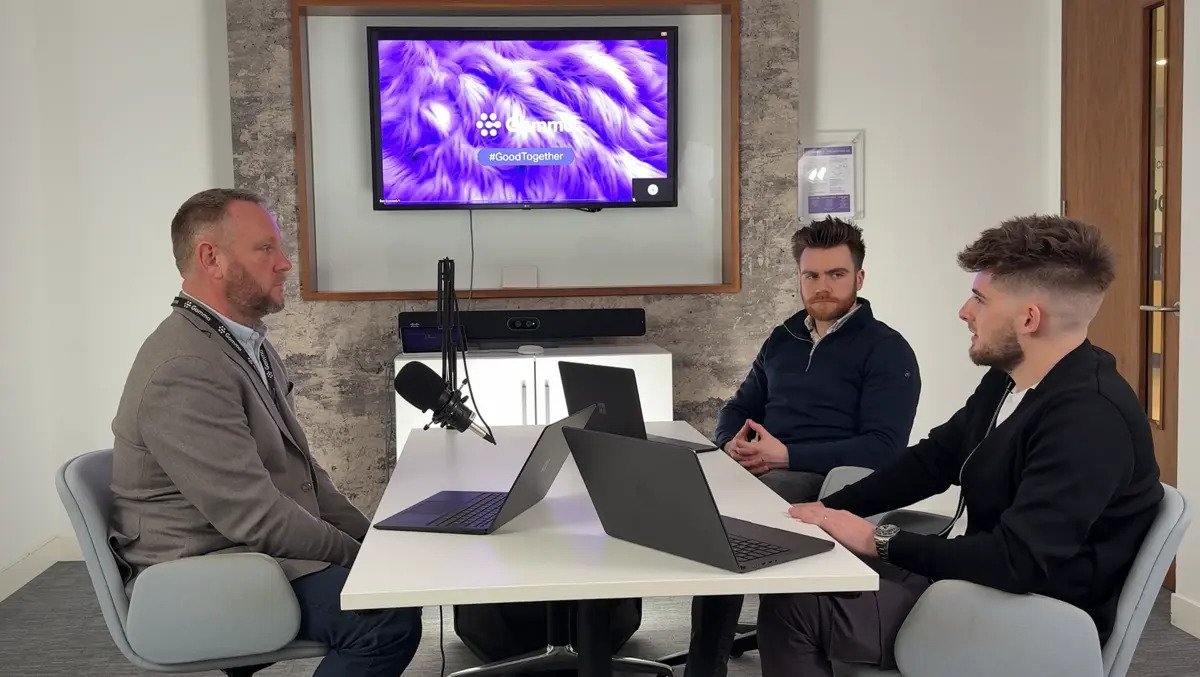
Organisations still treat voice as the highest-risk part of workplace communications, and that caution is most visible in healthcare and other public-facing services, according to Gamma Communications.
Voice remains central even as organisations add web chat, bots and collaboration software. Executives at Gamma and Sheffield Teaching Hospitals said the phone still carries the most weight when users need a direct answer, particularly in sensitive situations.
“What we found is that voice is never truly replaced. It is still the most common communication channel across industries. It is particularly useful for those we would probably class as the most vulnerable in society. From that angle, and especially from a healthcare perspective, it is a non-negotiable part of communication strategies when speaking to end users and customers. But because it is so critical, there is a perceived risk around changing the thing that props up everything else. A lot of digital interactions fail back to, ‘We’re terribly sorry, we can’t resolve this issue on web chat. Please call us.’ Well, that is the backup. So if we make any change to that, especially now that it is part of collaboration tools rather than a standalone platform, there are nerves and risks around what we do with it,” said Jack Carr, Teams Leader – Solutions Consultant, Gamma Communications.
That view is echoed in the NHS. At Sheffield Teaching Hospitals, patients and relatives often turn to the telephone first, even where other digital channels are available.
“For an ageing population, there is a real reliance on the telephone. Even now, with all the technology in the world and all the collaboration stacks, if trusts have web chat, live chat or chatbots, people will still default to the telephone. When you are contacting a healthcare organisation, you are often in a vulnerable position. You want to know what is going on with your care or the care of a loved one, or you are waiting for an appointment. You want an interaction with a person. There is nuance in a call that might not be picked up by other technologies. There is such a reliance on the telephone. Historically, it has always worked. Even if you did get through to a department and the booking system was not working, they could at least take your call and let you know. It has always had that importance,” said Tom Boyle, Head of Telecoms, Sheffield Teaching Hospitals.
Rebuild cycle
That dependence makes change difficult. Organisations delay telephony rebuilds for as long as possible because the work is disruptive and often depends on legacy knowledge that may no longer exist inside the business, Carr said.
Technology changes faster than the operating problems around it, he added. Companies still need systems that can cope with demand and remain accessible. Those requirements have stayed largely the same, even as the surrounding tools have shifted from traditional telephony platforms to cloud and unified communications products.
Healthcare providers tend to make such changes even less often, Boyle said. Internal telephony estates can remain in place for decades. Some trusts have changed internal systems separately from external call routing, leaving different parts of the environment moving at different speeds.
“It is the classic ‘if it’s not broke, don’t fix it’. For the PSTN switch-off, it is going to be a once-in-a-lifetime change. But in healthcare, organisations might only change their internal telephony provision every 25 or 30 years. They might change their PBXs or move from copper to IP internally and review it then, but now they are reaching the point where they need to change their external routing. They are probably not going to revisit the internal side because that was already a major project. It is almost as if both are playing catch-up with each other. They never seem to intertwine. And for us, it happens even less often because voice is always working, so we do not want to interfere with it. There is a perception that if you interfere with it, you might break it and make it worse. In healthcare, that impacts people and care. That makes it very different,” said Boyle.
Skills gap
Operational expertise is another issue. Many organisations are reviewing how much telephony infrastructure they should manage themselves and how much they should hand to a provider, Carr said. That question covers both direct spending and the internal cost of using specialist staff on maintenance work.
Yet both speakers said legacy estates still need people who understand voice. Large hospital campuses often run hybrid systems, Boyle said, and some still rely on classic PBX functions and specialist engineering knowledge.
“We are quite fortunate in that, while everything external-facing is IP, internally we have hybrid PBXs as well as an IP PBX. The five hybrid systems are classic telephony PBXs, and all that functionality requires a skilled telecoms engineer to manage it. I am fortunate that I have five skilled telecoms engineers. The difficulty for other healthcare organisations is that over the past 10 or 15 years, telephony has often been absorbed into the network team, collaboration platforms or the EUC team. That is different. But the core functionality of a telephone still needs a skilled telecoms engineer to understand it, especially if you still have parts of a legacy estate. I think there will come a point in the next five to 10 years when those staff and skills start to disappear, and more of this may naturally become part of core IT. But there still needs to be acceptance and understanding that voice expertise matters: how to test, how to probe voice lines and how they work. It is not just a pretend dial tone on an IP phone. There is much more to it. That is a risk looking ahead,” said Boyle.
He also rejected the idea that the move away from the PSTN requires every organisation to replace all internal systems. Large campus sites can keep existing telephony in place if external connections move to SIP-based services, he said.
Different users
The discussion also highlighted a split between the needs of desk-based staff and fixed-location devices. Hospital estates can include thousands of wall phones and emergency lines. Those use cases differ from those of staff who move between sites or work from home and expect a single number across multiple devices.
That divide can push organisations into over-engineered solutions, Boyle said. In some cases, old processes are forced onto newer systems. He argued that this weakens the service and leads users to conclude that the technology itself is at fault.
Decision-making improves when organisations start with business requirements rather than a preferred platform, Carr said. There is no single product that suits every team, and some organisations will continue to run different technology stacks across the same estate.
“That is particularly pertinent for us. If you are going after a specific platform or technology, you must consider how much nuance there is in the business and in the organisation. As we were saying about the split between worker types and departments, we do not have a use case for a large number of collaboration-platform licences when we have eight or ten thousand wall phones serving a simple purpose. Why try to fix that problem when you are trying to solve another? It seems a bit foolish. There is real benefit in splitting it up and simplifying it, rather than trying to chase some ideal end state,” said Boyle.
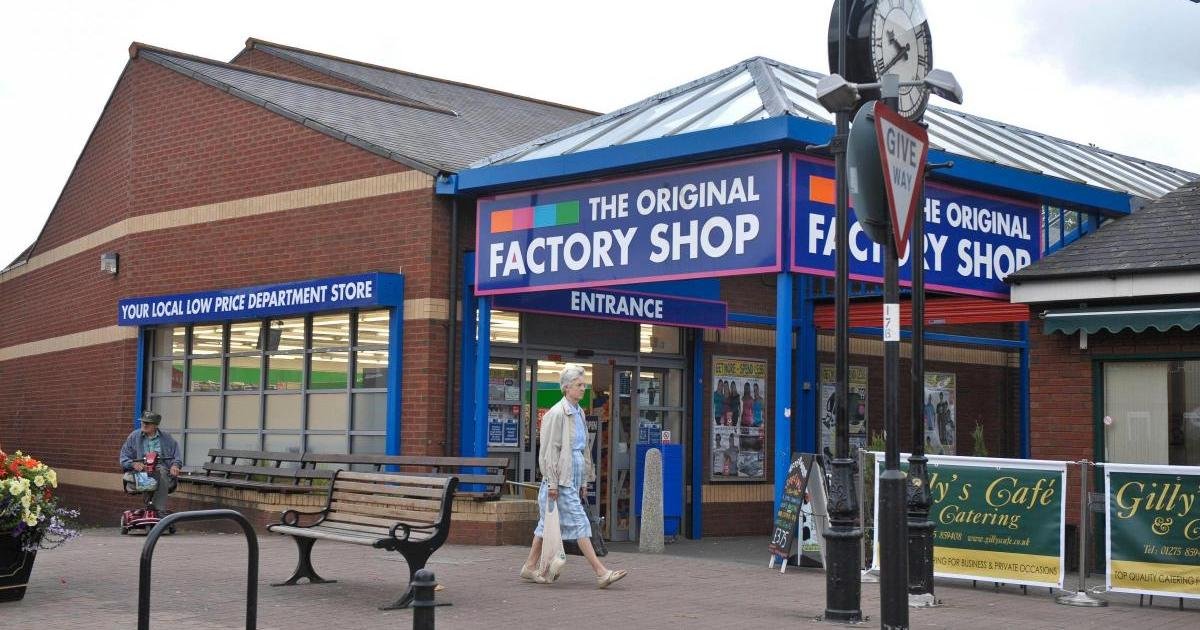
The Original Factory Shop which sells discounted homewares, furniture, electrical goods and toys, shut its store in Carterton yesterday (Saturday, March 28).
On the business’ Facebook page, last-minute discounts were being offered with clothing down to £2 an item.
READ MORE: Store closure fears as UK discount brand in administration
On Thursday, March 26, a spokesperson for the store said: “Everything in store is now up to 85 per cent off as we prepare to close our doors this weekend.
“This is your last chance to grab a bargain – once it’s gone, it’s gone.”

Following that announcement, prices were subsequently lowered and lowered.
Other branches around the UK also shut yesterday including in Cromer, Gorleston and Bungay in Norfolk and Suffolk with major sales also being implemented at other locations.
This comes after the business fell into administration in January, with further closures also expected imminently in Snettisham, according to The Sun, and around the country.
READ MORE: Geri Halliwell and Christian Horner score planning victory over neighbours
Administrators said The Original Factory Shop’s troubles have been driven by challenging trading conditions, linked to high-cost inflation, fragile consumer confidence and rising labour costs caused by government policies.
Problems were then exacerbated by issues linked to its third-party warehouse and logistics operator, weakening sales further.
It only has one store in Oxfordshire, its Carterton shop, although Claire’s – which is also owned by investment firm Modella Capital and is in administration – has one in the Oxford Westgate shopping centre.
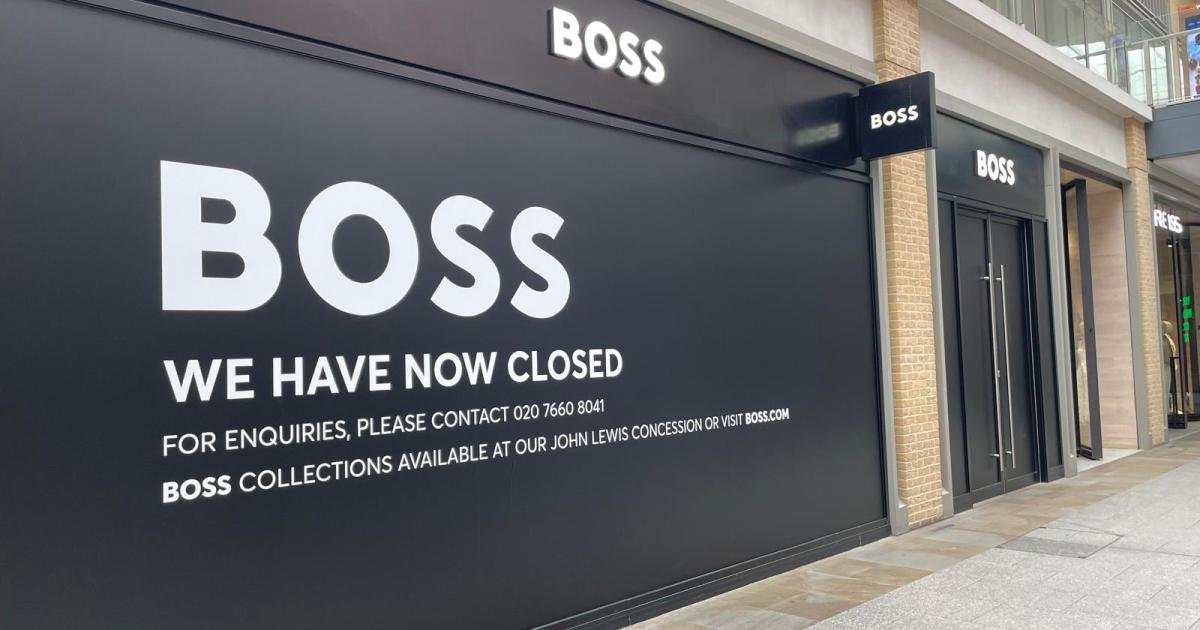
The fashion retailer this month closed down its store in the Oxford city centre shopping centre having opened in October 2017 as part of the £440m revamp.
It was one of the original retailers as part of the shopping centre’s new phase of life, along with John Lewis, Primark and Next.
A spokeswoman from Hugo Boss said: “Hugo Boss optimises its global store portfolio as part of its long-term strategy, which also affects the Boss Oxford Westgate Centre store.
“Hugo Boss will maintain a strong presence in the UK, and we will also continue to serve our customers via our online flagship store at hugoboss.com.”
READ MORE: Red Arrows will break record when it takes to skies over England
The company did not say whether any redundancies had been made from closing the store.
The spokeswoman said: “Wherever possible, we reallocate employees through transfers or other internal opportunities.”
There are indeed other branches not too far, including at Bicester Village, Swindon and Reading.
A spokeswoman for the Westgate said: “We remain committed to making Westgate Oxford a vibrant and varied retail destination for our guests, welcoming exciting new arrivals such as Sephora, The Beefy Boys, and the opening of Lego later this spring, as well as recently upsized stores for Oliver Bonas, Goldsmiths, and Superdrug.
“We look forward to sharing more details about new brands joining the centre soon.”

Henley Business Buzz hosted its first event at Henley Rugby Club, drawing more than 30 businesses and decision-makers from the local area.
The group is part of the wider Business Buzz network, offering informal, no-membership, pay-as-you-go networking that focuses on building professional relationships in a relaxed setting.
Orinta Gaucyte, host of Henley Business Buzz, said: “It was fantastic to see so many local businesses come together for our first Henley Buzz.
“There’s something really special about building a supportive community where people feel comfortable, included and able to make genuine connections.
“A huge thank you to everyone who came along and helped make the launch such a success.”
The launch was attended by Business Buzz co-founders Katrina Sargent and Simon George, who officially opened the event.
The Henley meetings are supported by sponsors Logic Financial Services and Logic Mortgages.
Lee Humphrey, of Logic Financial Services, said: “It’s brilliant to see an event like Business Buzz arrive in Henley.
“Creating opportunities for local businesses to connect in a relaxed and approachable way is incredibly valuable for the town, and we’re proud to support something that brings the business community closer together.”
Henley Business Buzz will take place on the fourth Thursday of each month, with the next event scheduled for Thursday, April 23.
All businesses, entrepreneurs, and professionals in the area are welcome to attend.



-

 Crime & Safety2 weeks ago
Oxford: ‘Next generation’ LimeBikes in city from today
-

 Jobs & Careers2 weeks ago
Explore our Careers
-

 Oxford Events2 weeks ago
Michelin Guide Oxfordshire Restaurants – The Oxford Magazine
-

 Jobs & Careers2 weeks ago
Why Join Oxford | Oxford University Jobs
-

 Student Life2 weeks ago
The independent cinema battling Oriel College to stay open
-

 Oxford Events2 weeks ago
Oxford News and Events, What’s on in Oxford, Exhibitions
-

 Jobs & Careers2 weeks ago
Internal Job Board for University vacancies
-

 Crime & Safety2 weeks ago
Crash partially blocks A40 and causes severe Oxfordshire traffic