
Business & Technology
Harmonic unveils AI fibre tools for European operators


Harmonic will showcase new fibre access products and an AI-based network operations system in London, targeting European broadband operators.
The lineup includes a network operations intelligence system, fibre expansion hardware, and software for multi-dwelling unit deployments. Harmonic will also present its Open ONT framework, designed to allow operators to choose customer premises equipment from multiple suppliers rather than tying deployments to a single vendor.
The announcement comes as telecoms groups across Europe continue expanding full-fibre networks while trying to contain installation costs and reduce engineer visits. As they push deeper into suburban and rural areas and connect more apartment buildings, operators are seeking greater automation to manage larger access networks.
Harmonic says its new network operations intelligence system is designed to shift broadband operations from reactive monitoring to proactive oversight. It is designed to work across different networks, equipment vendors, and software tools, providing operators with a single operational view.
Network Focus
The broader fibre portfolio on display is built around Harmonic’s cOS virtualised core platform and a range of access devices. The company highlighted Fin OLT, Ripple modular nodes, Wharf and Pier high-density OLT shelves for extending 10G fibre, and the Oyster low-power node.
The focus is on network scale and reach. The products are intended to support different deployment densities and speeds as operators adjust build plans to local demand and economics.
That is especially relevant in Europe’s fragmented broadband market, where operators often have to combine urban infill, greenfield roll-outs, and upgrades to existing access infrastructure. Multi-dwelling units remain a particular challenge because installation routes, in-building wiring, and landlord access can add cost and delay to fibre projects.
Open ONT is positioned as a response to another long-running issue in fibre roll-outs: dependence on a narrow group of customer device suppliers. By separating the access network from a single CPE path, operators may gain more flexibility in managing costs, procurement, and service models across different markets.
European Push
Harmonic has framed the launch around demand from European service providers for tools that can shorten deployment times and improve network uptime. It also links the products to efforts to cut truck rolls, the industry term for field engineer call-outs that can weigh on operating costs.
“As fiber deployments accelerate across Europe, service providers need immediate solutions to boost deployment velocity, reduce costs and enable data-driven, intelligent operational decision-making,” said Stefan Meier, Vice President of Broadband Sales, Europe, at Harmonic.
“Harmonic is at the forefront of fiber innovation, equipping operators with advanced solutions that keep pace with growing connectivity demands while enabling sustained network evolution,” Meier added.
According to Harmonic, its cOS platform is used by broadband operators worldwide on nearly 41 million CPE devices across North America, Europe, Latin America, and Asia. That installed base offers some indication of the company’s reach in broadband access, even as competition remains intense across fibre software, optical line terminals, and home devices.
Suppliers to the fibre sector are under pressure to demonstrate that software and hardware can reduce operating costs while supporting higher speeds. For operators, the business case for full-fibre build-outs depends not only on subscriber growth, but also on the cost of activating, maintaining, and upgrading networks over time.
Against that backdrop, automation in fault management and performance monitoring has become a stronger selling point for vendors. Harmonic’s latest offering suggests it is trying to expand its role from access infrastructure into day-to-day network oversight, where operators increasingly want tools that work across mixed estates rather than in isolated product silos.
The latest products are designed to help operators build broadband networks that can scale over the long term while offering greater flexibility in deployment choices and supplier relationships.

Oboloo has launched a free procurement software plan for SMEs and charities, available globally.
The London-based provider said its new Free Forever Plan is aimed at smaller organisations that still manage suppliers, contracts and renewals through spreadsheets despite rising cost pressures. The platform brings supplier records, contract information, sourcing activity and savings tracking into one system.
The launch comes as smaller businesses face tighter margins and greater scrutiny of recurring costs. Oboloo cited official UK statistics showing about 2,000 business failures a month, most of them SMEs, and pointed to industry research suggesting that 25 to 40 per cent of subscriptions and licences go unused or underused.
Auto-renewals are a particular concern for companies trying to control spending. The free plan includes automated email alerts for upcoming contract renewals, alongside audit trails designed to give businesses a clearer record of procurement decisions and supplier agreements.
Core tools
The free plan includes a central hub for supplier and contract information, a step-by-step process for supplier sourcing events, a tracker for savings achieved and integrations with a range of third-party business software. It is designed as a self-service cloud platform.
Oboloo is targeting a gap in the market where dedicated procurement systems have often been used by larger organisations, while smaller firms have relied on manual processes. As subscription spending and vendor complexity have grown, many SMEs have been left to manage supplier relationships and contract deadlines without specialist tools.
The company compared the move with the wider adoption of customer relationship management software, arguing that procurement systems should also be within reach of smaller businesses. It says procurement software has remained too expensive or too difficult to adopt for many SMEs and charities.
James Lancaster, co-founder of oboloo, outlined the company’s case for the launch.
“SMEs are the backbone of the UK economy, yet they are the hardest hit during periods of economic instability,” said James Lancaster, co-founder at oboloo. “Every day brings new financial pressures, and businesses simply can’t afford to let costs spiral due to a lack of visibility or well-intentioned but outdated procurement practices.
“With our Free Forever Plan, we’re removing cost as a barrier and putting powerful procurement tools directly into the hands of businesses, helping them stay on top of supplier decisions and costs.
“Unlike traditional procurement solutions that are often expensive and complex to implement, oboloo has been designed to be intuitive, fast to implement and easy to scale.
“This launch marks a significant step in oboloo’s mission to democratise procurement technology, making it accessible to every business, regardless of size or budget, at a time when it matters most.”
Cost pressure
The announcement reflects a broader effort by software providers to win smaller customers by reducing upfront fees and simplifying deployment. For SMEs, procurement has often ranked behind finance, sales and payroll systems when technology budgets are tight, even though supplier spending can account for a large share of total costs.
Businesses without a clear view of contract expiry dates, negotiated terms or active subscriptions can struggle to cut unnecessary spending quickly. Smaller organisations are also more exposed to staff turnover and informal processes, making it harder to maintain a complete record of supplier commitments.
By offering a no-cost entry point, oboloo is seeking to widen adoption among businesses that may not previously have considered procurement software. Founded in 2021, the company said it was created by procurement and technology specialists with more than 25 years of experience advising businesses on procurement strategy.
Its pitch centres on visibility and control over supplier and contract data at a time when many businesses are reviewing every line of expenditure. Users can create an account and begin using the platform within minutes, according to the company.
The free plan is open to SMEs and charities, giving them access to tools for sourcing, contract oversight, supplier management and savings tracking without a software charge.

Seekr has partnered with Arcas to supply explainable artificial intelligence systems to mid-sized organisations in Europe, with a focus on customers in regulated and sovereign infrastructure environments.
Together, they will offer AI applications to European Union organisations that need audit trails, clear explanations for outputs, and control over where data and models are hosted. London-based Arcas specialises in secure, governed AI deployments for mid-market European clients, while Seekr develops AI software for regulated commercial and government settings.
The partnership comes as businesses in Europe prepare for stricter oversight under the EU AI Act. The rules are expected to require AI systems used in professional settings to explain automated decisions, increasing compliance demands in sectors such as finance, legal services, and other regulated industries.
Platform Focus
At the centre of the partnership is SeekrFlow, Seekr’s AI software platform. It is designed to handle data preparation, model training, deployment, monitoring, and governance, with particular emphasis on tracing outputs back to training data and keeping systems within a customer’s own infrastructure.
That approach is likely to appeal to European buyers seeking to keep data in private cloud, on-premises, or other sovereign environments. The software can run in managed cloud, private cloud, on-premises data centres, air-gapped systems, and edge locations.
Seekr says its software allows organisations to fine-tune models on their own data or use supported open-source models. It also includes tools to score confidence in outputs and inspect the training data that most influenced a result, features likely to matter for firms facing scrutiny from regulators or clients.
For Arcas, the partnership broadens its product offering for customers who want generative and agentic AI tools without sacrificing visibility into how those systems operate. For Seekr, the deal provides a route into a European market where companies are increasingly seeking AI products that can be examined and defended in audits or disputes.
Early Use Cases
The companies pointed to early customer work in Europe as evidence of demand. According to figures they provided, a legal publisher in Luxembourg reduced manual review time by 78% using automated database summaries.
A regulatory advisory firm serving European fund managers cut compliance research time by 65%. In that case, each response was linked to source documentation, and the system ran within the customer’s own infrastructure.
Those examples reflect a broader market pattern, with legal, compliance, and information-heavy industries emerging as early adopters of AI tools that can show the basis for an answer. In these sectors, speed gains alone are rarely enough; buyers also need systems that enable staff to verify results and document the rationale for a decision.
The emphasis on explainability also reflects a broader shift in AI procurement. European organisations, especially in regulated fields, are placing greater weight on governance, auditability, and data sovereignty as core procurement criteria rather than optional safeguards.
Regulatory Pressure
The EU AI Act is shaping many of those buying decisions. As enforcement is phased in, companies using AI in professional settings face pressure to document how systems behave, what data they rely on, and whether results can be challenged or reviewed.
That creates an opening for suppliers that offer built-in transparency rather than bolt-on controls. It also favours partners able to deploy within local infrastructure, an issue that has gained importance in Europe as customers and policymakers focus on sovereignty, confidentiality, and control over sensitive information.
Seekr has positioned itself around that argument, particularly for organisations handling critical decisions or sensitive data. Arcas brings access to mid-sized European firms that may want AI tools tailored to complex document workflows but lack the resources to build and govern such systems internally.
Rob Clark, President of Seekr, said the partnership addresses a growing compliance challenge for companies in Europe: “Simply put: there is no governance or ability to audit AI systems without true explainability and transparency. Seekr’s platform was built for environments where every decision demands an explanation; European firms facing the EU AI Act need those same capabilities, deployed within the security and confidentiality of their own sovereign AI datacenters.”
Clark added, “We are excited to partner with Arcas to bring explainable AI to their customers, allowing them to move faster with AI while providing all the guardrails they need.”
Chiara Buck, co-founder of Arcas Agentic, said customers in Europe are under immediate pressure to prove how AI-generated outputs are reached: “In Europe, the regulatory bar for AI is here. Firms have a relentless demand for AI, but scaling it effectively means being able to defend every output to regulators.”
Buck added, “Seekr’s technology has made that possible. We are proud to partner with Seekr to deliver explainable AI solutions to our customers and move at the pace they demand.”
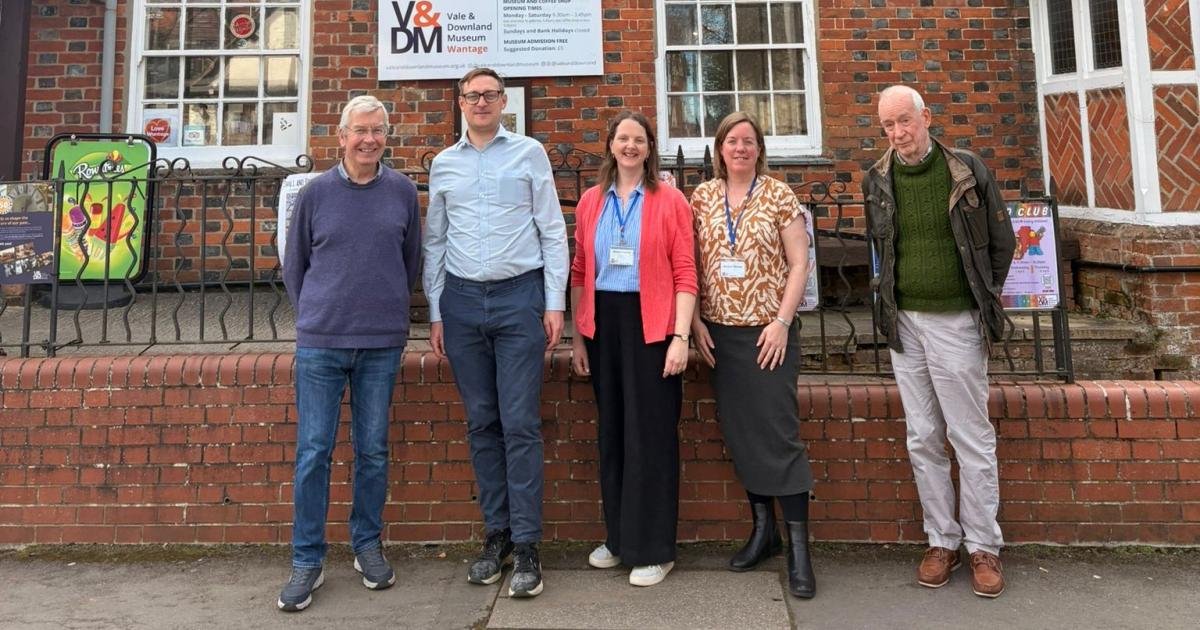
Olly Glover, MP for Didcot and Wantage, visited the Vale and Downland Museum on Church Street last week and heard about new proposals to redevelop the Barn Gallery.
This comes as the manager of the Wantage museum, Lisa Gale, said that without “an increase in consistent income” they will continue to face challenges meeting costs.
READ MORE: Frustration and worry in Oxford as Iran War sparks sharp rise in fuel costs
The project to renovate the gallery recently received a financial boost with funding secured from several sources, after the removal of a Formula 1 car from the area by Williams Racing two and a half years ago.
Those funding the works include Arts Council England, Vale of the White Horse District Council, FCC Communities Foundation, Persimmon Homes, and the Friends of the Vale and Downland Museum.
Ms Gale said: “We are thrilled to receive funding for projects across the museum, and it makes a real difference.”

The renovation is set to be phased with the first installation, scheduled for June, featuring a large-scale artwork by landscape artist Anna Dillon, depicting the distinctive scenery of the Vale and Downlands.
A second phase will focus on the physical refurbishment of the space, introducing interactive displays, hands-on activities, and previously unseen objects from the museum’s collection.
While the green light for this project was welcomed, the museum continued to stress that they were facing funding challenges, including to Mr Glover.
The local MP – who recently raised the issue in Parliament – said: “I had a good discussion with the team about the challenges they face in terms of fundraising and rising costs, following my recent oral question to culture ministers.

“I will continue to do all I can to support them.”
Ms Gale said: “Without an increase in consistent income—particularly as we do not benefit from the level of admissions income that many independent museums receive—we continue to face challenges in meeting our operational costs.
READ MORE: Almost 100-year-old Oxford pub listed for £700,000 sale
“We encourage local businesses to consider partnering with the museum.
“There are also opportunities for individuals to get involved, including joining our 100 Club or becoming a museum patron. Please get in touch if you’d like to find out more.”
Funding for cultural attractions such as museums is a topical issue in Oxfordshire after the River and Rowing Museum closed to the public last September.
Ms Gale has previously reported on signs of wear and tear at the Wantage destination.
Speaking in March, she said: “We have had leaks in certain places. Day to day dealing with an old building is a challenge.”



-

 Oxford Events4 weeks ago
Michelin Guide Oxfordshire Restaurants – The Oxford Magazine
-

 Crime & Safety3 weeks ago
Oxford: ‘Next generation’ LimeBikes in city from today
-

 Jobs & Careers3 weeks ago
Explore our Careers
-

 Oxford News4 weeks ago
Schwarzman Centre to open doors to public with major celebration
-

 Student Life3 weeks ago
The Art of Personalised Jewellery: Why Engraved Bracelets Are the Ultimate Keepsake
-

 Oxford News3 weeks ago
Gary Lineker’s nephew-in-law death inquest to be next week
-

 Jobs & Careers3 weeks ago
Why Join Oxford | Oxford University Jobs
-

 Oxford Events3 weeks ago
Oxford News and Events, What’s on in Oxford, Exhibitions