
UK News
GP shocked by bowel cancer diagnosis at 49 urges changes to screening

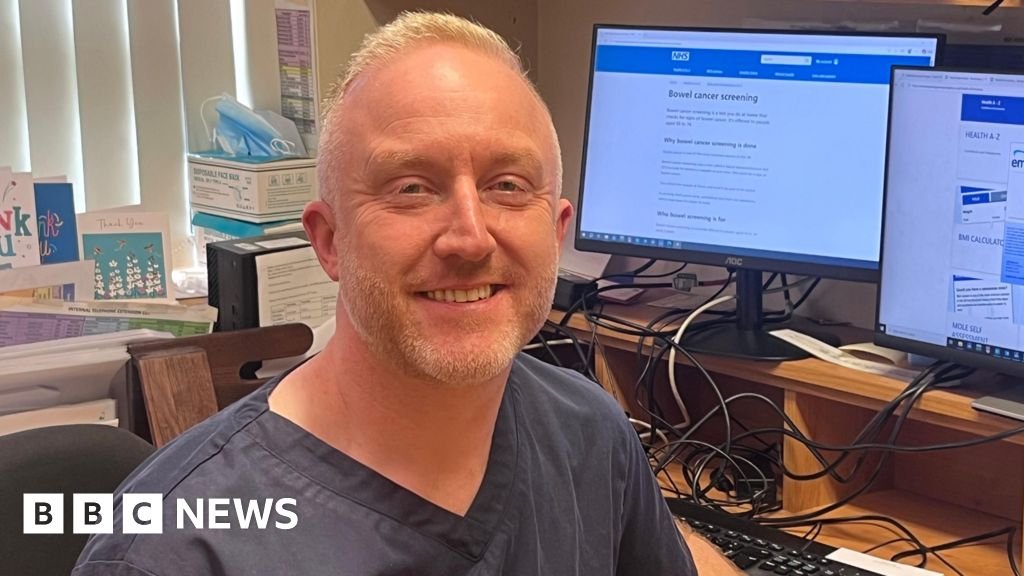
Dr Jonny Dillon is “very angry” that Northern Ireland’s bowel cancer screening programme lags behind the rest of the UK.
Source link



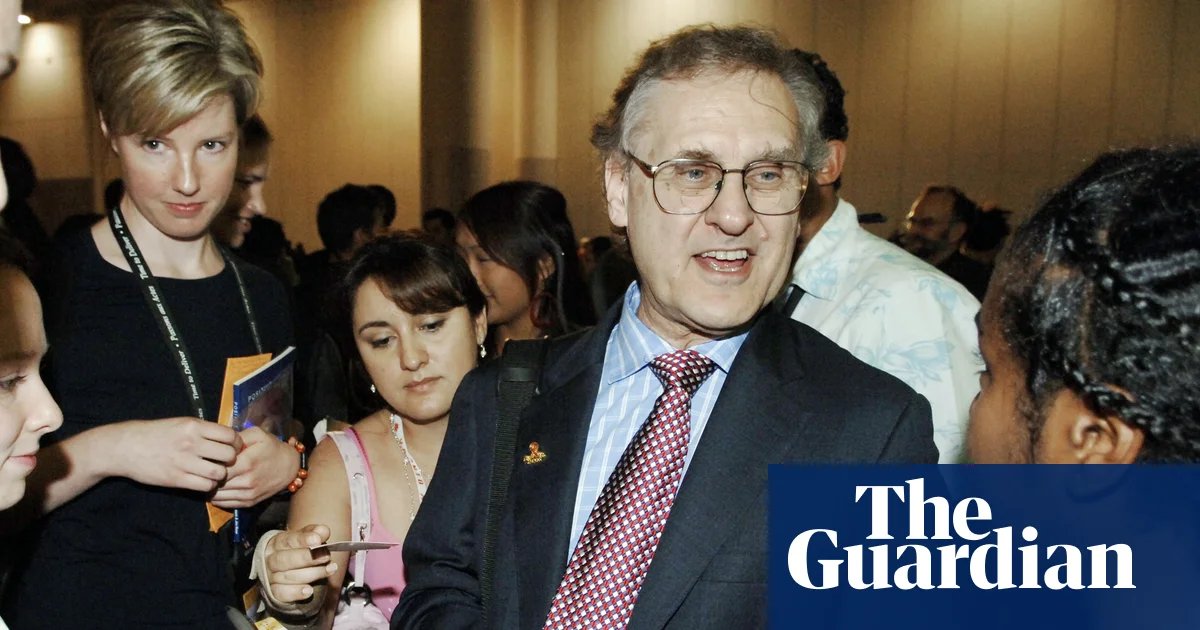
Stephen Lewis, the Canadian diplomat, politician and human rights advocate, who spent decades tirelessly working to focus global attention on the HIV/Aids epidemic, has died of cancer.
Lewis, who served as the Canadian ambassador to the United Nations, as well as the head of Ontario’s New Democratic party (NDP), was 88.
“Stephen spent the last eight years of his life battling cancer with the same indomitable energy he brought to his lifelong work: the unending struggle for justice and dignity for every human life,” his family said in a statement. “The world has lost a voice of unmatched eloquence and integrity.”
Prime minister Mark Carney paid tribute to Lewis, calling him “a pillar of compassionate leadership in Canadian democracy, and a renowned global champion for human rights and multilateralism” in a statement.
Lewis, the scion of former federal NDP leader David Lewis, was also the father of Avi Lewis, who was elected leader of the federal NDP on Sunday.
In his victory speech before his father’s death, Avi Lewis paid tribute to him, saying his father was “not doing too well” but was hanging on from his hospital bed to see the next chapter of “the movement”.
“Ever the political fanatic, dad has demanded daily updates about our organizing, delivered to his hospital bed – a veritable IV drip of campaign data,” he said. “At age 88 he is more passionate about the promise of democratic socialism than he has ever been in his life.”
Stephen Lewis led the Ontario NDP from 1970 to 1978, serving as official opposition leader from 1975 to 1977.
After leaving politics, Lewis was appointed Canada’s ambassador to the United Nations. He was then named special adviser to the UN’s secretary general on African affairs and later became deputy director of Unicef and the United Nations special envoy for HIV-Aids in Africa.
It was that work, in a region of the world decimated by illness and the neglect of nations with the means to help, that left him shaken.
“I cannot remember in my entire adult life scenes of such unendurable human desolation, it was heartbreaking,” Lewis said during his first speech to the UN in 2006.
A skilled orator and writer, he reserved his sharpest criticism for wealthy nations and the global institutions capable of ending much of the suffering.
“It’s not just the fact that people will die; it’s the fact that those who have made the decision know that people will die. How does that get rationalized?” he said in a 2011 speech at Yale University after donor nations cut funding. “How does that get dealt with in the inner sanctums of development ministries and cabinet discussions? What in God’s name do they say to each other?”
Lewis, driven by the desire to make combating disease and poverty his life’s work, then co-founded the Stephen Lewis Foundation with his daughter Ilana Landsberg-Lewis, travelling often to countries in Africa disproportionately affected by pandemics.
During the coronavirus pandemic, Lewis called on nations like Canada to recognize the need for vaccine equity, and criticised the government for accessing doses from an international vaccine-sharing pool. “It was always understood from the outset that this was not a source of vaccines for the rich and wealthy countries of the world,” he said in a 2021 interview.
There are two schools in Toronto named after him and Lewis holds 33 honorary degrees, among the highest of any Canadian. He was given the Order of Canada, the country’s highest honour, in 2002.
UK News
Almost half of primary teachers in England see pupils with eating disorders, survey finds | Education

Almost half of primary school teachers are seeing pupils with eating disorders “at least occasionally”, rising to four in five at secondary level, according to a survey by the UK’s largest education union.
The findings emerged in a poll of 10,000 teachers in English state schools about pupils’ mental health, which also revealed “overwhelming” exam anxiety in secondaries and dwindling numbers of counsellors to support students.
Asked whether they had observed children showing signs of an eating disorder in the past year, 45% of primary teachers and 78% of secondary teachers said they had seen it at least occasionally.
Of those, 4% at primary level said they saw evidence of eating disorders “regularly”, compared with 14% of secondary teachers and 20% in special schools and pupil referral units.
The National Education Union (NEU) poll also revealed that two-thirds (68%) of secondary school teachers who responded regularly encountered absenteeism linked to students’ mental ill-health.
Three-quarters (76%) regularly saw their students experiencing social difficulties, while the number of teachers complaining that their school did not have a counsellor rose from 29% to 40% in three years.
The rise in mental health problems among children and young people is well documented. A study published in the Lancet last year reported a 65% increase in annual hospital admissions between 2012-3 and 2021-2 for children and young people aged five to 18 with mental health concerns. Increases were “particularly steep” for eating disorders, rising from 478 to 2,938 over the same period – an increase of 515%.
The consultant paediatrician Dr Lee Hudson said eating disorders had become more common but pointed out that the term covered a wide spectrum of conditions, not just anorexia.
He said young children could have early anorexia or avoidant/restrictive food intake disorder (Arfid), characterised by limiting food type or quantity. “Eating disorders have become more common. We know it’s going up, but we don’t know why,” he said.
Almost half of teachers (48%) who responded said they regularly witnessed chronic anxiety among pupils, while almost a third (31%) saw students living with social isolation.
Daniel Kebede, the NEU general secretary, said: “Schools are unable to keep pace with the obvious acceleration in the levels of mental health support needed by young people. Demand clearly outstrips the available resources. In many cases, this rules out early and timely intervention for students.
“Teachers are crying out for nurses, mental health leads, and quicker access to child and adolescent mental health service support in schools. The majority tell us they have none of these. The rest tell us they do, but it isn’t enough.”
The NEU, which is holding its annual conference in Brighton this week, is due to debate the “violence and behaviour crisis in schools” on Wednesday. The motion calls for the establishment of a violence in school taskforce to monitor trends and develop policy.
A survey conducted before the conference found 66% of teachers said bad behaviour by pupils was regularly disrupting learning – almost exactly the same as in 2024 (67%), but significantly higher than in 2022 (48%).
The poll found disruption because of behavioural issues was worse in primary schools and special schools or pupil referral units, where 70% and 69% of teachers respectively said behaviour impacted negatively on lessons regularly or all the time, compared with 60% at secondary level.
Teachers told the NEU their ability to manage behaviour was being hampered by a lack of resources and understaffing, particularly for special educational needs.
One unnamed respondent said: “Due to unmet Send needs and insufficient specialist provision, staff are increasingly required to manage complex behaviours without adequate support or intervention from senior leadership.”
Another identified extreme views on social media as a contributing factor. “Increasing exposure to concerning attitudes and beliefs on the internet: misogyny is clearly having a huge effect, especially as a female teacher when dealing with the behaviour of male students.”



-

 Crime & Safety2 weeks ago
Oxford: ‘Next generation’ LimeBikes in city from today
-

 Jobs & Careers2 weeks ago
Why Join Oxford | Oxford University Jobs
-

 Oxford Events2 weeks ago
Oxford News and Events, What’s on in Oxford, Exhibitions
-

 Jobs & Careers2 weeks ago
Explore our Careers
-

 Student Life2 weeks ago
The independent cinema battling Oriel College to stay open
-

 Oxford Events2 weeks ago
Michelin Guide Oxfordshire Restaurants – The Oxford Magazine
-

 Jobs & Careers2 weeks ago
Internal Job Board for University vacancies
-

 Crime & Safety2 weeks ago
Crash partially blocks A40 and causes severe Oxfordshire traffic