
UK News
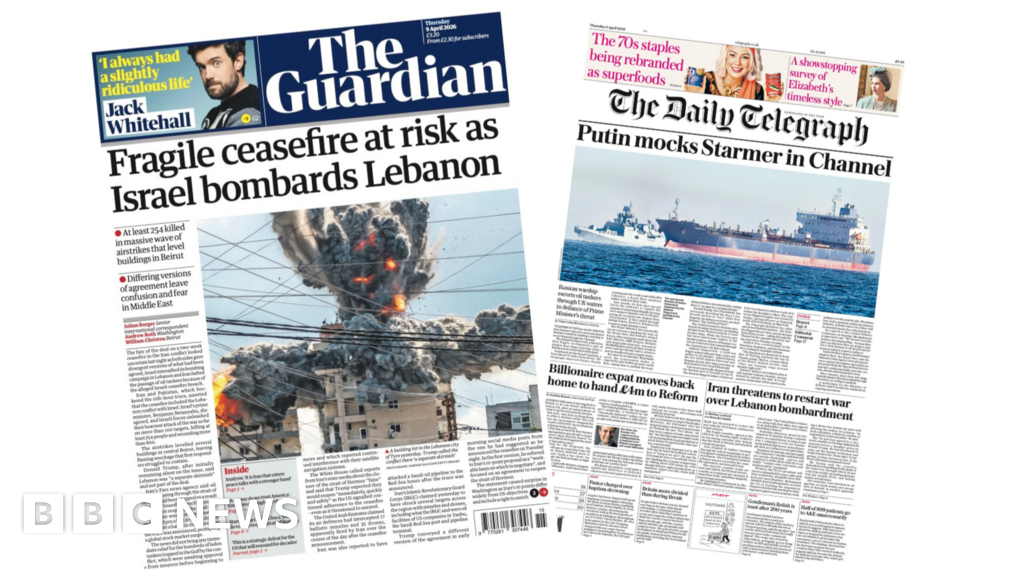
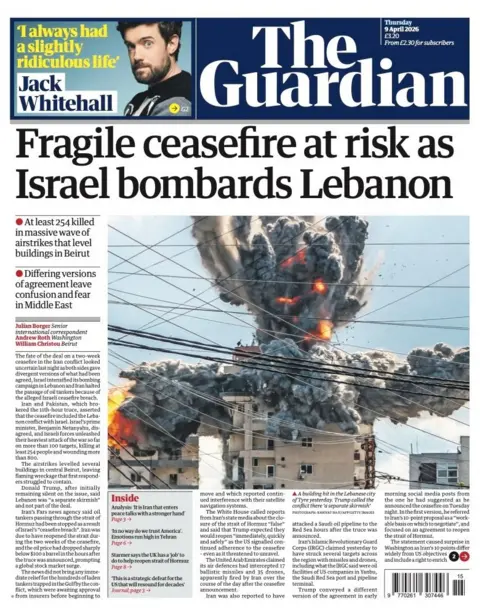
‘Fragile ceasefire at risk’ and ‘Putin mocks Starmer’


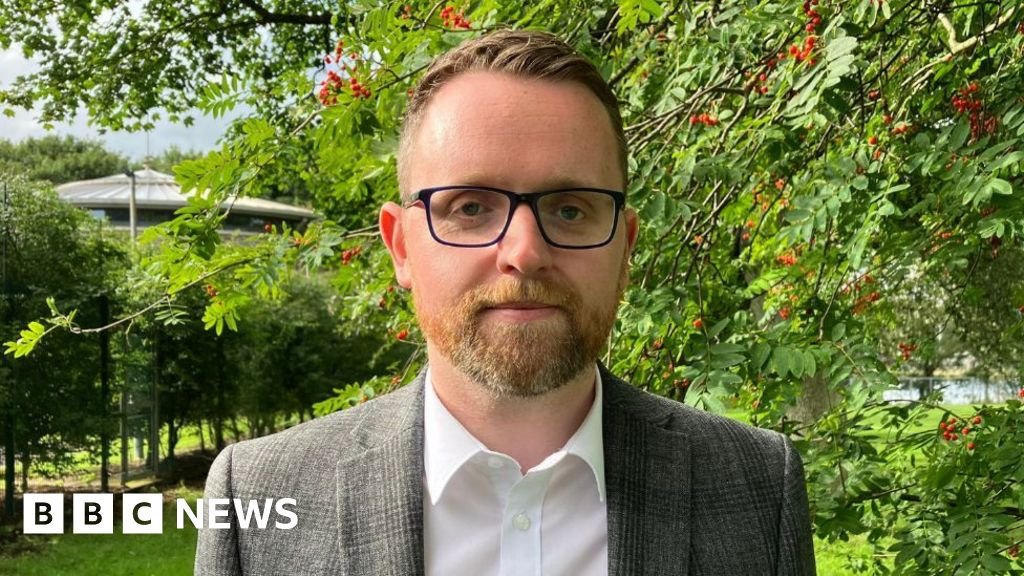
The Foyle MLA says he has been “suffering from a bout of ill-health” but now sees a “glimmer of light in what has been a very dark tunnel”.
Source link
UK News
Middle East crisis live: Red Cross ‘outraged’ as Israeli strikes on Lebanon kill at least 254; strait of Hormuz impasse continues | US-Israel war on Iran
Welcome summary
Welcome to the Guardian’s continuing coverage of the US-Israel war on Iran.
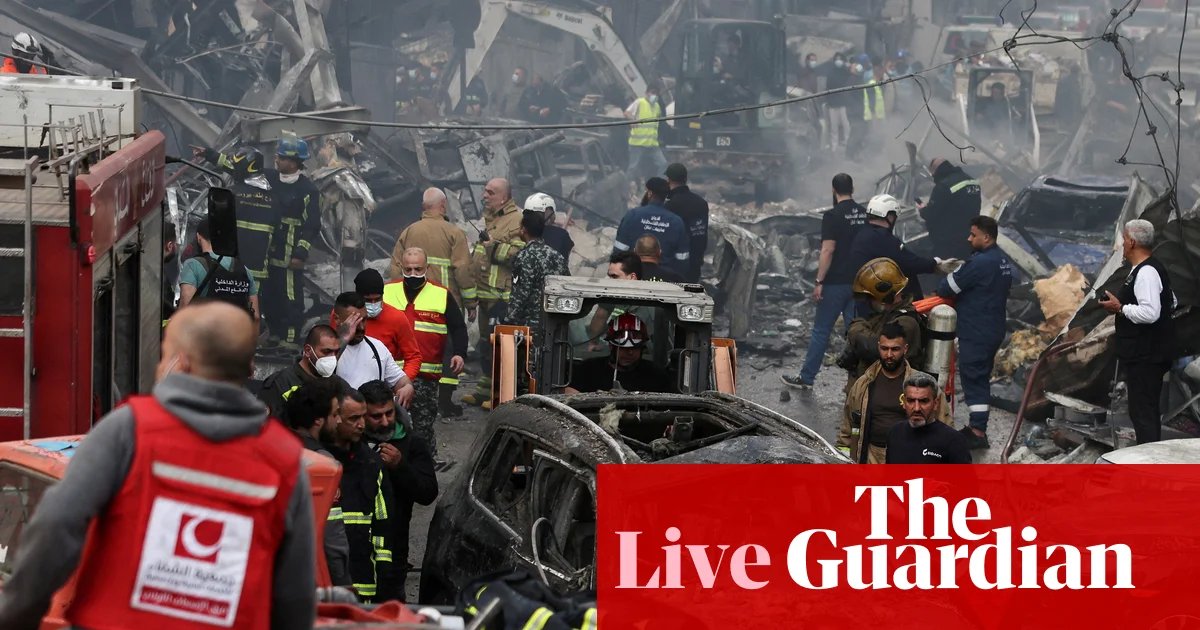
The fragile two-week truce between the US and Iran was hanging in the balance on Thursday, with Tehran threatening to resume hostilities as Israel launched a major bombardment of Lebanon, killing at least 254 people, according to Lebanon’s Civil Defence.
As a result, the conditional opening of the strait of Hormuz is precariously placed. Iran is threatening to lock up the chokepoint if Israel keeps striking Lebanon. Just before 4am on Thursday, Hezbollah said it had fired rockets at northern Israel over “ceasefire violations”, reports said.
Washington and Tehran have both claimed victory in agreeing the ceasefire, but fractures emerged quickly as Israel carried out its heaviest strikes on Lebanon – including in central Beirut – since Hezbollah joined the war in early March.
The UN rights chief, Volker Turk, called the scale of killing “horrific”, as Israeli bombarded Beirut without warning, triggering scenes of horror and panic. The Red Cross said it was “outraged by the devastating death and destruction” in densely populated areas across Lebanon.
Iran’s Revolutionary Guards warned they would “fulfil our duty and deliver a response” if Israel did not cease its strikes there, while Hezbollah said it had a “right” to respond.
Israeli prime minister, Benjamin Netanyahu, said the country remained prepared to confront Iran if necessary, as it still had “objectives to complete”, with the military saying it continued to pursue the goal of “disarming” Hezbollah in Lebanon. The Pentagon chief, Pete Hegseth, also vowed that US forces remained at the ready if the conflict flared up again.
The belligerent rhetoric came ahead of high-stakes talks in Pakistan expected on Friday, where the reopening of the strait of Hormuz will be a main talking point.
Here’s the main developments:
-
Iran announced alternative routes for ships travelling through the strait of Hormuz, citing the risk of sea mines in the main zone of the vital waterway. The statement shared instructions for an alternative entry and exit route through the strait.
-
The Trump administration on Wednesday stated Lebanon was not part of the ceasefire deal, with White House press secretary Karoline Leavitt claiming “that has been relayed to all parties”.
-
The US vice-president, JD Vance, also told reporters in Budapest that the US never promised to include Lebanon in the ceasefire, and that Iran may have been under that impression due to a “misunderstanding”. Israel announced on Wednesday it did not consider Lebanon covered by the Iran-US truce.
-
Karoline Leavitt also dismissed “misreporting” that Trump is working from the original 10-point plan put forward by Tehran. She said the 10-point plan presented in public by Iran was “literally thrown in the garbage” by Trump – despite the fact Trump said on Truth Social that the US received a 10-point proposal from Iran that is believed to be a “workable basis on which to negotiate”. Leavitt claimed Iran actually put forward a “more reasonable and entirely different and condensed plan to the president”.
-
French president Emmanuel Macron said he has urged his US and Iranian counterparts, Donald Trump and Masoud Pezeshkian, to include Lebanon in the ceasefire reached with Iran. Australia’s foreign minister has urged the same.
-
Donald Trump vented his frustration with Nato during a private meeting with its secretary-general, Mark Rutte, as relations in the alliance reached a crisis point. “He is clearly disappointed with many Nato allies, and I can see his point,” Rutte said on CNN, after spending more than two hours at the White House. “This was a very frank, very open discussion, but also a discussion between two good friends.”
-
Sir Keir Starmer will continue his tour of the Middle East on Thursday after he met with the Crown Prince of Saudi Arabia, Mohammed Bin Salman, as part of ongoing talks with allies to give shipping the “confidence” to pass through the strait of Hormuz.
Key events
The Spanish prime minster, Pedro Sánchez, condemned Israel’s latest strikes on Lebanon, and criticised Benjamin Netanyahu.
“His contempt for life and international law is intolerable,” Sánchez wrote on X.
Sánchez, who has been Europe’s loudest critic of the US and Israel’s military actions in the region, called on the EU to suspend its association agreement with Israel.
The Australian prime minister, Anthony Albanese, urged Israel’s attacks on Lebanon to cease, saying it threatened “a fragile peace”.
“The Australian government also firmly believes [the ceasefire] has to apply to Lebanon as well. We want to see peace in this region,” Albanese said.
Pakistan has suddenly declared two days of local holidays in Islamabad from Thursday, authorities said, ahead of US-Iran talks due to take place in the capital.
No reason was given in the official notification, but authorities in Islamabad have often announced holidays or restrictions for security reasons ahead of high-profile diplomatic events.
Pakistan has been preparing for high-stakes talks involving US and Iranian representatives. The White House says the vice president, JD Vance, will be leading a team to the negotiations in Islamabad “this weekend”.
Trump tells Iran to comply with ‘real agreement’
Donald Trump has just posted to Truth Social.
He says all US ships, aircraft, and military personnel would remain in place until Iran fully complied with “the real agreement”.
If for any reason it is not, which is highly unlikely, then the “Shootin’ Starts,” bigger, and better, and stronger than anyone has ever seen before. It was agreed, a long time ago, and despite all of the fake rhetoric to the contrary – NO NUCLEAR WEAPONS and, the Strait of Hormuz WILL BE OPEN & SAFE. In the meantime our great Military is Loading Up and Resting, looking forward, actually, to its next Conquest. AMERICA IS BACK!”
UN warns ceasefire at ‘grave risk’ if Israel keeps attacking Lebanon
The UN secretary-general has warned that ongoing Israeli attacks on Lebanon poses “a grave risk” to the fragile US-Iran truce, his spokesperson said.
“The ongoing military activity in Lebanon poses a grave risk to the ceasefire and the efforts toward a lasting and comprehensive peace in the region. The Secretary-General reiterates his call to all parties to immediately cease hostilities,” UN chief Antonio Guterres’s spokesman said in a statement on Wednesday.
Israeli strikes kill Al Jazeera correspondent and two Lebanese journalists: report
Israeli strikes on Wednesday killed an Al Jazeera correspondent in Gaza, according to Al Jazeera and health officials there, as well as two Lebanese journalists in that country, according to the Committee to Protect Journalists.
Citing Al Jazeera, the Associated Press reported that Mohammed Wishah was targeted in a drone strike in west Gaza City. The Israeli military’s Arabic-language spokesperson, Avichay Adraee, claimed on X that Wishah was a member of Hamas, reposting a 2024 tweet that described him as a “prominent commander” in its military wing, among other positions.
The Guardian has not been able to independently verify these claims.
Oil prices climb, stocks fall as ceasefire hangs in balance
Oil prices have climbed and stocks fallen on fears over the nascent US-Iran ceasefire, after Israel launched a major bombardment of Lebanon. In past two hours, Hezbollah said it had fired rockets at northern Israel in response to “ceasefire violations”.
Fears that the ceasefire could fall apart while crude remains stuck in Hormuz saw West Texas Intermediate oil jump around 3% Thursday, having plunged more than 16% the day before. Brent was up more than 2% following a 13% drop.
Equities also gave up some of their gains. In early trading in Asia, Tokyo, Hong Kong, Shanghai, Sydney, Singapore, Seoul and Taipei were all marginally down.
Gold eased to $4,712 an ounce.
Independent analysts say they have observed no change in traffic through the strait of Hormuz. That’s despite claims from the White House on Wednesday there had been an uptick in the number of ships transiting the strategic waterway since a US-announced ceasefire with Iran.
Windward, a maritime intelligence firm that tracks international shipping, said only 11 vessels transited the strait on Wednesday – about the same number from prior days.
Windward said all ships transiting the strait must still coordinate safe passage with Iranian authorities, who are requiring shippers to pay hefty tolls of up to $1 a barrel for outbound oil, paid in cryptocurrency. For context, the largest supertankers carry up to 3 million barrels of crude.
Windward said radio broadcasts from Iran to tankers in the Gulf on Wednesday warned that those transiting without approval would be attacked.
Welcome summary
Welcome to the Guardian’s continuing coverage of the US-Israel war on Iran.
The fragile two-week truce between the US and Iran was hanging in the balance on Thursday, with Tehran threatening to resume hostilities as Israel launched a major bombardment of Lebanon, killing at least 254 people, according to Lebanon’s Civil Defence.
As a result, the conditional opening of the strait of Hormuz is precariously placed. Iran is threatening to lock up the chokepoint if Israel keeps striking Lebanon. Just before 4am on Thursday, Hezbollah said it had fired rockets at northern Israel over “ceasefire violations”, reports said.
Washington and Tehran have both claimed victory in agreeing the ceasefire, but fractures emerged quickly as Israel carried out its heaviest strikes on Lebanon – including in central Beirut – since Hezbollah joined the war in early March.
The UN rights chief, Volker Turk, called the scale of killing “horrific”, as Israeli bombarded Beirut without warning, triggering scenes of horror and panic. The Red Cross said it was “outraged by the devastating death and destruction” in densely populated areas across Lebanon.
Iran’s Revolutionary Guards warned they would “fulfil our duty and deliver a response” if Israel did not cease its strikes there, while Hezbollah said it had a “right” to respond.
Israeli prime minister, Benjamin Netanyahu, said the country remained prepared to confront Iran if necessary, as it still had “objectives to complete”, with the military saying it continued to pursue the goal of “disarming” Hezbollah in Lebanon. The Pentagon chief, Pete Hegseth, also vowed that US forces remained at the ready if the conflict flared up again.
The belligerent rhetoric came ahead of high-stakes talks in Pakistan expected on Friday, where the reopening of the strait of Hormuz will be a main talking point.
Here’s the main developments:
-
Iran announced alternative routes for ships travelling through the strait of Hormuz, citing the risk of sea mines in the main zone of the vital waterway. The statement shared instructions for an alternative entry and exit route through the strait.
-
The Trump administration on Wednesday stated Lebanon was not part of the ceasefire deal, with White House press secretary Karoline Leavitt claiming “that has been relayed to all parties”.
-
The US vice-president, JD Vance, also told reporters in Budapest that the US never promised to include Lebanon in the ceasefire, and that Iran may have been under that impression due to a “misunderstanding”. Israel announced on Wednesday it did not consider Lebanon covered by the Iran-US truce.
-
Karoline Leavitt also dismissed “misreporting” that Trump is working from the original 10-point plan put forward by Tehran. She said the 10-point plan presented in public by Iran was “literally thrown in the garbage” by Trump – despite the fact Trump said on Truth Social that the US received a 10-point proposal from Iran that is believed to be a “workable basis on which to negotiate”. Leavitt claimed Iran actually put forward a “more reasonable and entirely different and condensed plan to the president”.
-
French president Emmanuel Macron said he has urged his US and Iranian counterparts, Donald Trump and Masoud Pezeshkian, to include Lebanon in the ceasefire reached with Iran. Australia’s foreign minister has urged the same.
-
Donald Trump vented his frustration with Nato during a private meeting with its secretary-general, Mark Rutte, as relations in the alliance reached a crisis point. “He is clearly disappointed with many Nato allies, and I can see his point,” Rutte said on CNN, after spending more than two hours at the White House. “This was a very frank, very open discussion, but also a discussion between two good friends.”
-
Sir Keir Starmer will continue his tour of the Middle East on Thursday after he met with the Crown Prince of Saudi Arabia, Mohammed Bin Salman, as part of ongoing talks with allies to give shipping the “confidence” to pass through the strait of Hormuz.
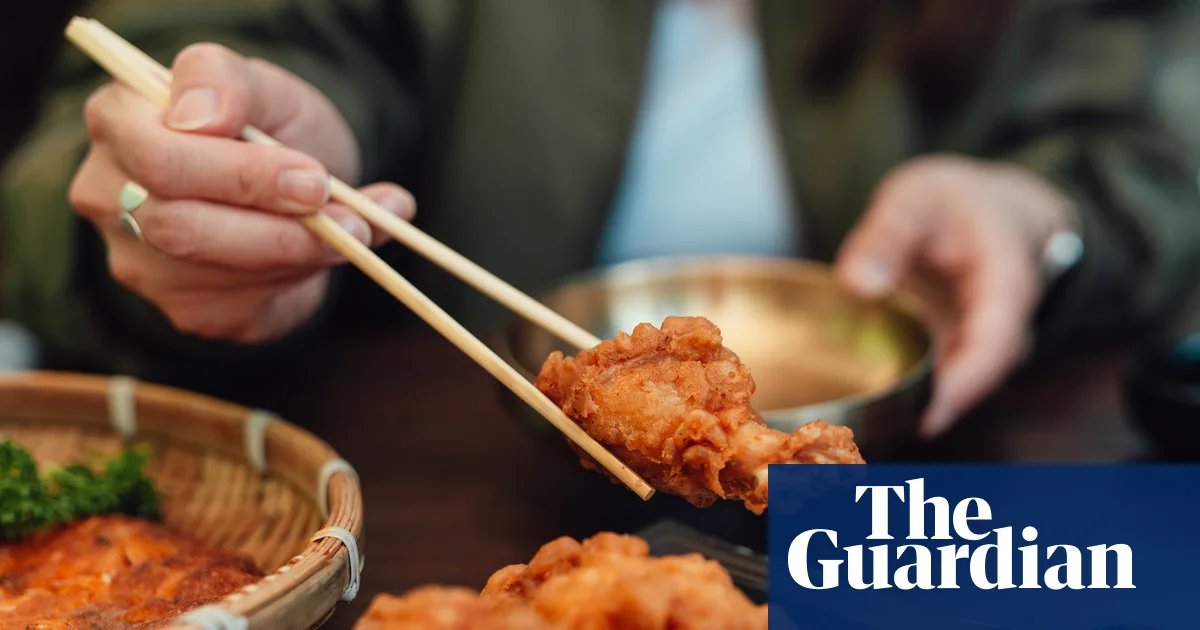
Inside a teaching kitchen south-east of Seoul, I coat a whole chicken – cut into eight parts – in batter and dip the pieces carefully into a bowl of powdered mix until covered in a light, fluffy layer.
A chef watches intently. “Don’t rub it,” he says. “Keep it delicate.”
The chicken, already brined in what I’m told is a secret marinade, goes into a fryer filled with an olive oil blend, heated to 170C. I slowly lower the pieces a third of the way, then drop them in away from myself to avoid splashing. I set a timer for 10 minutes.
This is Chicken University, a sprawling campus with a giant chicken statue at the entrance. It exists to train would-be owners of the BBQ Chicken franchise chain through a two-week residential programme. More than 50,000 people have passed through its classrooms.
This humble dish is relatively simple, and is not even traditional Korean cuisine, but it is part of a national obsession that has gone global, both physically and culturally as part of the K-food wave. The country has been only half-jokingly dubbed the Republic of Fried Chicken.
South Korea has around 40,000 fried chicken restaurants – just a few thousand short of the number of McDonald’s branches worldwide. Most are small, family-run operations. But now, Korean chicken brands operate more than 1,800 stores in around 60 countries, nearly double the number of stores a decade ago. From London to Los Angeles, Korean fried chicken appears on the menu.
It is the most popular Korean food among international consumers, according to a South Korean government survey of about 11,000 consumers across 22 cities, spanning Asia, Europe, the Americas and Australia.
From post-war import to K-food export
South Korea’s most successful culinary export is not traditionally Korean. Fried chicken arrived with American soldiers stationed in the country after the Korean war, but the technique that made it distinctly Korean emerged decades later.
About 1980, a chicken shop owner in the southern city of Daegu, Yoon Jong-gye, noticed customers abandoning their chicken once it grew cold, when the meat became dry. So he began experimenting with brining the chicken to keep it juicy and a glaze made from chilli powder. A neighbourhood grandmother suggested adding corn syrup.
The result was yangnyeom chicken – sweet, sticky and spicy – and still appealing at room temperature. Yoon never patented his recipe and died in December 2025 at 74, having watched his invention spread far beyond his tiny shop where it began.
Korean chicken brands had been expanding internationally since the early 2000s, but the cultural breakthrough came in 2014, when the Korean drama My Love from the Star became a sensation across China.
A line from its lead character – that “on the day of the first snow, you should have chicken and beer” – reportedly triggered queues outside Korean chicken restaurants, even during an avian flu outbreak.
Chimaek, the portmanteau meaning “fried chicken and beer” from the Korean words “chikin” and “maekju”, has since become a cultural shorthand, even entering the Oxford English Dictionary.
It describes as much an act of collective pleasure as a meal: friends gathered around a table, with a plate of chicken at the centre and draught beer within reach. Every July, Daegu hosts a chimaek festival that draws more than a million visitors.
One defining feature of Korean fried chicken is how it is served. Kim Ki-deuk, who has run an independent chicken shop near Korea University in Seoul with his wife Baek Hye-kyeong for more than 20 years, puts it simply. “In fast food places, they may sell one or several pieces,” he says. “Korean chicken is one full bird.”
Technique is another factor, though methods vary.
At shops like Kim and Baek’s, chicken is fried twice. “We fry it once first, then when the customer orders, we fry it again,” he says. “Otherwise it gets soggy. That’s what makes it extra crispy.”
The batter, typically made with potato or corn starch, holds up under the sauce – whether a sweet-spicy yangnyeom glaze or a soy-garlic coating – allowing it to stay crisp long after it has been boxed up for delivery.
Prof Joo Young-ha, a cultural anthropologist at the Academy of Korean Studies who specialises in food culture, argues that Korean chicken’s global success stems from its simplicity.
“Unlike pork, chicken crosses religious prohibition boundaries,” he says. “And unlike kimchi, which is treated like a side dish, or bibimbap, which isn’t immediately obvious as a dish, fried chicken is immediately recognisable as a meal.”
Beyond its global appeal, fried chicken’s rise in South Korea reflects something about modern life there. Prof Joo traces its rise to the 1980s and 1990s, when apartment living, dual-income households, and delivery culture were reshaping Korean life. Fried chicken, fast, convenient, and boxed for takeaway, fitted the moment.
The industry has long attracted mid-career Koreans seeking a route back to income after leaving corporate jobs, though the market is fiercely competitive and margins are thin.
Back at their fried chicken shop, Kim Ki-deuk slides another batch of chicken gizzards, another popular menu item, into the crackling oil. “Same as usual,” one customer says.
“It’s great that Korean chicken is known worldwide,” Kim says, wiping down the counter between orders. “Chicken is for everyone, young and old.
“Korea is such a small place. One bird doing all this work, introducing our country, our culture. It’s quite something.”



-
 Oxford Events4 weeks ago
Michelin Guide Oxfordshire Restaurants – The Oxford Magazine
-

 Crime & Safety3 weeks ago
Oxford: ‘Next generation’ LimeBikes in city from today
-

 Jobs & Careers3 weeks ago
Explore our Careers
-

 Jobs & Careers3 weeks ago
Why Join Oxford | Oxford University Jobs
-

 Oxford Events3 weeks ago
Oxford News and Events, What’s on in Oxford, Exhibitions
-

 Jobs & Careers3 weeks ago
Internal Job Board for University vacancies
-

 Oxford Events3 weeks ago
Athena Swan | Equality and Diversity Unit
-

 Student Life3 weeks ago
The independent cinema battling Oriel College to stay open