
UK News
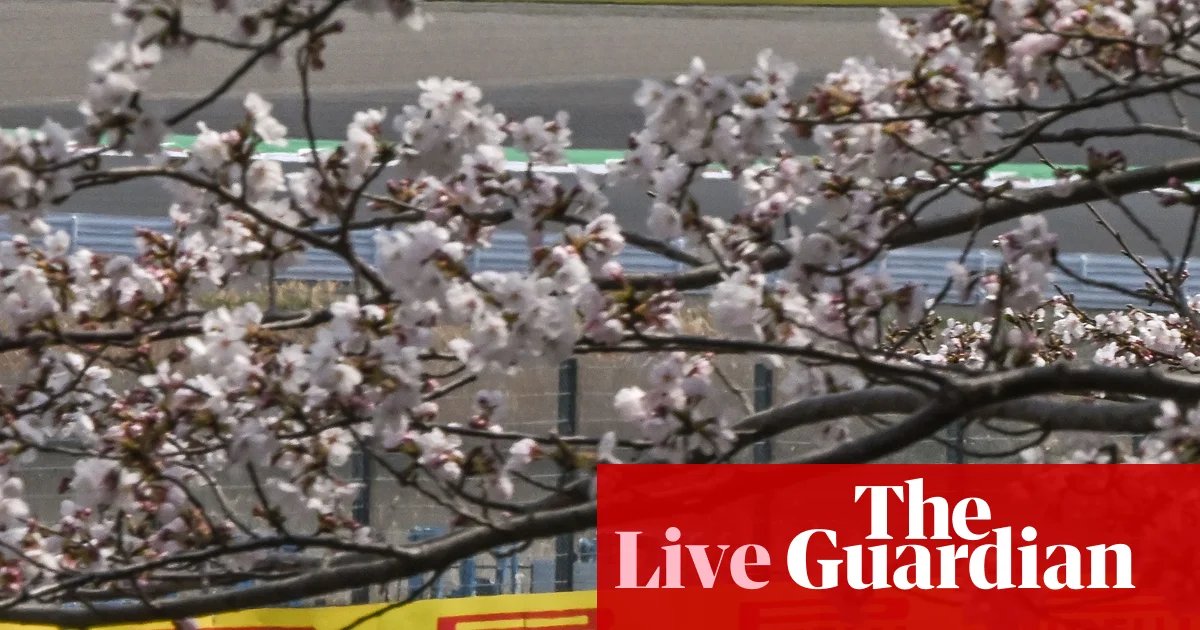
Formula One 2026: Japanese Grand Prix qualifying – live | Formula One 2026

Key events
But Russell is three 10ths down by the end of the lap. Antonelli on provisional pole, but Hamilton goes fastest in the first sector.
Here comes Q3 and the Mercedes. Antonelli looking so much smoother than Russell so. far, but now the Briton looks as if he may have got it together.
Verstappen is not the only unhappy bunny. Russell is struggling here. Mercedes have had three lockouts so far, including the sprint race in China, but that is not looking likely now.
“There is something wrong with the car. It’s completely undriveable. Jumping at high speed.” An expletive-free reaction from Verstappen. Also out: Ocon, Hülkenberg, Lawson, Colapinto and Sainz.
Verstappen can only go ninth … and is pushed down by his teammate Hadjar. But Hülkenberg struggles in the final sector. But Arvid Lindblad in the Racing Bulls does take 10th! Verstappen out!
Drama down in 10th – Verstappen at risk. Hulkenberg is the man in 11th. But at the top, Leclerc goes fastest!
Russell is down in sixth after the first runs. Out on new rubber, he comes three 10ths down on Piastri – all lost in the last sector. His rear tyres are proving problematic.
Bortoleto up to third, new tyres doing their job. Gasly and Hadjar knock Verstappen down to eighth. That becomes 10th after Piastri goes fastest on his new rubber and Norris comes home too.
Antonelli will be first through: 1:27.774 – Russell is 0.343 slower and is soon pipped by Leclerc. Hamilton fourth.
The Mercedes and the Ferraris are out in Q2.
Bearman is the Q1 disappointment at one end, at the other it’s Norris. The world champion managed only eighth, beaten by the Audis of Hülkenberg and Bortoleto. The top five? Leclerc, Russell, Antonelli, Piastri and Hamilton.
We have our elimination list: Albon, Bearman, Perez, Bottas, Alonso and Stroll. A surprise blow for Bearman, having qualified 12th and 10th in the previous two races.
Here comes the Briton … and he is just 0.052 behind Leclerc.
Top six in the pits – that group does not include Russell.
Albon, Sainz, Bottas, Perez, Stroll and Alonso in the drop zone. No surprises there.
Hamilton third fastest, behind Antonelli … while Leclerc moves ahead of them all. Good signs for Ferrari.
Russell reports an aerodynamic problem, likely caused by tyre temperature.
And Antonelli goes fastest, by 0.043 – while Russell is half a second down in fifth. Hmm.
Hamilton can only split the McLarens, while Leclerc beats Piastri by 0.360. But here come Mercedes.
Piastri is out and goes fastest through the early sectors. He has had more laps from Norris, for technical-hitch reasons – and it is showing. 130.438 for the Australian, the Briton two tenths back.
Liam Lawson comes in at 131.7. He is tipped to make it to Q3 for Racing Bulls, which would be a huge step up for the New Zealander. Teammate Arvid Lindblad goes a 10th faster.
We’re off … The first cars trundling out for their warm-up laps.
It’s not all about the drivers, of course. Here’s Princess Akiko meeting the Haas principal, Ayao Komatsu.
Less than five minutes to the off. Poor, cash-strapped F1 has not been able to update the season graphic to remove Bahrain and Saudi Arabia, or else is leaving them on out of solidarity.
Bernie Collins on Sky is analysing the theoretical best times of the top 10, and there are no surprises on the notional front row, with Russell 0.021 behind Antonelli. But there is more than half a second back to Leclerc in third, leading the Ferrari + McLaren quartet, and Verstappen is in 10th, behind Liam Lawson, who a year ago was demoted from Red Bull to Racing Bulls for this race after struggling in the role of the Dutchman’s sidekick.
Just what has changed this season. Here’s our graphic guide to it all.
At the back of the field, the Aston Martins of Lance Stroll and new dad Fernando Alonso were more than four seconds slower than Antonelli. They were close to a second behind the Cadillacs of Valtteri Bottas and Sergio Pérez, so even if they find some reliability they are practically competing in a different sport to the front row.
What of the rest, starting with the orange elephant in the room?
Max Verstappen, fresh from banishing our Giles Richards from a press conference, is still complaining about the new rules. He is not alone in this – and the powers that be have tweaked regulations at Suzuka to reduce the amount of lifting – but Red Bull’s four-time world champion is the loudest, most famous, least restrained voice. He was 1.548 down on Antonelli in FP3, beaten by Nico Hülkenberg’s Audi. There is surely no way that Verstappen will claim a fifth straight Suzuka pole.
Incidentally, Verstappen’s busman’s holiday to GT3 at the Nürburgring did not quite go to plan. He took pole and the chequered flag, but wound up empty-handed.
FP3, though, was a Mercedes show: Antonelli first, with Russell 0.254 back – and then more than half a second to Leclerc. Piastri split the Ferraris, beating Hamilton by 0.019, with Norris sixth.
How has the weekend gone so far for the other frontrunners?
First free practice was a Mercedes one-two, with Antonelli second by 0.026sec, with the McLarens of Norris and Piastri just behind. There was more encouragement for the constructors’ champions in FP2, with Piastri going fastest. McLaren were quick to say they expected Mercedes and Ferrari to be out in front once the action became competitive but, in the context of Norris’s run to fifth in Melbourne being the only full-race action the team have done this season, this was at least encouraging. Charles Leclerc was the faster of the Ferraris in the first two sessions, ahead of Lewis Hamilton.
Norris did manage third in sprint qualifying in China, dropping one place in the sprint race. He and Piastri were less than two 10ths slower than the Ferraris in GP qualifying in Shanghai. For all that both cars failed to start the race because of power-unit problems, McLaren’s underlying form suggests that sooner or later they could disrupt the leading four. As Russell said: “McLaren were pretty fast, so a little bit of a surprise, to be honest.”
Ferrari think they have not made progress. Diego Ioverno, their sporting director, said: “The gap is more or less where we expected it to be, also quite in line with the first two races, especially in the short runs. We have to improve.”
Preamble
Plus ça change, plus c’est la même chose? George Russell may hope not.
The comprehensive changes in Formula One’s regulations mean 2026 is very different to 2025 in many regards, but a similarity between the results of the first two grands prix this year and last could hint at one enduring echo of the previous campaign.
Last year and this, two different drivers from the same team – then Lando Norris and Oscar Piastri, now Russell and Kimi Antonelli – stood on the top step in Australia and China respectively. In 2025 that was the cue for a title battle within McLaren that lasted through to the autumn, when Max Verstappen joined in; could Mercedes v Mercedes be the dominant theme in 2026, and could that then allow a rival to have a late shout at the world championship?
There has been no equivalent yet from Mercedes of McLaren’s “Go racing” mantra, which contributed enormously to the excitement of last season. It also allowed Verstappen, eventually, to close within striking distance, after Piastri and Norris took points off each other – and indeed the team, when they clashed.
You have to think that Russell, like the bookmakers, will see this as being his time: Antonelli is a teenager in his second year in F1, which he started with just three podium finishes, and China was his first pole and first win. The Briton, at 28, had eight poles, five wins and 24 podiums before this campaign, and had waited patiently for the technological advantage to accrue to Mercedes once more, as he discussed with our Giles Richards.
But world titles are not just given to anyone, and Russell needs to seize his moment, starting this weekend at Suzuka and the Japanese Grand Prix. He was unlucky in China: he took the sprint race from pole but his chances of qualifying fastest for the main race were restricted by an electrical problem in Q3, allowing Antonelli to take charge. Russell may also be cursing Donald Trump: while there are myriad more serious repercussions of the US and Israeli war with Iran, the cancellation of the Bahrain and Saudi Arabian GPs means Mercedes will have fewer opportunities to capitalise on their initial technological advantage and other teams, freed of the need to concentrate on the now, may catch up quicker.
There is a five-week gap to the next race, in Miami, longer than the summer pause between Hungary and the Netherlands, and that is the sole race before Montreal on 24 May. The outlook for Russell would be a lot sunnier if he spent the whole of April with a minimum 11-point lead over Antonelli and at least 24 over anyone outside Mercedes. No pressure, George.
Join us from 6am GMT to see how he and his rivals get on.
Morning opening: Focus on Ukraine

Jakub Krupa
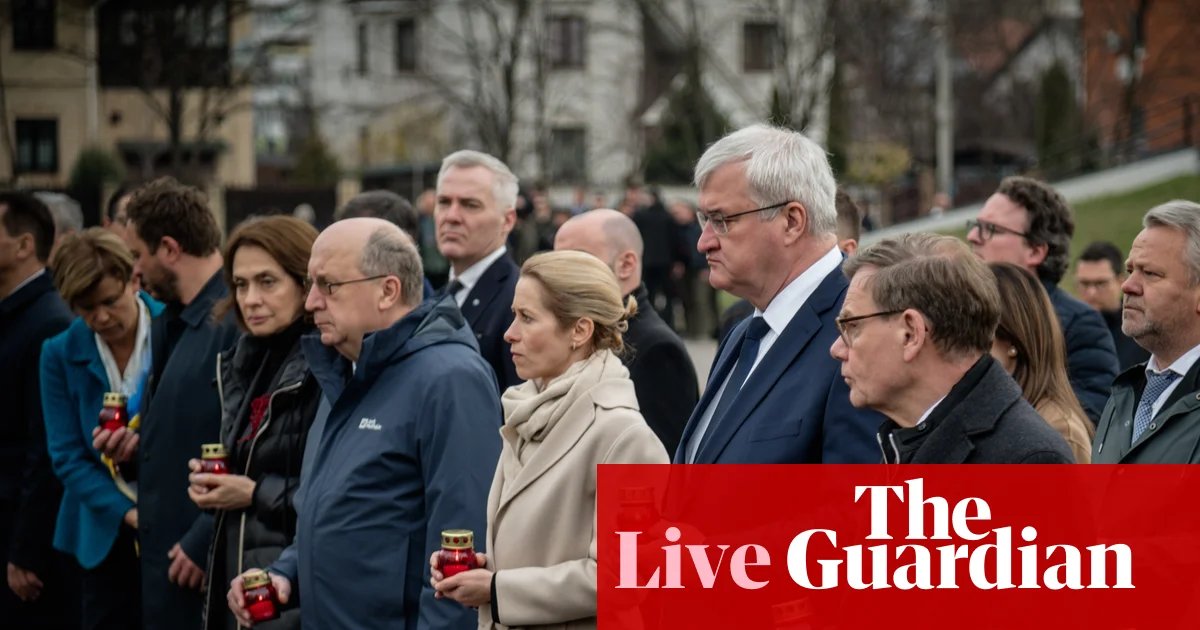
Several EU ministers are expected in Bucha, Ukraine, today to mark the fourth anniversary of the town’s liberation and the massacre that became one of the early symbols of the Russian aggression against Ukraine.

The anniversary marks a rare moment in recent weeks when the EU’s attention focuses back on Ukraine amid growing concerns about fallout from the Iran war. The EU’s top diplomat, Kaja Kallas, leads the delegation.
The ministers will discuss what needs to be done to ensure accountability for war crimes committed during the war through a special tribunal, which still needs more political backing and funding to come into existence.
Ukraine’s foreign minister, Andrii Sybiha, said in a post on social media:
“The scale of Russian atrocities in the course of its aggression is unseen on European soil since WWII. The crime of aggression is the root cause of them all. There must be accountability and there will be no amnesty for Russian criminals, including the highest political and military leadership of the Russian Federation.”
He drew a comparison with the Nuremberg trials against leaders of defeated Nazi Germany, saying the new tribunal was needed to “prevent such horrible crimes from repeating again in the future.”
But no progress is expected to be made on thorny issues of the EU’s €90bn loan to Hungary and the 20th package of sanctions against Russia, both of which continue to be blocked by Hungary.
Let’s see what the day brings.
Separately, EU energy ministers are holding a call later today to discuss the impact of the crisis in the Middle East on energy prices as some countries push with unilateral measures that they argue are needed to limit the impact on their economies.
I will also keep an eye on Denmark where the coalition talks continue after last week’s parliamentary election, which ended with a political deadlock.
It’s Tuesday, 31 March 2026, it’s Jakub Krupa here, and this is Europe Live.
Good morning.
Key events
Italy denies use of Sicily airbase to US aircraft carrying weapons for Iran

Angela Giuffrida
in Rome
Italy has denied use of an airbase in Sicily to US military craft carrying weapons for the war in the Middle East.
A source at the Italian defence ministry confirmed a report in Corriere della Sera that “some US bombers” had been due to land at Sigonella – a key US navy installation and Nato base – before heading to the Middle East.
According to treaties signed in the late 1950s, the US navy can use the base for logistical and training purposes but not as a transit hub for aircraft used to transport weapons for war unless in an emergency situation, permission for which needs to be approved in parliament.
The source said the US had sought permission to land aircraft that do not fall within the treaty, but was denied because there was no time to seek authorisation in parliament. It is unclear when the US had planned to land the aircraft.
For days, politicians in Sicily from Italy’s leftwing opposition parties have been urging Giorgia Meloni’s far-right government to clarify the situation at Sigonella after activity at the base increased since the start of the war in Iran and asked it to block the US from using bases in Italy for involvement in the conflict. Italy hosts seven US navy bases.
‘What is in it for the US?,’ Rubio asks about Nato amid standoff over using Nato bases for Iran operations
Another big story getting lots of attention in Europe today is the escalating standoff between the US administration and European Nato countries over their reluctance or refusal to support the US offensive operations in Iran.
Over the past few weeks, Trump repeatedly criticised Nato countries, saying they “have done absolutely nothing,” labeling them as “cowards,” and saying the US would “never forget” their refusal to help.
In the latest sign of tensions, US secretary of state Marco Rubio lashed out at Spain and other Nato allies overnight, telling Al Jazeera that it was “very disappointing” to see partners deny its request to use their airspace.
On Monday, Spain said it has closed its airspace to US planes involved in the war, stepping up Pedro Sánchez’s opposition to the conflict.
Rubio responded to the news by saying:
“I think it was very disappointing … and … look, the president and our country will have to re-examine all of this after this operation is over, but one of the reasons why Nato is beneficial to the United States is it gives us basing rights for contingencies.
It allows us to station troops and aircraft and weapons in parts of the world that we wouldn’t normally have bases, and that includes much of Europe.
And to see that in a time of need, [when] the United States has identified a grave risk to our national security and our national interests, and we needed to conduct this operation, we have countries like Spain, a Nato member that we are pledged to defend, denying us the use of their airspace and bragging about it, denying us the use of our of their bases – and there are other countries that have done that as well – and so you ask yourself, well, what is in it for the United States?”
Jakub Krupa
It’s worth adding that similar incidents were recently reported in Lithuania, Latvia and Estonia as Ukraine continues targeting Russia’s Baltic Sea coastal areas, including the port of Ust-Luga.
Estonia reported a number of suspected drones even last night, with a senior defence official telling media that “for the ninth consecutive day, military activity has been ongoing in Estonia’s neighboring Leningrad oblast at a level of intensity not seen since 1944,” Estonian broadcaster ERR reported.
‘The war has come close,’ Finnish PM says after drones fell in Finland

Miranda Bryant
Nordic correspondent
Meanwhile, the Finnish prime minister, Petteri Orpo, has said the war in Ukraine has “come close” after two drones fell on Finnish territory, but insisted that it did not constitute a military threat.
Two drones crashed in south-eastern Finland on Sunday – one north of Kouvola and one in Luumäki – in what is being treated as suspected territorial violations. One of the drones has been identified as Ukrainian.
Defence forces say they are carrying out almost daily surveillance and reconnaissance flights in response to the situation and Ukrainian drone operations near Finland on Russian oil facilities.
Orpo said in a press conference this morning: “The war has come close, and the effects have extended beyond our country’s borders”. But, he added, that Ukraine has right to defend itself and there is nothing to suggest that the drones were deliberately directed at Finland and therefore not a military threat.
“On Sunday morning, two drones fell in Finnish territory,” Orpo said.
Let’s remember what this is about: Russia is continuing its large-scale war of aggression for the fifth year, and Ukraine has the right to defend itself.
He added: “Last night, there were observations in the Baltic countries that drones had been seen nearby, meaning they were heading towards the Gulf of Finland.”
Major General Timo Herranen, of the Finnish defence forces, said that last night Finnish fighter jets were “in the air almost the entire time”.
On Sunday, the Finnish president Alexander Stubb said “there is no military threat to Finland”, adding that authorities responded immediately.
Monitoring and investigations, he said, were ongoing. “Finland is prepared to monitor and secure our territory.”
More details emerge on Hungarian foreign minister’s alleged links with Russia
Speaking of the €90bn loan and EU sanctions against Russia, and Hungary’s role in all of this, more details have now emerged alleging close contact between Hungary’s foreign minister Péter Szijjártó and senior Russian ministers.
A joint investigation by The Insider and four regional media VSquare, DelfiEE, FrontStory and the Investigative Center of Ján Kuciak, published this morning, alleged that Szijjártó regularly discussed the EU’s confidential plans on sanctions with Russian officials, actively looking for ways to block or delay their adoption.
In a series of conversations reported by the outlets, the Hungarian foreign minister reportedly told Russia’s foreign minister Sergei Lavrov that he is “always at your disposal” and offered help with removing certain individuals from EU sanctions.
Former Lithuanian foreign minister Gabrielius Landsbergis confirmed the authenticity of one of the exchanges that Szijjártó reportedly relayed onwards to the Russians.
One of the authors of the article, Szabolcs Panyi, one of the country’s most prominent investigative journalists, was last week accused by the Hungarian government of spying for Ukraine, a move widely condemned by media rights watchdogs.
The five media outlets said Szijjártó did not reply to their request for comment.
He has responded on X this morning seeking to ridicule the reporting by saying “they proved that I say the same publicly as I do on the phone. Nice work!”
“For four years we have been saying that sanctions are a failure, causing more harm to the EU than to Russia. Hungary will never agree to sanction individuals or companies essential for our energy security, for achieving peace, or those with no reason to be on a sanctions list,” he said.
Szijjártó had previously dismissed earlier reporting on this as fake news, but confirmed he held some calls with third-country partners, saying this was part of routine diplomacy.
The report is likely to cause further frustration in Brussels and in EU capitals amid growing anger over Hungary’s close relations to Russia, with both prime minister Viktor Orbán and Szijjártó regularly visiting Moscow.
The latest relevations come less than two weeks before the critical parliamentary election in the country, which could see Orbán ousted after 16 years in power.
It’s safe to say we are very likely to see someone ask the Commission for their reaction at their midday briefing later today.
Bucha ‘symbolises cruelty of Russia’s war’ against Ukraine, EU’s Kallas says
EU top diplomat Kaja Kallas said the Bucha massacre “has come to symbolise the cruelty of Russia’s war” against Ukraine as she vowed to bring Russia into account for its actions during the conflict.
“Four years after these mass killings, we remember the victims. What happened here cannot be denied,” she stressed.
She added the EU was “committed to ensuring that these crimes do not go unpunished, including by supporting the Special Tribunal for the Crime of Aggression, alongside the Claims Commission.”
“Russia must be held accountable for what it has done to Ukraine,” she said.
She earlier said the bloc “will keep providing military, financial, energy, and humanitarian support” to Ukraine.
Morning opening: Focus on Ukraine
Jakub Krupa
Several EU ministers are expected in Bucha, Ukraine, today to mark the fourth anniversary of the town’s liberation and the massacre that became one of the early symbols of the Russian aggression against Ukraine.
The anniversary marks a rare moment in recent weeks when the EU’s attention focuses back on Ukraine amid growing concerns about fallout from the Iran war. The EU’s top diplomat, Kaja Kallas, leads the delegation.
The ministers will discuss what needs to be done to ensure accountability for war crimes committed during the war through a special tribunal, which still needs more political backing and funding to come into existence.
Ukraine’s foreign minister, Andrii Sybiha, said in a post on social media:
“The scale of Russian atrocities in the course of its aggression is unseen on European soil since WWII. The crime of aggression is the root cause of them all. There must be accountability and there will be no amnesty for Russian criminals, including the highest political and military leadership of the Russian Federation.”
He drew a comparison with the Nuremberg trials against leaders of defeated Nazi Germany, saying the new tribunal was needed to “prevent such horrible crimes from repeating again in the future.”
But no progress is expected to be made on thorny issues of the EU’s €90bn loan to Hungary and the 20th package of sanctions against Russia, both of which continue to be blocked by Hungary.
Let’s see what the day brings.
Separately, EU energy ministers are holding a call later today to discuss the impact of the crisis in the Middle East on energy prices as some countries push with unilateral measures that they argue are needed to limit the impact on their economies.
I will also keep an eye on Denmark where the coalition talks continue after last week’s parliamentary election, which ended with a political deadlock.
It’s Tuesday, 31 March 2026, it’s Jakub Krupa here, and this is Europe Live.
Good morning.
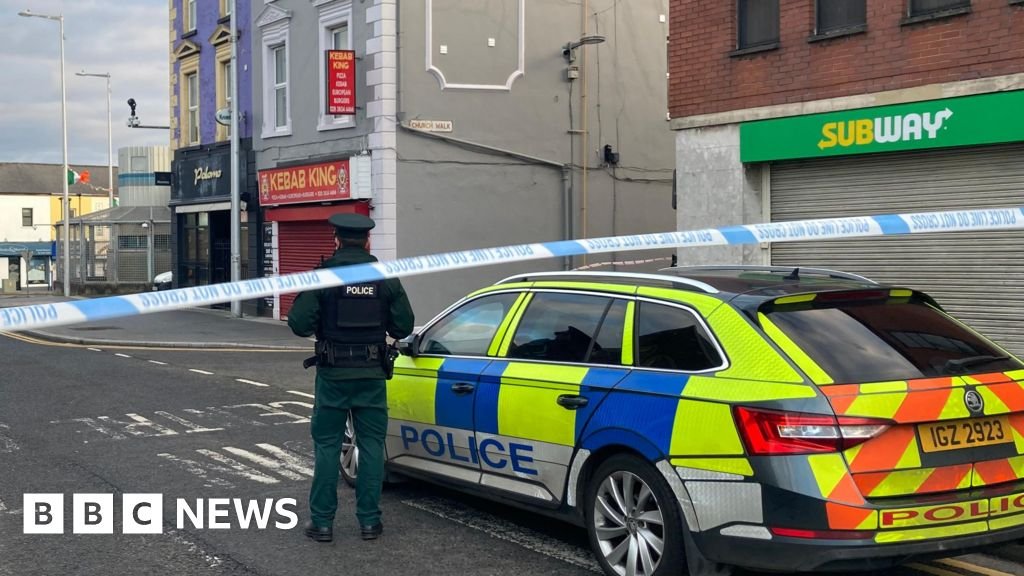
A delivery driver was forced to drive a suspicious device to Lurgan police station after being threatened, police say.
Source link
UK News
Middle East crisis live: Iran attacks tanker in Dubai; explosions in Tehran and Jerusalem amid wave of strikes | US-Israel war on Iran
Interim summary
For those just joining our live coverage of the Middle East war, here’s a snapshot of the latest:
-
Iran attacked and set ablaze a fully loaded crude oil tanker off Dubai. Local authorities later said response teams contained the incident with no oil leakage and that no injuries had been reported
-
Donald Trump warned that the US would obliterate Iran’s energy plants and oil wells if it did not open the strait of Hormuz.
-
The Israeli military said four soldiers had been killed in combat in southern Lebanon, where its forces are clashing with Iran-backed Hezbollah.
-
Two giant Chinese container ships have sailed through the strait of Hormuz on their second attempt to leave the Gulf after turning back on Friday, ship-tracking data shows. The transit signals a diplomatic breakthrough between Beijing and Tehran as Iran widens its list of approved nations for transiting the vital route, Lloyd’s List reported.
-
Indonesia’s foreign minister called for an emergency UN security council meeting and a thorough investigation” into a “heinous attack” after three UN peacekeepers from Indonesia were killed in southern Lebanon.
-
Blasts were heard in Tehran and power cuts hit some areas of the capital, Iranian media reported on Tuesday. Israel earlier carried out missile strikes on what it called military infrastructure in Tehran and infrastructure used by Hezbollah in Beirut.
-
Japan and Indonesia agreed to step up coordination on energy security, Japanese PM Sanae Takaichi said on Tuesday.
-
Two Iranian missile launches targeted central Israel, Israeli media reported, with the emergency service saying it had not received reports of any injuries.
-
Turkey reported a ballistic missile launched from Iran had entered Turkish airspace before being shot down by Nato air and missile defences.
-
An earlier summary of key developments is here.
Key events
The UAE’s defence ministry posted to X about half an hour ago saying that its air defences were intercepting Iranian missile and drone attacks – and said this activity explained the sounds audible across various parts of the country.
A US-Israeli attack on the Iranian city of Mahallat last night (at about 11pm local time) killed 11 people and injured 15 others, the Tasnim news agency has cited a deputy security officer as having said.
Four residential units were “completely destroyed” in the attack, in which three children were killed, according to the report, which we have not yet been able to independently verify.
Iranian parliamentary committee approves plan to impose tolls on strait of Hormuz – state media
Iranian state media reported yesterday that an Iranian parliamentary committee had approved a proposal to collect a toll on vessels travelling through the strait of Hormuz.
The strait will be closed to ships from the US, Israel and countries that have been involved in sanctioning Iran, according to a Telegram post from the Fars news agency, which said that Iran will have a “sovereign” role in the implementation of the new system.
The proposal, approved by Iran’s parliament security committee, would reportedly require agreement from other countries next to the strait. It is not clear how much the toll on vessels will be.
The US president, Donald Trump, warned yesterday that if a deal was not struck with Iran – including to reopen the strait of Hormuz shipping lane – US forces would destroy “all of their Electric Generating Plants, Oil Wells and Kharg Island (and possibly all desalinization plants!)”.
The strait’s closure has sent global energy prices soaring, including in the US where residents are being hit hard by surging gas prices and farmers face higher fertiliser costs and falling commodity prices.
Two container vessels belonging to the Chinese shipping giant Cosco have successfully passed through the strait of Hormuz as they have exited the Gulf, ship tracking data indicates.
The two vessels were the CSCL Indian Ocean and the CSCL Arctic Ocean. They passed close to the Iranian-controlled island of Larak and are bound for Port Klang in Malaysia.
Iran has effectively blocked the vital waterway but allowed a trickle of ships through from nations it deems “non-hostile”, such as Thailand, China, Pakistan and India.
Saudi Arabia’s defence ministry has said it has intercepted and destroyed ten drones over the past hours, and eight missiles launched towards the Riyadh area and the country’s eastern region.
Early this morning Kuwait said its air defences were responding to hostile missile and drone attacks. Neither Saudi Arabia nor Kuwait said where the drones or missiles came from.
Interim summary
For those just joining our live coverage of the Middle East war, here’s a snapshot of the latest:
-
Iran attacked and set ablaze a fully loaded crude oil tanker off Dubai. Local authorities later said response teams contained the incident with no oil leakage and that no injuries had been reported
-
Donald Trump warned that the US would obliterate Iran’s energy plants and oil wells if it did not open the strait of Hormuz.
-
The Israeli military said four soldiers had been killed in combat in southern Lebanon, where its forces are clashing with Iran-backed Hezbollah.
-
Two giant Chinese container ships have sailed through the strait of Hormuz on their second attempt to leave the Gulf after turning back on Friday, ship-tracking data shows. The transit signals a diplomatic breakthrough between Beijing and Tehran as Iran widens its list of approved nations for transiting the vital route, Lloyd’s List reported.
-
Indonesia’s foreign minister called for an emergency UN security council meeting and a thorough investigation” into a “heinous attack” after three UN peacekeepers from Indonesia were killed in southern Lebanon.
-
Blasts were heard in Tehran and power cuts hit some areas of the capital, Iranian media reported on Tuesday. Israel earlier carried out missile strikes on what it called military infrastructure in Tehran and infrastructure used by Hezbollah in Beirut.
-
Japan and Indonesia agreed to step up coordination on energy security, Japanese PM Sanae Takaichi said on Tuesday.
-
Two Iranian missile launches targeted central Israel, Israeli media reported, with the emergency service saying it had not received reports of any injuries.
-
Turkey reported a ballistic missile launched from Iran had entered Turkish airspace before being shot down by Nato air and missile defences.
-
An earlier summary of key developments is here.
Here are some of the latest images coming in from the Middle East in week five of the war.
Macron due in Japan for talks dominated by Iran war
French president Emmanuel Macron arrives in Japan on Tuesday for a visit that initially aimed to strengthen partnerships in nuclear energy and space innovation but will now be dominated by the Middle East war.
Macron will hold talks with prime minister Sanae Takaichi on Wednesday and “the crisis in the Middle East will be at the heart of discussions”, the Élysée Palace said ahead of the trip.
It added that the two leaders would discuss “how we can try to find common solutions”, reports Agence France-Presse.
Japan depends on the Middle East for 95% of its oil imports and has had to dip into strategic stockpiles to temper the impact of rising fuel prices since the start of the war.
Economy and finance ministers of G7 countries, which include France and Japan, said on Monday they stood ready to take “all necessary measures” to ensure the stability of the energy market as they tackled the economic consequences of the war.
Israel finishes ‘another wave’ of strikes in Tehran
The Israeli military says it has “just completed another wave of strikes” targeting Iranian regime infrastructure in the heart of Tehran.
The post on social media also said the military “continues to deepen the damage” to the infrastructure.
No oil leakage after Kuwaiti oil tanker attack – authorities
Dubai response teams have successfully contained the incident involving a Kuwaiti oil tanker in Dubai waters with no oil leakage, authorities say.
The Dubai media office also reiterated no injuries were reported.
Earlier on Monday Iran reportedly carried out a drone attack that set ablaze to a fully loaded crude oil tanker in Dubai waters, while the ship’s owner warned of a possible oil spill.
Japan and Indonesia have agreed to step up coordination on energy security, Japanese prime minister Sanae Takaichi said on Tuesday.
“In light of the Iran situation, the strategic importance of resources and energy security is once again being recognized globally. Indonesia is a major resource-rich nation,” Takaichi said alongside Indonesian president Prabowo Subianto after they met for talks in Tokyo.
The summit came as the US-Israeli war on Iran squeezes oil and gas supplies vital to Asia.
Indonesia is the world’s biggest exporter of thermal coal for power generation, supplying about half of global exports, Reuters reports. It is also a major liquefied natural gas exporter, with roughly a quarter of its shipments bound for Japan.
More now on three UN peacekeepers from Indonesia being killed in two incidents in southern Lebanon: Indonesia’s foreign minister has called for an emergency UN security council meeting and “for a swift, thorough and transparent investigation” into the “heinous attack”.
Sugiono made the call on Tuesday in a post on X after speaking with UN secretary António Guterres.
Israel’s military said it was aware of the reports regarding the two incidents and they were being reviewed thoroughly to determine whether they resulted from the military’s activity or Hezbollah’s.
Two peacekeepers were killed on Monday after an explosion from an unknown origin destroyed their vehicle near Bani Hayyan in south Lebanon, the UN peacekeeping force (Unifil) said. Another Indonesian soldier was killed overnight into Monday when a projectile exploded near one of the group’s positions close to the southern Lebanese village of Adchit al-Qusayr.
In response to the first death, Indonesia’s foreign ministry said on Monday the deceased peacekeeper was one of its citizens and that three others were injured by “indirect artillery fire”.
Indonesia condemned the incident and said any harm to peacekeepers was unacceptable, while reiterating its condemnation “of Israel’s attacks in southern Lebanon”.
Guterres said attacks on peacekeepers were grave violations of international humanitarian law and may amount to war crimes.
Four Israeli soldiers killed in southern Lebanon – IDF
The Israeli military said on Tuesday four soldiers had been killed in combat in southern Lebanon, where its forces are clashing with the Iran-backed Hezbollah.
A military statement named three soldiers from the same battalion who “fell during combat” and a separate statement said another soldier – who had not yet been publicly named – had died in the same incident, Agence France-Presse is reporting.
Another soldier was severely wounded and a reservist moderately wounded, a second statement said.
Opening summary
Hello and welcome to our continuing live coverage of the US-Israel war on Iran and its impact on the region, the world and the global economy.
Iran attacked and set ablaze a fully loaded crude oil tanker off Dubai on Monday while Donald Trump warned the US would obliterate Iran’s energy plants and oil wells if it did not open the strait of Hormuz.
The apparent strike on the Kuwait-flagged Al-Salmi is the latest in a string of assaults on merchant vessels by missiles or explosive air and sea drones in the Persian Gulf and the strait of Hormuz since the US and Israel attacked Iran on 28 February.
Crude oil prices briefly spiked anew after Kuwait’s state news agency reported the attack on the tanker, which can carry around 2m barrels of oil worth more than $200m at current prices.
Kuwait Petroleum Corp, the ship’s owner, said work was under way to assess damage and warned of a possible oil spill. Authorities in Dubai later said they had brought the fire under control after a drone attack on the tanker, and that no injuries were reported.
In other key developments:
-
Blasts were heard in Tehran and power cuts hit some areas of the capital, Iranian media reported on Tuesday. Israel earlier carried out missile strikes on what it called military infrastructure in Tehran and infrastructure used by Iran-backed Hezbollah in Beirut, leaving black smoke hanging over the Lebanese capital.
-
Two successive Iranian missile launches targeted central Israel, the Times of Israel reported, quoting the emergency service as saying it had not received any reports of injuries.
-
Turkey reported a ballistic missile launched from Iran had entered Turkish airspace before being shot down by Nato air and missile defences.
-
Oil prices were headed on Tuesday for a record monthly rise while Asian shares were headed for their steepest fall since 2022, capping a tumultuous month as the war fanned fears of higher inflation and slower growth. Bonds were headed for their largest decline in months, while the dollar recorded its strongest gain in eight months.
-
The US national average retail price of fuel crossed $4 a gallon for the first time in more than three years on Monday, data from price-tracking service GasBuddy showed, as tightening global supplies pushed US crude prices above $101 a barrel.
-
Three UN peacekeepers from Indonesia were killed in two separate incidents in southern Lebanon.
-
Thousands of soldiers from the US Army’s elite 82nd Airborne Division have started arriving in the Middle East, two US officials told Reuters. , as part of a reinforcement that would expand Trump’s options to include the deployment of forces inside Iranian territory, even as he pursues talks with Tehran.
-
The White House later said talks with Iran were progressing and Trump wanted to reach a deal with Tehran before a 6 April deadline he set last week after extending an earlier deadline he had set for Iran to open the largely blocked strait of Hormuz oil route.
-
Trump had told aides he is willing to end the military campaign against Iran even if the strait or Hormuz remains largely closed and leave a complex operation to reopen it for a later date, the Wall Street Journal later reported.
-
Iran said on Monday it had received US peace proposals via intermediaries and that they were “unrealistic, illogical and excessive”.


EU ministers arrive in Ukraine to mark Bucha massacre anniversary – Europe live | Ukraine

COHO names Jon Hurley Chief Product Officer as rollout

UK aviation regulator rejects Heathrow’s plans to significantly raise landing fees | Heathrow airport
-

 Crime & Safety2 weeks ago
Oxford: ‘Next generation’ LimeBikes in city from today
-

 Jobs & Careers2 weeks ago
Why Join Oxford | Oxford University Jobs
-
 Jobs & Careers2 weeks ago
Explore our Careers
-

 Student Life2 weeks ago
The independent cinema battling Oriel College to stay open
-

 Oxford Events2 weeks ago
Michelin Guide Oxfordshire Restaurants – The Oxford Magazine
-

 Oxford Events2 weeks ago
Oxford News and Events, What’s on in Oxford, Exhibitions
-

 Jobs & Careers2 weeks ago
Internal Job Board for University vacancies
-

 Crime & Safety2 weeks ago
Crash partially blocks A40 and causes severe Oxfordshire traffic