
Traffic & Transport
Flight chaos affecting hundreds of thousands was caused in ‘millisecond’ by software error | Air transport

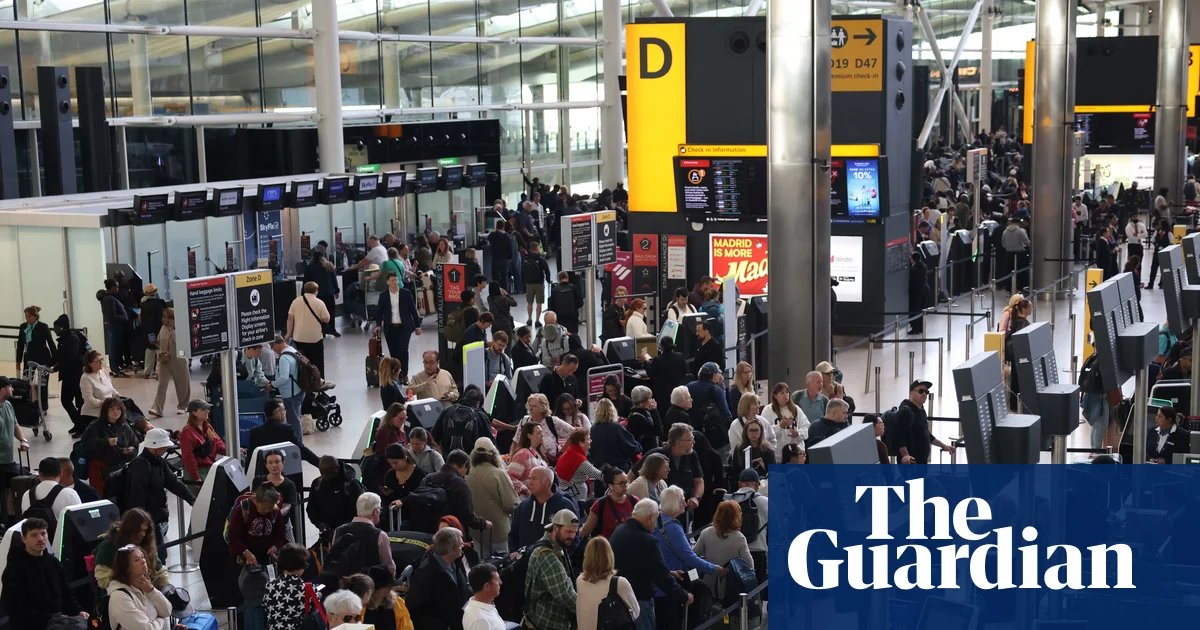
A software defect in part of the UK’s air traffic control system corrupted flight data “in the space of a millisecond”, leading to a six-hour outage and mass airline cancellations and delays across the UK last week, National Air Traffic Services has said.
But ministers said that the report into the incident still left questions unanswered, saying they needed “to urgently understand why this issue was not discovered and fixed before it caused chaos”.
The transport secretary, Heidi Alexander, said the industry regulator the Civil Aviation Authority (CAA) would now “check their findings” and investigate Nats’ plans.
Hundreds of thousands of passengers had their travel disrupted after the Nats failure on Tuesday 8 September, which initially only stopped flights departing in the London area but eventually spread to disrupt travel across the UK and beyond by the evening.
Airlines called for the dismissal of the Nats chief executive officer, Martin Rolfe, after the third major air traffic control failure in the UK since summer 2023.
However, Rolfe said the incident was unrelated to the previous failures and dismissed speculation that it was caused by military intervention.
The preliminary report said that the failure was a software defect in part of the National Airspace System, which allocates codes to individual aircraft to identify flights on radar.
The report said that while a manual request for an aircraft code was being processed, another request paused it, adding: “When processing of the aircraft code request resumed, the software defect meant it did not resume correctly and the resulting output was corrupted, and affected some subsequent flight data updates. This happened in the space of a millisecond.”
Rolfe said: “The issue has been identified and mitigation is in place while a permanent fix is safety tested and deployed.”
Nats said restrictions were put in place across the UK so that the system could be restarted. The restrictions were in place for six hours and it took more than two days for the backlog of passenger disruption to be cleared, with hundreds of thousands of passengers’ travel plans disrupted.
Rolfe added: “I would like to apologise again, very sincerely, to everyone who was affected last week. It’s our job to get people where they want to go, quickly and without delay and we are devastated when that goes wrong. However, our primary role is to keep our skies safe, and everyone who flies through them. At no point last week was safety in question.”
However, Alexander said: “The disruption we saw last week was completely unacceptable and I know how frustrating it was for passengers, airlines and airports.”
after newsletter promotion
She said she had received Nats’ report, adding: “While I am pleased to see that the safety of passengers was protected, it’s clear we need to urgently understand why this issue was not discovered and fixed before it caused chaos.
“I have therefore tasked the CAA with conducting an independent review to check Nats’ findings and investigate their investment plans to enhance resilience in the future, along with regulatory accountability.
“It is crucial that our national infrastructure is fit for the future, and this government will make sure the aviation sector is as resilient as possible, so passengers can get to where they need to be.”
The CAA’s review will be published within six months.
Traffic & Transport
Reported assaults on Britain’s railways rise to nearly 25,000 a year | Rail transport
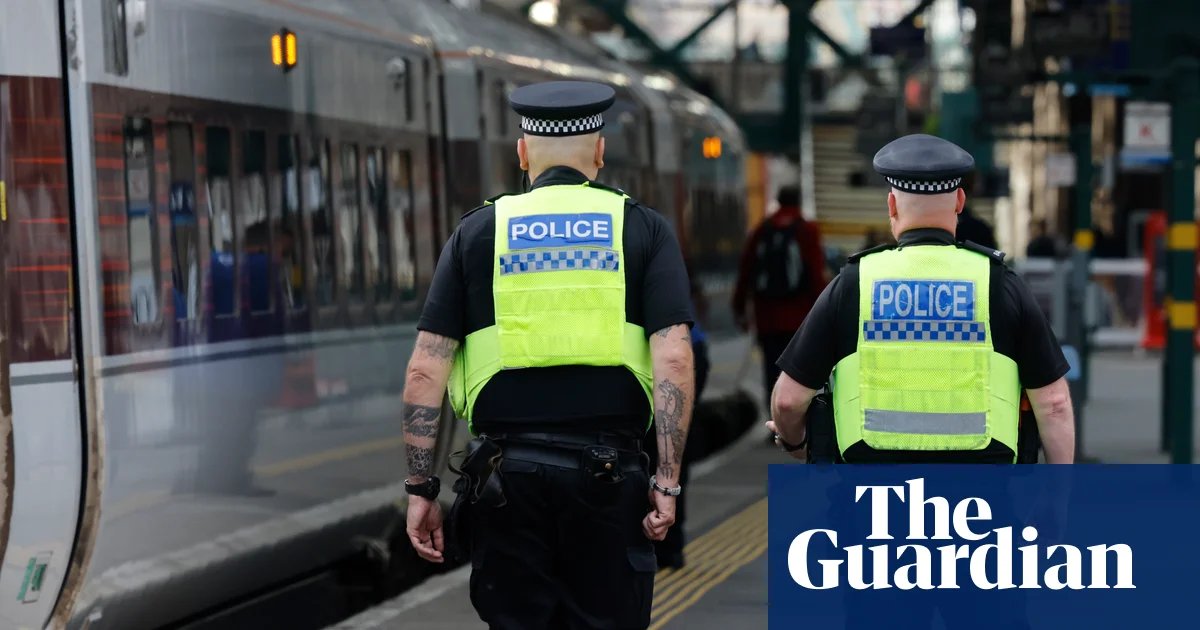
The number of reported assaults on Britain’s railways has risen to a record high of almost 25,000 incidents in a year.
Unions said the “horrendous” figures showed the need for more staff and policing, as the Office of Rail and Road (ORR) revealed a sharp increase in assaults on the travelling public and on railway staff last year.
There were 13,464 reported assaults against passengers and members of the public on the mainline railway in 2025-26, up 36% on the previous year and the highest number recorded by the ORR since it started tracking the figures in 2004.
Assaults on rail staff were up 12% in a year to 11,289 reported incidents, mainly verbal abuse but including nearly 2,500 physical assaults – an average of about seven every day.
The assaults on members of the public included startling rises in cases of harassment, up 52% year on year, and common assault, up by 30%.
The figures partly reflect increased reporting and zero-tolerance campaigns on public transport, but also underline concerns flagged by unions about the ongoing threats to frontline workers as well as passengers, and the availability of transport police.
The RMT general secretary, Eddie Dempsey, said the numbers were horrendous but chimed with the union’s own surveys showing two-thirds of its members had experienced some form of violence at work in the past year.
He said: “We are calling for a significant increase in staffing across public transport, including an end to lone working. We also clearly need stronger legal protections for public transport workers against assaults at work.
“British Transport Police funding cuts have also been disastrous which has undermined a proper policing presence on all public transport.”
The chief inspector of railways, the ORR’s Richard Hines, said: “The increase in reported assaults is concerning. No one on the railway should be subjected to violence, threats or abuse.
“We’re working with industry and our trade union colleagues to address work-related violence and harassment, including through recent guidance which sets out what we expect from rail employers.
“This includes understanding where the risks are, putting effective controls in place, encouraging staff to report incidents and providing appropriate support afterwards. Our inspectors will continue to check how these risks are being managed.”
A spokesperson for Network Rail and train operators said: “Violence, abuse and intimidation directed at passengers or staff are completely unacceptable. The rail industry works closely with British Transport Police to investigate incidents, support victims and bring offenders to justice.”
after newsletter promotion
They said the numbers also reflected greater intelligence sharing, improved reporting processes, and more CCTV and body-worn cameras for frontline staff.
The ORR report noted that the headline numbers of reported assaults can include multiple counts in a single incident, for example for both harassment and common assault, while workforce assaults are now recorded even if no physical injury occurs. On the London Underground, where there is single counting, the number of assaults on the workforce fell slightly last year.
The chief executive of the Rail Safety and Standards Board, Mark Phillips, said the rail industry was taking action to better protect staff, but the figures “underline the need for a change in public behaviour and greater respect for the people who keep the railway running safely every day”.
Reports in recent years have highlighted that women and girls were at particular risk, while the growing number of assaults year on year since the pandemic has coincided with pressure on British Transport Police numbers.
The abuse and intimidation faced by frontline staff on the railways has also been seen in sectors including retail and in the NHS. The British Retail Consortium warned over “endemic” violence towards shop workers earlier this year, while the number of reports of violence against NHS staff by patients surpassed 100,000 in 2025.
The Department for Transport and British Transport Police were approached for comment.
Traffic & Transport
London buses in decline? Why public transport in global cities is slowing to a crawl – visualised | Transport
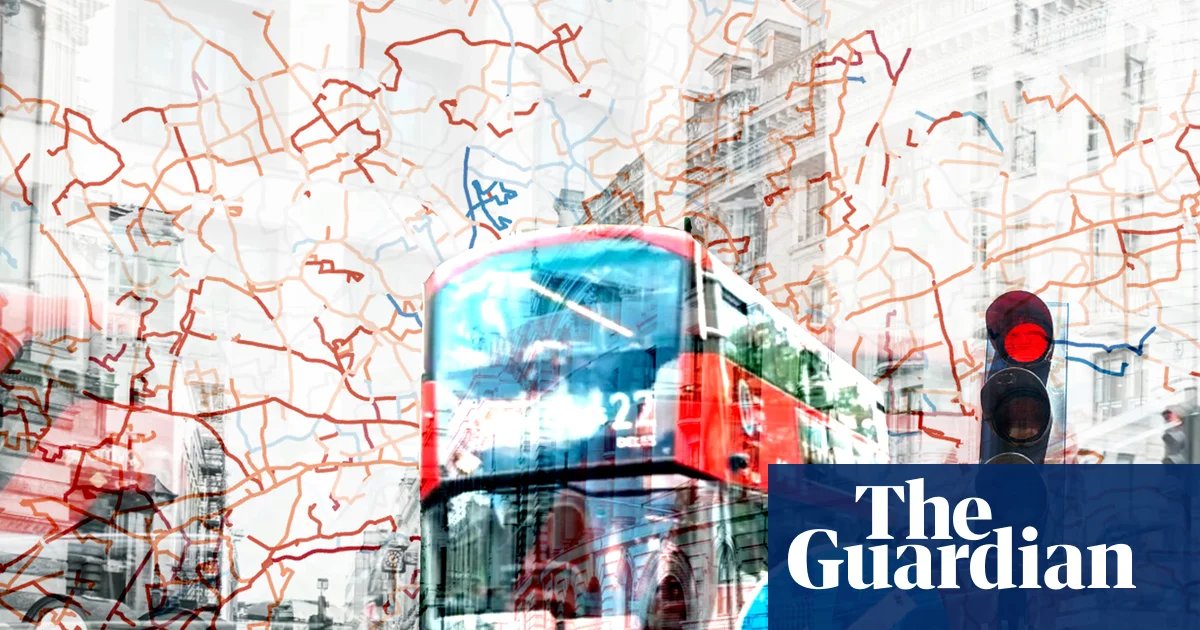
Experts warn that slower buses risk driving passengers away: research cited by Transport for London (TfL) suggests a 10% fall in speed leads to a 6% drop in demand.
Passenger journeys in London have already fallen by more than 300m a year, or 16%, since 2013, despite the city’s population growing by almost a million people.
The city’s mayor, Sadiq Khan, does not play down the issue. “We’re really concerned about bus usage. One of the reasons, when you speak to commuters, is a lack of reliability. And why is it they lack reliability? Because of bus speed.”
A congested city, with ever more demands on road space, has left London facing difficult choices over which modes of transport to prioritise. But when passengers turn away from slower buses, the service frequencies and even routes are liable to be cut.
The fear is, as one industry figure puts it, “a vicious circle of decline”: slower buses; fewer passengers; and increasing pressure on services.
Recent research has also pointed to this trend being recorded in other global cities such as Paris, Brussels, Lisbon and beyond.
The growing wait for the London bus – in data
Guardian analysis of data from TfL, which runs London’s road and rail public transport network, reveals several indicators that the capital’s bus services have slowed, become truncated or less reliable. The Covid-19 pandemic had a sharp and obvious impact on the data, but there are clear downwards trends cutting through that period.
Across the network as a whole, the average speed in 2025-26 stood at 9.18mph – the lowest speed since comparable records began in 2013-14, and a 4.8% drop over this period.
Bus timetables have long been adjusted to reflect London’s traffic. A snapshot of routes analysed by the economist Alexander Jan, a veteran of transport planning in the capital, found scheduled journey times are now, on average, 30% longer than they were 50 years ago.
Yet even with that extra time built in, buses are increasingly failing to meet expectations. Delays have worsened: on high-frequency routes – those running more than five buses an hour – passengers now wait 22% longer than expected, up from 18% in 2018.
If unreliability is, as Khan argues, deterring passengers, the latest ridership figures are concerning.
Last year saw the first fall in bus journeys since the post-pandemic recovery. Between 2010 and 2019, annual passenger numbers consistently exceeded 2 billion; in 2024, they fell to 1.8 billion.
At the same time, the size of London’s bus network has shrunk. Between 2010 and 2019, TfL buses travelled an average of 487m km (303m miles) a year. Over the past three years, that figure has fallen to about 460m.
Across the network buses are slower, passenger numbers are falling, services cover fewer miles and waiting times are rising.
Those slower journeys come with a financial cost. Because drivers’ wages account for the largest share of operating costs, slower buses mean more vehicles and more staff are needed to provide the same level of service.
According to analysis by the Confederation of Passenger Transport, making London’s buses 10% faster would bring in an extra £70m a year in fares and cut operating costs by £214m.
Delays and cuts also hit the poorest in society, who are more likely to rely on buses for shift work, lower costs or lack of a car. In London, a bus into the centre costs less than half the peak tube fare, and housing costs increase with proximity to underground stations.

A global trend
London is far from the only city whose buses are slowing down.
A 2026 report by the Transport Strategy Centre (TSC) at Imperial College London found a “persistent decline in bus speeds” in the past decade in 15 networks in Europe, Asia and North America.
London’s slowdown is modest compared with other cities: in Paris, Istanbul, Kuala Lumpur and Singapore, bus travel is more than 10% slower than before the pandemic.
Local factors vary, but the TSC report identifies a pattern: growing traffic and congestion and less space for buses, “diminished in part to the expansion of road space for cycling and walking”.
In Barcelona, the redevelopment of Plaça de les Glòries Catalanes pushed traffic on to surrounding roads, at lower speed limits, with no priority for buses. Journey times rose by more than 25%.
In New York, widening the protected cycle lane on Sixth Avenue reduced general traffic lanes from four to three; morning-peak bus speeds fell by 8% over the following year.
When buses are fast and reliable, as the TSC report concludes, passengers “respond with increased use, strengthening the viability of the system; when speeds decline, ridership suffers, undermining sustainability goals”. In other words, making buses better is, the TSC says, “a primary lever for achieving equitable, low-carbon, and resilient cities”.

Why are London buses getting slower?
In London, the persistent slowdown comes despite successive London mayors championing buses and bringing in better technology and vehicles. There was a great leap forward in bus performance in the early 2000s through Ken Livingstone’s congestion charge and investment in infrastructure such as GPS tracking, which massively improved reliability.
Livingstone’s fleets of new bendy buses were phased out by his immediate successor, Boris Johnson, a self-professed enthusiast – even if his signature New Routemasters proved controversial.
Since then Khan, famously the son of a bus driver, has brought in the Hopper fare, allowing multiple bus connections for the price of one journey, and is aiming for a fully electric bus fleet by 2030. Passengers on many routes now enjoy cleaner, quieter, cheaper buses, not least on the electric doubledeckers pioneered on the 63 route with better seats, skylights, wood-effect flooring and charging points – a nicer environment, at least, to wait in traffic.
Again Khan does not play down the issues: “We’re really concerned about bus usage. I’m fully aware that it’s poorer Londoners that rely on buses because they’re cheaper.”
Geoff Hobbs, TfL’s director of public transport service planning, says travel patterns have changed since Covid, with more home working, fewer trips to high streets and shifting demographics reducing demand in some areas. The growth of online shopping has also brought more delivery vans on to London’s streets, adding to congestion.
“School rolls in some parts of London are getting smaller and some schools are even closing. And it’s youngsters that make heaviest use of buses,” he says.
There is also “the double whammy of many more deliveries and delivery vans: you make less trips to town centres; and those same vans stop at places we’d rather they didn’t, blocking traffic”, Hobbs adds.
A Guardian reporter’s journey on the 22 bus was slowed – and often stopped – by many of these obstructions. On the 1 hour 47 minute journey, long single-lane queues around Putney and various lane and road closures from roadworks in Mayfair kept the bus still for 40 minutes in total.
But TfL and operators identify two factors above all others: growing pressure on road space and the sheer volume of roadworks.
Graham Vidler, the chief executive of the Confederation of Passenger Transport, says: “There are too many vehicles wanting to use the roads at popular times. You can account for that in timetabling.
“But what you can’t account for are unplanned and uncoordinated roadworks. And that’s probably the biggest thing that’s moved the dial. The number of roadworks seems to be mushrooming.”
Seb Dance, London’s deputy mayor for transport, agrees: “The biggest impact is roadworks and particularly unplanned roadworks. We’ve got a problem in London where we’ve got old infrastructure, whether it’s sewage, water, electricity, gas.”
A post-pandemic rebound in utility works, alongside road redesign projects and repairs to weather-damaged roads, has left more than 1,000 roadworks obstructing London’s streets on an average day.
Roadworks impinge on an increasingly limited road space, with five times as much of London now covered by cycleways as a decade ago – 450km compared with 90km. The conversion itself has meant lengthy works to build separate lanes – as well as move pavements and relocate bus stops – for surging cycling and e-bike use.
Hobbs says bus performances has had to come second to other considerations, including safety and the general city environment: “There are trade-offs to be done … London has become a more walkable city. There are more cycle lanes. There have been all sorts of schemes that make London, a better place to live. You go back far enough, Trafalgar Square was a sort of giant roundabout.”
Pedestrianisation of that square, once a key bus interchange, will be followed at Oxford Street, another important bus route.
Operators believe buses are at the raw end of such trade-offs. Vidler says the cycle lanes built in recent years “serve a really important purpose – but if the politicians decide to give more space to one mode it follows that others will get less. And if you’re putting in more cycle lanes, it means it’s harder for bus passengers to travel.”
Dance resists this interpretation. “Mainly there are just too many cars. So moving people out of cars to more efficient spaces such as public transport, buses and bikes is part of that solution,” he says.
Demand from other types of vehicles is growing, whether Lime bikes, e-scooters or the embryonic robotaxi fleets from the likes of Uber. But technology can also help buses find a way through. The next wave of TfL’s Fusion programme – “basically computers on all the traffic lights across London”, says Dance – will link the capital’s thousands of signals to speed up flow and give more buses priority where possible.
A lane rental scheme, charging companies by the day for the roadworks they carry out, was pioneered on TfL’s roads and is being extended to boroughs, incentivising work to be coordinated and completed quicker.
“We’ve got to make our buses more reliable,” says Khan. “Which means them going faster.”
The hot summer of 2026 is likely to have further affected bus performance. The mayor told bus drivers to take breaks and even to stay in the depot rather than operate a vehicle without functioning air-cooling systems. Contractual penalties for poor performance will be suspended during extreme heat, which is likely to be more common.
And for speed as heat, safety remains priority. Road speed limits across London are decreasing, with more 20mph routes and the 50mph on major suburban roads planned to be cut to 40mph before 2030 – potentially affecting even the express Superloop buses established by Khan.
For now, those orbital bus routes in the outer boroughs, rebranded and remapped under Khan, are seen as a success story. Instead of a doom loop of slower buses and fewer passengers, he says, “the Superloop has shown we can increase bus usage. If you provide a good product, people will use it.”
Claire Wright, TfL’s head of streets performance, says that despite the “marginal decline” in speeds, the bus network remains the most popular form of public transport in the capital, “helping people get around affordably while also delivering public health and air quality benefits from fewer people driving”.
She adds: “We’ll continue to closely monitor network performance to ensure the bus network serves Londoners as effectively as possible.”
Traffic & Transport
Flights delayed and cancelled in parts of UK after latest air traffic issue | Transport
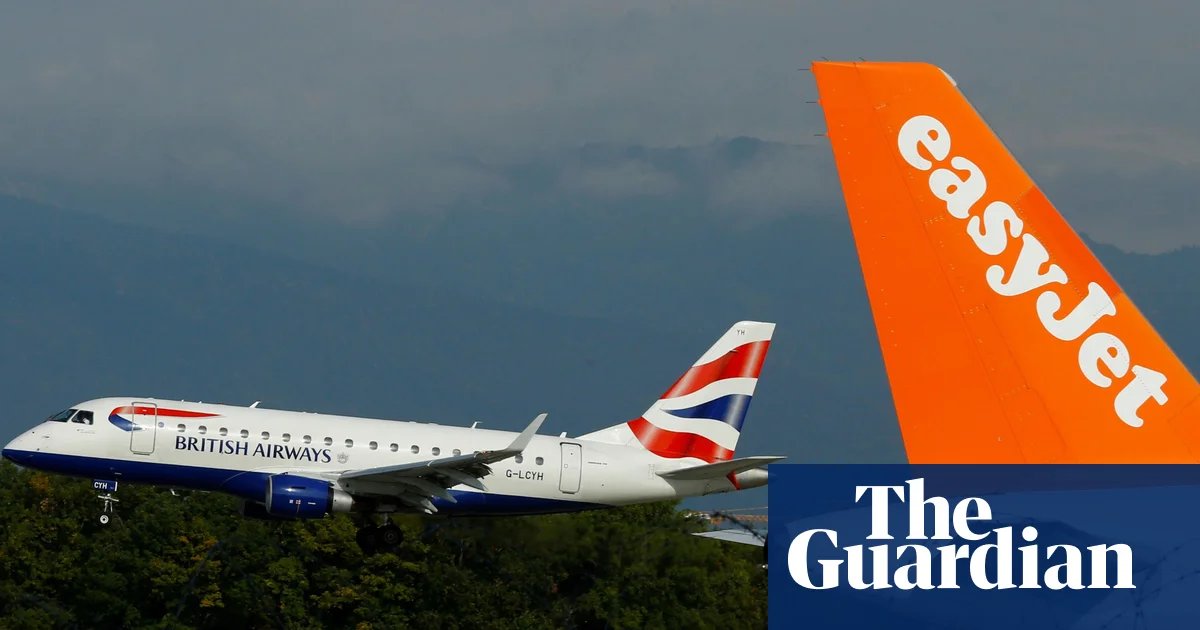
Flights have been disrupted in parts of the UK after National Air Traffic Services was hit by its second technical issue in a fortnight.
A number of departing and arriving flights were severely delayed and dozens cancelled on Monday with disruption affecting Scotland, Northern Ireland and northern England.
The fault was reported to have occurred at Nats’s second control centre, at Prestwick in Scotland and fixed by about 10.30am.
Airlines including British Airways and easyJet reported immediate cancellations. A total of 35 flights have so far been cancelled across UK airports, according to the analysts Cirium.
The failure came less than two weeks after a major incident at Nats control centre in England disrupted travel for hundreds of thousands of passengers, and only three days after the release of an initial report into that incident by Nats promising to “continually improve the critical service we provide”.
A Nats spokesperson said: “The issue in our Prestwick centre is now fixed. We are working with airports and airlines to safely lift air traffic regulations as quickly as we can to minimise any further disruption. Passengers should still check the status of their flight with their airline. We apologise for the disruption.”
Nats said the problem was “unrelated to the issue two weeks ago. We apologise for the disruption.”
The transport secretary, Heidi Alexander, posted on X just after 10.30am that the latest technical issue was resolved. She said: “There has been a further IT issue affecting Nats. Engineers have fixed the problem and systems are resuming.
“I know this will be deeply frustrating for passengers after the previous issue. There may be some delays as things reset. Please check with your airline for updates.”
An easyJet spokesperson said: “A Nats air traffic control system failure in its Prestwick centre is causing delays to flights with some unable to operate. This, once again, calls into question the resilience of Nats’s systems and demonstrates the need for firm actions to prevent these repeated failures.”
after newsletter promotion
A BA spokesperson said: “Yet another technical fault with Nats means some of our customers are likely to experience disruption to their travel plans today.
“This is disappointing, and while it is an issue that is entirely out of our control, we’re doing everything we can to limit the impact on customers and are keeping them updated.”
Ryanair repeated its demands for the sacking of the Nats chief executive, Martin Rolfe. The airline’s chief operations officer, Neal McMahon, added: “Just three days after Nats assured airlines and passengers that it had introduced robust ‘mitigation plans’, its flight data processing system has failed again.
“More than 25,000 Ryanair passengers have already suffered disruption, with over 140 Ryanair flights delayed.”



-
 Oxford News4 weeks ago
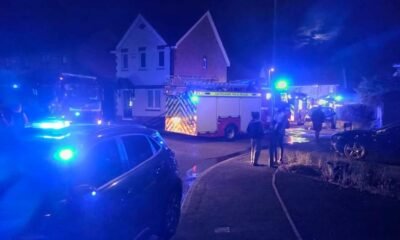
Probe launched as multiple fire crews fight Oxford blaze
-

 Oxford united FC3 days ago
Chris Gunter steps away Wales role to focus on Oxford United
-

 Oxford Events4 weeks ago
What’s on in Oxfordshire this September
-

 Oxford Events4 weeks ago
Supercar invasion: Salon Privé 2026 to bring a slew of UK automotive debuts
-

 Oxford News3 weeks ago
UK private school’s ‘outstanding’ headteacher is to retire
-

 Oxford News4 weeks ago
King Charles applauded as Dragons’ Den star among 26 to lose MBE
-

 Oxford united FC1 week ago
Oxford United transfer chief explains EFL embargo and contract dilemma
-

 Oxford Events4 weeks ago
13 remarkable cars to look out for at this year’s Salon Privé Concours