
UK News
Financial stability risks are rising as AI fuels cyber-attacks, IMF warns; oil below $100 on Iran peace hopes – business live | Business

IMF warns AI tools such as Mythos threaten financial stability
Newsflash: The International Monetary Fund is warning that financial stability risks are rising as artificial intelligence fuels cyber-attacks.
In a new blogpost, just published, the IMF singles out Claude Mythos as an example of how quickly risks are increasing.
The Fund is calling for “resilience, supervision, and international coordination” to safeguard global financial markets, and protect them against attackers with new AI tools.
It warns that AI tools such as Mythos can “dramatically” cut the time and cost needed to identify and exploit vulnerabilities, which raises the risk of weaknesses in key systems being discovered and exploited.
IMF experts Tobias Adrian, Tamas Gaidosch and Rangachary Ravikumar write:
Mythos could find and exploit vulnerabilities in every major operating system and web browser—even when used by non-experts.
This foreshadows how fast‑moving, AI‑driven cyber risks could destabilize the financial system if not managed carefully, and why authorities must focus on building resilience through supervision and coordination—rather than treating these developments as purely technical or operational issues.
AI firm Anthropic announced the existence of Mythos on 7 April but said it would not be released publicly because of its ability to identify unknown flaws in IT systems, which could be exploited by hackers.
But on 22 April Anthropic confirmed it is investigating a report that unauthorised users have gained access to Mythos
The IMF says “The Mythos episode” highlights the governance challenges surrounding AI, explaining:
Cyber risk does not respect borders. As AI capabilities spread across countries, inconsistent oversight could weaken a globally interconnected system.
The Fund is also concerned that emerging and developing economies may be disproportionately exposed to attackers targeting regions with weaker defenses
Key events
In its new blogpost, the IMF cites three ways that AI‑enabled cyber tools threaten financial stability:
-
Risks are systemic. Attacks become more dangerous when discovery and exploitation scale rapidly, with implications for financial stability.
-
Risks cut across sectors. The financial sector shares digital foundations with energy, telecommunications, and public services. That means AI‑assisted attacks can propagate across sectors that rely on the same infrastructure.
-
AI may further concentrate risk and failures with one vulnerability rippling across many institutions. Reliance on a small number of software platforms, cloud providers, or AI models increases the impact of any single exploited weakness.
IMF warns AI tools such as Mythos threaten financial stability
Newsflash: The International Monetary Fund is warning that financial stability risks are rising as artificial intelligence fuels cyber-attacks.
In a new blogpost, just published, the IMF singles out Claude Mythos as an example of how quickly risks are increasing.
The Fund is calling for “resilience, supervision, and international coordination” to safeguard global financial markets, and protect them against attackers with new AI tools.
It warns that AI tools such as Mythos can “dramatically” cut the time and cost needed to identify and exploit vulnerabilities, which raises the risk of weaknesses in key systems being discovered and exploited.
IMF experts Tobias Adrian, Tamas Gaidosch and Rangachary Ravikumar write:
Mythos could find and exploit vulnerabilities in every major operating system and web browser—even when used by non-experts.
This foreshadows how fast‑moving, AI‑driven cyber risks could destabilize the financial system if not managed carefully, and why authorities must focus on building resilience through supervision and coordination—rather than treating these developments as purely technical or operational issues.
AI firm Anthropic announced the existence of Mythos on 7 April but said it would not be released publicly because of its ability to identify unknown flaws in IT systems, which could be exploited by hackers.
But on 22 April Anthropic confirmed it is investigating a report that unauthorised users have gained access to Mythos
The IMF says “The Mythos episode” highlights the governance challenges surrounding AI, explaining:
Cyber risk does not respect borders. As AI capabilities spread across countries, inconsistent oversight could weaken a globally interconnected system.
The Fund is also concerned that emerging and developing economies may be disproportionately exposed to attackers targeting regions with weaker defenses
US stock market hits new highs
Zing! The US stock market has hit new record highs at the start of trading in New York.
With the oil price falling, hopes of a US-Iran peace agreement are spurring shares higher.
The S&P 500 share index has reached a new peak of 7,376 points, while the tech-focused Nasdaq Composite also hit a new high.
Oil price hits two-week low on Iran deal optimism
Brent crude has now sunk to its lowest level in over two weeks.
The benchmark oil measure is now down 5% today at $96.19 a barrel, its lowest level since 21 April.
Investors appear to remain hopeful that Iran might give a positive reaction to the peace deal proposed by the US yesterday, after US President Donald Trump predicted that the war in Iran will be “over quickly”.
Fawad Razaqzada, market analyst at Forex.com, explains:
The latest developments surrounding Iran have kept investors focused firmly on the risk-on trade.
Reports indicate Tehran is reviewing a US proposal that could eventually lead to the reopening of the Strait of Hormuz, while broader nuclear discussions may be delayed until later stages. At the same time, President Donald Trump has continued to strike a relatively optimistic tone, suggesting a deal could potentially be reached within a week ahead of the upcoming summit with Chinese President Xi Jinping on May 14-15.
The number of Americans filing new claims for jobless support has risen, but remains low.
Last week there were 200,000 new ‘initial claims’ for unemployment insurance, up from 190,000 in the previous week.
That’s lower than expected (economists forecast a rise to 205,000), and suggests US firms are still holding into workers despite the jump in energy prices since the Iran war began (although the Challenger jobs report earlier suggested job cuts were rising….)
Oil near two-week low
Oil is dropping closer to a two-week low, as Iran continues to ponder the US’s latest peace proposal.
Brent crude is now down more than 3% to just over $98 a barrel, near the lows seen yesterday after Tehran said the strait of Hormuz could reopen under new procedures.
There don’t appear to be any major breakthroughs yet, but key mediator Pakistan remains optimistic.
The Pakistani foreign ministry spokesperson, Tahir Andrabi, would not disclose details of the ongoing diplomatic efforts but said a deal could be reached soon.
He told a news briefing:
“What I can tell you and this is what I have stated before that we remain positive, we remain optimist, and we hope the settlement will be soon rather than later.”
Our Middle East crisis liveblog has the latest developments:
Sterling is having a calm election day.
The pound has gained 0.15% against the US dollar, which is generally weaker amid hopes of a US-Iran peace breakthrough.
The UK currency could be more volatile tomorrow as local election results from England, Scotland and Wales are announced.
There are forecasts that the Labour Party could lose as 1,800 council seats, or 75% of the seats it is defending. The worse the result, the greater the pressure on prime minister Keir Starmer – potentially creating fresh political instability.
Malaysia has joined the ranks of central banks leaving interest rates on hold while it assesses the impact of the Iran war.
Unike Norway, which hiked borrowing costs today (see earlier post), the Bank of Malaysia left its Overnight Policy Rate unchanged at 2.75%.
It also warned that sharp increases in energy and commodity prices from the Middle East crisis, and supply chain disruptions, are beginning to hurt global growth momentum, adding:
Downside risks to global growth remain elevated stemming from the uncertainties surrounding the length and severity of the conflict, tighter global financial conditions and concerns over valuations in financial markets.
The surge in building materials costs following the Iran war may make some UK construction projects unviable, warns Kelly Boorman, national head of construction at audit, tax and consulting firm RSM UK:
“Today’s figures show sentiment in the sector has fallen significantly as the industry braces for the impact of the Middle East conflict. Mobilisation is slowing as UK construction faced cost pressures on slim margins further challenged by the weakening economic backdrop.
“Pipelines are currently strong, particularly for large infrastructure projects including defence, healthcare and data centres. There are however some significant challenges around reassessing the viability of projects and extending mobilisation start dates, as oil price increases hit the supply chain, increasing material and fuel costs.
“With the increased volume of infrastructure projects committed to in prior years, outputs remain strong. However, local elections this week could cause further uncertainty among contractors around where future infrastructure spending will be focused. Uncertainty around planning decisions and concerns around new work to replace completed projects in April could create a shrinkage in the pipeline in the future that will create further instability for the industry. There is a significant risk that some planned projects will become unviable in the current economic climate, particularly for long-term fixed price projects, so we may see some large infrastructure projects put on hold.
Barclays’ AGM disrupted
Pro-Palestinian and climate protesters have interrupted the opening minutes of Barclays’ annual general meeting in Westminster, London, PA Media report.
The disruption broke out as chairman Nigel Higgins delivered his opening remarks, with several protesters standing up holding Palestinian flags and shouting “Free free Palestine”, “Everyone here is profiting from genocide” and “Barclays bank, you can’t hide, you’re supporting genocide”.
Mr Higgins responded that the board had “heard your point” and would take questions on the topic during a later Q+A section.
Security staff escorted, and in some cases carried, the protesters out of the meeting room as they continued shouting.
A few minutes later, climate protesters rose from their seats at the AGM and started singing: “Stop, in the name of love, before you break this Earth.”
One shouted:
“This bank is financing the climate and nature crisis that we have to stop. Softly-softly, slowly-slowly is not good enough. You are endangering life on Earth.”
China’s central bank loaded up on gold for an 18th straight month in April, Reuters reports.
They cite data from the People’s Bank of China which shows that China’s gold reserves rose to 74.64m fine troy ounces at the end of April, up from 74.38m at the end of March.
The total value of China’s gold mountain has risen too – to $344.17bn, up from $342.76bn a month earlier. The gold price stabilised in April after falling by 11.5% in March.
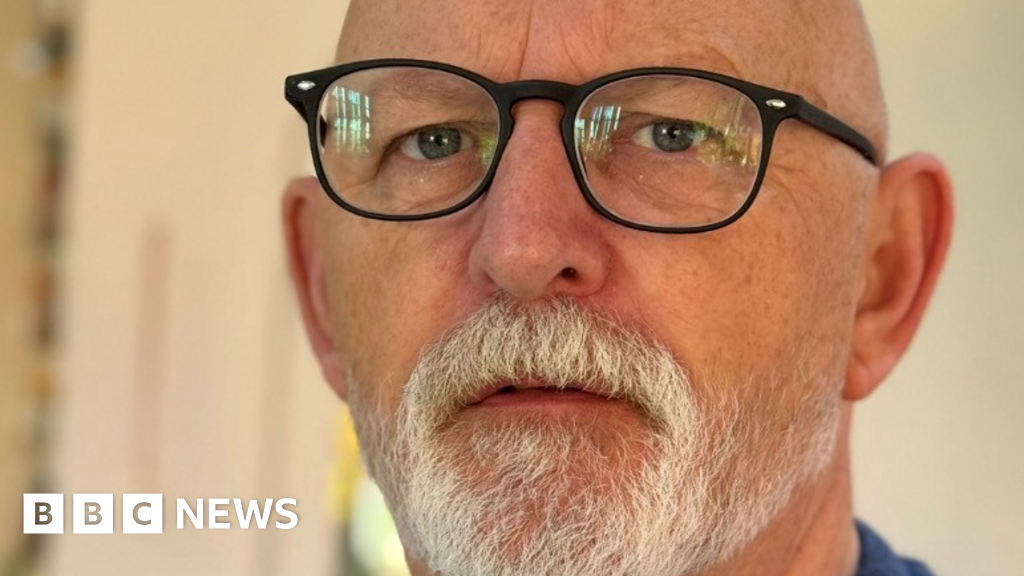
The family of Shaun Burton, say they are “devastated” by the loss.
Source link

Key events
In the opening half an hour against Cape Verde, Mikel Oyarzabal, the centre-forward, did not get a single touch.
Kyle Green gets in touch: “Your highlighting of Lalas and his absurdity is something that has prevented me from wanting to watch the coverage on Fox. While every channel has its pros and cons I just can’t.
“I’m 45 and probably the youngest of anyone who remembers him as a player instead of an opinionated insert insult here. As for the match this could be more competitive than it looks on paper Spain need a win the pressure is on them. Saudi Arabia could hold out for a draw and see what happens in their last match. “
News from the England camp, and it seems to be good news on Declan Rice.
“I’m ready and fit, raring to go. I was feeling a little bit of neural pain in my hamstring, which I was managing from after Christmas with Arsenal for a very long time. Obviously, not a lot of people would have known that. It was all behind-the-scenes stuff but it was a smart decision.
“In the end, that last 20 minutes is probably where you pick up the most, and it’s where you play a 70-minute match. But that last 20 is where you really feel your body going for it. And I think it was a smart decision because the last few days I felt really, really good.”
Alex Reid has penned today’s weekend special Football Daily.
Portugal v Uzbekistan on Tuesday enticingly pits the incredibly nice, incredibly 41-year-old-superstar-tolerant Roberto Martínez against Fabio Cannavaro, who’s won a Ballon d’Or as a player and the Chinese Super League as a coach. While the fixture following that game really does see the dream of Thomas Tuchel – in his first international job with England – taking on Queiroz, who is in charge of his ninth national side with Ghana.
The expected formations are 4-2-3-1 for Spain, and 5-3-2 for the Saudi Arabians.
The Saudi team features two Donis changes: Ali Lajami, a defender, and Nasser Al Dawsari, a midfielder, are preferred to Mohammed Abu Al Shamat and Mohamed Kanno. You may recall Salem Al Dawsari, the Saudi captain, as the man who scored the winner against Argentina.
An entertaining read, even for those of us who have just seen the clips.
In a conversation where his co-panelist is casually reminiscing about his days playing alongside Messi or exchanging shirts with Ronaldo Nazário at the World Cup, what exactly is Lalas going to talk about – coming on as a second-half substitute for Earnie Stewart in a friendly against Scotland in 1998? Helping the Kansas City Wizards finish last in the 1999 MLS Western Conference? Did Lalas enjoy an elite playing career? No. But does he do the background reading that could compensate for his relative lack of standing in a conversation with titans like Henry and Zlatan? Also no. But is he charming or funny or charismatic or otherwise magnetic on screen? Eh, no.
For the record, I once interviewed Alexi Lalas on the challenge of playing against Romario in the 1994 World Cup. He had this to say:
“He could kill you in so many different ways. If you remember from that World Cup, he scored so many types of goals. That ranged from solo adventures to an outside-of-the-right-foot half-volley off a corner kick. Romario was both the most difficult to play against and the best that I have faced.
“Roberto Baggio was doing his thing, but in terms of consistency and living up to the hype, he [Romario] was the best. As with all stars, there was a moment when the fans sit up in their seats, and that was a feeling I got with Romario. When it got close to him and the potential for his involvement in a play was there, everybody sat up in their seat. They knew that something spectacular would be happening.”
Saturday’s match reports here.
The Saudi Arabia coach, and Blackburn legend, Georgios Donis, spoke about the challenges facing his team: “Spain is not the same team when Yamal or Williams are on the bench.
“While they still have plenty of possession, they lack the individual one-on-one penetration when these two are missing. I’m not saying it’s a problem for Spain, but when those players are missing, they play in a different way. We saw this very clearly against Cape Verde.
“We are playing against one of the best teams in the world, and it’s very important that when you play against these kinds of teams, you should enjoy the experience and respect the opponent, but not too much.
“It is very hard for any team playing against Spain to have any time in possession. So what we must do is to be more in control of our movement and compact, and when the ball goes through the lines, be able to defend dynamically.
“It’s nice to see miracles in football, and we’ve seen favourites losing against underdogs. Of course, it’s great for Saudi football to have a great memory of the result against Argentina, but we aren’t drawing anything from that.
“I think we’ll feel more pressure in that [Cape Verde] game than we will against Spain.”
The Spain coach, Luis De La Fuente had this to say in his Saturday press conference: “This generation of footballers is highly competitive and really fired up… It’s going to be a completely different story,” he said at his pre-match press conference on Saturday. There is no drama or crisis. The bottom line is simply that we need to win tomorrow.”
Four changes for Spain: Lamine Yamal, Pedro Porro, Dani Olmo and Alex Baena also come into the side with Marcos Llorente, Fabian Ruiz, Ferran Torres and Gavi dropping out.
The teams – Lamine Yamal starts
Spain: Simon, Porro, Cubarsi, Laporte, Cucurella, Gonzalez, Rodri, Yamal, Olmo, Baena, Oyarzabal. Subs: Raya, Joan Garcia, Pubill, Grimaldo, Eric Garcia, Llorente, Merino, Torres, Fabian, Gavi, Pino, Williams, Zubimendi, Munoz, Iglesias.
Saudi Arabia: Al Owais, Abdulhamid, Tambakti, Lajami, Al Amri, Al Harbi, Nasser Al Dawsari, Al Khaibari, Al Juwayr, Al Buraikan, Salem Al Dawsari. Subs: Al Aqidi, Al Kassar, Majrashi, Yahya, Al Shehri, Al Boushal, Kadesh, Al Johani, Al Ghannam, Al Hajji, Al Hamdan, Mandash, Kanno, Thakri, Abu Al Shamat.
Referee: Raphael Claus (Brazil)
Perhaps one of the Saudi -players can write themselves into this high-grade selection?
Perhaps it can be their goalkeeper.
Madrid screening of Spain v Saudi Arabia cancelled due to heat
The public screening of Spain’s World Cup match against Saudi Arabia in Madrid on Sunday has been cancelled because of extreme heat forecast for the Spanish capital, officials said.
The match, due to kick off at 6pm local time on Sunday, had been scheduled to be shown on a giant screen installed by the Spanish football federation (RFEF) at a fan zone in Plaza de Colón in central Madrid.
Madrid city council and the federation decided to cancel the screening after national weather agency AEMET issued an orange heat warning – the second-highest level – for the Madrid region, with temperatures forecast to reach 40C.
“The decision has been taken with the aim of protecting the health of attendees, event staff and support services involved in the event,” Madrid city hall said in a statement, apologising for any inconvenience.
Officials urged supporters to watch the match indoors in air-conditioned spaces and avoid prolonged exposure to the heat.
Large parts of Spain are experiencing unusually high temperatures for June as a mass of hot air from North Africa moves across the Iberian Peninsula.
A total of 13 of Spain’s 17 regions are on orange alert for heat on Sunday, while the northern Basque Country bordering France is on red alert, the highest level.
Authorities advised residents and visitors to take precautions during the heatwave, including drinking water regularly, staying in cool environments, limiting outdoor physical activity during the hottest hours of the day and taking extra care of vulnerable people. AFP
Can Saudi Arabia repeat the magic of 2022?
Argentina arrived in Qatar on a 36-game unbeaten run. When Lionel Messi opened the scoring from the penalty spot after 10 minutes, a comfortable afternoon seemed in the offing. Saleh al-Shehri and Salem al-Dawsari had other ideas, Argentina had three goals disallowed for offside in the space of 13 minutes and the greatest comeback in Saudi Arabia football history was made. Argentina went on to lift the trophy, while defeats to Poland and Mexico meant the Saudis did not reach the knock-out stage.
Unai Simon over David Raya is a controversial choice for De la Fuentes. The Arsenal keeper could lay claim to being Europe’s best this season.
“Those at the Champions League final had a few more days, so I got there on the Wednesday night,” Raya says. “I arrived a bit before Fabián [Ruiz]. I was saying hello to some of the others in reception when he arrived. I went to say congratulations; that was almost the first thing I did. I couldn’t really talk [to him] after the final; I just didn’t have it in me. The next day we talked about the game properly. Just two mates chatting … I was happy for him that he could lift the trophy for a second time.”
A high pressure game for the European champions, as Sid Lowe reports.
“If we had scored one, the game would have changed,” Martín Zubimendi said. Immediately after the game, De la Fuente had offered a simple analysis: when the ball doesn’t want to go in it doesn’t want to go in, he insisted. Spain had racked up 27 shots, after all. Ferran Torres had hit the bar and seen another clear opportunity saved. Vozinha, the 40-year-old goalkeeper who stopped that, saved six more and was named the man of the match. “There’s nothing to reproach the team for,” Rodri said. “We generated chances but couldn’t put it away; the good thing is they created almost nothing.”
We wait to see what role Lamine Yamal will play today. His coach would surely like to be able to use him.
The worst mistake we could make would be to compare him to anyone. He is the midst of a process. He has exceptional footballing maturity and lives it all with total naturalness. He has great serenity and strength. We have to let him follow his path but those players who have something different are ready for that. They’re geniuses, like Dalí [who] can paint a picture, or Michelangelo. They’re different. What is exceptional to us, isn’t to them. In those extremes, they feel comfortable. Why? Because they are different. What we think is exceptional, they consider normal.
Preamble
Spain’s campaign did not get off to a flying start, and Luis de la Fuentes may wake up in the night to visions of Cape Verde’s Vozinha. He will have Georgia on his mind ever since Monday. Saudi Arabia are no pushovers and gave Uruguay a scare in their opening match. Memories of downing Argentina four years ago still abound, and so Spain might beware. They can ill afford to go into the final game with Uruguay at a disadvantage. All eyes on Lamine Yamal, whose fitness situation remains opaque, though Spain need their other forwards to come to the party.
Kick-off 5pm UK, 1pm ET, 2am AEST. Join me.

A topless man can be seen driving erratically in Edinburgh before abandoning his car and attacking a black man and a delivery rider.
Source link



-

 Oxford University4 weeks ago
New to the Oxford English Dictionary this September
-

 Oxford united FC4 weeks ago
Chris Gunter steps away Wales role to focus on Oxford United
-

 Oxford united FC2 weeks ago
LIVE: Exeter City vs Oxford United – Jersey Mike's Trophy group stage
-

 Student Life3 weeks ago
Oxford partnership allows OpenAI to use rare Bodleian texts to train ChatGPT
-

 Traffic & Transport2 weeks ago
Why should I have to pay more for buses if I don’t use a smartphone? | Bus fares
-

 Traffic & Transport2 weeks ago
How poor public transport policy is putting the brake on cities | Road transport
-

 Oxford united FC3 weeks ago
Northern Ireland fans laud Oxford United defender Ciaron Brown
-

 Oxford united FC2 weeks ago
Oxford United lose to Exeter City on penalties in Jersey Mike’s Trophy