
Business & Technology
Festival held across the UK has collapsed into liquidation


World Gin Day is just four weeks away but Faringdon-based The Gin To My Tonic will not be marking the occasion this year having closed down.
The Gin To My Tonic was the brainchild of friends and fellow gin drinkers Emira Shepherd and Paul Hudson-Jones, founded in 2017.
But the company, which curates nationwide events spotlighting small-batch distillers and craft spirit producers, fell into trouble late last year and has shut down.
Public accounts show The Gin To My Tonic Ltd has debts of just over £55,000 to settle, with money owed to traders and various councils across the UK.

What’s more, the taxman at HMRC is owed £158,633 from unpaid VAT and PAYE, a statement of affairs says.
According to Drink Edition, warning signs of The Gin To My Tonic’s troubles started in March 2025 when events were cancelled at short notice.
The report says: “Customers complained about poor communication, and distillers reported delayed payments.”
READ MORE: Jeremy Clarkson poignant statement on ‘autumn years” of his life
It adds: “The sudden fall of TGTMT is a hard hit to the UK’s craft drinks scene. It served as a key discovery platform for small distillers and provided a reliable income stream through event-based retail.
“But it also serves as a cautionary tale: in a tough economy, transparency, financial responsibility, and fair trading practices matter more than ever.
“For customers and vendors caught in the aftermath, there’s still hope for recourse – but time is of the essence.”

Andy Samuel of Shipyard Gin told Townhead Farm magazine: “Another story that starts with passion and ends with silence.
“Brands paid thousands of pounds to pour at these festivals.
“Many struggled to even break even, writing it off as a marketing cost, just to be seen, to tell their story, to reach new customers.”
The Gin To My Tonic’s website has been shut down, only referencing the liquidation with a brief statement on its homepage.
Festivals hosted by the Oxfordshire-based business were held in Winchester, Birmingham, Norwich and, in 2019, an event at Oxford Town Hall for World Gin Day.
The Gin To My Tonic organisers prided themselves on their relationships with distilleries and regularly invited a range of established and emerging craft gins to its events.
Emira told the Oxford Mail in 2019: “The Gin To My Tonic has quickly become a trusted and relatable source on all things gin, and with our range of gin-centric events, we continue our love of inspiring gin drinkers in a way that doesn’t come across as stuffy or inaccessible.”
Ten Seconds Yunnan Rice Noodle in New Inn Hall Street was inspected by Oxford City Council on May 26.
Inspectors subsequently handed the Chinese restaurant a rating of two out of five, meaning “improvement necessary”.
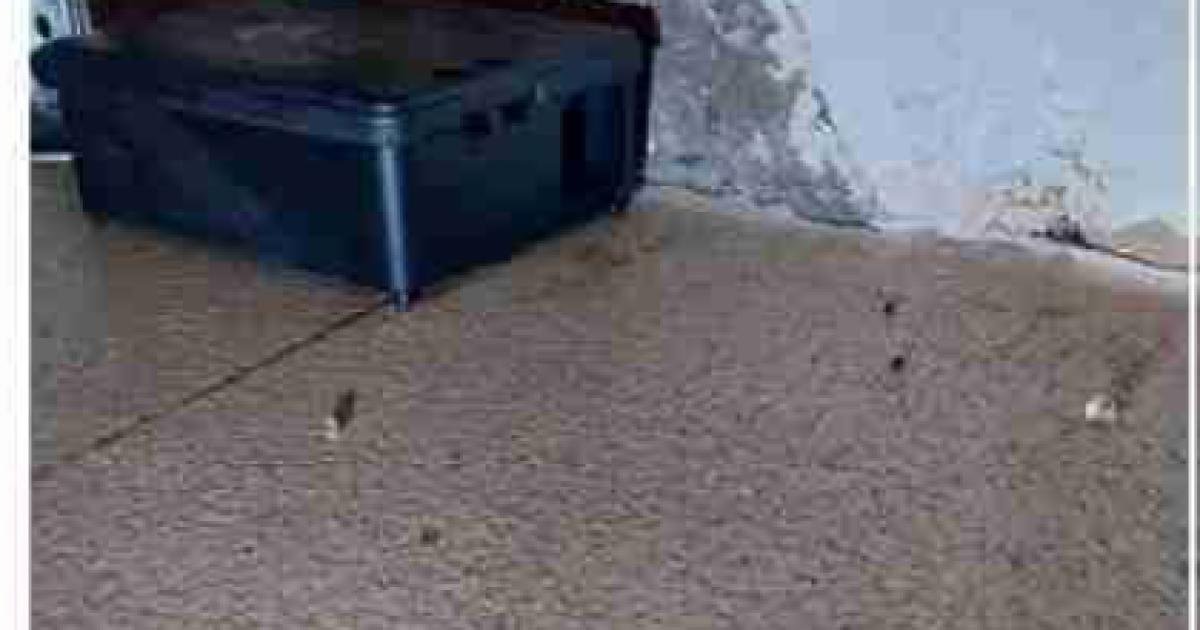
According to the report, received by the Oxford Mail after a Freedom of Information request submission, officers identified a series of concerns, including evidence of mouse activity.
The report states that mouse droppings were found throughout the business in two food storage rooms and the bar area.
In one of the storage areas, mouse activity was present where noodles were kept in plastic carrier bags and potatoes and onion were left in the open.

Inspectors said pest-proofing measures were “not great” and identified a hole beneath a sink in the bar area which could potentially allow pests to enter the premises.
In the report, the inspector said: “At the time of the inspection, I observed a number of historic mouse dropping in both the food storage areas.
“The most recent pest control report mentions no mouse activity in any of the food storage areas.
“All areas where food is prepared and stored must be kept clean and capable of being kept clean. This is so that pests are not attracted into your premises and the risk of food being contaminated by dirt is minimised.”
They advised the owner to remove all historic mouse droppings within the food business and continue to identify any issues of pest proofing within a month.

The business was instructed to remove the droppings and improve pest-proofing measures where previous temporary work had failed.
Food storage issues were also highlighted during the inspection.
In an “overfilled” fridge, officers found raw chicken stored above ready-to-eat foods, including uncovered beans and spring onions, which could cause cross-contamination leading to food poisoning.
That same fridge, which stored items such as cooked rice, chicken ballotine and prawns, was above the required eight degrees, raising concern about food poisoning.
A large number of food containers were also unlabelled, despite the food looking fresh.
The officer insisted a “robust system for ensuring adequate stock rotation” was implemented and recommended all food be kept in sealed, pest-proof containers.

No food-safe sanitiser or disinfectant were available on site, only a kitchen cleaner which they said did not provide adequate disinfection.
Despite the concerns, the report noted there had been a “huge improvement” in cleaning standards since the restaurant’s previous inspection.
The business also had a food safety management system in place and a pest control contract with Pure Pest Solutions.
The council has required a range of improvements, with compliance timescales ranging from one week to one month with a revisit inspection planned.

Oxford-based Peripear has secured an Innovate UK Women in Innovation Award and a £74,974 grant for its development of a wearable device designed to prevent perineal trauma during labour.
The funding will support continued product development ahead of the company’s planned first-in-human study.
Nina van Schaick, co-founder and COO of Peripear as well as a midwife who trained at Oxford Brookes, said: “I’m sure I wasn’t the only one to see this gap.
“I was incredibly lucky to meet my co-founder, Eviatar Natan, right as my frustration about the lack of translation of evidence into practice had peaked.
“There was a proven mechanism that could reduce injuries occurring in up to 90 per cent of vaginal births, and it was being left out of clinical pathways simply because no standardised tool existed to deliver it.”
Peripear is developing what it describes as the world’s first automated perineal thermotherapy wearable, designed to prevent perineal trauma during childbirth.
A perineal thermotherapy wearable is an emerging medical device.
It is a hands‑free warm compress device used on the perineum during the second stage of labour to reduce severe tearing and episiotomies while improving maternal comfort.
Ms van Schaick added: “I’m a farmer’s granddaughter, and when I started practising over 14 years ago, I asked: where is the tool I need to implement this evidence? I looked around and realised we were still asking clinicians to improvise.
“Peripear is what happens when the person who has lived the problem, both personally and professionally, meets the person who can help her build the solution.”

The company behind bikemaker Raleigh, which was founded 139 years ago and has supplied bikes to the UK’s cycling city of Oxford over the years, has filed to appoint administrators.
Accell UK and Ireland, part of Netherlands-based Accell Group, filed a notice of intention to appoint administrators as the wider group kickstarted insolvency proceedings.
This follows a difficult spell for Nottinghamshire-based Raleigh, which confirmed job cuts in 2024 before reporting a £30m loss in financial accounts published the following year.
READ MORE: UK supermarket giant issues customer notice on Jeremy Clarkson beer
The boss of Accell said it was a “deeply sad and frustrating situation” and that it had “tirelessly explored” every option for the future of the cycling business.
The company bought Raleigh in 2012 for around 100 million US dollars (£74 million), adding to its roster of bike brands throughout Europe including Haibike, Winora and Ghost.
Raleigh was founded in Nottingham in 1887 and was well-known for its Chopper model, which featured extended handlebars and is now part of its “retro” range.
It no longer manufactures bikes from Nottingham, and its head office has moved to Eastwood, Nottinghamshire, while the company has shifted to selling electric bikes under Accell’s ownership.
READ MORE: TV icon daughter’s £3.95m swimming pool mansion in Oxfordshire unsold
Accell went through a restructuring in February, securing additional funding from shareholders and lenders and reducing debts.
The group said it had since “explored every possible avenue” for its future, including discussions with potential buyers, but that it had not been possible to find a solution which means the business can continue operating.
It has therefore initiated insolvency proceedings in the Netherlands.
Accell’s chief executive Jonas Nilsson said: “This is a deeply sad and frustrating situation given all the hard work and everything we have achieved, with the support of shareholders and lenders, to restructure Accell’s operations and finances.
“It is an especially difficult moment for our employees, creditors, customers, suppliers, and partners.
READ MORE: EastEnders cast ‘furious’ as Shane Richie due to appear in court
“Every realistic option for the future of the business has been tirelessly explored, and none have resulted in a solution to continue the Group in its current form.
“Our immediate focus is to support an orderly process, provide clarity wherever possible, and work with the relevant court-appointed administrators to preserve viable activities and employment where circumstances allow.”
At its 1970s height, Raleigh employed more than 13,000 people across the UK, with around 8,000 working at its various Triumph Road sites in Nottingham.
The former factory land later became the University of Nottingham’s Jubilee Campus.
Raleigh subsequently moved its headquarters to Church Street in Eastwood, before leaving that site and relocating to Durban House in 2024.



-

 Business & Technology3 weeks ago
HSBC UK & Visa test AI shopping with live payments
-

 Business & Technology3 weeks ago
Valarian lands USD $50 million backing for sovereign AI
-

 Oxford Events4 weeks ago
Henley Festival 2026 highlights: Five nights of unforgettable performances and festival moments
-

 Oxford united FC3 weeks ago
Oxford United three players who be kept after transfer ban
-
 Business & Technology2 weeks ago
Slice golf bar swings to new heights after successful launch
-

 Business & Technology3 weeks ago
UK AI firms raise record GBP £4.56bn in Q2 funding
-

 Oxford News3 weeks ago
Man jailed for ‘sickening’ sexual assault of three girls in Cotswolds
-

 Business & Technology3 weeks ago
Jagex moves Cambridge HQ to Granta Park office hub