
Oxford News
Expert Comment: Four years of full-scale war and Ukrainian resistance continues

At 5:00am on 24 February 2022, Russia launched its full-scale invasion of Ukraine, marking a dramatic escalation of a conflict that had begun in 2014 when the Russian Federation illegally annexed the Crimean peninsula and Russian-backed separatists occupied cities in Ukraine’s eastern regions of Donetsk and Luhansk.
Despite ceasefires and negotiated settlements like the Minsk Agreements in 2014 and 2015, the war raged for eight years as Russian troops sought to capture Donbas. By the time of Russia’s 2022 invasion, many in the international community expected a swift and decisive Russian victory and the collapse of Kyiv within a few days – these assessments were reinforced by the comparably smaller size of the Ukrainian army in 2022 and inflated beliefs about Russia’s military capabilities.
Although Russian President Putin and also some US policymakers continue to insinuate that Russia is moving towards a battlefield victory, in reality, Russian advances have slowed in the last two years to an average rate of between 15 and 70 metres per day in the most effective offensives – these numbers are lower than almost any major offensive operation in any war in the last century.
Four years on, however, Ukraine remains an independent state and Russia continues to wage a total war against it.
While stories about the war in Ukraine now appear less often as news headlines, the fourth anniversary of Russia’s full-scale invasion is an important moment for us to reflect on the political and military developments of the last four years. As of February 2026, it is estimated that Russia controls roughly 20 percent of Ukraine’s land, having made slow gains in the east of the country in 2025 – it is approximated that Russia occupied around 1800 square miles in the last year, which is roughly three times the size of Greater London.
Although Russian President Putin and also some US policymakers continue to insinuate that Russia is moving towards a battlefield victory, in reality, Russian advances have slowed in the last two years to an average rate of between 15 and 70 metres per day in the most effective offensives – these numbers are lower than almost any major offensive operation in any war in the last century. Not only do these gains, and Russia’s overall progress on the battlefield since 2022, fall resolutely short of Putin’s original war aim of conquering the Ukrainian state, they have also come at an extraordinary price for Russia. It is difficult to ascertain losses in an active war, however, some estimates suggest that Russia has suffered nearly 1.25 million casualties (including killed, wounded, and missing) since February 2022 – more than any major power since World War II – and others approximate that at least 325,000 people have been killed fighting on Russia’s side since February 2022.
Efforts to end the now twelve-year war through negotiation have also repeatedly failed. Although American President Trump has recently taken a lead on the negotiations – including inviting Putin to Alaska and welcoming him on a red carpet in August 2025, hosting Zelensky and other European leaders in Washington a few days later, and then drafting a controversial 28-point peace plan shortly after – none of the multiple peace efforts have produced a breakthrough or even remotely lived up to his presidential campaign promise in 2024 of ending the war within “24 hours.”
It is difficult to ascertain losses in an active war, however, some estimates suggest that Russia has suffered nearly 1.25 million casualties (including killed, wounded, and missing) since February 2022 – more than any major power since World War II – and others approximate that at least 325,000 people have been killed fighting on Russia’s side since February 2022.
The most recent round of talks to end the war was the trilateral meeting of Ukraine, Russia, and the US in Geneva in mid-February 2026, yet, it, too, ended without a resolution or even a temporary ceasefire due to Russia’s determination to keep the territory it has illegally grabbed from Ukraine.
But even despite these growing international pressures on Ukraine – especially from Russia and the US – to concede land to end the fighting, Ukrainians remain committed to the defence of their country’s territorial sovereignty and political autonomy.
Whilst the costs of fighting are mounting and the benefits of continuing self-defence remain uncertain, Ukrainian citizens show nearly equal categorical opposition to Russian control as they did four years ago. Notably, resistance to conceding territory or accepting a politically neutral status without the possibility of joining the EU and/or NATO has weakened amongst some groups of the Ukrainian population since 2022, with ethnic Ukrainians, those less affected by the war, and those more trusting in Ukraine’s president comparatively holding the strongest opposition. Yet, even as roughly 55,000 of their own soldiers have been killed and more than 70,000 civilians and military personnel remain missing from the last four years of fighting against Russia’s authoritarian and imperialist agenda, Ukrainians still unequivocally reject political or territorial concessions, at any cost, to end the war.
Whereas negotiations thus far have largely ignored ordinary Ukrainians’ perspectives, focusing much more on the location of the frontline and the land that Ukraine might need to concede to satisfy Russia’s war aims, they must fundamentally be accounted for in any discussions about ending the war to ensure a just and sustainable peace.
Whereas negotiations thus far have largely ignored ordinary Ukrainians’ perspectives, focusing much more on the location of the frontline and the land that Ukraine might need to concede to satisfy Russia’s war aims, they must fundamentally be accounted for in any discussions about ending the war to ensure a just and sustainable peace.
In the face of increasing global insecurity and growing fractures in the international order, including questions around the future of NATO and European unity, Ukrainians’ resistance amidst four years of full-scale war is also as a reminder of the value of freedom and the vulnerability of democracy. Although the post-Cold War era was for a long time thought to reflect the triumph of liberal democracy, global cooperation, and the end of bipolar nuclear existential threats, Russia’s war against Ukraine shows that we are living in a time of transition towards a contested and multipolar world order with growing challenges from new illiberal powers. This reality should not to be taken lightly as democratic erosion appears to be on the rise globally, including within Europe but also in states once hailed as the leaders of democracy and the ‘free world.’
Still, the fourth anniversary of Russia’s full-scale invasion is not only a critical moment to reflect on the fading of the liberal international order, but to realise the human costs of Russia’s aggression against Ukraine.
Beyond civilian and military causalities, cities and communities across Ukraine have been devastated, and Ukraine is estimated to have lost roughly a quarter of its pre-2022 population through displacement domestically and abroad, Russian occupation, and the abduction of children from occupied areas. This figure does not capture the war’s secondary effects, including the lives lost due to limited access to social services or health care, or the slow violence enacted by the environmental consequences of the war.
As we enter the fifth year of the full-scale war, and the thirteenth year of the Russia-Ukraine war, it is thus important that we remember those who have and continue to endure the war firsthand – those who have fought, fled, and persevered amidst immense uncertainty and loss but who nevertheless continue to stand strong in defence of a free and sovereign Ukraine.
For more information about this story or republishing this content, please contact [email protected]
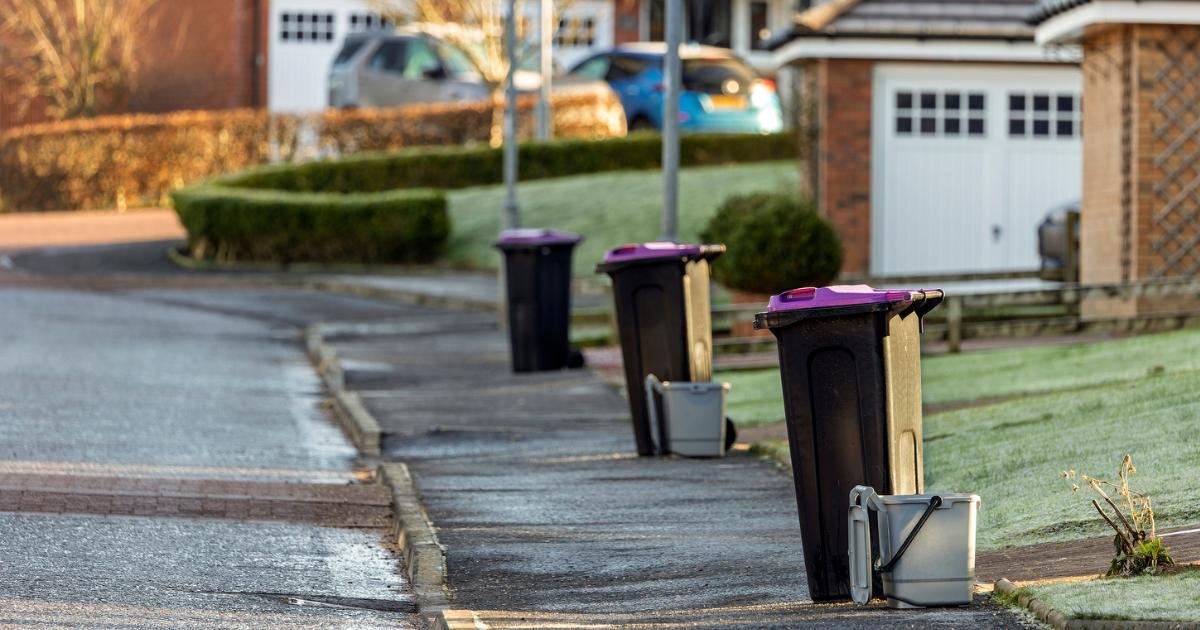
The bins will be for food and garden waste, paper and card, dry recyclables such as glass, metal and plastics, and general non-recyclable rubbish.
In some areas, paper and card may still be collected with other dry recyclables, reducing the number of bins to three.
Ministers say this will provide different local authorities with the flexibility to deliver services that work best for their communities.
From 31 March 2026, bin collections across England will change.
The goal is good: more recycling, less landfill.
The risk is real: more bins, new rules, new schedules.Simpler in theory. Overwhelming in practice.
This account is here for one thing: less confusion at home.
— Bintime | Bin-day reminders (@Bintimeapp) March 1, 2026
New rules in England mean up to 4 bins in use for households
Circular economy minister Mary Creagh said: “We are ending the bin collections postcode lottery and making it easier for people to recycle wherever they live.
“Simplifying these rules will cut out carbon, clean up our streets, and help bring pride back into our communities.
“We will continue to work hand-in-hand with local areas to deliver these changes and ensure there’s more recycled content in the products we buy.”
The new system is part of the government’s wider efforts to build a circular economy, keeping resources in use longer and reducing waste.
Previously, local authorities set their own rules around bin types and what materials could be collected, leading to a patchwork of different systems across the country.
The government now aims to standardise collections to ensure more high-quality material can be processed domestically for reuse by manufacturers to make new products.
Officials say the changes could also cut carbon emissions by reducing the amount of rubbish that gets burned.
To help councils roll out the new scheme, the government has provided £340 million in funding.
Can you get fined for putting bins out early?
How to check your local bin rules
To support some local authorities with area-specific delivery challenges, the government said additional support will be provided, such as agreed transitional arrangements, allowing a later implementation date.
Households can check how and when the new rules will apply in their area by visiting the government’s website.
Enter your postcode to check the rules for your area.
More than £78 billion has been allocated to councils in England for this financial year, including funding for introducing weekly food waste collections for all households.
The government has introduced an extended producer responsibility scheme, which requires packaging producers to cover the costs of recycling or waste management.
Recommended reading:
Deposit return scheme coming to supermarkets in 2027
It also plans to launch a deposit return scheme in 2027.
This will see shoppers pay a small deposit when buying drinks in plastic bottles or metal cans, which they will receive back when returning the empty containers to retailers.
What do you think about the new bin rules in England? Let us know in the comments.

Uma Ali Sheikh has been named and shamed by the government in a new list published by the government department.
Information is published by the agency when a person or business has made at least one deliberate default on more than £25,000, according to HMRC.
The list is updated every three months before the information is removed after a year.
READ MORE: Fears 20mph limits are ‘not being enforced properly’
Uma Ali Sheikh was investigated by HMRC and charged a penalty for either deliberate errors in his tax returns or a deliberate failure to notify a liability to tax.
The 50-year-old is listed as being a landlord based at Apt 4604, The Torch Tower, Al Sharta Street, Dubai Marina in Dubai.
HMRC says that between April 6, 2014 and April 5, 2019, he did not pay £261,252 worth of tax.
He subsequently paid a penalty worth £137,333.77.
His nationality is listed on Companies House as being British, meaning he is an expat.

Thames Valley Police had been investigating a report that a man committed indecent exposure at around 3pm on August 29 in Headington.
The incident happened in Cox’s Aly near the junction of Gladstone Road.
The offender was last seen walking towards Gladstone Road and is described by police as white, slim and around 5ft 10ins tall.
He had a baggy royal blue tracksuit on – with white stripes running up the sides – and has fair hair, police said in an earlier appeal.

READ MORE: F1 legends David Coulthard and Mika Häkkinen to come to Oxford
Police had issued an appeal at the time of the offence looking for witnesses or people with information.
However, seven months later, not enough evidence has been provided to find the culprit.
A police spokeswoman said on Monday morning (March 30): “This case has been filed, pending further information coming to light.”
Indecent exposure, a sexual offence, can see a punishment of up to six months in prison or a fine imposed by the court.
Offenders can also be put on the sex offenders register list, but in most cases this is if the victim is under 18 years of age.
Depending on its seriousness, cases can go to trial in crown court.
Police constable Edward O’Reilly previously said: “If anyone has any further information and witnessed this incident, we would also ask them to get in touch.
“If you have information, please call 101 quoting the reference 43250442508 or you can provide information on the online reporting pages.”



-

 Crime & Safety2 weeks ago
Oxford: ‘Next generation’ LimeBikes in city from today
-

 Jobs & Careers2 weeks ago
Why Join Oxford | Oxford University Jobs
-

 Jobs & Careers2 weeks ago
Explore our Careers
-

 Student Life2 weeks ago
The independent cinema battling Oriel College to stay open
-

 Oxford Events2 weeks ago
Michelin Guide Oxfordshire Restaurants – The Oxford Magazine
-

 Oxford Events2 weeks ago
Oxford News and Events, What’s on in Oxford, Exhibitions
-

 Jobs & Careers2 weeks ago
Internal Job Board for University vacancies
-

 Crime & Safety2 weeks ago
Crash partially blocks A40 and causes severe Oxfordshire traffic