
Business & Technology
Evri opens Barnsley fulfilment centre with GBP £4m


Evri has opened a new fulfilment centre in Barnsley, investing more than GBP £4 million in the site.
The 265,000 sq ft facility is less than 100 metres from Evri’s existing Barnsley hub, allowing parcels to move directly from fulfilment into the delivery network on an hourly basis.
The site is expected to create more than 150 local jobs and is intended to serve both small and medium-sized businesses and larger retailers seeking later order cut-off times and faster dispatch.
A key feature is an order cut-off time of 11.59pm for next-day delivery. Parcels can move from order stage to picking, packing and entry into the delivery network within an hour.
The centre will also support same-day dispatch seven days a week and Amazon Prime distribution. Barnsley is the latest addition to Evri’s fulfilment network, following an earlier site in Basildon and operations on the US East Coast, in the Netherlands and in Oman.
The investment expands a fulfilment business that has recorded double-digit annual growth since launching in 2021. Evri is aiming to link warehousing and parcel handling more closely as retailers seek later shopping cut-off times and faster delivery.
Local expansion
The opening adds to Barnsley’s logistics and technology base as the town is promoted as the UK’s first ‘Tech Town’. Evri linked the development to local growth and inward investment, with job creation forming part of the project.
Located beside Evri’s largest operational site, the fulfilment centre gives the group a concentrated base for storage, picking, packing and immediate transfer into parcel sortation. The proximity reduces handover time between warehouse operations and linehaul distribution.
For smaller online sellers, later cut-off times can help narrow the service gap with larger brands that already operate extensive logistics networks. Evri said the new Barnsley site is intended to give thousands of SMEs access to next-day services that would otherwise be harder to provide at scale.
David Saenz outlined the company’s position on the launch.
“The launch of this purpose-built fulfilment facility, designed to meet the needs of the shopper of today and tomorrow, will bring exciting opportunities to some of the UK’s most loved brands as well as our country’s deep reservoir of small and medium-sized companies.
“We’ve paired cutting-edge fulfilment technology with a direct connection to the Evri Group’s well-established and fast-growing domestic and international networks, meaning whatever the business need, we have a solution,” said David Saenz, Chief Commercial Officer, Evri Group.
Evri did not disclose expected throughput for the new centre. It said the Barnsley operation would strengthen links between its fulfilment arm and its wider domestic and international parcel network.
Customer view
One existing customer said the shorter timetable from order to network entry could directly affect delivery promises.
“Evri has been an ideal partner to support our growth, and we’re thrilled about the new Barnsley fulfilment hub.”
“The ability to order at midnight, have the package in their network within an hour and be delivered the next day will be amazing for our customers,” said Amy Wilshere of Furocity, a sports nutrition and energy drink brand and Evri fulfilment customer.
Evri Group brings together Evri, DHL eCommerce UK, Coll-8 and UK Mail. The group says it handles more than 1 billion parcels and a further 1 billion business letters each year, while the Evri brand itself delivers around 900 million parcels annually.
The Barnsley project reflects how parcel operators are investing in fulfilment sites close to core hubs to shorten delivery windows and win more retail volume. It also highlights the growing overlap between warehouse services and parcel distribution in the push for later ordering and next-day delivery.
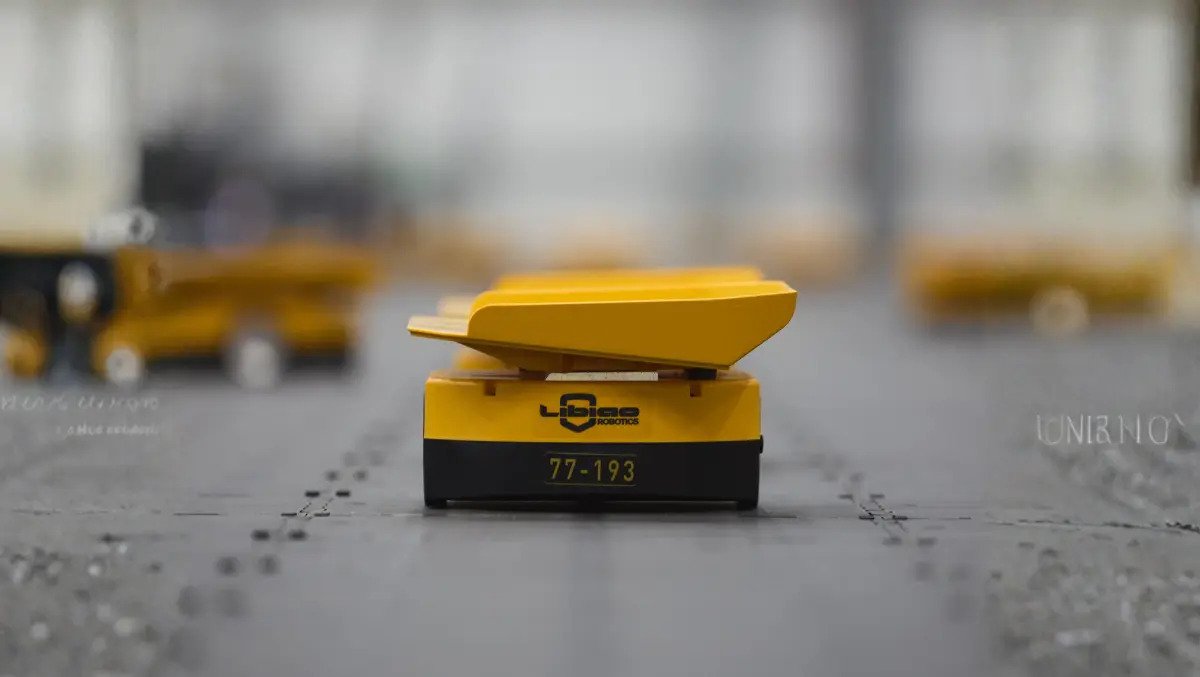
THG Fulfil has deployed 430 Libiao Robotics sorting robots at one of its facilities, increasing daily sortation capacity to 625,000 units.
The system was integrated with its warehouse management system in 35 days and reached target volume within a week. The project used a Robotics-as-a-Service model instead of a large upfront capital investment.
At the site, sortation capacity rose from 250,000 units a day to 625,000 units a day. Throughput also increased by 11,151 units an hour, 34% above the initial target.
The deployment includes 14 induction stations and 80 Libiao 3D sorters, enabling dynamic sorting across 3,840 destinations. In total, 430 robots were introduced to support batch picking and sortation.
The system is delivering 99.9% sort accuracy and 99.9% uptime. THG Fulfil added that the change has reduced staffing needs by 45 full-time equivalent roles at a daily volume of 200,000 units.
Labour pressure
The investment comes as eCommerce operators face pressure from rising order volumes, demand volatility and labour costs, particularly during peak trading periods. Retailers and logistics providers have increasingly turned to warehouse automation to reduce dependence on seasonal labour and handle higher throughput requirements.
THG Fulfil said its previous constraints were in sortation and batching, where capacity limits and fixed infrastructure created bottlenecks. The company serves brands across beauty, nutrition, fashion, electronics and housewares.
The rollout has also enabled later delivery cut-off times, supporting next-day delivery cut-offs as late as 1am.
Global reach
THG Fulfil operates as part of THG Ingenuity and provides fulfilment and courier management services for eCommerce brands. It works with more than 250 courier partners across 195 countries.
THG Fulfil is also an official distributor of Libiao Robotics, giving clients direct access to the supplier’s automation systems. The arrangement links its fulfilment operations with a commercial role in distributing the same technology.
Libiao Robotics specialises in sorting systems for warehouses and distribution centres. These systems are designed to help operators handle large volumes of parcels or units by automating repetitive sorting tasks that would otherwise require more floor space or labour.
For THG Fulfil, the project marks a shift towards a more modular approach to warehouse automation. Using a service-based commercial model allows the company to add or adjust robotics capacity in line with changing order patterns rather than tying expansion to permanent fixed equipment.
The figures point to a focus on lowering cost to serve while improving handling speed and order accuracy. These metrics are closely watched by eCommerce brands, especially in categories where promotions, social media demand spikes and late ordering patterns can produce sudden surges in volume.
At a single facility, the new system has delivered 99.9% accuracy and 99.9% uptime, increased capacity by 150%, and reduced staffing needs by 45 full-time equivalent roles at a daily volume of 200,000 units.

Neuphonic has partnered with Rapport to launch a real-time digital human system that runs on standard CPU hardware. It is designed to deliver photorealistic avatars with no perceptible delay.
The partnership combines Neuphonic’s text-to-speech software with Rapport’s facial and full-body animation technology. Together, the system can generate voice, lip movement and facial performance in under 100 milliseconds while running fully on-device, rather than through cloud services or specialist graphics processors.
The approach addresses a long-standing hurdle for interactive digital characters, where slow response times and reliance on expensive hardware have limited wider adoption. By using standard CPUs, the companies are targeting devices and environments where dedicated GPU infrastructure is too costly or impractical.
Rapport is a division of Speech Graphics, whose animation tools have been used in games including Call of Duty, The Last of Us Part II and Hogwarts Legacy. London-based Neuphonic focuses on voice AI models built to run on consumer devices.
The system could be used in games, film and virtual production, advertising, training and customer engagement. The companies also pointed to education and virtual assistants as areas where more responsive digital characters could be deployed at greater scale.
On-Device focus
A central part of the tie-up is that processing remains local to the device. This means user data does not need to leave the immediate environment for cloud processing, reducing latency and lowering infrastructure requirements.
Keeping the system on-device also reflects a broader shift in AI development, as companies seek to balance faster response times with privacy concerns and rising cloud costs. In sectors such as gaming and interactive media, real-time responses have become increasingly important as users expect conversations and character reactions without obvious lag.
Neuphonic said its speech technology runs with sub-100 millisecond latency on CPUs. Rapport contributes real-time facial and body animation designed to match speech output closely enough to create natural-looking interactions.
“We’re making real-time digital humans practical,” said Sohaib Ahmad, Chief Executive Officer and Co-founder of Neuphonic. “For the first time, you can run a fully interactive, lifelike avatar instantly on everyday hardware. It shifts this from something that required high-end infrastructure to something that can run anywhere, and will unlock entirely new use cases across games, media and AI. It will move us closer to AI that feels like a natural, seamless extension of human interaction.”
Speech Graphics has spent more than a decade developing audio-driven animation for entertainment, with work ranging from pre-produced character performances to conversational systems. The partnership with Neuphonic shows how that expertise is moving into live interactive settings rather than remaining confined to traditional game and film pipelines.
Wider uses
For game developers, the technology could support non-player characters that speak and respond dynamically during play. In film and virtual production, it could enable live digital performances without remote processing. In advertising and customer engagement, it could support interactive spokespeople or branded characters.
The ability to deploy across ordinary hardware could also make digital humans easier to distribute at scale. The companies said the system could run on billions of devices, widening access beyond studios or organisations with substantial graphics budgets.
The partnership has received support from Innovate UK’s Creative Catalyst programme, which backs projects in the creative and technology sectors. That support underlines growing interest in digital human systems that can operate in real time and in practical commercial environments.
“Neuphonic was a natural partner because the technologies are highly complementary,” said Gregor Hofer, Chief Executive Officer and Co-founder of Rapport, a division of Speech Graphics Ltd. “They bring ultra-low latency, on-device voice that runs efficiently on CPU, and we bring production-proven, real-time facial animation. Together, this enables fully local digital humans that can speak, animate and respond instantly, without relying on the cloud, opening up new possibilities for performance, cost and deployment at scale. It’s a complete, real-time conversational experience.”
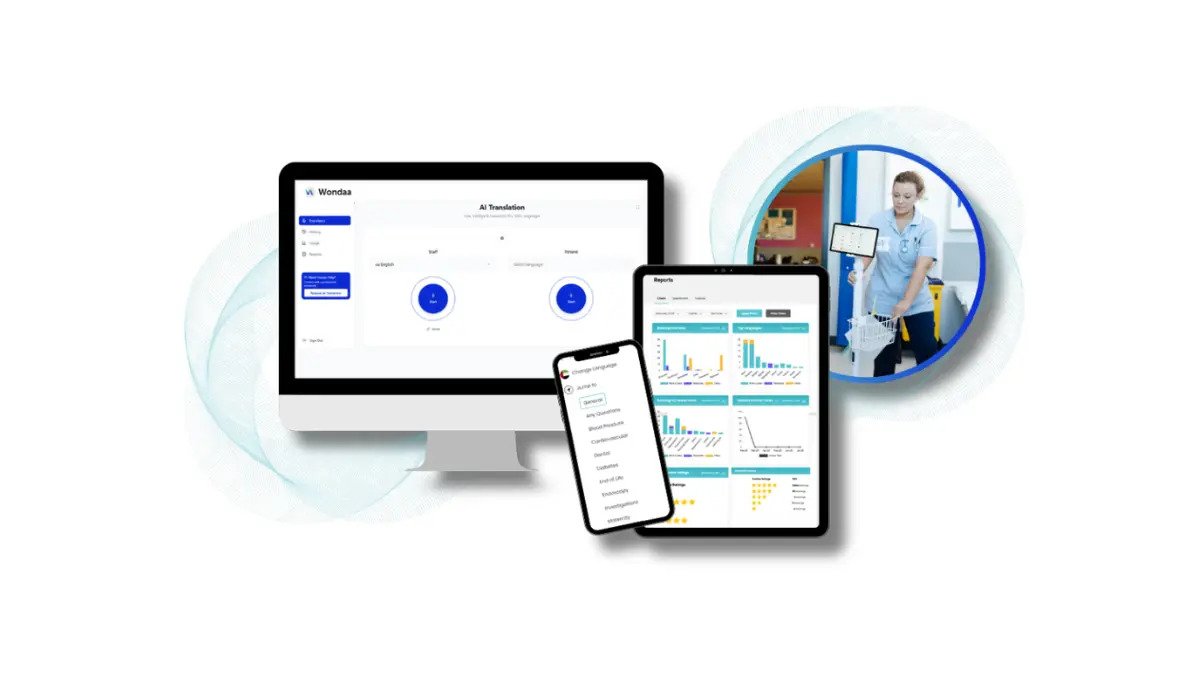
Word360 has launched Wondaa, an AI interpreter app for NHS staff designed to support real-time communication with patients in more than 100 languages.
The Birmingham-based company says the app is intended for routine frontline exchanges such as check-ins, standard instructions and appointment management. It offers two-way voice translation and on-screen text, and was built around healthcare workflows with clinical phrase libraries developed by clinical linguists and healthcare professionals.
Language support remains uneven across the health service, according to NHS England’s Community Language Translation and Interpreting Improvement Framework. Around one million people in the UK are unable to speak English well or at all, the framework says, creating barriers to access and adding operational pressure for providers.
Trusts can face delays in securing professional interpreters, particularly in emergency settings or outside normal hours. That can leave staff without immediate support for routine conversations that do not involve complex clinical discussions but still affect patient experience and care delivery.
Clinical use
Wondaa was developed for those day-to-day interactions, not to replace interpreters in sensitive or high-risk consultations. If staff need to escalate to a qualified interpreter, the system can connect users to Word360’s existing interpreting services.
The app’s phrase packs cover common care scenarios, including maternity and emergency settings. Those libraries are structured to support clinically appropriate communication and could help with use cases linked to Martha’s Rule.
Development included collaboration with teams at Walsall Healthcare NHS Trust, where staff have previously explored AI tools in clinical environments. That work included ambient voice technology used to create structured clinical documentation for clinicians to review and validate.
Garry Perry, Associate Director Patient Voice (Experience) at Walsall Healthcare NHS Trust and The Royal Wolverhampton NHS Trust, said: “Good communication is fundamental to patient safety, care quality and trust. Strong clinician-patient communication improves outcomes and reduces costs, making it central to high-performing NHS services.”
Tools like Wondaa have the potential to reduce administrative pressure, improve access to care and support more effective communication with patients. However, it is important that AI is used alongside, not instead of, professional interpreters. Interpreters remain essential for complex, emotional and high-risk conversations where accuracy and nuance are critical. The future is likely to be a hybrid model that combines both.”
Hybrid model
The launch comes as NHS organisations face continued pressure to improve accessibility while managing stretched services. NHS England has said translation and interpreting provision remains variable across trusts and integrated care systems despite legal duties around accessible communication.
Hospitals and community providers are therefore weighing how to use new digital tools without weakening safeguards for patients whose first language is not English. In practice, the clearest role for AI-based translation is likely to be in routine, lower-risk exchanges where staff need quick access to basic multilingual communication.
Word360 already provides interpreting support through its Wordskii platform and says it works with more than 50 trusts and health boards. Its wider service covers more than 450 languages through a UK-based network of professional linguists.
Kavita Parmar, Co Founder and CCO, Word360, said: “Clear communication is fundamental to safe and equitable healthcare. When patients and clinicians cannot understand each other, it can affect confidence, outcomes and experience. Wondaa has been developed with clinical input for the conversations that don’t happen, but should, while ensuring professional interpreters remain central to clinical communication. Responsible use of AI in healthcare depends on governance, oversight and clear boundaries, and that has guided our approach.”



-

 Crime & Safety2 weeks ago
Oxford: ‘Next generation’ LimeBikes in city from today
-

 Jobs & Careers2 weeks ago
Why Join Oxford | Oxford University Jobs
-

 Oxford Events2 weeks ago
Oxford News and Events, What’s on in Oxford, Exhibitions
-

 Jobs & Careers2 weeks ago
Explore our Careers
-

 Student Life2 weeks ago
The independent cinema battling Oriel College to stay open
-

 Oxford Events3 weeks ago
Michelin Guide Oxfordshire Restaurants – The Oxford Magazine
-

 Crime & Safety2 weeks ago
Radiohead promising ’20 gigs for 2027′ after sell-out shows
-

 Jobs & Careers2 weeks ago
Internal Job Board for University vacancies