
Business & Technology
Enterprise Oxfordshire launches new High Street Summit


Enterprise Oxfordshire is launching the High Street Summit to champion town centre businesses across the county.
The event takes place on April 16 at the Cornerstone Arts Centre in Didcot and runs from 10am to 2.30pm.
The event will include a keynote speaker on ‘The High Street is Human’, business stories, an open mic opportunity and a dedicated afternoon session to turn insight into action.
It will also feature a networking lunch to encourage collaboration among attendees.
Sarah Beal, growth hub manager at Enterprise Oxfordshire, said: “High streets remain the heartbeat of our communities, and the Helping High Streets programme has been about helping businesses adapt, grow and remain vibrant in a changing economic landscape.
“The High Street Summit event is the first of its kind for Oxfordshire, putting high street businesses at the centre, with councils and partners in a supporting role.
“Nationally, there have been a small number of high street branded gatherings, but most have focussed heavily on big structural and infrastructure issues – the Oxfordshire High Street Summit is uniquely business centred and collaboration-led in its design and content.”
The summit is open to all high street businesses in Oxfordshire, regardless of whether they have previously engaged with Enterprise Oxfordshire’s support programmes.
It marks the conclusion of the ‘Helping High Streets’ programme, a government-funded initiative to boost the prospects of businesses in high-footfall, town and city centre areas.
Although programme-specific support ended at the end of March, the summit will be a final event to bring together businesses from across the county.
Growth hubs across the wider region – of which Enterprise Oxfordshire Business is one – have also been under the spotlight following the publication of the Growth Hub Cluster Impact Report.
Covering the period from April 2020 to March 2025, the report shows the collective impact of hubs in Oxfordshire, the South Midlands, Buckinghamshire, Cambridgeshire and Peterborough, and New Anglia.
Over five years, the hubs supported 92,719 businesses, delivered 178,563 hours of support, enabled 3,934 business start-ups, and helped create 6,970 jobs while safeguarding 6,093.
They also attracted an additional £24 of funding for every £1 of core government investment and delivered £35 of economic and social value.
March also saw the launch of Enterprise Oxfordshire’s Marketplace and Celebration Event 2026, with the prestigious marketplace and awards evening set to take place on Wednesday, November 4.
Open to all eligible businesses in Oxfordshire, the awards will highlight the achievements of SMEs, innovators, and leaders who have engaged with Enterprise Oxfordshire Business since April 2022.
There are six free-to-enter categories, with an overall winner revealed on the night.
Businesses interested in attending the High Street Summit or entering the awards can find more details at www.enterpriseoxfordshirebusiness.com.
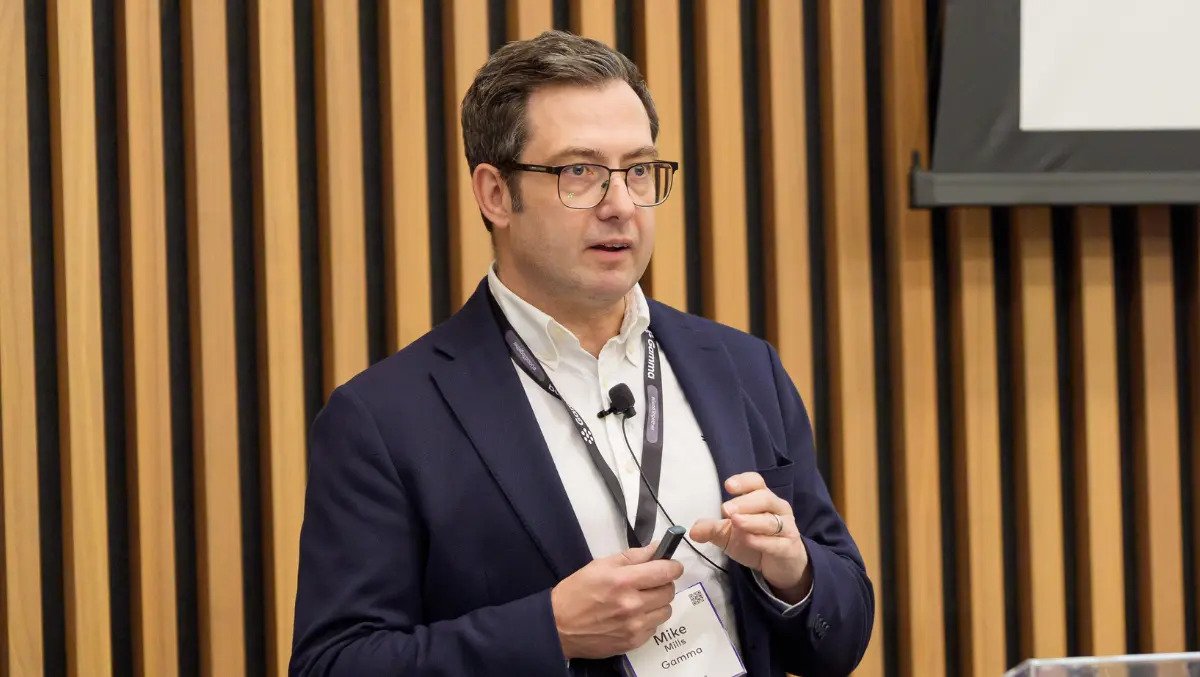
This year’s Cavell Summit Europe provided us with an agenda that reflected the real pressures service providers are now facing today. Senior leaders within the cloud communications ecosystem are now tasked with adapting to structural changes in 2026 and beyond.
What’s key to remember is that these aren’t theoretical futures. Practical shifts are already underway, and the disruption that follows is structural, not cyclical.
Matt Townend’s keynote address established the framework for everything that followed. The focus was on how factors such as pricing pressure, changing buyer behaviour, AI, security, and sovereignty are no longer temporary challenges.
Instead, they form a permanent operating environment for service providers trying to protect margin, while continuing to grow.
It resonates with the wider conversations being held in the wider service provider space. The reality is that nobody is asking whether the market is changing. Now, it’s how to effectively adapt to conditions without increasing complexity or risk.
Global platforms and marketplaces are also reshaping buying journeys. There’s now extra attention being paid to these areas, especially as communications services are no longer sold in isolation. Solutions are now being embedded into CRM, CX, and productivity ecosystems.
Platforms, such as HubSpot, are beginning to act as commercial entry points for telco services. Salesforce’s own move into digitally purchased contact centre capabilities also signals a wider shift in how voice and CX are both packaged and consumed.
What does this mean for service providers? It’s a material change, where customers increasingly expect communications to ‘fit’ into existing platforms. Buying journeys are becoming shorter, more digital, and less telco‑centric, and differentiation is shifting away from features toward integration and enablement.
All this change is being accompanied with the ever-present issues of sovereignty and regulation. Data sovereignty, especially in the current geopolitical climate, is now a key topic of discussion among service providers. A fragmented European market only makes the challenge more pressing.
Service providers, however, need to have a pragmatic mindset, rather than an alarmist one.
SMBs don’t see sovereignty as a primary buying driver. The use of a large hyperscaler cloud is far more relevant to these smaller businesses, and sovereignty is materially relevant to only a handful of enterprises. If these businesses operate in a highly regulated environment like government or defence, data sovereignty is far more important to them.
The growing tension between emerging European guidance and existing frameworks, such as the US CLOUD Act of 2018, is also creating confusion. When operating across jurisdictions, providers must navigate between contradicting regulations.
So, what should service providers do? The key thing is not to over‑rotate on sovereignty as a sales message. They must understand which customer segments genuinely require it and design their propositions accordingly.
For anyone who attended this year’s Summit, they would already know that the most valuable insights always come from conversations throughout the day.
A recurring theme was how quickly global ambition exposes operational friction. Selling voice internationally involves far more than coverage, such as local licencing requirements and numbering regulations.
It’s something Gamma Communications has seen with the recent expansion into APAC. Providers, for example, must hold specific licences simply to issue local numbers. It’s both a cost and complexity burden that many service providers underestimate, until they attempt to scale.
This is exactly where global enablement models become commercially important. Those foundations allow service providers to extend reach without taking on disproportionate, unnecessary regulatory or operational risk.
Complexity around global regulations is giving service providers more to think about. In Singapore, for example, regulators are now getting tougher on sub-allocation and whether numbers are being provided without a licence. Providers need an SBO licence or at least work with a vendor that already has one.
Gamma’s own tri-party model in the APAC region helps to remove those obligations. What’s vital to remember is that no single provider can solve global communications alone. There are numerous factors providers need to consider when it comes to long-term growth.
Through strong partner ecosystems, shared operational responsibility, and models that allow international scalability, a foundation can be established. It reinforces a broader industry shift from transactional resale models towards a partnership that builds towards success.
The priorities service providers need to focus on all gravitate around building sustainable growth in 2026 and beyond. That can only be achieved by reducing friction for both partners and customers and avoiding any needless complexity.
Disruption will happen at the baseline – it’s never just a phase. If models are designed for platform-led buying, and there’s clear guidelines around sovereignty, then global growth will follow.
When a trusting partnership is combined with shared infrastructure, this becomes a reality rather than just another pipe dream.
If you’re ready to take your communications further, find out more about Gamma Communications’ service provider proposition.

Starling Bank has published research suggesting that sole traders are using artificial intelligence tools for tax and accounting advice as HMRC’s Making Tax Digital changes drive wider adoption.
A survey of 1,000 UK sole traders found that 26% had used an AI platform for guidance on Making Tax Digital, while 20% said they regularly used AI for tax and accounting support. Among respondents, 88% said they trusted AI advice, and 55% expected to rely on it more over the coming year.
Speed appears to be the main reason. Some 39% said they chose AI because they wanted information quickly, compared with 32% who cited the cost of professional advice.
Many sole traders seem to be using AI for routine tasks rather than as a replacement for accountants or tax advisers. The research found that 26% had used AI for a second opinion on advice they had already received.
The survey was released alongside Starling’s launch of a free accounting software package for sole traders. It includes an HMRC-recognised Making Tax Digital for Income Tax tool that lets users manage tax reporting through the bank’s system, categorise transactions and track their finances in real time.
The launch comes as smaller businesses face pressure to adapt to new digital tax reporting requirements. Making Tax Digital for Income Tax requires self-employed people and landlords with qualifying income above £50,000 to use compatible software for digital record-keeping and quarterly reporting to HMRC.
Starling also highlighted wider financial administration pressures on smaller firms. Separate research cited found that small and medium-sized enterprises spend an average of £63,000 a year managing their finances.
Speed over cost
The findings suggest convenience is shaping how sole traders seek support. Rather than relying only on professional advisers, many are using AI to answer basic questions quickly, especially as new tax rules add unfamiliar compliance steps.
That may reflect the practical constraints on sole traders, who often manage administration themselves while running day-to-day operations. In that context, tools that provide immediate responses can be appealing, even if users still prefer professional advice for more complex matters.
“These findings are a call to action for all those who work with sole traders, showing that we need to find faster and more convenient ways to deliver the support they need. At Starling, we’re committed to playing our part with digital tools that help sole traders blast through their admin, leaving them more time to grow their businesses and to manage complex issues with their professional advisers,” said Daniel Hogan, Director of Business Tools at Starling.
User response
One customer cited in the research said AI had been useful for initial checks on the tax changes, but not for more serious advice.
“AI platforms are not usually where I’d get tax information from, but they were useful for searching about the Making Tax Digital changes. It may be helpful in future for low-level research, but for more serious advice, I’ll stick with the experts. It’s great that Starling has created a free HMRC-recognised Making Tax Digital tool for sole traders like me. It’s taken a weight off my mind,” Dr Emily Durling, Clinical Psychologist and Starling customer, said.
Starling’s accounting product has two pricing tiers. Its Essentials plan is free and aimed at sole traders, landlords and small businesses. Its Plus plan is designed for VAT-registered businesses and costs £7 a month until April 2027, then £14 a month.
The bank has previously introduced other AI-based customer tools, including services focused on spending insights and scam detection. Its latest research suggests that, for many sole traders, AI’s immediate appeal lies less in cutting advisory costs than in getting quick answers to routine questions as tax administration becomes more digital.

The UK Cyber Security Council has launched the Associate Cyber Security Professional title, a new registration aimed at people seeking their first cyber security role.
Now open for general applications following a pilot phase, the title will become a permanent part of the Council’s professional registration framework. It brings the total number of Council titles to four, alongside Practitioner, Principal and Chartered.
The launch comes as employers continue to report cyber skills shortages. The Department for Science, Innovation and Technology’s latest Cyber Security Skills in the UK Labour Market report found that 50% of UK businesses have a basic cyber skills gap, while 49% of cyber firms struggled to fill technical roles over the past year.
The new title is intended to address a common barrier to entering the sector: candidates often need experience to secure a first role, but need a first role to gain that experience.
Under the scheme, applicants must submit evidence of competence across five areas. It is open to people who are ready for, or already in, their first cyber security role, and recognises academic study, self-directed learning, certifications, bootcamps, apprenticeships and experience gained in other careers.
Some applicants will be able to fast-track the process if they hold qualifications, training or certifications already aligned with the title’s competency requirements.
Professional register
Unlike other certifications or qualifications, the Associate Cyber Security Professional title places successful applicants on the UK’s Cyber Security Professional Register, which the Council describes as the sector’s only route to formal professional registration.
Registration shows that an individual meets the standards set out in the UK Cyber Security Standard for Professional Competence and Commitment. To remain on the register, title holders must also complete 75 hours of continuing professional development over three years.
The title is designed to give employers a clearer benchmark when recruiting for entry-level roles, covering technical competence, ethical standards and a commitment to ongoing development.
Established by Royal Charter, the organisation has a public interest mandate to set and uphold professional standards for the cyber security sector. It said the Government recently recognised its role in strengthening national cyber resilience through the Cyber Resilience Action Plan and work on a new cyber profession aligned with the Council’s standard.
In a statement, Giles Grant said: “There are so many people who have the skills and drive for a career in cyber security but struggle to prove it to employers. The Associate title changes that. It gives individuals a credible, government-backed way to demonstrate their readiness for their first cyber role, while giving employers the confidence to hire them. This is a hugely important step in closing the cyber skills gap and ensuring the UK has the pipeline of cyber security professionals it needs.”
The registration is intended to widen the pool of candidates available to recruiters by recognising several routes into the profession rather than favouring a single educational pathway. That may be particularly relevant for employers seeking junior staff in a labour market where vacancies have remained difficult to fill.
More broadly, the launch reflects a wider effort to formalise cyber security as a profession with defined standards and recognised stages of progression. With more than 1,000 professionals already on the register, the Associate title extends that structure to people at the start of their careers.
Applications for the new title are open until 17 May.


Blenheim Palace staff named among top AI leaders in UK

Starmer confirms UK will not support US blockade of strait of Hormuz – UK politics live | Politics

Platforms, sovereignty and global growth at Cavell Summit Europe
-

 Crime & Safety4 weeks ago
Police race to crash on Oxfordshire A34 with severe traffic building
-

 Oxford News4 weeks ago
Schwarzman Centre to open doors to public with major celebration
-

 Oxford News4 weeks ago
Gary Lineker’s nephew-in-law death inquest to be next week
-

 Business & Technology3 days ago
Aqilla launches AI invoice tool to speed accounts payable
-

 Crime & Safety1 week ago
American Akita and a French Bulldog seized after dog killed
-

 Crime & Safety4 weeks ago
Wiltshire 12-year-old girl with Oxfordshire links missing
-

 Oxford Events4 weeks ago
Michelin Guide Oxfordshire Restaurants – The Oxford Magazine
-

 Oxford News4 weeks ago
Statins do not cause the majority of side effects listed in package leaflets