
Crime & Safety
Cotswolds estate for sale at £26m after aristocrat’s death

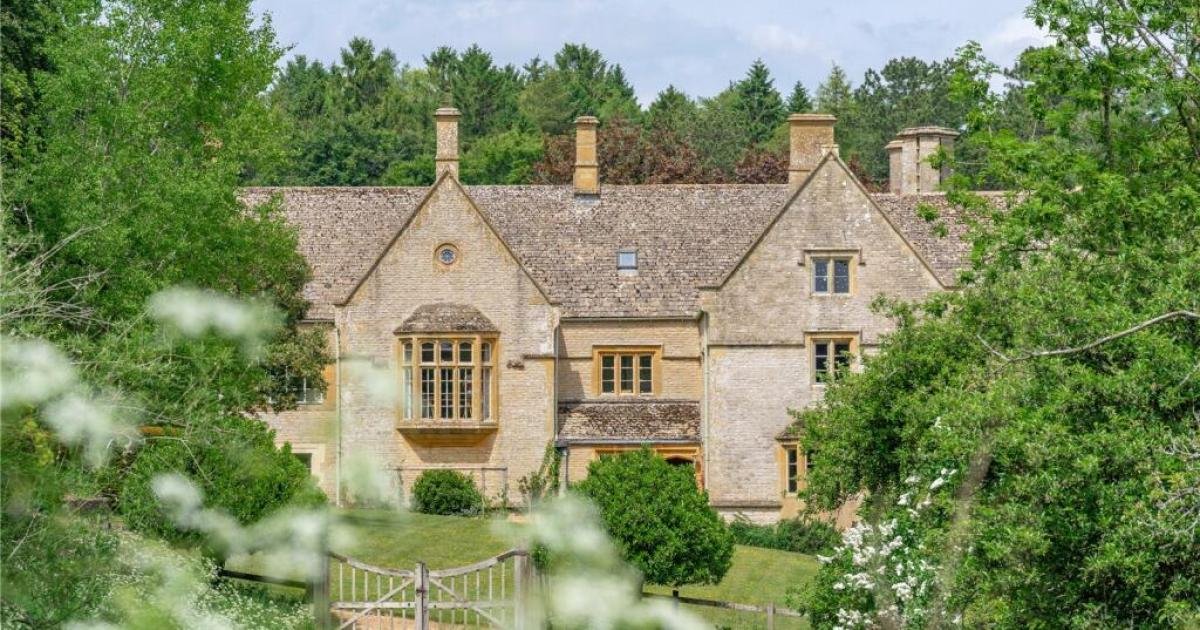
Built in 1826 for Sir Charles Cockerell of neighbouring Sezincote and designed by architect CR Cockerell, Hinchwick Manor stands in a secluded position and was extended in 1937.
The Cotswolds stone manor has entered the open market following the passing of Stephen Asquith in May 2024.
A great-grandson of Liberal prime minister Herbert Asquith, he had inherited the historic North Cotswolds farm in the 1980s.
The main house is arranged over three floors plus a cellar, with a series of impressive reception spaces, including a central flagstone hall, drawing room and dining room, balanced by more informal family and service rooms in the later wing.
READ MORE: Pop legend’s £5.25m Oxfordshire mansion with six bedrooms up for sale

Consent was granted in 2008 for a reconfiguration of the family rooms to form a larger kitchen and breakfast room, giving buyers scope to create a substantial modern heart to the historic house.
Bedrooms are spread across the top two floors, with a principal suite, bedroom, dressing room and ensuite bathroom, and two further ensuite bedrooms and a family sitting room on the first floor.
The second floor offers a more relaxed feel, with seven attic-style bedrooms and two bathrooms providing flexible guest, children’s or staff accommodation.
One of the estate’s most striking features is the octagonal courtyard of buildings to the east of the manor, entered through a central arch and dovecote, which forms the main approach to the house.
READ MORE: Couple ‘save’ 253-year-old UK fashion brand amid liquidation

Either side, long Cotswold-stone ranges include the converted Scarlet Sub Edge barn to the south and a former threshing barn to the north, now renovated as a dramatic full-height entertaining space.
The remaining ranges provide single-storey workshops and stores, with potential, subject to consents, for sensitive conversion into further ancillary accommodation under an outline design scheme already drawn up.
Scarlet Sub Edge itself is a beautifully finished barn conversion attached to the manor’s southern wing, with an entrance hall, large open-plan kitchen and dining space, en-suite bedroom, laundry and WC on the ground floor.
Upstairs, four bedrooms over two storeys, two with ensuites, plus a family bathroom, make it ideal as a guest, multigenerational or staff space, or potentially as a showpiece party and dining barn directly linked to the main house.
READ MORE: School rated ‘outstanding’ by Ofsted for 22nd consecutive time

Outside, Scarlet Sub Edge sits behind a generous, well-kept front garden with gravelled parking.
Formal gardens and grounds are a key part of Hinchwick’s appeal, with a flagstone terrace flowing from the breakfast room onto stepped lawns to the west and rear of the house.
To the east, within the shelter of the courtyard walls, lies an enclosed garden of lawns, gravel paths and terraced beds divided by mature hedging, creating a series of intimate outdoor rooms.
The surrounding land secures the manor’s immediate setting and views, and could be shaped as parkland, equestrian ground or landscaped gardens while retaining its agricultural value.
READ MORE: 165-year-old pub closes for refurb as search for new boss continues

Beyond the core house and courtyard, the estate includes four character cottages, providing useful staff or guest accommodation and potential rental income.
Alders Yard, a substantial farmstead at the centre of the holding, underpins the estate’s working credentials with grain drying and storage for around 3,000 tonnes, four 50-tonne wet bins, a grain dryer, modern livestock buildings, a Dutch barn and silage clamps, plus a detached bungalow.
In total, the land forms a coherent block of North Cotswolds farmland with about 611 acres of arable, 72 acres of pasture and grazing, and roughly 136 acres of woodland.
Its rolling grounds, natural valleys and established woods offer strong potential for a reinstated private shoot, with scope for driven pheasant and partridge days, rough shooting and deer stalking.
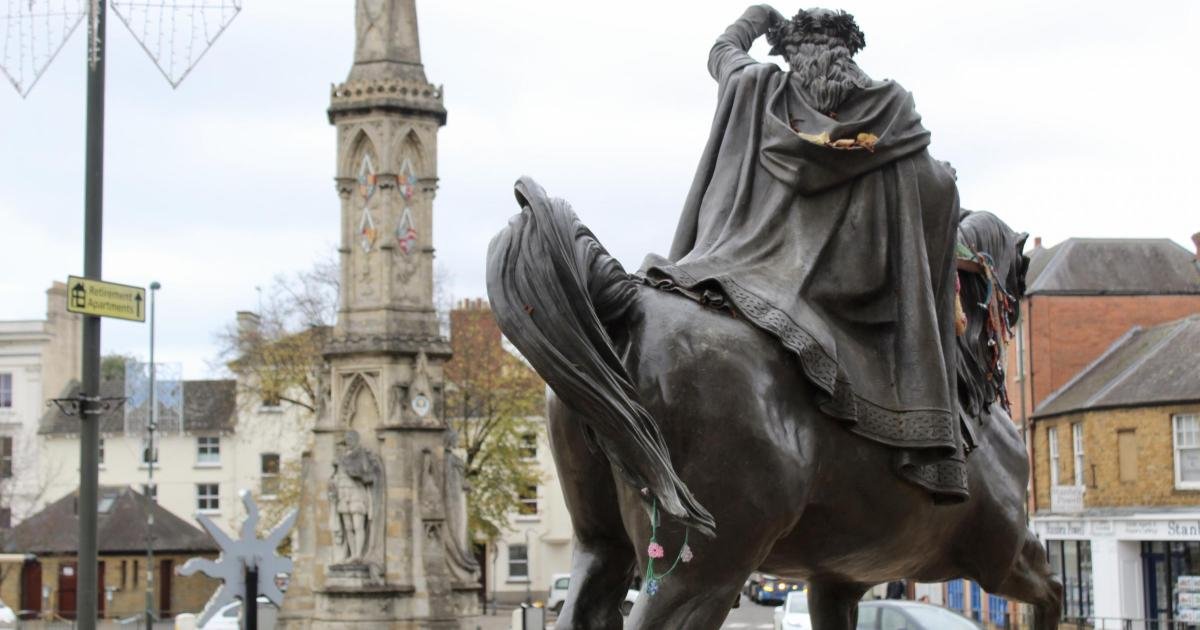
Cherwell District Council is working alongside Banbury Town Council and the Quays Consortium to prepare a formal expression of interest for the new national competition, which aims to celebrate the cultural and heritage contributions of towns across the country.
David Hingley, leader of Cherwell District Council, said: “I’m proud to confirm that alongside our partners we will be submitting an expression of interest for Banbury to be recognised as the UK Town of Culture 2028.
“This competition is our opportunity to show the rich, diverse and historic heritage that makes Banbury so special and unique, and to leave a lasting legacy for the future.
“From our outdoor market, thriving community initiatives, popular festivals, grassroots arts and wellbeing projects, to youth sporting programmes, culture is already at the heart of Banbury, and this bid will help us shine a spotlight on the town, its people and its stories.”
The UK Town of Culture 2028 winner will receive £3 million to deliver a six-month programme of cultural events and activities.
Banbury’s expression of interest will showcase its distinct identity and outline how the programme could broaden resident engagement, increase access to arts and heritage, and involve communities in shaping the design and legacy of the programme.
The council is engaging with partners such as Banbury Museum, The Mill Arts Centre, cultural organisations, businesses, and community groups to strengthen the bid and realise the town’s cultural ambitions.

Helen & Douglas House, which cares for terminally ill children and their families, launched its revamped clothing store on March 12.
The updated shop was opened by BBC Radio Oxford presenter Adam Ball and joins the charity’s refurbished homeware shop, which reopened last September and occupies the other half of the unit.
Baljit Dhindsa, head of retail at Helen & Douglas House, said: “We are delighted to unveil the refurbished space, which has been thoughtfully redesigned to create a brighter, more modern shopping environment while continuing our commitment to sustainability.
“The new layout allows us to showcase an even wider selection of clothing and accessories, with improved displays and more space on the shop floor.
“We have also enhanced accessibility within the shop, including adding an additional accessible fitting room to ensure a comfortable experience for all our customers.”
The reimagined boutique-style shop features a contemporary, urban-inspired design with vintage touches and improved backroom facilities, allowing for increased donations and more efficient sorting.
Proceeds from the store directly support Helen & Douglas House’s hospice care in Oxford and in people’s homes.
Ms Dhindsa said: “When you buy something from our shop for £5, this could pay for arts and crafts materials for local terminally ill children to make Mother’s Day cards whilst staying at the hospice in Oxford.
“Our spring collection is now in store so do pop in to checkout our great range of clothing and accessories and take a look at the wonderful transformation of our shop.”

Cotswold Wildlife Park was established by John Heyworth on the Bradwell Grove Estate and opened on Good Friday, March 27, 1970.

It began with 341 animals and has since grown to house more than 1,500 animals across 250 species.
A spokesperson for Cotswold Wildlife Park said: “We hope you’ll join us in celebrating 56 wonderful years of Cotswold Wildlife Park & Gardens and we’d like to thank our visitors for their loyal support over the years.

“We must thank them for all their support for more than half a century.”
From its early days on a shoestring budget, the park has expanded to include giraffes, which arrived in 2010 for its 40th anniversary, and rhinos such as D’ora, named during its golden jubilee year in 2020.

George the Aldabra giant tortoise is the park’s oldest and only original resident.
To mark the 50th anniversary, keepers made him a special cake during the lockdown.



-

 Crime & Safety2 weeks ago
Oxford: ‘Next generation’ LimeBikes in city from today
-

 Jobs & Careers2 weeks ago
Why Join Oxford | Oxford University Jobs
-
 Jobs & Careers2 weeks ago
Explore our Careers
-

 Student Life2 weeks ago
The independent cinema battling Oriel College to stay open
-
 Oxford Events2 weeks ago
Michelin Guide Oxfordshire Restaurants – The Oxford Magazine
-

 Oxford Events2 weeks ago
Oxford News and Events, What’s on in Oxford, Exhibitions
-

 Jobs & Careers2 weeks ago
Internal Job Board for University vacancies
-

 Crime & Safety2 weeks ago
Crash partially blocks A40 and causes severe Oxfordshire traffic