
Business & Technology
COHO names Jon Hurley Chief Product Officer as rollout


COHO has appointed Jon Hurley as Chief Product Officer, moving the Co-Founder from Chief Operations Officer into a product leadership role.
He will oversee the vision, direction and delivery of the shared living software group’s digital products as it expands its platform for landlords, letting agents and tenants. The appointment comes as COHO rolls out changes linked to the Renters’ Rights Act and broader updates to its product offering.
COHO, which operates in the UK shared living market, says its platform is used by more than 55,000 tenants across more than 6,000 houses in multiple occupation. It describes itself as the only HMO platform in the UK to offer compatibility-based tenant matching, designed to pair tenants with common interests.
The business also reported recent growth of 87% year on year, 187% over 18 months and 531% over two years. It is targeting 200,000 units on the platform within the next two years.
According to COHO, Hurley has more than 12 years of experience in shared living management organisations. Before co-founding the company in 2019 with chief executive officer Vann Vogstad, he held roles at AXA Insurance, Switch Design Consultancy and co:home.
His appointment formalises a shift away from operations and towards product development. COHO said his background includes digital solution delivery, software development, relational database design and technical problem-solving.
Product rollout
The appointment comes as COHO prepares a new set of features for landlords and agents ahead of changes in the rental market. Among them is a digital Assured Tenancy Agreement, which will be free for all COHO users, with documentation merge tags for both single lets and HMO rooms.
The business is also introducing grouped HMO onboarding as part of the same update, aiming to simplify administration for owners and managers handling multiple occupants and property types.
Usability updates are being made across the platform, including a new communications panel and a document-serving flow designed to centralise, track and provide evidence for tenant documents, alongside stored templates and document-merging tools.
For letting agents, COHO is finalising property float features and broader changes to financial workflows, including enhanced supplier payments and owner settlements.
The platform has also been integrated with Rightmove, Zoopla and OnTheMarket, with further user experience refinements in development.
Leadership focus
Hurley outlined his priorities in the new position.
“I’m thrilled to be taking the role of Chief Product Officer at COHO at such an exciting time for the business, as it accelerates the delivery of new features that make COHO faster, smarter and even easier for customers to rely on,” said Hurley.
“COHO is leading the way in innovation in the shared-living management sector, and we’re continuing to deliver tools that give landlords and agents greater clarity, compliance and control in an evolving market,” said Hurley.
“My role will focus on exploring customer insights, creating clear and consistent product priorities, and monitoring market and regulatory shifts, competitive movement and emerging opportunities,” said Hurley.
Vogstad said product development would play a central role in the company’s next stage of expansion.
“We’re thrilled to announce that Jon will be leading the development of our product suite. His rare ability to move seamlessly between strategy, marketing and development brings exactly what we need as we continue to scale,” said Vogstad.
“Jon’s experience and instinct for building products that truly solve problems will be instrumental in driving COHO’s next phase of growth. We’re excited about the impact he’ll have on both our team and the wider shared living community,” said Vogstad.

Hyperlayer has appointed Louise Chan and Barry O’Callaghan to its board of directors following the London fintech’s GBP £30 million fundraise in the third quarter of 2025.
Chan already serves on the executive team as Chief Operating Officer, while O’Callaghan joins the board with a background in investment and corporate leadership. The appointments add two senior figures as Hyperlayer looks to expand internationally.
Founded in London, Hyperlayer sells technology to banks launching new financial products while maintaining links to existing core systems. Its platform is designed to help lenders move faster in areas such as digital financial services.
Chan joined Hyperlayer in 2023 and has more than 25 years of experience across banking and payments.
Before becoming Chief Operating Officer at Hyperlayer, she held the same role at Ebury, where she oversaw product, data and operations during the company’s international expansion. Earlier, she was Managing Director for Innovation Capability Development at HSBC and also held senior roles in banking and consultancy.
Capital markets
O’Callaghan is Chairman of private investment firm AKLO Capital. He previously served as Chief Executive Officer of education company Houghton Mifflin Harcourt and earlier built digital publisher Riverdeep through a series of acquisitions.
Earlier in his career, he held investment banking roles at Morgan Stanley and Credit Suisse, focusing on mergers and acquisitions and capital markets. That experience brings board-level expertise in fundraising, expansion and dealmaking as Hyperlayer builds on its latest investment round.
The board changes were announced by Rob Rooney, Hyperlayer’s co-founder and former Chief Executive Officer of Morgan Stanley International. He has led the company as it pursues further growth with banks across multiple markets.
Board changes
The addition of an internal operating executive and an investor with capital markets experience points to a blend of execution and financial oversight at the board level. It also formalises Chan’s leadership role while giving O’Callaghan a direct governance position.
O’Callaghan was already involved with the business as an investor. His appointment shifts that relationship from shareholder backing to a formal board seat as the company enters its next phase.
For fintech companies selling to large banks, board composition can carry weight because customers and investors often look for experience in regulation, operations and institutional relationships. Hyperlayer’s choice of directors reflects that emphasis, with Chan bringing operational banking expertise and O’Callaghan contributing experience in investing and large-scale corporate management.
Hyperlayer has tied the appointments to its recent funding and international plans. It is one of several UK fintechs seeking to win business from incumbent banks under pressure to improve digital services without replacing core systems outright.
Market pressure
Competition in that market has intensified as banks weigh how to use newer forms of automation and software in customer-facing products. Providers that can demonstrate an understanding of both bank infrastructure and governance requirements have tried to stand out as spending by financial institutions remains selective.
“Louise has been instrumental in building our global operating capability, driving our HyperJar B2C business and leading Tier 1 bank client relationships. Barry adds deep experience in capital markets and scaling global businesses, and we’re delighted to see him move from investor to this hands-on leadership role. As we expand internationally and work with larger institutions, their perspective at board level will be critical to our next stage of growth,” said Rob Rooney, Chief Executive Officer and Co-Founder of Hyperlayer.
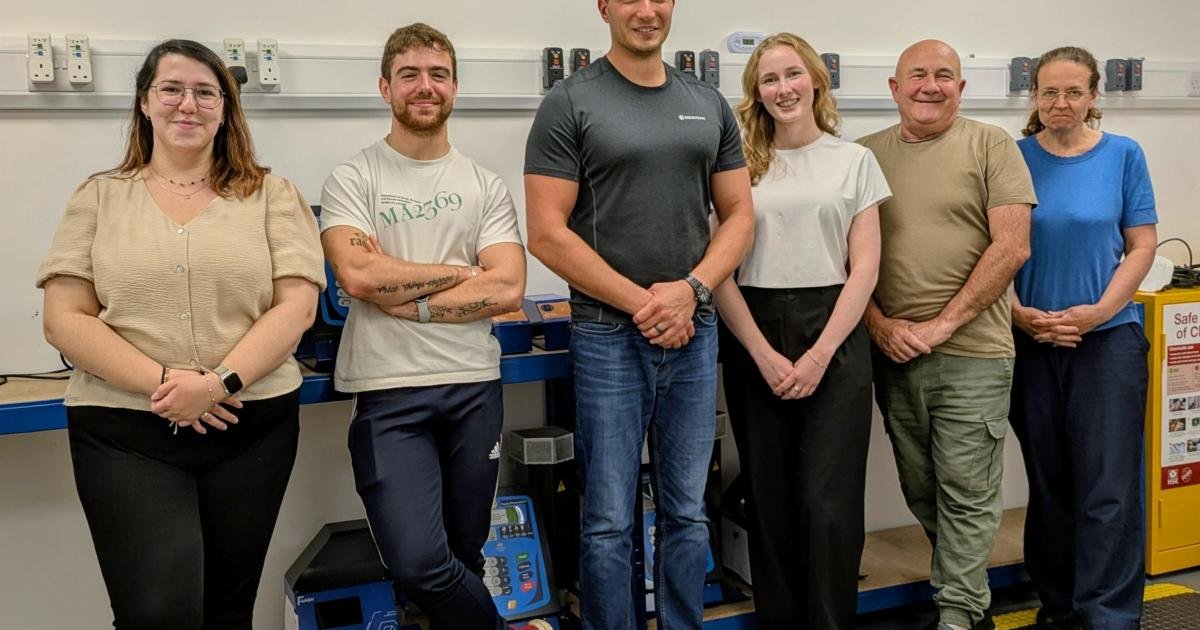
Small and medium-sized manufacturers in Oxfordshire will benefit from a £3.1 million investment through the Made Smarter South East programme, funded by the Government to boost digital transformation.
The programme offers expert technology advice, leadership training, digital skills development, and match-funded grants to support productivity, innovation, job creation, and carbon reduction.
Bryan Vint, programme manager for Made Smarter South East, said: “This new wave of funding is a huge boost for manufacturers across the South East.
“In our first year we have already shown what the region can achieve when SMEs have access to the right advice, skills and technology.
“The continuation of the programme gives businesses the confidence to plan ahead, invest in digital tools and build the skills they need to grow.
“We are excited to help hundreds more manufacturers unlock productivity, resilience and long-term growth.”
The scheme is delivered by Surrey County Council in partnership with Oxfordshire LEP.
Since its launch in April 2025, Made Smarter South East has supported 273 manufacturers, participated in 137 diagnostic workshops, developed 93 digital roadmaps, and approved grants for 20 technology projects.
Over the last year, manufacturers have secured more than £307,000 in matched funding, enabling over £1 million of investment in technologies such as ERP systems, 3D printing, and automation.
Manufacturers in Oxfordshire are already seeing the impact.
Brick Kiln Composites, based in Banbury, completed a Digital Transformation Workshop and joined the Leadership Programme to explore how digital technologies could enhance their operations.
Josh Tee, HR and operations manager at Brick Kiln Composites, said: “Working with Made Smarter has helped us step back and assess where digital technology can make the biggest difference to our operations.
“The programme has helped us better understand our current processes, identify pain points, and explore how digital tools could improve efficiency, strengthen lean manufacturing, and support more sustainable practices.”
He described the programme as a “fantastic initiative” for SMEs that builds “awareness and confidence around digital opportunities.”
Mr Tee said: “As we look ahead, technologies will increasingly support every stage of the manufacturing process, from procurement through to quality assurance, helping us create positive change for both our team and our customers.”
Businesses start with an expert digital assessment to identify their technology and skills priorities, followed by the creation of a tailored digital roadmap.
Support includes leadership development, workforce training, and digital internships to help embed new technologies and change across the organisation.
Eligible companies can receive up to 50 per cent match funding, with grants of up to £20,000 available for capital technology projects.
More information is available at madesmarter.uk/adoption/in-my-region/south-east.

Poor product information is driving returns and deterring purchases, according to new Akeneo consumer research on shopping behaviour and return rates.
The findings highlight problems both before and after checkout, with shoppers saying missing or inaccurate details affect confidence, product choice, and brand loyalty. Two-fifths of consumers said they had returned a product in the past year because the pre-purchase information turned out to be wrong.
Return rates across retail remain high. Akeneo, citing National Retail Federation figures, said the average retail return rate is approaching 17%, with annual returns costing the sector nearly USD $900 billion.
The research points to inaccurate descriptions, inconsistent sizing, missing specifications, and weak imagery as key reasons shoppers receive products that do not meet expectations. Consumers said they return an average of two products a year for that reason alone.
Before Purchase
Product information issues also shape behaviour before a sale is made. Nearly three-quarters of consumers said they struggle to find all the information they need to make a confident purchase decision, while 71% said they now spend more time checking purchases because of inflation and higher prices.
That caution appears to affect both conversion and loyalty. The findings show that 70% of shoppers would buy a different product than the one they intended if information was lacking, 65% would abandon a purchase altogether, and 68% would stop buying from a brand after a poor product information experience.
Akeneo argued that retailers have focused heavily on making returns easier and cheaper while paying less attention to the quality of information shown before an order is placed. Clearer, more complete product data could reduce avoidable returns and build customer trust, it said.
Consumers also linked better information with a greater willingness to keep what they buy. Nearly two-thirds, or 62%, said they are far more likely to keep a purchase and feel positive about it when product information is clear, accurate, and detailed.
That includes sizing and fit guidance, product attributes, technical specifications, imagery, and details on materials, availability, and sustainability. The research suggests shoppers are using a broader range of product details to judge whether an item meets their needs before committing to buy.
Executive View
Romain Fouache, Chief Executive Officer of Akeneo, said retailers and brands are missing a direct link between data quality and returns.
“Many companies still haven’t connected the dots between product data quality and return rates,” Fouache said. “When product information is incomplete, unclear or inconsistent, customers are far more likely to receive something that doesn’t meet their expectations, and that leads directly to returns. But when data is accurate, consistent, detailed and easy to understand, shoppers buy with confidence. Better product data doesn’t just lift conversion; it protects margins, loyalty and brand credibility.”
The figures add to a broader retail debate over the cost of returns and pressure on margins. Returns can add handling, transport, and restocking costs, while increasing the risk that stock cannot be resold at full price.
For retailers, the research indicates that product pages and related data may have a more direct effect on commercial performance than is often assumed. For consumers, it suggests that frustration starts before the return process itself, when information is absent, unclear, or inconsistent at the point of decision.
Among the clearest findings was the link between accurate information and customer retention: 68% of consumers said they would stop buying from a brand after a bad product information experience.



-

 Crime & Safety2 weeks ago
Oxford: ‘Next generation’ LimeBikes in city from today
-

 Jobs & Careers2 weeks ago
Why Join Oxford | Oxford University Jobs
-

 Jobs & Careers2 weeks ago
Explore our Careers
-

 Student Life2 weeks ago
The independent cinema battling Oriel College to stay open
-

 Oxford Events2 weeks ago
Michelin Guide Oxfordshire Restaurants – The Oxford Magazine
-

 Oxford Events2 weeks ago
Oxford News and Events, What’s on in Oxford, Exhibitions
-

 Jobs & Careers2 weeks ago
Internal Job Board for University vacancies
-

 Crime & Safety2 weeks ago
Crash partially blocks A40 and causes severe Oxfordshire traffic