
Crime & Safety
Closed Oxford pharmacy could be replaced with ice cream shop

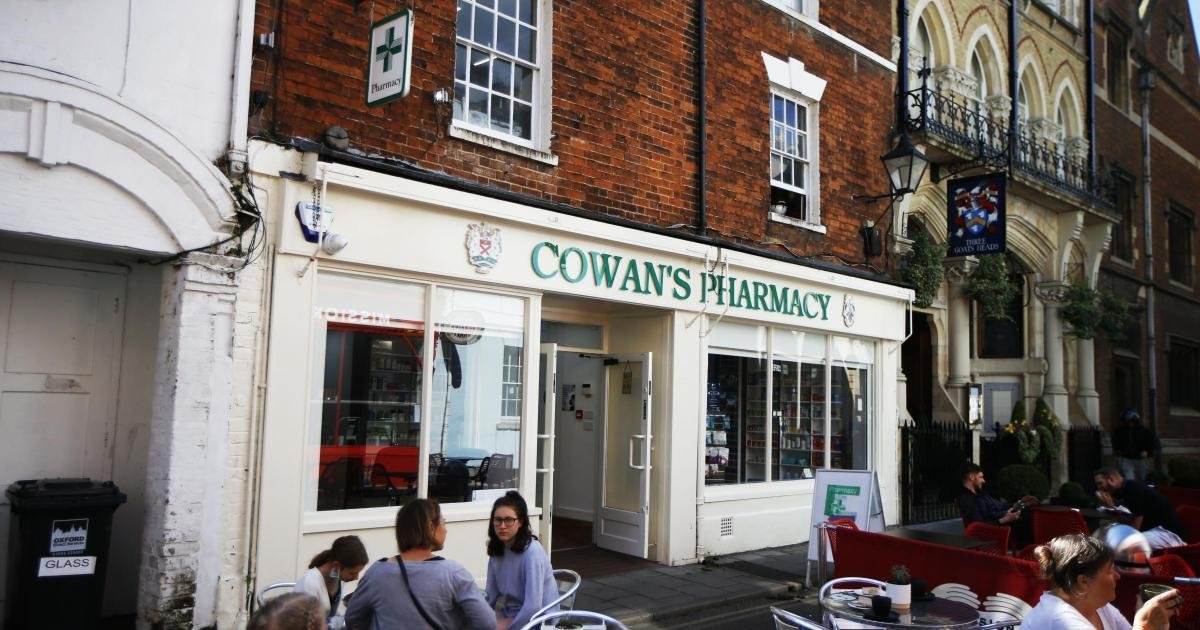
Cowan’s Pharmacy in St Michael’s Street, Oxford, was run by pharmacist Adil Cowan after he set up shop independently following the closure of the pharmacy he ran in the Boswells department store in 2020.
But this newspaper reported in August 2021, shortly after its opening, that Cowan’s had been refused a licence to dispense NHS prescriptions after competitor Boots objected to the plans.
READ MORE: Oxford – Paedophile jailed for sexually abusing girl 25 years ago
It is not known what caused the closure of the pharmacy in St Michael’s Street, but the company was dissolved in February this year. Mr Cowan could not be reached for comment.

Now, new plans have been submitted for the former pharmacy to be turned into an ice cream shop, called Aromi.
An applications for alterations to the existing shopfront at 1-3 St Michael’s Street has been submitted to Oxford City Council.
The proposal includes repainting the shop, added new signage and installed a sash window to serve ice cream and other products directly to customers on the street during the summer.
READ MORE: Oxford – Fears over wildlife and smells at 3,000 homes plan
A planning document by Clark Architecture and Design submitted on behalf of the applicant said: “This proposal seeks to enhance and enliven the existing outdoor dining experience through the creation of a small opening.
“This feature will provide direct access to the restaurant’s interior while serving as an outlet for products to be served straight to the street, adding a level of theatre to the current street scene.”
The application is set to be decided by the council by mid-May.

Charlie Page was the subject of a hearing at Oxford Crown Court for an application for bail on Wednesday, April 8.
The 19-year-old has been charged with one count of oral rape and one count of assault by penetration.
READ MORE: Man found dead after major police response at Culham Lock
The offences are said to have been committed against a 13-year-old girl in Oxford on January 8.
Judge Nigel Daly refused to grant Page bail ahead of the trial.
The next hearing related to the case has been set for April 17 with the view to bringing the defendants trial date forward, as the current date of December 14 is outside of his new custody time limit.

Great Western Park, a 3,300-home estate is due to be finished this year, and was initially granted planning permission in 2008, with a new GP surgery included.
The planning permission for the new surgery dates back about 10 years but there have been repeated delays.
Didcot West county councillor Ian Snowdon launched a petition calling for swift action after the previous developer Assura pulled out, and it quickly attracted more than 2,000 signatures online.

He said: “Finding a new developer is a positive step but there is still some legal work to be done.”
Woodlands Medical Centre has appointed London-based Apsley Henley Med Ltd as the new developer for the long-awaited project.
The appointment, confirmed today, follows action taken by the former NHS Buckinghamshire, Oxfordshire and Berkshire West Integrated Care Board (BOB ICB) to identify an alternative developer.
This comes after Assura’s proposal for the new surgery building was deemed unaffordable.

Olly Glover, MP for Didcot and Wantage, has repeatedly pressed for updates on the delayed scheme.
In October, he raised the issue in the House of Commons with Health Secretary Wes Streeting urging action to help unblock plans. Following this exchange, Mr Streeting promised to ‘find out what’s gone wrong’.
Mr Glover explained at the time that Great Western Park has added more than 3,000 homes to Didcot, with Valley Park under construction adding over 4,000 more. Yet the GP surgery promised in 2008 remains an empty patch of land.
Despite the council having granted planning permission, Woodlands Surgery prepared to run the new facility, and the Integrated Care Board (ICB) supporting the case for one, progress was stalled with NHS England, leaving local primary care services struggling to cope with increasing demand for appointments.
Mr Glover said: “Residents in Great Western Park have waited far too long for the GP surgery that was promised years ago.
“However, today’s announcement is an important step in the right direction. With a new developer now appointed, this should provide the momentum that is needed to get this project up and running.
“My constituents deserve access to primary care that keeps up with housing growth, and I will continue to press the ICB to make sure that this project finally becomes a reality.”
Mr Snowdon’s petition calls for a binding timetable and delivery commitment from the ICB and urgent interim GP capacity measures such as temporary clinical space, additional staff, or expanded appointment capacity.
About £791,000 in developer contributions was secured for the new surgery in 2016.
They noted long-term declines in the numbers spotted during the RSPB’s long-running Big Garden Birdwatch citizen science scheme.
Average starling counts per garden fell to a record low for the second year in a row, dropping by another 3% in this year’s birdwatch.
According to the RSPB, starling numbers recorded in the survey have plunged by 85.1% since the scheme began in 1979.
Greenfinches saw a modest 2.3% rise in average counts this year, but the charity said their numbers remain around two-thirds down on 1979 levels.
RSPB scientists warned that these songbirds are among the species vulnerable to diseases that can spread at bird feeders, and are urging households to reconsider when they feed birds, how they do it and what food they put out.
Beccy Speight, the charity’s chief executive, said: “We’re not asking people to stop feeding, just to feed in a way that protects birds’ long-term health.”
This year, more than 650,000 people took part in the birdwatch, which involves spending an hour counting birds in a garden or local green space during the last weekend in January.
The results can help conservationists gauge how the country’s bird life is faring.
The house sparrow held on to the top spot and the blue tit remained at number two again this year, followed by starling in third, woodpigeon in fourth and blackbird in fifth.
While starlings jumped from fourth to third place for the most commonly spotted species in 2026, it was largely because fewer woodpigeons were reported compared to last year, the RSPB said.
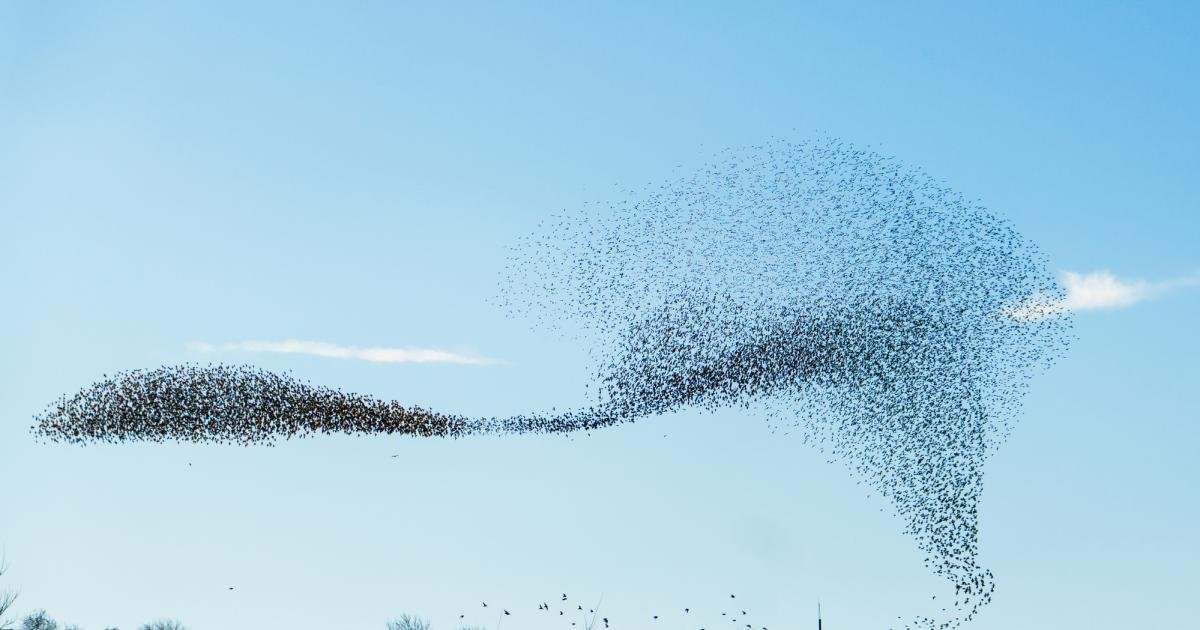
The charismatic birds are found across the UK, with numbers swelling during winter when more of the species arrive from northern Europe, and can be seen in huge numbers performing aerial displays known as “murmurations”.
Before the year 2000, starlings were regularly the most numerous species recorded in the Big Garden Birdwatch.
However, they are now “red-listed” because of concerns over their falling population.
What is causing the decline of birds?
The RSPB said there is a lack of evidence behind what might be driving the decline although a fall in chicks’ survival rates over their first winter could be contributing.
Greenfinches have seen their population particularly devastated by the disease trichomonosis, which spreads more easily when birds gather around feeders in summer and autumn.
The songbird is also on the conservation “red list”, with other UK-wide surveys indicating a loss of more than two million birds since the mid-1990s.
Recommended reading:
Ms Speight said: “Feeding birds is something millions of us love and value, but the science shows us that birds such as greenfinches have been affected by the spread of disease at feeders.
“By making small changes together, we can ensure garden feeding continues to be a positive force for nature.”
What’s your favourite type of bird in the UK? Let us know in the comments



-
 Oxford Events4 weeks ago
Michelin Guide Oxfordshire Restaurants – The Oxford Magazine
-

 Oxford News3 weeks ago
Gary Lineker’s nephew-in-law death inquest to be next week
-

 Oxford News4 weeks ago
Schwarzman Centre to open doors to public with major celebration
-

 Crime & Safety3 weeks ago
Oxford: ‘Next generation’ LimeBikes in city from today
-

 Jobs & Careers3 weeks ago
Explore our Careers
-
 Student Life3 weeks ago
The Art of Personalised Jewellery: Why Engraved Bracelets Are the Ultimate Keepsake
-

 Crime & Safety3 weeks ago
Wiltshire 12-year-old girl with Oxfordshire links missing
-

 Jobs & Careers3 weeks ago
Why Join Oxford | Oxford University Jobs