
Oxford University
Celebrating ÖSYM’s visit to Oxford and the future of English assessment in Türkiye

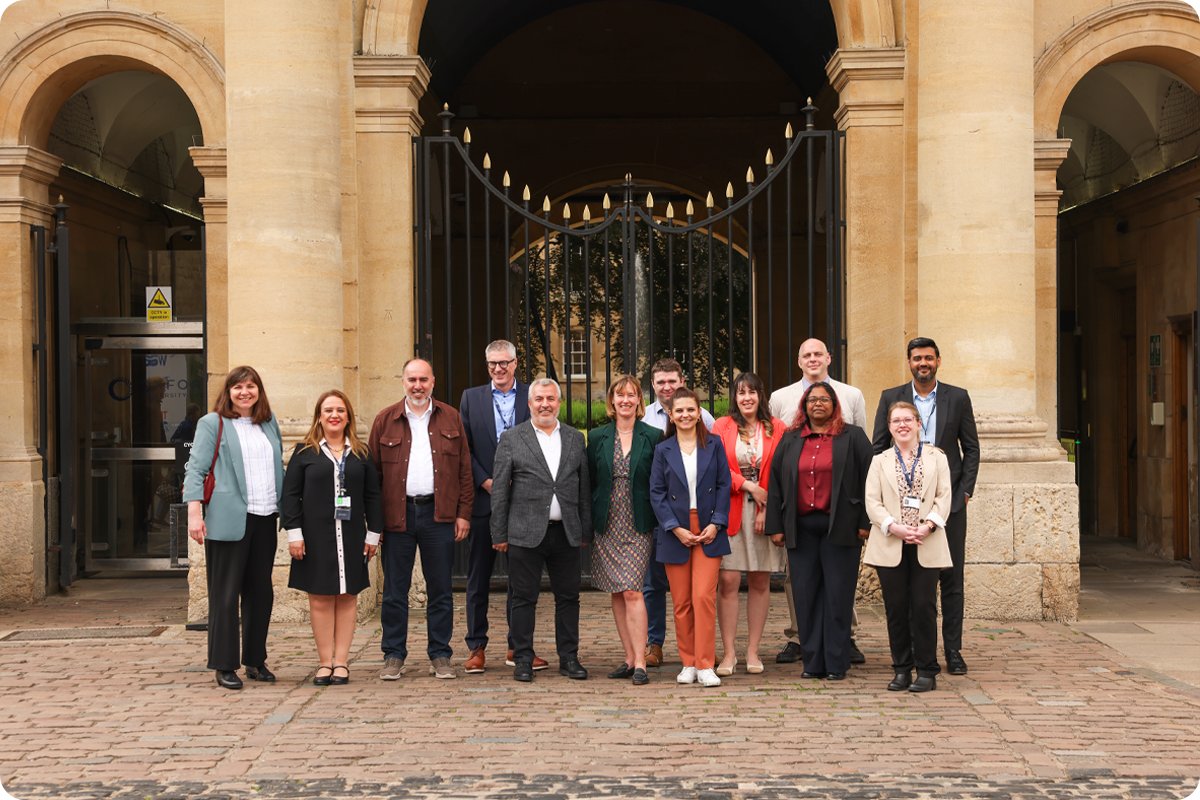
In a significant move for English language assessment in Türkiye, the Student Selection and Placement Centre (ÖSYM) has officially recognized the Oxford Test of English (OTE).
The recognition expands the range of valid English proficiency tests accepted by Turkish universities and institutions, and represents the beginnings of a deeper collaboration with ÖSYM.
In May 2025, a senior ÖSYM delegation visited our Oxford office, marking a milestone in Türkiye’s engagement with global standards in educational assessment.
Steps to OTE recognition in Türkiye
The Oxford Test of English (OTE) is an online, modular English proficiency test aligned with the Common European Framework of Reference for Languages (CEFR). It assesses candidates at A2, B1, B2, and C1 levels in four key skills: Listening, Reading, Speaking, and Writing. The exam is designed for flexibility: test-takers can choose to sit individual modules or the entire test. The full exam takes about two hours, and results are typically released within five working days.
In early 2025, ÖSYM formally recognized OTE, meaning that Turkish higher education institutions can now accept OTE scores for language exemption and programme applications.
Recognizing OTE also marks a shift in how Türkiye can engage with global academic institutions and integrates technology and quality assurance into its educational measurement systems.
ÖSYM’s Oxford visit: strengthening ties
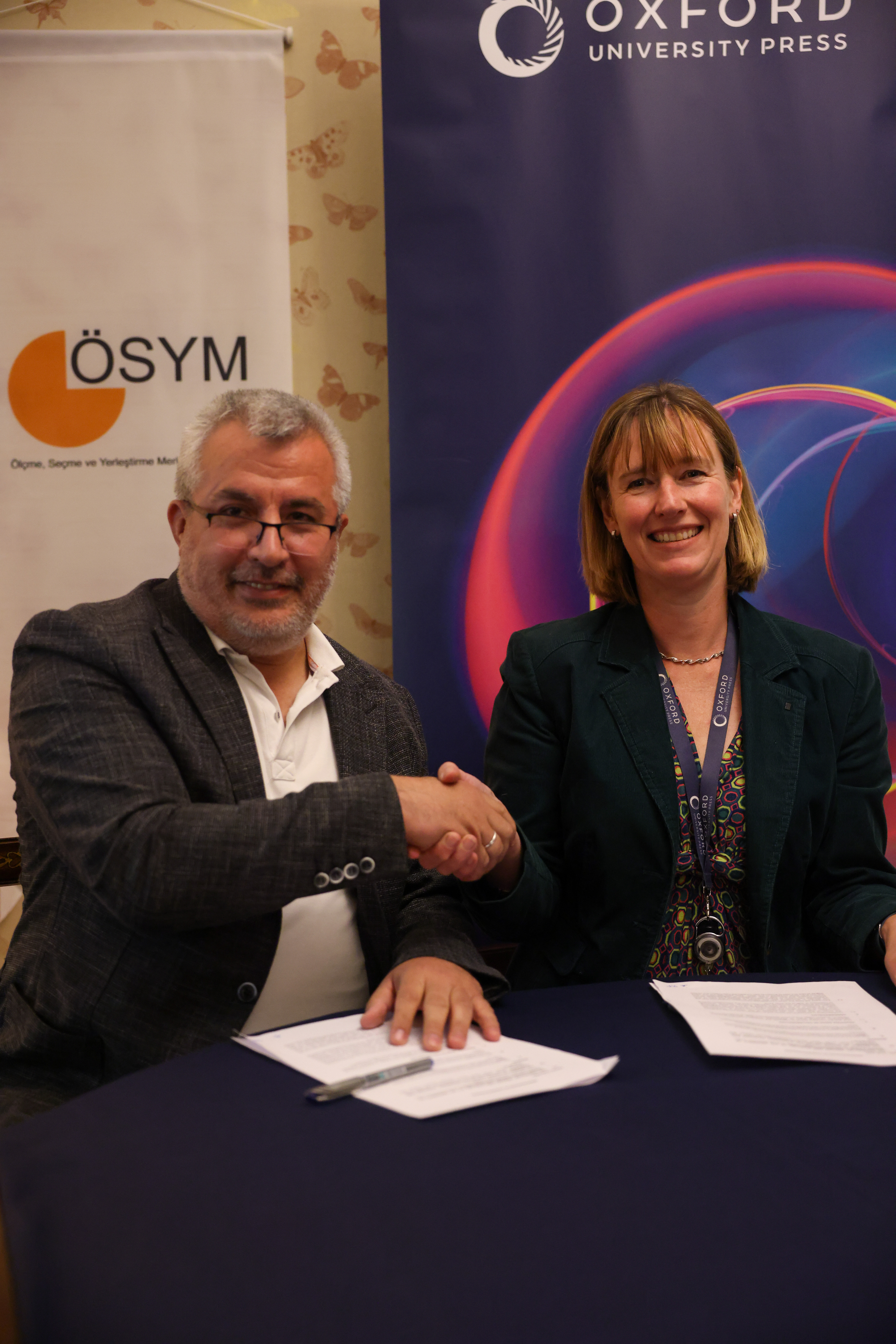
In May 2025, we welcomed a delegation led by Professor Dr Bayram Ali Ersoy, President of ÖSYM, to mark the beginning of a formal collaboration aimed at aligning Türkiye’s assessment practices more closely with international standards, especially in the context of language testing.
During a strategic meeting, our colleagues and ÖSYM representatives shared insights into exam design, item development, test delivery, and quality assurance processes with a strong emphasis on the use of digital technologies in assessments.
Sara Pierson, our Managing Director of English Assessment, reflected on the day by highlighting the mutual aim to progress towards long-term academic cooperation, technical exchange, and innovation:
“It was a pleasure to host senior delegates from ÖSYM at our offices. This visit marks a significant step in our partnership as we further develop our English assessment presence across Türkiye. Our discussions highlighted the value of international collaboration and the role of technology in advancing assessment quality and accessibility. I am delighted by the strong partnership that we have formed and look forward to further collaboration in the future.”
A new era in English assessment for Türkiye
With the recognition of OTE and further collaboration planned, we are excited to be able to work closely with ÖSYM to offer:
- More flexible testing models that suit diverse learner needs
- Faster and more reliable results, helping streamline university admissions and preparatory programme decisions
- Improved test security and standardization using international best practices
- Digital integration, aligning with Türkiye’s broader goals for educational digital transformation.
In the context of global mobility, where English proficiency is often a prerequisite for academic exchange and employment, adopting respected assessment tools like OTE contributes to improving Türkiye’s competitiveness and the international credibility of its education system: for example, by helping institutions attract international students and expanding their role in cross-border academic partnerships.
We are pleased by ÖSYM’s recognition of the Oxford Test of English, and what it means for language assessment in Türkiye: a more flexible, digital, and learner-oriented approach, and more accessible and efficient testing for individuals, supporting institutional goals for internationalization and quality assurance.
You can find out more about the Oxford Test of English here.

We have been named a finalist in the Legal Technology Awards 2026.
Oxford Law Pro, our knowledge resource for legal professionals and researchers, has been recognized in the Responsible Use of AI in Legal Services category. This recognition follows two recent award wins in the Society for Scholarly Publishing’s EPIC Awards, for both Hosting Platform Features and Branding.
Hosted by Netlaw Media, the Legal Technology Awards recognize leadership, innovation, and technology as well as the individuals, teams, and suppliers transforming the future of legal services.
The Responsible Use of AI in Legal Services category recognizes organizations that demonstrate exemplary governance, robust risk management, and strong leadership in the ethical integration of artificial intelligence.
Mirkka Jokelainen, Product Portfolio Manager, said:
“Having made the list of finalists is such a meaningful recognition of OUP’s work with legal professionals, and means a lot for the whole Oxford Law Pro team. AI is a tool which enables lawyers to benefit from our decades strong work of publishing the best legal commentary and analysis, and from the start, we have wanted to make sure the new capabilities enhance lawyers’ work and are easy to use. Responsible AI is about more than just technology. It’s about helping legal professionals access trusted expertise, realize value quickly, and adopt new capabilities with confidence.”
Winners of the Legal Technology Awards will be announced on 18 November.
About Oxford Law Pro
Launched last year, Oxford Law Pro brings together more than 9,000 journal articles and over 600 award-winning, peer-reviewed books from our portfolio of authoritative and timely legal analysis, all on our Oxford Academic platform.
Oxford Law Pro is powered by a conversational AI research assistant, developed with Silverchair, making legal research more efficient without compromising on accuracy. Unlike generic AI search tools, Oxford Law Pro employs retrieval-augmented generation (RAG) frameworks specifically tuned for legal content, ensuring responses are grounded exclusively in OUP’s authoritative materials.
The platform equips legal professionals with tools that match the realities of modern practice, and by reducing time spent on initial source identification, the AI assistant allows them to allocate more time to substantive analysis, strategic thinking, and client service.
You can find out more about Oxford Law Pro here.

“Our research into AI disclosure follows our 2024 survey, which revealed a wide range of initial perceptions towards AI. Two years on, AI use is more widespread, but there remain major differences in how researchers are adopting, applying, and disclosing these tools.
“At OUP, we’ve developed AI guidelines for authors with the view that the scholarship we publish must remain valued and protected. We regularly review these against industry guidelines and consider any feedback to ensure clear guidance for authors.
“We continue to prioritize working with the research community to develop clear publishing standards that support readers and authors in an AI-enabled world.”

We’ve launched our AI Study Assistant on Business, Politics, and Science Trove, following the successful launch of the tool on Law Trove in October 2025.
This means that all our Trove platforms now offer students enhanced functionality through AI to increase their efficiency when studying by helping them to find and engage with relevant content.
Troves—in business, law, politics, and science—offer discipline-specific collections of higher education textbooks from across our market-leading lists. Rolling out the AI Study Assistant more widely means that students from these disciplines can generate accurate summaries, authoritative answers, and targeted quizzes to support understanding, revision, and exam preparation. Moreover, responses and quizzes generated by the assistant only draw from our trusted textbook content, guaranteeing that students are accessing reliable source material.
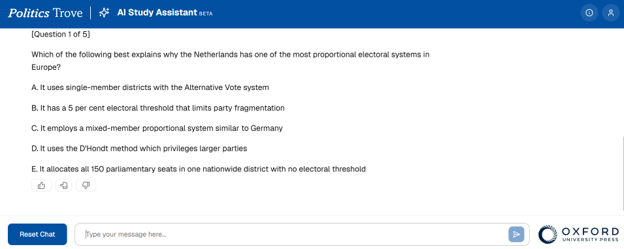
Building on the Law Trove AI Study Assistant
To expand the tool across our other Trove platforms, we further developed the assistant to meet user needs for Science Trove.
As with Law Trove, we have taken a conscientious approach to embedding AI into Business, Politics, and Science Trove by empowering users to develop the skills they need to apply critical thinking to their use of AI not just academically, but for their future careers through the specialized module on AI literacy. The module is available for all Trove users and covers generative AI fundamentals, academic integrity, critical thinking, and effective prompting, so users can use the AI Study Assistant responsibly and with confidence.
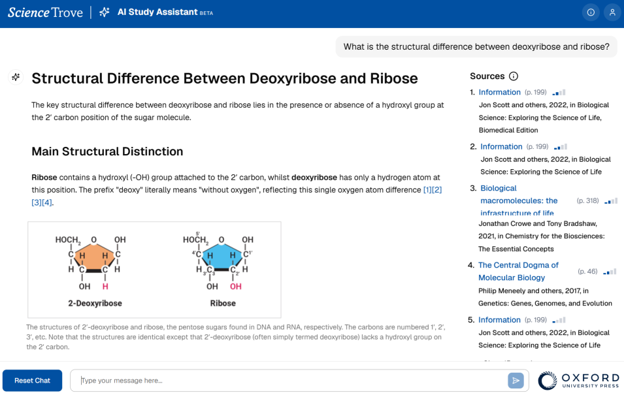
Shaped through user testing with lecturers and students, the tool has been designed with real teaching and learning needs at its heart, ensuring that Trove stands at the forefront of combining innovative technology with high-quality educative resources for higher education institutions and students.
We look forward to hearing how students interact with the tool across Trove in the new academic year and beyond. You can learn more about the development of the AI Study Assistant and the positive reception it has had on Law Trove here.



-

 Oxford News3 weeks ago
Richard Hammond takes control of classic car company
-

 Business & Technology4 weeks ago
Apprentices say AI is reshaping tech skills demand
-

 Oxford News4 weeks ago
Royal Mail customer notice to anyone writing addresses by hand
-

 Oxford Events3 weeks ago
Stage Watch: Now You See Me, Comedy About Spies, Standard Of Living, Every Woman & Silence of Lambs
-

 Business & Technology4 weeks ago
UK flight school collapsed into liquidation
-

 Oxford Events3 weeks ago
What’s on in Oxfordshire this September
-

 Oxford News3 weeks ago
King Charles applauded as Dragons’ Den star among 26 to lose MBE
-

 Oxford Events3 weeks ago
Supercar invasion: Salon Privé 2026 to bring a slew of UK automotive debuts