
Traffic & Transport
Air pollution is a fixable problem – just look at how London and New York have cleaned up their acts | Sadiq Khan and Michael Bloomberg

Some public health threats make global headlines: Covid-19. Ebola. Famine. When these disasters hit, photographs and videos of people suffering and dying spur countries to respond, international bodies to cooperate and individuals to donate supplies and money. Yet one of the world’s deadliest threats gets almost no attention at all, because it is largely invisible to the public and mostly absent from media coverage: air pollution.
Every day, billions of people are inhaling air that is shortening their lives and making them sicker with every breath. Every year, air pollution kills more than 8 million people worldwide. That’s more deaths than HIV, malaria and tuberculosis combined. It hides in plain sight and strikes without mercy, leading to heart and lung disease, cancers and other deadly conditions.
The heaviest burden falls on low- and middle-income communities and nations, but it is a problem that stretches across all classes and countries.
The good news is this is a fixable problem – and the public doesn’t need to wait for national governments to act. Cities can implement their own solutions – and as the world convenes in London for Climate Action Week, the success that the English capital and New York have had in reducing pollution can help overcome opposition to bold climate action.
Experts at King’s College London predicted that from 2016 it would take almost 200 years for London to meet legal limits for roadside nitrogen dioxide (NO2) without action. But with robust and bold action from City Hall, London did it in nine.
How? By following the data. Alongside an extensive network of automatic and passive monitors, low-cost air quality sensors were installed across the city in areas where people live, play and work – schools, hospitals and cultural centres – through the Breathe London programme. But data alone is not enough. Progress comes down to how it is used and by whom. That’s why the Breathe London network also engaged with community leaders and the general public to increase awareness and install additional sensors in the areas most in need.
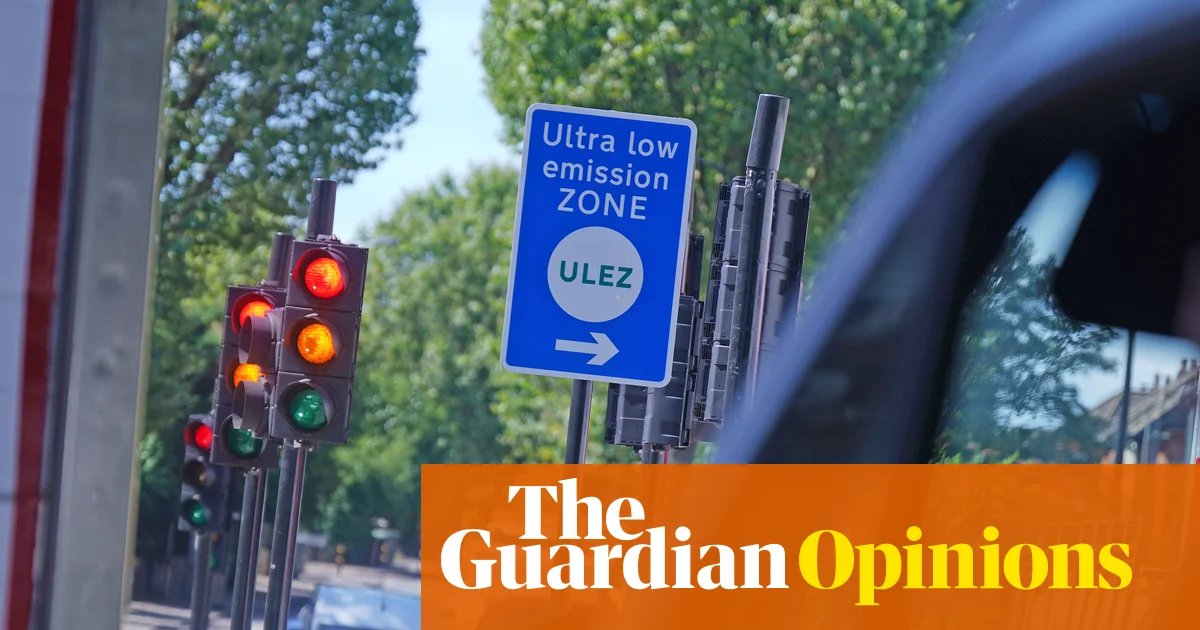
The data helped to inform solutions, such as the ultra-low emissions zone (Ulez) – the world’s largest clean air zone – and the rollout of zero-emission buses on London’s streets, which have made a real impact and driven air pollution levels down drastically. Taking those steps required facing down political opponents, pressure groups and vested interests but – as the data makes clear – the public has benefited. Only this month, new research published by Imperial College London found that fewer Londoners were admitted to hospital with breathing and heart problems as a direct result of the impact of the Ulez.
London built on the work that was pioneered in New York, where air-quality sensors helped city government target its efforts and drive air pollution down to a 50-year low. Both cities have demonstrated that rapid, measurable progress is achievable. In doing so, both cities have also shown that lower emissions and improved air quality are good for health, the climate and the economy, since improving air quality helps attract private investment. Now our mission is to help other cities do the same.
A new programme called Breathe Cities, launched by Bloomberg Philanthropies in partnership with Clean Air Fund and C40 Cities, was created to take what we’ve learned and spread those best practices around the world. This initiative gives mayors what they need to attack the problem head-on: real-time data on where pollution is worst, technical support to convert that data into policy solutions and a global network of cities to share ideas with. Breathe Cities will ensure that when something is working in one city, other cities will benefit, as those success stories become roadmaps for mayors across the globe to follow.
The early results are promising. We’re already seeing that blueprint work not only in global capitals such as London and New York, but also in cities with widely varying levels of resources and political dynamics.
Nearly 1,200 air sensors have been deployed across 14 participating Breathe Cities, including the first hyper-local networks ever established to detect pollution in Accra and Nairobi. Ten of these cities have committed to clean air zones by 2030, which will collectively cover an area where more than 18 million people live and work.
By using data, cities are attacking the problem of air pollution as a public health challenge and simultaneously making progress in tackling the climate crisis, rather than retreating from environmental protection as some national governments are doing. People rightly expect their local leaders to make it safe to walk outside. That includes protecting them from toxic pollution, as breathing clean air is a fundamental right.
The more cities that uphold that right, the more lives will be saved – and the more progress the world will make in the fight against the climate emergency.

What a joy to read John Harris’s piece on the cultural changes taking place in rural areas (Walking the Peak District, I discovered a wonderful rejection of the right’s monotone vision of England, 23 August. My husband and I have walked many miles in the Peak District and we would comment on the monocultural nature of other walkers. As a headteacher, I also took groups of children to stay in Hartington Hall, where Harris stayed with his own children, and other school groups also appeared to be monocultural. We knew nothing about Black Girls Hike or Steppers UK that Harris mentions, but hope that these movements will support positive change.
Nina Young
Collingham, Nottinghamshire
John Harris rightly highlights the cost of gastropubs and boutique Airbnbs replacing budget alternatives as an issue, but overlooked another. The replacement of basic (cheap) campsites with (expensive) glamping yurts and fully serviced campervan pitches is threatening dirt-cheap summer holidays spent backpacking around the country and learning to appreciate new landscapes and peoples, from which many of us oldies benefited greatly.
Mike Coogan
Abbeystead, Lancashire
John Harris omits one critical issue that impacts participation. Public transport outside cities and towns is often poor. To places like Bellever on Dartmoor, the location of one of his favourite hostels, buses are very limited indeed.
Les Bright
Exeter
Traffic & Transport
‘Without us, no wheel would turn’: the unsung heroes keeping England’s transport moving | Business
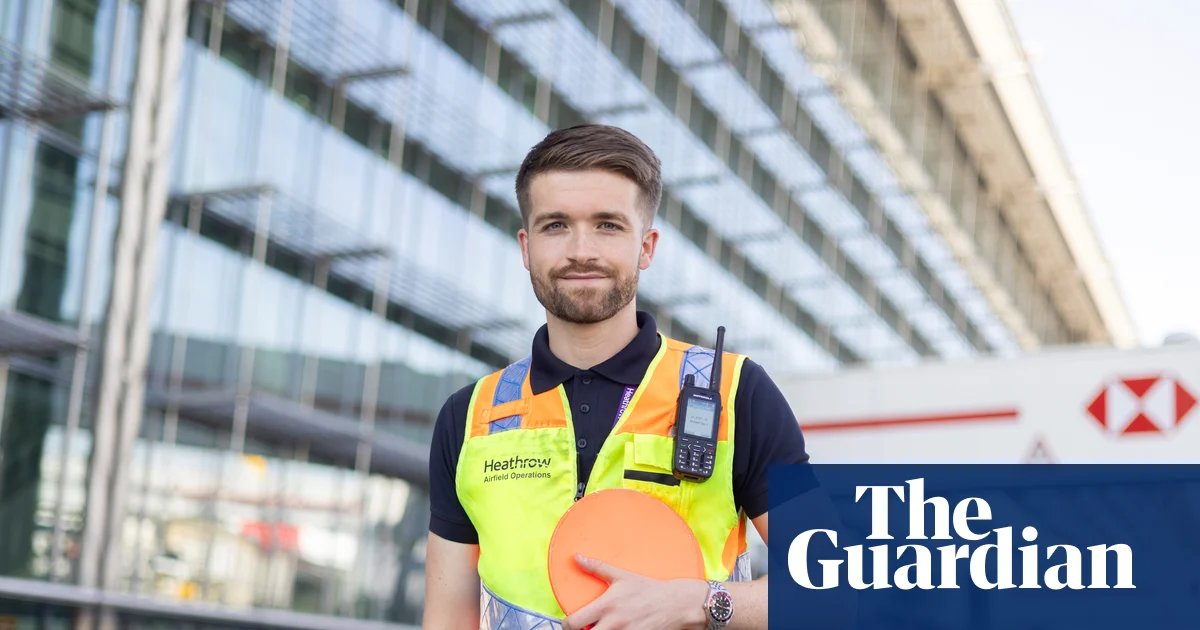
Not many people get to park their car here – bang in the middle of Heathrow airport, on the taxiway just a stretch of grass away from where a line of passenger planes is coming in to land.
It’s close enough to see the shimmering air and smoke as nose tyres hit the tarmac. “An A380 will put down as much rubber as a car’s entire tyre,” Jack Quantick-Thorne says. He knows – part of his job is to ensure the runway team scrapes it off and patches things up overnight. And it is all recycled, he adds.
The airfield operations officer is not in the limelight much, but is one of a host of unsung workers keeping transport moving. And some jobs far from the public eye turn out to be not only essential, but surprisingly challenging.
Jack Quantick-Thorne, airfield operations officer, Heathrow
Passengers might only catch a glimpse of Quantick-Thorne from a window seat on landing, if he grabs the paddles to marshal a plane into the exact designated spot at the stand. “People just think you’re that person with the table tennis bats,” he grimaces slightly, as the Guardian requests a demonstration. “That’s like 5% of my job.”
In fact, most planes are now brought to the stand via laser-guided electronic displays. But human marshalling remains a crucial backup. Brandishing the paddles, Quantick-Thorne beckons in a taxiing British Airways arrival, the pilot peering down from the cockpit and steering 50 tonnes of plane straight towards him. The nosewheel travels bang on the guideline, stopping exactly in position for the airbridge to swing in and allow passengers to disembark.
Nerve-racking? “No. When you’ve got a really big plane, an A380, you need a second marshal right by the wheel to check it’s stopped in the right place,” he says.
Back in the car, the job continues: “I’m patrolling, I’m looking around, scanning everything – is the refueller doing his job properly, has the aircraft got chocks under its wheels?”
That includes monitoring the road system under Heathrow’s airfields, recognising every vehicle and checking any infringement: drivers here can also clock up points on their licence, if he spots them.
Officers also need to look out for wildlife – particularly birds, a serious danger for jet planes (and vice versa). How does he deal with them? “We’ve got methods of dispersal,” says the airfield operations officer.
These, marvellously, turn out to be speakers on the roof of the van, which play a range of bird sounds: “If I saw a flock of starlings, if I played a starling noise, the starling would think, ‘Oh, maybe there’s a predator nearby,’ and they fly off.”
And, he demonstrates, “I’ve got common gull. Black-headed gull. I’ve got a falcon”.
Are there falcons? “No,” he explains patiently. “So you think about it from a bird’s point of view. If there’s a pigeon over there, best play a falcon so it will fly off.”
If he now knows birds, it’s the planes that drew him here. He was previously at Nats, the air traffic control centre in Swanwick, managing the planes, but never up close. There is more to it than the paddles – but, he confesses, he takes every opportunity to use them, and records each plane that he has marshalled, including every aircraft in BA’s short-haul fleet.
Being a pilot is the dream, he admits, but the prohibitive training costs – £100,000 or more – put it out of reach. For an enthusiast, he reckons the job is the next best thing. Last year he had to tow the Concorde that still stands at the edge of the airfield across for an exhibition: “It was the first time one had moved in years – incredible to see in the rear-view mirror.”
Chris Thackaberry, network traffic controller, Transport for London
The day starts in Victoria Station House overlooking the bus terminus, a grand old building that looks considerably less so inside, where Chris’s desk is surrounded by hundreds of cardboard diversion signs.
About 500 of the capital’s 19,000 bus stops are on his patch in Westminster – home to some of Britain’s most congested streets, where dozens of bus routes cross. Roadworks are the bane of the bus and Thackaberry’s job is to keep them moving – armed with a van, pliers and zip ties.
Sometimes he can plan for roadworks months ahead. But other days are less predictable, when life suddenly blocks a route: “It could be a broken-down vehicle or a burst water main, but I’ve had windows falling out of buildings, I’ve had a collapsed horse on a bridge. I had an upside down Lamborghini in Piccadilly … I don’t know if it was sticking to the 20mph limit.”
His incident response van contains an orderly standing desk area and even a printer to rustle up more signs if needed, as well as spill dry sacks, ready to suck up any diesel or oil leaked over the road.
It also has two cylinders affixed to the wall containing “spit kits” – swabs to pick up any saliva aimed at staff, with clear bags to seal, ready to take the evidence to the police. “It’s just part and parcel of when you’re working in London, for anyone in uniform.”
In a sweltering Trafalgar Square, as he hunts in the midst of four lanes of traffic to hitch his cardboard signs to any available piece of spare street furniture, the complexity of the puzzle becomes clearer.
“There’s so many routes go through here, we’re fighting with ourselves for space.”
after newsletter promotion
Sarah, railway signaller, York
Gone are most of the signal boxes of old: these days, Britain’s railway is mostly controlled from one of 12 remote centres. From a windowless room in York, trains right down the East Coast mainline are guided on their way.
“In the old days, it was lever pulling,” says Sarah. “Now it’s a click of the mouse instead. Like a computer game scenario, but it’s real track, real trains, real people. We have to manually click, signal to signal, for every train that comes through our patch.”
Signallers have five screens at eye level showing the railway, and five above with timetables and traffic management information.
“When you first start the job, it feels so far removed. There’s no windows, it’s like a black hole in the middle of the building, but you are signalling trains from York all the way into King’s Cross. I remember thinking: ‘How many hundreds of people are on that train we’re signalling?’”
Anything from a circuit failure to a trespasser to a sick passenger on a train can hold up the lines. “Our job initially in any incident is to make the area safe – that’s first and foremost. And then we look for a workaround, to keep trains moving. The days when there are serious incidents are few and far between. But every day there’s something.”
Jamie *, public service vehicle engineer, Manchester
At Jamie’s bus depot, servicing the Bee Network, the first shift starts at 5am and the last ends at 1am, but engineers might stay through the night with a breakdown.
“In the daytime it’s routine: vehicles are inspected by law on a monthly basis,” he says. “But engineers have bus driving licences too, if a bus was to break down, often we’d take another one out to the driver to keep the service running.”
With city buses that stop and start frequently, there is typically more treatment and maintenance. And newer vehicles don’t necessarily mean less work, he says: “They bring a lot of new issues and we’re constantly learning, going back to college on courses to learn the tech.
“Electric buses haven’t made the job easier – but they and the new diesel engines are clean. Working back in the day, it was a hell of a lot dirtier, especially in depots indoors or undercover,” says the vehicle engineer.
He will check each bus’s brakes, emissions tests and inspect the nuts and bolts everywhere from the underside to the driver’s cab. “We see a lot in the press about the conditions in the cab, but we’re cleaning those buses: it’s like a greenhouse, and the heat from the engines also comes into our workshop.
“Even the drivers don’t understand what engineers do – I always say we are the forgotten people. But without us, no wheel would turn.”
Frankie *, baggage handler, Gatwick
The thing people don’t understand, explains Frankie, is that the placement of bags in the hold is not random. “It’s all done on weight distribution. You have to put baggage where you’re told – it is a very specific job, you do not deviate.”
At many airports, larger aircraft such as long-haul planes are loaded with bags already in large crates, lifted into position by machine. But short-haul flights at Gatwick are loaded manually. “An average bag is about 20kg and the average load is 90 bags off, 90 on, for three or four people. If you do eight turns a day, that’s nearly 30 tonnes your team is lifting. You get fitter – it’s like going to the gym, you end up lifting heavier and heavier bags.”
Passengers who fear for their luggage often make the job harder: “The worst thing is shrink-wrapped bags. It’s slippery, harder to hold on to, and less grip for the belt to pull up. And those straps around bags, they can get jammed in the belts and break them.
“People don’t realise how damaging it can be – and pointless. If you’re on a flight where customs do spot checks, they go for the bags that are wrapped. And there is so much CCTV and security. If I get caught opening a bag, I’d lose my job – why would I risk that?”
There are, says Frankie, more women doing the job now: “It’s getting more female-friendly. A lot of people choose this type of job to get into aviation: they want to be pilots or crew eventually, and just want to be around planes any way they can.”
* Names have been changed
Traffic & Transport
Train drivers secure 3.6% pay rise after threat of strikes on busy UK routes | Rail transport
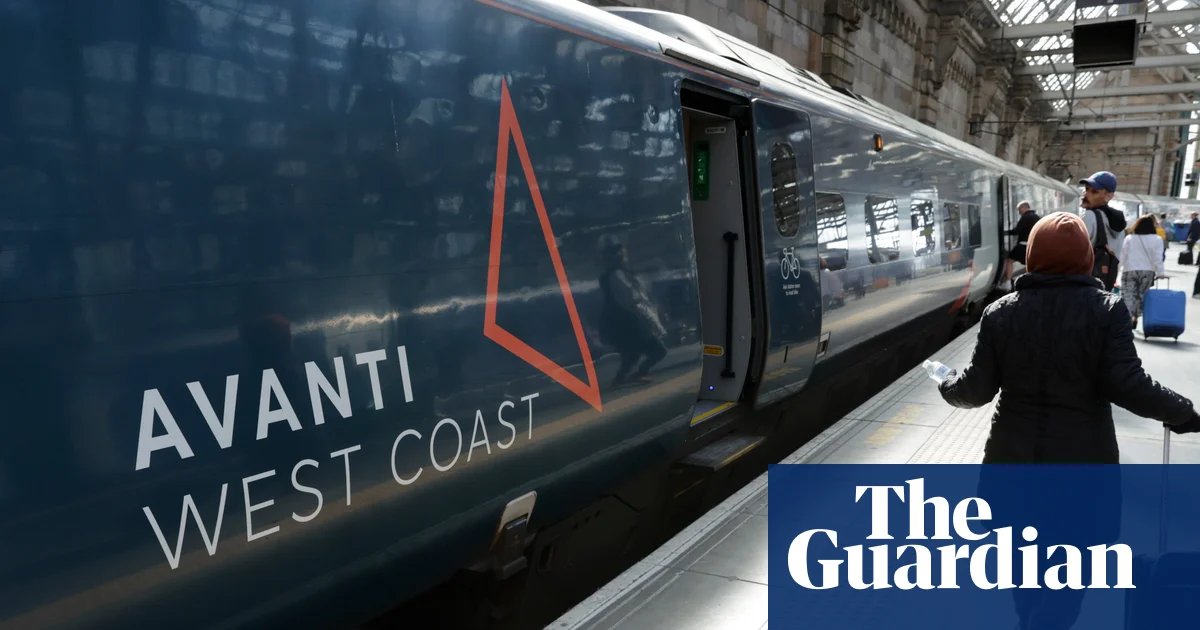
Train drivers have secured a significant pay rise after the threat of strike action was floated on busy routes across the UK, including those on the busy London-Manchester line.
The deal, which was agreed on Saturday between Avanti West Coast and the Associated Society of Locomotive Engineers and Firemen (Aslef) union, is the first to be approved by Andy Burnham in his premiership.
As well as the London-Manchester line – likely to see increased ministerial traffic after the establishment of the No 10 North office – the company also operates services to other big British cities such as Birmingham, Glasgow and Liverpool.
Coming after Aslef announced plans in June to ballot members about possible strike action over pay, the deal – first reported by the Sunday Times – will be seen as a victory for the union. It features a 3.6% pay rise for drivers, 0.7% higher than the latest inflation rate, as well as time and a half pay for working Sundays, and £720 if drivers work a fifth day in the week.
Avanti is to be renationalised under the Labour government by spring 2027, with all rail companies due to be under government control by the end of that year. The operator, which is seen as having the worst punctuality rating for any major rail company in the UK based on figures from the Office of Rail and Road, has cut multiple services in the past year, including the 7am train between Manchester and London, which they cut and brought back in the space of a few days after public scrutiny.
The government said it had “prioritised resolving the rail union disputes, improving services for passengers and saving hundreds of millions in lost revenue to ease the burden on taxpayers”.
But Conservative shadow transport secretary Richard Holden said that the government was “totally capitulating to their union paymasters” and that “taxpayers are being asked to stump up millions simply to save Burnham’s blushes.”
An Aslef spokesperson said on Saturday: “Our job is to enhance our members’ terms and conditions and this deal, struck with Avanti West Coast and approved by the DFTO (Department for Transport Operator), has been accepted.”
A Department for Transport spokesperson said: “This government has prioritised resolving the rail union disputes, improving services for passengers and saving hundreds of millions in lost revenue to ease the burden on taxpayers.
after newsletter promotion
“We are pleased to see Avanti West Coast work with Aslef to enable a fair and affordable settlement to keep Britain’s railways moving and prevent disruption for passengers.”



-
 Oxford News3 weeks ago
Train cancellation alert amid ‘fault’ near London Paddington
-

 Oxford News2 weeks ago
Museum evacuated and Oxford University closed amid incident
-

 Business & Technology4 weeks ago
Nuggit launches GBP £5 million fund for UK YouTubers
-

 Business & Technology4 weeks ago
Muscle Food at risk of closing after entering administration
-

 Student Life4 weeks ago
My year of rest and rustication
-

 Business & Technology4 weeks ago
Historic town faces series of high street shop closures
-
 Student Life4 weeks ago
Academic tourism: Oxford University and its summer schools
-

 Business & Technology3 weeks ago
Currys rolls out NiCE software to unify customer service