
UK News
‘A wow moment’: stolen 2,500-year-old Romanian gold helmet has been found | Art theft


A priceless ancient golden helmet from Romania that was stolen last year from a museum in the Netherlands, has been recovered as part of a plea deal reached with the suspects.
Under the guard of balaclava-wearing police, prosecutors unveiled the 2,500-year-old Coțofenești helmet, which is considered a cultural icon of Romania, during a news conference on Thursday in the eastern Dutch city of Assen.
Linked to the lost Dacian civilisation and dating from around 450BC, the helmet was stolen together with three golden bracelets from the Drents Museum in January last year, shocking the art world.
Robert van Langh, the director of the museum, said on Thursday that the objects were of inestimable historical value and that their return was a “wow” moment.
“On the golden helmet of Coțofenești, as you can see, two eyes are depicted,” he said. “They are meant to protect both the wearer and the helmet itself against the evil eye, against misfortune. They have done so successfully for centuries, and even today they seem to prove their value.”
The stolen items had been on loan from the Romanian National History Museum in Bucharest. The theft made international headlines, led to diplomatic tensions between Romania and the Netherlands, and sparked an international treasure hunt.
Within days of the heist, Dutch police arrested three suspects who have largely remained silent in pre-trial hearings. Their trial is due to begin later this month.
Under huge pressure from Romania, Dutch authorities had made several attempts to convince the suspects to tell them where the treasures had been stashed. Police had offered to halve the sentence of one suspect if he revealed the location of the helmet. An undercover officer posing as a criminal mastermind reportedly offered another suspect €400,000 (£350,000) to tell him where the items had been hidden.
Corien Fahner, the chief public prosecutor in the Noord-Nederland region, said the helmet and two of the bracelets were recovered on 1 April as part of a plea deal. “If it was an April fool, it would have been a very bad joke,” she said.
Arthur Brand, a Dutch art detective involved in recovering a stolen Van Gogh painting in 2023, described the recovery as “fantastic news for Romania and for the Netherlands”. He said: “We suspected that it had not been melted down because the suspects were arrested so quickly, within four days of the robbery.”
No written records remain from the Dacian civilisation, but Van Langh said the quality of the golden helmet spoke volumes. “These objects are 450 years before dating,” he said. “If you just look at the quality, the way that they have been manufactured with accuracy, detail, but also depicting what these objects must have meant for people at the time – I rest my case. They are extraordinary, from an extraordinary culture.”
Van Langh said there had been minor damage to the helmet, which could be fixed “in an hour” of restoration. A previous repair made with glue had been dislodged and there was a small dent. The bracelets were in perfect condition.
It is unclear what will happen about the €5.7m in compensation that was paid to Romania last September. At the time, the ministry said that if the artefacts were recovered, Romania would reimburse the insurance company in full or in part, depending on their condition and on whether all or only some of them were returned.
Ernest Oberländer-Târnoveanu, the former director of the National History Museum of Romania who had approved the loan and who was fired after the theft, told Dutch media the news was remarkable and that he felt “relieved and more than happy”, thanking everyone involved in the search. He has long defended his decision to send the artefact abroad, arguing the exhibition aimed to showcase Romania’s history internationally and to counter stereotypes.
Speaking at a press conference in Bucharest on Thursday, Rareș Stan, the Romanian prosecutor on the case, said the investigation would continue as authorities searched for the third bracelet. He added he was “confident we will be able to return this treasure to the Romanian people”.
Art and antiquities expert Bianca Frölich said the stolen treasures had a rare value. “Objects like this are exceptionally rare witnesses of a culture that sits at a crossroads of the ancient world,” she said. “The Dacians occupied a fascinating position between the Greek, Scythian, and later Roman spheres, yet much of their material culture has been lost or remains only partially understood.”

Craig Lewis-Williams needs specialist care for the rest of his life following the November 2021 attack.
Source link
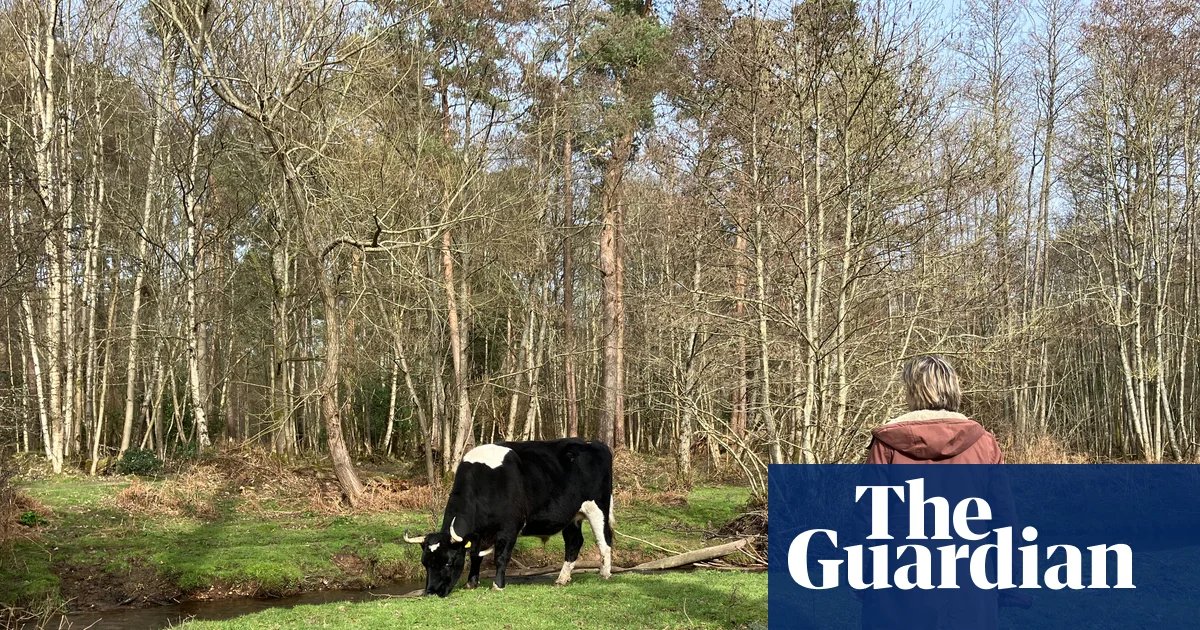
Thirty years on from the impassioned action of the road protests, the Newbury bypass soars above us on the old railway embankment. I can’t entirely accept it even now, having been part of the campaign. Today, walking in The Chase, the nature reserve that lies adjacent, the roar of traffic slips into a background hum, aided by other memories I’ve built up here.
Many of those have been with my dearest friend, Sarah. She volunteers as a “cow watcher” for the National Trust, and I’ve come with her as she checks their whereabouts and wellbeing. They are conservation grazers; keeping coarser scrub in check, spreading seed and poaching areas, and encouraging greater biodiversity and plantlife.
The reserve was once common land, with a sheepwash and blanket mill that gave this village its name, Woolton Hill. It was enclosed for hunting in 1819 and eventually became a National Trust property in 1944.
It’s also been my playground. I remember trees like spilled pencils after the great storms of 1987 and 1990, and later more felled trees when it was clipped by the Newbury bypass; I was pulled down from the branches, flicking cable ties into chainsaws to jam them up. Sarah and I recall devastating sewage spills that killed invertebrates, fish, lampreys and native crayfish.
But we also remember coming with our children, losing boots, falling (or simply lying down) in the streams; “welly walks” with grandparents, watching great spotted woodpecker chicks fledging from a hole in a Corsican pine, waiting for otters in the alder carr, and following silver-washed fritillary butterflies.
Sarah tracks the cattle on her app, via a collar round the neck of Colchis, one of six hardy black, red and white Shetland cows with upswept horns. We wade across a stream to find them grazing among wild daffodils and golden saxifrages.
Our circuit complete but our chat not yet done, we agree to meet at the garden centre cafe. Thanks to the brain fog I’ve been bemoaning, I head in error to the pub. When I eventually get to the garden centre, I follow the zigzag caterpillars of peaty-black mud from Sarah’s boots across the polished floor of the cafe. Apologising, I add my own, with a little jus of cow muck.

The papers are dominated by Donald Trump’s threats against Iran.
Source link



-

 Oxford Events3 weeks ago
Michelin Guide Oxfordshire Restaurants – The Oxford Magazine
-

 Crime & Safety3 weeks ago
Oxford: ‘Next generation’ LimeBikes in city from today
-

 Jobs & Careers3 weeks ago
Explore our Careers
-

 Jobs & Careers3 weeks ago
Why Join Oxford | Oxford University Jobs
-

 Jobs & Careers3 weeks ago
Internal Job Board for University vacancies
-

 Oxford Events3 weeks ago
Oxford News and Events, What’s on in Oxford, Exhibitions
-

 Student Life3 weeks ago
The independent cinema battling Oriel College to stay open
-

 Oxford Events3 weeks ago
Pancake day recipes – Pancake day 2024