
Oxford News
Precious pictures rescued of Oxford St Edmund Campion School

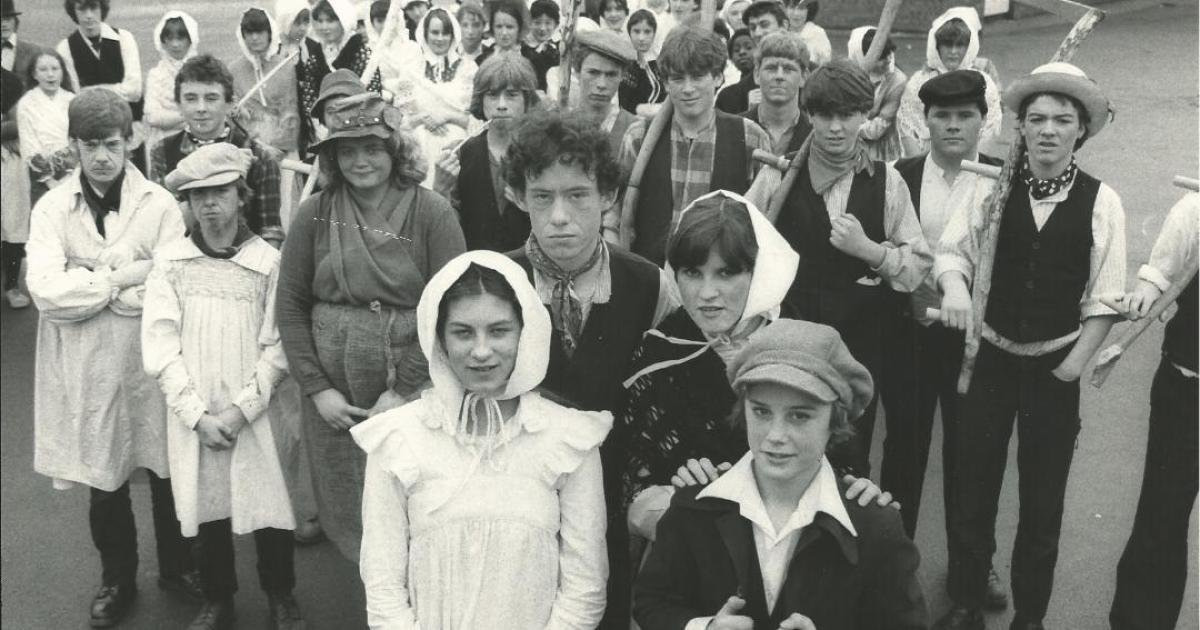
That is how many of us will remember our childhood days at school, both primary and secondary. How did we survive without the wonders of modern technology?
The pictures here were among a collection from St Edmund Campion School in Oxford that were due to be “binned and lost forever”.
READ MORE: Oxford Speedway’s long term future is secured
Thankfully, they were saved by former pupils Ray Doran and Noel McCabe, with help from friend Will Gardner, and despatched to Memory Lane.
Of course, youngsters didn’t spend all day at their desks as we see in Picture 1. It dates from 1981 and shows Bronan McCabe, John Carton and others in a school play.

In Picture 2, we see Helene Day and Junie Deegan with a teddy bear, which played a major role in a study to help deaf and hard of hearing children.
The idea was to encourage pupils with hearing difficulties to make a sound, which would illuminate the teddy’s eyes.
The Oxford Mail published the story in 1972 under the headline, ‘Teddy with a Heart of Gold’.
Picture 3 was taken in the school’s deserted art room in 1958, while we can identify headmaster Mr Taylor and Father McKenna among those in Picture 4 taken at Our Lady Help of Christians parish church at Cowley in 1970.

Picture 5 features pupils Chris Cooper, John Lever, Joan Murphy and Marie Ostojan, and in Picture 6, we see the impressive school building.

Sadly, it is no longer there. St Edmund Campion School, which opened at Iffley Turn in 1958, later became St Augustine’s School, which closed in 2003.

A housing estate was built on the site and pupils now go to Greyfriars Catholic School in Cricket Road, Cowley.
The original school was named after St Edmund Campion, who was born in 1540 and became a student and fellow at St John’s College in Oxford.
As lecturer in rhetoric, he entertained Queen Elizabeth 1 at a debate in Latin.
He accepted a travelling scholarship to Ireland, but maintained his links with Oxford, including dedicating his history of Ireland to the Oxford University Chancellor, the Earl of Leicester.
However, in 1581, he was arrested as a Roman Catholic agitator and martyred at the Tower of London.
Campion Hall in Brewer Street, Oxford, a private hall set up originally in 1896 when Catholics were again allowed to attend Oxford University, is also named after him

Thames Valley Police has asked for the public’s help in finding Dominic as a neighbouring police force fear for his welfare.
A spokesperson said: “Can you help our colleagues at Warwick Police locate missing man Dominic?
READ MORE: Public told ‘DO NOT APPROACH’ as wanted man sighted in Oxford centre
“He has links to Yarnton.”
Warwickshire Police explained that the 56-year-old has not been seen since Friday morning and has urged anyone with any information to get in touch as soon as possible.
They added that he is around 5 foot 8 inches, has grey hair and is believed to be wearing a blue shirt, blue shorts and brown shoes.
A spokesperson for Warwickshire Police said: “Have you seen Dominic? He was last seen in the Cape Road area of Warwick at around 10.30am yesterday morning (Friday) but has not been seen since.
“Our officers are growing increasingly concerned for the 56-year-old’s welfare and urge anyone who sees him to get in touch.
READ MORE: Manhunt launched after ‘sexual assault’ at Oxford shopping centre
“Dominic is described as around 5ft 8” tall, with grey hair and is believed to be wearing a blue shirt, blue shorts and brown shoes.
“He has links to Warwick and Oxfordshire.
“Anyone who sees Dominic or knows where he might be is asked to call 999 quoting incident number 191 of 28 August.”
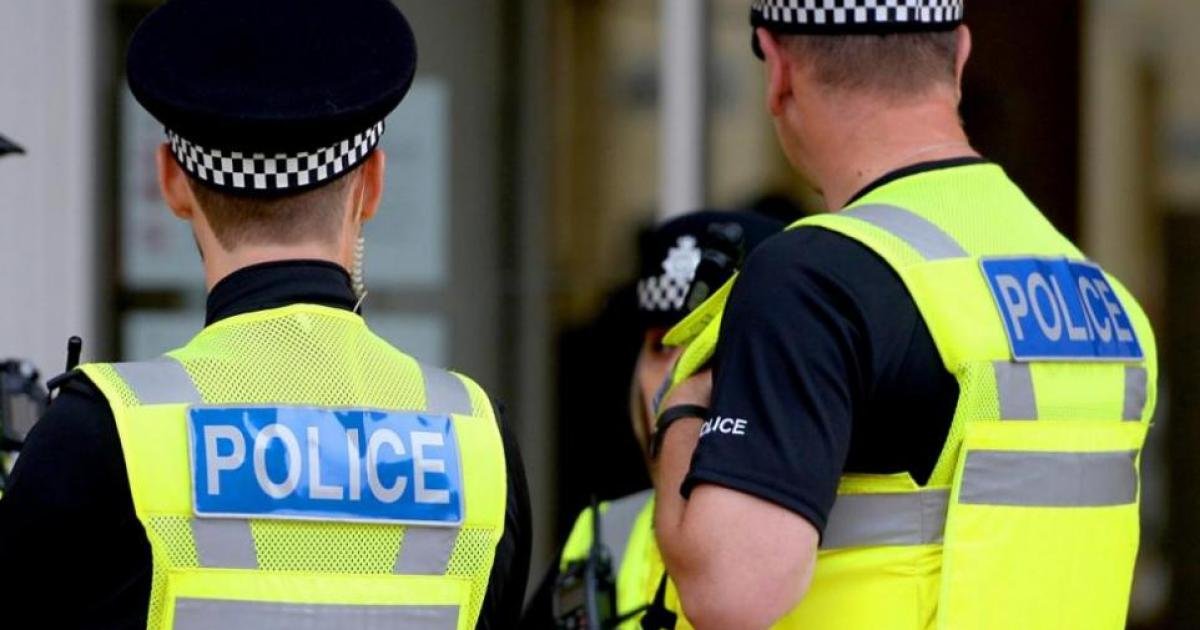
The Thames Valley Police Abingdon unit arrested a man for “breaching court bail conditions” on Saturday, August 29.
A spokesperson said: “On Saturday, PC Hackett attended reports of a male breaching court bail conditions.

READ MORE: Public told ‘DO NOT APPROACH’ as wanted man sighted in Oxford centre
“With assistance from PC Ellingworth and PC Harvey, the male was arrested. Following a search, a knife was recovered from his possession.”
In a wide ranging update, the force also revealed it had supported in a “concern for welfare incident linked to the night-time economy.
In addition, it had carried out licensing checks across Abingdon with drug wipes used and sent off for testing
OXFORD Mail Camera Club members have been taking photos of their dogs
Source link




-

 Oxford News3 weeks ago
Train cancellation alert amid ‘fault’ near London Paddington
-

 Oxford News2 weeks ago
Museum evacuated and Oxford University closed amid incident
-

 Business & Technology4 weeks ago
British Business Bank backs PhysicsX with USD $25 million
-

 Business & Technology4 weeks ago
Nuggit launches GBP £5 million fund for UK YouTubers
-

 Business & Technology4 weeks ago
Muscle Food at risk of closing after entering administration
-
 Business & Technology4 weeks ago
Historic town faces series of high street shop closures
-

 Student Life4 weeks ago
My year of rest and rustication
-
 Student Life4 weeks ago
Academic tourism: Oxford University and its summer schools