
Student Life
Oxford Labour defies national trends at city council elections

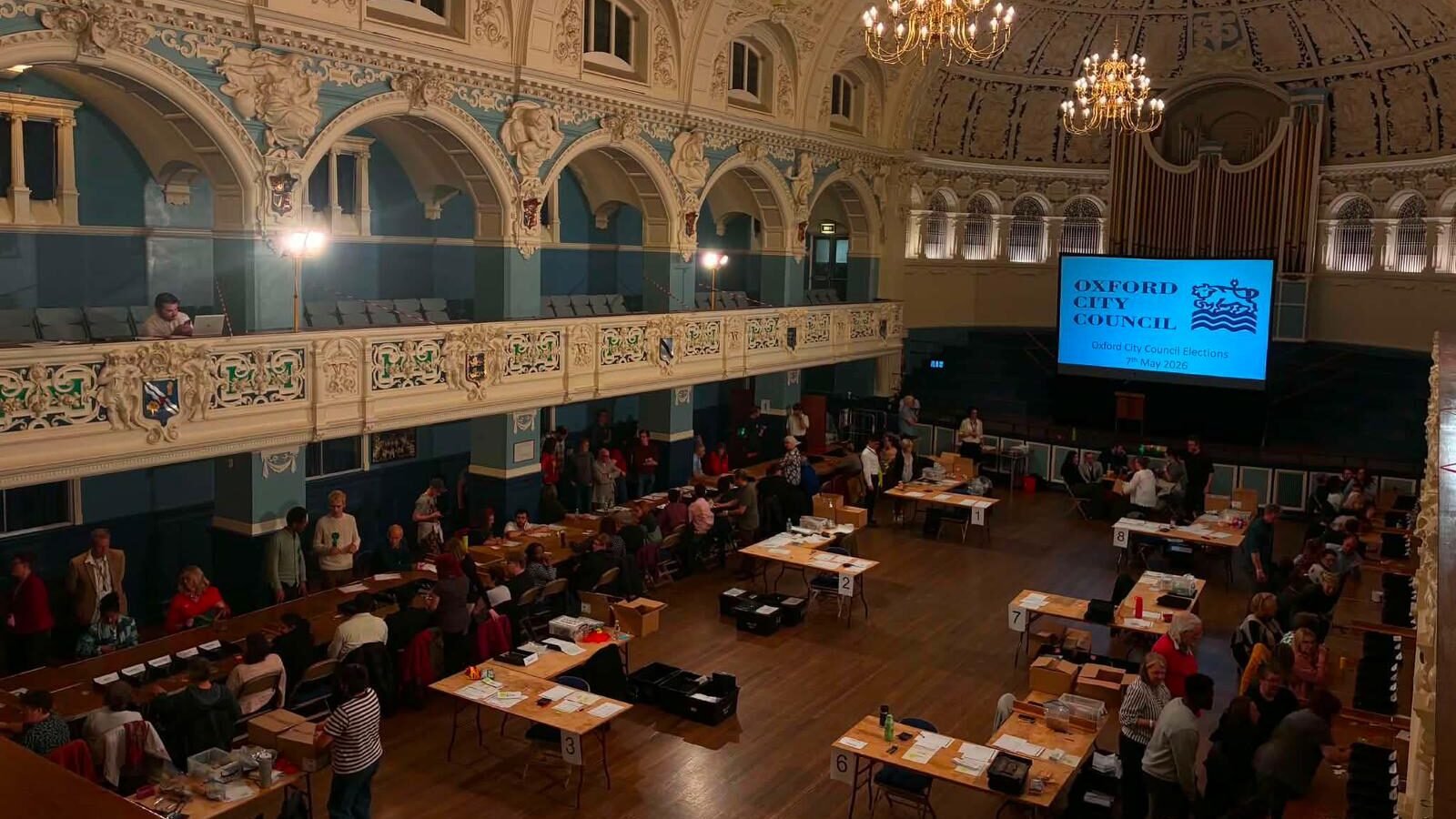
The Labour Party defied national trends in the Oxford local elections yesterday, with their seat count in the City Council dropping slightly from 21 to 20, against a national backdrop of major losses for the party. Multiple students at Oxford University stood unsuccessfully as candidates in wards across the city.
The Labour Party remains the largest party on the council. The Green Party gained four councillors, raising their total count to 13. The Liberal Democrats remained steady on a total of nine seats. The number of Independent councillors dropped from nine to six, with four now representing the Independent Oxford Alliance and two representing the Real Independents Group. The Conservatives and Reform UK still have no representation on the City Council.
A total of 24 councillors were up for election this year, with one councillor elected in each of the city’s 24 wards. Oxford City Council elects half of its councillors every two years, with each ward represented by two councillors overall. The Council remains under no overall control, meaning no party holds a majority. Labour previously held a majority on the Council for 13 years until the 2023 resignation of ten councillors in protest of Labour’s policy on the war in Gaza.
Holywell ward, the City Council ward with a majority student population, was held by the Green Party, with recent Oxford graduate Alfie Davis elected with an overwhelming majority of 622 votes over the Labour student candidate, Awab Kazuz.
Davis told Cherwell that the result in Holywell represents “a profound rejection of Labour” by students and a new form of “politics for the people”. Reflecting on the significance of the result for young people, Davis added that students represent a “unique social community… that is recognised very little”. However, they highlighted that their key takeaway from the Oxford results was the “ridiculously high” turnout, over 40% in most wards, describing this as a “real sign of young people showing interest in local elections”.
The results come amid major losses for the Labour Party in local councils across England, as well as projected losses in the Scottish Parliament and the Welsh Senedd. Speaking to Cherwell after his loss, Labour candidate Kazuz, a first-year student at St Edmund’s Hall and a member of the Oxford Labour Club Executive Committee, said he was “really proud of the campaign that we ran” and noted that the party was holding “marginal seats”. Kazuz rejected any suggestion that the night had been a “drumming” for Labour in Oxford, telling Cherwell: “We’re doing better than a lot of people expected us to do.” He also said he was “rooting for Alfie so that they can do the best that they can for the people of Holywell”.
Student candidates also stood in the Carfax and Jericho ward – Harriet Dolby for the Conservatives, and Vittorio Cuneo-Flood for Reform UK – with a candidate ultimately elected from the Green Party, replacing the incumbent Labour candidate. Student Harry Morgan stood unsuccessfully for the Liberal Democrats in Osney & St Thomas, Zelalemawee Asheber stood unsuccessfully for the Green Party in Walton Manor, and Indigo Haynes stood unsuccessfully for the Green Party in Blackbird Leys.
Speaking to Cherwell, Morgan, former President of the Oxford Student Liberals Organisation, highlighted the “disconnect between the University and local elections generally”, adding that students have seemingly been more engaged this year. Addressing the wider national result, however, Morgan warned of the rise of Reform UK for students, saying: “They don’t really believe in the climate crisis. I don’t think they have housing solutions. I don’t think they have the deep thinking to deal with any of the problems that are going to affect us.”
Reform UK has made gains in councils across England. Whilst no seats were won by Reform in Oxford, they increased their vote share across the city, and came second in three wards, all of which were won by the Labour Party.
Reflecting on the results of the night, Councillor Susan Brown, Labour Leader of the Council prior to the election, told Cherwell: “I feel we have listened to local residents. We have given a very positive program to the people of Oxford. And so I’m pleased and proud that at the end of tonight, we ended up as still very much the largest party…It seems to me that people are relatively happy with what we are putting forward.”
Brown acknowledged that it had proved “very difficult…to communicate directly with students”, particularly in the Holywell ward, and recognised that Labour continued to lack a majority (25 seats) in the Council, telling Cherwell she was “always happy to work in partnership and collegiately” with other parties.
The outcomes in each ward were as follows:
Barton and Sandhills – Labour hold
Blackbird Leys – Labour hold
Carfax and Jericho – Green gain from Labour
Churchill – Labour hold
Cowley – Green gain from Independent
Cutteslowe and Sunnymead – Lib Dem hold
Donnington – Green hold
Headington – Lib Dem hold
Headington Hill and Northway – Labour Hold
Hinksey Park – Labour hold
Holywell – Green hold
Littlemore – Labour hold
Lye Valley – Green gain from Independent
Marston – Green hold
Northfield Brook – Labour Gain from Independent
Osney and St Thomas – Green hold
Quarry and Risinghurst – Labour hold
Rose Hill and Iffley – Labour hold
St Clement’s – Green gain from Labour
St Mary’s – Green hold
Summertown – Lib Dem hold
Temple Cowley- Independent hold
Walton Manor – Labour hold
Wolvercote – Lib Dem hold
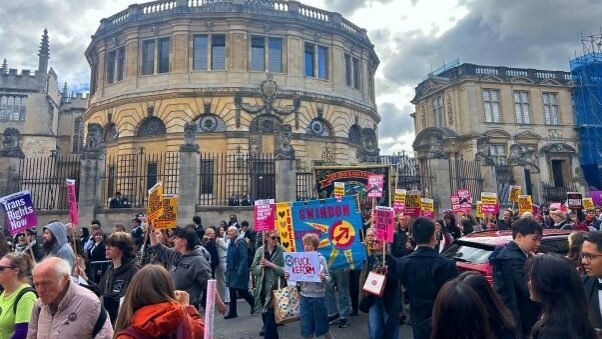
Approximately 300 demonstrators joined the ‘Oxford Unites Against the Far Right’ unity march Saturday afternoon, amid matriculation ceremonies. More than 23 local organisations took part in the peaceful march from Cowley Road to the Sheldonian Theatre, challenging the far right’s rise across the UK.
Oxford Stand Up To Racism organised the march, which included representatives from political parties and matriculating students at the University of Oxford.
A representative from Stand Up to Racism, Monique, opened the rally: “We are going to show the love of Oxford today. We’ve got to find our humanity – it feels like this country has forgotten that.” Speaking to Cherwell, she added: “The message is simple: everyone should be welcome. That is the way England has always been, giving refuge to those who need it.”
In her speech, Labour Councillor for Blackbird Leys Lubna Arshad referenced the City Council’s commitment to make Oxford an anti-racist city. “We must turn those commitments into action,” she told the crowd. “The far right does not speak for Oxford. The far right will not divide us.”
A small group within the crowd booed the councillor’s speech, shouting “F*ck the Labour Party” and “Labour is a racist Party”. The crowd hushed them, and Stand Up To Racism said: “Today is for unity. The far right wants to divide us. We are all speaking the same message.” At the end of the event, Ian McKendrich, a representative for Oxfordshire Stand Up To Racism, said: “We need unity irrespective of our differences on other issues.”
Crowds of newly matriculated students in sub fusc cheered as the march approached the Sheldonian Theatre, some joining in to sing ‘Bella ciao’ down the High Street. One matriculant told Cherwell: “I wanted to show there’s no place in Oxford for the far right, as much as Ghislaine Maxwell and Boris Johnson have come from here.”
Emma Jones, speaking on behalf of the Coalition to Keep Campsfield Closed, called the detention centre “one of the biggest symbols of division in Oxford”. Since its reopening in December 2025, the centre has drawn regular protests. “Immigration detention is racist,” she told the crowd, “for more than 30 years, people in Oxfordshire have refused to accept Campsfield. The biggest danger of a thing like Campsfield is that we become accustomed to it.” Plans from the government to more than double Campsfield’s capacity are currently undergoing a public inquiry.
The demonstrators held placards including “Make Nazis afraid again”, and banners which called for the protection of Oxford as a city of sanctuary. Seth, the former Co-Chair of Oxford Labour Club, told Cherwell: “These marches show the people to whom the far right poses a genuine, tangible threat that they are not the only ones who have a voice, that there are people everywhere in the community that care and that will stand up with them.”
“It achieves genuine things,” he added. “Look at Shabana Mahmood – she has changed her policy on immigration rules that she imposed last November because of these constant protests.”
This is the second consecutive year that Stand Up To Racism has led the march in Oxford. Reflecting on last year’s demonstration, a drummer from Extinction Rebellion told Cherwell: “I think it was appreciated by people who can feel under attack at the moment. People come out of their houses clapping and thanking [us] – it is in solidarity with those people too.”
Oxford is one of eight cities to hold unity marches this Saturday. Speaking with Cherwell, Ines Wilhelm, the newly elected Chair for the Oxfordshire Green Party, said that “this is a happy protest. Lots of people are coming out, having a good time, and showing that they care about each other.”
Additional reporting by Mair Andrews, Stanley Arlidge, and Freya Robson.

As Michaelmas rolls around once again, I open my phone to the unmistakable signs of a new academic year at Oxford. Society committee pleas, ads for upcoming club nights, and emails welcoming a new wave of freshers fill my inbox and feed. But this year, scrolling through those familiar notifications leaves me with a feeling I did not expect.
Now in my third year, the time has finally come for the long-anticipated, even longer-in-the-making ‘year abroad’. While friends return to Oxford, I find myself watching the new academic year unfold from a distance – no collections to revise for, no frantic search for a last-minute BOP costume, and no Plush Thursday to inevitably mark the weekend drawing near.
As I sit writing this from Buenos Aires, Argentina, I feel deeply conflicted. Of course, there is a certain melancholy in watching friends slip so effortlessly back into the rhythms of university life. It can be oddly unsettling to see a place that has played such a significant part in my adult life carry on as though I had never left.
Yet simultaneously, I am glad not to be there. The concept of lining up for hall food, pulling an all-nighter in the library, or squeezing into the queue at Bully is significantly less appealing from 7,000 miles away. For all the nostalgia that comes with watching Oxford from afar, distance has also given me something I didn’t realise was needed: perspective.
And no, this is not going to be a long rambling of how I ‘found myself on my gap yah’. Although, somewhere between getting on the wrong bus to work and confidently preparing mate in entirely the wrong way, I have started to wonder why an experience this valuable should be reserved for students studying certain subjects.
There is something liberating about being somewhere where nobody knows your name, your college, or your subject. While abroad, I am no longer simply an Oxford student navigating the same routines of term-time life; I am an outsider, and, most importantly, a beginner again. The world suddenly feels much bigger than the few square miles I had grown accustomed to calling home.
It would be easy to romanticise this feeling. I am not Anthony Bourdain, travelling the world with a camera crew filming an episode of Parts Unknown. I am, instead, entirely reliant on a far less glamorous student loan, a questionably downloaded eSIM, and what appears to be a complete inability to read Google Maps.
Indeed, it can at times be overwhelming to think just how much I have left behind. Over two years’ worth of friendships, routines and rituals do not simply disappear because you board a flight. Friends are still there, returning to university for their final year, before graduating and stepping into the increasingly structured world of work. From a distance, it can feel as though everyone else is moving forward along a path that I have temporarily stepped away from.
For my friends back in Oxford, that step is becoming increasingly difficult to ignore. With 78% of graduates reportedly worried about finding employment, and 71.9% already in professional-level roles within just 15 months of graduating, it is hardly surprising that the job market can feel overwhelmingly competitive. Talks of internships now dominate a FaceTime catch-up, and for many, there is little choice but to climb to the first rung of the corporate ladder as soon as possible. The opportunity to travel, experiment, and explore a different way of living (both personally and professionally) can all too easily be pushed aside in favour of getting on with the ‘more serious’ route of starting a career.
That is precisely what makes the time away so valuable. It is a rare opportunity to step away from the well-trodden path for a while, without having to abandon it altogether. As more UK universities begin to offer years abroad across a wider range of subjects, it seems worth asking why Oxford should be any different.
The benefits are far from merely personal. I am now working at an Argentine news network, using a language I have spent years studying, but in an environment where getting the grammar right is rather less theoretical than it is in a classroom. Language students are fortunate in this respect: learning a language inevitably means learning something about the people and culture that speak it. But what about everyone else?
At its core, it is an exercise in empathy and human connection. A PPE student can encounter political and economic ideas outside the British context; a historian can experience another country’s relationship with its past; a scientist can apply their technical skills in a professional environment shaped by an entirely different set of assumptions. With funding available to make these experiences more accessible, there is little reason for the year abroad to remain the preserve of language students. Studying something is one thing; being forced to apply it somewhere unfamiliar is another.
With this may come the feeling of being out of one’s depth. But, certainly for me, that is the most important part. At a time when immigration, integration, and national identity occupy so much of British political debate, there is value in experiencing what it actually feels like to enter a society in which you do not automatically understand the language, the customs, or the unwritten rules.
Here, I am a newcomer trying to work out how things are done. More than once, I have forgotten to kiss the cheek of a superior at work, or have asked for completely the wrong thing at a supermarket. With that comes a certain humility, as you become constantly more aware that integration is not simply a matter of arriving somewhere and expecting to feel at home – an all-too common attitude of ‘Brits abroad’.
And perhaps that is the greatest argument for going abroad. Not because everyone needs to spend a Bourdain-esque year in South America, or because life in Oxford is somehow too small. It is because it is surprisingly easy to mistake the familiar for the universal. Living somewhere else forces you to question assumptions you did not even realise you had – about work, education, politics and culture, or even something as simple as whether a greeting calls for a firm handshake or a warm embrace and kiss on the cheek.
Eventually, I will return to Oxford, and life will presumably slip back into its familiar rhythms. But I hope to return with a little more perspective on the bubble I have spent two years inhabiting – less convinced that Oxford is the centre of the world, and considerably more curious about everything beyond it.
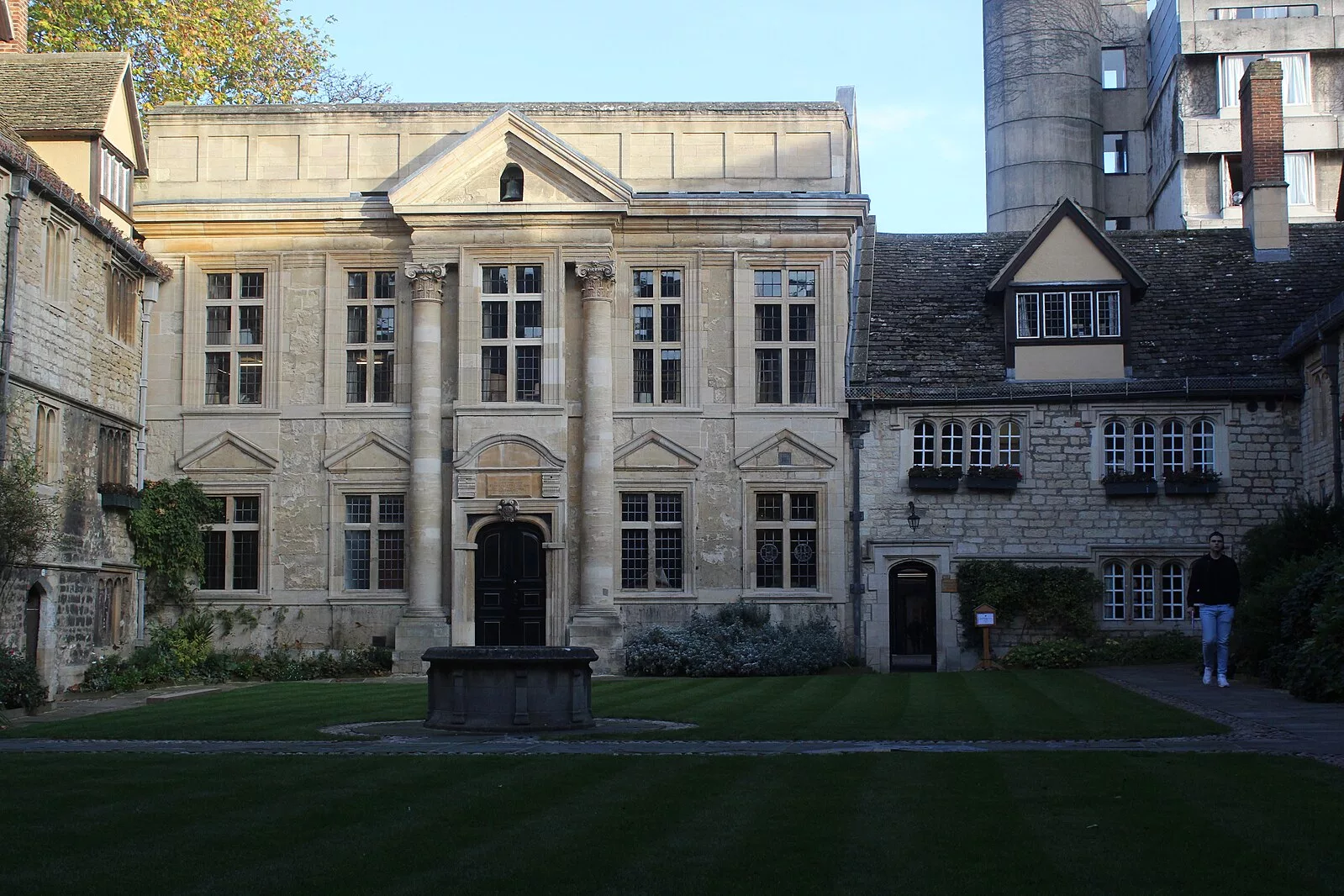
St Edmund Hall has opened new, sustainability-focused accommodation in Norham Gardens, one of Oxford’s most affluent neighbourhoods.
The College describes the buildings, which took three years to construct, as an “exemplar” of sustainability. Designed by architects Wright & Wright LLP, they are certified with a Passivhaus standard, widely regarded as the industry benchmark for energy efficiency, and were built using “sustainably sourced and low-embodied carbon materials”. According to a press release on the Teddy Hall website, the buildings will use 70% less energy than the typical modern building.
It contains 127 en-suite study rooms, split across three new buildings: Willis House, Ashton House, and Elliott House, on the nearly 50-year-old Norham St Edmund site. The buildings, which back onto University Parks, are powered at least in part by solar panels and are heated by air-source heat pumps.
The rooms include heated towel racks, big double beds, and dimmable lights. Despite the luxury, the College kept the nightly rate in line with the rest of its Norham housing. The College told Cherwell that it “recognises the need to keep rents as low as possible” and that its accommodation costs are “below the median of all Oxford colleges”. By that standard, tenants are expected to pay around £30 a night.
Rooms on the site will be reserved for Teddy Hall returning undergraduates. They will not be available to postgraduates and, by extension, not be offered through the Oxford University Collegiate Accommodation System, now in its second year of opening college rooms to students from other colleges. The accommodation will allow Teddy Hall to accommodate all undergraduates for their whole degree.
The development’s outdoor spaces are boasted as climate-resilient and biodiverse, with landscaped gardens and lawns. For budding geographers and biologists, the most intriguing feature may be an ecology pond.
Chancellor William Hague said in a press release: “Norham St Edmund is a world-leading blueprint for future student accommodation projects and sustainable building design, both in Oxford and beyond. I look forward to seeing it serve a thriving college community for generations to come.



-

 Oxford University4 weeks ago
New to the Oxford English Dictionary this September
-

 Oxford united FC4 weeks ago
Chris Gunter steps away Wales role to focus on Oxford United
-

 Oxford united FC2 weeks ago
LIVE: Exeter City vs Oxford United – Jersey Mike's Trophy group stage
-

 Traffic & Transport2 weeks ago
Why should I have to pay more for buses if I don’t use a smartphone? | Bus fares
-

 Traffic & Transport2 weeks ago
How poor public transport policy is putting the brake on cities | Road transport
-

 Student Life3 weeks ago
Oxford partnership allows OpenAI to use rare Bodleian texts to train ChatGPT
-

 Oxford united FC3 weeks ago
Northern Ireland fans laud Oxford United defender Ciaron Brown
-

 Oxford united FC2 weeks ago
Oxford United lose to Exeter City on penalties in Jersey Mike’s Trophy