
UK News
EU praises ‘extremely constructive’ early talks with incoming Hungarian government – Europe live | Bulgaria

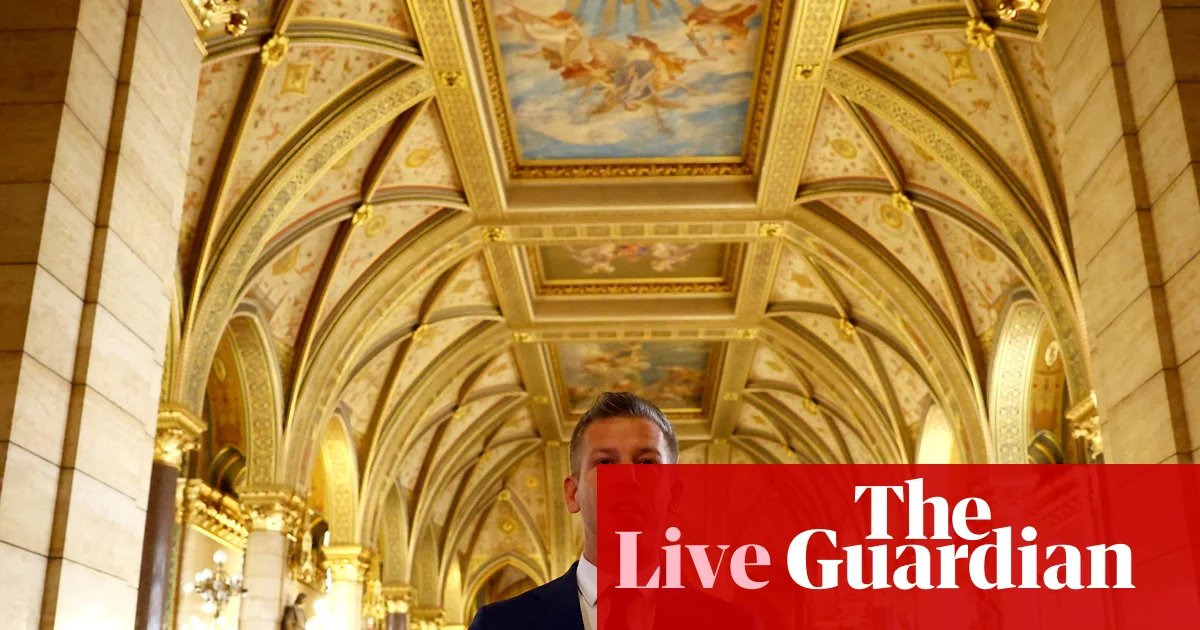
EU praises ‘extremely constructive’ early talks with incoming Hungarian government
The European Commission has offered a brief update after this weekend’s early talks with the incoming Magyar government in Hungary.
The commission’s deputy chief spokesperson, Olof Gill, told reporters that the meetings were “extremely constructive and positive in tone.”
He said it was “a very useful starting point for the necessary work that needs to happen, particularly in order to unblock funds for the benefit of the Hungarian people.”
Asked for the new Hungarian government’s position on Ukraine, Gill declined to offer more details, but in a telling hint he said:
“The point here is that we are engaging with the incoming Hungarian government to move forward on a range of issues that for too long have been blocked.”
Separately, Gill was also asked about the reported progress on restoring oil deliveries on the Druzhba pipeline (9:56), saying the commission “tried to fulfil a coordinating role here, a mediating role to try and move this issue forward.”
Key events
We should hear more about “extremely constructive” talks between the incoming Hungarian administration and the European Commission (12:16) when the PM-elect Péter Magyar is expected to speak to the media later today after his first meeting with new Tisza parliamentarians this afternoon.
We will keep a close eye on the lines coming out from his presser.
Nato’s Rutte congratulates Bulgarian election winner
Nato’s secretary general Mark Rutte also adds his congratulations for Radev.
In a brief post on X, he said:
“Spoke with Rumen Radev following his election victory in Bulgaria I look forward to continued cooperation on shared security challenges.”
EU’s von der Leyen congratulates Radev for win in Bulgaria
The European Commission’s (unsustainable) position on why they are not offering a line on Bulgaria (12:51) appears to have been abandoned.
With 98.78% of votes counted (so still not 100%!) its president, Ursula von der Leyen, has just congratulated Rumen Radev on his win last night.
“Congratulations to Rumen Radev on his victory in the parliamentary elections.
Bulgaria is a proud member of the European family and plays an important role in tackling our common challenges.
I look forward to working together, for the prosperity and security of Bulgaria and Europe.”
Bulgaria’s Radev unlikely to take Orbán role as EU’s disrupter-in-chief, but questions about his Russia views remain

Jon Henley
Europe correspondent
and Eden Maclachlan in Sofia
Bulgaria’s Moscow-friendly former president has won an absolute majority in parliamentary elections that could bring the country political stability after years of short-lived coalitions, but leave it walking a tightrope on EU issues.
With more than 97% of ballots counted, the Progressive Bulgaria party of Rumen Radev, a former fighter pilot and air force chief, had scored 44.7% of the vote, giving it an estimated 131 of the 240 seats in the national assembly.
The election was Bulgaria’s eighth since 2021, when huge anti-corruption rallies brought down the government of long-serving pro-European premier Boyko Borissov, and Radev’s majority is the first for a single political formation since 1997.
Radev, 62, who stepped down from the largely ceremonial role of president in January to campaign on an anti-graft ticket, has criticised a recent defence agreement signed between Bulgaria and Ukraine and opposed Sofia sending arms to Kyiv.
He has, however, pledged not use Bulgaria’s veto to block future EU decisions, and analysts note that he has consistently denied being aligned with the Kremlin, backed EU membership, and appeared deliberately vague on foreign policy.
In a message perhaps designed to calm concerns about possible pro-Russia drift, one of Radev’s closest associates, Slavi Vassilev, said last week Bulgarians “do not want closer ties to Russia, but rather … continued active participation in Nato and the EU”.
EU diplomats have said they do not expect Radev to seek to take over from Hungary’s pro-Moscow, anti-Brussels prime minister Viktor Orbán, whose 16 years in power were dramatically ended last weekend, as the bloc’s disrupter-in-chief.
However, Dimitar Keranov, a Bulgarian fellow of the German Marshall Fund’s European resilience programme in Berlin, warned that “the corrupt system remains” and while “the mere prospect of stability is significant … stability is not reform”.
“A Kremlin-friendly leader governing a Nato and EU member state on the Black Sea, days after Hungary voted Orbán out, is bad news for the EU and for Ukraine,” he added.
In the absence of any comment from the European Commission, we have our Europe correspondent Jon Henley and Eden Maclachlan in Sofia with more on Radev’s victory…
Over to Jon and Eden.
After its refusal to comment on Bulgarian election (12:25), the commission now gets (rightly, I would say) called out for the fact that it had not exercised similar caution last week as the EU rushed to celebrate Péter Magyar’s win over Viktor Orbán.
Deputy chief spokesperson Gill insists that it’s all down to the votes still being counted – although the situation was literally the same last week and yet the commission was very happy to comment on the results.
Also, given the massive lead with 90%+ votes counted, it’s not like anything is going to change…
Pushed on whether this reaction suggests a lack of enthusiasm on the EU’s side, he replies that:
“The commission always works with all governments in the European Union to promote the interests of their citizens and European interests, and that’s all I can say at the moment, given that votes are still being counted in Bulgaria.”
The commission also got asked about the Italian proposals for a “wild west-style bounties” that could be paid to Italian lawyers if they successfully convince their immigrant clients to return home.
Our Rome correspondent Angela Giuffrida reported on the controversial proposal over the weekend:
But the commission declined to comment at this stage, saying they don’t comment on “ongoing legislative discussions.”
But after a follow-up, a commission spokesperson pointed out that “individuals subject to return procedures have a right to an effective remedy, as guaranteed by article 47 of the EU charter,” which appeared to hint at some potential legal issues if the law gets passed.
No jet fuel shortage in EU, commission says, as it hints at ‘flexibilities’ that could help
The European Commission has also insisted that there is no jet fuel shortage in the EU, despite the continuing impact of the Middle East disruption.
Commission spokesperson Eva Hrncirova said that as “part of the preparedness, we talk to the citizens and inform them … as we know the situation is not ideal” with the crisis in the Middle East.
“Our role is mainly to coordinate and to prepare for different scenarios. We have the oil coordination group that has met last week, and the group will also meet at the end of this week.
The availability of the jet fuels, obviously, is a priority, and it’s important to say that here in the European Union, we have also a significant capacity to refine the crude oil and to produce the jet fuel, so we are preparing for possible actions, but everything depends on the development of the situation.
At this stage, there are no fuel shortages in the EU.”
Asked directly if Europeans should book their summer holidays without worrying about potential disruptions, she said:
“I cannot give you such an advice from the podium. It’s totally up to you where do you want to go during the summer.”
She added there are some flexibilities that the EU could explore to help with the situation, and confirmed that the bloc’s upcoming energy package – set to be presented on Wednesday – “will address different elements that are connected to the current crisis.”
But the European Council president, António Costa, isn’t that cautious as he just posted his congratulations for Radev for his electoral win in Bulgaria.
In a social media post, he said:
“Congratulations to Rumen Radev on your outright victory in yesterday’s legislative elections in Bulgaria. It is a pleasure to welcome you back to the European Council.
As conveyed in our phone call this morning, I look forward to working together with you in the #EUCO on our shared agenda for a prosperous, autonomous and secure Europe.
I wish you all the best in your new function.”
As far as I can tell, Costa is the first EU leader to publicly congratulate Radev on his win.
Asked about Bulgaria and the new government’s potentially tricky position on Russia, the commission’s spokesperson declined to comment for now.
“My understanding is that votes are still being counted, therefore it would not be appropriate for me to offer any comment at this point,” Gill said.
EU praises ‘extremely constructive’ early talks with incoming Hungarian government
The European Commission has offered a brief update after this weekend’s early talks with the incoming Magyar government in Hungary.
The commission’s deputy chief spokesperson, Olof Gill, told reporters that the meetings were “extremely constructive and positive in tone.”
He said it was “a very useful starting point for the necessary work that needs to happen, particularly in order to unblock funds for the benefit of the Hungarian people.”
Asked for the new Hungarian government’s position on Ukraine, Gill declined to offer more details, but in a telling hint he said:
“The point here is that we are engaging with the incoming Hungarian government to move forward on a range of issues that for too long have been blocked.”
Separately, Gill was also asked about the reported progress on restoring oil deliveries on the Druzhba pipeline (9:56), saying the commission “tried to fulfil a coordinating role here, a mediating role to try and move this issue forward.”
Kremlin ‘impressed’ by Bulgarian election winner Radev’s call for pragmatic dialogue with Moscow
In one of the first reactions to the Bulgarian vote last night, the Kremlin has just said it was impressed by Radev’s words about pragmatic dialogue with Moscow, Reuters reported.
In full quotes reported by AFP, Kremlin spokesperson Dmitry Peskov said:
“Of course, the words of Mr Radev … as well as some other European leaders about their readiness to resolve problems through dialogue, appeal to us.”
During the campaign, Radev spoke about the need to engage more closely with Russia, prompting concerns about his future government’s approach to Moscow, including on energy imports.
Government crises loom in Romania and Slovenia
Meanwhile, it looks like we are likely to see government crises in Romania and Slovenia in the coming days and weeks…
Reuters reported that Romania’s Social Democrats are widely expected to withdraw their support for liberal prime minister Ilie Bolojan, likely ushering in months of political instability that will pressure debt, credit ratings and the receipt of EU funds.
Bolojan’s coalition government of four pro-European parties came together 10 months ago after a polarising presidential election in an attempt to keep the surging far right from power but they have constantly clashed over reform measures.
Reuters noted that as Bolojan has said he will not resign, the leftists would then pull their six ministers from the cabinet later this week, leaving the coalition without a parliamentary majority.
An early election would most likely see the far-right Alliance for Uniting Romanians decisively win the vote.
Meanwhile over in Slovenia, the country’s outgoing prime minister Robert Golob, whose party secured a razor-thin majority in last month’s parliamentary elections, said that he had failed to form a government and will work in the opposition.
He said he had not found a partner among the parties of the centre-right to join a potential governing coalition.
Golob’s failure to form a new government opens the door for runner-up Janez Janša, a close Trump ally, to return in his role as the country’s PM, AFP noted.
Radev’s win raises tricky questions for younger voters amid concerns about his EU policy
But as Eden Maclachlan reported in his correspondence from Sofia for us over the weekend, younger voters are not particularly convinced by Radev’s platform – which concerns he could prove to be another tricky partner in the bloc, like Viktor Orbán.
Here is what Eden wrote before the Sunday vote:
Compared by some to Viktor Orbán, Hungary’s recently defeated rightwing populist, Radev [was] leading in the polls, buoyed up by the support of older, rural voters who hope he can smash what he calls an “oligarchy” of corrupt veteran politicians.
For voters like Aleksandar Tanev, 22, Radev is not a credible option. The law student believes Radev, who resigned as president in order to run in this election, “is part of this same model” of politicians and “had the opportunity to use the caretaker governments to fight this mafia” as president but did not.
Dimitar Keranov, a Bulgarian fellow at the German Marshall Fund’s European resilience programme in Berlin, said voters were split along broadly generational lines.
“I don’t think [Radev] would be a straightforward vote for young Bulgarians, because I think he represents the same status quo young Bulgarians would like to see dismantled,” he said. “He’s representing the same old guard or the usual political elite.”
A victory for Radev’s Progressive Bulgaria (PB), a left-leaning but Moscow-friendly coalition, could prove another headache for Brussels and its allies just as the EU breathes a sigh of relief over Orbán’s demise.
On Wednesday, amid concern over the rising cost of living, Radev took aim at the previous government for its introduction of the euro “without asking” voters. “And now, when you pay your bills, always remember which politicians promised you that you would be in the ‘club of the rich’,” he said.
‘Europe has fallen victim to its own ambition to be moral leader,’ Bulgarian election winner Radev says
The latest results, after more than 91% of votes were counted, confirm that Radev will have an absolute majority in the new parliament as he appears to be on course for some 130 seats in the 240-seat parliament.
AFP notes that the landslide victory marks the first outright parliamentary majority for a single formation in Bulgaria since 1997 when a centre-right, pro-European grouping won.
But in a sign of tensions to come, Radev said that “a strong Bulgaria and a strong Europe need critical thinking and pragmatism.”
“Europe has fallen victim to its own ambition to be a moral leader in a world with new rules,” he told reporters.
Guess we will have to wait and see what that means in practice.
Morning opening: Eighth time is the charm
Jakub Krupa
Bulgarian ex-president Rumen Radev – an EU critic who has called for renewing ties with Russia – on Sunday hailed a “victory of hope” after his formation topped the eighth parliamentary elections in five years.
Projections from polling agencies put his Progressive Bulgaria (PB) grouping at 44%, which would give him an absolute majority of at least 129 seats in the 240-seat parliament.
This morning’s partial results – after over 80% votes counted – suggest the polls were broadly correct, raising hopes for a stable government in Bulgaria.
But there was little of the international enthusiasm that we saw a week ago in Hungary, with no European leaders taking to social media to congratulate the winner just yet.
Radev, Bulgaria’s president between 2017 and 2026, is a Eurosceptic, who regularly opposed further military support for Ukraine amid continuing Russian aggression, prompting some concerns that he could replace Hungary’s Viktor Orbán as tricky partner in the European Council.
But his focus is likely to be on domestic reforms and fight against corruption, as his foreign policy remains to be properly defined. On Sunday he declared that Bulgaria “would make efforts to continue on its European path” after joining the eurozone earlier this year.
I will bring you more on this during the day.
Separately, France’s Emmanuel Macron is expected in Poland where he will meet with the prime minister, Donald Tusk, and the Nobel prize winning former leader of the Solidarity movement, Lech Wałęsa.
Meanwhile, Brazil’s Lula is in Germany, meeting with the chancellor, Friedrich Merz, for talks on trade, among other things.
Hungary’s Orbán also suggested Ukraine could restore oil deliveries through the Druzhba pipeline as early as today.
The issue has been at the centre of tricky Hungarian-Ukrainian relations in recent months, and if confirmed, he suggested that he would be ready to drop the Hungarian block on the EU’s €90bn loan for Ukraine – even before Péter Magyar gets in in early May.
I will keep an eye on all of that and bring you the latest here.
It’s Monday, 20 April 2026, it’s Jakub Krupa here, and this is Europe Live.
Good morning.
The family of Shaun Burton, say they are “devastated” by the loss.
Source link
Key events
In the opening half an hour against Cape Verde, Mikel Oyarzabal, the centre-forward, did not get a single touch.
Kyle Green gets in touch: “Your highlighting of Lalas and his absurdity is something that has prevented me from wanting to watch the coverage on Fox. While every channel has its pros and cons I just can’t.
“I’m 45 and probably the youngest of anyone who remembers him as a player instead of an opinionated insert insult here. As for the match this could be more competitive than it looks on paper Spain need a win the pressure is on them. Saudi Arabia could hold out for a draw and see what happens in their last match. “
News from the England camp, and it seems to be good news on Declan Rice.
“I’m ready and fit, raring to go. I was feeling a little bit of neural pain in my hamstring, which I was managing from after Christmas with Arsenal for a very long time. Obviously, not a lot of people would have known that. It was all behind-the-scenes stuff but it was a smart decision.
“In the end, that last 20 minutes is probably where you pick up the most, and it’s where you play a 70-minute match. But that last 20 is where you really feel your body going for it. And I think it was a smart decision because the last few days I felt really, really good.”
Alex Reid has penned today’s weekend special Football Daily.
Portugal v Uzbekistan on Tuesday enticingly pits the incredibly nice, incredibly 41-year-old-superstar-tolerant Roberto Martínez against Fabio Cannavaro, who’s won a Ballon d’Or as a player and the Chinese Super League as a coach. While the fixture following that game really does see the dream of Thomas Tuchel – in his first international job with England – taking on Queiroz, who is in charge of his ninth national side with Ghana.
The expected formations are 4-2-3-1 for Spain, and 5-3-2 for the Saudi Arabians.
The Saudi team features two Donis changes: Ali Lajami, a defender, and Nasser Al Dawsari, a midfielder, are preferred to Mohammed Abu Al Shamat and Mohamed Kanno. You may recall Salem Al Dawsari, the Saudi captain, as the man who scored the winner against Argentina.
An entertaining read, even for those of us who have just seen the clips.
In a conversation where his co-panelist is casually reminiscing about his days playing alongside Messi or exchanging shirts with Ronaldo Nazário at the World Cup, what exactly is Lalas going to talk about – coming on as a second-half substitute for Earnie Stewart in a friendly against Scotland in 1998? Helping the Kansas City Wizards finish last in the 1999 MLS Western Conference? Did Lalas enjoy an elite playing career? No. But does he do the background reading that could compensate for his relative lack of standing in a conversation with titans like Henry and Zlatan? Also no. But is he charming or funny or charismatic or otherwise magnetic on screen? Eh, no.
For the record, I once interviewed Alexi Lalas on the challenge of playing against Romario in the 1994 World Cup. He had this to say:
“He could kill you in so many different ways. If you remember from that World Cup, he scored so many types of goals. That ranged from solo adventures to an outside-of-the-right-foot half-volley off a corner kick. Romario was both the most difficult to play against and the best that I have faced.
“Roberto Baggio was doing his thing, but in terms of consistency and living up to the hype, he [Romario] was the best. As with all stars, there was a moment when the fans sit up in their seats, and that was a feeling I got with Romario. When it got close to him and the potential for his involvement in a play was there, everybody sat up in their seat. They knew that something spectacular would be happening.”
Saturday’s match reports here.
The Saudi Arabia coach, and Blackburn legend, Georgios Donis, spoke about the challenges facing his team: “Spain is not the same team when Yamal or Williams are on the bench.
“While they still have plenty of possession, they lack the individual one-on-one penetration when these two are missing. I’m not saying it’s a problem for Spain, but when those players are missing, they play in a different way. We saw this very clearly against Cape Verde.
“We are playing against one of the best teams in the world, and it’s very important that when you play against these kinds of teams, you should enjoy the experience and respect the opponent, but not too much.
“It is very hard for any team playing against Spain to have any time in possession. So what we must do is to be more in control of our movement and compact, and when the ball goes through the lines, be able to defend dynamically.
“It’s nice to see miracles in football, and we’ve seen favourites losing against underdogs. Of course, it’s great for Saudi football to have a great memory of the result against Argentina, but we aren’t drawing anything from that.
“I think we’ll feel more pressure in that [Cape Verde] game than we will against Spain.”
The Spain coach, Luis De La Fuente had this to say in his Saturday press conference: “This generation of footballers is highly competitive and really fired up… It’s going to be a completely different story,” he said at his pre-match press conference on Saturday. There is no drama or crisis. The bottom line is simply that we need to win tomorrow.”
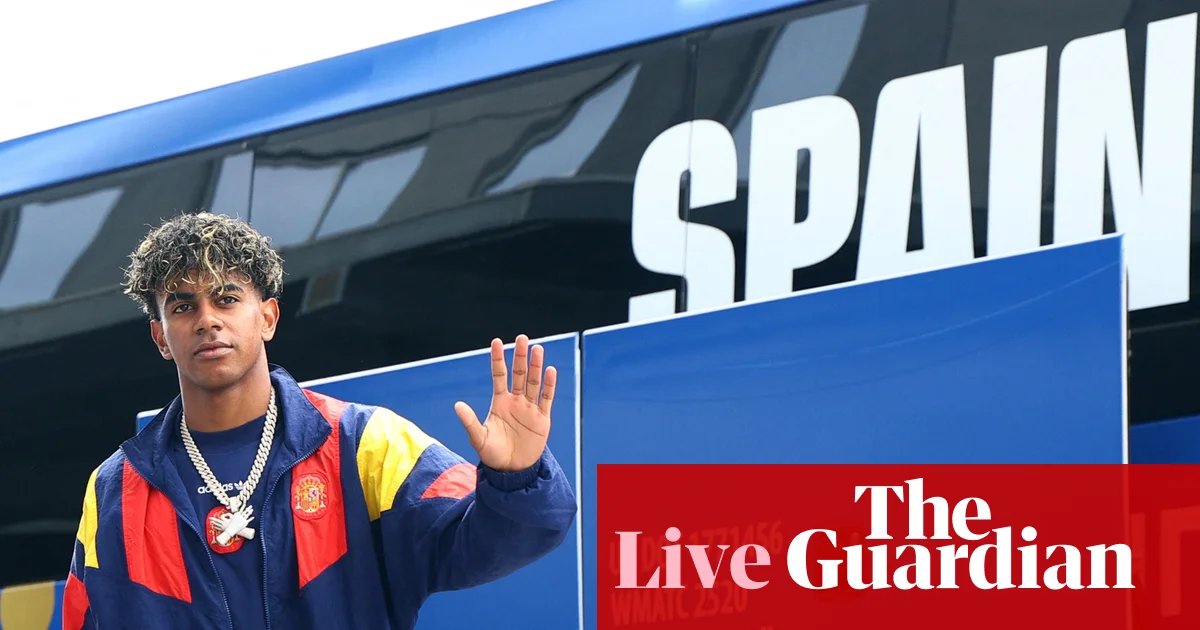
Four changes for Spain: Lamine Yamal, Pedro Porro, Dani Olmo and Alex Baena also come into the side with Marcos Llorente, Fabian Ruiz, Ferran Torres and Gavi dropping out.
The teams – Lamine Yamal starts
Spain: Simon, Porro, Cubarsi, Laporte, Cucurella, Gonzalez, Rodri, Yamal, Olmo, Baena, Oyarzabal. Subs: Raya, Joan Garcia, Pubill, Grimaldo, Eric Garcia, Llorente, Merino, Torres, Fabian, Gavi, Pino, Williams, Zubimendi, Munoz, Iglesias.
Saudi Arabia: Al Owais, Abdulhamid, Tambakti, Lajami, Al Amri, Al Harbi, Nasser Al Dawsari, Al Khaibari, Al Juwayr, Al Buraikan, Salem Al Dawsari. Subs: Al Aqidi, Al Kassar, Majrashi, Yahya, Al Shehri, Al Boushal, Kadesh, Al Johani, Al Ghannam, Al Hajji, Al Hamdan, Mandash, Kanno, Thakri, Abu Al Shamat.
Referee: Raphael Claus (Brazil)
Perhaps one of the Saudi -players can write themselves into this high-grade selection?
Perhaps it can be their goalkeeper.
Madrid screening of Spain v Saudi Arabia cancelled due to heat
The public screening of Spain’s World Cup match against Saudi Arabia in Madrid on Sunday has been cancelled because of extreme heat forecast for the Spanish capital, officials said.
The match, due to kick off at 6pm local time on Sunday, had been scheduled to be shown on a giant screen installed by the Spanish football federation (RFEF) at a fan zone in Plaza de Colón in central Madrid.
Madrid city council and the federation decided to cancel the screening after national weather agency AEMET issued an orange heat warning – the second-highest level – for the Madrid region, with temperatures forecast to reach 40C.
“The decision has been taken with the aim of protecting the health of attendees, event staff and support services involved in the event,” Madrid city hall said in a statement, apologising for any inconvenience.
Officials urged supporters to watch the match indoors in air-conditioned spaces and avoid prolonged exposure to the heat.
Large parts of Spain are experiencing unusually high temperatures for June as a mass of hot air from North Africa moves across the Iberian Peninsula.
A total of 13 of Spain’s 17 regions are on orange alert for heat on Sunday, while the northern Basque Country bordering France is on red alert, the highest level.
Authorities advised residents and visitors to take precautions during the heatwave, including drinking water regularly, staying in cool environments, limiting outdoor physical activity during the hottest hours of the day and taking extra care of vulnerable people. AFP
Can Saudi Arabia repeat the magic of 2022?
Argentina arrived in Qatar on a 36-game unbeaten run. When Lionel Messi opened the scoring from the penalty spot after 10 minutes, a comfortable afternoon seemed in the offing. Saleh al-Shehri and Salem al-Dawsari had other ideas, Argentina had three goals disallowed for offside in the space of 13 minutes and the greatest comeback in Saudi Arabia football history was made. Argentina went on to lift the trophy, while defeats to Poland and Mexico meant the Saudis did not reach the knock-out stage.
Unai Simon over David Raya is a controversial choice for De la Fuentes. The Arsenal keeper could lay claim to being Europe’s best this season.
“Those at the Champions League final had a few more days, so I got there on the Wednesday night,” Raya says. “I arrived a bit before Fabián [Ruiz]. I was saying hello to some of the others in reception when he arrived. I went to say congratulations; that was almost the first thing I did. I couldn’t really talk [to him] after the final; I just didn’t have it in me. The next day we talked about the game properly. Just two mates chatting … I was happy for him that he could lift the trophy for a second time.”
A high pressure game for the European champions, as Sid Lowe reports.
“If we had scored one, the game would have changed,” Martín Zubimendi said. Immediately after the game, De la Fuente had offered a simple analysis: when the ball doesn’t want to go in it doesn’t want to go in, he insisted. Spain had racked up 27 shots, after all. Ferran Torres had hit the bar and seen another clear opportunity saved. Vozinha, the 40-year-old goalkeeper who stopped that, saved six more and was named the man of the match. “There’s nothing to reproach the team for,” Rodri said. “We generated chances but couldn’t put it away; the good thing is they created almost nothing.”
We wait to see what role Lamine Yamal will play today. His coach would surely like to be able to use him.
The worst mistake we could make would be to compare him to anyone. He is the midst of a process. He has exceptional footballing maturity and lives it all with total naturalness. He has great serenity and strength. We have to let him follow his path but those players who have something different are ready for that. They’re geniuses, like Dalí [who] can paint a picture, or Michelangelo. They’re different. What is exceptional to us, isn’t to them. In those extremes, they feel comfortable. Why? Because they are different. What we think is exceptional, they consider normal.
Preamble
Spain’s campaign did not get off to a flying start, and Luis de la Fuentes may wake up in the night to visions of Cape Verde’s Vozinha. He will have Georgia on his mind ever since Monday. Saudi Arabia are no pushovers and gave Uruguay a scare in their opening match. Memories of downing Argentina four years ago still abound, and so Spain might beware. They can ill afford to go into the final game with Uruguay at a disadvantage. All eyes on Lamine Yamal, whose fitness situation remains opaque, though Spain need their other forwards to come to the party.
Kick-off 5pm UK, 1pm ET, 2am AEST. Join me.
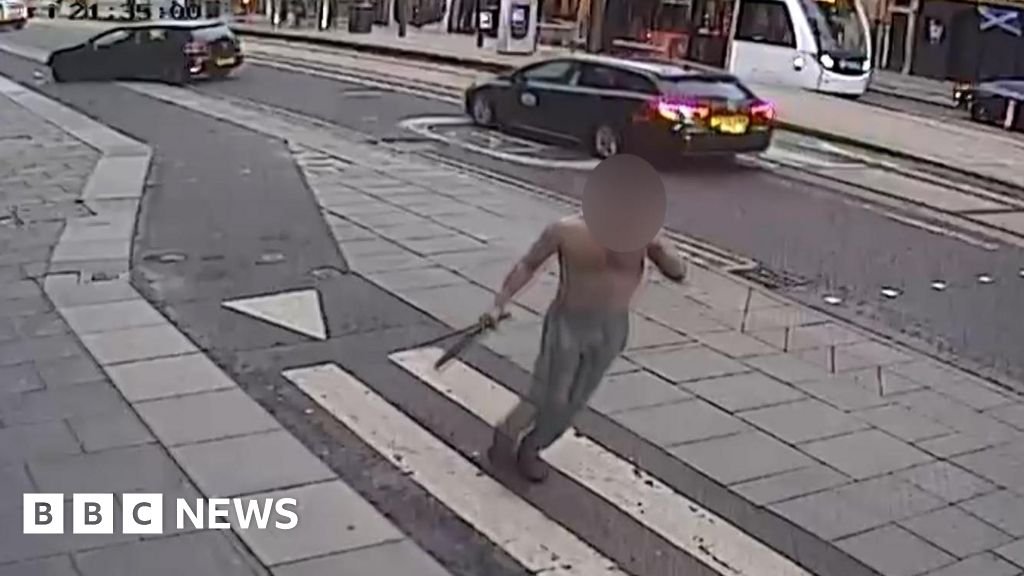
A topless man can be seen driving erratically in Edinburgh before abandoning his car and attacking a black man and a delivery rider.
Source link


Andy Burnham launches campaign against ‘headphone dodgers’ on public transport | Transport policy

Students join march against the far right at matriculation

Oxford’s traffic measures: how can a historic city manage traffic and congestion?
-

 Oxford University4 weeks ago
New to the Oxford English Dictionary this September
-
 Oxford united FC4 weeks ago
Chris Gunter steps away Wales role to focus on Oxford United
-
 Oxford united FC2 weeks ago
LIVE: Exeter City vs Oxford United – Jersey Mike's Trophy group stage
-

 Traffic & Transport2 weeks ago
Why should I have to pay more for buses if I don’t use a smartphone? | Bus fares
-
 Student Life3 weeks ago
Oxford partnership allows OpenAI to use rare Bodleian texts to train ChatGPT
-
 Traffic & Transport2 weeks ago
How poor public transport policy is putting the brake on cities | Road transport
-
 Oxford united FC3 weeks ago
Northern Ireland fans laud Oxford United defender Ciaron Brown
-
 Oxford united FC2 weeks ago
Oxford United lose to Exeter City on penalties in Jersey Mike’s Trophy