
UK News
Starmer rejects criticism of defence spending after being accused of complacency – UK politics live | Politics

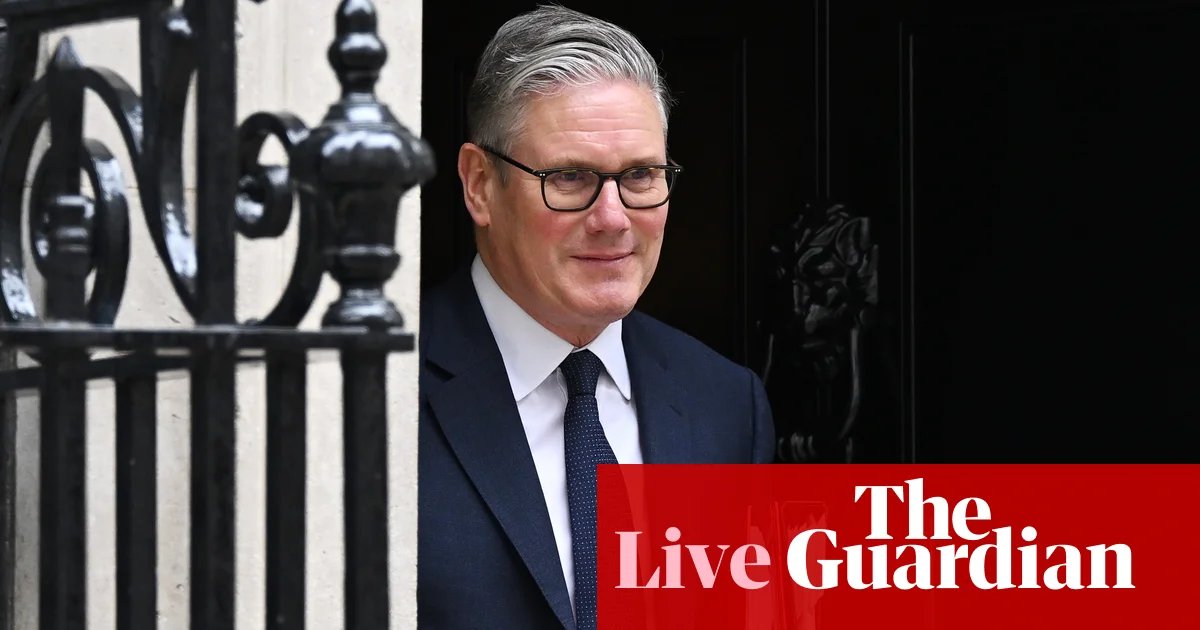
Starmer says he does not agree with criticism of his defence record made by George Robertson
Kemi Badenoch asks why Lord Robertson had “corrosive complacency” on defence.
Starmer says he respects Robertson. But he does not agree with him on this. He has committed twice to raising defence spending, including by cutting aid, a difficult decision.
The defence investment plan will be published as soon as possible, he says.
Key events
Badenoch says she met Robertson last year to discuss the defence review.
Will the PM approve an upgrade that will affect HMS Dragon?
Starmer says HMS Dragon was commissioned by the last government.
He attacks Badenoch again over her record on the war.
He claims she insulted British pilots, accusing them of hanging around.
He says she is not serious.
Badenoch says this is a moment of profound national seriousness. But what are Labour doing – promoting sex toys in parliament.
That gives new meaning to the phrase fiddling while Rome burns.
Badenoch asks if the billions saved from ditching the Chagos deal will go into defence.
Starmer says the goverment is already spending more on defence. The armed forces have had the biggest pay rise for years, he says.
Badenoch says Starmer loves to misrepresent her position on the war.
She offers again to help Starmer find welfare cuts to fund higher defence spending.
Starmer ridicules Badenoch’s suggestion that she was talking about the UK offering the US just verbal support.
Badenoch says talking about an increase is not the same as giving an increase. The defence investment plan was meant to be published last autumn. “What’s the hold up?”
Starmer says he has set out his case. Badenoch called for the UK to jump into the war. He says Tory MPs shouted “shame” at him in the Commons when he declined to back the war.
He says Badenoch made the mother of all U-turns.
Lindsay Hoyle intervenes, saying it is prime minister’s questions.
Badenoch asks why the defence investment plan cannot be published before the end of this session of parliaement.
Starmer says defence spending is at a record level. Defence spending went down from 2.5% to 2.1% under the Tories. Minesweepers and destroyers were cut, he says.
Starmer says he does not agree with criticism of his defence record made by George Robertson
Kemi Badenoch asks why Lord Robertson had “corrosive complacency” on defence.
Starmer says he respects Robertson. But he does not agree with him on this. He has committed twice to raising defence spending, including by cutting aid, a difficult decision.
The defence investment plan will be published as soon as possible, he says.
Lauren Edwards (Lab) says the PM was right not to take the UK into the war against Iran. She asks what he is doing to support the armed forces, and to prepare for all eventualities.
Starmer says the government is investing in the armed forces, improving their homes, and improving recruitment. But the most important decisions are those about going to war, he says.
Keir Starmer starts by saying he will keep his promise to deliver a Hillsborough law.
Balancing UK’s welfare and defence spending ‘not zero-sum game’, minister says
James Murray, chief secretary to the Treasury, has said balancing welfare and defence spending “is not a zero-sum game”, amid stark warnings that the UK will have to increase its military budget to ensure national security during global volatility. Pippa Crerar has the story.
Starmer faces Badenoch at PMQs
PMQs is starting soon.
Here is the list of MPs down to ask a question.
Streeting claims until recently he thought stories about Mandelson’s post-jail links with Epstein were ‘overblown’
Wes Streeting, the health secretary, has said that until recently he believed stories about Peter Mandelson maintaining a relationship with Jeffrey Epstein after Epstein’s first conviction for child sex offences were “overblown”.
In his interview with Woman’s Hour, Streeting also claimed that he did not read the Financial Times story in 2023 saying that Mandelson stayed in Epstein’s house in New York while Epstein was in jail in 2009 – and that when he saw references to this on social media, he dismissed it as trolling.
Pointing out that Mandelson hosted a podcast for the Times until he was made ambassador to the US, Streeting also claimed that the media should have scrutinised Mandelson more intensely.
In the past Streeting and Mandelson were regarded as friends and allies, leading figures on the Labour right. But, after the full extent of Mandelson’s relationship with Epstein emerged with the release of the Epstein files earlier this year, leading to Mandelson’s arrest over allegations that he leaked confidential government information to Epstein, Streeting abruptly distanced himself from the peer.
In a move that seemed intended to ensure the Mandelson link did not harm in a potential Labour leadership content, Streeting pre-emptively published the WhatsApp messages they had shared (ahead of their official release due to the Commons humble address vote). In an article for the Guardian, he also declared: “Contrary to what has been widely reported, I was not a close friend of Peter Mandelson.”
On Woman’s Hour, the presenter, Nuala McGovern, asked Streeting how it was possible that he did not know about how Mandelson’s relationship with Epstein extended beyond the first conviction. What it because he had not seen the 2023 reports, or because they did not concern him?
Streeting said he had not seen the reports. He went on:
I’ll be honest, when people would pop up on social media laying those sorts of charges, they tended to be the sort of people who appear in your timeline trolling. And I just didn’t think it could be credible that [Mandelson] would have had that kind of relationship.
Asked to explain this more, Streeting said the original report was not “a big story at the time”, and he had not read it at the time.
This showed how Mandelson was not being held to account, he said.
So, the FT did a report, but I don’t remember seeing it in other newspapers. Mandelson still had a podcast. He was appearing regularly on really big news programmes. And so, to be honest, the only time I remember seeing stuff, Mandleson/Epstein, you just think, ‘I haven’t seen that from a credible news source, he hasn’t been questioned, I think that must be overblown’.
Asked if he questioned his judgment now, Streeting replied: “Of course, absolutely.”
He said there has been a political failure to ask Mandelson full questions about his ongoing relationship with Epstein. “It is also, I think, a media failure,” he said.
And, linking to the main subject of his interview (see 10.13am), he concluded:
I think it stems from the same root cause, which is those women [Epstein’s victims], those girls, not being taken seriously enough, their experiences not mattering enough and being prioritised. And that is exactly the sort of sexism and misogyny at the root of the issue, I’m afraid. And I think all of us have to take responsibility for that.
In the light of what George Robertson, who led the strategic defence review for Labour, said about defence spending in his speech last night, there’s a good chance Kemi Badenoch will choose to raise this at PMQs later.
She may well raise the Times’s splash, which says Rachel Reeves, the chancellor, is proposing to raise defence spending by less than £10bn over the next four years.
In their story, Steven Swinford and Larisa Brown report:
The State of It political podcast from The Times and The Sunday Times has been told that Reeves is unwilling to break her fiscal rules or increase taxes to boost defence spending.
John Healey, the defence secretary, is pressing for a bigger increase as there are concerns that £10bn will not be enough, given the increasing likelihood that British forces will be deployed to Ukraine and the Middle East.
The internal rows over defence spending have led to more than six months of delays to the publication of the defence investment plan, which is supposed to set out the blueprint for funding over the next decade.
The Guardian is siding with Reeves, not Robertson, in this argument. Here is our leader on the topic.
And here is an extract.
Lord Robertson produced his first SDR as Tony Blair’s defence secretary in 1998, and the historian David Edgerton noted then that Britain was committing itself “to acting primarily with the USA in a wide-ranging programme of global policing”. The structure of the armed forces is designed not for autonomous defence but because “the composition … is what allows Britain to be the USA’s principal partner”. Only 15% to 20% of spending, Prof Edgerton reckoned, related to purely national defence. In that sense, the model Lord Robertson now defends was never primarily about defending the UK at all. It was about plugging into a US system and piggybacking on its arms industry base.
The Treasury is right to question prioritising defence now. Cutting welfare would hit demand and weaken growth. As Khem Rogaly of the Common Wealth thinktank argues, defence spending provides a weak economic stimulus compared with public investment – and is even worse as a job creator. Moreover, the UK is not using higher defence spending to build its own independent military, but to reshape its armed forces around a US-style venture capital and tech ecosystem. With Mr Trump in office, there is no better time to ask: whose security are we funding – Britain’s or America’s?
On Woman’s Hour Wes Streeting has just referred to the “BBC graph” illustrating his point about how waiting times for women were growing under the Tories more than they were for men. (See 10.13am.)
He was talking about this chart showing how between February 2020 and January 2026 the gynaecological waiting list in England doubled.
Streeting says women’s health strategy will help tackle ‘culture of medical misogyny’ in NHS
Wes Streeting, the health secretary, is taking questions on Radio 4’s Woman’s Hour now about the women’s health strategy for women. You can listen here.
Explaining why the women’s health strategy has been reissued, he cited two factors.
In part, the failure to deliver timely access to care for women can be explained by the generally poor performance we saw in the NHS, which was declining year on year [before Labour took office].
We started to arrest that decline. Waiting lists are now falling but – and the BBC’s data and report today shows this really clearly – while it is true to say that waiting lists rose for the general population, they rose even faster and higher in women’s health care, particularly around the [gynaecology] waiting list, for example.
And I think that is a symptom of a deeper culture … which is a culture of medical misogyny, sexism in the NHS, both conscious and unconscious bias, which means even in an NHS that’s getting worse or was getting worse for everyone, it was getting disproportionately worse for women.
JL Partners has not yet published the details of its May elections poll featured in the Telegraph’s splash. But here is some details from Tony Diver’s Telegraph write-up.
On Wales
The Telegraph’s projection shows that Plaid will be the largest party in Wales for the first time, winning 33 of the 96 seats, followed by Reform with 29 and Labour with 17.
On English local elections
Of the 136 English local authorities facing elections, Labour currently controls or is the coalition leader in 83.
The party could suffer its worst night in local election history – winning just 42 authorities – with almost half of that total in London.
On London
The expected Green surge in the capital will split the Left vote, but Zack Polanski’s party is set to gain control of just two of London’s 32 boroughs.
However, it will come second in many of the other 19 London councils Labour is on course to hold.
On Reform UK gains
At the highest end of predicted results, Nigel Farage’s party would gain control of up to 69 councils – half of the number voting this year – by gaining support from Labour voters in the Red Wall and Conservatives in the East of England.
Even on a more modest prediction, it would net 56 councils, compared with 42 for Labour, 17 for the Liberal Democrats and 15 for the Conservatives.
On Tory losses
Kemi Badenoch’s Blue Wall of shire councils across the south of England is also set to crumble.
Reform is on course to seize Essex, the county council including Mrs Badenoch’s own constituency, along with Suffolk and Norfolk.
The Tories are also on course to lose East Sussex, West Sussex and Hampshire, finishing second or third behind either the Lib Dems or Reform. The Tories’ vote share could fall as low as 15 per cent in East Sussex …
With new boundaries in the Tory stronghold of Surrey, the Conservatives are also set to lose both East and West Surrey, slumping from an overall vote share of 42 per cent in the county five years ago to 24 per cent.
UPDATE: The JL Partners polling is now available here.
War against Iran helping Putin, Starmer says
Iran war truth-telling in government seems to be spreading. After Rachel Reeves described Donald Trump’s war as “folly”, Keir Starmer made a point of saying that it was helping Vladimir Putin.
The comment came in the readout issued by Downing Street of Starmer’s meeting yesterday with his Dutch counterpart, Rob Jetten. Normally these readouts are bland to the point of meaningless, but on this occasion someone decided to include a line about who is gaining most from Trump’s folly.
A No 10 spokesperson said:
Turning to recent events in the Middle East, the prime ministers updated on their recent diplomatic meetings, including Prime Minister Starmer’s visit to the Gulf, and Prime Minister Jetten’s meetings in Washington.
The summit on the strait of Hormuz on Friday would be a vital moment to continue to drive diplomatic, military and economic work, the leaders underlined.
Both also reiterated their deep concern at the situation in Lebanon and the need for deescalation. On Ukraine, the prime minister thanked Prime Minister Jetten for The Netherlands’ unwavering support and reflected on Ukraine’s momentum on the battlefield.
Putin was benefiting from the events in the Gulf, and it was vital partners looked at how they could step up pressure on Russia to mitigate that, the prime minister added.
This article by Simon Goodley last week explains why Russia is doing so well from the war.
Reeves to meet US Treasury secretary Scott Bessent, after he claimed ‘small bit of economic pain’ caused by Iran war worth it
Rachel Reeves, the chancellor, is in Washington where later she will be meeting the US Treasury secretary, Scott Bessent. Yesterday he defended the war against Iran, saying “small bit of economic pain” was worth the long-term security benefits. He told the BBC:
I wonder what the hit to global GDP would be if a nuclear weapon hit London… I am saying that I am less concerned about short-term forecasts, for long-term security.
Reeves, who is in charge of an economy that will suffer more than any other in the G7 as a resut of the war, according to the IMF, is unlikey to agree. Yesterday she called the war “folly”.
It shoud be a lively meeting.
Graeme Wearden has more on this on his business live blog.
Labour claims Reform UK won’t protect women, as poll suggests Farage’s party heading for ‘seismic’ wins in May
Good morning. Wes Streeting, the health secretary, is publishing a revised women’s health strategy for England today. As Andrew Gregory reports, the strategy implicitly accepts that women have been let down by a (largely male) medical establishment which has not always taken their health concerns seriously.
But, for Labour, this is not just a health announcement. The English local elections are just over three weeks away, and Labour is using this announcement as a platform to attack Reform UK, saying that Nigel Farage’s party can’t be trusted to stand up for women.
Labour HQ has sent out a briefing note backing up this claim with this list of 10 reasons why is says Reform are not on the side of women. For the record, here is the list in full.
1. Reform want to reopen the debate on abortion limits
Nigel Farage has described the current 24-week abortion limit as “utterly ludicrous” and called for Parliament to revisit it – raising concerns about rolling back long-established reproductive rights.
2. Reform figures have questioned women’s bodily autonomy
Senior Reform figure, Danny Kruger MP, has argued that women do not have an “absolute right” over their own bodies in the context of abortion, undermining a fundamental principle of women’s healthcare and rights.
3. Reform would scrap the Equality Act
Suella Braverman MP, Reform’s equalities spokeswoman, has pledged to repeal the Equality Act – removing key legal protections against sex discrimination in workplaces, services and public life.
4. Reform have links to anti-abortion campaigns
Farage has accepted payment to speak at events linked to anti-abortion groups, while candidates with similar views are standing for the party – raising concerns about the direction of travel.
5. Reform would roll back workplace protections
Plans to scrap the Employment Rights Act would put at risk protections for maternity leave, workplace discrimination and job security – undermining progress made for women at work.
6. Reform would bring back the two-child benefit limit
This policy disproportionately impacts women, particularly single mothers, pushing families into poverty and limiting financial support for children.
7. Reform figures have made regressive comments about women at work
Farage has previously backed claims that employers avoid hiring women because of maternity rights – echoing outdated attitudes that penalise women for having families.
8. Reform figures have criticised breastfeeding in public
Farage has suggested women should not breastfeed in a way that is “openly ostentatious” – policing women’s behaviour in public spaces.
9. Reform has platformed and defended controversial figures
Farage has described Andrew Tate as an “important voice for men”, despite widespread concern about misogyny and the impact of such views on young people.
10. Reform’s record on violence against women raises serious concerns
The party is considering bringing back former MP James McMurdock, who was jailed for assaulting his then-girlfriend.
Commenting on this, Anna Turley, the Labour chair, said:
Today Labour is taking action to fix a system that has too often ignored women – cutting waiting lists, improving care and putting women’s voices at the centre.
But Reform’s record speaks for itself. From attacking reproductive rights to undermining protections at work, they simply can’t be trusted to stand up for women.
Reform UK has been approached for a comment. I’ll post it when I get a reply.
Farage is probably more interested in the Telegraph splash. It reports the findings of a poll by JL Partners which, as well as saying Labour is on course to lose power in Wales (no surprise), also says “Labour is also facing a Reform rout across England, with the near-total collapse of the Red Wall and the loss of stronghold councils held since the 1970s.”
James Johnson, the co-founder of JL Partners, told the Telegraph:
If these results come to pass, we will be looking at a major political earthquake across Britain.
It could be the worst local election ever for Labour in England, a collapse for the Conservatives in their historic Blue Wall heartlands, and a brutal third place for Starmer’s party in Wales.
One cannot overstate how seismic that result in Wales would be – it is a place that has stayed Labour even in the party’s darkest days. Plaid Cymru, the SNP, and the Greens are all contributing to this, but it is Reform that looks set to be the real story, potentially moving into opposition in Wales and securing England councils across the country.
Here is the agenda for the day.
9.30am: Russell Findlay, the Scottish Tory leader, holds a campaign event on postal voting. Anas Sarwar, the Scottish Labour leader, is doing a separate event at 10am on maternity services, and John Swinney, the first minister and SNP leader, is campaigning in South Ayrshire at 2pm.
10am: Wes Streeting, the health secretary, is on Radio 4’s Woman’s Hour speaking about the government’s women’s health strategy, ahead of speaking at a formal launch at 11am.
11am: Zack Polanski, the Green party leader, speaks at a Green event about ending the “normalisation” of food bank use.
Noon: Keir Starmer faces Kemi Badenoch at PMQs.
3.15pm (UK time): Rachel Reeves, the chancellor, speaks at a CBNC event in Washington, where she is attending IMF spring summit meetings. She also has a meeting at some point with her US counterpart, Scott Bessent.
3.45pm (UK time): John Healey, the defence secretary, is expected to speak at a press conference in Berlin after a meeting of fellow defence ministers from the Ukraine Defence Contact Group.
If you want to contact me, please post a message below the line when comments are open (between 10am and 3pm), or message me on social media. I can’t read all the messages BTL, but if you put “Andrew” in a message aimed at me, I am more likely to see it because I search for posts containing that word.
If you want to flag something up urgently, it is best to use social media. You can reach me on Bluesky at @andrewsparrowgdn.bsky.social. The Guardian has given up posting from its official accounts on X, but individual Guardian journalists are there, I still have my account, and if you message me there at @AndrewSparrow, I will see it and respond if necessary.
I find it very helpful when readers point out mistakes, even minor typos. No error is too small to correct. And I find your questions very interesting too. I can’t promise to reply to them all, but I will try to reply to as many as I can, either BTL or sometimes in the blog.
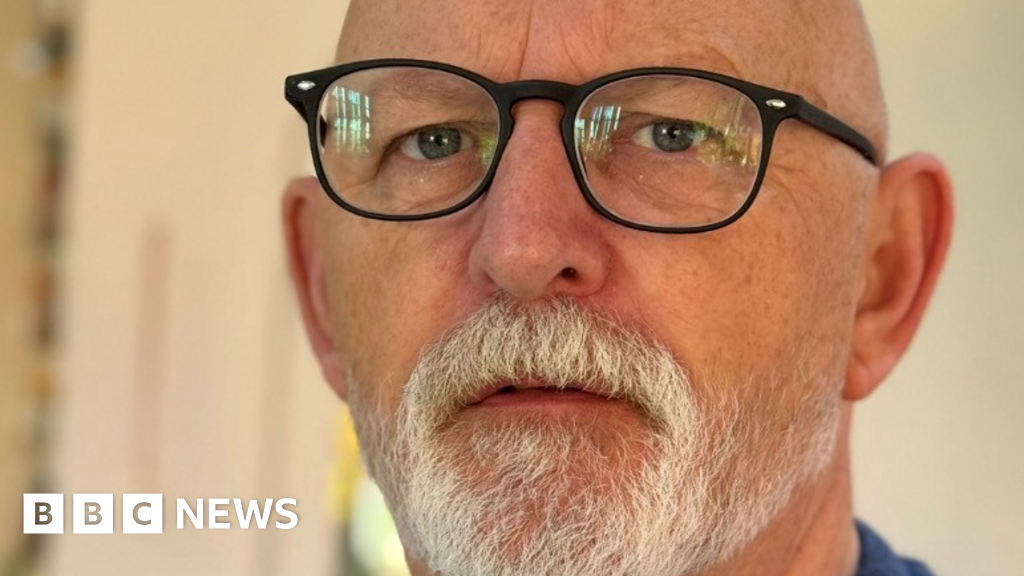
The family of Shaun Burton, say they are “devastated” by the loss.
Source link

Key events
In the opening half an hour against Cape Verde, Mikel Oyarzabal, the centre-forward, did not get a single touch.
Kyle Green gets in touch: “Your highlighting of Lalas and his absurdity is something that has prevented me from wanting to watch the coverage on Fox. While every channel has its pros and cons I just can’t.
“I’m 45 and probably the youngest of anyone who remembers him as a player instead of an opinionated insert insult here. As for the match this could be more competitive than it looks on paper Spain need a win the pressure is on them. Saudi Arabia could hold out for a draw and see what happens in their last match. “
News from the England camp, and it seems to be good news on Declan Rice.
“I’m ready and fit, raring to go. I was feeling a little bit of neural pain in my hamstring, which I was managing from after Christmas with Arsenal for a very long time. Obviously, not a lot of people would have known that. It was all behind-the-scenes stuff but it was a smart decision.
“In the end, that last 20 minutes is probably where you pick up the most, and it’s where you play a 70-minute match. But that last 20 is where you really feel your body going for it. And I think it was a smart decision because the last few days I felt really, really good.”
Alex Reid has penned today’s weekend special Football Daily.
Portugal v Uzbekistan on Tuesday enticingly pits the incredibly nice, incredibly 41-year-old-superstar-tolerant Roberto Martínez against Fabio Cannavaro, who’s won a Ballon d’Or as a player and the Chinese Super League as a coach. While the fixture following that game really does see the dream of Thomas Tuchel – in his first international job with England – taking on Queiroz, who is in charge of his ninth national side with Ghana.
The expected formations are 4-2-3-1 for Spain, and 5-3-2 for the Saudi Arabians.
The Saudi team features two Donis changes: Ali Lajami, a defender, and Nasser Al Dawsari, a midfielder, are preferred to Mohammed Abu Al Shamat and Mohamed Kanno. You may recall Salem Al Dawsari, the Saudi captain, as the man who scored the winner against Argentina.
An entertaining read, even for those of us who have just seen the clips.
In a conversation where his co-panelist is casually reminiscing about his days playing alongside Messi or exchanging shirts with Ronaldo Nazário at the World Cup, what exactly is Lalas going to talk about – coming on as a second-half substitute for Earnie Stewart in a friendly against Scotland in 1998? Helping the Kansas City Wizards finish last in the 1999 MLS Western Conference? Did Lalas enjoy an elite playing career? No. But does he do the background reading that could compensate for his relative lack of standing in a conversation with titans like Henry and Zlatan? Also no. But is he charming or funny or charismatic or otherwise magnetic on screen? Eh, no.
For the record, I once interviewed Alexi Lalas on the challenge of playing against Romario in the 1994 World Cup. He had this to say:
“He could kill you in so many different ways. If you remember from that World Cup, he scored so many types of goals. That ranged from solo adventures to an outside-of-the-right-foot half-volley off a corner kick. Romario was both the most difficult to play against and the best that I have faced.
“Roberto Baggio was doing his thing, but in terms of consistency and living up to the hype, he [Romario] was the best. As with all stars, there was a moment when the fans sit up in their seats, and that was a feeling I got with Romario. When it got close to him and the potential for his involvement in a play was there, everybody sat up in their seat. They knew that something spectacular would be happening.”
Saturday’s match reports here.
The Saudi Arabia coach, and Blackburn legend, Georgios Donis, spoke about the challenges facing his team: “Spain is not the same team when Yamal or Williams are on the bench.
“While they still have plenty of possession, they lack the individual one-on-one penetration when these two are missing. I’m not saying it’s a problem for Spain, but when those players are missing, they play in a different way. We saw this very clearly against Cape Verde.
“We are playing against one of the best teams in the world, and it’s very important that when you play against these kinds of teams, you should enjoy the experience and respect the opponent, but not too much.
“It is very hard for any team playing against Spain to have any time in possession. So what we must do is to be more in control of our movement and compact, and when the ball goes through the lines, be able to defend dynamically.
“It’s nice to see miracles in football, and we’ve seen favourites losing against underdogs. Of course, it’s great for Saudi football to have a great memory of the result against Argentina, but we aren’t drawing anything from that.
“I think we’ll feel more pressure in that [Cape Verde] game than we will against Spain.”
The Spain coach, Luis De La Fuente had this to say in his Saturday press conference: “This generation of footballers is highly competitive and really fired up… It’s going to be a completely different story,” he said at his pre-match press conference on Saturday. There is no drama or crisis. The bottom line is simply that we need to win tomorrow.”
Four changes for Spain: Lamine Yamal, Pedro Porro, Dani Olmo and Alex Baena also come into the side with Marcos Llorente, Fabian Ruiz, Ferran Torres and Gavi dropping out.
The teams – Lamine Yamal starts
Spain: Simon, Porro, Cubarsi, Laporte, Cucurella, Gonzalez, Rodri, Yamal, Olmo, Baena, Oyarzabal. Subs: Raya, Joan Garcia, Pubill, Grimaldo, Eric Garcia, Llorente, Merino, Torres, Fabian, Gavi, Pino, Williams, Zubimendi, Munoz, Iglesias.
Saudi Arabia: Al Owais, Abdulhamid, Tambakti, Lajami, Al Amri, Al Harbi, Nasser Al Dawsari, Al Khaibari, Al Juwayr, Al Buraikan, Salem Al Dawsari. Subs: Al Aqidi, Al Kassar, Majrashi, Yahya, Al Shehri, Al Boushal, Kadesh, Al Johani, Al Ghannam, Al Hajji, Al Hamdan, Mandash, Kanno, Thakri, Abu Al Shamat.
Referee: Raphael Claus (Brazil)
Perhaps one of the Saudi -players can write themselves into this high-grade selection?
Perhaps it can be their goalkeeper.
Madrid screening of Spain v Saudi Arabia cancelled due to heat
The public screening of Spain’s World Cup match against Saudi Arabia in Madrid on Sunday has been cancelled because of extreme heat forecast for the Spanish capital, officials said.
The match, due to kick off at 6pm local time on Sunday, had been scheduled to be shown on a giant screen installed by the Spanish football federation (RFEF) at a fan zone in Plaza de Colón in central Madrid.
Madrid city council and the federation decided to cancel the screening after national weather agency AEMET issued an orange heat warning – the second-highest level – for the Madrid region, with temperatures forecast to reach 40C.
“The decision has been taken with the aim of protecting the health of attendees, event staff and support services involved in the event,” Madrid city hall said in a statement, apologising for any inconvenience.
Officials urged supporters to watch the match indoors in air-conditioned spaces and avoid prolonged exposure to the heat.
Large parts of Spain are experiencing unusually high temperatures for June as a mass of hot air from North Africa moves across the Iberian Peninsula.
A total of 13 of Spain’s 17 regions are on orange alert for heat on Sunday, while the northern Basque Country bordering France is on red alert, the highest level.
Authorities advised residents and visitors to take precautions during the heatwave, including drinking water regularly, staying in cool environments, limiting outdoor physical activity during the hottest hours of the day and taking extra care of vulnerable people. AFP
Can Saudi Arabia repeat the magic of 2022?
Argentina arrived in Qatar on a 36-game unbeaten run. When Lionel Messi opened the scoring from the penalty spot after 10 minutes, a comfortable afternoon seemed in the offing. Saleh al-Shehri and Salem al-Dawsari had other ideas, Argentina had three goals disallowed for offside in the space of 13 minutes and the greatest comeback in Saudi Arabia football history was made. Argentina went on to lift the trophy, while defeats to Poland and Mexico meant the Saudis did not reach the knock-out stage.
Unai Simon over David Raya is a controversial choice for De la Fuentes. The Arsenal keeper could lay claim to being Europe’s best this season.
“Those at the Champions League final had a few more days, so I got there on the Wednesday night,” Raya says. “I arrived a bit before Fabián [Ruiz]. I was saying hello to some of the others in reception when he arrived. I went to say congratulations; that was almost the first thing I did. I couldn’t really talk [to him] after the final; I just didn’t have it in me. The next day we talked about the game properly. Just two mates chatting … I was happy for him that he could lift the trophy for a second time.”
A high pressure game for the European champions, as Sid Lowe reports.
“If we had scored one, the game would have changed,” Martín Zubimendi said. Immediately after the game, De la Fuente had offered a simple analysis: when the ball doesn’t want to go in it doesn’t want to go in, he insisted. Spain had racked up 27 shots, after all. Ferran Torres had hit the bar and seen another clear opportunity saved. Vozinha, the 40-year-old goalkeeper who stopped that, saved six more and was named the man of the match. “There’s nothing to reproach the team for,” Rodri said. “We generated chances but couldn’t put it away; the good thing is they created almost nothing.”
We wait to see what role Lamine Yamal will play today. His coach would surely like to be able to use him.
The worst mistake we could make would be to compare him to anyone. He is the midst of a process. He has exceptional footballing maturity and lives it all with total naturalness. He has great serenity and strength. We have to let him follow his path but those players who have something different are ready for that. They’re geniuses, like Dalí [who] can paint a picture, or Michelangelo. They’re different. What is exceptional to us, isn’t to them. In those extremes, they feel comfortable. Why? Because they are different. What we think is exceptional, they consider normal.
Preamble
Spain’s campaign did not get off to a flying start, and Luis de la Fuentes may wake up in the night to visions of Cape Verde’s Vozinha. He will have Georgia on his mind ever since Monday. Saudi Arabia are no pushovers and gave Uruguay a scare in their opening match. Memories of downing Argentina four years ago still abound, and so Spain might beware. They can ill afford to go into the final game with Uruguay at a disadvantage. All eyes on Lamine Yamal, whose fitness situation remains opaque, though Spain need their other forwards to come to the party.
Kick-off 5pm UK, 1pm ET, 2am AEST. Join me.

A topless man can be seen driving erratically in Edinburgh before abandoning his car and attacking a black man and a delivery rider.
Source link



-

 Oxford University4 weeks ago
New to the Oxford English Dictionary this September
-

 Oxford united FC4 weeks ago
Chris Gunter steps away Wales role to focus on Oxford United
-

 Oxford united FC2 weeks ago
LIVE: Exeter City vs Oxford United – Jersey Mike's Trophy group stage
-

 Traffic & Transport2 weeks ago
Why should I have to pay more for buses if I don’t use a smartphone? | Bus fares
-
 Traffic & Transport3 weeks ago
How poor public transport policy is putting the brake on cities | Road transport
-
 Student Life3 weeks ago
Oxford partnership allows OpenAI to use rare Bodleian texts to train ChatGPT
-

 Oxford united FC2 weeks ago
Oxford United lose to Exeter City on penalties in Jersey Mike’s Trophy
-

 Oxford united FC3 weeks ago
Northern Ireland fans laud Oxford United defender Ciaron Brown