
Student Life
We should care about Ukraine now more than ever

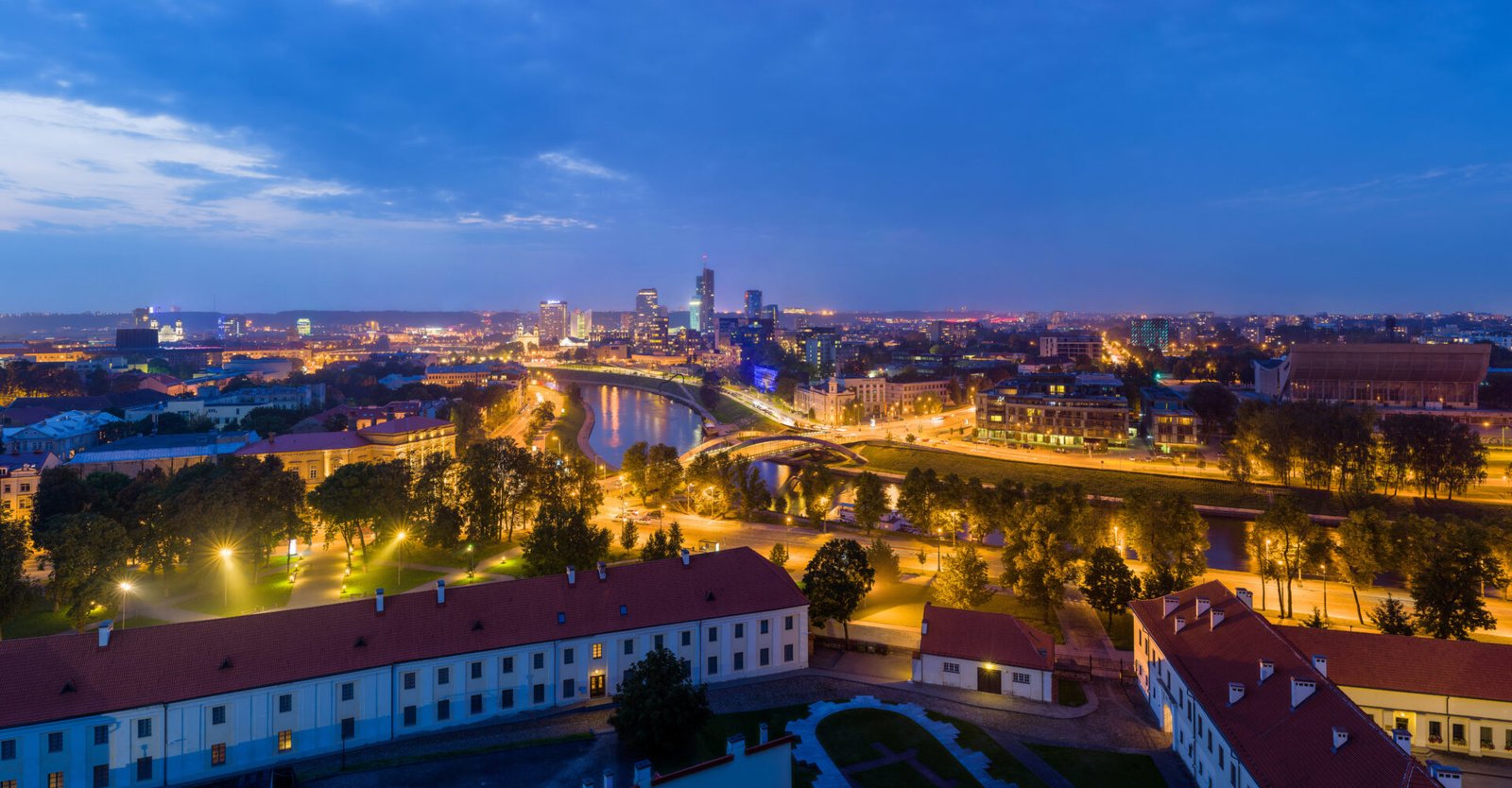
There are multiple levels of severity to a Lithuanian air raid alert – white, yellow, and red. White means the threat has been resolved; yellow urges people to locate their nearest bomb shelter; and red orders everyone to take cover immediately.
Last spring, people in Vilnius, the Lithuanian capital, received a red air raid alert. Children were hauled out of schools, and some were incomprehensibly led to football stadiums, while many people realised that their nearest bomb shelters were much further away than could possibly be reached in a true emergency. Because this wasn’t, after all, a ‘true’ emergency – a drone had entered Lithuanian airspace, but no attack ensued. Still, it was an emergency in the way that it forced people to face the unsettling fact that Lithuania no longer lives in a time of peace. Russia’s full-scale invasion of Ukraine, now in its fifth year, has slowly but very tangibly expanded into a hybrid war against the Baltic states, Finland, Poland, and several other countries.
It’s nothing out of the ordinary these days to open the Lithuanian news and see an alert for an air raid, or to receive one on your phone. Even just five years ago such an event would have caused national chaos and uproar; now it happens almost every month, some months multiple times. During the vacations, when I am back in Lithuania and hear an airplane go by that seems to be louder than usual, the question is always forced into my mind: is this it? Is this the moment it starts? I know that in those 30 seconds, everything about my life as I know it could change.
I feel greater unease when I am here, in Oxford – when, for instance, I open LRT, the Lithuanian national broadcaster, and see that multiple air raid alerts have been announced. Even more so when I read that NATO fighter jets were mobilised, yet did not succeed in destroying the drones, as happened in early November. I feel guilty being away from my family for half of the year; I have to consider the deeply uncomfortable question of what happens to them in the event that Russia escalates its war.
Having spent a year studying in Oxford and engaging in political discussions with people from the UK, I find it jarring how much focus there is on domestic issues, with problems outside of this country often left as an afterthought or not mentioned at all. While caring about domestic issues is perfectly understandable and necessary, the apparent lack of interest in international problems shocks me because I come from an environment where outside events, more often than not, take precedence in our political discourse. While Lithuania’s situation is, of course, nothing compared to the situation of Ukrainians who are currently fighting and dying for their country, Lithuanians still experience the reality of living next to a country that wants nothing more than to wipe ours off the map.
International news coverage of Russian aggression against Ukraine has been measurably declining in recent years. Analysing millions of news article titles from thousands of sources in 194 countries between January 2013 and December 2024, Vianini et al found that coverage is heavily dependent on major geopolitical events, with peaks around Russia’s annexation of Crimea in 2014 and full-scale invasion in 2022. Evidently, as the shock of the initial event wears off and people get accustomed to the new status quo, news media no longer sell as many copies or generate the same number of clicks, so they switch to other topics.
Perhaps it is therefore unsurprising that, as a percentage of GDP, northern European and Baltic countries have been leading in bilateral aid to Ukraine. The danger of Russian expansion is, after all, more acute the closer Russia is, especially given the threat that Russia has posed to many of these countries’ sovereignty in the past.
This is in no way meant to imply that other countries, such as the US and the UK, have made less valuable contributions, as their aid to Ukraine has been immense. It is just that with the much greater geographical separation from Russia, there is also a mental detachment. It is much more difficult for people here to understand the urgency – not just of February 2022, but every day – almost five years into Russia’s full-scale invasion. For us, this is not just a war; it is a threat to our very existence.
Countries like Lithuania are mostly powerless in bringing about any sort of resolution to this war, but countries like the US and UK are not. It is therefore particularly concerning to Lithuanians when, for instance, the will of these countries’ leaders to continue enforcing sanctions on Russian exports and individuals benefiting from Russia’s war appears to dwindle. This becomes especially disconcerting when coupled with implicit or explicit statements that Russia’s illegal war can only be resolved if Ukraine agrees to give up a portion of its territory. The United Nations’ new Equal Earth world map, adopted in September 2026, for instance, depicted Crimea in a different colour – not as part of Ukraine, capitulating to Russia’s expansionist aspirations. Crimea, which Russia illegally occupied and annexed in 2014, remains Ukrainian territory under international law.
Such acts of complacency give Russia the confidence to violate boundaries further and further. If the world goes on as it has, Russia will kill more people in Ukraine, will continue to establish its concentration (‘filtration’) camps, which have already been used to abduct more than 20,000 Ukrainian children, and will expand its hybrid war. Just in the last round of peace talks in mid-November, Russia reintroduced its demands that NATO remove its forces from its eastern flank, leaving Poland and the Baltic states profoundly vulnerable, halt all supplies of Western military support to Ukraine, as well as permanently rule out further enlargement.
The urgency that we as Lithuanians feel is because we know that in any sort of escalation, the Baltic states are very likely the next targets, an urgency that people in the UK, US, and western Europe have the privilege of not feeling. But if Ukraine, the Baltics, Poland, Finland, or any other country targeted by Russia falls, then the UK and western Europe will be forced to remember a lesson that should have been learned 80 years ago: appeasement does not work. The threat of annihilation is at their doorstep – like it has been at ours, for centuries.
I sconce anyone who hasn’t heard of a crew date, BOP, or Barty. Words which have no real meaning beyond the high stone walls of Oxford University and its colourful college social term cards; students here clearly have a propensity for always doing it a tad differently, beyond just exam attire and bizarre names for our semesters. God forbid we call a party in a bar a party in a bar. Why must we expose our lack of spontaneity so unashamedly? For although it is hard to admit, a BOP does not refer to the action of ‘bopping’ to music but rather an assertion that the party is both big and organised. Maybe it is simply the love of a ritual which trickles down from centuries-old University-wide traditions into the modern-day Oxford student’s social schedule.
A ‘social’ history
I highly doubt that back in 1096, the University’s founding year, students of theology and canon law were daring one another to drink beer from their shoes or toss pennies into one another’s glasses. Granted, there is little evidence to say they absolutely did not partake in such games; so let’s not write off the social scene of the High Middle Ages just yet. However, a series of traditions, recognisable today, soon began to emerge. For instance, ‘pennying’, first debuted by dons and students in the 14th century, is still a familiar ritual at rowing formals and crew dates.
Merton College dining hall was built in 1277 and, following suit, each college built a form of this dedicated social and dining facility to provide a space beyond lecture halls and teaching rooms. Many traditions, notably ‘pennying’, ‘doing a shoe’ and ‘sconcing’, find their roots in such hallowed halls. The latter dates back to 1617, when a small monetary fine was imposed for a mispronunciation when saying grace, no doubt a major faux pas in that era. Today a dreaded sconce promises to expose your most embarrassing secret to a football team’s worth of recent strangers.
Since the medieval period, Oxford’s love of rituals, especially when aided by cheap alcohol, has come to be part of the very fabric of its reputation. For better or for worse, students here are readily associated with supposed debauchery, as they had but ‘no choice’ but to indulge in the rituals of their predecessors. The Bullingdon Club instantly springs to mind when considering this facet of the University, with members famously including Boris Johnson and David Cameron. Known for questionable treatment of staff and premises, using sport as a respectable front, and outrageous drinking habits, the club is no longer recognised by either the University or Oxford University Conservative Association (OUCA). They almost certainly explain why students have gained a reputation for obnoxious and entitled behaviour. Even though crew dates today at Angrid Thai are more BYOB and cold chips as opposed to duck confit and port, this air of impunity still remains strong. Similarly, their respect for tradition does not waver.
Obsession from night to day
This reliance on ritualistic structure is still seen across university events. Multiple times a year, an army of penguins donned in academic dress marches towards Examination Schools. Many can be seen adopting the white, pink, and red carnations symbolic of their exam progression. The carnations are not mandatory; however, many still rush to the Covered Market, frantically hunting for replacement pins when theirs is lost, all in the name of a retro tracking system. Whilst expected for exams, I personally have never seen anyone refused entry for not wearing sub fusc. Oxford students were even given the option to remove the demand for academic dress in 2015, but 75.8% chose to keep it. The panic of what to cram last minute, as well as deciding what to wear, was clearly too daunting for students at the University. I, for one, am grateful. Albeit monotone and a tad school uniform-esque, the shirt, skirt, gown, ribbon combo means one less decision must be made.
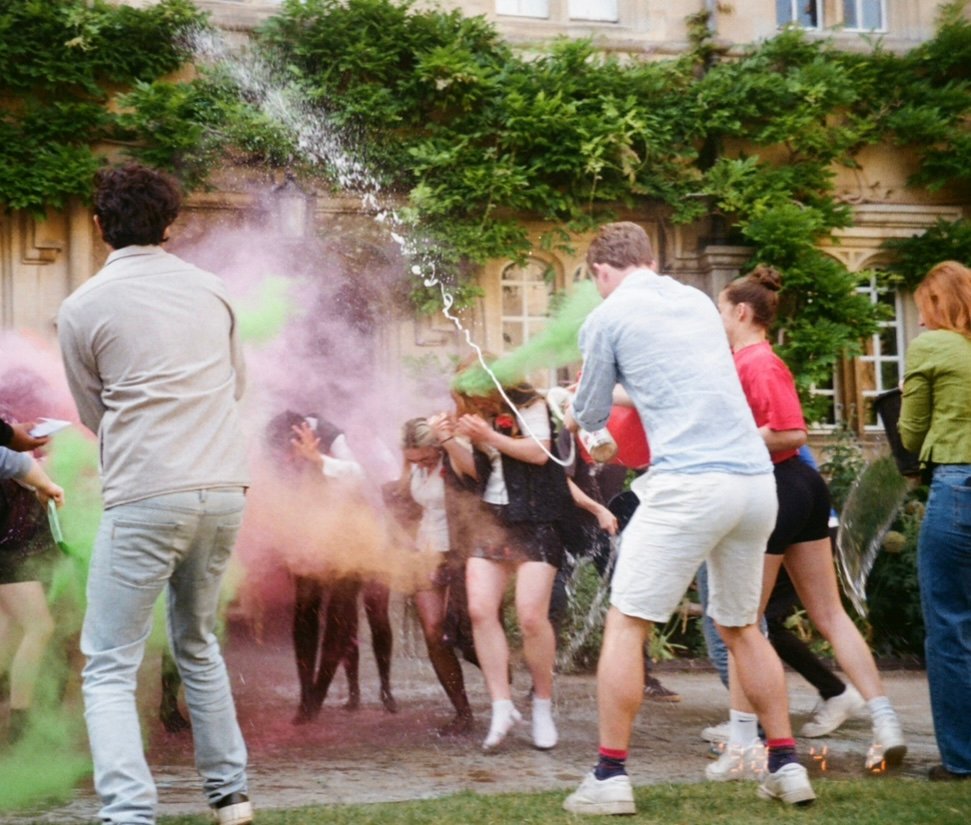
Even after exams, there is a step-by-step process to celebration. Upon exiting Examination Schools, one is met with flowers from the Garden of Oxford if they are lucky. Although banned, many still partake in the tradition of ‘trashing’. A low-level ‘trash’ would see students douse cheap prosecco on a freshly pressed shirt: a mother’s nightmare but not particularly damaging to the environment. However, more extreme examples could see finalists covered in coloured powder, eggs, or confetti, which often end up in Oxford’s waterways. The University has, of course, caught wind of this post-exam ritual and implemented a £150 fine for any student found partaking as part of its Celebrate SMART guideline. Oddly enough, this ritual does not see extensive roots in Oxford’s social history; the Oxonian’s affinity for making a mess seemingly did not take form through the ‘trashing’ tradition until recently. Therefore, one is left questioning as to why it occurs. We cannot simply blame tradition. Perhaps this is but a further example of our need to mark every occasion – entering the University, finishing an exam and so on – through the means of ritual. Its mode is almost baptismal, albeit far less sacred.
The crew date
A crew date, or a ‘swap’ in Cambridge, usually consists of a male and female sports team from different colleges enjoying a joint social at Angrid Thai or Jamal’s (and as of recently, Bridge and Plush). One must mention that women are a new addition to this unique Thursday ritual. The ‘laddish’ culture that would have been commonplace prior to the entrance of women has thankfully started to see its demise (#ThursdaysAreForTheGirls). However, one can still witness instances of it permeating the social scene in recent years. In 2013, the Pembroke College rugby social secretary was found to have circulated emails amongst members encouraging them to spike the drinks of fresher girls prior to a Thursday crew date “with a substance of [their] choice”. The captain stepped down, and a statement of apology was released. However, the only tangible punishment was a two-week playing ban from the first round of the league and a relegation to Division 3. I would argue a couple of weeks off is unlikely to teach a strong enough lesson.
Thai, the son of the owner of Angrid Thai, told Cherwell about his extensive experience hosting Wednesday and Thursday crew dates in his family’s restaurant. He explained how Angrid’s was not the original location for such socials; however, due to students requesting use of the premises for crew dates, they began offering them in a slightly more official fashion and soon became the widely understood spot for college and university sports teams. I was relieved to hear that the “relationship with students has improved”, with attendees “rarely disrespectful to staff” and “not abusive”. Naturally, there are still exceptions. Thai noted that St. Hughs rugby and football teams as common perpetrators of physical damage and disorder following their socials, with “vegetable oil poured on the basement floor” and “light fixtures found ripped off”. Such activities have led to the team being completely banned from the venue. Despite damage at such an extreme level being rare, the restaurant still repaints and refits its furniture annually due to the extensive scuffing of walls and chairs that crew dates invite. When asked why Angrid’s has continued hosting crew dates, Thai responded that “you’ve got to do what you’ve got to do”. The physical damage and general rowdiness are “outweighed” by the business crew dates bring. It must be said that speaking with Thai did not necessarily give the impression that he or the restaurant has at all a negative view of crew dates. He praised “Worcester” and “St Catz football” as the most energetic and fun guests who also treat staff with respect and refrain from leaving a mess behind. Out of interest, I asked him why he thinks students act as they do, and he contended that it is simply “kids being kids”, and that Oxford’s “college system” allows for students to act as if they were “still in school”. I’m sure we make for excellent weeknight entertainment.
Speaking further to captains and social secs from various college sports teams, the social picture was as expected. A Magdalen women’s sports captain told Cherwell that she attends “a social or crew date every week, usually on a Wednesday or Thursday”. The strangest instances she has witnessed were “strange sex positions”. Nothing short of your average weeknight activities. At my home college, Balliol, the netball captain told Cherwell that a game of “Zimmy, Zimmy” was her most cherished crew date tradition. Similarly, a Jesus College sports social secretary named his favourite game as “Patrick, Patrick, Patrick” and noted his most memorable social moment as the time a club member “fell off the Schwarzman pen (statue)”. Group chanting, public humiliation, all sounds rather cult-like. Those involved simply call it “a bit of fun” and a chance for students to “just let go”.
But why?
These examples do not just happen because of history and tradition. Plenty of past rituals are not perpetuated today. However, Oxford has remained steadfast in many of its peculiar events that look extremely archaic and bizarre to those external to the University. So why do we continue to observe these rites and ceremonies, if not because it sets us apart from everyone else? From crew dates to BOPs to matriculation, Oxford students feel this indescribable obligation to do exactly as has been done before. Without intending to insult, perhaps we lack spontaneity and creativity; it is very easy to just copy the actions of those who came before us. We make many decisions -academic or otherwise -every day. Perhaps we follow tradition to reduce any further decision fatigue. Furthermore, with intense workloads and therefore few empty hours left unscheduled, we no doubt feel a need to justify any time spent away from the library. Perhaps we name every social and every occasion to provide such a reason. Our diaries are filled with professional and academic commitments, so ‘going out’ on an evening requires a recognisable title: crew date, court, or ‘où est le poulet?’.
A further theory perhaps is that we thrive under rules. Rituals come with rules, and Oxford socials have rules galore. Ever wondered why Boris Johnson pointed with his finger bent in parliament; no doubt because pointing was a fineable offence at an Oxford social, where international drinking rules are strictly enforced, and he simply cannot shake such a habit. This adherence finds itself expressed even during the daylight hours. Even at my less traditional college, I would find it plain wrong to tread on the grass of the front quad. I’m sure no one would bat an eyelid, but I cannot fathom breaking these rules. Like Johnson, perhaps Oxford students feel an innate obligation of adherence to the rules, even when they offer little in terms of justification.
One can easily rely on a strange cultural or psychological backing for why students here love social rules and ritual. Maybe the answer is far simpler. Maybe we partake because they are fun, silly, and cheeky, and prevent socials from all blending into one. Granted, there are common themes: drinking, dressing up and so on. However, each has a unique element to it, and many are unique further still because they are only enjoyed at Oxford. Much of our student lives are taken up by essay crises and tutorial prep, so perhaps we are just embracing the work-hard-play-hard lifestyle. Whatever the reason, these rituals have been enjoyed by students for centuries and, like many features of the University, I would be very surprised if they were to change anytime soon. They formed a large part of my freshers’ experience, and so I can only look back on them with fondness. Therefore, I sconce anyone who hasn’t ever attended a crew date, BOP, or Barty, and strongly recommend that they give it a go. Get in the mixer!
St. Hugh’s Football team (Hughdam FC) and St. Hugh’s Rugby team (St. Hughs/LMH RFC) were contacted for comment. They told Cherwell: “Firstly, we have not been given notice of any ban on our club holding rugby socials at Angrid Thai. We understand that the restaurant has, on occasion, asked student groups not to return for a period following socials. The only incident we believe you could be referring to occurred at a social a few weeks ago, when a bottle of vegetable oil was accidentally spilled in the private room. We apologised for the mess at the time, and the restaurant retained our £90 deposit, which we would hope was sufficient to cover any necessary cleaning. However, we do not believe that this spillage constitutes ‘physical damage’ to the premises. It was an accidental incident and our deposit was retained to cover any associated costs. We have enjoyed a positive relationship with Angrid Thai over many years and have always appreciated the opportunity to visit the restaurant.”
Student Life
Imperial photographs, imperial shadows: The Ashmolean’s ‘Colonial Views of India’ in review
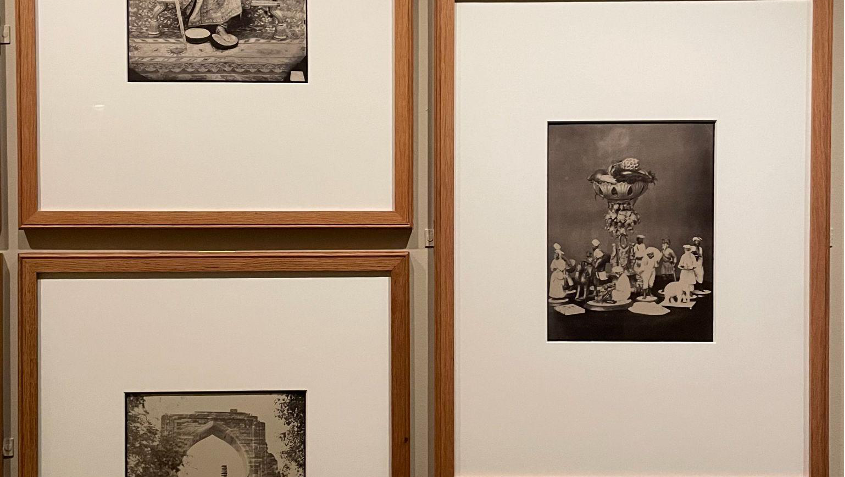
A Bengal tiger, strangely docile, stares vacantly out of the surreal sepia-grey of an albumen print. A heavy chain snakes from its neck to a nearby tree, whilst the shadow of a photographer with a tripod looms larger-than-life from the left. Such is the view that opens Colonial Views of India: Photographs by Eugene Clutterbuck Impey, now in its final month at the Ashmolean. The fact that I managed to drag myself out of Fifth Week blues to see this exhibition is testament to the promise I thought it held. But much like the figure, presumably Impey himself, overshadows the photograph of the tiger, the shadows of imperialism and its legacies loom large over the exhibition, at times clouding its merits.
For the museum’s approximately one million annual visitors, the exhibit is, in theory, a treasure trove of insights into how pioneering mid-19th-century photographers propagated the ideologies of British imperialism through visual culture. Impey and his contemporaries produced some of the first images Britons saw of the subcontinent their ‘mother country’ had subjugated for over a century. Visitors to the exhibition see India through Impey’s lens, in the same way that readers of his 1865 Delhi, Agra, and Rajpootana Illustrated (note the Anglicisation!), an early collection of eighty of the displayed photographs, would have done.
As the exhibition’s curator Mallica Kumbera Landras stated, the works displayed are “visual representation[s]… of imperial purpose”. Impey’s passion for photography, the captions note, developed during a transitional period of colonial rule, in which he served as a soldier, official, and political agent for the East India Company and, after 1857, the Crown. The desire to reinforce the Orientalist stereotypes that justified the imperial ‘civilising mission’, therefore, conspicuously permeates his work. It is the same upper classes that Impey ‘managed’ as an agent that his portraits depict in stage-managed poses of almost-narcotic greed. It is the same masses that Britain ‘divided and conquered’ that his framing forces into displays of imagined primitivity.
All of the above makes Colonial Views of India seem an invaluable resource, with the potential to stimulate direly needed conversations about British imperialism and its present-day aftershocks. Why, then, did it disappoint me so much?
The first problem is its location, a flaw already observed in many museums’ attempts to decolonise their collections. The exhibition is tucked away in Gallery 29 on the first floor, usually reserved for ‘Eastern Paintings’, but you could be forgiven for missing this information in the only place it is visibly available: the revolving digital display behind the ticket desk. By contrast, the museum’s Aphrodite: The Making of a Goddess exhibition imposes classical splendour on almost every entrance.
Does this prioritisation suggest an ulterior motive? Maybe not, but the exhibition’s physical space is certainly underwhelming; one would think that such a vast and previously unseen collection would be displayed on a grand scale, not stuffed into a seemingly random room. It displays only a select few of the 247 Impey photographs the museum possesses, and does so in a way that doesn’t render them any less mysterious than the works that remain archived. The presence (or lack thereof) of context for the photographs leaves much to be desired.
Captions are not absent, but they hide on tiny plates tucked into nooks, and barely scratch the surface of the complexities that the photographs illustrate. It is of course true that Impey’s photography “reinforced stereotypes… to justify colonial efforts”, “profiled perceived indigenous criminality”, and, in the case of the allegorical tiger, “reflected views of Indians as cunning and deceptive”. But, according to the exhibition, that’s it. No further analysis is provided, and there are some questionable comments, too; one caption seems to take as fact the idea that imperial hill-stations, the setting of some of the portraits, provided “safe havens… from heat, diseases, and local populations”.
Such a comment, if one even manages to find it beneath the monotone rows of identically-sized frames, makes implicit the assumption that the racist views Impey and his contemporaries held of their photographic subjects remain salient. One needn’t even look beyond Oxford to see the issues this poses. I often regret buying a Union membership, but it did allow me to witness a debate last Michaelmas proposing that “The Sun Should Have Never Set on the British Empire”, nothing if not an overt exposé of the fact that imperialist ideas remain insidiously persistent in modern Britain.
To add insult to injury, work exploring imperial legacies is being done very well elsewhere in the Ashmolean. The Shedding Light installation in the European Ceramics gallery, curated in collaboration with Oxford’s African and Caribbean community, is a visually striking reimagination of a mid-20th century living room that masterfully implicates imperialism and the slave trade in the production of objects as quotidian as plates and teacups. In juxtaposing domesticity and historical atrocity, it simultaneously recognises the presence of the Windrush generation in Oxford and details the connections between the museum’s vast ceramic collections and their imperial origins.
Colonial Views of India could have done something similar, but the exhibition falls short of anything like the level of nuance required to contextualise its subjects. Whilst Impey’s photographs may have taken a long time to develop, their presentation in the Ashmolean offers only fleeting glimpses: glimpses of the imperial culture they represent and glimpses of the important role they could play in bringing about a sorely-needed reckoning of the British Empire’s legacy.
In place of citing another review of Colonial Views of India – there seem to be very few – I’ll leave you with the words of an American tourist, the only other visitor on the cold Fifth Week afternoon on which I found myself at the exhibition:
“Oh”, she said to her companion, “so these were supposed to promote colonialism?”
When asked for a response, the Ashmolean told Cherwell: ‘Colonial Views of India is the first exhibition at the Ashmolean dedicated to photography in colonial India. It is the result of extensive research led by Professor Mallica Kumbera Landrus, the Ashmolean’s Keeper of Eastern Art and a leading scholar of Indian art. The exhibition presents previously unseen photographs by Eugene Clutterbuck Impey, a British colonial officer, and examines the role of photography in documenting India and serving the interests of British imperial rule.
‘The exhibition is displayed in Gallery 29, the Museum’s dedicated gallery for Eastern Art works on paper. This purpose-designed space provides the controlled lighting and environmental conditions necessary to protect objects such as the sensitive photographic material featured in this exhibition. Its location is determined by the conservation requirements of the works, not by their subject matter.
‘The exhibition’s interpretation explicitly addresses the racist ideologies of British colonial rule and the use of photography to reinforce stereotypes and justify colonial dominance. The reference to hill stations as ‘safe havens’ describes how British colonial communities regarded these places and should be read in the context of the full caption, which examines the inequalities and prejudices of the period.
‘The exhibition is accompanied by the first Ashmolean publication dedicated to the use of photography in colonial India. This substantial scholarly volume, with contributions from eleven specialists, examines the photographs in greater depth, including the Ashmolean’s own historical connections with British colonial institutions. A copy is available in the gallery for visitors wishing to explore the subject further.’
The exhibition is at the Ashmolean until 13 December.
Student Life
Fostering community through music: The Nest’s ‘Team Drum’ and ‘Sound Engineering Showcase’
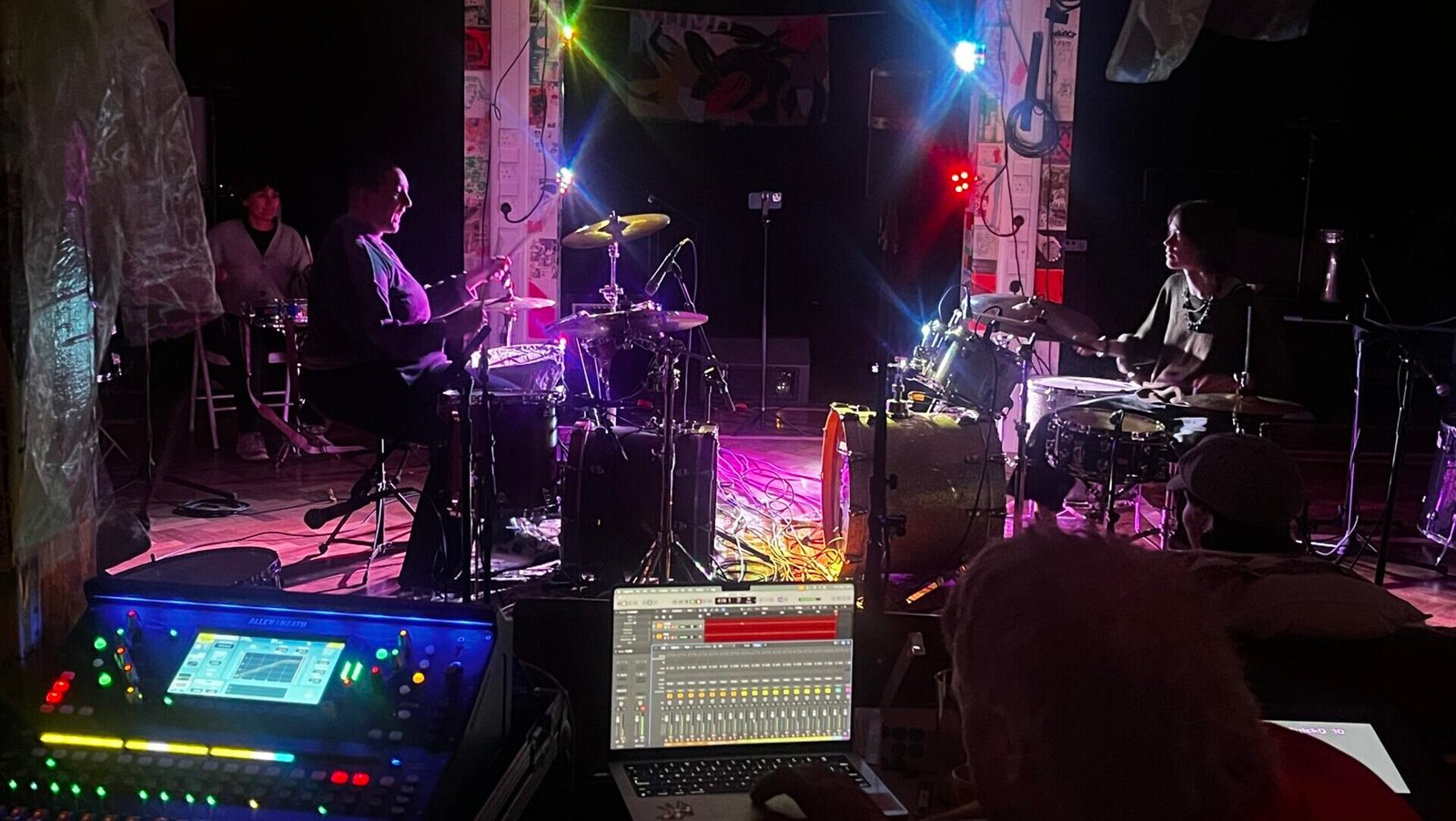
Music has a remarkable ability to bring people together. On Thursday 12th November, Oxford’s newest grassroots music venue, The Nest, offered a wonderful reminder of this. The Team Drum and Sound Engineering Showcase celebrated the completion of two community-music courses, bringing together their participants for an uplifting performance of their newly developed skills.
At the heart of the free event was a performance of three drumming songs by Team Drum. Led by Zahra Haji Fath Ali Tehrani and Annie Davison, who guided the group from the centre of the circle, Team Drum’s enthusiasm was just as infectious as their rhythms. The Team Drum course, open to complete beginners, taught participants how to play and create drum patterns inspired by songs they love, with rhythms intended for carnivals, parades and protests.
Behind the scenes, participants from The Nest’s Sound Engineering Course set up the equipment to record the showcase. Over the six-week course, the group learnt the ins and outs of how to mix and amplify live sound under the guidance of Ky Acab.
The collaboration of these two courses exemplifies the ethos of The Nest and the Young Women’s Music Project (YWMP), the charity that runs the venue. Guided by the Safer Spaces Policy, The Nest provides an inclusive space for grassroots music in Oxford, particularly centring young women, trans and non-binary people. At its core, the project strives to make community music-making safe, accessible and welcoming, while kindling opportunities to experiment, develop confidence, and connect with others through a shared love of music.
Both courses and the final showcase were supported by the Museum of Oxford as part of its Sounds of the City exhibition, running from July 2026 to March 2027 at Oxford Town Hall. Exploring the people, places and communities that have shaped Oxford’s rich musical heritage, the exhibition celebrates the diversity and vibrancy of the city’s musical activity. As part of this bustling city, the showcase at The Nest illustrates how community is at the heart of any music scene.



-

 Oxford united FC3 weeks ago
Dogs, drones and extra police powers for Oxford United game
-

 Oxford united FC4 weeks ago
Oxford United beat Stockport 1-0 in statement victory
-

 Oxford united FC4 weeks ago
LIVE: Barnsley 1-0 Oxford United – Yoganathan puts 10-man Tykes ahead
-

 Oxford united FC4 weeks ago
Oxford United leaders criticised as results hide concerns
-

 Student Life4 weeks ago
Oxford University wins at local climate awards
-

 Student Life4 weeks ago
St Anne’s to close nursery called a ‘lifeline’ for women at Oxford
-

 Oxford united FC4 weeks ago
Aaron Ramsey explains Brannagan and Brown Oxford United absence
-

 Oxford united FC3 weeks ago
Oxford United player ratings in landmark Reading derby win