
Traffic & Transport
Is the party ending in Birmingham’s nightlife district? | Music

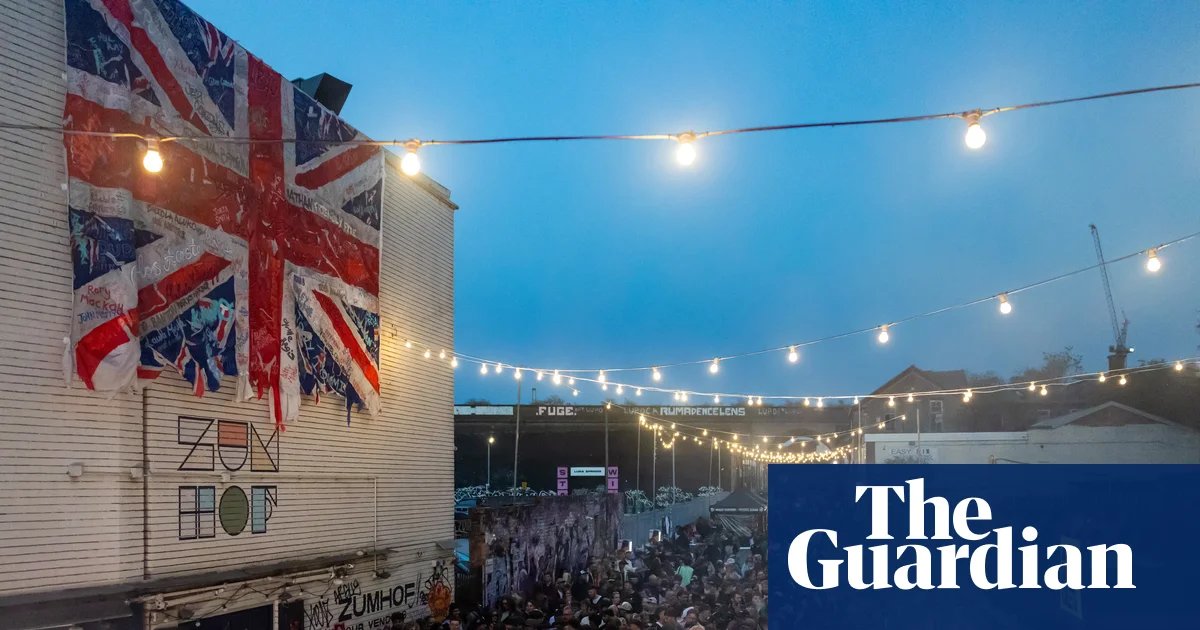
Regarding your article on the threat to nightlife in Digbeth from proposals by the Midlands Rail Hub Alliance (‘It brings soul into this sterile world’: the Birmingham clubbers fighting to save their patch – and Britain’s nightlife, 3 November), as someone who spends a lot of time in this district of Birmingham, I think it’s also worth recognising that it is getting major investment, turning it into an area you want to visit and even live in.
There are new TV and film studios, street refurbishments, residential flats, a new tram route and better bus services. Access to the area is increasing. The new tram route – wholesale street redesigns, but mothballed until connecting tracks can be laid across HS2’s Curzon Street site – has been particularly painful during construction and has spurred mistrust from businesses.
The Midlands Rail Hub Alliance recently came forward with early and heavy-handed designs for a project half a century in the making. The proposals demolished too many buildings, many of which are currently leased from Network Rail. Naturally, business owners want certainty about their premises’ future, which is hard to guarantee early on, and we would complain if proposals were too advanced to change.
The project is transformational for rail travel within Birmingham and beyond. It means no longer being constrained by capacity at New Street station. One standout benefit is returning the cross‑city line, one of the busiest rail commuter lines outside London, to 10-minute frequency.
Network Rail mismanaged its stakeholder engagement approach, with some businesses finding out via X. However, my observation is that they are being listened to. Birmingham city council set out conditions for the scheme that formalised the concerns expressed by businesses and the mayor recently took political oversight of one the main organisations promoting the rail hub. We now need to take a breath and wait for fresh designs at the next consultation.
Martin Price-Phillips
Birmingham
Digbeth has always been home to fascinating units and great nights out but, unless on National Express coaches, it has never been easy to get to. During Covid we were told that access would be simplified with the new Digbeth tramline. After six years of construction and temporary traffic lights, the tram has still not made it to Digbeth. By the time it opens, it seems the tram will only take you to see the remaining interesting sites being demolished to accelerate train line updates. What Digbeth really needs is a joined-up approach to urban planning to ensure any future decisions do not undo the progress of past successes.
Harry Shaw
Cradley Heath, West Midlands
Of course Digbeth cannot be demolished! For about 200 years this area has been Birmingham’s mecca for many styles of music and its genres have moved with the times.
The London museum music hall, created in Victorian times, and the Digbeth civic hall, where the 1960s folk scene flourished and popular bands from the Cure to the B-52s performed, are just two examples. The Irish centre celebrated 50 years of traditional tunes, and a terrace house in a street called Cheapside gave birth to classics like Girls on Film and Rio. These are a few of the venues where music has been enjoyed and created in this historical industrial hub, situated next to the city centre. All have all contributed to international successes and have put Birmingham on the musical map.
At the moment Digbeth is celebrating a fabulous party scene and in time it will evolve again and produce another kind of venue that will be culturally driven and call people to celebrate en masse in an area where music is truly rooted. A transport hub does not fit the remit.
Janette Brown
Castet-Arrouy, France
Traffic & Transport
Labour expected to cut EV targets for UK’s car industry despite MPs’ protests | Electric, hybrid and low-emission cars

Ministers are expected to make steep cuts to the government’s electric vehicle (EV) targets this week, in a move that will relieve carmakers but alarm many Labour MPs who are worried about the government’s commitment to the green agenda.
Louise Haigh, the de facto deputy prime minister, will finalise the plan after a crunch meeting in Downing Street on Wednesday to settle a long-running dispute between the transport, energy and business departments.
Haigh is expected to agree to cut a target for EV sales by about a quarter, government sources say, helping British industry but setting up a potential fight with MPs and campaigners over the government’s single biggest decarbonisation policy.
The decision will be made just as Andy Burnham prepares to travel to his first Cop summit as prime minister, where he and the foreign secretary, Ed Miliband, will champion electrification on a global scale.
With some MPs already upset by the decisions to approve the Jackdaw gasfield and to cut funding for green schemes to pay for higher defence spending, many see the upcoming decisions on the Rosebank oilfield and the EV mandate as critically important.
Lizzi Collinge, the Labour MP for Morecambe and Lunesdale, said: “The upcoming decision on the ZEV [zero emission vehicle] mandate will have a huge climate impact, possibly the biggest one that’s on the PM’s desk.
“But it will also set the direction for tackling the cost of living and helping get our energy prices down over the coming decade.”
Catherine Fookes, the MP for Monmouthshire, said: “The government has some incredibly difficult decisions to make in the coming months and the prime minister will need to weigh up the consequences of each. We need the ZEV mandate to stay, and Rosebank to be rejected.”
A government spokesperson said: “The government is united in its commitment to the ZEV mandate and no decisions have been taken.
“We are committed to the phaseout of all new cars relying solely on petrol and diesel engines by 2030, and to 100% of new car and van sales being zero emission by 2035, and our legally binding net zero targets.
“Our consultation on the mandate will not change this, and will ensure we are taking a pragmatic and balanced approach to the ZEV transition.”
Under rules brought in by the last Conservative government, carmakers have to make sure they only sell EVs by 2035, gradually increasing the proportion over time to 80% by 2030.
The policy is expected to create greater emissions savings than any other, leading to nearly 14% of all the reductions to which the UK has pledged between 2028 and 2032.
Carmakers have warned for years, however, that the interim targets in particular are unattainable, arguing that higher inflation and a squeeze on living standards have pushed them out of reach.
The Society of Motor Manufacturers and Traders (SMMT) says the industry will miss this year’s 33% target by a wide margin, with battery EVs accounting for 26.6% of new car sales in the first 10 months of the year.
Those targets, however, do not take into account exemptions that allow carmakers to avoid fines even if they undershoot their targets, such as by selling more hybrid cars, or making up for lower sales of electric cars now by selling more in the future.
Mike Hawes, the SMMT’s chief executive, said: “The gap between demand and mandated targets continues to widen.
“Meaningful change to the trajectory, alongside expanded flexibilities throughout the regulation, is essential to bridge that gap, safeguard jobs and investment while keeping the UK’s zero emission transition on track.”
after newsletter promotion
With ministers already having diluted the targets on multiple occasions since the policy was first proposed, the government launched another review into the policy in August, proposing five main options.
They were: to keep the mandate unchanged; keep it at 80% but extend the flexibilities by four years to 2034; reduce the interim target to 70%; reduce it to 60%; or reduce it to 50%.
That consultation kickstarted an internal battle in Whitehall. Jonathan Reynolds, the business secretary, has argued for the 2030 target to be reduced as far as possible, to 50%.
Heidi Alexander, the transport secretary, is believed to want it to be approximately 60%, while Miatta Fahnbulleh and her predecessor as energy secretary, Ed Miliband, are understood to want it to remain at 80%.
The prime minister would normally have sought to have resolved the dispute, but Burnham has recused himself from the decision because his wife, Marie-France van Heel, advises the board of the Manchester-based electric vehicle charging network Be.EV.
Government insiders say Haigh will probably sign off on a 2030 target of about 60%, while also extending the flexibilities in the targets until 2034. She is understood to have told colleagues, however, that she does not want them to come back in the future demanding another target reduction.
The decision will not only upset some Labour MPs, it will also dismay people in the wider environmental movement and in the EV charging industry, which is relying on high vehicle sales to recoup investment.
Shane Brennan, the chief executive of the trade association ChargeUK, said: “Weakening the mandate puts £1.7bn of charging infrastructure at risk and all the associated jobs and supply chain spending that goes with it.
“Charging investors’ confidence will be rocked by a third change in three years. Government should be in no way complacent about the long-term implications of being seen to cave to the short-term interest of global car importers.”
Paul McNamee, the director of the Labour Climate and Environment Forum, said: “Significant weakening of the ZEV mandate from the current 80% targets will be seen as a rowing back on climate leadership.
“If the government does this, it must provide assurance that the mandate will not be weakened again in the coming years, the 2035 target for EVs remains in place, and it delivers a robust industrial strategy to build a strong EV manufacturing base in the UK that will protect jobs in the long term.”
Additional reporting by Jasper Jolly
Traffic & Transport
Met Office issues weather warning as UK conditions create ‘perfect recipe’ for fog | UK weather

The Met Office has said weather conditions in the UK are creating a “perfect recipe” for fog as it warned that travel may be disrupted.
A yellow weather warning lasting from 6pm on Sunday until 11am on Monday has been issued by the service, with the affected areas including most of southern England, excluding the south-west, and the entirety of the Midlands.
The warning also includes pockets of northern England and Wales, with fog expected in Liverpool, Sheffield, York, Cardiff and Wrexham.
Niamh Murray, a Met Office operational meteorologist, said: “There is still going to be patchy fog elsewhere, just not quite as dense or as impactful. Parts of the West Country could still see fog, Northern Ireland, really anywhere across much of the UK, even into the central belt of Scotland.
“With autumn and winter and getting fog during this time of year, we get much longer nights, and that allows temperatures to sort of fall away,” she told the Press Association. “We get a longer period of cooling and also the temperatures are much lower, so they’re much closer to the temperature that we need for the air to become saturated and therefore form fog.”
Murray believes recent weather conditions have created the “perfect recipe” for dense fog to roll across large areas of England and Wales.
“Another thing that we need to form fog is quite light winds, not absolutely no winds,” she said. “We just have the perfect recipe at the moment: light winds, clear skies, long nights, to allow that fog to develop. And particularly if we see the negative numbers, it can be quite stubborn to clear the next day.”
The Met Office said the fog may be densest overnight on Monday in rural areas such as parts of the Midlands, Wales and East Anglia, with air frost possible.
It also warned that delays to bus and train services could happen as visibility may reduce to as little as 50 metres or less in parts of the UK. Delays and cancellations for flights in and out of the country are also a possibility due to the heaviness of the fog.
after newsletter promotion
Murray claimed rainfall that follows the fog could benefit areas of the UK such as the south-west, which have suffered droughts in the preceding months.
She added: “Across the south-west, where severe drought has been declared and is still enforced by the Environment Agency, there is a chance that we might see some very slow-moving rain, and you could see potentially accumulations up to 50 to 70mm.”
Traffic & Transport
‘The end of an era’: Scillonian III sets sail on final voyage from Isles of Scilly | Cornwall
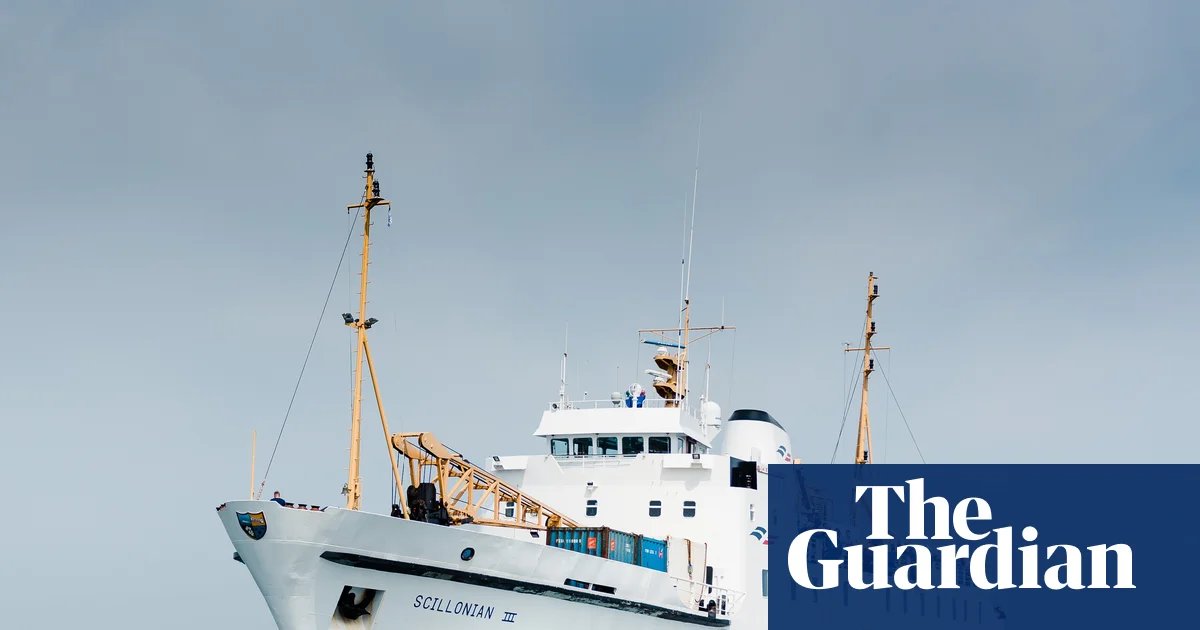
Tears were shed, sea shanties sung and tales of stormy voyages exchanged as one of the UK’s most characterful ships set sail for the final time.
Scillonian III, also known as the “vomit comet” because in stormy weather it tended to rock a little too much for the comfort of those susceptible to sea sickness, has chugged between the British mainland and the Isles of Scilly, for just shy of half a century.
But all good things (or bad, depending on your sea legs) come to an end and on Sunday the grand old ship made one last 37-nautical-mile trip from the island of St Mary’s to Penzance in Cornwall.
“Everybody on the islands have been talking about this last voyage,” said Terry Ward, who was on board Scillonian III’s first journey through the Atlantic swells to Scilly in 1977.
“That trip was beautiful,” said Ward, whose great-grandfather was the founding chair of the Isles of Scilly Steamship Group, which has operated the ship.
“We sailed overnight from north Devon where the boat was built. It was a lovely, glassy sea. When we arrived, the quay was packed with locals wanting to have a first look. A magical trip.”
They could not have known that Scillonian III would last so long. Over 49 years, it has sailed more than 10,000 times, carrying islanders, holidaymakers and ornithologists (Scilly is a fine location for bird-spotting) between spring and autumn.
“I don’t think there’s a better loved ship anywhere,” Ward said. “It’s been part of the fabric of the islands. When it turned up in March every year, it signalled the start of the season. We weren’t marooned any more. When it left at the end of the season, it left a bit of an empty feeling.”
Ward accepted that travelling on it could be tough for those with sensitive stomachs. “I think it’s a beautiful vessel but when it was rough it could turn into a hospital ship.”
People came to favour a particular seat. Those keen to spot dolphins or basking sharks liked the outside areas; others liked the lower deck inside, where you could fall asleep, comforted by the ship’s drone.
Ray Jackman, a Scillonian businessman who was on the ship’s first and last voyages, always sat next to the engine room because the crew would show him the inner workings of the ship. “It’s been an amazing ship. She’s very rarely broken down and has been a big part of people’s lives on the islands. It’s a sad day.”
after newsletter promotion
As its name suggests, Scillonian III was the third passenger ship to serve the islands over the last century.
The first, Scillonian, operated from 1926 to 1956 and during the second world war was fitted with guns and used as a military transport. Scillonian II lasted 25 years before being replaced by Scillonian III, which was launched by the then Prince Charles.
Scillonian IV is on its way to the islands from south-east Asia, where it has been built, via the Cape of Good Hope. It will make its maiden voyage between the islands and the mainland in March and the steamship company says it will carry more passengers, be swifter and feature “roll and pitch reduction systems” to counteract the impact of the swells.
The steamship company had expected a few dozen passengers on the final voyage but tickets sold out. A Scilly shanty group called Mackerel Sky sang her off. The Cape Cornwall Singers waited at the other end to welcome her in. Then it was off to the Dock Inn in Penzance for more music, dancing, beers and tears.
Among those along for the final voyage was Sholto Blackwell, a self-confessed Scillonian superfan and founder of the ship’s Facebook appreciation page, which has almost 5,000 members.
Blackwell, a crane operator and lifting supervisor who lives near Bristol, said he felt very sad for Scillonian III. “It’s the end of an era for me. It carries so many memories.” He has regularly sailed on the ship since he was taken to Scilly on holidays as a boy. “I’ve made maybe 30 or 40 return trips.”
Feeling queasy has sometimes been part of the experience. “I’ve suffered with sea sickness many times,” he said. “But the reward is, you get to Scilly, which is magical. Feeling sick was part of the journey, part of the fun.”
He accepted that the islands and crew needed the new ship – but was not completely convinced the new vessel would mean the loss of the thrills and spills Scillonian III was known for. “They say it’s going to make for faster, calmer journeys. We’ll see.”



-

 Student Life4 weeks ago
From Oxford to Cambridge: The 204-mile punt for Alzheimer’s
-

 Student Life4 weeks ago
Hidden in plain sight: the bakery behind Oxford’s café counters
-

 Property & Housing4 weeks ago
Blenheim displays new Oxfordshire scheme with show home
-
 Property & Housing4 weeks ago
Plans developed for 12 affordable Blackbird Leys homes
-

 Traffic & Transport4 weeks ago
Uber begins self-driving robotaxi trial in Manchester | Uber
-

 Oxford united FC3 weeks ago
Oxford United beat Wigan Athletic 2-1 in League One victory
-

 Oxford united FC4 weeks ago
Karl Robinson in ‘best in EFL’ comment on Oxford United’s Aaron Ramsey
-

 Oxford united FC3 weeks ago
Aaron Ramsey blasts Oxford United red card decisions in Mansfield draw