
Traffic & Transport
Heathrow’s third runway is a bottomless money pit. Stop it now | Simon Jenkins


Infrastructure sends politicians berserk. Propose more money for the health service or reopening youth clubs and frowns break out all round. Can we afford it? But shout infrastructure and cheers go up. The word suggests glamour, chest-beating and “growth”. Reason flies out of the window.
The saga of Heathrow’s third runway beggars belief. A foreign-owned private company wants to make more money out of its cramped west London investment. The airlines are sceptical and passengers will have to pay surcharges higher than any in Europe. Meanwhile fields lie empty round its rival, Gatwick, and capacity at London’s third airport, Stansted, is underused.
The third runway is a nightmare. The official price tag is now a staggering £49bn but the overall budget for Heathrow’s expansion and operating expenditure could soar beyond £100bn. An unknown proportion of this will fall on the taxpayer. The proposal has been debated for 20 years and the opening constantly postponed. A date of 2035 has now become 2039. I would not take bets on 2045.
Sixty years ago, the British government agreed it was totally inappropriate for crowded and polluted Heathrow to expand in densely populated west London. Nor could an expanded Gatwick meet demand. The debate was over where to locate a new third airport. Sites in the Thames estuary and at Cublington and Stansted were researched. Stansted won. It already had an RAF base and it would service the expected growth in demand from London’s growing eastern reaches. Stansted opened in 1991.
The Tories privatised London’s airports. This turned what should have been a planned expansion into a battleground of feuding rivals. Each airport became a matter not of orderly growth but of quick profits, self-serving airline slots and a shifting army of amateur officials. Commissions came and went, in the grip of overpaid lobbyists. A Heathrow runway proposed by businessman Surinder Arora within the existing airport curtilage was brushed aside as insufficiently bold. As for Stansted, it was taken over by Manchester airport and is now hardly mentioned as an alternative to a third runway.
Airport public relations endlessly suggests it is about “business” and therefore relevant to “growth”, as if it were part of Andy Burnham’s re-industrialisation of Britain. Heathrow claims its new runway will create 100,000 jobs. But fewer than 15% of air travellers claim to be “on business”, and whatever happened to video conferencing reducing the need for intensive business air travel? As for Heathrow’s claim to be Britain’s leading cargo airport – “a quarter of all UK trade by value” – that is based, ludicrously, on the value of the gold ingots that form roughly 60% of the goods it transports. What banks shifting bullion has to do with growth is unclear.
Heathrow now has eerie echoes of HS2. Even its upper cost limit of £100bn is much the same. Both are plagued by extravagant planning horizons and consultancy-driven budgets in which each contractor has a vested interest in cost inflation. A third similar project is Hinkley Point nuclear power station, its cost currently rising through £50bn. Both the railway and the power station have been savaged by the National Audit Office. These projects are widely considered political white elephants and years from completion. Few dare say so. Meanwhile we should note that a new general hospital costs £1bn, as would rebuilding 50 secondary schools.
Stupefying sums are here being channelled into London and the south of England. That they have been born of the age of Boris Johnson’s “levelling up” and Burnham’s tilt to the north is bizarre. This week, conference politicians have cited budgets with endless savings: half a million off student exchanges here, a billion off quangos there. Yet no one mentioned that every year for the next decade John Healey’s Treasury will blow about £7bn just to relieve overcrowding on trains from London to Birmingham. This is almost 70% of his total rail investment.
The fact is that big infrastructure is monumental and sexy. No one boasts about building a care home, rather a fancy train or a nuclear power plant. One of Parkinson’s laws states that, while tiny items of corporate spending are debated for hours, big ones go through on the nod. They are too big to check and easy to promote.
It is absurd for the government to spend the next two decades upheaving Heathrow and tearing apart the M4 corridor for the profit of a band of foreign investors, when a simple alternative lies in growing Gatwick and Stansted. This whole debate is about tourism, and tourists can surely suffer the mild inconvenience of using the other two venues, as was intended half a century ago.
after newsletter promotion
The rest of us – politicians not least – should realise that this is serious money. There are serious uses to which it should be put.
Traffic & Transport
Yes, Britain’s railways are a mess. But is anyone sober enough to care? | Zoe Williams
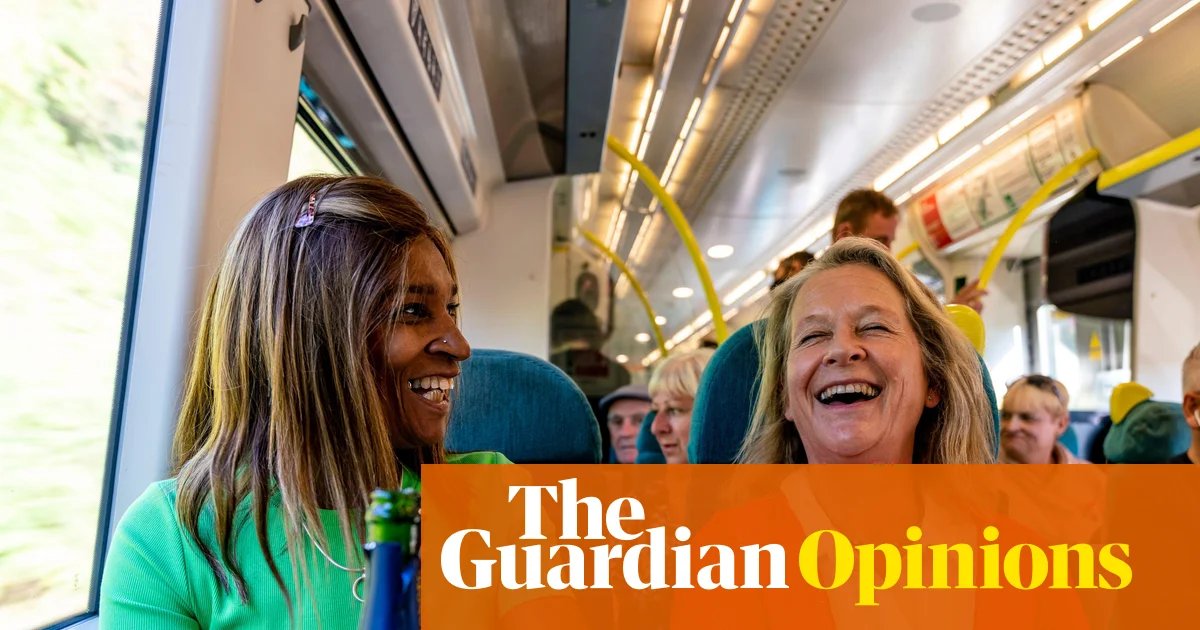
On Saturday I went to Liverpool with my youngest, and the overhead lines went down at Crewe, but also there were crew shortages across the land, so between the homophones and my lifelong inability to start listening to a train announcement until halfway through, I cannot tell you at what point this journey became a five-train, four-hour odyssey. All I know is what’s happening on every train, in every part of the country. The 7.48am is a calm and ordered cohort of people who think they know where they’re going and will be there soon. And from 9.04am onwards, everyone’s drunk, all the way to everywhere.
Between Rugby and Birmingham New Street, there was an incredibly festive crowd going to the Horse of the Year show, squishing real fruit into cans of Pimm’s, because it was breakfast time, and also because it was funny. But what were the horses going to make of all this? Because they’re quite short on appreciation for ludic pranking, and famously easy to frighten.
Between Birmingham New Street and Wolverhampton, there was a 40th birthday party with a load of mini-bottles of prosecco, and they were extremely charming and well signposted in some ways (for instance, how did I know it was a 40th? Because of the massive flashing deely-boppers saying “40”), but I still had so many questions. Why buy 15 tiny bottles, when you could get four regular bottles for a fraction of the price, and they would have exactly the same effect? What earthly state are you going to be in when you get there? Is there somewhere you could have a little snooze before your next appointment? Maybe things are different when you’re 40, but I dimly remember it, and it’s not that different.
Between Wolverhampton and Stafford, it’s only 13 minutes, so I was mainly awed by how many people could even be bothered to open a can of Stella. Stafford to Liverpool was a stag do, and it was brunch o’clock by now, so running up and down the carriage, yelling “Ay ay ay” in a fake scouse accent, dressed in a Brazilian flag, all fell under the umbrella “having a normal one”.
I abhor British exceptionalism, except on this one subject: exceptionally bad train network; exceptionally fun trains. Would recommend.
Zoe Williams is a Guardian columnist
The Guardian’s year in review 2026
On Tuesday 1 December 2026, join your favourite Guardian writers for an evening of candid conversations, witty remarks and surprises as we look back on the year-defining stories of 2026. With Zoe Williams, John Crace, Pippa Crerar, Jonathan Liew and Lucy Mangan. Book tickets here or at guardian.live
Traffic & Transport
Virgin unveils its future cross-Channel train as it gears up to take on Eurostar | Virgin Trains
Flash interiors, fancy food and maybe even a bar: Virgin has unveiled a mock-up of its future cross-Channel train, with a pledge to create “something genuinely new”.
The group is planning to launch rail services from London to the continent in 2030, with Eurostar facing competition for the first time since the opening of the Channel tunnel.
Virgin has ordered 12 trains from the manufacturer Alstom, and will hope to outshine Eurostar on design and customer experience as it fits them out.
While Virgin’s last stab at reimagining UK train travel may have peaked with the talking toilet seat on its intercity services in 2013, it has said the future trains will be inspired from its airline, cruise and hotel arms.
Although details are being kept firmly under wraps, it said it would draw on Virgin Atlantic’s airport lounges, or Clubhouses, for “pre-departure and onboard social spaces” with “more flexibility to work, relax or socialise in style”. Food will be influenced by its cruise line menu and the design by its Virgin Hotels brand.
Josh Bayliss, the chief executive of Virgin Group, said: “Virgin has a proud history in UK rail. With our latest venture we are drawing on more than four decades of experience across travel and hospitality to create something genuinely new.
“We’re confident that more journeys between the UK and Europe will be made by train. We’re adding capacity for millions more international rail journeys each year, growing the market as a whole. We’re looking forward to seeing our distinctive red and black trains travelling across Europe.”
Virgin will also look to connect its rail and airline networks, potentially bringing passengers from France for Virgin Atlantic flights.
The Office of Rail and Road on Thursday published an agreement with Eurostar for Virgin to maintain its trains at the Temple Mills international depot in east London, with track access in the UK confirmed until at least 2040.
after newsletter promotion
Italy’s state-owned Trenitalia is also expected to launch cross-Channel high-speed services. It already runs international trains as far as Paris and recently announced its own €2bn order for 19 new trains from Hitachi, some of which are expected to be based in France and run through the tunnel to London.
Traffic & Transport
New direct train services from London to Wrexham and Rochdale rejected | Rail industry
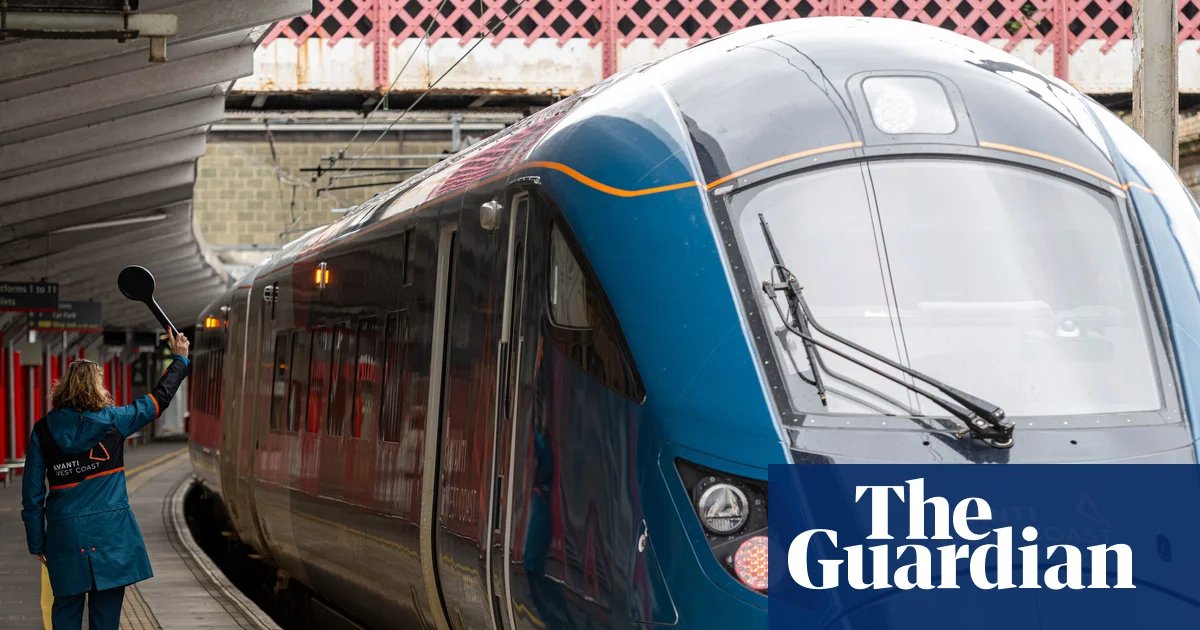
Plans to run direct train services to Wrexham and Rochdale from London have been rejected by the rail regulator because of “significant pressure” on the line.
The Office of Rail and Road said that there was insufficient space on the crowded west coast mainline to introduce the two new separate train services.
It also vetoed plans for additional London-Blackpool train services wanted by Avanti.
The ORR had last year knocked back plans for a new independent open access service linking Wrexham and the capital put forward by the Wrexham, Shropshire & Midlands Railway Company (WSMR). WSMR had submitted plans for a slightly less frequent service but the ORR said the new routes would still put the reliability of the wider railway at risk.
The new service could have allowed Wrexham to capitalise further on the town’s Hollywood-meets-football mini-boom, fuelled by the Wrexham AFC co-owners Ryan Reynolds and Rob McElhenney.
Proposals for a new Lumo service between London and Rochdale, again slimmed down after being rejected in 2025, were once more rebuffed.
The ORR also said Avanti could not add more Blackpool services from London. However, it did approve one extra London-Chester evening service from Avanti, which would otherwise have run as a “ghost train”, with crew and the rolling stock returning north to the depot overnight. The decision follows the outcry over the ORR’s initial ruling on a Manchester-London service which was barred from taking passengers last year.
The regulator said its assessment, backed by external reviews, was that the “capacity and performance of the southern section of the west coast mainline has not materially changed since similar applications were rejected in 2025”.
It said gaps in the current timetable were needed to provide important space for trains to recover when things went wrong, rather than escalating chaos.
Stephanie Tobyn, ORR’s director of strategy, policy and reform, said: “New services, destinations and greater choice can bring real benefits for passengers and communities. But the west coast mainline is already under significant pressure, with performance reflecting limited resilience on a heavily used part of the rail network.
after newsletter promotion
“Our detailed analysis has shown that adding more trains to the current timetable would reduce the ability to recover when disruption occurs, increasing the risk of delays spreading and making reliability of the network worse for all passengers.”
Private operators such as First Group, owners of Lumo, have been looking to increase open-access routes – such as Hull Trains and Grand Central – as Labour has renationalised major rail contracts in the transition to Great British Railways.
London-Wrexham direct trains briefly ran from London Marylebone from 2008 to 2011 as an open-access service but stopped owing to financial losses.



-

 Oxford united FC3 weeks ago
Chris Gunter steps away Wales role to focus on Oxford United
-

 Oxford University3 weeks ago
New to the Oxford English Dictionary this September
-

 Oxford united FC4 weeks ago
Oxford United transfer chief explains EFL embargo and contract dilemma
-

 Student Life2 weeks ago
Oxford partnership allows OpenAI to use rare Bodleian texts to train ChatGPT
-

 Student Life4 weeks ago
Oxford falls to lowest ever spot in The Times UK University Guide 2027
-

 Oxford Events3 weeks ago
Four days of equestrian spectacle at 2026 Blenheim Palace International Horse Trials
-

 Traffic & Transport2 weeks ago
How poor public transport policy is putting the brake on cities | Road transport
-

 Oxford united FC2 weeks ago
Northern Ireland fans laud Oxford United defender Ciaron Brown