
Traffic & Transport
Lime bike profits double as rider numbers surge in England | Ebikes


Love them or hate them, Lime ebikes are an increasingly common sight on England’s roads with new figures showing annual profits more than doubling thanks to a surge in riders.
Lime’s average number of monthly users jumped 31% to approaching 700,000 as it added more than 4,500 ebikes and scooters to its fleet, taking the total to almost 38,000, the company’s UK arm, Lime Technologies, said in accounts filed at Companies House.
Sales rose by a third to £148m in 2025 and profits more than doubled to £4.7m from £1.7m, as first reported by the Sunday Times. The progress followed expansion into new cities, including Oxford in 2024 and Nottingham in 2023, adding to its presence in London, Milton Keynes and Salford.
Despite the surge in trade, Lime’s UK accounts show it employed just 54 people in 2025, up from 39 a year before, largely because it relies on self-employed contractors to shift and service its ebikes and scooters.
The company, whose parent Neutron Holdings listed on the Nasdaq stock exchange last year valued at $1.7bn (£1.3bn), is part-owned by US ride-hailing app Uber. Lime was founded in 2017 in San Francisco, California, and now operates in about 230 cities across 29 countries, mostly in Europe.
At the time of the listing, Wayne Ting, the chief executive of Lime, said the company was having “conversations with lots of other [UK] municipalities”.
The English devolution bill, passed in April, gives local authorities in England fresh powers to license rental ebike operators and set requirements around parking, safety and accessibility standards.
London’s transport body estimated in 2024 that one in 10 of the 1.5m daily cycle journeys in the capital are made on dockless ebikes such as Lime, Forest and Voi.
The schemes have fuelled a surge in cycling in London, helped by the patronage of celebrities such as Timothée Chalamet and most recently Kim Kardashian.
However, there have been mounting concerns about safety for riders and pedestrians. Rented bikes were reportedly responsible for almost a third of cyclist collisions with pedestrians that required police intervention.
Meanwhile, riders have been injured by defective bikes while cycling or suffered fractures caused by the weight of the bicycle falling on them, a phenomenon known as “Lime bike leg”.
Lime recently began introducing on the UK a new, smaller version of its electric bikes, with batteries repositioned towards the back wheel,after safety criticism. More than 1,500 of the new models are now in operation in England.
The company has said that more than 99.99% of Lime trips in London last year ended without a reported incident.
Charities representing blind residents and people with limited mobility have also raised concerns about the difficulty in navigating parts of London amid chaotic parking of rental bikes on pavements.
London boroughs have seized at least 3,000 ebikes this year, 2,000 of which were Lime bikes, a Guardian investigation found, as hire companies face growing calls to stop bicycles littering streets and blocking pavements.
Traffic & Transport
Burnham dodges questions on Heathrow third runway as project faces four-year delay | Heathrow third runway
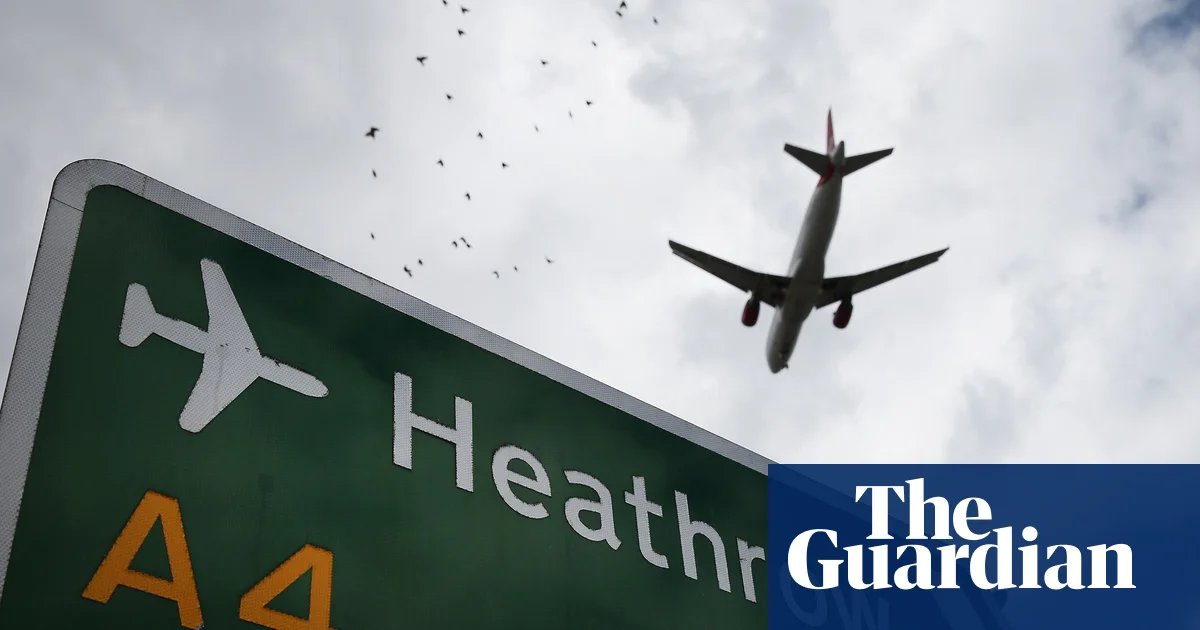
Plans for a third runway at Heathrow are once again up in the air after the prime minister refused to say whether he backs the “contested” project which is delayed by up to four years.
Over the weekend it emerged that Heathrow no longer expects to meet the original 2035 deadline. Instead, the airport hopes to secure planning permission by 2029 and then open the runway “within a decade”, meaning it would not be operational until 2039.
The delay comes amid signs of lukewarm support for the project from Andy Burnham who dodged questions about the issue on Sunday.
Asked at the Labour party conference in Liverpool if he was in favour of building a third runway at the airport, Burnham said the issue was “contested” and “principally it’s a matter for London and London MPs”.
Burnham, who has previously criticised the expansion, said he did not want to “jump straight in” before considering the results of a public consultation which ran over the summer. “There are different views and you have to take those views seriously in coming to a decision.”
Heathrow is seeking to build a £33bn runway, enabling it to operate up to 756,000 flights a year. At present, the number is capped at 480,000.
Making way for the runway involves demolishing hundreds of homes, diverting rivers and rerouting a section of the M25 motorway through a tunnel. However, it is estimated it would create 100,000 jobs and provide a huge boost to the UK economy.
Tony Bosworth, climate campaigner at Friends of the Earth, said “putting the start date back four years makes the already dubious economic case for expansion even more questionable. That’s before even considering the fact that anything we might gain from expansion is vastly outweighed by the huge social and environmental cost.”
Robert Barnstone, coordinator of the No 3rd Runway Coalition said it was right to say that the future of the project should be decided in London. “It is ultimately vast swathes of Londoners that would have to put up with Heathrow expansion through more noise overhead for communities right across London as well as poorer air pollution.”
However, the leaders of the Unite and GMB unions spoke out in support of the third runway.
The GMB urged the government to clear planning bottlenecks to support an expected 108,000 jobs linked to the plans.
Warren Kenny, GMB London Regional Secretary said: “Every year of dithering is a year of apprenticeships not started, contracts not signed and wages not paid.”
“Opponents of this runway will try to dress up a timetable as a verdict. It isn’t one. A project taking longer to build is not a reason not to build it. It’s a reason to start now.
“Heathrow has been clear that the hold-up is planning and red tape. Politicians can fix that.”
after newsletter promotion
Sharon Graham, the general secretary of Unite the Union, agreed the project was important for “securing the future of good, unionised jobs and a guaranteed market for UK steel.”
Heathrow has said its existing runways have been full for over two decades, putting limits on its growth and the wider UK economy. It claims the project would unlock capacity for 40 airlines who want to operate new or more services.
A spokesperson for Heathrow said: “It’s right that ambitious targets were set, the sooner expansion begins the sooner the whole UK will benefit. Our focus has always been to secure planning permission by 2029. Once achieved, the runway will be open within a decade – and the benefits of expansion can be felt from today.
“This is a national project, 100% privately financed which will support growth today and secure the UK’s position in the global economy once the runway opens.”
However, a paper published by the Department for Transport this summer showed that airports elsewhere in England and Wales are likely to lose millions of passengers if Heathrow builds a third runway, in a significant blow to regional jobs.
Further analysis for the government also found that the overall economic boost could be a fraction of what ministers had hoped, while expanding the airport could have a “major adverse” effect on local health”.
A department spokesperson said: “There is currently no live planning application for a third runway, and we cannot comment on ongoing consultation processes or prejudice them in a way that will only delay progress.
“The timeline has always been ambitious. We’ll continue to work with promoters, including Heathrow, and all other stakeholders at pace to ensure the right framework is in place for which a planning application for a third runway could be considered.”
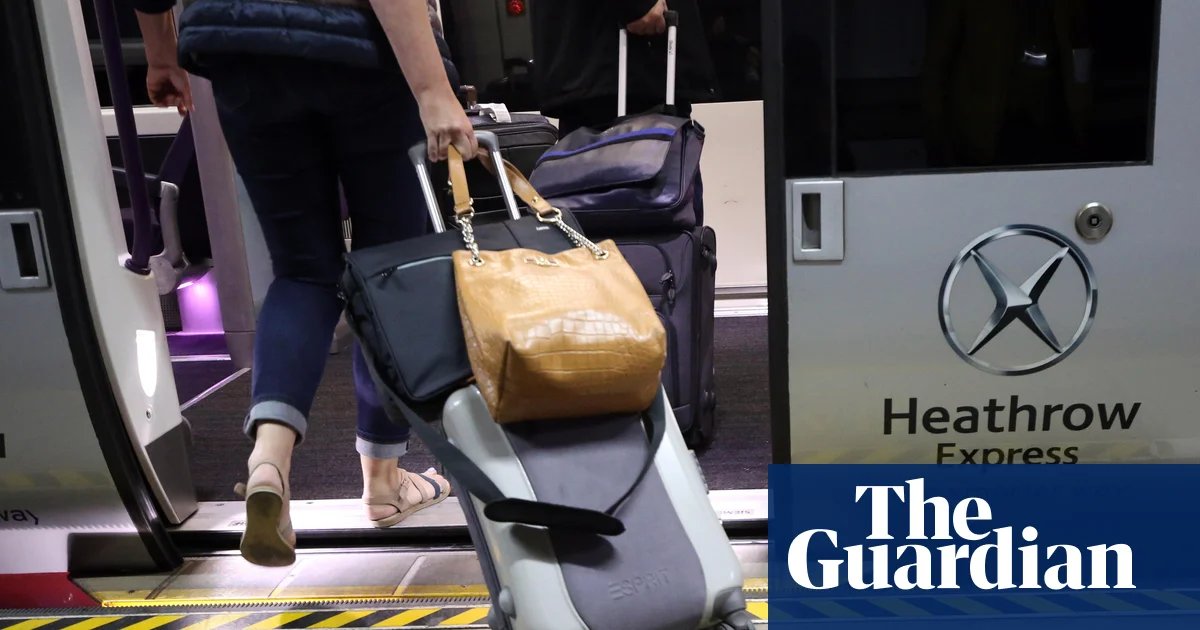
If Heathrow finally builds its third runway, Londoners can expect hundreds more planes flying overhead each day. But greater congestion on the ground will be a problem too. Under Heathrow’s £33bn expansion plan, 100,000-200,000 more passengers would eventually be travelling to or from the airport each day.
The most eye-catching problem has been moving part of the UK’s busiest motorway, the M25, to make space for a new 2.2-mile (3.5km) runway. A thornier one may be getting motorists out of their cars, and finding more sustainable ways for the extra passengers – and thousands of staff – to travel to and from Heathrow.
Although ride-sharing, coaches and buses can play a part, scaling up rail is the clear alternative. Space on the existing line is, however, at a premium, and the Elizabeth line, built with a promise of connecting business travellers swiftly and directly from Heathrow to the City and Canary Wharf, only has limited paths. With everything up for negotiation, transport experts are asking: has the time come to kill off the Heathrow Express?
The obvious airport train, as unwary visitors often find out too late, may not be the best one. The Heathrow Express, which charges a whopping £26 for a 15- to 21-minute one-way hop, was long one of the most expensive airport connections around (at least until it was overtaken by the Luton Dart). It is, as advertised, technically the fastest way to central London, though passengers travelling beyond Paddington may reach their destination more quickly on the Elizabeth line or even the tube on a direct route.
For those who value the speed – in addition to TV news, a toilet and a luggage rack – it may be the perfect service. But the Heathrow Express was only used by 4.5 million passengers last year, a figure that represents, at best, less than 6% of Heathrow’s air passengers, with the number bolstered by airport staff on heavily discounted tickets.
Transport for London (TfL) has signalled its belief that the service’s time is up, as the government consults on its Heathrow expansion national policy statement. MPs must approve the statement for the runway to go ahead. That no longer seems automatic: Andy Burnham’s long-term scepticism over a third runway, along with the loss of Rachel Reeves in No 11 as a champion of expansion, makes Downing Street support look ambivalent at best – even given the new chancellor’s belated assertion that the “economic case stacks up”.
However many runways the airport has, TfL said it was “worth reviewing [the Heathrow Express’s] future in the context of determining the optimal mix of services on the Great Western mainline to make the most effective use of the limited capacity available”.
For TfL, the Elizabeth line, going deeper and cheaper into the heart of London, is “a more compelling service”. At the moment, only two Elizabeth line trains an hour serve Heathrow’s Terminal 5, which handles about 40% of the airport’s passengers. That means a passenger who does not carefully judge the timing may face a journey from the City or Canary Wharf to T5 of more than an hour. The frequency is due to double next year but more space into Heathrow could still be freed up.
Alex Williams, the chief customer and strategy officer at TfL, told MPs at a select committee hearing this month that the Heathrow Express was “taking up valuable paths that aren’t actually well used. There’s a way of repurposing that to be more affordable, more attractive, and carry more public transport users.”
Surface access, or getting people between central London and Britain’s biggest airport, underwent a step change with the Elizabeth line. Previously, the little-advertised offering Heathrow Connect joined the dots at the likes of Hayes & Harlington on a slower train to Paddington, serving many airport workers, if not international travellers. Fares were then about a third of the price of the Heathrow Express – a gap that is now less significant given that the Elizabeth line charges £15.50 to reach any of its central London stations. And for those who are able to book and plan a month ahead, the Express advance tickets can prove less expensive at £10.
TfL’s cheaper but slower alternative, the Piccadilly line (£5.90 into central London), is also due to get an upgrade of signalling and trains, increasing capacity.
Two additional rail schemes have been mooted – Heathrow Southern Railway and a Western Rail link – as ways to connect into the wider national rail network, and the Elizabeth line itself could be extended to Staines – all of which would encourage many more from the suburban commuter belt to take the train rather than drive to the airport.
Rebooting the railway now would coincide with the end of Heathrow Express’s operating agreement with the Department for Transport, which gives the service access rights to the national railway until June 2028. The DfT says no decision has yet been made on the future operation.
It’s complicated: the actual operator, the FirstGroup-owned Great Western Railway, is due to be nationalised this December and become part of Great British Railways next year. Meanwhile, Heathrow owns the stations and five miles of railway from the airport to the mainline, part of its original £1bn investment in the Express in the 1990s.
after newsletter promotion
The service brought in revenue of £48m for the first six months of 2026, according to a Heathrow spokesperson. They said: “It operates without taxpayer funding and helps keep airport charges down. Passengers don’t want fewer choices – Heathrow Express remains an important part of the competitive connectivity, convenience and flexibility they expect.”
But many question whether enough is being done – or if there will be enough pressure on Heathrow to avoid gridlock on the roads. The mayor of London, Sadiq Khan, warned that the taxpayer could be left picking up the bill for public transport improvements “left undefined and unfunded in the current proposals” for expansion – estimated at up to £9bn by TfL, a figure Heathrow said it did not recognise.
Most passengers go to the airport by car. And while Heathrow is funding new car parks – with plans to boost its parking space capacity from 21,000 to 36,000 – and its rerouting of the M25, it has not pledged any of its £33bn expenditure on improving the trains, Williams told the select committee, adding: “If you make it easier for people to park very near the terminal, how will you encourage them to get on the train?”
Without clear demands for a mode shift to public transport – as existed in the previous expansion plan, as well as in the planning permission for Gatwick’s recently approved second runway – the policy statement was “a step backwards”, Williams said, adding that in 2017 “there was a commitment or an aspiration from Heathrow to get no extra traffic. That is gone.”
A DfT spokesperson said: “We are carefully considering responses to the consultation, which sets out the key requirements any future planning application for expansion would have to meet, including public transport targets.”
A legal mandate could happen, a source said. But so far these are just targets: at the most stringent, 55% of airport passengers using public transport, and only when Heathrow’s third runway is fully operational.
For Anthony Smith, the former passenger watchdog who now chairs the Heathrow Area Transport Forum, it seems a curious timetable. He told MPs: “If you’re trying to shift people out of cars in 20 years’ time, when you’ve got 130 million passengers, it’s just harder, harder, harder.”
Traffic & Transport
Happy birthday! What deals and discounts does your age unlock? | Consumer affairs

Have you just unwrapped some presents? Been sitting in a soft play centre and watched a toddler blow out some candles? Double-checked what time the party starts later?
With 26 September being statistically the most common day to have a birthday in England and Wales, according to the Office for National Statistics, it is quite possible that you or someone close to you is marking another trip around the sun.
Even if you no longer celebrate the big day with a party or family outing, there are still reasons why it is worth noting because some milestones bring gifts of their own.
Age 12
You can legally buy Christmas crackers. At this stage, the jokes will be much older than you are.
Age 14
You can get a part-time job. There are some professions – acting and modelling, for example – where you can work from a younger age. There are some local councils that allow you to work from the age of 13 for a very limited number of hours a week.
Age 16
You are entitled to earn £8 an hour under the UK’s minimum wage laws. You may also have to pay national insurance (NI). This tax is collected by your employer if you earn more than £242 a week from one job. You will be issued with a NI number and card before your birthday. You should receive a letter – make sure you read it and amend any mistakes.
You can also take charge of your child trust fund (if you have one) although you cannot withdraw the money yet. You and your parents should get a letter from the provider about this.
Age 17
This is the legal driving age for most people in the UK. You can apply for your provisional licence much earlier in Great Britain – from the age of 15 years and nine months, or two months before you turn 17 if you live in Northern Ireland. It costs £34 to apply online and £43 to do so by post in Great Britain, or £62.50 in Northern Ireland.
Age 18
You can withdraw your child trust fund or junior Isa – but you do not have to. If it is a child trust fund, you can transfer it to an Isa; if it is a junior Isa, it will automatically become an adult one. Lots of people are unaware they have a child trust fund: you can check for yourself or your child on the government website.
At this age you can open an Isa – either cash or stocks and shares. You could choose a lifetime Isa, which is designed to help you raise a deposit for a home and is not an account you can dip into, or a standard Isa, which will be more flexible.
Benefits such as universal credit can be claimed once you turn 18 if you are not in education and are on a low income or out of work. Payments are lower for under-25s than older claimants.
The minimum wage you are entitled to also goes up to £10.85 an hour (currently – the rates change in April each year).
Age 21
You are entitled to the full adult minimum wage, which is now £12.71 an hour.
Age 26
You have outgrown what used to be called the Young Persons Railcard but have no fear: you can still get one-third off train travel, only now with a 26-30 Railcard. It costs £35 for a year and is available online, so you can buy it and use it on the same day.
Age 28
You are no longer a young person in the eyes of car rental companies. They typically charge a young driver’s fee: a surcharge that is usually about £35 a day and is paid on top of the regular hiring cost. The age up to which this is charged varies by company. At Budget, for example, it is up to the age of 25, while at Europcar, it is 26. At Sixt the surcharge applies to bookings by those under 28.
Age 39
This year is your last chance to open a lifetime Isa. This is the tax-free account that offers a government bonus on your savings every year to help you save a deposit for a property or towards your retirement. The account is available to 18- to 39-year-olds who can pay in up to £4,000 a year each. This is boosted by a payment worth 25% of what you paid in each month. Between the ages of 40 and 50 you can keep paying into the account. At 50 you will not be able to add any more; you can withdraw the money to buy a home or when you turn 60.
Age 40
People in England, Wales and Northern Ireland who have a close relative with a glaucoma diagnosis can get free eye tests from the age of 40. Ask your optician if you think this applies to you.
Age 50
“Welcome to the Saga club!” is the sort of thing people say when you hit your half century. Saga is the company well known for offering products and services, including insurance and holidays, exclusively to the over-50s.
This is also the age when you may be targeted by over-50s life insurance providers. With this type of cover, typically aimed at those aged 50 to 85, you pay a fixed monthly premium and are guaranteed a fixed payout when you die – but there are downsides.
There are some train discounts available to those who are 50 and older. ScotRail has Club 50, which gives you a 20% discount on most tickets when bought online, plus other benefits (it costs £15 a year). In England, for Greater Anglia and Stansted Express services, there is the Club 50 Railcard (£25 for a year), which works in a similar way.
Age 55
This is usually the earliest age at which you can take money from your private or workplace pension – it is rising to 57 from 6 April 2028. You may be able to take your pension before 55 if, for example, you need to retire early because of poor health. However, a private pension is normally designed to pay out from about the age of 65, so you will usually get less money than you expect if you access it early.
That’s because the headline estimate of your future retirement income that will be in the documents usually assumes you will continue paying in until the scheme’s normal pension age.
Some cinemas offer cheap tickets to those aged 55-plus (but for most, 60 is the important age). The upmarket Everyman chain runs Silver Screen: weekly matinee screenings with a reduced ticket price for those 55 or older. Tickets include a complimentary hot drink and a slice of cake.
Age 60
In England, NHS prescriptions become free, saving you £9.90 an item. They are already free for everyone in Scotland, Wales and Northern Ireland.
Some good travel schemes kick in at this age. The over-60s can get a third off rail travel with a Senior Railcard costing £35 for a year or £80 for three years. The average saving that holders enjoy is said to be £114 a year.
If you live in London, you can get a 60+ London Oyster photocard, which gives you free travel on buses, the tube and other transport within the capital, but is subject to some restrictions. You have this until you reach state pension age and are eligible for a Freedom Pass. If you are in Wales, you can travel for free on most bus services in Wales and the borders and get discounted or free travel on many rail services by getting a Concessionary Travel Card.
Photograph: Christopher Jones/Alamy
On the shopping front, the retailer Iceland offers 10% off for all customers aged 60 or over every Tuesday. You need an Iceland Bonus Card (this is free) and to show valid proof of age at the till – for example, a senior bus pass, driving licence or senior railcard. This in-store-only deal applies to all UK Iceland and The Food Warehouse stores but excludes Iceland Local and The Range stores.
The bakery chain Patisserie Valerie offers the over-60s with a valid passport or driving licence 10% off. To access this, you need to verify your age via a service run by a separate company.
In England and Wales, you become entitled to a free NHS eye test. In Northern Ireland, you can get a free Health and Social Care (HSC) sight test. In Scotland, NHS eye tests are free for everyone.
Many local authority leisure centres offer free swimming for over-60s at specified times, and some theatres – including the National Theatre in London and some ATG venues – give discounts on selected shows.
Age 65
A few companies offer discounts – for example, at some Hilton hotels in the UK, guests who are 65-plus can enjoy savings of up to 6%. This is also the age that some theatre discounts for older people kick in (for example, at Birmingham Hippodrome and the RSC in Stratford-upon-Avon).
You should also be able to get the free NHS flu jab. This is typically offered from September or October (in regions such as England and Wales, this includes those who will turn 65 by 31 March 2027).
Age 66+
If you were born on or before 5 April 1960, your state pension age is 66. As of now it is rising gradually each month, and by one month at a time, until it reaches 67 in April 2028. It will eventually rise to 68, affecting those born after April 1977.
The new state pension (as opposed to the old basic state pension) is up to £241.30 a week, and entitlement can unlock other benefits and help. The MoneyHelper website has more information.
Age 75
You can apply for a free TV licence, provided you (or your partner living at the same address) receive pension credit.
Age 80
To get the winter fuel payment for 2026-27, you have to be 66-plus (born on or before 27 June 1960) – however, those aged 80-plus (born before 28 September 1946) can get more: a total of £300. It is available to those in England, Wales and Northern Ireland (Scotland has its own scheme), and the rules are complicated.
Some people who receive little or no basic state pension are able to apply for the “over 80 pension”. This can now give you £110.75 a week.
Age 100
You can get a free birthday message from King Charles when you hit 100 – and then every year from age 105 onwards.


Burnham dodges questions on Heathrow third runway as project faces four-year delay | Heathrow third runway

Lime bike profits double as rider numbers surge in England | Ebikes

Rookie boss Aaron Ramsey has banished Oxford United ‘fears’
-

 Oxford united FC6 days ago
Chris Gunter steps away Wales role to focus on Oxford United
-

 Oxford News4 weeks ago
UK private school’s ‘outstanding’ headteacher is to retire
-

 Oxford Events3 weeks ago
Oxford Open Doors: nine properties to explore without booking
-

 Oxford united FC2 weeks ago
Oxford United transfer chief explains EFL embargo and contract dilemma
-

 Oxford News3 weeks ago
Salon Privé at Blenheim Palace 2026 – day one revs up
-

 Oxford united FC3 weeks ago
Leicester City confirm ‘serious’ injury before Oxford United clash
-

 Oxford united FC4 weeks ago
LIVE: Huddersfield Town vs Oxford United – Deadline Day football in League One
-

 Student Life3 weeks ago
Oxford academics sign open letter opposing Nathan Cofnas’ suspension