
Traffic & Transport
Black-clad protesters in balaclavas block road at port of Dover in Kent | Kent

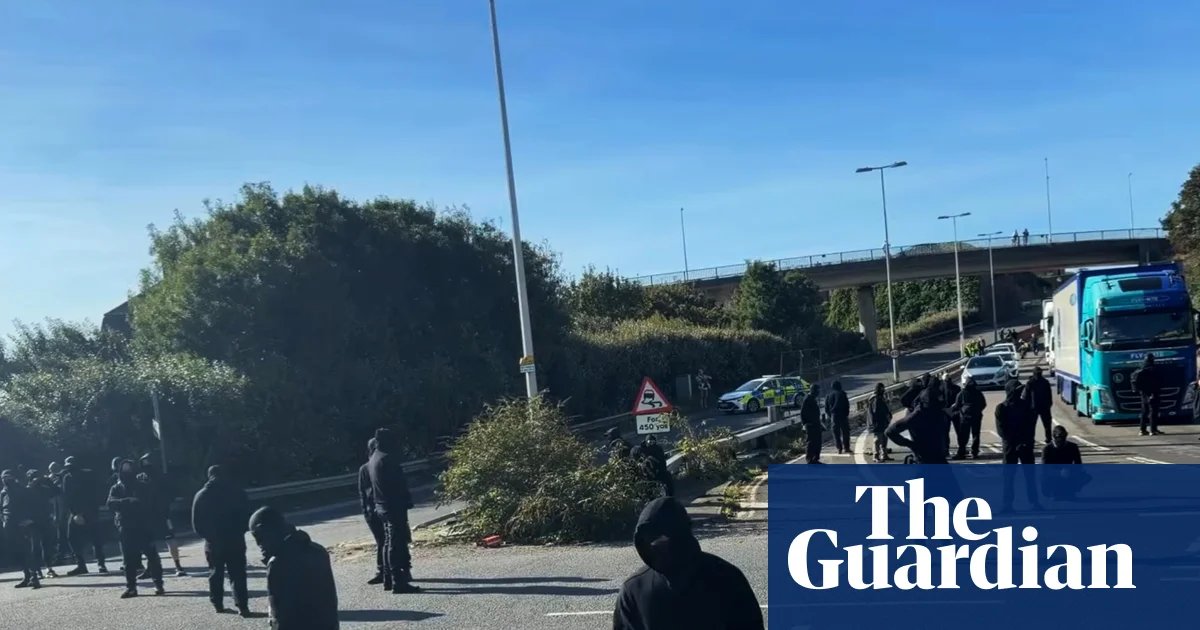
A large group of people dressed in black and wearing balaclavas have blocked the road at the port of Dover in Kent, forcing closures in both directions.
Kent police said they were aware of the protest, which was described as a “public order incident” by the Port of Dover. Officers were in attendance and engaging with protesters, they said.
Traffic in and out of the port on the A20 has been stopped, according to National Highways, causing delays of up to 30 minutes and four miles of congestion.
Videos and pictures shared online show masked people in black standing on the road in a large group as lorries wait in traffic next to police cars.
Some have estimated that about 300 people have gathered, although this has not been confirmed by police.
The Port of Dover confirmed in a statement that the disruption was affecting “all routes” in and out, as well as around the town, and that it was in touch with the police.
It said: “The Port of Dover can confirm that there is an ongoing public order incident happening around the town of Dover. This situation is impacting our local community and our customers, so of course we are hoping for a swift resolution.”
Nathan Ditchburn, who was on his way to work when he saw the group arrive at about 6.45am, told KentOnline: “I would say there are around 300 men, maybe more. Nobody will speak; they just handed me a piece of paper to look at. They have blocked off every entrance and exit of the Dover port area, and Jubilee Way is blocked as well. It will be causing huge delays for the ferries today.”
The far-right activist Tommy Robinson, whose real name is Stephen Yaxley-Lennon, reposted a video of the blockade, highlighting a livestream of the protest.
The local Parkrun group cancelled its Dover Waterfront run, telling runners the course was unsafe or blocked. A spokesperson told KentOnline: “I am afraid we are going to cancel this morning. We have mass disruption with some protesters.”
Mike Tapp, the Labour MP for Dover and Deal, criticised what he described as “idiots coming to Dover to cause disruption”. In a post on Facebook, he said: “Parkrun cancelled and port access disrupted. I am fed up with idiots coming to Dover to cause disruption. I bet if you asked any one of those ‘protesters’ they wouldn’t know small boat crossings are down by 40% and we are working hard to fix the mess. Go home, enjoy your weekend/get a job.”
A local Reform councillor, Paul King, told residents to avoid the port area. He said: “I’ve been told it’s a stop the boats protest. Speaking to local women, they felt frightened by such a large group of men walking up the street. We don’t condone causing public disturbance by protest. But it’s a very good example of what is happening daily with the boats coming in.”
The shipping company DFDS said: “We are aware of the current traffic disruption affecting access to the port. Rest assured we will accommodate you on to the next departure once you arrive.”
P+O Ferries said its sailings were still going ahead as scheduled, adding that those who missed their departure would be offered the next available crossing.
Traffic & Transport
London Paddington fire causes rail chaos as Heathrow trains cancelled | Public transport
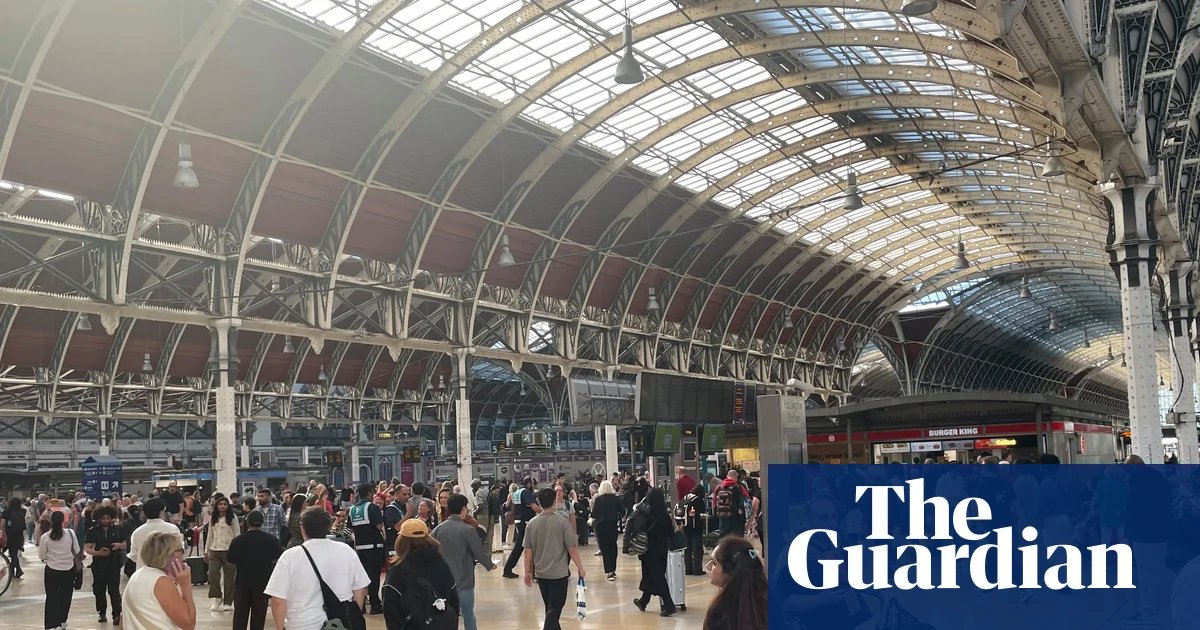
A fire near a train track in the London Paddington area has caused major disruption, with services to Heathrow airport cancelled.
The fire caused an electricity supply failure which has left all lines between Paddington and the airport blocked, National Rail said.
Cancellations and delays to services are expected until 7.15pm, it added.
Photos on social media show large plumes of smoke rising from the Paddington area.
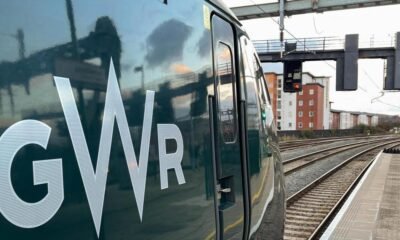
Great Western Railway (GWR) services to Reading have been cancelled, while the Elizabeth line is part-suspended.
No trains are running in either direction between Paddington and Heathrow, the Heathrow Express said.
The airport advised passengers to leave extra time for their journeys, adding that the Piccadilly line, which runs services to the airport, is also experiencing delays.
Transport for London (TfL) said the Elizabeth line is suspended between Paddington and Heathrow terminals four and five, and between Paddington and Reading, while the line to Abbey Wood is experiencing severe delays.
There are severe delays across the entire Piccadilly line due to an earlier trespasser at Hammersmith, according to the TfL website.
GWR said trains may be cancelled, delayed or terminated at and started back from Reading, with disruption expected until 7pm.
The London fire brigade has been contacted for comment.
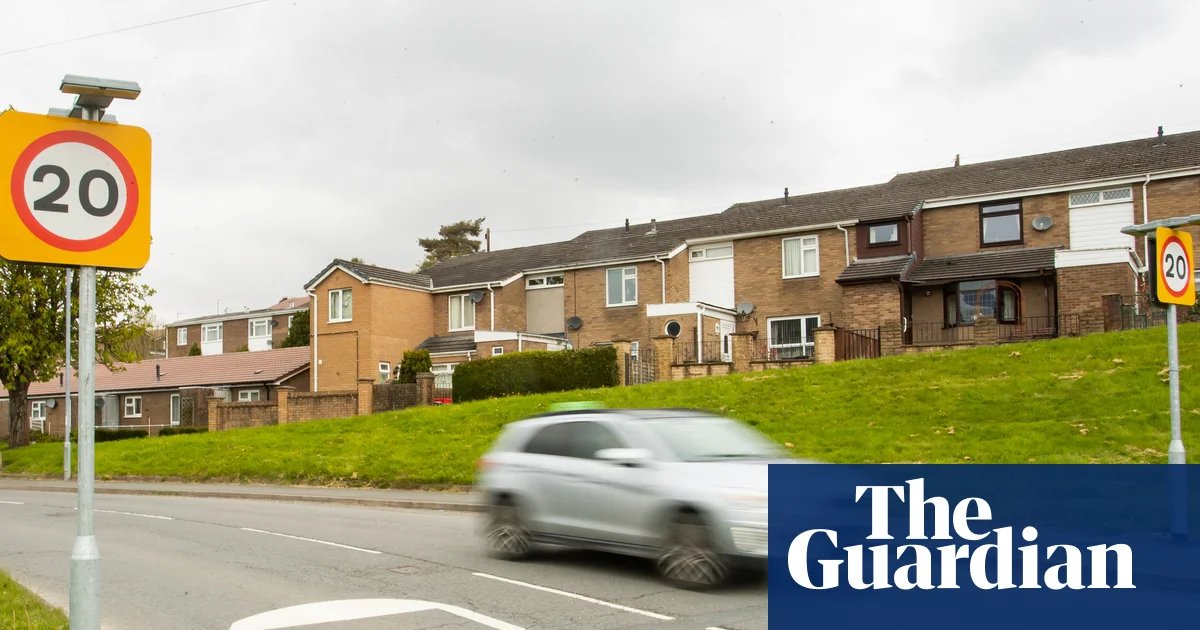
Thanks to Christian Wolmar for his insightful article on a 20mph limit and how it would be a good thing for Birmingham (Dear culture-war motorists, look to the future. We’ll all be driving at 20mph soon, 28 August). He is right to identify that the world has changed from when the car was king and we planned our city mobility almost exclusively around automobiles.
At 20’s Plenty for Us we have seen our movement developing from being classed as radical in the 2000s, to progressive in the 2010s and the new normal in the 2020s. As 20mph limits have been adopted by progressive authorities, we have seen the significant benefits extend beyond pedestrians and cyclists to those who drive.
There is clear evidence that when implemented on a wide scale, as in Wales, the average motorist benefits. Journeys for drivers took less than a minute more on average, and journey times were more reliable; car, van and taxi occupant casualties on urban and village roads were reduced by 29.6% in the first year; and insurance costs were reduced by £45 for the average driver owing to 20% fewer damage claims.
These are real gains for the average motorist, who also benefits from 20mph being the foundation for people to choose to walk or cycle instead of being in another car in front of them. Of course, when they are not in their car, the same people benefit, and their community becomes a safer and less stressful place.
Some drivers will always object to community needs being placed above their own judgment. But the world has changed, and soon a 20mph speed limit will be the urban and village norm, making all of our places better places to be.
Rod King
Founder and chair, 20’s Plenty for Us CIC
Good luck to Birmingham city council with their plan for a blanket 20mph speed limit. However, many speed cameras were turned off a decade ago to make austerity savings. As a result, current speed limits are widely (and sometimes enthusiastically) ignored with apparent impunity – particularly, it seems, the existing 20mph limits on residential roads.
If there’s a war on motorists here, it is one that motorists are now winning: if existing limits are not enforced, it seems unlikely that simply extending the zone will result in a change in behaviour.
John Hopkin
Moseley, Birmingham
Traffic & Transport
Badly parked ebikes in London are a menace – but other cities have shown us the solution | Agustin Guilisasti
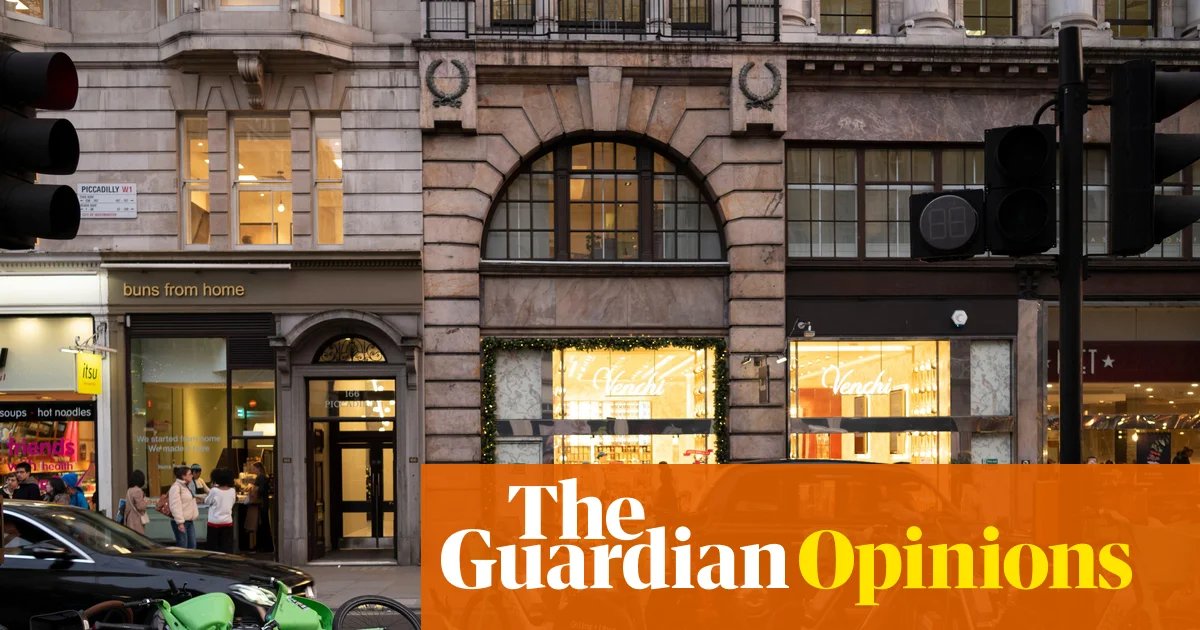
Shared ebikes have become a key part of London’s transport network. From Hounslow to Greenwich, it’s rare to step on to the street without seeing one, and they now facilitate millions of journeys every month. Forest recorded 3m rides this July alone, a new high. Demand keeps rising, and operators are logging ever-higher ride-per-bike ratios, a key measure of how intensively fleets are being used.
This is good news for London, which gains a cleaner, healthier and more sustainable way to get around – one that eases reliance on private car ownership. And, with new research revealing that air-quality improvements driven by the ultra-low emission zone (Ulez) have led to better lung health in children, the benefits of reducing polluting journeys are increasingly clear.
But shared ebikes also draw real criticism. Poorly parked bikes make near-daily headlines, and with good reason. I’m acutely aware of the criticism directed at us and I know this is a problem. Misparked bikes, and the cluttered pavements they leave behind, cause understandable frustration. It’s a nuisance, and – at worst – a genuine hazard for pedestrians and other road users. Especially disabled pedestrians or those with access needs.
But the solution doesn’t lie in fewer bikes – it lies in answering the crucial question around parking. Other European cities have shown that, with the right infrastructure and planning, shared ebikes can be woven into existing transport systems. They’ve done it by answering one key question: where should bikes go when they’re not moving?
London’s cycling infrastructure has come a long way – the Cycleway network now covers 450km (280 miles) – but our roads are still asked to accommodate buses, taxis, pedestrians, scooters, cyclists, private vehicles and mopeds within the same finite space. If London is serious about making shared ebikes part of its transport network, policymakers need to rethink how that space is allocated, particularly when it comes to parking.
Paris offers the clearest case study. The administration of the former mayor, Anne Hidalgo, didn’t just build cycle lanes; it fundamentally reconsidered how public space should be used once the pedalling stops. Her administration converted tens of thousands of on-street car parking spaces into Vélib’ docking stations (Paris’s version of Transport for London’s Santander bike scheme) and dedicated bays for bikes and shared micromobility. These, incidentally, also made room for wider pavements and more trees.
Hidalgo’s approach was informed by a simple insight: a single car parking space can hold about 10 bicycles. Repurposed, that space now serves hundreds of people a day instead of storing one stationary vehicle.
London hasn’t yet had this conversation, but the timing has never been better, for two key reasons. First, car ownership in the capital is declining. Almost half of London households no longer own a car, rising to nearly two-thirds in inner London. Yet about 18% of households in inner London still own two or more vehicles.
And, second, as part of the recently passed English Devolution and Community Empowerment Act, TfL has been tasked with designing a pan-London licensing framework for shared micromobility that will finally bring regulation to a market that has grown rapidly over the past five years. It is inevitable that parking for shared mobility schemes will be a key part of that framework’s design.
I see this scheme’s design as a real opportunity to question whether one of the world’s best-connected cities should keep prioritising scarce street space for second cars, over transport that serves thousands of people every day.
after newsletter promotion
For example, if the mayor and TfL converted even 15% of the on-street parking currently taken up by second cars into dedicated micromobility bays, this would create space for almost 1m shared ebikes – far more than the estimated 50,000 already in London and far more than we would ever conceivably need – with every one of them parked on the carriageway, not the pavement.
With help from operators, boroughs, TfL and the mayor, London could solve its ebike parking conundrum in an instant and get on with the most urgent task: integrating them into the transport system safely, sustainably and for the benefit of all Londoners.



-
 Oxford News4 weeks ago
Train cancellation alert amid ‘fault’ near London Paddington
-

 Oxford News3 weeks ago
Museum evacuated and Oxford University closed amid incident
-

 Business & Technology4 weeks ago
Currys rolls out NiCE software to unify customer service
-

 Business & Technology3 weeks ago
Love Island unknowns outshine influencers in growth
-

 Business & Technology3 weeks ago
Apprentices say AI is reshaping tech skills demand
-

 Oxford Events4 weeks ago
Wilderness Festival 2026: four days of music, food, art and wild escapism
-

 Oxford News4 weeks ago
Oxford’s iconic shark in roof celebrates 40th anniversary
-

 Oxford News2 weeks ago
Richard Hammond takes control of classic car company