UK News
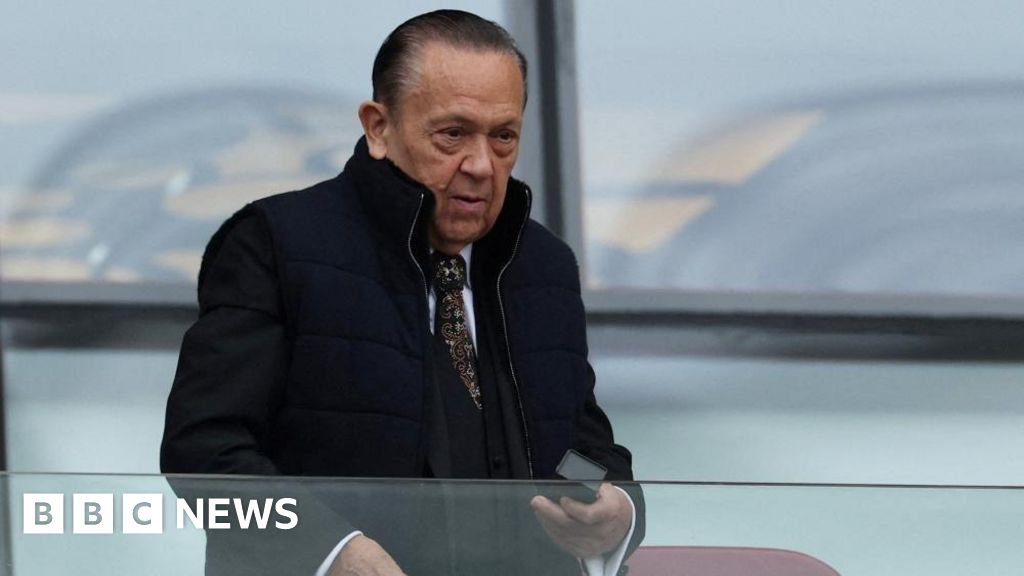
London Stadium and West Ham women's team not aware of David Sullivan contact ban
The owner of West Ham United’s home has raised concerns it was not told about safeguarding restrictions.
Source link
UK News
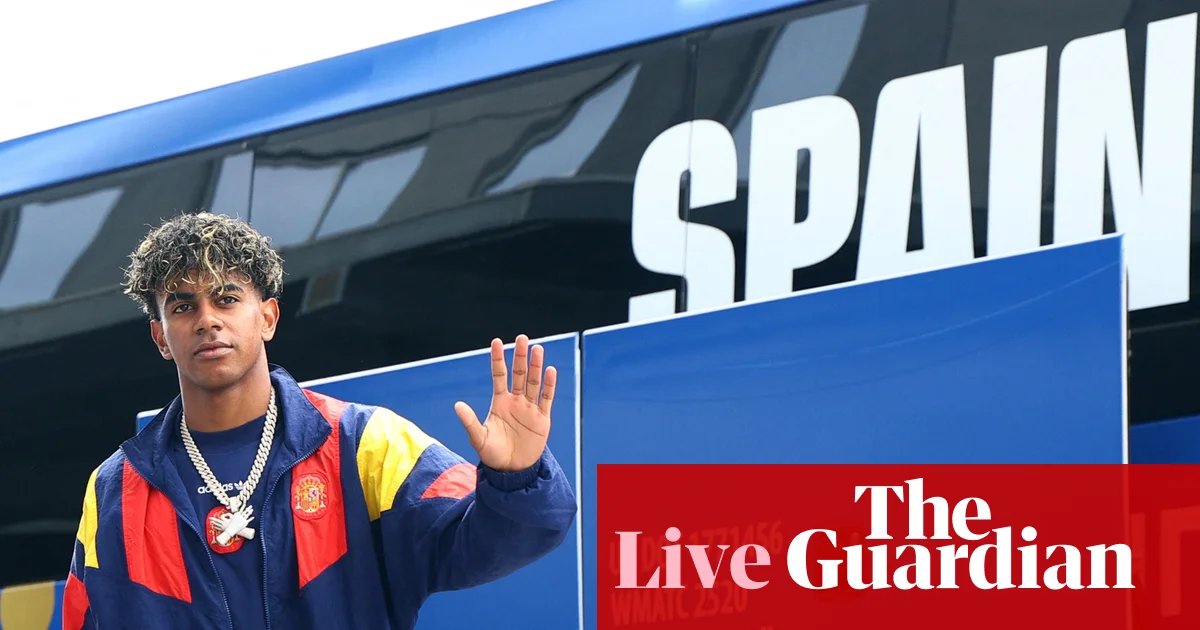
Portugal v DR Congo: World Cup 2026 – live | World Cup 2026
Key events
Also going on:
HALF-TIME: Portugal 1-1 DR Congo
The goal was the final touch of the half, and I’m sure it happened exactly as Congo planned, the second movements after the ball goes short giving them the overload; there followed perfection, and do we got ourselves a ball-game? We got ourselves a ball-game!
GOOOOAAALLL! Portugal 1-1 DR Congo (Wissa 45+5)
OY MY DAAAAAAAAYS! Fifty-two years after their last World Cup appearance, DRC have a goal! The corner goes short to Masuaku, Congo have an overload at the back post, and the ball in picks out Wissa, left alone, who leaps to punish a header past Diogo Costa! Celebrations are glorious, feelings of love and joy zooming around the world, and what a moment this is, exactly why we’re here and one that’ll live forever!
45+5 min Mbemba twisted his ankle winning the corner off Fernandes, so takes treatment, then we’re good to go again.
45+3 min Masuaku inside into Bakambi, who sends him away down the line, then he cuts back to Moutoussamy on the edge. This time, he tries a curler and again, he hits a man close by, this time a defender, and the ball loops behind. The corner yields another.
45+1 min We’ll have four additional minutes.
45 min In space, 25 yards out, Moutoussamy takes a pass from Mukau and decides to shoot after looking like he’s seeking any other alternative, ramming his effort into Wissa.
44 min “Quite right, returns Charles Antaki, who knows how to get himself published. “Portugal’s strip hasn’t been anything like us distinctive or pleasing since they changed from the old bulls-blood dark red shirt (as on their flag) to the dull high-street red indistinguishable from anybody else’s. Yes, I know that it probably sells better. Bah.”
42 min Portugal continue moving the ball but they’ve not created loads other than the goal. There’s a confidence about them, though – I don’t want to keep comparing them to Spain, but it’s our best reference point, and they’re playing with a lot more confidence and conviction.
40 min “I noticed today’s hydration break is instead labelled as a ‘match break’, says Justin Madson who, if I remember correctly, is in the US. “Seems the suits got tired of lying about the reason for the break.”
Or its deployment in matchers such as this one, where there’s no need, could not longer be defended.
38 min Bruno tosses another pass over the top for Mendes, who breaks into the box … then can’t find a pass. Those lofted passes for runners attacking the space are working really well for Portugal; without proper wingers, Spain wouldn’t do that against Cape Verde, though of course that’s not just because Lamine and Williams didn’t play but because De La Fuente picked Gave and Ferran to replace them when he might’ve tried Pino.
35 min “I don’t remember Ronaldo getting up to much in Euro 2016 other than being his usual petulant self,” says Fedor Tot. “He scored just three goals, and people forget that Portugal scraped through their group as one of the best third-placed teams, having drawn all three of their games. They won just once in normal time (Wales in the semis). His one good performance was in the final group game against Hungary, where his two goals admittedly rescued them to a 3-3 draw and got them through. In a ‘proper’ tournament without the best 3rd-placed nonsense they’d never have won!”
Oh I agree they weren’t a great team but, as you say, Ronaldo dragged them through that Hungary game and also scored the first against Wales in the semi. Nothing we’d seen of the team suggested not having him for the majority of the final was a good thing
33 min Kapaudi finds Kayembe, who takes the ball nicely, at inside-left, advances, and shoots … but the effort is deflected, off Veiga I think, and Diogo Costa catches easily enough.
32 min Mbemba jumps into Neto, elbow up but tight to his body, then yanks his shirt on the way down. He’s booked, a decision that seems harsh to me, then Mendes’ free-kick is kicked clear.
30 min Nice feet from Wan-Bissaka – do not adjust your sets, that is not a misprint – and he finds Wissa infield. From there, the ball goes wide, but Bakambu’s cross is headed away.
30 min And again, they try another low cross, this time through Cancelo on the right, a little deeper … but the ball has just too much on it for Ronaldo.
28 min We’re off again and Veiga flips a tasty pass over the top and down the line for Neto, who screeches forward and looks to find Ronaldo with a low cross … but a defender knocks it behind. Threcorner comes to nothing, and Portugal build again.
26 min It’s been pretty easy for Portugal so far – they’re being allowed to knock it about – but they’re so good at that, and if DRC press them, they leave space in behind. Really, the problem is the goal they conceded – they let Portugal have it for free, and know if they concede another, it’s over.
24 min We’re playing in a roofed, airconned stadium; it’s time for a hydration break.
22 min Portugal, er, “possess the football”.
20 min I wonder if, assuming they make the knockouts, Martinez has any plans to play bernardo a little deeper. At the moment, he’s off the right, but it’d be hard for any team to avoid being dominated by a trio of him, Vitinha and Neves. I also think Portugal have full-backs on whom they can rely for width, so a 4-3-1-2, with Bruno in the one and Neto alongside bruno in the two, feels like me to be their best big-game setup.
18 min The first flash of Bruno a lofted pass, with curl, into the path of Mendes, who bursts into the box between two defenders and, just as he’s about to shoot, Wan-Bisska wan-bissakas him, sliding in to heel the ball away. It hits the keeper’s chest, bounces out, and Buno picks up possession, dragging a shot wide of the far post.
16 min “Instant favourite football kit of this World Cup,” says Charles Antaki. “I don’t think many African teams wear light blue; probably because it’s not a popular colour in African flags. Anyway DRC have found a colour that seems to shine out in the gloom, with a pleasing flames-type design when you see it in close-up. Portugal a bit boring in all red. On the other hand, they are winning the game.”
It’s a little strange, actually – I’d expect Portugal’s shorts to be green, and the shade of red is much pinkier and less deep than usual, one you might think works better as an item of clothing, but doesn’t do it for me in the context of a football jersey.
14 min Better again from DRC, Bakamubu swerving around Mendes and Veiga, with men free, but he opts to shoot from 22 yards, the ball flying off Araujo and behind … for a corner that comes to nowt. I like what I’ve seen from the underdogs since they went behind.
13 min Bernardo launches himself into a challenge on Kayembe, of Watford, introduces studs to achilles, and he’s booked. Roonaldo points out that it’s his first offence, and it is: his first yellow-card offence.
11 min DRC’s first attack, Wan-Bissaka advancing down the right and the ball moving infield, Bakambu’s shot blocked before Wissa fires just wide with his left foot.
11 min “I believe you’re quite right about Ronaldo being a liability and Messi still an inspiration – and not only because Messi has always been a player of a higher class,” writes Geoff Wignall. “My many years of living in Portugal included the Euros triumph. From the admittedly small sample of a crowded local bar in which I was the lone estranjeiro, at least half the assembly felt Portugal’s chances improved once Ronaldo went off injured. This was in real time, not in retrospect: many comments about how, “now they can play as a team” – and he was much younger then. The reaction might also have been influenced of course by the number of Portuguese who can’t stand the bloke, notwithstanding the media narrative.”
Yeah, that’s definitely personal, because Ronaldo dragged them to that final more or less by himself. I seem to recall that when he went down, I contacted my local turf accountant for a price in France, which went well for me.
9 min I doubt DRC change their tactics now they’re behind – they’d take 1-0 after 70 minutes, I’m sure, and given goal difference is likely to decide which of the third-placed teams go through, there’s a lot to be said for a narrow defeat against one of the best sides in the competition.
GOAL! Portugal 1-0 DR Congo (Neves 6)
Neto tosses in a cross from left and, not for the first time, Neves is up, to glance a terrific header across Mpasi and into the far side-netting. DRC will wonder how, when they’ve got five defenders, a diminutive midfielder was able to score like that, but you can be good in the air without being tall, and he is.
6 min So far, the pattern of this game is similar to Spain v Cape Verde, attack against defence. But there’s more ingenuity about the way Portugal move – the ball and off it – Cancelo’s low cross whizzing across the face of goal, no one close enough to tap or slide it in.
5 min Portugal eschew an opportunity to put a ball into the box to keep passing – which I get, but I imagine Ronaldo fancies early service, and backs himself to win aerial challenges.
3 min Ronaldo takes his first touch and the buzz in the crowd is palpable. On which point, Mary Waltz emails in: “I am a massive Messi fan. But this need to pick one of them and rip the other is silly. Yes, the humble little guy Messi is easier to relate to than the at times arrogant Adonis but as far as football talent goes it is a 50/50 coin flip.
As blokes, I wouldn’t say I relate to either of them, though guess I “prefer” Messi; as players, I disagree. Obviously I think Ronaldo is incredible and the best player I’ve seen at my own club, but in the pantheon, I don’t think it’s close – Messi is miles ahead, “for me”.
2 min DRC are indeed fielding a back five, but it’s noticeable that, when Portgual have the ball in their own half, they’re stepping up quickly as a unit.
1 min Portugal kick-off and don’t go for touch as per the current vogue, instead keeping possession. They’re so out, dudes.
Righto, our teams huddle and we’re good to go.
The DRC players give their anthem plenty, and what a moment this is for the Congolese and their on-pitch representatives. Club football runs the world, but international tournaments agitate emotions in a way that’s completely different.
Anthem time – and, though we’ve been deprived of Il Canto degli Italiani, I’m a big fan of Portugal’s.
“When Messi scored a tap-in after a goalkeeping howler last night, the co-commentator called him a genius,” says Niall Mullen. “It’s early doors to hit the hyperbole so hard but I am interested to see if it escalates. Perhaps tonight Ronaldo will be declared a singular legend for winning a corner?”
In fairness, Messi is a genius and Ronaldo is a legend. I actually enjoyed that tap-in finish too, first because, after all these years, Messi was still the one alive to the potential for a fumble, and also because the finish, though simple, was still perfection, the angle at which he rolled it in making it impossible for the keeper to recover.
…and here they come!
Our teams are tunnelled…
Yoane Wissa is a player with plenty to prove in this competition. If we’re honest, he was something of a panic-buy, Newcastle under pressure to find someone who’d come to them and landing on him. But he won’t have expected to play as little as he did and presumably needs to find a new club, so could really do with excelling. And if there’s a weakness in this Portugal side, it’s at the back so, while he might not get much of the ball, when DRC get it forward, he’s a chance.
Learn more about Lumumba here; the film, Soundtrack to a Coup d’État – nominated for an Oscar in 2025 – is also worth your time.
I like DRC’s training tops. More news as I get it.
I’m looking forward to seeing Lumumba Vea in situ. His tribute to Patrick Lumumba, Congo’s first prime minister until his assassination, reminds us of the social and political struggles the country has had through on fault of its own. He is what the World Cup is all about.
I enjoyed Jacob Steinberg’s piece on Thomas Tuchel. Jacob covered him at Chelsea too, so knows and has observed him; I bet I’m not the only person to put TC Boyle’s Water Music on their wishlist.
“You wrote ‘Cristiano Ronaldo, his inability to press making it almost impossible to play a modern style’”, says Alex. “I wonder how the reigning world champions were capable of it despite being led by a man who hasn’t defended at all for more than a decade? Why is this narrative so much more emphasised with Ronaldo than so many other players who offer nothing defensively?”
Argentina had Rodrigo De Paul doing Lionel Messi’s running – I’m not sure Portugal have anyone able to do a similar job. It’s also the case that Messi offers more than just the final touch, which Ronaldo doesn’t really, and that without him, Argentina wouldn’t have got close to winning the last tournament, whereas I think Portugal would be better without Ronaldo because the rest of their attack is so good. Finally, I think the eye test confirms that – I watch Portugal frustrated they don’t have a more mobile man up front; watching Argentina, I don’t feel that way.
Email! “Let’s not forget that Cristiano Ronaldo, in an alternative World Cup not driven by profit, would be serving a three-game ban now for violent behaviour,” remembers Justin Kavanagh. “But Infantino has learned to honour the time-traditions of the host country, where laws are just for little people, inapplicable to the rich.”
Yup, as the story below illustrates. I guess in the context of the competition, the decision to let Ronaldo off has been largely ignored because there’s so much worse going on, but it is a stain on the competition’s sporting integrity.
Great news!
In the context, obviously.
I’m really looking forward to seeing how Axel Tuanzebe does in this one. As a teenager, he was viewed as a blue-chip prospect, and his performance when Manchester United won away to PSG in 2020 was magnificent. But injuries took their toll and things haven’t quite worked out for him since, but it was his goal that took DRC here and I’m expecting a decent performance from him because his top level is a good level.
I’m glad Portugal have played a proper winger, not Félix, who now looks destined not to fulfil the potential he had at 19, when Atlético Madrid paid £113m for him. Neto has pace, the ability to go both ways, and offers more out of possession than Leão, so the selection makes sense, another quick player to offset Ronaldo’s lack of speed.
DRC, meanwhile, move to a five at the back. I’m a little surprised Noah Sadiki has left out, but the three picked ahead of him have earned their spots.
Taking a closer look at the Portugal team, Dias is absent injured, but it’s perhaps a little surprising to see Gonçalo Inácio, whose passing has been so important, left out. Otherwise, the XI is pretty much as expected – the only choice Martínez had to make was who to pick in the left-wing berth, and he’s gone for Pedro Neto, not João Félix or Rafael Leão.
Teams!
Portugal (4-2-3-1): Diogo Costa; Cancelo, Araújo, Veiga, Mendes; Vitinha, Neves; Bernardo Silva, Fernandes, Neto; Ronaldo. Subs: Semedo, Dalot, Rui Silva, Conceição, João Félix, Guedes, Inácio, Trincão, Sá, Ramos, Nunes, Leão, Neves, Samú Costa, Dias.
Congo DR (5-3-2): Mpasi; Wan-Bissaka, Mbemba, Tuanzebe, Kapaudi, Masuaku; Moutoussamy, Mukau, Kayembe; Bakambu, Wissa. Subs: Banza, Batubinsika, Bongoda, Elia, Epolo, Fayulu, Kakuta, Mayele, Kalulu, Kayembe, Cipenga, Mbuku, Pickel, Sadiki, Tshibola.
Referee: Abdulrahman Ibrahim Al Jassim (Qatar)
Preamble
Rui Patricio; Cédric, Fonte, Pepe, Guerreiro; Carvalho; Sanches, Silva, João Mário; Nani, Ronaldo: names branded on to the soul of all Portuguese football fans. And yet the team which won the 2016 Euros, a first international title after a long wait and much pain, is so inferior to the one that’s since failed even to get close, it’s almost silly.
Football, though, is an art not a science, the job of balancing a team needing feel as much as calculation – feel which eluded Fernando Santos and, so far, has eluded Roberto Martínez too.
Previously, it’s been easy to blame Cristiano Ronaldo, his inability to press making it almost impossible to play a modern style and by whose mere presence everyone connected with team seems awed. Now, though, the tactical meta has changed a little – the best teams often sit off – and the players behind him are so good, their standing in the game so high, they really should be able to carry the physical slack while facilitating finishing that remains excellent. Their time is now – but also, their time was in 2020, 2022 and 2024 – with no guarantee that Bruno Fernandes, Berrnardo Silva, Rúben Dias and João Cancelo will sustain their current levels until 2028. That’s a lot of pressure for a group who’ve not worn it well.
Nor will DRC make things easy. Previously renowned for chaotic attacking, under Sébastien Desabre they’ve morphed into a doughty defensive outfit, one that is hard to penetrate but struggles to penetrate. They had to fight to qualify, needing a playoff and extra time, but now they’re here, participating in their first World Cup since 1974, they won’t be easy to shake. And, as Spain discovered, any team that is disciplined and organised can be hard to break down, the pedigree of the DRC back four – it features Aaron Wan-Bissaka, Axel Tuanzebe, Chancel Mbemba and Arthur Masuaku – of far greater pedigree that Cape Verde’s.
Of course, the likeliest outcome is a comfortable Portugal win but, as the game – and real life – never tire of reminding us, they don’t care for what should happen, only for what does happen. The line between immortality and ignominy is thin.
Kick-off: 12pm local, 1pm EDT, 6pm BST, 3am AEST
UK News
Firm fined £150,000 after electrician killed in mine by fan blades
Colin Thwaites died at Lochaline Quartz Sand Ltd’s underground mine on the Morvern Peninsula in October 2024.
Source link
UK News
The rightwing counter-revolution is gaining ground – and Labour’s softly-softly approach won’t stop it | Andy Beckett
Not for the first time, the UK is in the grip of a backlash against equality and diversity. Already disadvantaged parts of the population are having the existence of that disadvantage denied – and the limited legal redress for it, which has been won over decades, such as the 2010 Equality Act, threatened with repeal. Two of the largest political parties, much of the media, street protesters, online activists, opportunistic rioters and organised fascists are all working to erase aspects of British multiculturalism, by lawful means and otherwise. In the decade since the Brexit referendum – which awoke semi-dormant forces of social conservatism and nationalism – this reactionary campaign has gained more and more momentum.
Its targets have widened and solidified: from “wokeness”, multiracial cities, diversity, and equity and inclusion policies to immigrant cultures of all kinds, so-called two-tier policing and the general conduct of local and central government. “Britain is a two-tier state – against white people,” claimed Nigel Farage in a sweeping Reform UK policy statement on Sunday. “Anti-whiteness is institutionalised into every aspect of public life.” His party, still consistently ahead in the polls, promises to work relentlessly against this supposed injustice when it takes office, copying the confrontational and divisive tactics of Donald Trump.
Meanwhile the Conservatives, under the ever more rightwing and Reform-influenced leadership of Kemi Badenoch, pledge to get rid of a key part of the Equality Act, the public sector equality duty. It requires state institutions to “have due regard to the need to eliminate discrimination, harassment [and] victimisation … advance equality of opportunity … [and] foster good relations” between disadvantaged and non-disadvantaged Britons.
Between 2010 and 2024, five successive Tory governments saw no need even to amend this consensual Labour legislation. Yet last week Badenoch said it must be repealed, as “part of our plan to remove identity politics entirely from the public sector”. Switching to the more respectful tone with which she addresses businesses, she continued: “Hopefully the private sector will follow suit, because they have this problem too.”
Only a minority of Britons are actually enthusiasts for this backlash. A survey published this week found that 17% “strongly agree” that “the growth in the Muslim population poses a foundational threat to UK culture” – one of the main preoccupations of campaigners against multiculturalism. “Tracing changes in values across a 30-year period,” wrote the political scientists Laura Serra and Maria Grasso last year, “we find that … [UK] sociocultural values have been consistently shifting towards social liberalism – a change that is driven primarily by generational replacement.” The conservative older Britons upon whom the backlash and its associated political parties and movements still heavily rely, for all the online and street visibility of younger reactionaries, are gradually dying out.
Yet as has been shown regularly since Brexit, angry rightwing minorities, amplified by rightwing papers and digital media, sometimes encouraged and funded by rich allies in America, can easily dominate British political discourse. Meanwhile, the less politicised or more liberal majority either tunes out, pushes back too little, or gives ground.
For much of Keir Starmer’s leadership, Labour has surrounded itself with Union flags, produced ever tougher immigration policies and treated many of the grievances driving the backlash as “legitimate” – even those based on fears and ignorance rather than social realities, such as the widespread conviction that immigration is surging, when it has actually fallen fast over the past year. Occasionally, Starmer has spoken up for “our beautiful, tolerant, diverse country”, and against those who “just want to stir the pot of division”, as he put it at Labour’s conference last year. But this strategy of intermittent challenge and more general appeasement has failed: Labour remains loathed by most socially conservative voters and has been abandoned by many liberals, while the backlash parties have radicalised further and the potential victims of their policies have grown more scared.
How might Labour and other political forces that support equality and diversity deal better with the backlash? Sadiq Khan’s London mayoralty suggests one approach. Like Starmer, he is no great orator, but he has been re-elected twice during a period of general Labour unpopularity – partly because he has refused to allow the right to define the legitimate makeup of London, instead always presenting the city’s diversity as its strength. At last month’s local elections, the already low Tory vote in London fell, while Reform performed much worse than elsewhere.
Yet today’s multiracial, sexually tolerant capital, which until the May elections had been dominated by Labour for 30 years, and which is now also a stronghold of Zack Polanski’s socially liberal Greens, is a relatively easy place for a Labour politician to fight a socially conservative backlash. It was a lot harder back in the 1980s, when the city was much less diverse and Margaret Thatcher’s illiberal Conservatives were often its most popular party. Then as now, rightwingers in parliament and the media were aggressively seeking a return to “traditional values” after the liberal advances of the 1960s and 1970s. The far right was active against immigrants on the streets, and much of Britain appeared to be moving rightwards.
Yet from 1981 to 1986 the Labour-run Greater London Council (GLC), led by Ken Livingstone, challenged the conservative narrative about Britain being undermined by minorities. Instead, it promoted a counter-narrative that the capital – and by implication, the country – needed to end discrimination against minorities and draw on their cultures if it was to become a successful and decent modern society. The GLC’s vibrant and inventive public education and propaganda campaigns are documented in London’s Ours!, a new book by the cultural historian Hazel Atashroo. “Black people do not cause slums,” said one typically direct, dramatically designed poster. “They are forced to live in them.” Many rightwingers were outraged by the GLC’s provocative style and radical goals. In 1985, the office of its ethnic minorities unit was firebombed. In 1986, the GLC was abolished by the Thatcher government. But in the longer term, the GLC won.
Forty years on, Labour often seems to have forgotten how to mount effective campaigns against social conservatism, which Badenoch disingenuously calls “common sense”. Perhaps with a different Labour leader, in an unofficial alliance with other relatively liberal parties, the rightwing counter-revolution could be blocked. It needs to be. A backlash, if left unchallenged, rarely stops.
-
Crime & Safety4 weeks agoOxfordshire bridge closure comes as management ‘weaknesses’ found
-
Crime & Safety4 weeks agoWhat happens to Halifax customers if Lloyds makes changes?
-
Oxford News4 weeks agoActor steps down from major role in new Harry Potter series
-
UK News4 weeks agoBurnham seeks to calm markets by committing to fiscal rules
-
UK News4 weeks agoGlass deposit scheme 'risks major problems' for retail industry
-
UK News4 weeks agoEx-minister Shapps quits aerospace firm over rule concerns
-
Crime & Safety4 weeks agoRyan Bridge speaks of London arrest after Oxford incident
-
Crime & Safety4 weeks agoOxfordshire man accused of sexual offences 40 years ago