
Business & Technology
Girl Tech expands across England as 2,000 join scheme

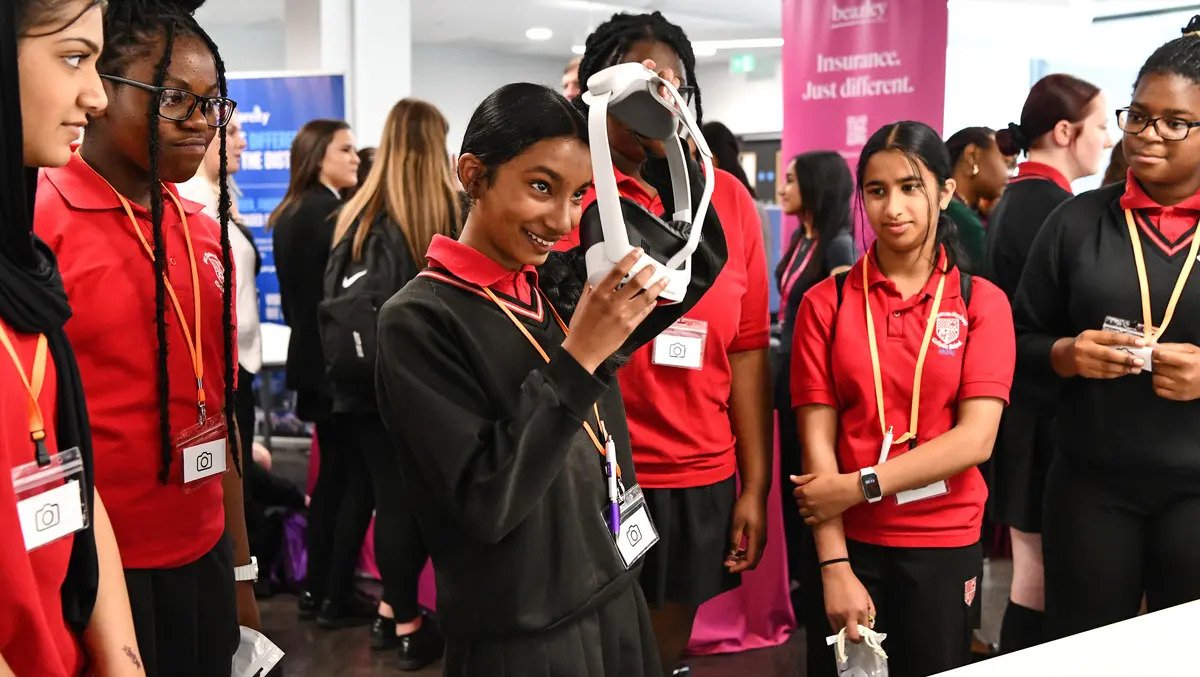
Ahead Partnership said its Girl Tech programme has helped more than 2,000 young women explore digital careers, expanding from Leeds into several regions across England.
Launched nine years ago, the scheme now operates in London, the North West, the North East and the West Midlands, alongside its original base in Leeds. According to Ahead Partnership, 90% of last year’s participants left interested in pursuing tech and digital roles.
Girl Tech aims to reach young women before they make key GCSE subject choices. It focuses on direct employer engagement, practical activities and access to role models working in the sector.
Support for the initiative has widened as it has grown. Netcompany is the national sponsor, while other employers and institutions involved include Optum, SCC, Sulzer, Tokamak Energy, Asda, Currys, Grainger Hub and the University of Westminster.
The expansion comes as policymakers and employers sharpen their focus on the skills needed for wider AI adoption and digital growth. Research cited by the organisers points to persistent barriers, including weak digital literacy, uneven access to training and unequal participation in technology careers.
Skills England has estimated that AI adoption could add up to GBP £400 billion to the UK economy by 2030, while warning that workforce preparedness is lagging. That has intensified debate over how to widen routes into digital work and improve representation in a sector where women remain under-represented.
The organisers argue that earlier intervention in education is critical. By targeting pupils before they make important academic choices, the programme is designed to shape how young women view the technology sector and whether they see a place for themselves in it.
Early intervention
Ahead Partnership, which describes itself as a social value specialist, said demand for the scheme has grown among both schools and employers. Businesses are seeking practical ways to address gender imbalance in technology roles before the recruitment stage, it said.
That employer-led approach is now central to the programme’s design. Companies provide volunteers, role models and exposure to real workplace experiences, giving students a view of jobs and career paths that might otherwise feel remote.
Supporters of the model say that matters because many barriers emerge well before people enter the labour market. Subject choices, confidence and a lack of visible representation can all narrow options at a young age.
Suzie Bell, Programme Manager, Ahead Partnership, said: “As one of the fastest growing and most opportune sectors in the UK, we need to ensure young women are equipped with the right tools and knowledge to explore careers in tech at the right time in their academic journey. Against unwavering gender disparity across the field and growing demand for new skills and talent, we give women access to the right role models, information and resources ahead of making big decisions about their career pathways. We’re demystifying the sector in a way that ensures young women have equal access to the opportunities within it, no matter their background. Nine years since our first Girl Tech, the appetite among our partners and business volunteers to help shape a more inclusive future for the sector continues to grow, marking our biggest year of activity to date. At a critical point for the future of tech, this enthusiasm for change is encouraging; we’re committed to harnessing this drive for the benefit of the sector, the economy and all young people.”
Employer backing
Corporate support has helped the programme grow from a local initiative into a broader national model. For employers, the appeal lies in building awareness of digital careers among pupils who might not otherwise consider the sector.
Netcompany, one of the businesses backing the scheme, said its support reflects a long-term view of workforce development. The focus is less on immediate hiring and more on influencing who enters the pipeline in future years.
Richard Davies, UK Country Managing Partner, Netcompany, said: “Netcompany’s multi-year commitment to Girl Tech reflects our dedication to equalising opportunities within tech and digital sectors – a programme which has been consistently ahead of the curve and generates real results for young people. While Girl Tech has reached an important milestone, its true impact will be measured in the years ahead, as more young women step into careers in tech.”
The issue has drawn national attention as ministers and industry groups examine how to increase women’s participation in technology and innovation. Organisers of programmes such as Girl Tech argue that local engagement, employer involvement and earlier exposure can help tackle skills shortages while improving diversity.
For now, the programme’s headline measure is straightforward: more than 2,000 young women have taken part, and Ahead Partnership said most recent participants left with an interest in a digital career.

Blossom Pottery Cafe opened on Friday, August 14 at 18 South Bar, bringing a new artistic opportunity to coffee, tea and cake lovers in the town.
Opening the cafe was a long-standing dream of owner Wendy, who began pottery as a personal hobby and gradually developed the idea of creating a space where people of all ages can enjoy the peaceful pass time.

With every table full on opening weekend and dozens of beautiful pieces newly painted by guests, the owner said her ‘heart is so full’ to see the dream realised.
“So grateful to see so many of you coming to support us on our opening day,” she shared. “Thank you so much.”

Wendy earlier said: “We’re incredibly excited to be opening Blossom Pottery Studio & Café and bringing something new to Banbury.
“We hope it becomes a place where people can take a break from their busy lives, enjoy being creative, and make lasting memories with family and friends.

“The support we’ve received from the local community has been amazing, and we can’t wait to welcome everyone through our doors.”
As part of the grand opening, all customers who visited during the opening weekend or made a pottery painting booking within the next three months received a free cupcake from the cafe.
Blossom Pottery Cafe hosts family-friendly pottery painting sessions from 10am each day, with normal cafe opening hours 8am to 5pm.

Atos highlighted the views of three apprentices entering the technology industry, focusing on apprenticeships as a route into tech as artificial intelligence reshapes workplace skills.
All three work as First Line Service Desk Apprentices and described a jobs market in which technical knowledge alone is not enough. Alongside coding and troubleshooting, they said communication, customer service, problem-solving and adaptability have become central to early careers in IT.
Kyle Brady said he moved into an apprenticeship after studying physics, maths and computer science at A level, then spending time in temporary work, including as a forklift driver, while building his technical skills independently. The apprenticeship, he said, offered a way to gain workplace experience while continuing to learn.
His account points to a common hurdle for new entrants: gaining practical experience before securing a first role. Brady said that challenge shaped his view of what employers value in technology jobs.
“After completing my A levels in physics, maths and computer science, I knew I wanted a career in technology. I’ve always enjoyed solving problems and understanding how things work, but I found it difficult to get my foot in the door. I spent some time in temporary jobs, including as a forklift driver, while building my technical skills in my own time. When the opportunity to start an apprenticeship came along, it felt like the perfect way to gain real workplace experience while continuing to learn.
“One of the biggest things my apprenticeship has taught me is that a career in tech is about much more than technical knowledge. Working on the helpdesk has shown me how important communication, customer service and problem-solving are. Being the first point of contact for users has completely changed how I see the industry and helped me develop skills I never realised I’d need. The experience has also shown me how quickly technology is evolving, especially with AI becoming part of more workplaces. That means the ability to keep learning and adapting is becoming just as important as technical skills. My apprenticeship has helped me build that mindset while giving me hands-on experience with the realities of working in IT.
“It’s also opened up opportunities I wouldn’t have had otherwise. Learning about career paths in cybersecurity and data engineering has shown me the range of opportunities available and given me confidence about where my career could go next. I’d encourage anyone thinking about a career in technology to keep an open mind and not feel like university is the only route. Apprenticeships give you the chance to earn while you learn, develop practical skills from day one and build the confidence to adapt as technology continues to change. In an industry being transformed by AI, that real-world experience is invaluable,” Brady said.
Ryan Cresswell said he studied IT at college and games design at university before working in sales to strengthen his people skills. He later returned to technology, but said employers often wanted practical IT experience as well as qualifications.
His experience reflects a wider issue for people seeking entry-level technology roles. Employers often ask for evidence of workplace readiness even for junior positions, making apprenticeships one way to bridge the gap between education and employment.
“After studying IT at college and games design at university, I began working in sales to hone my people skills before returning to technology. One of the biggest challenges I faced while applying for jobs in tech was that employers liked my qualifications but wanted candidates with hands-on IT experience. That made it difficult to get my foot in the door.
“My apprenticeship has given me the opportunity to earn, learn and gain practical experience at the same time. It’s allowed me to develop my technical troubleshooting skills, but I’ve also learned a lot about communication, problem-solving and handling different types of people. My advice to anyone considering a career in tech is to explore the different paths available. In the past it felt like university was the only choice, but that’s no longer the case. Also, speak to people already working in the industry and stay curious. Apprenticeships are a great way to build skills, confidence and hands-on experience, whether working individually or in a team, while discovering what’s right for you. The most important thing is to keep learning and not be afraid to take a different path if the first one doesn’t work out,” Cresswell said.
Skills shift
Zainab Hussain said she chose an apprenticeship because it offered immediate workplace experience and a path into more senior roles without student debt. She said the role had helped her develop both technical and interpersonal skills, including troubleshooting problems and explaining complex concepts clearly.
Her comments underscore how apprenticeships are being framed by employers and trainees as an alternative to university for some digital roles. In this case, the appeal lies in earning while learning, building professional networks and gaining direct exposure to the daily demands of IT support.
“I’m naturally drawn to tech and have always been IT literate, so I knew it was the right path for me. It’s an industry that’s constantly evolving, and I wanted to be part of that. I chose an apprenticeship because it felt like the best way to gain real experience from day one, and it sets you up to move into higher roles faster than if you go to university. I also wanted to build a career in the industry without taking on student debt.
“My time at Atos so far has helped me develop both my soft and technical skills, such as how to troubleshoot problems and communicate complex concepts clearly. I’ve also had the chance to earn, learn and build my experience, all of which are helping prepare me for the next stage of my career. The apprenticeship path has given me valuable opportunities to network with co-workers from different career backgrounds and skill sets, which you wouldn’t get at uni. The workplace experience has been incredibly valuable, so if you’re interested in tech, I’d encourage you to go for an apprenticeship, explore every opportunity available and keep an open mind,” Hussain said.
Taken together, the three accounts point to a shift in the skills mix associated with junior technology roles. As AI tools become more common in workplaces, the apprentices said the ability to keep learning, work with users and adapt to changing systems is becoming as important as formal technical training.
All three also described apprenticeships as a practical answer to the experience barrier that can prevent candidates entering the sector. They framed the route as a way to gain income, training and exposure to real workplace problems at the same time, while opening paths into areas such as cybersecurity, data engineering and wider IT support.

Liquidators have been instructed to wind down Go Fly Oxford, which provided lessons for commercial and private pilots licences.
Colin Wilson and Emma Mifsud, of Opus Restructuring & Insolvency, have been appointed as joint liquidators for Go Fly Oxford Ltd back in May 2025.
But new records filed by the liquidators have revealed an HMRC secondary preferential claim of £118,132.
Ten unsecured claims have been received by the liquidators totalling £60,314.
Further unsecured creditor claims estimated in the statement of affairs total £88,955, the published documents say.

Over the past year, liquidators say they investigated whether any recoveries could be made from directors or other parties, but concluded there were no further viable assets or claims.
Aircraft shown in the 2024 accounts at a book value of £238,181 had been sold before liquidation. The liquidators found the sales appeared to be at fair value and saw no basis for a claim over the transactions.
The aircraft sales happened about seven months before liquidation, outside the relevant period for a preference claim.
The aircraft were reportedly transferred to creditors and leased back so the company could continue trading.
A purchaser of a PA34-200 aircraft was said to owe £6,000. The liquidators received £4,980; the remaining £1,020 was treated as settled because the purchaser had paid a company liability instead.
Two employees were made redundant on 31 March 2025 and were given information to submit claims to the Redundancy Payments Service.
READ MORE: MOT centre and car shop collapses into administration
The flying school was based at Oxford Airport when it collapsed.
Its website, which has since been shut down, described the business: “At Go Fly Oxford we pride ourselves on offering a personal and tailored approach to pilot training.
“We know that people learn at different paces and in different ways, this makes catering for individual needs our main target.”
Oxford Airport’s main trade is pilot training. Flight schools at Oxford train pilots who go on to fly for more than 100 airlines in the UK and globally, including for British Airways.
Historically, the airport has been Europe’s foremost centre for professional pilot training with well over 40,000 students having started their careers there.
At one point, the airport’s runway was the busiest in the world with more than 235,000 movements a year (a take-off or landing) and up to 1,100 flights in a single day, its website says.
The business’ report says: “Over the course of 2025, the company will be complementing its Diamond DA40 fleet with a new fleet of Elixir aircraft, a safer and more efficient type of aircraft, which will provide a much reduced cost per flight hour.
“This, along with growth in enrolments and full utilisation of the European base will ensure the profitability of the business in the coming years.”


UK government promises disabled air passengers better safeguards | Airline industry

Andy Burnham launches campaign against ‘headphone dodgers’ on public transport | Transport policy

Students join march against the far right at matriculation
-

 Oxford University4 weeks ago
New to the Oxford English Dictionary this September
-

 Oxford united FC4 weeks ago
Chris Gunter steps away Wales role to focus on Oxford United
-

 Oxford united FC2 weeks ago
LIVE: Exeter City vs Oxford United – Jersey Mike's Trophy group stage
-

 Traffic & Transport2 weeks ago
Why should I have to pay more for buses if I don’t use a smartphone? | Bus fares
-

 Student Life3 weeks ago
Oxford partnership allows OpenAI to use rare Bodleian texts to train ChatGPT
-

 Traffic & Transport3 weeks ago
How poor public transport policy is putting the brake on cities | Road transport
-

 Oxford united FC2 weeks ago
Oxford United lose to Exeter City on penalties in Jersey Mike’s Trophy
-

 Oxford united FC3 weeks ago
Northern Ireland fans laud Oxford United defender Ciaron Brown