
UK News
Macron expected to back Andorra’s moves to decriminalise abortion during visit – Europe live | France

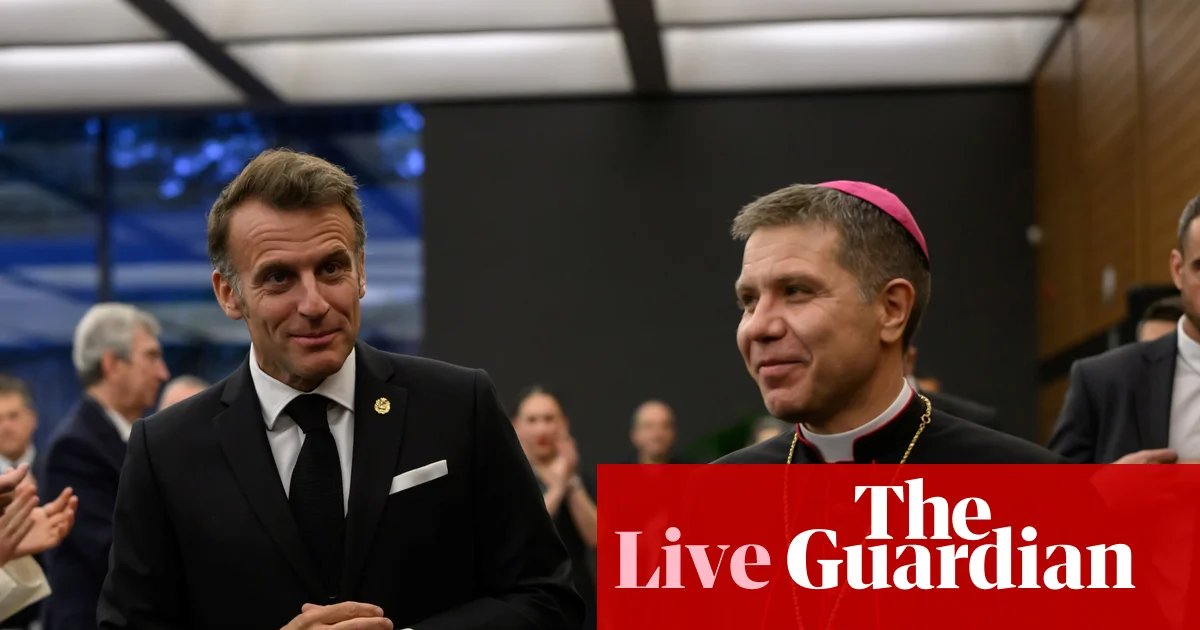
Morning opening: Co-prince Macron visits Andorra

Jakub Krupa
France’s president Emmanuel Macron is in Andorra, performing his duties as the state’s co-prince, alongside the Catholic Bishop of Urgell, Josep-Lluís Serrano Pentinat.

That in itself could be at best a factoid for your next politics geek pub quiz, but – as briefly covered in yesterday’s Europe Live – there is a serious element to it as his visit comes at a time of policy debate on abortion in the country, which continues to have some of the most restrictive laws in Europe.
Radio France International reported that Andorra’s prime minister Xavier Espot Zamora has “indicated he hopes to decriminalise abortion within a year, though not necessarily legalise it,” but the microstate’s governance setup involving a Catholic bishop makes it tricky.
During today’s speech as Andorra’s co-prince, Macron is expected to speak frankly about the issue and back the changes, as well as endorse plans for Andorra to ratify its association agreement with the European Union, which could be done as early as in July.
Last night, Macron raised a toast “from heart” to celebrate Andorra’s unique history and international position, with political talks only taking place behind the closed doors, but today we should hear more.
Andorra’s public broadcaster RTVA reported on Monday that Macron confirmed that abortion would feature in his speech, with the Catholic co-prince conceding that “we must move forward without breaking the institutional seams.” Let’s see what that means.
I will bring you the key lines from Macron’s speech later.
Separately, the European Parliament is expected to discuss the next EU budget, and the European Commission to talk about reforming its regulatory environment.
Again, I will keep an eye on this for you.
It’s Tuesday, 28 April 2026, it’s Jakub Krupa here, and this is Europe Live.
Good morning.
Key events
‘Public secret’ that Iran war causes delays to stock deliveries to Europe, Finland and Estonia’s leaders confirm
Separately, Finland’s Stubb confirms that Europe faces some delays in stock deliveries from the US as a result of the Middle East war.
He says:
“It is a public secret that some of the stocks and delivered systems in the US are either going elsewhere or being delayed. But I don’t see any need for alarm here in Finland.”
Estonia’s Karis confirms this, too:
“We are in a same position in the sense I know that there is a delay – it is probably a question to our minister of defence what kind of missiles or ammunition we are missing – but as far as I know, its [tactical ballistic missiles] Himars.
But it’s a signal that in Estonia and in Europe in general, we should much much faster develop our defence industry, not relying on different countries in the world.”
‘Prepare for the worst so you can avoid it,’ Finnish president says as he plays down Tusk’s warnings about potential Russian attack in months
In the meantime, let’s check in on what’s happening in Helsinki where Finland’s president Alexander Stubb – often dubbed as Europe’s Trump whisperer because of his close relationship with the US president – is hosting his Estonian counterpart Alar Karis.
The leaders are facing questions about Poland’s prime minister Donald Tusk’s comments in the FT from late last week (£), suggesting that a Russian attack on some Nato countries in Europe could come in months, not years.
But it’s probably fair to say they are both not entirely convinced by Tusk’s alarmist claims.
Finland’s Stubb says:
“We work on different type of scenarios, but I come back to the stay cool, calm, and collected [message]. I don’t see an incentive for Russia to test Nato’s Article 5.
There will be always hybrid tests, I don’t deny that. But if you look at the eastern flank, starting from north-east, north-eastern Scandinavia, Norway, Finland, the Baltic states, Poland, then down to Ukraine, I don’t think there will be a test.”
He then says the Americans “are telling us it is for Europe to take more responsibility for our own defence” and to shift conventional forces burden sharing from “60-40 US Europe to probably more closer to 50-50.”
“Where then it’s going to end up, we don’t know. But I do think it’s a good thing that many other European countries are now starting to spend sufficient amounts on their defence,” he says.
He says European countries should draw a lesson from “the Finnish mentality: don’t faff too much about what might happen; prepare for the worst so you can avoid it.”
Karis adds:
“I’m pretty much convinced that the US presence in Europe is as important for the US as [is for us as] well. So we should work on it make sure that the troops remain on the ground at the same time we should put more money on defence in Europe.”
On Tusk’s warnings, he says:
“These ideas that who’s next, Estonia’s next, or the Baltics are next, or Finland is next… these narratives come and go, it’s not the first time … this is a tactic of the Russian Federation to make us a bit anxious but we should stay calm as it’s for an very common the Nordic people.”
Just checking in on Macron in Andorra, just look at how happy he is there!
I keep an eye on his visit there, but so far the ceremonial part mostly involves walking around (the beautiful) Andorra and high-fiving people.
His speech is expected around midday UK (1pm local).
Gunman opens fire at two locations in Athens, leaving at least five people injured
I am also keeping an eye on an incident in Athens where a gunman – identified locally as an 89-year old man – opened fire at a social security office and a courthouse in the city centre.
At least five people are reported to have suffered minor injuries.
State broadcaster ERT said that the gunman – who remains at large – had reportedly thrown envelopes with documents on to the floor after the shooting at the courthouse, saying those were the reasons for his actions, AP reported.
Media freedom ‘under sustained attack’ across EU as public trust drops, report finds

Jon Henley
Europe correspondent
Journalists in the EU face increasing levels of harassment, threats and violence, while news outlets are owned by a shrinking number of proprietors and public trust in the media has plummeted, a report has found.
The Civil Liberties Union for Europe (Liberties) said the findings of its fifth annual media freedom report, released on Tuesday, should place EU officials “on high alert”, with media freedom and pluralism “under sustained attack” across mainland Europe.
Europe’s leading civil liberties group also warned public media independence was being steadily eroded by political interference and budget cuts, and journalists were being increasingly hampered by restrictions on free expression and access to information.
“A healthy, pluralistic media system is a litmus test and mirror of democracy,” said Eva Simon, Liberties’ senior advocacy officer. “Where the rule of law weakens – through deliberate government action or neglect – media freedom is undermined.”
Journalist safety in particular reached what the report called “a crisis point” in Europe in 2025, with reporters and media workers facing “extreme physical violence and systemic legal harassment”, including bomb attacks targeting investigative reporters.
Jakub Krupa
As we wait for Macron’s speech, let’s bring you some other news from around Europe.
Meanwhile, Macron is visiting the Andorran primary school in Santa Coloma and absolutely loving spending his time with kids, happily posing to pictures with the Andorran flags.
Last week, he suggested he would quit politics at the end of his term in May next year, and so we should expect to see more of this sort of legacy-building trips and interventions as he enters the final year in office.
Morning opening: Co-prince Macron visits Andorra
Jakub Krupa
France’s president Emmanuel Macron is in Andorra, performing his duties as the state’s co-prince, alongside the Catholic Bishop of Urgell, Josep-Lluís Serrano Pentinat.
That in itself could be at best a factoid for your next politics geek pub quiz, but – as briefly covered in yesterday’s Europe Live – there is a serious element to it as his visit comes at a time of policy debate on abortion in the country, which continues to have some of the most restrictive laws in Europe.
Radio France International reported that Andorra’s prime minister Xavier Espot Zamora has “indicated he hopes to decriminalise abortion within a year, though not necessarily legalise it,” but the microstate’s governance setup involving a Catholic bishop makes it tricky.
During today’s speech as Andorra’s co-prince, Macron is expected to speak frankly about the issue and back the changes, as well as endorse plans for Andorra to ratify its association agreement with the European Union, which could be done as early as in July.
Last night, Macron raised a toast “from heart” to celebrate Andorra’s unique history and international position, with political talks only taking place behind the closed doors, but today we should hear more.
Andorra’s public broadcaster RTVA reported on Monday that Macron confirmed that abortion would feature in his speech, with the Catholic co-prince conceding that “we must move forward without breaking the institutional seams.” Let’s see what that means.
I will bring you the key lines from Macron’s speech later.
Separately, the European Parliament is expected to discuss the next EU budget, and the European Commission to talk about reforming its regulatory environment.
Again, I will keep an eye on this for you.
It’s Tuesday, 28 April 2026, it’s Jakub Krupa here, and this is Europe Live.
Good morning.

At the end of 2011, party season was under way but I was in no mood for festivities. Two years into fertility treatment, my body was pumped full of synthetic hormones and felt like a pin cushion, while my head was filled with both the fragile hope of having a baby, and the exhaustion of failed clinical attempts to do so.
I was in my late 20s. I met my husband when I was 22; we got married when I was 25. “I want to have kids young,” I’d told him. It was a feeling I’d harboured since my teenage years. But I’d also had the nagging sense that it might not come easily to me. As it turned out, my intuition was right. Approaching 28, I was a regular on the infertility merry-go-round.
I was recovering from my second miscarriage that year when I heard Sia’s raspy voice on the car radio belting out words that sounded emotionally weighty for an electronic dance number – her David Guetta collaboration, Titanium.
It’s not a song I would have necessarily rated or listened to again – I’m more likely to play 00s R&B and hip-hop – but it came at the perfect time in my life. I had forgotten how days felt before fertility drugs and the diarised cycles of administering them. I’d been constantly wearing a brave face and cramming in hospital appointments before and after work, going about my job through a fog of longing and hormones. It had left me in a “cry on the bedroom floor” kind of a heap. I needed something to drag the hope back into me.
I turned the radio up and listened to the lyrics: “I’m bulletproof, nothing to lose / Fire away, fire away.” It felt as if it was talking to and about me, issuing a riposte to all those shots of disappointment that had been fired our way. As Sia’s vocals ascended through the chorus with Guetta’s soaring synths – “Ricochet, you take your aim” – I cried, but I felt myself gaining power with her, too. “You shoot me down, but I won’t fall / I am titanium.” Those were the words I needed to hear.
I felt like a puppet pulled upright again. I streamed it on repeat in the days that followed. I might not have been able to face the work Christmas party but I wasn’t going to languish on the bedroom floor any more.
Over the next months, I spent a lot of time in my car, travelling to work and to fertility appointments to get my blood tested, hormones measured or insides scanned. Listening to Titanium became routine. Each time, its cinematic surge had the same empowering effect and I’d turn up the volume, wind down the windows and defiantly sing along in my terrible voice so it could wash over me.
The following May, when my husband and I headed to the clinic for another IVF embryo transfer, I let it motivate me; when we drove back from scans confirming we were six weeks, then 12 weeks pregnant, I celebrated with it. As I nervously made my way through my pregnancy, I turned to it when I needed the boost.
In January 2013, our first son was born. Today, he is the eldest of three: his brother arrived 15 months later, via IVF too (the last of our fertilised embryos) and four years later, another brother, without fertility treatment. We consider ourselves unspeakably lucky; for many, the outcome is not the same.
In our family, everyone knows Titanium is my fight song. It’s the only big commercial dance hit on my playlists, and a marker of something I overcame.
My kids call me in whenever it streams or plays on TV. When I made my husband a playlist for our 15th wedding anniversary, it’s the song that represented our 2011. And the other week, when he was out with friends, he sent me a voice note from the bar: he’d recorded it playing in the background.
There’s something all-consuming about fertility treatment: you view life only through the filter of your efforts to get pregnant. If you’re lucky, the filter lifts. It did for me, but the fight song remained. So, now, elsewhere in life, when I need a shot of strength and find myself alone in the car, down goes the window and on it goes.
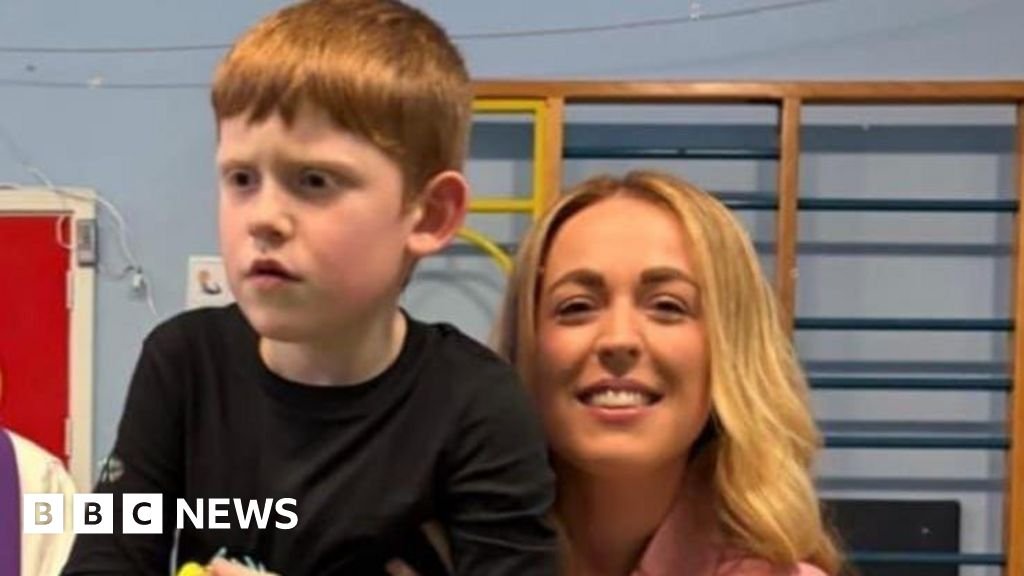
Amy Gibney says she is one of eight families at her child’s school to find out that they don’t have a place for next year.
Source link
UK News
Edinburgh airport reopens after security alert but passengers warned of ‘knock on’ effect | Scotland
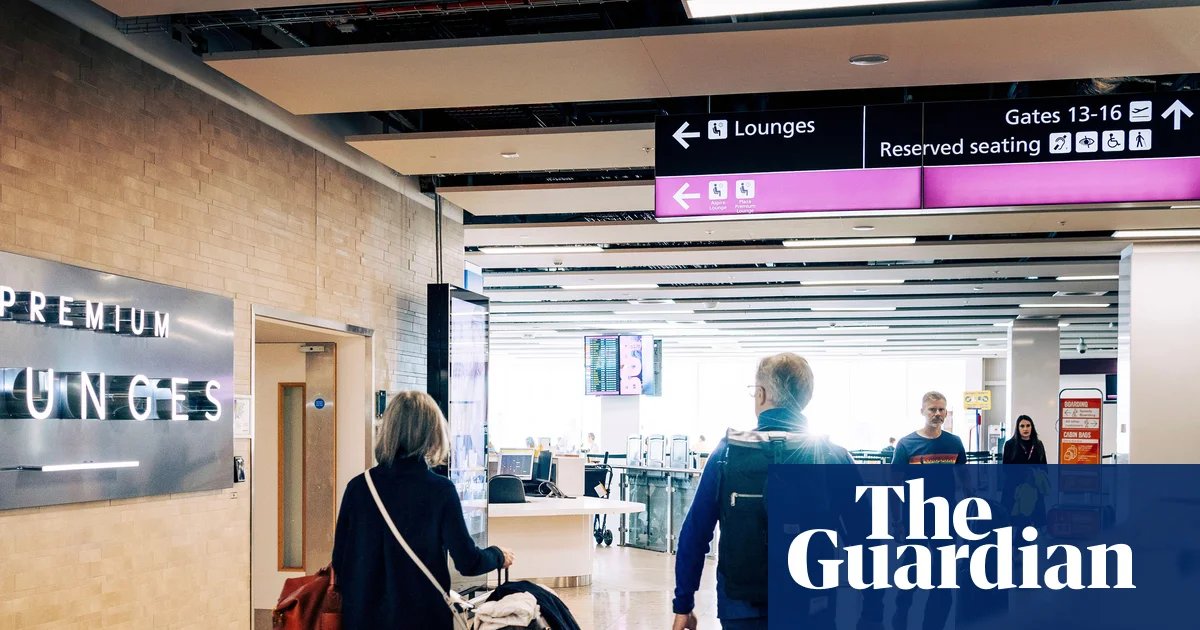
Edinburgh airport reopened on Saturday morning after parts of the terminal building were evacuated on Friday night because of a security alert.
An explosive ordnance disposal team was sent to the airport to investigate what Police Scotland described as a “potentially suspicious package” discovered at about 6.50pm on Friday.
An evacuation was ordered and a police cordon was set up, with roads closed.
Passengers faced disruption as result of the operation and the airport warned that schedules would continue to be affected on Saturday.
In a statement at about 3am on Saturday, the airport confirmed it had reopened and would work to restore normal services as quickly as possible.
“Following investigations by specialist teams, the airport has now reopened.
“This incident will have knock-on impacts throughout today and staff are working hard to address these and support passengers.
“Operational teams are continuing to work to restore normal services as quickly as possible.
“Please check with your airline for the latest information on your flight.”
The statement did not provide an update about the examination of the suspicious package.



-

 Oxford News3 weeks ago
Oxfordshire families invited to free day of fun in Bicester
-
 Crime & Safety4 weeks ago
New video call system to help domestic abuse victims
-
 Crime & Safety3 weeks ago
Photos as 1979 Pontiac Firebird ‘bursts in flames’ at Tesco
-

 Business & Technology3 weeks ago
New ‘high-quality’ mushroom business launched in Oxford
-

 Business & Technology4 weeks ago
NHS IT outages disrupt 274,620 patient interactions
-
 Student Life3 weeks ago
Transgender rights protest in central Oxford following updated EHRC guidance
-
 Crime & Safety4 weeks ago
Co-op incident in Oxfordshire town leads to police charge
-

 Business & Technology3 weeks ago
Oxford firm wins major backing for fin-based tidal power