
Property & Housing
Analysis suggests Oxford’s retail market thrives on placemaking


Mike Watson, partner at property consultancy Vail Williams, has said Oxford continues to benefit from constrained supply, strong tourist footfall and high barriers to entry.
He also believes that the future is in conscious placemaking, rather than blanket regeneration. Mike, whose clients include several key stakeholders on Oxfords High Street, said “There is a shift towards more coordinated stewardship at a time when fragmented ownership can easily dilute long-term vision.
“Demand remains focused on smaller, character-led retail units, particularly those suited to independent operators, premium brands and food and beverage occupiers seeking prominent city centre locations.”
Collaboration in retail
Lincoln College, All Souls College and Brasenose College are working together under the umbrella of The City Centre College Group, to deliver a unique retail offer in the form of the Oxford Market Quarter- an essential element of the city’s independent retail output, this being alongside Oxford City Council’s own reinvention of the Covered Market, which is part of the Quarter.
Mike, with almost 30 years commercial property experience in the city, said “The ambition is to champion independent and artisan retailers, at a time when many UK high streets have become increasingly homogenised.
“The focus of the Oxford Market Quarter is on revitalising and delivering a range of quality retailers and hospitality, focusing on longevity and relevance, from high-end fashion and footwear, to a distinctive food and beverage offer with retailers that trade on craftsmanship and experience.”
Oxfords layout
Mike said Oxfords challenge now was configuring evolution without eroding the city’s historic character, which has been a key part of its sustained success. On the edge of the city, locations such as the Oxford Retail Park provide large-format retail with national brands, closer to the centre however, and offers are more nuanced, with a mix of major brands alongside long-established names.
Mike said “This gradual shift is not accidental. It reflects what visitors and locals increasingly expect from Oxford- that it does not act as a replica of every other UK high street, but offers something rooted in place”
Challenges
Despite the success, challenges are emerging. Mike said that many independent retailers in Oxford felt the pressure of rising rents and business rates- “that tension cannot be ignored. The success of Oxford’s High Street has always been built on small, distinctive traders, but the financial challenges they face are becoming increasingly burdensome.
“Future regeneration must recognise these challenges, as well as the fact that heritage is not just architectural, it is economic and cultural too.”
Image: Google Earth
© Thames Tap (powered by ukpropertyforums.com).
This article and its contents are the intellectual property of UK Property Forums and may not be reproduced, distributed, or used in any form without prior written permission. The views expressed are those of the author(s) and do not constitute legal or professional advice.

Landlords from across West Oxfordshire gathered in significant numbers at a recent industry briefing designed to prepare property owners for the sweeping changes introduced by the Renters’ Rights Act.
Held at the Corn Exchange, the event attracted more than 120 attendees—more than double the turnout seen at previous landlord sessions—highlighting growing concern and interest around the evolving rental landscape.
Organised by Parkers Properties, the free session provided practical guidance on what is widely considered the most significant reform to the private rental sector in nearly 40 years.
Senior members of the Parkers team outlined key legislative changes set to take effect from May, including the transition to rolling tenancies, the abolition of Section 21 “no-fault” evictions, tighter regulation of rent increases, and new rules preventing discrimination against tenants, such as those with children or receiving benefits.
Landlords will also face stricter conditions around pet ownership in rental properties.

Alongside these changes comes an increased compliance burden. Enhanced documentation requirements and stronger enforcement powers for local authorities mean landlords must be more diligent than ever. Civil penalties for non-compliance will start at £7,000 and can rise to as much as £40,000.
The session also covered wider regulatory updates, including new energy efficiency requirements and the introduction of Making Tax Digital, which came into effect in April.
Following the presentation, attendees had the opportunity to engage directly with industry professionals, including solicitors, financial advisors and a representative from West Oxfordshire District Council, who provided additional insights and answered questions.
The strong turnout reflects the level of uncertainty surrounding the implementation of the new legislation, as well as the growing need for landlords to stay informed and prepared in an increasingly regulated market.
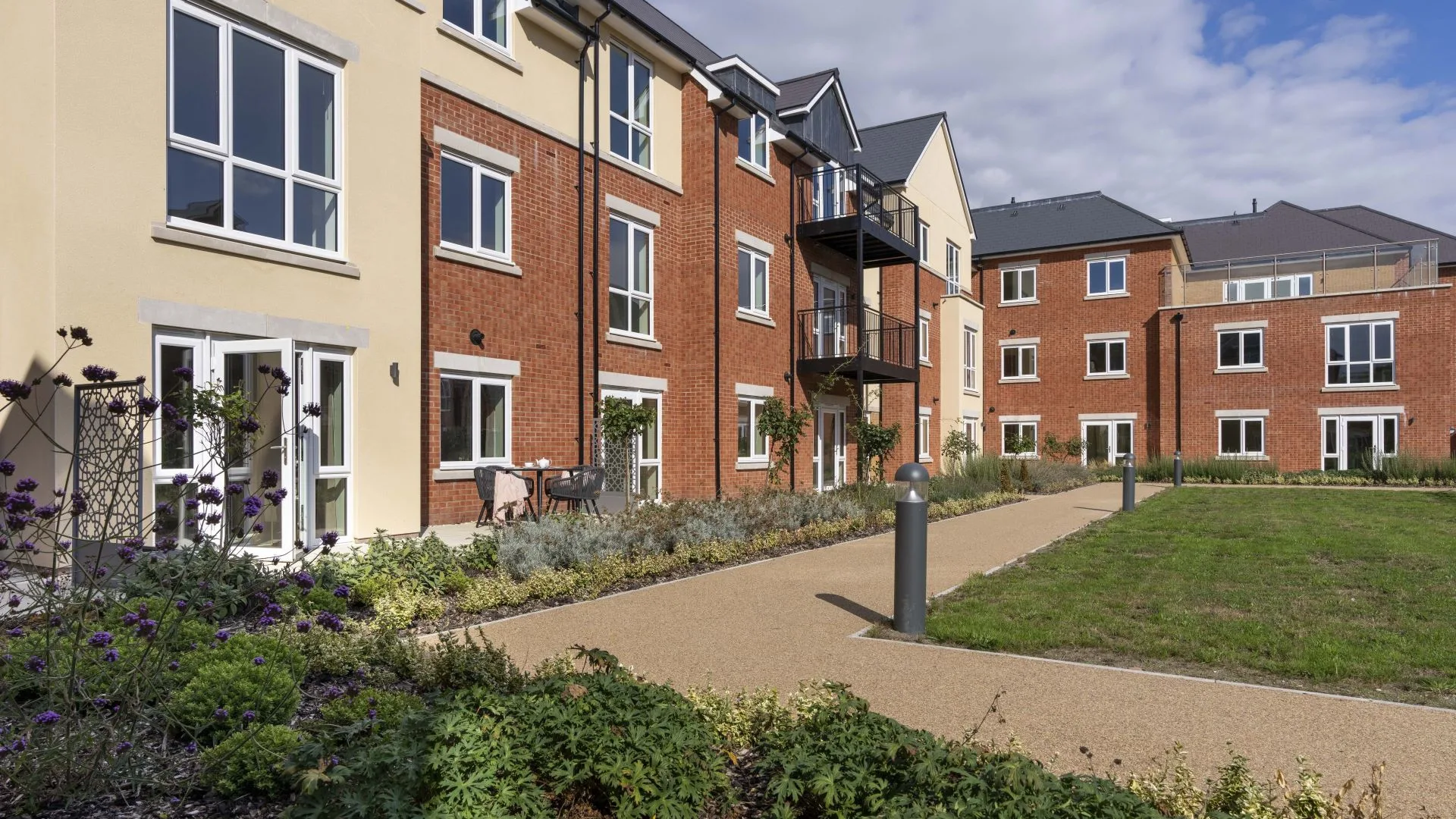
Downsizers looking to future-proof their housing choices are increasingly favouring retirement developments that provide dedicated guest accommodation, according to Cognatum.
For many older homeowners considering a move to retirement living, one of the main concerns is losing the spare room needed to host visiting friends and relatives.
Guest suites are helping to address that concern by offering separate on-site accommodation that allows residents to welcome visitors without sacrificing living space in their own homes.
Paul Adams, director of property at Cognatum, said:
“All the preparation, cleaning and making of beds is done to a hotel standard by the estate team; the resident simply has to book in the required dates.
“Guest suites can provide flexibility for changing life stages, from longer family visits to short-term stays by carers or companions following illness or surgery. Or simply for visiting friends and family.
“By removing the need for permanent spare bedrooms, residents are able to downsize the total floor area of a property, without compromising too heavily on living space. For many of our residents, downsizing feels like a lifestyle upgrade rather than a loss.
“Many family and friends will become regular visitors, so they get to know the other residents and are welcomed like a part of a much wider family.”
At The Rivus, one of Cognatum’s newest retirement estates in Wantage, the guest suite has become one of the most popular features among residents.
The accommodation has been designed for visiting family and friends and includes two beds, an en suite shower room, kitchenette facilities and refreshments, allowing guests to stay nearby while maintaining privacy and independence.
Jan Whitmore, whose sister and brother-in-law live at The Rivus, said:
“This beautifully appointed guest accommodation offered very comfortable twin beds, a kitchenette, and a bathroom, all within the main building, which made life very easy and practical when visiting my family at the Rivus. As guests we enjoyed all the benefits of the larger Rivus community, the joys of being together with loved ones, and guest suite privacy! A perfect combination.”
Mr Adams added:
“Visitors in our guest suites are of course welcome to use the shared areas of the estate, such as a pool, gym and extensive grounds. Simply having a drink or a coffee in a communal area, or joining in with social nights, brings benefits to the wider community of residents, adding interest, new conversations, and conviviality to the estate as a whole.
“It’s also a great opportunity for family and friends to gain an understanding of the resident’s lifestyle.”

Plans for a new burial ground for Oxford go before councillors on Wednesday (April 1) with a recommendation for approval.
Oxford City Council’s proposals to use 7.34 hectares of agricultural fields to the north of Oxford Road near Horspath for a new ‘burial meadow’ will be considered by South Oxfordshire District Council.
The city council is fast running out of space for burials but the new site can accommodate around, 5,000 graves.
The council expects an average of 120 burials per year which would enable the burial meadow to last for between 40 and 45 years.
A breakdown shows 40 per cent of the space will be for Muslim burials.
A new access off Oxford Road will be created for hearses but parking (other than the provision of three disabled bays) will only be available in a nearby council car park.
The team on the project includes The Environment Partnership on planning and landscape planning and Campbell Reith on transport.

© Thames Tap (powered by ukpropertyforums.com).
This article and its contents are the intellectual property of UK Property Forums and may not be reproduced, distributed, or used in any form without prior written permission. The views expressed are those of the author(s) and do not constitute legal or professional advice.


The post Oxford’s ‘burial meadow’ recommended for approval appeared first on UK Property Forums.


When is an ebike not an ebike? When it has a powerful, illegal engine. Get this menace off our roads | Peter Walker

Oxford United stars receive UEFA Nations League squad selection

Oxford United transfer chief explains EFL embargo and contract dilemma
-

 Oxford News3 weeks ago
Richard Hammond takes control of classic car company
-

 Business & Technology4 weeks ago
Apprentices say AI is reshaping tech skills demand
-

 Oxford News4 weeks ago
Royal Mail customer notice to anyone writing addresses by hand
-

 Business & Technology4 weeks ago
UK flight school collapsed into liquidation
-

 Oxford Events3 weeks ago
Stage Watch: Now You See Me, Comedy About Spies, Standard Of Living, Every Woman & Silence of Lambs
-

 Oxford Events3 weeks ago
What’s on in Oxfordshire this September
-

 Oxford Events3 weeks ago
Supercar invasion: Salon Privé 2026 to bring a slew of UK automotive debuts
-

 Oxford News3 weeks ago
King Charles applauded as Dragons’ Den star among 26 to lose MBE