
UK News
Middle East crisis live: Trump claims Iran war is ‘close to over’ after hinting at return to talks in Pakistan | US-Israel war on Iran

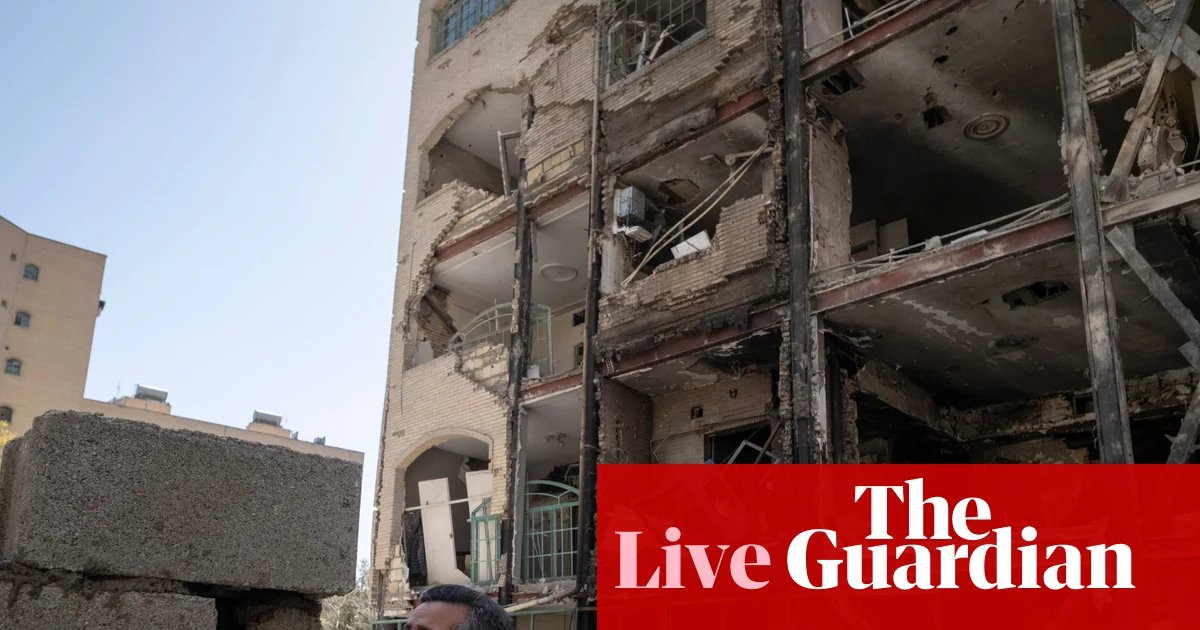
Trumps says Iran war is ‘close to over’
The Sky News interview is one of several Donald Trump has given in the past 24 hours, in which he has indicated the war with Iran may be nearing an end.
When asked by Sky whether a deal could happen before King Charles visits the US at the end of the month, Trump said: “It’s possible. Very possible. They’re beaten up pretty bad.”
In an interview with Fox News, which is scheduled to air later this morning, the US president said the Iran war was “close to over, yeah, I mean I view it as very close to over”. In a short preview of the interview posted on social media last night, Trump said: “If I pulled up stakes right now, it would take them [Iran] 20 years to rebuild that country. And we’re not finished.
“We’ll see what happens. I think they want to make a deal very badly.”
The clip came hours after he told the New York Post that another round of peace talks “could be happening over the next two days” in Pakistan.
Trump has previously suggested that the war was ending. In his address to the nation on 1 April, Trump said the war was “nearing completion” and could end in “two or three weeks”.
Key events
The Israeli military has issued another order forcing people to flee their homes south of the Zahrani river in southern Lebanon.
“The airstrikes are ongoing as the Israel Defense Forces operate with significant force in the area,” said Avichay Adraee, the Israeli military’s Arabic language spokesperson.
The UN said Israel has issued warnings and displacement orders covering approximately 14% of Lebanon, including the whole region south of the Zahrani river, most of Beirut’s southern suburbs and parts of the Bekaa region. They affect more than 100 towns and villages and have caused the displacement of more than a million people.
The Israeli military has continued its strikes on southern Lebanon, while Hezbollah said it launched rockets at several areas in northern Israel.
Lebanon’s official National News Agency reported five people were killed in an Israeli airstrike that hit the southern Lebanese town of Ansariyah, while civil defence teams and paramedics recovered four bodies after an Israeli raid in the Qadmus area.
The news agency also reported two people were killed in drone strikes on two vehicles on the Tyre-Beirut coastal highway, near the towns of Saadiyat and Jiyeh south of the Lebanese capital. The strikes were reportedly the closest to Beirut in a week, after a series of Israel attacks on the Lebanese capital on 8 April killed more than 350 people.
There was no immediate comment from the Israeli military.
Meanwhile, the Iran-backed Hezbollah group said it targeted several areas in northern Israel with rocket barrages this morning, including Metula, Kfar Giladi and Kiryat Shmona, according to reports by the Hezbollah-owned al-Manar TV.
The attacks come hours after Lebanon and Israel’s ambassadors to the US held their first direct talks in decades in Washington. They agreed to hold further direct negotiations, although Hezbollah has strongly rejected the talks.
Trumps says Iran war is ‘close to over’
The Sky News interview is one of several Donald Trump has given in the past 24 hours, in which he has indicated the war with Iran may be nearing an end.
When asked by Sky whether a deal could happen before King Charles visits the US at the end of the month, Trump said: “It’s possible. Very possible. They’re beaten up pretty bad.”
In an interview with Fox News, which is scheduled to air later this morning, the US president said the Iran war was “close to over, yeah, I mean I view it as very close to over”. In a short preview of the interview posted on social media last night, Trump said: “If I pulled up stakes right now, it would take them [Iran] 20 years to rebuild that country. And we’re not finished.
“We’ll see what happens. I think they want to make a deal very badly.”
The clip came hours after he told the New York Post that another round of peace talks “could be happening over the next two days” in Pakistan.
Trump has previously suggested that the war was ending. In his address to the nation on 1 April, Trump said the war was “nearing completion” and could end in “two or three weeks”.
Trump warns UK trade deal could ‘always be changed’
Donald Trump said he had given the UK a “good trade deal” and warned that the deal could “always be changed”.
When asked by Sky News for his thoughts on the special relationship, Trump replied: “With who?”
After Sky clarified it meant with the UK, the US president replied: “It’s the relationship where: when we asked them for help, they were not there. When we needed them, they were not there. When we didn’t need them, they were not there. And they still aren’t there.”
He added: “It’s been better, but it’s sad. And we gave them a good trade deal, better than I had to, which can always be changed.”
Trump says strained US-UK relationship will not overshadow royal visit
Donald Trump said the “special relationship” between the US and UK was in a poor state but that it will not have impact on King Charle’s upcoming state visit to America.
In an interview with Sky News, the US president once again criticised Keir Starmer over his policies, particularly on energy and immigration, and reiterated his disappointment that the UK and other Nato allies had not joined his war against Iran when the US “needed them”.
Despite fraught relations between the UK and US, King Charles will go ahead with a four-day trip to America later this month, Buckingham Palace confirmed.
Speaking hours after Buckingham Palace released details of the king’s US itinerary, Trump described Charles as a “great gentleman”.
“I’ve known him for a long time. He’s wonderful, wonderful person,” he said.
Trump insisted his strained relationship with Starmer would “not at all” overshadow the royal visit.
On the UK prime minister, Trump said Starmer had made a “tragic mistake in closing the North Sea oil”, as well as “a tragic mistake on immigration”.
The head of the International Atomic Energy Agency (IAEA) said any US-Iran agreement to end the war must include “very detailed” measures to verify Tehran’s nuclear activities.
“Iran has a very ambitious, wide nuclear programme so all of that will require the presence of IAEA inspectors,” said director general Rafael Grossi.
“Otherwise, you will not have an agreement. You will have an illusion of an agreement.”
He added that any agreement on nuclear technology “requires very detailed verification mechanisms”.
Iran has not allowed the IAEA access to its nuclear facilities bombed by Israel and the US during a 12-day war in June, according to a confidential IAEA report circulated to member states and seen by the Associated Press.
The report stressed that it “cannot verify whether Iran has suspended all enrichment-related activities” or the “size of Iran’s uranium stockpile at the affected nuclear facilities”.
Iran has long maintained that its nuclear programme is for peaceful purposes and has demanded recognition of its sovereign right to enrich uranium.
Trump continues feud with Pope Leo in Truth Social post
Donald Trump has doubled down on his criticism of Pope Leo over the war in Iran, despite earlier attacks drawing swift criticism from Catholics and the international community.
In a Truth Social post, he said:
Will someone please tell Pope Leo that Iran has killed at least 42,000 innocent, completely unarmed, protesters in the last two months, and that for Iran to have a Nuclear Bomb is absolutely unacceptable. Thank you for your attention to this matter. AMERICA IS BACK!!!
He also took aim at Nato in a separate post, writing: “NATO wasn’t there for us, and they won’t be there for us in the future!”
Trump said he would not apologise for earlier attacks on Pope Leo, whom he called weak on crime and “terrible for foreign policy” in a lengthy social media post on Sunday. He did, however, delete a post of an AI image depicting himself as a Jesus-like figure.
Giorgia Meloni, Italy’s prime minister, described Trump’s criticism of the pope as “unacceptable”.
South Korea has secured supplies of more than 270m barrels of crude oil via routes unaffected by the US blockade of the strait of Hormuz, a senior official has said.
“I hereby report to the nation that visits to four countries have secured the import of 273m barrels of crude oil by the end of this year,” Kang Hoon-sik, chief of staff to the president, said.
The amount is sufficient for more than three months of South Korea’s oil needs, Kang said after he returned from a trip to Kazakhstan, Oman, Saudi Arabia and Qatar.
Pakistani prime minister Shehbaz Sharif will depart for an official visit to Saudi Arabia on Wednesday, his office said, as Islamabad continues feverish rounds of diplomacy aimed at facilitating US-Iran peace talks.
Prime minister Muhammad Shehbaz Sharif will depart from Islamabad for Jeddah today on an official visit to Saudi Arabia, accompanied by a high-level delegation.”
Saudi Arabia is one of Washington’s regional allies to have come under attack from Iran since the outbreak of the war in February. Islamabad’s finance ministry announced on Wednesday that Saudi Arabia would provide Pakistan with $3bn to help bolster the country’s foreign reserves.
Sharif will also travel to Qatar and Turkey.
In Turkey, Sharif is expected to participate in the fifth Antalya Diplomacy Forum and hold meetings with Turkish president Recep Tayyip Erdoğan and other world leaders.
Are non-Iranian vessels transiting through the strait of Hormuz?
America’s blockade of Iranian ports is designed to choke off Iran’s oil revenues and force the regime back to the negotiating table – but it could have the added effect of removing almost two millions barrels of oil a day from the world market, further tightening global supply.
Data shows that Iran exported an average of 1.84m barrels per day in March, despite the ongoing war. But exports from Gulf countries that rely on the strait of Hormuz to get their oil to market have been severely curtailed by Iran’s defacto blockade of the strait since early March.
The US military appears to be seeking to establish secure passage for non-Iranian ships in order to restart the flow of oil through the strait – and White House officials have briefed some US media that more than 20 vessels not linked to Iran have transited through the waterway since the blockade began.
But experts and analysts who track shipping movements have questioned the accuracy of those claims.
Maritime data company Kpler said “traffic through the Strait of Hormuz remains well below typical levels” and noted just six vessels crossed through the strait on Monday, when the blockade began.
Salvatore Mercogliano, a maritime historian and an associate professor at Campbell University in North Carolina, said “the Trump Administration talks a lot about ships coming through the Strait but there is no indication yet.”
Kpler has said confidence among shipowners remains weak, with uncertainty weighing on “transit decisions.”
For now, the operating environment remains high risk, limiting any meaningful recovery in flows.”
Experts have said that despite the presence of the US navy, many shipping companies will be wary of entering or leaving the strait out of fear of attacks from Iran. German shipping giant Hapag-Lloyd has said it will not resume transiting the strait for now as the situation remains tense.
At a Turning Points USA event in Georgia on Tuesday, US vice-president JD Vance faced heckles from an audience member – who appeared to be criticising the Trump administration for its stance on Gaza.
JD Vance has said Iran will “thrive” if it commits to not having a nuclear weapon. Speaking at a Turning Point USA event in Georgia, the US vice-president said Donald Trump “doesn’t want to make, like, a small deal. He wants to make the grand bargain.”
We’re going to make it economically prosperous, and we’re going to invite the Iranian people into the world economy in a way they haven’t been in my entire life.”
Vance – who took part in weekend negotiations with Iran in Pakistan – said there was a lot of mistrust between Washington and Tehran that cannot be resolved overnight, but that Iranian negotiators wanted to make a deal and that he felt “very good about where we are.”
Talks to end the Iran war could resume in Pakistan over the next two days, Trump said on Tuesday, after the collapse of weekend negotiations prompted Washington to impose a blockade on Iranian ports. The fragile two-week ceasefire between the US and Iran still has a week to run.
Trump: ‘I think you’re going to be watching an amazing two days ahead’
Donald Trump has made further hints that talks with Iran could resume in Pakistan, telling an ABC reporter that he did not think it would be necessary to extend the two-week ceasefire that ends on 21 April.
“I think you’re going to be watching an amazing two days ahead,” Trump told reporter Jonathan Karl.
It could end either way, but I think a deal is preferable because then they can rebuild …They really do have a different regime now. No matter what, we took out the radicals.”
The signs of diplomatic engagement helped calm oil markets, pressing benchmark prices down for a second day on Wednesday. Asian stocks rose while the safe-haven dollar stabilised after falling for a seventh straight session overnight.
Summary
Welcome to the Guardian’s continuing coverage of the crisis in the Middle East.
The US military has said American forces have completely halted economic trade going in and out of Iran by sea through a blockade.
After talks between the US and Iran in Pakistan ended without a breakthrough, Donald Trump declared a naval blockade on ships using Iranian ports in the Gulf in an effort to increase pressure on the country’s economy, and as a counter to Iran’s near-total closure of the strait of Hormuz to ships using other Gulf ports.
The blockade has created further uncertainty for shippers, oil companies and war risk insurers.
On Wednesday morning, US central command (Centcom) said US forces had “achieved maritime superiority in the Middle East”.
An estimated 90% of Iran’s economy is fueled by international trade by sea. In less than 36 hours since the blockade was implemented, U.S. forces have completely halted economic trade going into and out of Iran by sea.”
-
Donald Trump has said that talks with Iran could resume in Pakistan over the next two days, according to an interview with the New York Post. “Something could be happening over the next two days, and we’re more inclined to go there,” Trump was quoted as saying.
-
US secretary of state Marco Rubio said Israel-Lebanon talks in Washington on Tuesday were a “historic opportunity”. He said that while every complexity would not be resolved immediately, he hoped the parties would begin to move forward.
-
Lebanon’s president expressed hope that direct talks would lead to an end to his country’s “suffering” after war erupted again between Israel and Hezbollah last month. “I hope that the meeting in Washington… will mark the beginning of the end of the suffering of the Lebanese people in general, and those in the south in particular,” president Joseph Aoun said in a statement, adding that “stability will not return to the south if Israel continues to occupy its lands”.
-
Lebanon’s top envoy to the US said the high-level diplomatic engagement between her country and Israel was “constructive,” but urged an end to the ongoing conflict between Israel and Iran-backed Hezbollah militants that has displaced thousands of Lebanese. After participating in Tuesday’s talks with Rubio and Israel’s ambassador to the US, Nada Hamadeh Moawad said she had “underscored the need to preserve our territorial integrity and state sovereignty”.
-
The US will not renew a 30-day waiver of sanctions on Iranian oil at sea that expires this week officials told Reuters, as the US imposes a blockade on shipments from Iranian ports.
-
UK prime minister Keir Starmer and French president Emmanuel Macron will co-host a summit in Paris on Friday focused on efforts to reopen the strait of Hormuz, Downing Street said. A spokesperson said: “The summit will advance work towards a coordinated, independent, multinational plan to safeguard international shipping once the conflict ends.”
-
Trump criticised Italian prime minister Giorgia Meloni, a political ally, in an interview published on Tuesday for her unwillingness to help in the Iran war. “I’m shocked at her. I thought she had courage, but I was wrong,” he told Italian daily Corriere della Sera.
-
Foreign ministers from Saudi Arabia, Pakistan and Egypt will meet Turkey’s top diplomat this week for talks on regional matters, a ministry source told AFP on Tuesday. “This is the third meeting of the four countries to discuss regional affairs, not specifically Hormuz,” said the source, who wished to remain anonymous.
-
Hezbollah said it targeted 13 northern Israeli towns with rockets shortly after the start of Lebanese-Israeli talks in Washington. In a statement, the group said it targeted Kiryat Shmona, Metula and 11 other towns “with simultaneous rocket salvos” at 6.15pm.
-
US treasury secretary Scott Bessent has said the underlying US economy remains strong and that growth could still exceed 3% or 3.5% this year despite the impact of the US-Israel war on Iran. Earlier on Tuesday, the International Monetary Fund (IMF) cut its growth forecasts for 2026 based on the impact of the war and said any further escalation in the conflict could trigger a global recession. Bessent however cast cuts in global growth forecasts and higher inflation projections by the IMF and World Bank as an overreaction.
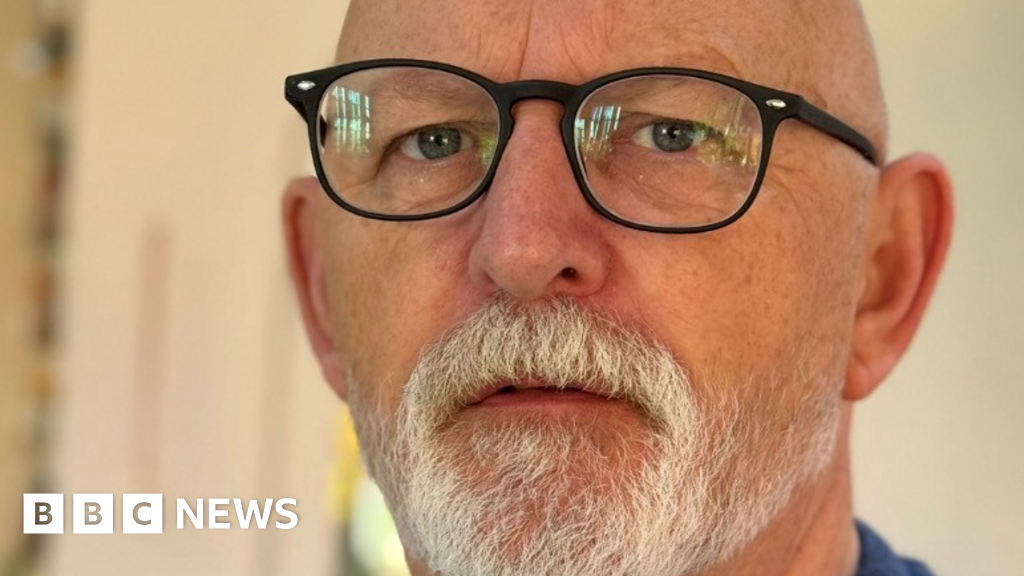
The family of Shaun Burton, say they are “devastated” by the loss.
Source link

Key events
In the opening half an hour against Cape Verde, Mikel Oyarzabal, the centre-forward, did not get a single touch.
Kyle Green gets in touch: “Your highlighting of Lalas and his absurdity is something that has prevented me from wanting to watch the coverage on Fox. While every channel has its pros and cons I just can’t.
“I’m 45 and probably the youngest of anyone who remembers him as a player instead of an opinionated insert insult here. As for the match this could be more competitive than it looks on paper Spain need a win the pressure is on them. Saudi Arabia could hold out for a draw and see what happens in their last match. “
News from the England camp, and it seems to be good news on Declan Rice.
“I’m ready and fit, raring to go. I was feeling a little bit of neural pain in my hamstring, which I was managing from after Christmas with Arsenal for a very long time. Obviously, not a lot of people would have known that. It was all behind-the-scenes stuff but it was a smart decision.
“In the end, that last 20 minutes is probably where you pick up the most, and it’s where you play a 70-minute match. But that last 20 is where you really feel your body going for it. And I think it was a smart decision because the last few days I felt really, really good.”
Alex Reid has penned today’s weekend special Football Daily.
Portugal v Uzbekistan on Tuesday enticingly pits the incredibly nice, incredibly 41-year-old-superstar-tolerant Roberto Martínez against Fabio Cannavaro, who’s won a Ballon d’Or as a player and the Chinese Super League as a coach. While the fixture following that game really does see the dream of Thomas Tuchel – in his first international job with England – taking on Queiroz, who is in charge of his ninth national side with Ghana.
The expected formations are 4-2-3-1 for Spain, and 5-3-2 for the Saudi Arabians.
The Saudi team features two Donis changes: Ali Lajami, a defender, and Nasser Al Dawsari, a midfielder, are preferred to Mohammed Abu Al Shamat and Mohamed Kanno. You may recall Salem Al Dawsari, the Saudi captain, as the man who scored the winner against Argentina.
An entertaining read, even for those of us who have just seen the clips.
In a conversation where his co-panelist is casually reminiscing about his days playing alongside Messi or exchanging shirts with Ronaldo Nazário at the World Cup, what exactly is Lalas going to talk about – coming on as a second-half substitute for Earnie Stewart in a friendly against Scotland in 1998? Helping the Kansas City Wizards finish last in the 1999 MLS Western Conference? Did Lalas enjoy an elite playing career? No. But does he do the background reading that could compensate for his relative lack of standing in a conversation with titans like Henry and Zlatan? Also no. But is he charming or funny or charismatic or otherwise magnetic on screen? Eh, no.
For the record, I once interviewed Alexi Lalas on the challenge of playing against Romario in the 1994 World Cup. He had this to say:
“He could kill you in so many different ways. If you remember from that World Cup, he scored so many types of goals. That ranged from solo adventures to an outside-of-the-right-foot half-volley off a corner kick. Romario was both the most difficult to play against and the best that I have faced.
“Roberto Baggio was doing his thing, but in terms of consistency and living up to the hype, he [Romario] was the best. As with all stars, there was a moment when the fans sit up in their seats, and that was a feeling I got with Romario. When it got close to him and the potential for his involvement in a play was there, everybody sat up in their seat. They knew that something spectacular would be happening.”
Saturday’s match reports here.
The Saudi Arabia coach, and Blackburn legend, Georgios Donis, spoke about the challenges facing his team: “Spain is not the same team when Yamal or Williams are on the bench.
“While they still have plenty of possession, they lack the individual one-on-one penetration when these two are missing. I’m not saying it’s a problem for Spain, but when those players are missing, they play in a different way. We saw this very clearly against Cape Verde.
“We are playing against one of the best teams in the world, and it’s very important that when you play against these kinds of teams, you should enjoy the experience and respect the opponent, but not too much.
“It is very hard for any team playing against Spain to have any time in possession. So what we must do is to be more in control of our movement and compact, and when the ball goes through the lines, be able to defend dynamically.
“It’s nice to see miracles in football, and we’ve seen favourites losing against underdogs. Of course, it’s great for Saudi football to have a great memory of the result against Argentina, but we aren’t drawing anything from that.
“I think we’ll feel more pressure in that [Cape Verde] game than we will against Spain.”
The Spain coach, Luis De La Fuente had this to say in his Saturday press conference: “This generation of footballers is highly competitive and really fired up… It’s going to be a completely different story,” he said at his pre-match press conference on Saturday. There is no drama or crisis. The bottom line is simply that we need to win tomorrow.”
Four changes for Spain: Lamine Yamal, Pedro Porro, Dani Olmo and Alex Baena also come into the side with Marcos Llorente, Fabian Ruiz, Ferran Torres and Gavi dropping out.
The teams – Lamine Yamal starts
Spain: Simon, Porro, Cubarsi, Laporte, Cucurella, Gonzalez, Rodri, Yamal, Olmo, Baena, Oyarzabal. Subs: Raya, Joan Garcia, Pubill, Grimaldo, Eric Garcia, Llorente, Merino, Torres, Fabian, Gavi, Pino, Williams, Zubimendi, Munoz, Iglesias.
Saudi Arabia: Al Owais, Abdulhamid, Tambakti, Lajami, Al Amri, Al Harbi, Nasser Al Dawsari, Al Khaibari, Al Juwayr, Al Buraikan, Salem Al Dawsari. Subs: Al Aqidi, Al Kassar, Majrashi, Yahya, Al Shehri, Al Boushal, Kadesh, Al Johani, Al Ghannam, Al Hajji, Al Hamdan, Mandash, Kanno, Thakri, Abu Al Shamat.
Referee: Raphael Claus (Brazil)
Perhaps one of the Saudi -players can write themselves into this high-grade selection?
Perhaps it can be their goalkeeper.
Madrid screening of Spain v Saudi Arabia cancelled due to heat
The public screening of Spain’s World Cup match against Saudi Arabia in Madrid on Sunday has been cancelled because of extreme heat forecast for the Spanish capital, officials said.
The match, due to kick off at 6pm local time on Sunday, had been scheduled to be shown on a giant screen installed by the Spanish football federation (RFEF) at a fan zone in Plaza de Colón in central Madrid.
Madrid city council and the federation decided to cancel the screening after national weather agency AEMET issued an orange heat warning – the second-highest level – for the Madrid region, with temperatures forecast to reach 40C.
“The decision has been taken with the aim of protecting the health of attendees, event staff and support services involved in the event,” Madrid city hall said in a statement, apologising for any inconvenience.
Officials urged supporters to watch the match indoors in air-conditioned spaces and avoid prolonged exposure to the heat.
Large parts of Spain are experiencing unusually high temperatures for June as a mass of hot air from North Africa moves across the Iberian Peninsula.
A total of 13 of Spain’s 17 regions are on orange alert for heat on Sunday, while the northern Basque Country bordering France is on red alert, the highest level.
Authorities advised residents and visitors to take precautions during the heatwave, including drinking water regularly, staying in cool environments, limiting outdoor physical activity during the hottest hours of the day and taking extra care of vulnerable people. AFP
Can Saudi Arabia repeat the magic of 2022?
Argentina arrived in Qatar on a 36-game unbeaten run. When Lionel Messi opened the scoring from the penalty spot after 10 minutes, a comfortable afternoon seemed in the offing. Saleh al-Shehri and Salem al-Dawsari had other ideas, Argentina had three goals disallowed for offside in the space of 13 minutes and the greatest comeback in Saudi Arabia football history was made. Argentina went on to lift the trophy, while defeats to Poland and Mexico meant the Saudis did not reach the knock-out stage.
Unai Simon over David Raya is a controversial choice for De la Fuentes. The Arsenal keeper could lay claim to being Europe’s best this season.
“Those at the Champions League final had a few more days, so I got there on the Wednesday night,” Raya says. “I arrived a bit before Fabián [Ruiz]. I was saying hello to some of the others in reception when he arrived. I went to say congratulations; that was almost the first thing I did. I couldn’t really talk [to him] after the final; I just didn’t have it in me. The next day we talked about the game properly. Just two mates chatting … I was happy for him that he could lift the trophy for a second time.”
A high pressure game for the European champions, as Sid Lowe reports.
“If we had scored one, the game would have changed,” Martín Zubimendi said. Immediately after the game, De la Fuente had offered a simple analysis: when the ball doesn’t want to go in it doesn’t want to go in, he insisted. Spain had racked up 27 shots, after all. Ferran Torres had hit the bar and seen another clear opportunity saved. Vozinha, the 40-year-old goalkeeper who stopped that, saved six more and was named the man of the match. “There’s nothing to reproach the team for,” Rodri said. “We generated chances but couldn’t put it away; the good thing is they created almost nothing.”
We wait to see what role Lamine Yamal will play today. His coach would surely like to be able to use him.
The worst mistake we could make would be to compare him to anyone. He is the midst of a process. He has exceptional footballing maturity and lives it all with total naturalness. He has great serenity and strength. We have to let him follow his path but those players who have something different are ready for that. They’re geniuses, like Dalí [who] can paint a picture, or Michelangelo. They’re different. What is exceptional to us, isn’t to them. In those extremes, they feel comfortable. Why? Because they are different. What we think is exceptional, they consider normal.
Preamble
Spain’s campaign did not get off to a flying start, and Luis de la Fuentes may wake up in the night to visions of Cape Verde’s Vozinha. He will have Georgia on his mind ever since Monday. Saudi Arabia are no pushovers and gave Uruguay a scare in their opening match. Memories of downing Argentina four years ago still abound, and so Spain might beware. They can ill afford to go into the final game with Uruguay at a disadvantage. All eyes on Lamine Yamal, whose fitness situation remains opaque, though Spain need their other forwards to come to the party.
Kick-off 5pm UK, 1pm ET, 2am AEST. Join me.

A topless man can be seen driving erratically in Edinburgh before abandoning his car and attacking a black man and a delivery rider.
Source link


Andy Burnham launches campaign against ‘headphone dodgers’ on public transport | Transport policy

Students join march against the far right at matriculation

Oxford’s traffic measures: how can a historic city manage traffic and congestion?
-

 Oxford University4 weeks ago
New to the Oxford English Dictionary this September
-

 Oxford united FC4 weeks ago
Chris Gunter steps away Wales role to focus on Oxford United
-

 Oxford united FC2 weeks ago
LIVE: Exeter City vs Oxford United – Jersey Mike's Trophy group stage
-

 Traffic & Transport2 weeks ago
Why should I have to pay more for buses if I don’t use a smartphone? | Bus fares
-
 Student Life3 weeks ago
Oxford partnership allows OpenAI to use rare Bodleian texts to train ChatGPT
-
 Traffic & Transport2 weeks ago
How poor public transport policy is putting the brake on cities | Road transport
-

 Oxford united FC3 weeks ago
Northern Ireland fans laud Oxford United defender Ciaron Brown
-

 Oxford united FC2 weeks ago
Oxford United lose to Exeter City on penalties in Jersey Mike’s Trophy