UK News
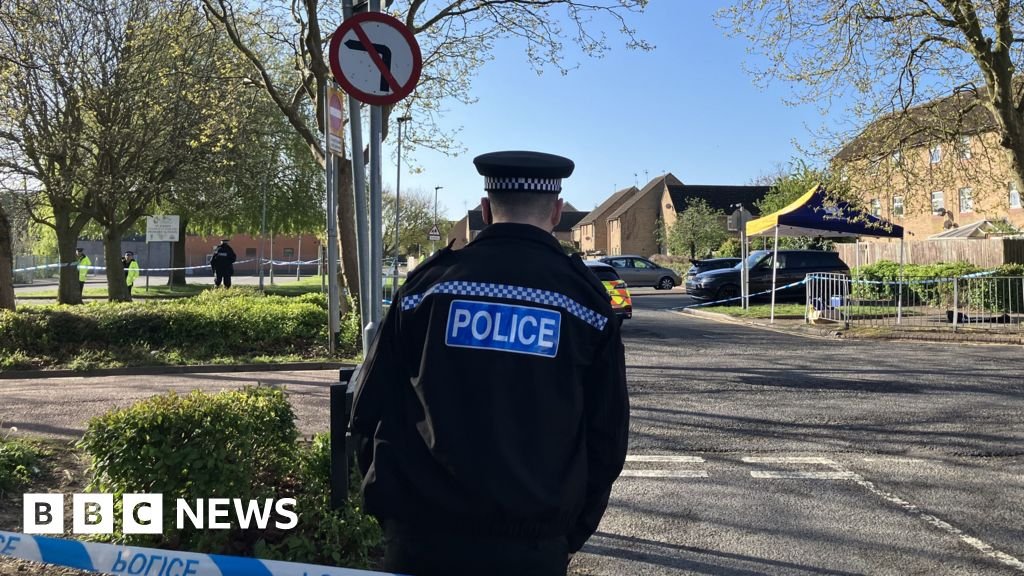
Four teens arrested over fatal stabbing of boy, 16
A large police presence is in place near a city shopping centre following the attack.
Source link
UK News
Congress returns as historic DHS shutdown is unresolved and Trump’s strict voter ID bill looms – US politics live | US Congress
Congress returns to stalled DHS talks and a high‑stakes agenda
The Senate returns to work today, while the House will hold a brief procedural session before getting back to regular business on Tuesday.
Lawmakers have still not passed a funding bill to reopen the Department of Homeland Security (DHS) subagencies affected by the record-breaking partial government shutdown, now in its ninth week.
During the two-week recess, House Republican speaker Mike Johnson took no action to advance a Senate-passed measure that would reopen agencies like the Transport Security Administration (TSA) and Coast Guard, but withhold funds for Immigration and Customs Enforcement (ICE) and border patrol. Democrats have demanded stronger guardrails on federal immigration enforcement after the killing of two US citizens by officers in Minneapolis earlier this year.
A reminder that ICE and Customs and Border Protection (CBP) were largely insulated from the shutdown because they received billions in Donald Trump’s sweeping tax policy bill, signed into law last year.
Johnson is also facing pressure from hardline House Republicans members who argue that the Senate bill hands Democrats a win. Now, John Thune, the Senate majority leader, and Johnson are expected to try to move a new tax package that includes immigration enforcement funding for at least three years, aiming to avoid another standoff on Capitol Hill. They hope to pass it through a process known as reconciliation, which only requires a simple majority to advance.
Senators will also spend much of today debating the Save America act, the president’s restrictive voter ID proposal that would require proof of US citizenship for new voters, among other measures. A reminder that the legislation is unlikely to clear the 60-vote filibuster threshold.
Key events
Trump warns that Iranian ships who come close to US blockade will be ‘immediately eliminated’
As the US blockade of the strait of Hormuz begins, Donald Trump has vowed that any Iranian ships that come “anywhere close” will be “immediately ELIMINATED”. In a post to Truth Social, the president added that US forces will use “the same system of kill that we use against the drug dealers on boats at Sea. It is quick and brutal.”
Following the failed peace negotiations in Islamabad over the weekend, Trump reiterated that Iran’s navy had been “obliterated”, minutes after the blockade on Iranian ports in the vital waterway began.
Federal judge dismisses Trump lawsuit against Wall Street Journal over Epstein birthday book reporting
A federal judge has dismissed Donald Trump’s $10bn lawsuit against Wall Street Journal and its publisher Dow Jones, after the president claimed the Rupert Murdoch-owned outlet defamed him by reporting on the president’s alleged message to Jeffrey Epstein, as part of the late sex offender’s 50th birthday album.
Judge Darrin Gayles said that Trump’s legal team failed to proved that the Journal acted with “actual malice”, a key requirement in defamation cases involving a public figure. The ruling also noted that the president failed to prove that the Journal’s reporting resulted in “special damages”, which amount to out-of-pocket losses.
Congress returns to stalled DHS talks and a high‑stakes agenda
The Senate returns to work today, while the House will hold a brief procedural session before getting back to regular business on Tuesday.
Lawmakers have still not passed a funding bill to reopen the Department of Homeland Security (DHS) subagencies affected by the record-breaking partial government shutdown, now in its ninth week.
During the two-week recess, House Republican speaker Mike Johnson took no action to advance a Senate-passed measure that would reopen agencies like the Transport Security Administration (TSA) and Coast Guard, but withhold funds for Immigration and Customs Enforcement (ICE) and border patrol. Democrats have demanded stronger guardrails on federal immigration enforcement after the killing of two US citizens by officers in Minneapolis earlier this year.
A reminder that ICE and Customs and Border Protection (CBP) were largely insulated from the shutdown because they received billions in Donald Trump’s sweeping tax policy bill, signed into law last year.
Johnson is also facing pressure from hardline House Republicans members who argue that the Senate bill hands Democrats a win. Now, John Thune, the Senate majority leader, and Johnson are expected to try to move a new tax package that includes immigration enforcement funding for at least three years, aiming to avoid another standoff on Capitol Hill. They hope to pass it through a process known as reconciliation, which only requires a simple majority to advance.
Senators will also spend much of today debating the Save America act, the president’s restrictive voter ID proposal that would require proof of US citizenship for new voters, among other measures. A reminder that the legislation is unlikely to clear the 60-vote filibuster threshold.
As we noted earlier, Eric Swalwell’s decision to suspend his campaign for governor on Sunday, even as he denies allegations from four women who accuse him of sexual misconduct and assault, did not end the pressure the congressman faces.
On Sunday afternoon, his troubles deepened when the US Department of Homeland Security announced an investigation into allegations the US representative hired “a Brazilian national as a nanny without lawful work authorization”.
The claim that Swalwell and his wife might have violated immigration law by employing a Brazilian woman who did not have a work permit to care for their children was detailed in a 68-page complaint filed with federal immigration officials in February by Joel Gilbert, a California film-maker who calls himself “the conservative Michael Moore”.
Gilbert, who mailed a conspiratorial documentary about Barack Obama to voters in swing states before the 2012 election, and has made films attacking Michelle Obama, Bill Clinton and Al Gore, and others celebrating Donald Trump, denied that he was a Republican political operative. “I just kind of follow the truth where I see it,” he said in an interview.
A reminder that my colleagues are covering the latest developments out of the Middle East at our dedicated live blog. This includes the latest reaction to Donald Trump’s declaration that the US Navy would start blockading the Hormuz strait of Hormuz at 10am ET.
Since Trump’s announcement, the price of oil has leapt again, beyond $100 per barrel. Brent crude – the international standard – rose 7% to $102.29.
Follow along here:
Donald Trump is in Washington today. He’s spending most of the day in policy meetings and signing time. These will be closed to the press but we’ll let you know if anything changes. At 7pm ET, the president and first lady will welcome King Willem-Alexander and Queen Maxima of the Netherlands to the White House for a state dinner.
US-born Pope Leo XIV has defended his position of seeking peace, after Donald Trump criticised him for “catering to the Radical Left”.
“I have no fear of the Trump administration or speaking out loudly of the message of the Gospel, which is what I believe I am here to do, what the church is here to do,” the pontiff said.
“We are not politicians, we don’t deal with foreign policy with the same perspective (as) he might understand it,” he continued. “But I do believe in the message of the Gospel, as a peacemaker.”
This comes after Leo suggested over the weekend that “delusion of omnipotence” was fuelling the US-Israel war in Iran. In response, Trump said he doesn’t think the pontiff is not “doing a very good job”.
Both Trump and Pete Hegseth, his defence secretary, have invoked God and religious language in public messaging during the conflict. Hegseth has even framed the war effort as divinely supported, a sentiment that the pope has repeatedly refuted.
“Jesus is the king of peace, who rejects war, whom no one can use to justify war,” he said on Palm Sunday. “He does not listen to the prayers of those who wage war but rejects them.”
Congressman Eric Swalwell’s departure from the California governor race comes at a pivotal moment in the “wide-open” primary race, just weeks before voters receive postal ballots ahead of the 2 June election.
This jungle primary sees candidates of all parties competing, and the top two finishers regardless of party will advance to the November general election. The winner of the election will replace outgoing governor Gavin Newsom and lead the United States’ most populous state.
The other Democrat candidates include billionaire activist Tom Steyer, who has put at least $110m into television advertising, former Rep Katie Porter, former secretary of health and human services Xavier Becerra, former Los Angeles mayor Antonio Villaraigosa, California superintendent of public instruction Tony Thurmond, San Jose mayor Matt Mahan, and former state controller Betty Yee.
The deadline to enter the race ended in March, meaning the current roster of candidates is set and ballots are due to be sent out at the start of May. While Swalwell has suspended his campaign, his name cannot be removed from the ballot.
“None of these candidates really have a lane,” said Garry South, a longtime California Democratic strategist, as reported by CNN. “The race is wide open,” he said in an interview. “Today is Day 1 of that new race, and we all move forward.”
Historically, Republican candidates have struggled to win statewide races in the heavily Democratic state of California. However, in this election, the Democrat-heavy voter base has been split between candidates, leaving two Republicans, Steve Hilton and Chad Bianco, near the top of early primary polls.
The general election is due to take place on 3 November, and the top two finishers will advance to it, regardless of their party.
Calls grow for Democratic congressman to resign from House amid sexual assault allegations
Welcome to our live coverage of US politics.
Representative Eric Swalwell, the Democratic frontrunner in the fiercely contested race to be governor of California, has suspended his campaign amid a series of sexual assault and misconduct allegations by a former staff member and at least three other women.
The woman who worked for Swalwell said the California congressman had sexually assaulted her twice when she was too inebriated to consent, according to a report by the San Francisco Chronicle, which was published on Friday.
Three other women also accused Swalwell of misconduct, according to CNN. The women said Swalwell had sent them unsolicited nude photographs or explicit messages.
In a statement posted online, Swalwell, 45, said he would “fight the serious, false allegations that have been made – but that’s my fight, not a campaign’s”.
Swalwell denies all allegations and claims that they are an effort to disrupt his campaign. He has sent cease-and-desist letters to all accusers.
But calls are growing for him also to step aside from the House with some representatives saying they would support the rare step of expelling him should he refuse to go.
With the House returning to session Tuesday, the question of whether to expel Swalwell could come to a head quickly. Republican Anna Paulina Luna, of Florida, said Saturday that she would be filing a motion to start the process.
Expulsion votes in the House are rare and require a two-thirds majority, but there is recent precedent for taking the step. Republican George Santos of New York in 2023 became just the sixth member in House history to be ousted by colleagues for his conduct.
Fellow Democrats Jared Huffman, Pramila Jayapal and Teresa Leger Fernández said they would vote to expel Swalwell from the House, though they said they also support expelling Republican Tony Gonzales of Texas who admitted to an affair with a former staff member who later died by suicide.
In addition to the sexual assault allegation, Swalwell’s troubles deepened when the US Department of Homeland Security announced an investigation into allegations the US representative hired “a Brazilian national as a nanny without lawful work authorization”.
The claim was filed by Joel Gilbert, a California film-maker and conspiracy theorist who calls himself “the conservative Michael Moore”. In the 68-page-long complaint, Gilbert alleges that Swalwell and his wife employed a Brazilian woman who did not have a work permit to care for their children – and therefore violated immigration law.
Stay with us for all the developments. In other news:
-
Pope Leo XIV has said he has “no intention” of debating president Donald Trump over the Iran war. This comes after Leo suggested over the weekend that “delusion of omnipotence” was fuelling the US-Israel war in Iran. In response, Trump said he doesn’t think the pontiff is not “doing a very good job” and that the US-born leader of the Catholic church was “a very liberal person”. “I’m not a fan of Pope Leo,” he said in a social media post, while also suggesting the pontiff should “stop catering to the Radical Left”. Speaking to reporters on Monday, Leo said: “I have no intention to debate with (Trump). The message is the same: to promote peace.”
-
Trump has said the US Navy would start blockading the Hormuz strait and also prohibit every vessel in international waters that had paid a toll to Iran. The US Central Command said later it would begin a blockade of all Iranian Gulf ports and coastal areas on Monday at 10am ET (5.30pm in Iran and 2pm GMT), effectively seizing control of maritime traffic in the strait of Hormuz.
UK News
Former Arsenal player denies two new counts of rape
Thomas Partey, 32, pleads not guilty to two new allegations of rape at Southwark Crown Court.
Source link
UK News
Hungarian election winner Magyar vows to rebuild EU relationship after stunning defeat of Viktor Orbán – Europe live | World news
Magyar pledges to lead constructive EU policy and seek compromises on tricky issues
After some 20 minutes, Magyar is turning towards foreign policy now.
He says the Hungarians are proud to be a part of the EU and Nato, even as he acknowledges some of the EU’s flaws with its networks of lobbies and interests.
“It’s a complicated bureaucratic, compromise-seeking … organisation,” he says.
But he insists “you can find compromises” that will work for Hungary.
“I am sure we will have debates … but we are not going there to fight for the sake of fighting so we can write on billboards that Brussels is evil and needs to be stopped,” he says in another swipe at Orbán.
Again: expect him to get asked about what these compromises on key issues – such as the rule of law, migration and Ukraine – could look like when we eventually get to Q&A.
Key events
-
Magyar says Hungary ‘cannot change geography’ on energy as he hints at removing sanctions against Russia if Ukraine war ends
-
Magyar promises two-term limit for PM, effectively blocking potential Orbán return
-
‘We will not take unlawful measures to restore rule of law,’ Magyar commits
-
Magyar repeats call for president Sulyok to resign from office
-
Hungarian foreign minister is destroying documents on EU sanctions, Magyar alleges
-
Magyar pledges to lead constructive EU policy and seek compromises on tricky issues
-
Magyar defends ‘good kind of populism’ as he urges EU leaders to reconnect with electorate
-
Magyar says Hungary ‘stands for peace,’ criticises Orbán’s focus on foreign affairs
-
Hungarians voted ‘not just for change of government, but of regime,’ Magyar says, as he recommits Hungary to EU
-
Magyar urges Hungarian president to convene new parliament as soon as possible in early May
-
Watch Magyar’s press conference live
-
Waiting for Péter Magyar press conference
-
EU ready to work with new Hungarian government ‘as soon as possible’
-
‘People do not normally dance in streets over politics’
-
Who is Péter Magyar, Hungary’s likely next prime minister?
-
What Europe does in response will determine if Magyar can succeed
-
‘No far-right leader can fill Orbán’s shoes’
-
‘After defeating Orbán, Magyar now faces daunting task of fighting Orbánism’
-
Magyar says his government will work for ‘free, European’ Hungary
-
Orbán allies in Czech Republic, Slovakia congratulate Magyar with praise for Orbán
-
Magyar’s win sends ‘very clear signal against right-wing populism,’ Germany’s Merz says
-
Morning opening: Change of regime, not just government
Magyar then gets asked about Poland as he hails his special relationship with the Polish government and plans to make Warsaw his first foreign trip, hopefully in early May.
He jokes that he will want to meet with the country’s conversative president, Karol Nawrocki, too – even though he didn’t congratulate him on the win and appeared to support Orbán’s relection.
He also gets asked about two former Polish government ministers evading the Polish justice system in Budapest. He jokingly advises them not to buy too much furniture from Ikea and don’t get too comfortable in the capital.
He then also makes similar points about the importance of regional cooperation with Austria and other countries in CEE.

Jakub Krupa
For all the enthusiasm among Europe’s liberals and progressives in response to Tisza’s win last night, his comments on Russia will serve as a handy reminder that there still will be some fairly big issues in which Hungary will have a distinctively different view to the EU mainsteam.
That list is likely to include Russia, Ukraine, energy, and migration policies, among others.
Magyar says Hungary ‘cannot change geography’ on energy as he hints at removing sanctions against Russia if Ukraine war ends
Magyar turns to energy for a bit, and he says that Hungary “cannot change geography” and will need to figure out a way forward on energy imports, also from Russia.
He says:
Russia will be there, Hungary will be here. But we will try to diversity.
He adds that “that does not mean that we want to detach ourselves; but we want to buy oil at low prices securely.”
“But with the Druzhba pipeline, the Friendship oil pipeline and what’s happened there, we can see that it threatens Hungary’s energy supply; what’s happening in Tehran in Iran threatens our energy supply,” so Hungary will need to “diversity.”
But here comes the tricky bit.
He then says he is hopeful that the Russian aggression of Ukraine would end soon and “then immediately, Europe will lift the sanctions, because we are neighbours to Russia and it is not in Europe’s interests to buy raw materials at higher prices because that destroys our competitiveness.”
“I understand the moral issues … or principles, and I will protect human rights as much as possible, … but let’s not shoot ourselves in the leg,” he says.
Expect these comments to get some scrutiny as there is limited appetite for removing the sanctions or returning to normal energy imports from Russia.
Magyar gets now a question about his earlier comments about Szijjártó and his allegations (14:39) that the foreign minister is trying to get rid of some confidential documents ahead of the government change.
He doesn’t give away too much and merely says it comes from “an insider” at the ministry, with many officials turning to Tisza to blow the whistle on the outgoing government’s actions.
Magyar gets asked about his phone call with Orbán last night, in which the outgoing PM congratulated him on the election win.
He tells a story of how the call came about, via an earlier call from one of Orban’s closest aides Gergely Gulyás, his former friend from his time at Fidesz and the godfather of his son.
In a classic Millenial moment, he says he asked for the last four digits of Orbán’s phone number in return, because he otherwise doesn’t take phone calls from unknown numbers.
Fair enough.
Turns out it was a very short conversation, though.
Magyar promises two-term limit for PM, effectively blocking potential Orbán return
Magyar is now talking about his future government and top jobs, but says he won’t reveal the key names just yet.
But he talks about the structure of government more broadly.
Earlier he said he would like to introduce a two-term limit for the prime minister, and commit to it in the constitution.
He now says that it would also apply retrospectively, effectively banning Orbán – who served in the top role for 20 years in total – from becoming a prime minister ever again.
He then talks about his plans to deal with corruption and to end political interference in police and administrative procedures. He wants a new anti-corruption office, tasked with recovery of fraudulently spent money, to be up and running by June.
‘We will not take unlawful measures to restore rule of law,’ Magyar commits
Curiously, discussing the president’s future, Magyar makes it clear that despite the two-third majority in the new parliament, he will be careful about how he uses it and wouldn’t move
“We will not take unlawful measures to restore the rule of law that way,” he declares.
But he repeats that Sulyok should essentially be gone from office before the 70th anniversary of the 1956 revolution in October.
Magyar repeats call for president Sulyok to resign from office
Magyar repeats his call to get president Tamás Sulyok to step down from his office, as he calls him a “puppet” of Viktor Orbán.
“He was appointed to sign everything; every document that he is presented with – whether it’s the menu or the constitution or the laws – so we don’t need people like that. To me, he is not the president,” he says.
Magyar says the report about Szijjártó offers a hint at how difficult this transition from the Orbán era will be.
He says normally an incoming PM gets a national security briefing from the outgoing leader, but he does not expect to get one.
He alleges there are lots of legal documents that the Hungarian public or even he don’t know about, including on international obligations and loans overseas.
“We will have to get our hands on all of the documents that haven’t been shredded” to figure out the detail, he says.
He says his government will try to make them public whenever possible and not breaching confidentiality clauses to put more light on the dealings of the outgoing government.
And with that, we finally go into the Q&A.
In a nice touch, Magyar’s spokesperson gives the floor to independent Hungarian media first in recognition of their hard work under the previous government.
I will bring you slightly less detailed coverage of questions on domestic issues – he is currently discussing the value of holding open cabinet meetings – but fear not, I will bring you all the key lines on foreign affairs.
Hungarian foreign minister is destroying documents on EU sanctions, Magyar alleges
Oh, that’s explosive.
At one point during the press conference, Magyar got a piece of paper with a message on it which clearly disrupted his flow.
He pauses and tells reporters he has learned that the country’s foreign minister Péter Szijjártó, who recently attracted scrutiny over his ties with Russia, is reportedly at the ministry of foreign affairs “destroying documents that have to do with sanctions” against Russia.
“They are shredding documents, and that’s not going to help them – but this is just to give you some context about the situation in Hungary,” he says.
He compares it to attempts to destroy public record “just like in the old communist age.”
Magyar pledges to lead constructive EU policy and seek compromises on tricky issues
After some 20 minutes, Magyar is turning towards foreign policy now.
He says the Hungarians are proud to be a part of the EU and Nato, even as he acknowledges some of the EU’s flaws with its networks of lobbies and interests.
“It’s a complicated bureaucratic, compromise-seeking … organisation,” he says.
But he insists “you can find compromises” that will work for Hungary.
“I am sure we will have debates … but we are not going there to fight for the sake of fighting so we can write on billboards that Brussels is evil and needs to be stopped,” he says in another swipe at Orbán.
Again: expect him to get asked about what these compromises on key issues – such as the rule of law, migration and Ukraine – could look like when we eventually get to Q&A.
Magyar defends ‘good kind of populism’ as he urges EU leaders to reconnect with electorate
Magyar also makes a point to talk about how much time he spent on the campaign trail, meeting with ordinary people.
He says he gets asked about why his campaign was so successful, and says “the secret lies in that politics is about people, and this is what many politicians forgot.”
“I can see that many places in Europe, there are crises in government, one after the other. Mainstream politicians are frightened that extreme forces are gaining more and more ground and the party system is overturned in many European countries.
I can send a message, as I was asked personally by Western European politicians about the secret: you have to stay with the people. You have to put the work into it, whether you like it or not. I visited 700 towns and villages in two years. There are towns and villages some I visited seven times.
I was on Hungarian streets and squares more than in my own bed in my own flat. This meant that I met my three sons far less than I would have liked to.
We went around Hungary. I was there in the smallest settlements. I met many million people. I looked into the eyes of hundreds of 1000s of people. We shook our hands and we asked, How can we help? How can we prove that politics can be beautiful, it can be frank, it can be honest, it can be fair, and it can be useful.
Many people can say this is populism. If it is, it’s a good kind of populism, because this is what politics should be about, not politically correct talk, talk, but honesty, humanity.”
He then goes on to say that Facebook posts and social media frenzies will never replace that person-to-person element of politics.
Magyar says Hungary ‘stands for peace,’ criticises Orbán’s focus on foreign affairs
Magyar also pushes back on what he calls “lies” of the previous government, saying that the new government will also be committed to peace in Europe, despite scaremongering posters plastered all over Hungary and “Goebbels-like, North Korea-like propaganda” about his intentions towards Ukraine.
“In Hungary, nobody wants war. Hungary stands for peace. The Tisza government will be the government of peace,” he says.
I am sure he will get questions on what is specifically means for Hungary’s relations with Ukraine later.
He then takes a swipe at Orbán for being too focused on foreign affairs – with Russia, Ukraine, the US and Iran – and not on resolving domestic issues facing the electorate.
“He spoke about everything except issues, problems that affected the Hungarian people and the Hungarian people said no to all this,” he says.
Our history is not written in Brussels or in Washington, but on Hungarian streets, and in Hungarian squares.
Hungarians voted ‘not just for change of government, but of regime,’ Magyar says, as he recommits Hungary to EU
Magyar makes a point to stress that the electorate voted “not just for a change of government, but for a change of the regime” to move away from what he says are compromised institutions and structures of the Orbán era.
He also makes a point that his administration will make inevitably make mistakes, but will own them – and “our country will no longer be a country of no consequences.”
He also stresses his pro-EU message and notes it was particularly symbolic that the vote was held on the 23th anniversary of Hungary’s accession to the EU.
He says the electorate clearly voted to anchor Hungary firmly in the EU, “no matter what the outgoing … government was planning or trying to lead us to.”
Magyar urges Hungarian president to convene new parliament as soon as possible in early May
Magyar urges the Hungarian president to convene the new parliament at the earliest possible day after the election result becomes final on 4 May, even potentially the very next day, on 5 May.
He says there is no time to waste and the new administration is keen to get going as quickly as possibly.
“Hungary is in trouble in more than one ways. It’s been robbed, it’s been betrayed, it’s been indebted, it’s been devastated. We became the most impoverished and the most corrupt country in the EU,” he says.
Magyar opens by saying he has phone calls planned with other European leaders this afternoon and doesn’t want to keep them waiting so we need to get on with it.
And so the briefing gets under way.
He repeats his main lines from yesterday, saying that the Hungarian electorate “wrote history yesterday,” remarking on how much the result resonated around the world.
He says the only reason that Viktor Orban’s party got so many votes anyway was down to the entire state apparatus helping them in the election campaign.
Watch Magyar’s press conference live
You can watch Magyar’s press conference along with us below, and I will bring you the key lines here too.
Waiting for Péter Magyar press conference

Jakub Krupa
in Budapest
We are now waiting for Péter Magyar’s press conference at which he is expected to take some questions from the international media. It should get under way in the next half hour.
The conference will be hosted at a massive theatre-style venue, reflecting the incredible level of truly global interest in Hungary’s next prime minister – and the life after Viktor Orbán. This is not just any other election in the region.
Tisza’s staff are taking it very seriously too: as I type, they are… ironing the flags so they look absolutely spotless on stage – and, to be fair, they do look great!
-
Crime & Safety4 weeks agoPolice race to crash on Oxfordshire A34 with severe traffic building
-
Oxford News4 weeks agoGary Lineker’s nephew-in-law death inquest to be next week
-
Oxford News4 weeks agoSchwarzman Centre to open doors to public with major celebration
-
Business & Technology3 days agoAqilla launches AI invoice tool to speed accounts payable
-
Crime & Safety1 week agoAmerican Akita and a French Bulldog seized after dog killed
-
Crime & Safety4 weeks agoWiltshire 12-year-old girl with Oxfordshire links missing
-
Oxford News5 days agoHow drivers react to new monk statue on town roundabout
-
Oxford News2 days agoOxfordshire children care provider employed illegal staff