
UK News
No need for hard stares as Paddington: The Musical triumphs at Olivier awards | Olivier awards


It was a night of sweet victory for Michael Bond’s marmalade-loving bear as Paddington: The Musical dominated the Olivier awards on Sunday. Amid the tuxes and gowns of a glittering ceremony at the Royal Albert Hall in London, the duffle coat-wearing bear got his sticky paws all over seven prizes including best new musical.
The award for best actor in a musical went to the duo who play Paddington: James Hameed provides the lovable hero’s voice and is the remote puppeteer, while Arti Shah performs in the furry costume. The show’s baddies, Tom Edden (as the busybody Mr Curry) and Victoria Hamilton-Barritt (as Millicent Clyde, who wants Paddington to literally get stuffed), won best supporting actor and best supporting actress in a musical respectively. Luke Sheppard was named best director for the production, which also picked up awards for costume design (Gabriella Slade and Tahra Zafar) and set design (Tom Pye and Ash J Woodward).
Paddington: The Musical, which has music and lyrics by McFly’s Tom Fletcher and a book by Jessica Swale, shared the highest number of nominations (11) with Stephen Sondheim and James Lapine’s Into the Woods. That show, at the Bridge theatre, took home two awards: best musical revival and best lighting design (Aideen Malone and Roland Horvath).
The ceremony was hosted by actor, comedian and Celebrity Traitors finalist Nick Mohammed who joked that he had repeatedly been asked by people (including his own agent) how he had got such a gig. He even roped in nominee Tom Hiddleston to hold up his cue cards.
There were performances on stage from stars including Rachel Zegler who won best actress in a musical for Evita, one of last year’s most talked about shows as it featured a scene in which Zegler sang from the London Palladium’s balcony to huge crowds on the street below. Zegler praised director Jamie Lloyd for creating such an “accessible moment” of theatre for passersby and thanked Londoners for “making me feel so welcome here”.
Fabian Aloise won best theatre choreographer for Evita while Elaine Paige, who played Eva Perón in the first production of that musical in 1978, won the Special award for her stage career, presented to her by Evita composer Andrew Lloyd Webber. Paige said it was a “pinch me moment” and praised her father for encouraging a spirit of perseverance that had helped her during her “remarkable adventure” in the industry.
Dramas exploring the theme of justice picked up several awards. Rosamund Pike beat nominees including Cate Blanchett and Marianne Jean-Baptiste to the prize for best actress for her performance in Inter Alia as a karaoke-loving crown court judge whose personal and professional life are rocked by a shock revelation. Pike, whose performance also won best actress at the Critics’ Circle theatre awards last month, originally performed the role at the National Theatre, has reprised it for a West End run and will take the play to Broadway in November. The play was written by Suzie Miller whose Prima Facie brought Jodie Comer the best actress prize at the Oliviers in 2023. Pike said it had been 14 years since she last performed on stage and that she had felt it was a huge risk to return. Praising her fellow nominees in the category, she said they had moved her to tears.
Inter Alia lost to James Graham’s Punch in the best new play category. Graham’s play is based on the true story of a one-punch death. Julie Hesmondhalgh won best actress in a supporting role for playing Joan Scourfield who sought restorative justice after her son James Hodgkinson died when he was hit by Jacob Dunne. Graham was joined on stage by Dunne and Scourfield and the playwright described their “extraordinary journey” towards healing. Hesmondhalgh said the play had a message of hope, compassion, forgiveness and love in a world of division, violence and conflict.
Ivo van Hove’s production of Arthur Miller’s All My Sons won the award for best revival, presented by Helen Mirren and Ian McKellen who joked that he would have to improvise with a Shakespeare speech during their introduction as he could not read the Autocue. All My Sons also won the best supporting actor prize for Paapa Essiedu who spoke of the importance of youth theatres and called for funding for access programmes to ensure the next generation of actors and audiences come through.
In one of the night’s biggest upsets, the star of All My Sons, Breaking Bad’s Bryan Cranston, was beaten to the best actor award by Jack Holden for Kenrex. Holden played every role in the drama, which he also co-wrote, about the citizens of a small US town taking the law into their own hands. Praising his “esteemed” fellow nominees, he joked that most people wouldn’t know who he is and encouraged audiences to take a chance on new talent when choosing what to see at the theatre. Kenrex also won a second prize for Giles Thomas’s sound design. The Olivier awards honour London productions but Kenrex and Punch were regional theatre triumphs: the former was a Sheffield Theatres transfer and Punch originated at Nottingham Playhouse.
There were no awards (from six nominations) for the transfer of the Broadway hit Stereophonic, which in 2024 became the most nominated play in the history of the Tony awards. Another US import, the uproarious Oh, Mary!, won the prize for best new entertainment or comedy play. Best family show went to Guardian journalist Nick Ahad’s rambunctious yet poignant adaptation of Onjali Q Raúf’s novel The Boy at the Back of the Class, staged at the Rose theatre.
The prize for outstanding musical contribution went to Chris Fenwick (for musical supervision and arrangements) and Sean Hayes (for his live piano performance of Rhapsody in Blue) for Good Night, Oscar at the Barbican. The award for best new production in an affiliate theatre went to The Glass Menagerie, the closing production at the Yard in Hackney Wick before the theatre reopens in a new home. The best new dance production was Into the Hairy by Sharon Eyal for S-E-D at Sadler’s Wells and best new opera production was Dead Man Walking by the English National Opera at London Coliseum. This year, Wayne McGregor won the award for outstanding contribution to dance and Danielle de Niese was recognised for her outstanding contribution to opera. Industry recognition awards went to children’s playwright David Wood; Betty Laine, founder of Laine Theatre Arts college; and Linda Tolhurst, stagedoor keeper at the National Theatre for almost half a century.
But it will go down in history as Paddington’s big night – the musical’s tally of seven awards is the same as past Oliviers successes Matilda the Musical, Hamilton, Cabaret and Sunset Boulevard.
This year’s ceremony included special performances to mark the 40th anniversary of The Phantom of the Opera in the West End and the 20th anniversary of Wicked.
The Olivier awards, which this year celebrated their 50th anniversary, are overseen by the Society of London Theatre. The winners were chosen by a team of industry figures, stage luminaries and theatre-loving members of the public.
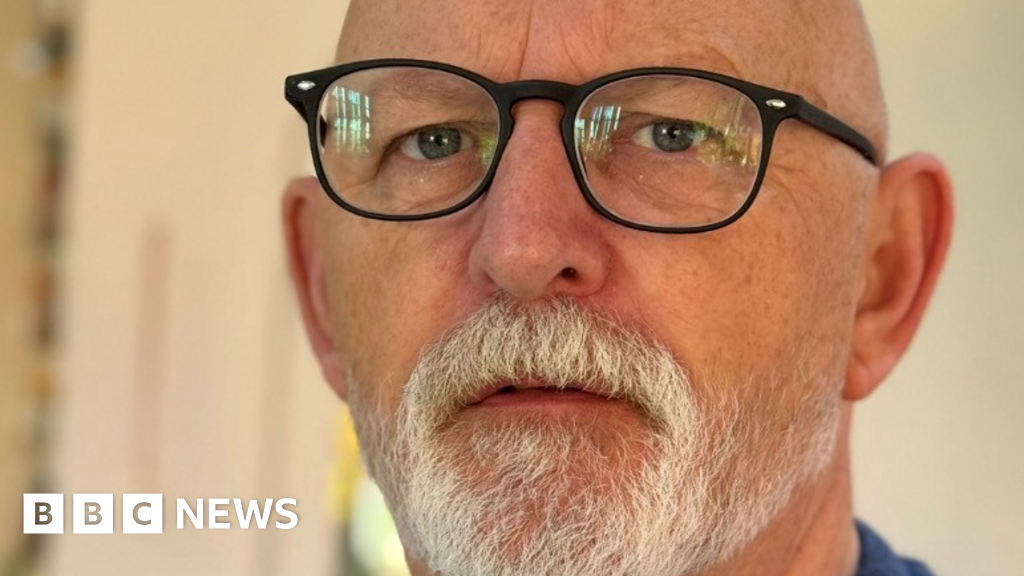
The family of Shaun Burton, say they are “devastated” by the loss.
Source link
Key events
In the opening half an hour against Cape Verde, Mikel Oyarzabal, the centre-forward, did not get a single touch.
Kyle Green gets in touch: “Your highlighting of Lalas and his absurdity is something that has prevented me from wanting to watch the coverage on Fox. While every channel has its pros and cons I just can’t.
“I’m 45 and probably the youngest of anyone who remembers him as a player instead of an opinionated insert insult here. As for the match this could be more competitive than it looks on paper Spain need a win the pressure is on them. Saudi Arabia could hold out for a draw and see what happens in their last match. “
News from the England camp, and it seems to be good news on Declan Rice.
“I’m ready and fit, raring to go. I was feeling a little bit of neural pain in my hamstring, which I was managing from after Christmas with Arsenal for a very long time. Obviously, not a lot of people would have known that. It was all behind-the-scenes stuff but it was a smart decision.
“In the end, that last 20 minutes is probably where you pick up the most, and it’s where you play a 70-minute match. But that last 20 is where you really feel your body going for it. And I think it was a smart decision because the last few days I felt really, really good.”
Alex Reid has penned today’s weekend special Football Daily.
Portugal v Uzbekistan on Tuesday enticingly pits the incredibly nice, incredibly 41-year-old-superstar-tolerant Roberto Martínez against Fabio Cannavaro, who’s won a Ballon d’Or as a player and the Chinese Super League as a coach. While the fixture following that game really does see the dream of Thomas Tuchel – in his first international job with England – taking on Queiroz, who is in charge of his ninth national side with Ghana.
The expected formations are 4-2-3-1 for Spain, and 5-3-2 for the Saudi Arabians.
The Saudi team features two Donis changes: Ali Lajami, a defender, and Nasser Al Dawsari, a midfielder, are preferred to Mohammed Abu Al Shamat and Mohamed Kanno. You may recall Salem Al Dawsari, the Saudi captain, as the man who scored the winner against Argentina.
An entertaining read, even for those of us who have just seen the clips.
In a conversation where his co-panelist is casually reminiscing about his days playing alongside Messi or exchanging shirts with Ronaldo Nazário at the World Cup, what exactly is Lalas going to talk about – coming on as a second-half substitute for Earnie Stewart in a friendly against Scotland in 1998? Helping the Kansas City Wizards finish last in the 1999 MLS Western Conference? Did Lalas enjoy an elite playing career? No. But does he do the background reading that could compensate for his relative lack of standing in a conversation with titans like Henry and Zlatan? Also no. But is he charming or funny or charismatic or otherwise magnetic on screen? Eh, no.
For the record, I once interviewed Alexi Lalas on the challenge of playing against Romario in the 1994 World Cup. He had this to say:
“He could kill you in so many different ways. If you remember from that World Cup, he scored so many types of goals. That ranged from solo adventures to an outside-of-the-right-foot half-volley off a corner kick. Romario was both the most difficult to play against and the best that I have faced.
“Roberto Baggio was doing his thing, but in terms of consistency and living up to the hype, he [Romario] was the best. As with all stars, there was a moment when the fans sit up in their seats, and that was a feeling I got with Romario. When it got close to him and the potential for his involvement in a play was there, everybody sat up in their seat. They knew that something spectacular would be happening.”
Saturday’s match reports here.
The Saudi Arabia coach, and Blackburn legend, Georgios Donis, spoke about the challenges facing his team: “Spain is not the same team when Yamal or Williams are on the bench.
“While they still have plenty of possession, they lack the individual one-on-one penetration when these two are missing. I’m not saying it’s a problem for Spain, but when those players are missing, they play in a different way. We saw this very clearly against Cape Verde.
“We are playing against one of the best teams in the world, and it’s very important that when you play against these kinds of teams, you should enjoy the experience and respect the opponent, but not too much.
“It is very hard for any team playing against Spain to have any time in possession. So what we must do is to be more in control of our movement and compact, and when the ball goes through the lines, be able to defend dynamically.
“It’s nice to see miracles in football, and we’ve seen favourites losing against underdogs. Of course, it’s great for Saudi football to have a great memory of the result against Argentina, but we aren’t drawing anything from that.
“I think we’ll feel more pressure in that [Cape Verde] game than we will against Spain.”
The Spain coach, Luis De La Fuente had this to say in his Saturday press conference: “This generation of footballers is highly competitive and really fired up… It’s going to be a completely different story,” he said at his pre-match press conference on Saturday. There is no drama or crisis. The bottom line is simply that we need to win tomorrow.”
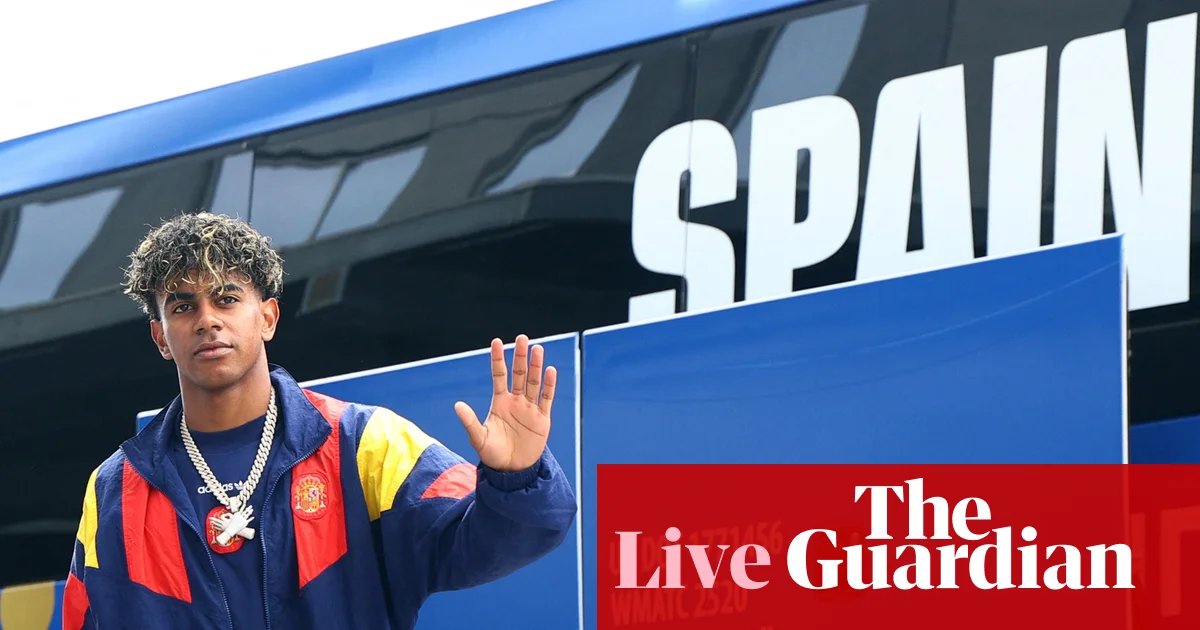
Four changes for Spain: Lamine Yamal, Pedro Porro, Dani Olmo and Alex Baena also come into the side with Marcos Llorente, Fabian Ruiz, Ferran Torres and Gavi dropping out.
The teams – Lamine Yamal starts
Spain: Simon, Porro, Cubarsi, Laporte, Cucurella, Gonzalez, Rodri, Yamal, Olmo, Baena, Oyarzabal. Subs: Raya, Joan Garcia, Pubill, Grimaldo, Eric Garcia, Llorente, Merino, Torres, Fabian, Gavi, Pino, Williams, Zubimendi, Munoz, Iglesias.
Saudi Arabia: Al Owais, Abdulhamid, Tambakti, Lajami, Al Amri, Al Harbi, Nasser Al Dawsari, Al Khaibari, Al Juwayr, Al Buraikan, Salem Al Dawsari. Subs: Al Aqidi, Al Kassar, Majrashi, Yahya, Al Shehri, Al Boushal, Kadesh, Al Johani, Al Ghannam, Al Hajji, Al Hamdan, Mandash, Kanno, Thakri, Abu Al Shamat.
Referee: Raphael Claus (Brazil)
Perhaps one of the Saudi -players can write themselves into this high-grade selection?
Perhaps it can be their goalkeeper.
Madrid screening of Spain v Saudi Arabia cancelled due to heat
The public screening of Spain’s World Cup match against Saudi Arabia in Madrid on Sunday has been cancelled because of extreme heat forecast for the Spanish capital, officials said.
The match, due to kick off at 6pm local time on Sunday, had been scheduled to be shown on a giant screen installed by the Spanish football federation (RFEF) at a fan zone in Plaza de Colón in central Madrid.
Madrid city council and the federation decided to cancel the screening after national weather agency AEMET issued an orange heat warning – the second-highest level – for the Madrid region, with temperatures forecast to reach 40C.
“The decision has been taken with the aim of protecting the health of attendees, event staff and support services involved in the event,” Madrid city hall said in a statement, apologising for any inconvenience.
Officials urged supporters to watch the match indoors in air-conditioned spaces and avoid prolonged exposure to the heat.
Large parts of Spain are experiencing unusually high temperatures for June as a mass of hot air from North Africa moves across the Iberian Peninsula.
A total of 13 of Spain’s 17 regions are on orange alert for heat on Sunday, while the northern Basque Country bordering France is on red alert, the highest level.
Authorities advised residents and visitors to take precautions during the heatwave, including drinking water regularly, staying in cool environments, limiting outdoor physical activity during the hottest hours of the day and taking extra care of vulnerable people. AFP
Can Saudi Arabia repeat the magic of 2022?
Argentina arrived in Qatar on a 36-game unbeaten run. When Lionel Messi opened the scoring from the penalty spot after 10 minutes, a comfortable afternoon seemed in the offing. Saleh al-Shehri and Salem al-Dawsari had other ideas, Argentina had three goals disallowed for offside in the space of 13 minutes and the greatest comeback in Saudi Arabia football history was made. Argentina went on to lift the trophy, while defeats to Poland and Mexico meant the Saudis did not reach the knock-out stage.
Unai Simon over David Raya is a controversial choice for De la Fuentes. The Arsenal keeper could lay claim to being Europe’s best this season.
“Those at the Champions League final had a few more days, so I got there on the Wednesday night,” Raya says. “I arrived a bit before Fabián [Ruiz]. I was saying hello to some of the others in reception when he arrived. I went to say congratulations; that was almost the first thing I did. I couldn’t really talk [to him] after the final; I just didn’t have it in me. The next day we talked about the game properly. Just two mates chatting … I was happy for him that he could lift the trophy for a second time.”
A high pressure game for the European champions, as Sid Lowe reports.
“If we had scored one, the game would have changed,” Martín Zubimendi said. Immediately after the game, De la Fuente had offered a simple analysis: when the ball doesn’t want to go in it doesn’t want to go in, he insisted. Spain had racked up 27 shots, after all. Ferran Torres had hit the bar and seen another clear opportunity saved. Vozinha, the 40-year-old goalkeeper who stopped that, saved six more and was named the man of the match. “There’s nothing to reproach the team for,” Rodri said. “We generated chances but couldn’t put it away; the good thing is they created almost nothing.”
We wait to see what role Lamine Yamal will play today. His coach would surely like to be able to use him.
The worst mistake we could make would be to compare him to anyone. He is the midst of a process. He has exceptional footballing maturity and lives it all with total naturalness. He has great serenity and strength. We have to let him follow his path but those players who have something different are ready for that. They’re geniuses, like Dalí [who] can paint a picture, or Michelangelo. They’re different. What is exceptional to us, isn’t to them. In those extremes, they feel comfortable. Why? Because they are different. What we think is exceptional, they consider normal.
Preamble
Spain’s campaign did not get off to a flying start, and Luis de la Fuentes may wake up in the night to visions of Cape Verde’s Vozinha. He will have Georgia on his mind ever since Monday. Saudi Arabia are no pushovers and gave Uruguay a scare in their opening match. Memories of downing Argentina four years ago still abound, and so Spain might beware. They can ill afford to go into the final game with Uruguay at a disadvantage. All eyes on Lamine Yamal, whose fitness situation remains opaque, though Spain need their other forwards to come to the party.
Kick-off 5pm UK, 1pm ET, 2am AEST. Join me.

A topless man can be seen driving erratically in Edinburgh before abandoning his car and attacking a black man and a delivery rider.
Source link


Andy Burnham launches campaign against ‘headphone dodgers’ on public transport | Transport policy

Students join march against the far right at matriculation

Oxford’s traffic measures: how can a historic city manage traffic and congestion?
-

 Oxford University4 weeks ago
New to the Oxford English Dictionary this September
-
 Oxford united FC4 weeks ago
Chris Gunter steps away Wales role to focus on Oxford United
-

 Oxford united FC2 weeks ago
LIVE: Exeter City vs Oxford United – Jersey Mike's Trophy group stage
-

 Traffic & Transport2 weeks ago
Why should I have to pay more for buses if I don’t use a smartphone? | Bus fares
-
 Student Life3 weeks ago
Oxford partnership allows OpenAI to use rare Bodleian texts to train ChatGPT
-

 Traffic & Transport2 weeks ago
How poor public transport policy is putting the brake on cities | Road transport
-

 Oxford united FC3 weeks ago
Northern Ireland fans laud Oxford United defender Ciaron Brown
-

 Oxford united FC2 weeks ago
Oxford United lose to Exeter City on penalties in Jersey Mike’s Trophy