
UK News
I wore Meta’s smartglasses for a month – and it left me feeling like a creep | AI (artificial intelligence)

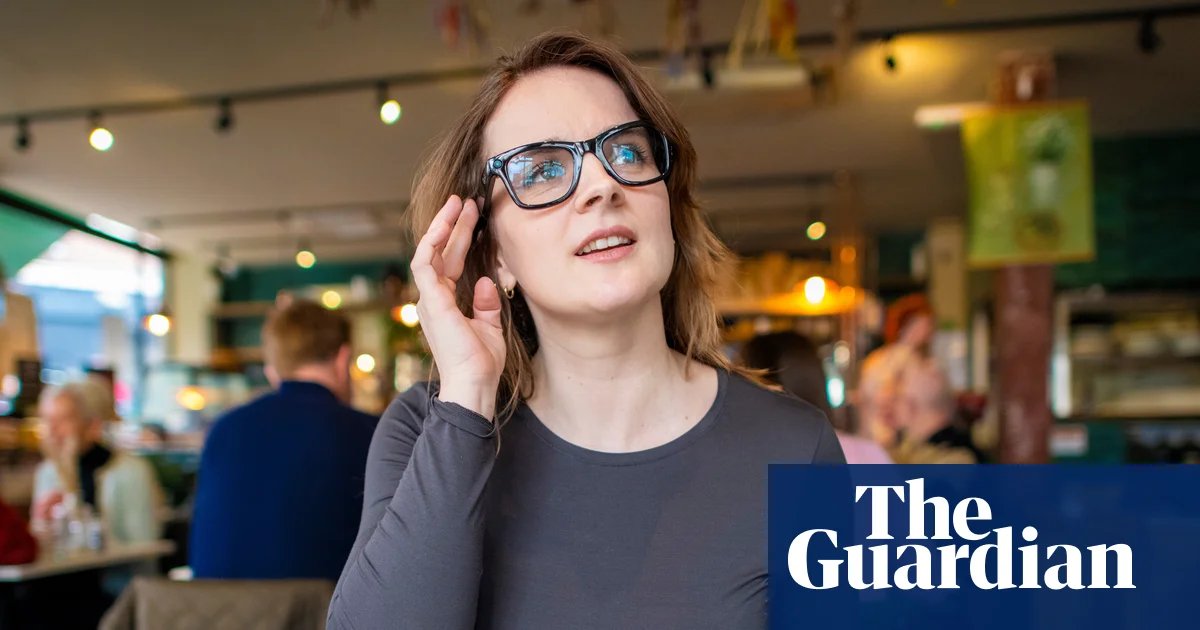
Lately, I’ve been hearing Judi Dench’s voice in my head. She tells me tomorrow’s forecast, when to turn right, that there’s been another message in my group chat. Day or night, Dame Judi is eager to assist. When I ask the eight-time Academy Award nominee what I’m looking at, she answers: a residential area, a person in a pub, daffodils. “They are a bright yellow colour and are often associated with spring.”
This isn’t a delusion. This is, apparently, progress. I am test-driving Meta’s smartglasses and Dench voices its integrated AI assistant: “Here to chat, answer questions, create images and provide advice and inspiration,” said “Judi” when I selected her over the actors John Cena and Kristen Bell. “Shall we begin?”
Over the next decade, predicts the Meta founder Mark Zuckerberg, smartglasses will gradually become “the main way we do computing”, fulfilling many of the same functions as smartphones – taking photos, playing music, making calls, giving directions. For people who wear glasses, Zuckerberg has suggested, the upgrade is a no-brainer, bundling more features into an essential accessory. And for those of us who don’t, it is only a matter of time. In 2025, Meta sold more than 7m pairs globally.
Are they really the future, bringing us the benefits of tech without the tyranny of screens, or will they trap us deeper in the digital world? To see for myself, I wore a pair for a month.
The most common response to my new frames is: “Why?” I don’t usually wear glasses, and these clear-lens Wayfarers (part of Meta’s collaboration with Ray-Ban) are on the heavy side. I look like the nerdy girl in a 90s romcom, or the old guy from Up, but the sunglasses would have made me even more conspicuous if worn indoors. The other question I get asked is: “Are you filming me?” In general, I find people do not like being around someone wearing Meta glasses, not least because sometimes the answer is: “Yes.”
When I arrive home, my boyfriend, Marco, clocks me wearing them, then instantly freezes, as though he has unexpectedly come face to face with a predator. (Marco is not his real name; I have violated his privacy enough.) Although they are still fringe tech, concerns about privacy are mounting, amid reports of users covertly recording in public. Last month, journalists in Sweden found that moderators employed by Meta review intimate footage from the glasses, including of people using the toilet and having sex. (Meta responded that it took the protection of people’s data very seriously and was constantly refining its efforts and tools in that area. It said that unless users choose to share media they’ve captured with Meta or others, that media stays on the user’s device.) That’s not to mention the company’s reported plans to implement facial recognition.
Meta’s newer Display glasses have tiny screens embedded in the lenses for displaying text messages, maps and the like, but they cost $799 (£600) and are not yet available outside the US. My entry-level Gen 1 Wayfarers, which retail for £299, aren’t as functional as a smartphone.
It’s possible that smartglasses could bring about a paradigm shift, as an accessible first step towards wearable AI and augmented reality. Meta is certainly betting big on them, expanding its partnership with the eyewear giant EssilorLuxottica (the parent company of Ray-Ban, Oakley and more than 150 other brands) and heavily investing in its Meta AI. The pitch is that smartglasses remove friction between our physical and digital worlds, enabling the wearer to be more present “in the moment, with your head up and your hands free”, as Alex Himel, Meta’s vice-president of wearables, recently told Radio 4.
A Meta spokesperson said in an emailed statement that the company foresaw smartglasses being increasingly used alongside smartphones, not replacing them. Eventually, they will have more specific, unique functions, the spokesperson said, but for now they aim to be less distracting and more convenient than taking your phone out of your pocket. Wearing a camera does encourage me to take more photos while out with friends, but, when I later download them on to my phone, most of them are unfocused and awkwardly framed. It’s not easy, composing an image with your eyes.
I get more use out of the glasses as headphones. They pipe audio directly into your ear without blocking ambient sound; only someone standing very close to you could tell that music was playing. It’s nifty tech, but the trade-off is continual interruptions. Headphones signal to others that you are not listening; glasses don’t. I am self-conscious while taking calls in public, apparently talking to myself.
So far, so nonessential. Smartglasses’ real promise lies in the integrated AI: what Meta is hailing as “the most natural and seamless way to access an AI assistant in your daily life”. Judi can operate my phone via voice commands (“call Ian”, “take a picture”), answer questions and engage with what I can see – for example, by reading aloud printed text or identifying objects. Blind people and those with low vision have reported this as transformative. Using the Be My Eyes feature, they can even connect with a sighted volunteer, who then “looks through” their glasses’ camera and gives live feedback. It is easy to see smartglasses’ potential as assistive technology; they are already being used to help people with dementia, dyslexia and other needs. But, for now, they are not reliable or functional enough to offer consistent support or replace other aids.
Even Zuckerberg, presenting the new Meta Display on stage last year, repeatedly tried and failed to make a simple video call. My experience is similarly haphazard. Judi frequently mishears me, cuts out midway through answering my questions or reads aloud only some new texts in a chain, meaning I don’t feel confident giving her tasks without then checking them on my phone – defeating the point of “hands-free” tech.
The AI assistance is also limited. Judi can distinguish daffodils from daisies and confirm when I am in a pub (as opposed to outdoors), but she struggles with even slightly more involved requests. When I ask her to ID a friend’s hat, for example, Judi says she can’t yet help “with requests about product pricing or availability”. At Tate Modern, when I ask her to tell me about the artwork I’m looking at, Judi describes “a bed with white bedding and a blue mat underneath it [with] various items scattered”. It’s not wrong, exactly, but it’s not what I want to know about My Bed by Tracey Emin.
Of all the glasses’ selling points, I’d been most enthusiastic about the real-time translation, imagining it smoothing my interactions abroad and allowing me to eavesdrop on Marco, a native Italian speaker. If Marco was initially wary of the glasses, after two weeks he is sick of the sight of them, but indulges my request to role-play tourist and local.
I ask him for directions to “the nearest duomo”, looking directly at him, as instructed, with the Meta AI app open on my phone. Marco rattles off a response with authentic speed and dismissiveness. An English translation appears on my phone’s screen, after a slight lag, but it is incomprehensible. The interaction is significantly less fluid than typing into Google Translate and passing the phone back and forth. This is frequently the case in my month of Meta glasses: instead of a more seamless experience, they add another layer of tech, one that’s more fiendish to navigate.
There’s a reason smartglasses are not all that popular, suggests Iain Rice, a professor of industrial AI at Birmingham City University. As the technology evolves and improves, they may become standard for certain activities, but at present they conspicuously lack clear, valuable “use cases”. His take is that Meta wants to be seen as innovating alongside Google and Apple, but lacks the vision and business acumen to come up with genuinely essential tech. Rice points to the metaverse, Zuckerberg’s long-trailed digital world, from which Meta began shifting resources away last month, after $80bn in investment. Meta’s glasses could prove similarly misjudged, he thinks.
Most people don’t want to wear glasses if they don’t need to, Rice points out – which is partly why Google Glass failed 10 years ago. “Meta has spent time trying to make them well designed and trendy … but they didn’t seem to have the market research at the forefront: do people actually want this? Will they buy into it? Or is the tech just not there?”
It’s no surprise that take-up seems to have been highest among content creators, perpetually in need of more footage and fresh angles on their day-to-day lives. More specifically, Meta glasses have become associated with pick-up artists, social-media pranksters and other public irritants. It has become increasingly common online to see footage shot with glasses, showing the wearer’s point of view, although the person featured may not have consented to being recorded or even been aware.
A blinking LED on the frame alerts others that recording is in progress (and was made more visible for the Gen 2 model), but workarounds are widely shared online. Even as is, the light is easy to miss, especially in bright light. To test this, on the tube home one evening, I guiltily snap a picture of the people across from me. No one notices, absorbed in their own devices. They might have twigged had I angled my phone in that now familiar cagey way, but people don’t yet think to check glasses for a light or a camera.
The number of content creators, and worse, capitalising on this, plus the absence of other obvious uses, has earned Meta glasses the nickname “pervert glasses”. Of course, not all users are ill-intentioned, but I can’t deny: not only do I feel creepy wearing them, but they also lead me to think like a creep. When I see a stranger walking her lookalike dog, and when I run into an ex for the first time in years, both times I have the fleeting thought: I wish I’d been recording.
I’m perturbed by how quickly my initial discomfort passes and the glasses become second nature. Just having a covert camera makes me want to use it, the possibilities of the tech overriding my better judgment and even basic decency.
The Meta spokesperson told me that, as outlined in the terms of service, the user is responsible for using them lawfully and “in a safe, respectful manner”: “As with any recording device, people shouldn’t use them for engaging in harmful activities like harassment, infringing on privacy rights or capturing sensitive information.”
The trouble is, as emerging tech, smartglasses complicate what we consider harassment, privacy and sensitive information. Some users, for example, argue that being able to film makes them feel safer, while others feel threatened by their presence. With no laws against recording in public places in the UK, whose rights take precedence: those who want to wear smartglasses or those who don’t want to be perceived by them?
This comes to a head for me on a solo Sunday-morning jaunt to Ikea. Realising I don’t have to suffer alone, I use the glasses to place my first video call, to Marco. At first, it’s all fun and games, showing him the Swedish snacks and soft toys. Then he tries to order me to fling some around and have a weird interaction with an employee. “Why?” I ask, pointing out that neither of us are typically disruptive in public. Marco apologises, blaming force of habit: the first-person point of view reminds him of playing a video game.
No other shoppers seem to notice me talking to myself, but the knowledge that I am broadcasting without their knowledge is genuinely queasy-making. When a small child crosses my path, I instinctively, immediately whip my head towards the shelves with a sinking feeling. I cannot fathom what sort of person would be untroubled by doing this or, worse, feel entitled to do it. After that, I never make another video call and stop dismissing Meta glasses as a gimmick.
Even in their present shonky state, Rice agrees, they are shaping up as a flashpoint in a bigger, existential discussion about just how much integration we want with tech. “They’re pervading slowly into society … If you see a person wearing them and don’t want to be recorded, unfortunately, the only way to make sure is by moving out of the way.”
Nonconsensual and covert filming are only the tip of the iceberg, he says. For Meta, smartglasses are a way to gather masses of data on individual users and whatever – or whomever – they’re seeing. Some media and interactions captured on Meta glasses could be used to train its AI, the company admits. “If you knew what was being done with all the imagery after you’d recorded it, I don’t think you’d be doing it the way you are,” Rice says.
Meta could make changes to protect bystanders’ privacy, he suggests, such as blurring and removing unapproved faces at the preprocessing stage. His concern is that, as the tech gets cheaper and better, all glasses will be made smartglasses, just as Bluetooth became the norm. “I think they’ve released a technology that the world wasn’t ready for, and definitely hasn’t regulated for, so there has to be some ownership.”
In the meantime, he says, we should feel confident pushing back: by asking friends wearing Meta glasses to take them off around us; and strangers we suspect of filming us to stop. What would Rice say to someone who was thinking about getting a pair? “I’d say: I don’t think you should.”
After a month, I’m glad to return the glasses to the office. I’m sick of seeing friends’ faces fall at the sight of me, of feeling trapped inside the computer, of hearing Judi say I’ve got a new text. Before I wipe the device’s memory, I alert Judi to my intentions and ask if she has any last words. “Thanks for letting me know,” she says.
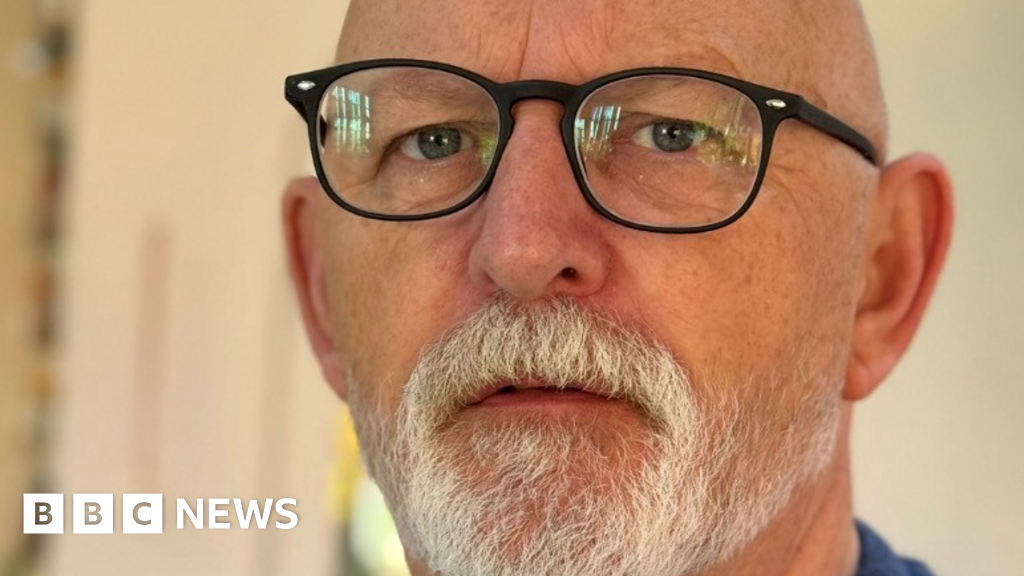
The family of Shaun Burton, say they are “devastated” by the loss.
Source link

Key events
In the opening half an hour against Cape Verde, Mikel Oyarzabal, the centre-forward, did not get a single touch.
Kyle Green gets in touch: “Your highlighting of Lalas and his absurdity is something that has prevented me from wanting to watch the coverage on Fox. While every channel has its pros and cons I just can’t.
“I’m 45 and probably the youngest of anyone who remembers him as a player instead of an opinionated insert insult here. As for the match this could be more competitive than it looks on paper Spain need a win the pressure is on them. Saudi Arabia could hold out for a draw and see what happens in their last match. “
News from the England camp, and it seems to be good news on Declan Rice.
“I’m ready and fit, raring to go. I was feeling a little bit of neural pain in my hamstring, which I was managing from after Christmas with Arsenal for a very long time. Obviously, not a lot of people would have known that. It was all behind-the-scenes stuff but it was a smart decision.
“In the end, that last 20 minutes is probably where you pick up the most, and it’s where you play a 70-minute match. But that last 20 is where you really feel your body going for it. And I think it was a smart decision because the last few days I felt really, really good.”
Alex Reid has penned today’s weekend special Football Daily.
Portugal v Uzbekistan on Tuesday enticingly pits the incredibly nice, incredibly 41-year-old-superstar-tolerant Roberto Martínez against Fabio Cannavaro, who’s won a Ballon d’Or as a player and the Chinese Super League as a coach. While the fixture following that game really does see the dream of Thomas Tuchel – in his first international job with England – taking on Queiroz, who is in charge of his ninth national side with Ghana.
The expected formations are 4-2-3-1 for Spain, and 5-3-2 for the Saudi Arabians.
The Saudi team features two Donis changes: Ali Lajami, a defender, and Nasser Al Dawsari, a midfielder, are preferred to Mohammed Abu Al Shamat and Mohamed Kanno. You may recall Salem Al Dawsari, the Saudi captain, as the man who scored the winner against Argentina.
An entertaining read, even for those of us who have just seen the clips.
In a conversation where his co-panelist is casually reminiscing about his days playing alongside Messi or exchanging shirts with Ronaldo Nazário at the World Cup, what exactly is Lalas going to talk about – coming on as a second-half substitute for Earnie Stewart in a friendly against Scotland in 1998? Helping the Kansas City Wizards finish last in the 1999 MLS Western Conference? Did Lalas enjoy an elite playing career? No. But does he do the background reading that could compensate for his relative lack of standing in a conversation with titans like Henry and Zlatan? Also no. But is he charming or funny or charismatic or otherwise magnetic on screen? Eh, no.
For the record, I once interviewed Alexi Lalas on the challenge of playing against Romario in the 1994 World Cup. He had this to say:
“He could kill you in so many different ways. If you remember from that World Cup, he scored so many types of goals. That ranged from solo adventures to an outside-of-the-right-foot half-volley off a corner kick. Romario was both the most difficult to play against and the best that I have faced.
“Roberto Baggio was doing his thing, but in terms of consistency and living up to the hype, he [Romario] was the best. As with all stars, there was a moment when the fans sit up in their seats, and that was a feeling I got with Romario. When it got close to him and the potential for his involvement in a play was there, everybody sat up in their seat. They knew that something spectacular would be happening.”
Saturday’s match reports here.
The Saudi Arabia coach, and Blackburn legend, Georgios Donis, spoke about the challenges facing his team: “Spain is not the same team when Yamal or Williams are on the bench.
“While they still have plenty of possession, they lack the individual one-on-one penetration when these two are missing. I’m not saying it’s a problem for Spain, but when those players are missing, they play in a different way. We saw this very clearly against Cape Verde.
“We are playing against one of the best teams in the world, and it’s very important that when you play against these kinds of teams, you should enjoy the experience and respect the opponent, but not too much.
“It is very hard for any team playing against Spain to have any time in possession. So what we must do is to be more in control of our movement and compact, and when the ball goes through the lines, be able to defend dynamically.
“It’s nice to see miracles in football, and we’ve seen favourites losing against underdogs. Of course, it’s great for Saudi football to have a great memory of the result against Argentina, but we aren’t drawing anything from that.
“I think we’ll feel more pressure in that [Cape Verde] game than we will against Spain.”
The Spain coach, Luis De La Fuente had this to say in his Saturday press conference: “This generation of footballers is highly competitive and really fired up… It’s going to be a completely different story,” he said at his pre-match press conference on Saturday. There is no drama or crisis. The bottom line is simply that we need to win tomorrow.”
Four changes for Spain: Lamine Yamal, Pedro Porro, Dani Olmo and Alex Baena also come into the side with Marcos Llorente, Fabian Ruiz, Ferran Torres and Gavi dropping out.
The teams – Lamine Yamal starts
Spain: Simon, Porro, Cubarsi, Laporte, Cucurella, Gonzalez, Rodri, Yamal, Olmo, Baena, Oyarzabal. Subs: Raya, Joan Garcia, Pubill, Grimaldo, Eric Garcia, Llorente, Merino, Torres, Fabian, Gavi, Pino, Williams, Zubimendi, Munoz, Iglesias.
Saudi Arabia: Al Owais, Abdulhamid, Tambakti, Lajami, Al Amri, Al Harbi, Nasser Al Dawsari, Al Khaibari, Al Juwayr, Al Buraikan, Salem Al Dawsari. Subs: Al Aqidi, Al Kassar, Majrashi, Yahya, Al Shehri, Al Boushal, Kadesh, Al Johani, Al Ghannam, Al Hajji, Al Hamdan, Mandash, Kanno, Thakri, Abu Al Shamat.
Referee: Raphael Claus (Brazil)
Perhaps one of the Saudi -players can write themselves into this high-grade selection?
Perhaps it can be their goalkeeper.
Madrid screening of Spain v Saudi Arabia cancelled due to heat
The public screening of Spain’s World Cup match against Saudi Arabia in Madrid on Sunday has been cancelled because of extreme heat forecast for the Spanish capital, officials said.
The match, due to kick off at 6pm local time on Sunday, had been scheduled to be shown on a giant screen installed by the Spanish football federation (RFEF) at a fan zone in Plaza de Colón in central Madrid.
Madrid city council and the federation decided to cancel the screening after national weather agency AEMET issued an orange heat warning – the second-highest level – for the Madrid region, with temperatures forecast to reach 40C.
“The decision has been taken with the aim of protecting the health of attendees, event staff and support services involved in the event,” Madrid city hall said in a statement, apologising for any inconvenience.
Officials urged supporters to watch the match indoors in air-conditioned spaces and avoid prolonged exposure to the heat.
Large parts of Spain are experiencing unusually high temperatures for June as a mass of hot air from North Africa moves across the Iberian Peninsula.
A total of 13 of Spain’s 17 regions are on orange alert for heat on Sunday, while the northern Basque Country bordering France is on red alert, the highest level.
Authorities advised residents and visitors to take precautions during the heatwave, including drinking water regularly, staying in cool environments, limiting outdoor physical activity during the hottest hours of the day and taking extra care of vulnerable people. AFP
Can Saudi Arabia repeat the magic of 2022?
Argentina arrived in Qatar on a 36-game unbeaten run. When Lionel Messi opened the scoring from the penalty spot after 10 minutes, a comfortable afternoon seemed in the offing. Saleh al-Shehri and Salem al-Dawsari had other ideas, Argentina had three goals disallowed for offside in the space of 13 minutes and the greatest comeback in Saudi Arabia football history was made. Argentina went on to lift the trophy, while defeats to Poland and Mexico meant the Saudis did not reach the knock-out stage.
Unai Simon over David Raya is a controversial choice for De la Fuentes. The Arsenal keeper could lay claim to being Europe’s best this season.
“Those at the Champions League final had a few more days, so I got there on the Wednesday night,” Raya says. “I arrived a bit before Fabián [Ruiz]. I was saying hello to some of the others in reception when he arrived. I went to say congratulations; that was almost the first thing I did. I couldn’t really talk [to him] after the final; I just didn’t have it in me. The next day we talked about the game properly. Just two mates chatting … I was happy for him that he could lift the trophy for a second time.”
A high pressure game for the European champions, as Sid Lowe reports.
“If we had scored one, the game would have changed,” Martín Zubimendi said. Immediately after the game, De la Fuente had offered a simple analysis: when the ball doesn’t want to go in it doesn’t want to go in, he insisted. Spain had racked up 27 shots, after all. Ferran Torres had hit the bar and seen another clear opportunity saved. Vozinha, the 40-year-old goalkeeper who stopped that, saved six more and was named the man of the match. “There’s nothing to reproach the team for,” Rodri said. “We generated chances but couldn’t put it away; the good thing is they created almost nothing.”
We wait to see what role Lamine Yamal will play today. His coach would surely like to be able to use him.
The worst mistake we could make would be to compare him to anyone. He is the midst of a process. He has exceptional footballing maturity and lives it all with total naturalness. He has great serenity and strength. We have to let him follow his path but those players who have something different are ready for that. They’re geniuses, like Dalí [who] can paint a picture, or Michelangelo. They’re different. What is exceptional to us, isn’t to them. In those extremes, they feel comfortable. Why? Because they are different. What we think is exceptional, they consider normal.
Preamble
Spain’s campaign did not get off to a flying start, and Luis de la Fuentes may wake up in the night to visions of Cape Verde’s Vozinha. He will have Georgia on his mind ever since Monday. Saudi Arabia are no pushovers and gave Uruguay a scare in their opening match. Memories of downing Argentina four years ago still abound, and so Spain might beware. They can ill afford to go into the final game with Uruguay at a disadvantage. All eyes on Lamine Yamal, whose fitness situation remains opaque, though Spain need their other forwards to come to the party.
Kick-off 5pm UK, 1pm ET, 2am AEST. Join me.

A topless man can be seen driving erratically in Edinburgh before abandoning his car and attacking a black man and a delivery rider.
Source link



-

 Oxford united FC4 weeks ago
Chris Gunter steps away Wales role to focus on Oxford United
-
 Oxford University3 weeks ago
New to the Oxford English Dictionary this September
-

 Oxford united FC1 week ago
LIVE: Exeter City vs Oxford United – Jersey Mike's Trophy group stage
-

 Student Life3 weeks ago
Oxford partnership allows OpenAI to use rare Bodleian texts to train ChatGPT
-

 Traffic & Transport2 weeks ago
How poor public transport policy is putting the brake on cities | Road transport
-

 Traffic & Transport2 weeks ago
Why should I have to pay more for buses if I don’t use a smartphone? | Bus fares
-

 Oxford united FC3 weeks ago
Northern Ireland fans laud Oxford United defender Ciaron Brown
-

 Oxford united FC1 week ago
Oxford United lose to Exeter City on penalties in Jersey Mike’s Trophy