
Traffic & Transport
Tuesday briefing: Can Andy Burnham beat Britain’s headphone dodgers? | UK news

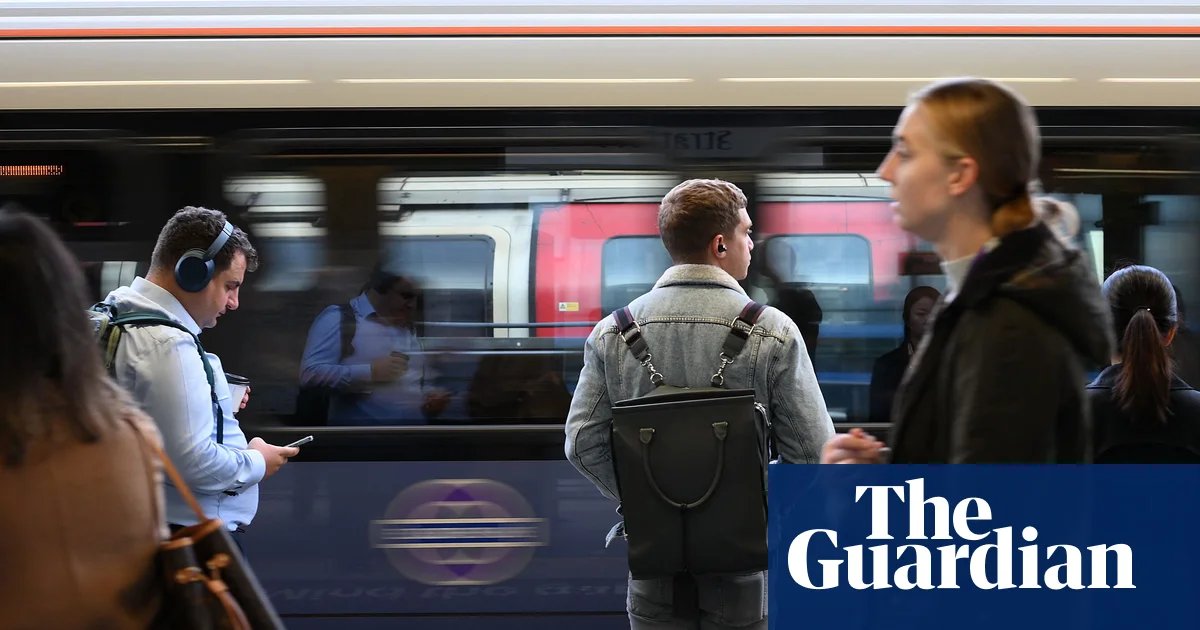
Good morning.
Me again, back from the October school holiday (a week in glorious Wales, thanks for asking) and ready to hear your commuter woes. For our prime minister, it’s “one of the most annoying things on public transport”: maybe you’re trying to work, or read, or you’ve finally got your kid to sleep, when someone starts blasting sound from their phone at full volume.
As I sign off this First Edition en route from Glasgow to London (the things I’ve heard on this commute, against my will, I’ll save for another newsletter), I’m hoping everyone has been paying attention.
I’m struck by how few voices there have been suggesting Burnham should be concentrating on more important matters. It seems to me that other people’s noise, and other inconsiderate behaviour on public transport, has become shorthand for wider concerns about social cohesion, generational conflict and political fragmentation. Put simply, we are all making much more noise, and have become much worse at listening to what anyone else is actually saying. For today’s newsletter, I spoke to a bus driver, a transport expert and a cultural critic to find out more. That’s after the headlines.
Five big stories
-
France | The prime minister has said he has asked regional authorities to impose partial curfews in some cities after the government admitted police had “lost control” in several places during violent weekend protests around the country.
-
UK politics | Andy Burnham has told officials to rip up their plans for how to fix Thames Water and present him with more radical options for what to do with the stricken company.
-
Yemen | At least 53 people have been killed in a Houthi ballistic missile attack on a training camp for Yemeni government forces in the largest single loss of life since the country’s civil war reignited in September.
-
Israel | Israeli police have detained 10 people in a rare raid against settlers, after a weekend of extreme violence in the occupied West Bank including an attack on US photojournalist Heidi Levine.
-
Reform | Nigel Farage undermined his own claims that a £5m gift was for security when he referred to the money as a reward for Brexit, according to one of his closest aides.
In depth: Can a campaign against ‘loudcasting’ make public transport quieter?
When Andy Burnham launched his crusade against unnecessary noise and antisocial behaviour on public transport with a chatty Instagram post recorded on a morning train into Manchester Piccadilly, my first thought was: “I bet he didn’t upload that on the dodgy onboard wifi.”
The prime minister’s sights were set on the phenomenon described as “loudcasting” or “headphone dodging” – but you don’t need a specialist term, because you know it when you hear the passenger next to you blasting Facebook slop on loudspeaker.
Alongside a nationwide campaign encouraging people to plug in their headphones and “share the carriage, not the noise,” Burnham announced new guidance to help local transport authorities introduce fines of up to £100 for nuisance behaviour like vaping, littering and playing loud music or videos on buses. Train operating companies already have powers to impose fines of up to £1,000 for antisocial behaviour.
If you’re grinding your molars at the thought, you’re not alone. A hefty majority of Britons, about 88% according to recent polling, consider it unacceptable to play music out loud on a train.
Who will actually enforce the rules?
It’s still unclear how these new rules would be enforced. Government officials have reassured bus drivers that they won’t be expected to police passengers themselves. That job will fall on transport safety officers or police officers.
Mark, a bus driver in central London, tells me he and his colleagues simply don’t have the capacity to help. He spends his working life in the glass cabinet at the front of the vehicle. He can’t hear every noise or spot every puff of vape smoke on the top deck, and, as well as navigating the city traffic, he already has other things to focus on, such as fare-dodging.
Mark’s route has become noisier in recent years, though he’s keen not to point out “it’s an all-ages” issue, and not to lay the blame solely with younger passengers. He doubts whether Burnham can isolate the problem to public transport. “It’s a whole society thing: being kinder and more aware of their environment.”
“It’s not workable without resources,” he says. “I don’t really see how it would be enforceable: you can’t have someone on every bus and train.”
Here lies the difficulty: fines for nuisance noise on trains are already vanishingly rare, with offenders able to shut up or leave the carriage before enforcement arrives.
The number of British Transport Police (BTP) officers has fallen by more than 10% over the past two years. The people left to challenge the noisy doom-scroller are, therefore, you and me. Transport for London, for example, has done some great work on bystander intervention, suggesting straightforward ways to interrupt bad behaviour without putting yourself in danger, but many of us would think twice about confronting a stranger in the confines of a moving vehicle.
Is this a crackdown on bad behaviour, or a distraction from worse problems?
Not everyone is impressed by the scale of the response. Sharon Graham, general secretary of Unite – a woman resolutely resistant to hoping, again – described the new policy as “well-meaning but wholly inadequate” to tackle the “avalanche of escalating abuse” faced by the transport workers she represents.
“There has been a massive escalation in reported assaults on public transport across the country,” says our transport correspondent Gwyn Topham, who reported earlier this month on the growing number of verbal and physical assaults faced by transport workers and passengers. In my previous incarnation as Scotland correspondent, I wrote about bus driver Keith Rollinson, who died at Elgin bus station after a violent assault by a teenage passenger.
Thoughtlessly broadcasting your TikTok scrolling is at the other end of the spectrum, but there’s an argument that antisocial behaviour exists on a continuum, and that a “nip it in the bud” approach might prevent more serious problems from escalating. Zero tolerance policing of course has a mixed record – and if you detect Tony Blair vibes here, so do I. Dropping a grand for loudcasting your tunes has more than a whiff of New Labour’s respect agenda and the classist asbo culture it ushered in, which singularly failed to tackle antisocial behaviour at its roots.
Still, there’s much to be said for elevating the issue from shared eye-rolls to official tannoy announcements. This is a policy that is going to appeal hugely to commuters, Gywn predicts, and when we are speaking he points out that the article about the campaign launch has been most-read across the Guardian website throughout the morning. “What he’s done well is to acknowledge an everyday irritation, that doesn’t cost a lot of money to fix, but can hopefully alter public behaviour.”
Can telling people to behave better work?
Gentle nudges towards more respectful behaviour, rather than sledgehammer fines, have made a difference historically, writer Dan Hancox tells me. His latest book, Multitudes, is about crowd behaviour, and recalls “a real moral panic” in the early 2010s over teenagers playing tinny MP3s aloud from basic mobile phones.
Dan could see why people found this irritating, but defended it at the time: “It was a rare example of sharing of music as a social adhesive, at a moment when David Cameron was introducing austerity and the spaces in which young people could gather together were being shut down.”
Crucially, within a couple of years the behaviour had died down again, as often happens after the initial buzz around new technology and the social pressure points they create.
But this phenomenon of people playing video out loud on their phones has got noticeably worse in the last couple of years, he believes, and, as I match Dan’s anecdotal experience with my own, it’s not all about the young ones this time. Indeed, younger travellers seem more likely to rely on noise-cancelling headphones – which some audiologists have raised concerns over potential links to auditory processing problems.
So why are otherwise apparently mature adults broadcasting their content and calls on the bus? The notion that people have “forgotten how to behave” since the Covid lockdown is one that Dan refutes. “It feels like an easy answer for something that is much more complex,” he says. “But it didn’t go on for that long, and the really remarkable thing about human beings is how quickly and elastically they bounce back to their previous sets of behaviours.”
The more boring answer, he suggests from his own research, is that as 5G makes watching videos easier to do wherever we are – people are simply seizing that opportunity.
But crowd psychology tells us that other people’s propensity to broadcast noise has a minimal effect on our own behaviour. “People’s pre-existing values and social mores are incredibly robust and are unlikely to change based on the behaviour of a complete stranger,” says Dan. And this makes it much more susceptible to the kind of nudge messaging over the train tannoy that Burnham is proposing.
In my own experience of antisocial behaviour on public transport, it seems that two things can be true at once: there’s a growing anxiety that this indicates an unravelling of the social contract, and in the main our interactions with fellow passengers often reassure us this is not, in fact, the case.
It’s possible that anxiety about strangers and the malign influence of the crowd arises at moments of wider pressures, says Dan. “When people are worried about paying the rent or feeding their families, as wars in the wider world rock our sense of stability and faith in human beings, our suspicion of the random person on the bus grows.
“But my day-to-day experience of life in a big and supposedly alienating city like London tells me people want this kind of spontaneous connection more than ever, and it’s a joy when it happens. Even if it’s just a few warm words exchanged with a stranger at the bus stop, on the train or in the shops – this is what it means to live in a society.”
after newsletter promotion
We want to hear from you
Next week, the chancellor, John Healey, will deliver his first budget. We want to hear what you think the chancellor should do, so email us at first.edition@theguardian.com.
What else we’ve been enjoying
-
Thanks to Jessica Murray’s excellent preview, I’ll be heading to the Senate House Library’s new exhibition, which charts the history of housing and poverty in London over the past 200 years – and reveals how much (and how little) has changed. Lucinda Everett, newsletters team
-
I regularly pace around my neighbourhood (or living room) before bed if I’m yet to hit my 10,000 daily steps. After Kate Lloyd investigated whether this target was arbitrary, I fear I’ll no longer bother. Michael
-
“Some scientists say that we are living through the largest loss of life since the time of the dinosaurs”: Patrick Greenfield’s piece about quite how much is at stake at the Cop17 biodiversity summit is a sobering and important read. Lucinda
-
Come Dine With Me fans will appreciate this week’s How we made column on the C4 show. Not sure I’ve seen the episode mentioned where a pet snake crapped all over a dining table, but host-puts-whole-whisk in mouth is a classic. Michael
-
If you need an easy DIY Halloween costume this year, Guardian writers and readers have got you. Top suggestions include dressing up as a Freudian slip (by wearing a slip dress with “ego”, “id” and “preconscious” written across it) and donning an LED face mask without the light turned on – genuinely chilling. Lucinda
Sport
Football | James Maddison scored an excellent first goal, before Omar Marmoush and Ben Davies wrapped up the scoring as Spurs beat a stubborn Coventry 3-1.
Gymnastics | The judge who sentenced the former USA Gymnastics team doctor Larry Nassar to up to 175 years in jail in 2018 for the sexual abuse of more than 250 women and girls has condemned the lack of meaningful change in the decade since Nassar’s crimes were exposed.
Sport | Australian Scott Boland quick ended the day with four wickets against South Africa who finished on 97-5 on the second day of the test match.
The front pages
“Burnham orders radical rethink of options to fix Thames Water”, is the Guardian’s front page today. The Times leads with “No increase to capital gains tax in the budget”, the Mail writes “Kemi: Budget could be even worse than Reeves bloodbath”, the Telegraph has “Labour cuts £2bn from Army from front line”, and the i Paper runs with “Two-child cap on childcare benefits will be lifted by April”.
The FT leads on “Challenges facing Macron deepen after street clashes reignite French debt rout”, and Metro has “The French correction”. The Express splashes on “NHS is ‘simply not ready’ for another winter crisis”, and the Sun on an RAF crash probe writes “Air heads”.
Today in Focus: The Latest

France protests escalate with riots, looting and 2,400 arrests
Last weekend there were mass protests across France, with more than half a million people estimated to have been involved. The unrest included rioting, looting and violent clashes with outnumbered police in cities including Paris, Marseille and Limoges. The interior minister conceded that police ‘lost control’ in some cities, while President Emmanuel Macron demanded a full security review. Lucy Hough speaks to the Guardian’s Europe correspondent, Jon Henley.
Cartoon of the day | Ben Jennings
The Upside
A bit of good news to remind you that the world’s not all bad
In 2022, bird flu wiped out the colony of sandwich terns nesting at Pagham harbour, West Sussex. But their numbers have since bounced back to 756 breeding pairs – and populations of other birds such as ringed plovers and oystercatchers have also increased along the same coastline.
The turnaround is thanks to conservation efforts by RSPB staff and volunteers, which have included removing certain vegetation to make space for shorebirds to nest, and erecting special fencing to keep out predators such as foxes.
The RSPB’s Wez Smith said: “It’s taken several years of dedicated conservation action, but the situation began to ‘tern’ around last year, and the site is now thriving with record breaking populations using it.”
Sign up here for a weekly roundup of The Upside, sent to you every Sunday
Bored at work?
And finally, the Guardian’s puzzles are here to keep you entertained throughout the day – with plenty more on the Guardian’s Puzzles app for iOS and Android. Until tomorrow.
Traffic & Transport
New Bradford railway station will ‘transform travel across the north’ | Business
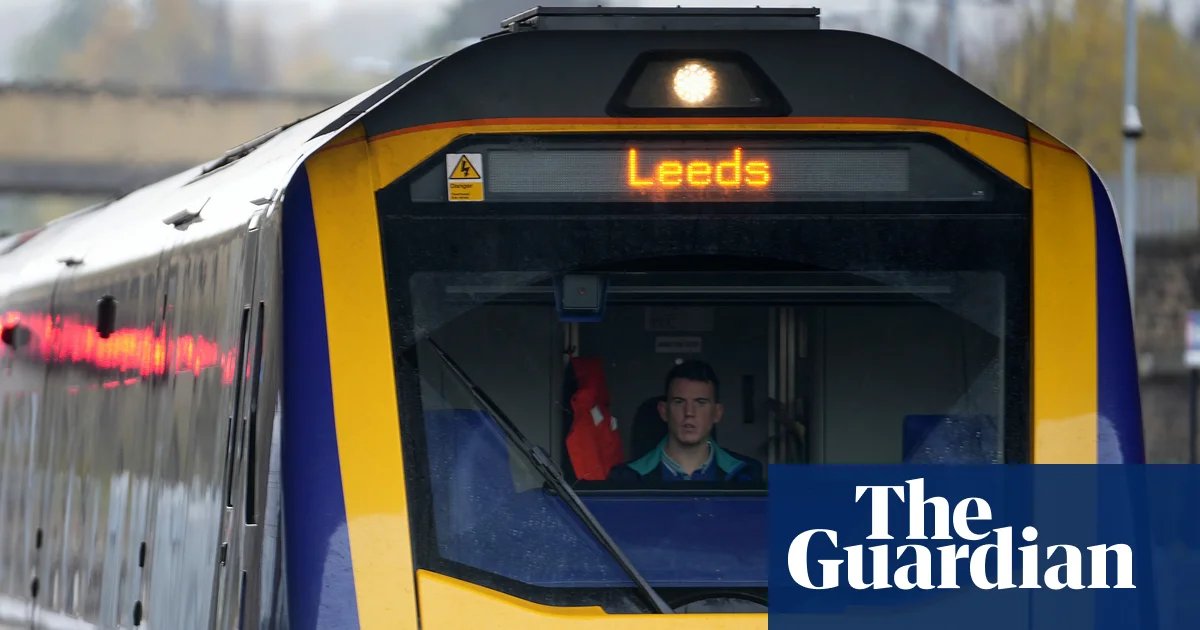
A new railway station will be built in Bradford to “transform how people travel across the north”, the government has announced.
The station will be at the heart of the Northern Powerhouse Rail (NPR) scheme, built on the current Bradford Interchange site but allowing through trains between Leeds and Manchester.
With the promise of more frequent and faster services, it is expected to support new homes and jobs for the West Yorkshire city, located alongside its Southern Gateway regeneration project and connecting to the proposed tram to Leeds.
Approval of the station, which is expected to be built by the mid-2030s, has been regarded by northern leaders as a critical sign of political commitment to improving rail links across the north, after long delays in delivering pledged upgrades.
The Department for Transport said that NPR would allow a “turn-up-and-go railway” for passengers from Bradford, with sufficiently frequent trains running across the north for people not to need to check timetables.
The transport secretary, Heidi Alexander, said: “Today marks an important milestone for Bradford with a brand-new station that will transform how people travel across the north.”
The new station, along with the proposed West Yorkshire mass transit network – better known as the Leeds tram – will bring more than £1bn in economic benefits, according to Bradford council.
The mayor of West Yorkshire, Tracy Brabin, said: “Bradford has so much untapped potential, and faster, more frequent trains to Leeds and Manchester, and the transformation of the city centre will help to finally unleash it.”
Henri Murison, the chief executive of the Northern Powerhouse Partnership, said the decision to build a new station at Bradford Interchange represented “a long-term commitment to the city and the wider north”. He added: “Confidence is already building here, and this will help build it further.”
NPR was first promised by the Conservatives in 2014 but no firm funded plans emerged for the proposed railway linking cities from Liverpool to Hull.
The government under Keir Starmer announced in January that NPR would be delivered in three stages, with a funding cap of £45bn, which could be topped up by local contributions.
The scheme will start by improving connections on existing lines around Yorkshire. It also includes plans for a new line between Liverpool and Manchester.
As mayor of Greater Manchester at the time, Andy Burnham had championed a new underground station for Manchester Piccadilly as part of the project, which the Treasury did not approve.
after newsletter promotion
The rail industry is also anticipating more work on improving Manchester-Birmingham links to replace the scrapped HS2 northern leg, another transport issue long pushed by Burnham.
Northern transport links could be improved further after the mayor of South Yorkshire and other leaders announced plans to bring Doncaster Sheffield airport into public ownership.
The combined authority and Doncaster city council are set to buy the airport from Peel Land, hoping to restart freight next year and passenger flights by spring 2028.
The airport’s owners shut down operations in November 2022, regarding it as commercially unviable.
However, South Yorkshire’s mayor, Oliver Coppard, said that, subject to formal approval, a deal was now going through that “puts the future of DSA back in our hands and finally gives one of the biggest and best growth opportunities in South Yorkshire the platform for long-term success that it needs and deserves”.
He said the government’s devolution agenda had allowed them to now act to resume flights to the city, adding: “When the airport closed, almost everything was against us; the owners did not want to sell, we had no legal powers to intervene or stop the airport from closing, and no backing from the government at the time. Today, the sky’s the limit.”
Traffic & Transport
UK government promises disabled air passengers better safeguards | Airline industry
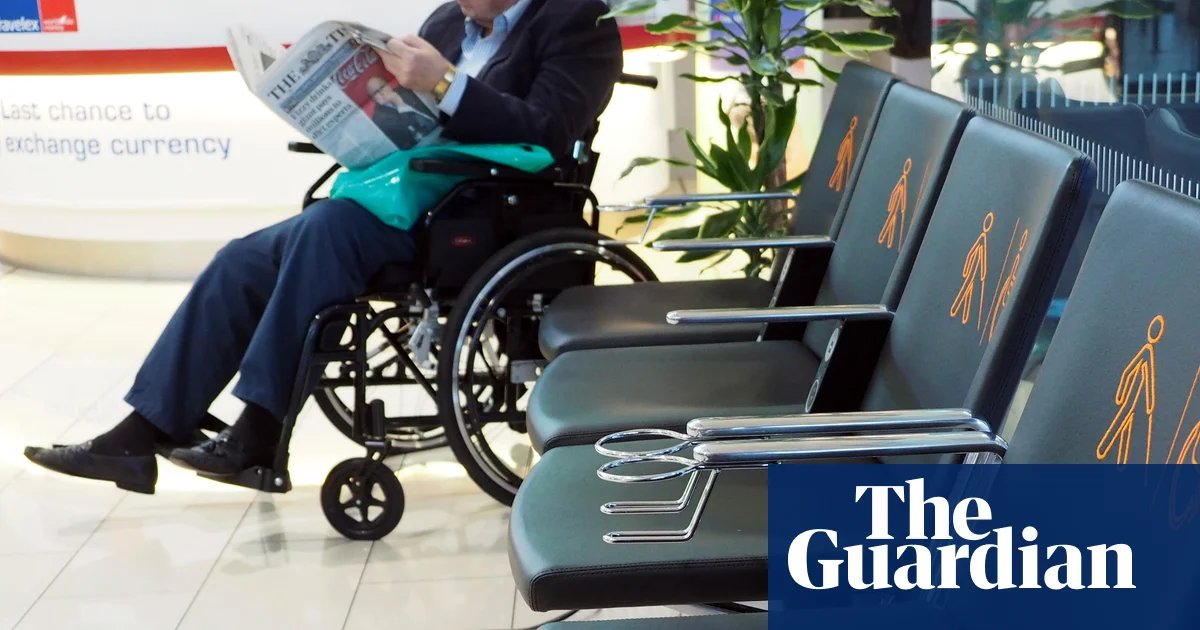
Disabled passengers will have better safeguards when flying, the government has pledged, including protection from damaged wheelchairs and support from trained staff.
A report from an industry-led accessibility group said there was “much more to be done” but progress was being made, a year after a review led by Tanni Grey-Thompson demanded action to improve air travel in response to numerous incidents in which passengers had been left stranded without assistance.
The Department for Transport said airports had added more staff training and a new standardised system has been set up to prepare airlines for handling mobility aids, after more than 1,000 wheelchairs were damaged in transit in 2024, equivalent to more than 80 a month.
Almost one in five disabled passengers are still dissatisfied with their air travel experience though, according to an industry body, and requests for assistance are continuing to rise.
The government is planning to remove the maximum payout in compensation for lost and damaged wheelchairs, and to give the aviation regulator new powers to fine airlines and airports when passengers are not given the assistance they need to travel.
The changes are expected to be in the civil aviation bill which is progressing through parliament and which the government said would give air passengers stronger protection and consumer rights.
The transport secretary, Heidi Alexander, said: “People must be able to fly with dignity and peace of mind. For disabled passengers this means not worrying about their wheelchair coming back in one piece, or whether staff will be there to support them around the airport.
“We’ve backed industry to overhaul staff training, prevent damage to mobility aids and create easy, simple ways for passengers to share key information before they fly.”
The co-chairs of the aviation accessibility implementation group, which is assessing progress on the 19 recommendations in Grey-Thompson’s report, said: “There is much more to be done, but we have made a positive start. We will be focusing now on embedding more of the changes that are needed to enable disabled people to fly with confidence and dignity.”
after newsletter promotion
The chief executive of lobby group Airlines UK, Tim Alderslade, said the number of passengers requiring assistance was up nearly 10% year on year.
“82% report that they are satisfied with their air travel experience which demonstrates the efforts and progress airlines are making for those who require additional support when they fly,” he said.
Traffic & Transport
Andy Burnham launches campaign against ‘headphone dodgers’ on public transport | Transport policy
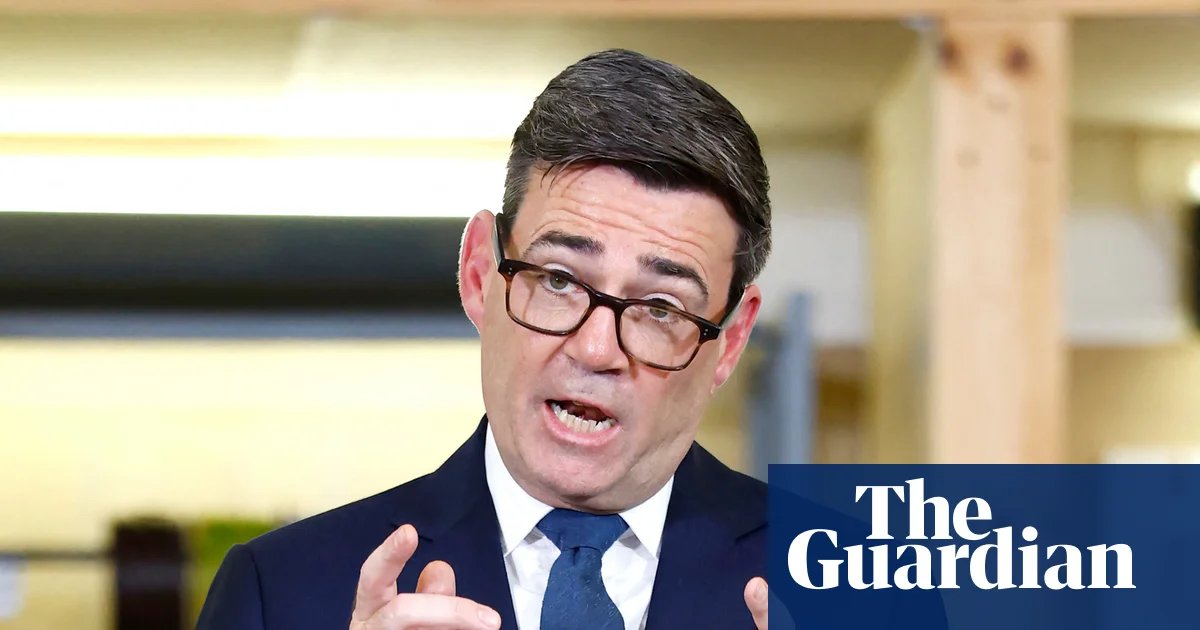
Andy Burnham has announced a crackdown on “headphone dodgers” who play loud music on public transport, as he extends his promise to give voters “breathing space” in the confines of a train carriage.
The prime minister will unveil a campaign against nuisance behaviour on public transport on Monday, alongside guidance allowing local transport authorities to levy fines of up to £100 for non-compliance.
The move makes him the latest senior politician to promise action against people who play videos or music out loud in public spaces, something that about 60% of voters back.
Burnham said in a statement: “We’ve all been on the train when someone starts blasting music or videos from their phone. It gets on your nerves and can quickly spoil the journey.
“So, we’re launching a nationwide campaign reminding passengers to use headphones on trains. On top of that, we’re giving local leaders new powers to tackle loud music, vaping and littering on buses.
“It’s a simple thing, but one that will make journeys that little bit better for all of us.”
Under the plan, ministers will issue guidance to local transport authorities advising them on how they should use new powers granted under the Bus Services Act, which allows them to set and enforce their own rules on board.
The guidance will say authorities should issue fines of up to £100 if bus passengers refuse to comply with a request to stop certain nuisance behaviour.
Officials said drivers would not be expected to enforce such rules. That job would be left to transport safety officers or police officers. Train operating companies already have the power to issue fines of up to £1,000 for similar behaviour.
Alongside the new powers, the government is launching a poster campaign to discourage people from playing videos or music on their phones out loud on public transport.
Under the slogan “share the carriage, not the noise”, passengers will be encouraged to use headphones, avoid making calls on speakerphone and watch videos quietly.
The campaign makes Burnham the latest in a series of politicians to promise to tackle headphone dodgers.
after newsletter promotion
The London mayor, Sadiq Khan, unveiled a campaign in the summer urging passengers to “travel kind”, including by wearing headphones. The Liberal Democrats have called for bus travellers to face £1,000 fines as well as those on trains.
The scramble for politicians to react comes as polls show noise on public transport is a major annoyance for British people.
A recent poll by YouGov found voters would back £1,000 fines for people playing music out loud on buses and trains. A separate survey by the same company found that voters listed people talking on speakerphones as one of their top three irritants.
Unions, however, said the new enforcement regime would do little to protect transport workers.
The general secretary of Unite, Sharon Graham, said: “The government’s proposals are well-meaning but wholly inadequate to tackle the challenges and violence bus workers are facing on a daily basis. The proposed penalties are not going to deal with the issues facing workers.”


Tuesday briefing: Can Andy Burnham beat Britain’s headphone dodgers? | UK news

Mark Harris targets more than 15 goals for Oxford United

New Bradford railway station will ‘transform travel across the north’ | Business
-

 Oxford University4 weeks ago
New to the Oxford English Dictionary this September
-

 Oxford united FC4 weeks ago
Chris Gunter steps away Wales role to focus on Oxford United
-

 Oxford united FC2 weeks ago
LIVE: Exeter City vs Oxford United – Jersey Mike's Trophy group stage
-
 Traffic & Transport3 weeks ago
Why should I have to pay more for buses if I don’t use a smartphone? | Bus fares
-
 Traffic & Transport3 weeks ago
How poor public transport policy is putting the brake on cities | Road transport
-

 Student Life3 weeks ago
Oxford partnership allows OpenAI to use rare Bodleian texts to train ChatGPT
-

 Oxford united FC2 weeks ago
Oxford United lose to Exeter City on penalties in Jersey Mike’s Trophy
-

 Oxford united FC3 weeks ago
Northern Ireland fans laud Oxford United defender Ciaron Brown