
Traffic & Transport
Avanti West Coast to be renationalised in March | Rail industry

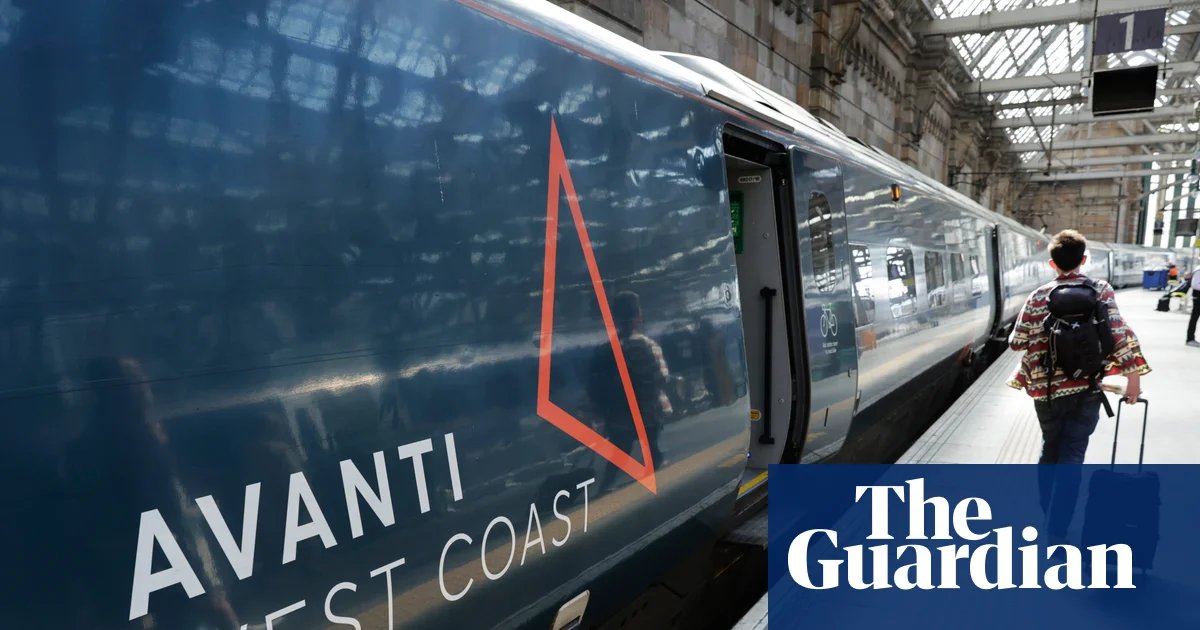
Avanti West Coast will be renationalised in spring, as prime minister Andy Burnham declares “enough is enough” for passengers who have put up with a rail service “that has failed them time and time again”.
The rail operator, which is one of the worst in the country for train delays and cancellations, will come under public ownership from March when its contract ends.
The Labour government has been nationalising passenger rail services across the country as their contracts have expired, as the public body Great British Railways prepares to take full oversight in 2027.
Avanti had among the highest proportion of train cancellations in Britain, at 7.1% from April to June this year.
The company connects the north and south of England, with its service running from London to Manchester and Liverpool.
Burnham has previously complained about high prices on Avanti, with tickets for peak-time returns from Manchester to London as high as £300.
The prime minister wrote on social media that “for years, people have been expected to put up with Avanti’s cancellations, delays, overcrowding, and a service that has failed them time and time again”.
“So my Labour government is bringing Avanti West Coast into public ownership at the earliest opportunity in March next year. That means passengers, not shareholders, will come first.
“More investment, fewer delays, and a renewed focus on getting the basics right. We’re putting essential services back in public hands and building a railway that actually works for the people who use it.”
Avanti, which has the worst punctuality rating for any large rail company in the UK, has also cut multiple services in the past year, including the 7am train between Manchester and London.
after newsletter promotion
The transport secretary, Heidi Alexander, – who will formally announce the decision in her speech at Labour conference on Tuesday afternoon – added that “for years, we’ve heard stories of Avanti underperforming, with passengers left paying the price”.
She added that the Labour government “is committed to putting essential services back in public hands, connecting people to opportunity and delivering growth in every postcode and this move reflects that commitment”.
Andy Mellors, managing director at Avanti West Coast, said: “We’re proud of what we’ve achieved over the last six years – from refurbishing our Pendolino fleet and introducing our new Evero trains to running more services than ever before.”
He said the improvements had given “customers greater choice, more capacity and better connectivity, while we’ve continued to innovate to shape the future of the west coast and wider rail industry”.
Traffic & Transport
TfL’s bailiffs are chasing me for a stranger’s unpaid Ulez fines | Low emission zones
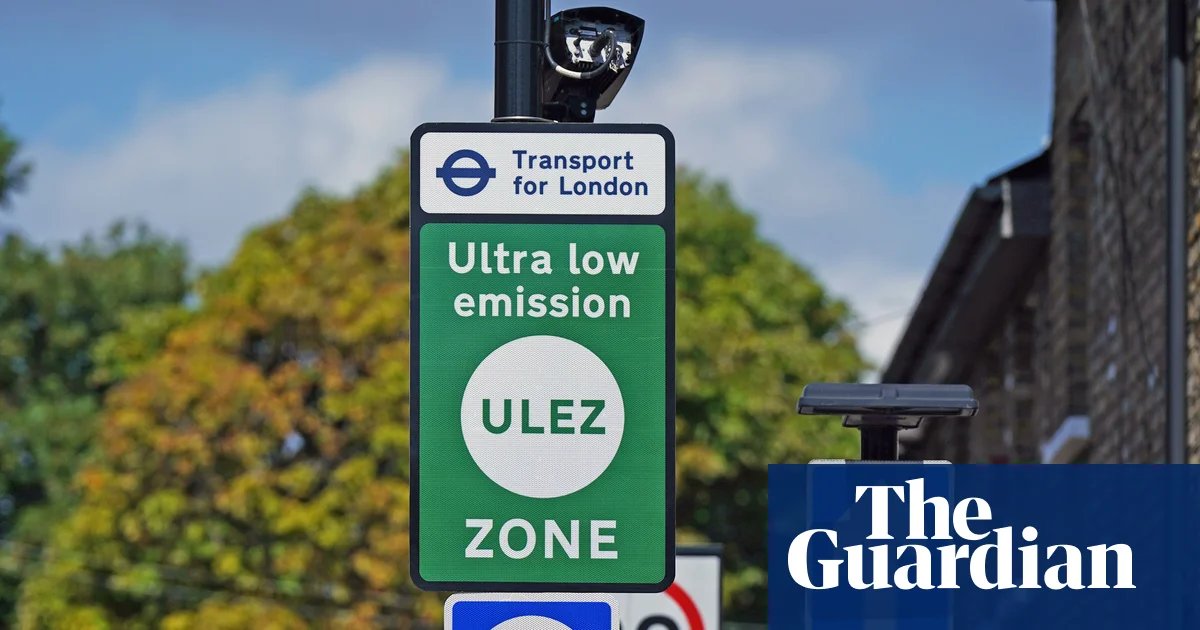
Bailiffs turned up at my home to seize goods over four unpaid Ulez fines issued by Transport for London (TfL) that have nothing to do with me.
The saga began two months ago when I received four enforcement notices from CDER Group relating to a vehicle I have never owned.
I was told my address had been obtained from the DVLA, but the DVLA confirmed that the vehicle has never been registered to me or my address. I sent this confirmation to CDER, but they nevertheless ordered bailiffs to come to my house and told me enforcement could not be stopped.
I complained to TfL, which referred me back to CDER. CDER then informed me that TfL had rejected the evidence I had supplied.
For more than 25 years I have been repeatedly mistaken for another individual with the same name, resulting in debt collection activity by numerous organisations. I have spent years proving my identity and correcting mistakes, only for the same problems to happen again.
CW, Blackpool
It seems that the original penalty charge notices (PCNs) were sent to the address of the offending driver and, when they ignored them, tracing agents trawled citizens with the same name and decided you were a good fit.
Your labours to prevent bailiffs confiscating your belongings, including sending CDER 13 years of payslips and eight years of bills, took such a toll that you had to be signed off work.
Most gobsmacking of all is an email from TfL to CDER rejecting the DVLA’s written confirmation that the offending vehicle has never belonged to you.
“We cannot consider the evidence as valid,” TfL wrote, and it instructed CEDR to continue enforcement action.
In the meantime, you discovered that the credit reference agency TransUnion had incorrectly merged a stranger’s credit report with yours. This, it turned out, was the third time in three years that it had done so.
That explains why tracing agents came to your address because of a debt owed by a man with the same name in Yorkshire. You have now established that your address has, over the years, been given to tracing agents acting for more than 20 creditors, a few of whom have pursued you for debts accrued by your Yorkshire namesake.
This blunder by TransUnion does not excuse either CDER or TfL for failing legal obligations to ensure they had the right person before contacting you, and for failing to accept the evidence proving your innocence.
TfL, responding also for CDER, belatedly apologised when I intervened.
“Our contracted enforcement agents use credit searches to track down the person liable [for unpaid PCNs],” a spokesperson says. “From this search, it wrongly concluded that CW was the owner of this vehicle.”
TfL has now cancelled enforcement action, and CDER has paid you £500 in compensation for the “anguish” it now recognises it has caused.
TransUnion declined to comment while the Financial Ombudsman Service investigates a complaint you have lodged about its conduct.
We welcome letters but cannot answer individually. Email us at consumer.champions@theguardian.com or write to Consumer Champions, Money, the Guardian, 90 York Way, London N1 9GU. Please include a daytime phone number. Submission and publication of all letters is subject to our terms and conditions.
Traffic & Transport
Burnham dodges questions on Heathrow third runway as project faces four-year delay | Heathrow third runway
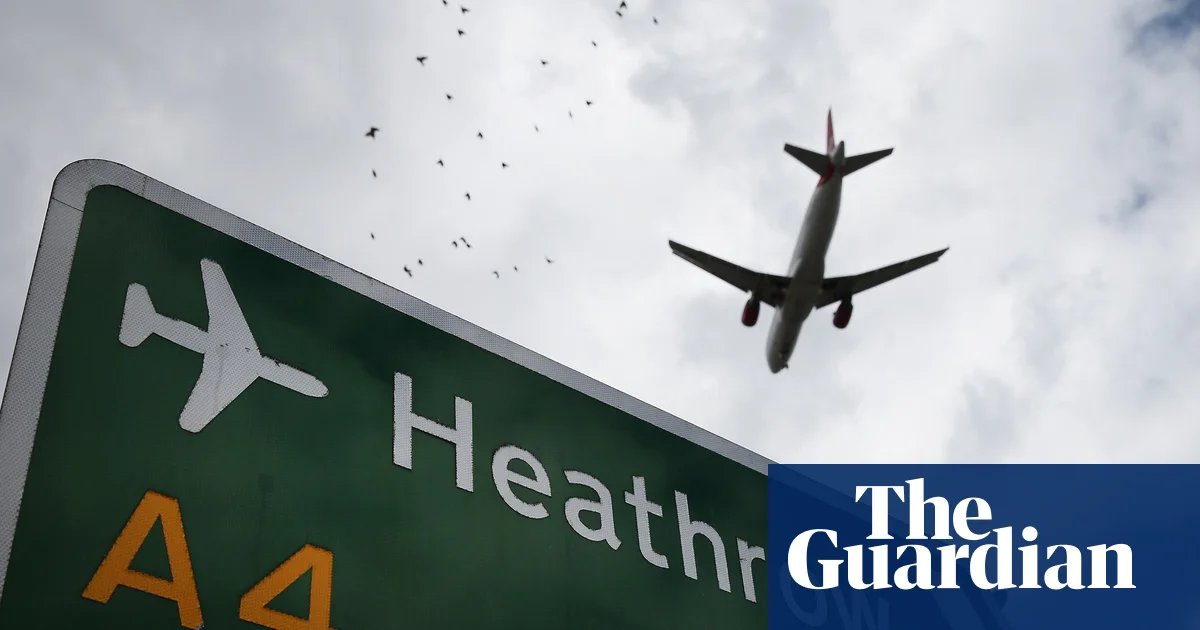
Plans for a third runway at Heathrow are once again up in the air after the prime minister refused to say whether he backs the “contested” project which is delayed by up to four years.
Over the weekend it emerged that Heathrow no longer expects to meet the original 2035 deadline. Instead, the airport hopes to secure planning permission by 2029 and then open the runway “within a decade”, meaning it would not be operational until 2039.
The delay comes amid signs of lukewarm support for the project from Andy Burnham who dodged questions about the issue on Sunday.
Asked at the Labour party conference in Liverpool if he was in favour of building a third runway at the airport, Burnham said the issue was “contested” and “principally it’s a matter for London and London MPs”.
Burnham, who has previously criticised the expansion, said he did not want to “jump straight in” before considering the results of a public consultation which ran over the summer. “There are different views and you have to take those views seriously in coming to a decision.”
Heathrow is seeking to build a £33bn runway, enabling it to operate up to 756,000 flights a year. At present, the number is capped at 480,000.
Making way for the runway involves demolishing hundreds of homes, diverting rivers and rerouting a section of the M25 motorway through a tunnel. However, it is estimated it would create 100,000 jobs and provide a huge boost to the UK economy.
Tony Bosworth, climate campaigner at Friends of the Earth, said “putting the start date back four years makes the already dubious economic case for expansion even more questionable. That’s before even considering the fact that anything we might gain from expansion is vastly outweighed by the huge social and environmental cost.”
Robert Barnstone, coordinator of the No 3rd Runway Coalition said it was right to say that the future of the project should be decided in London. “It is ultimately vast swathes of Londoners that would have to put up with Heathrow expansion through more noise overhead for communities right across London as well as poorer air pollution.”
However, the leaders of the Unite and GMB unions spoke out in support of the third runway.
The GMB urged the government to clear planning bottlenecks to support an expected 108,000 jobs linked to the plans.
Warren Kenny, GMB London Regional Secretary said: “Every year of dithering is a year of apprenticeships not started, contracts not signed and wages not paid.”
“Opponents of this runway will try to dress up a timetable as a verdict. It isn’t one. A project taking longer to build is not a reason not to build it. It’s a reason to start now.
“Heathrow has been clear that the hold-up is planning and red tape. Politicians can fix that.”
after newsletter promotion
Sharon Graham, the general secretary of Unite the Union, agreed the project was important for “securing the future of good, unionised jobs and a guaranteed market for UK steel.”
Heathrow has said its existing runways have been full for over two decades, putting limits on its growth and the wider UK economy. It claims the project would unlock capacity for 40 airlines who want to operate new or more services.
A spokesperson for Heathrow said: “It’s right that ambitious targets were set, the sooner expansion begins the sooner the whole UK will benefit. Our focus has always been to secure planning permission by 2029. Once achieved, the runway will be open within a decade – and the benefits of expansion can be felt from today.
“This is a national project, 100% privately financed which will support growth today and secure the UK’s position in the global economy once the runway opens.”
However, a paper published by the Department for Transport this summer showed that airports elsewhere in England and Wales are likely to lose millions of passengers if Heathrow builds a third runway, in a significant blow to regional jobs.
Further analysis for the government also found that the overall economic boost could be a fraction of what ministers had hoped, while expanding the airport could have a “major adverse” effect on local health”.
A department spokesperson said: “There is currently no live planning application for a third runway, and we cannot comment on ongoing consultation processes or prejudice them in a way that will only delay progress.
“The timeline has always been ambitious. We’ll continue to work with promoters, including Heathrow, and all other stakeholders at pace to ensure the right framework is in place for which a planning application for a third runway could be considered.”

Love them or hate them, Lime ebikes are an increasingly common sight on England’s roads with new figures showing annual profits more than doubling thanks to a surge in riders.
Lime’s average number of monthly users jumped 31% to approaching 700,000 as it added more than 4,500 ebikes and scooters to its fleet, taking the total to almost 38,000, the company’s UK arm, Lime Technologies, said in accounts filed at Companies House.
Sales rose by a third to £148m in 2025 and profits more than doubled to £4.7m from £1.7m, as first reported by the Sunday Times. The progress followed expansion into new cities, including Oxford in 2024 and Nottingham in 2023, adding to its presence in London, Milton Keynes and Salford.
Despite the surge in trade, Lime’s UK accounts show it employed just 54 people in 2025, up from 39 a year before, largely because it relies on self-employed contractors to shift and service its ebikes and scooters.
The company, whose parent Neutron Holdings listed on the Nasdaq stock exchange last year valued at $1.7bn (£1.3bn), is part-owned by US ride-hailing app Uber. Lime was founded in 2017 in San Francisco, California, and now operates in about 230 cities across 29 countries, mostly in Europe.
At the time of the listing, Wayne Ting, the chief executive of Lime, said the company was having “conversations with lots of other [UK] municipalities”.
The English devolution bill, passed in April, gives local authorities in England fresh powers to license rental ebike operators and set requirements around parking, safety and accessibility standards.
London’s transport body estimated in 2024 that one in 10 of the 1.5m daily cycle journeys in the capital are made on dockless ebikes such as Lime, Forest and Voi.
The schemes have fuelled a surge in cycling in London, helped by the patronage of celebrities such as Timothée Chalamet and most recently Kim Kardashian.
However, there have been mounting concerns about safety for riders and pedestrians. Rented bikes were reportedly responsible for almost a third of cyclist collisions with pedestrians that required police intervention.
Meanwhile, riders have been injured by defective bikes while cycling or suffered fractures caused by the weight of the bicycle falling on them, a phenomenon known as “Lime bike leg”.
Lime recently began introducing on the UK a new, smaller version of its electric bikes, with batteries repositioned towards the back wheel,after safety criticism. More than 1,500 of the new models are now in operation in England.
The company has said that more than 99.99% of Lime trips in London last year ended without a reported incident.
Charities representing blind residents and people with limited mobility have also raised concerns about the difficulty in navigating parts of London amid chaotic parking of rental bikes on pavements.
London boroughs have seized at least 3,000 ebikes this year, 2,000 of which were Lime bikes, a Guardian investigation found, as hire companies face growing calls to stop bicycles littering streets and blocking pavements.


Avanti West Coast to be renationalised in March | Rail industry

TfL’s bailiffs are chasing me for a stranger’s unpaid Ulez fines | Low emission zones

Burnham dodges questions on Heathrow third runway as project faces four-year delay | Heathrow third runway
-

 Oxford united FC7 days ago
Chris Gunter steps away Wales role to focus on Oxford United
-

 Oxford united FC2 weeks ago
Oxford United transfer chief explains EFL embargo and contract dilemma
-

 Oxford News4 weeks ago
UK private school’s ‘outstanding’ headteacher is to retire
-

 Oxford Events3 weeks ago
Oxford Open Doors: nine properties to explore without booking
-

 Oxford News4 weeks ago
Salon Privé at Blenheim Palace 2026 – day one revs up
-

 Oxford united FC3 weeks ago
Leicester City confirm ‘serious’ injury before Oxford United clash
-

 Student Life4 weeks ago
Oxford academics sign open letter opposing Nathan Cofnas’ suspension
-

 Oxford united FC4 weeks ago
What next for Oxford United after Stanley Mills departure