
Traffic & Transport
I was wary of driverless cars and their tech overlords – but they could give me a different future | Gabriel Stewart

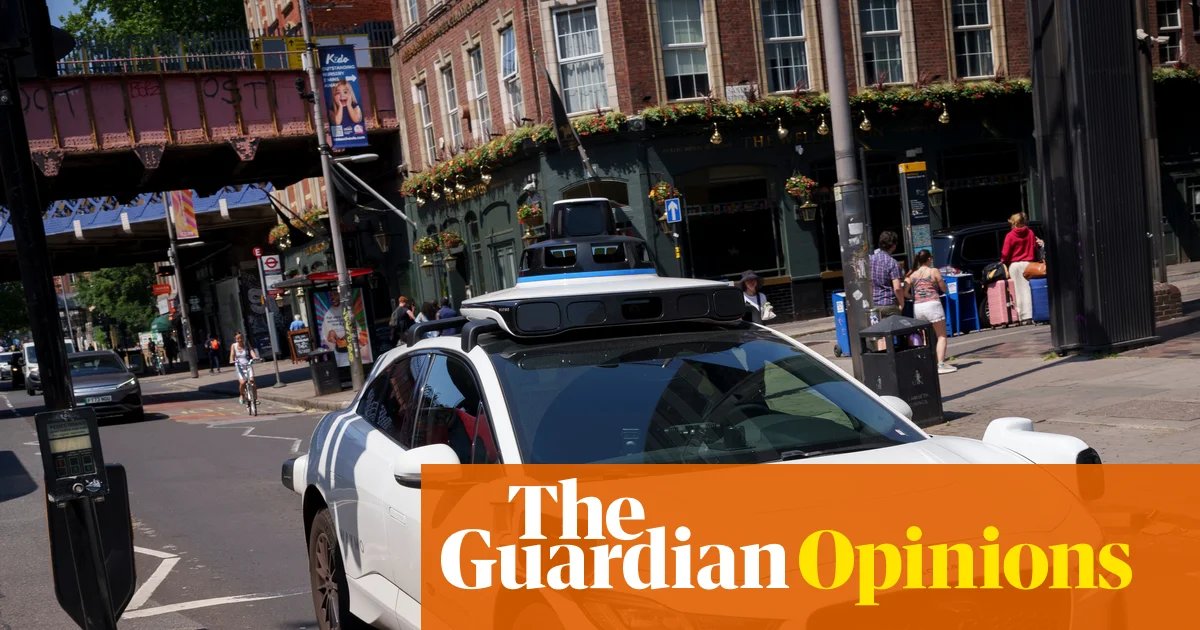
The robotaxis are coming! The robotaxis are coming! Well, actually, they’re already here. Until now they’ve been the stuff of science fiction, but this summer London’s streets have seen Silicon Valley-based company Waymo testing out self-driving cars. It hasn’t been the smoothest of introductions – from cars getting stuck in a cul-de-sac and repeatedly waking up the residents of Shoreditch to one driving into a crime scene, after a double stabbing in Harlesden.
The automated vehicles (AVs) have so far had trained drivers waiting behind the wheel to take control if needed, but will soon be shedding their human minders. Waymo and British rival Wayve are hoping to launch driverless minicabs in the capital this year, subject to approval from the British government and Transport for London, among others. A subsidiary of Google parent Alphabet, Waymo currently operates ride-hailing services in 10 US cities, but London, with its narrow streets and densely populated centre, will serve as one of its biggest challenges yet.
Is this a good thing? I have to admit I was initially suspicious, being naturally resistant to all forms of modernity and any “solution” proposed by the tech industry. Plus, the clunky camera-laden Jaguar SUVs hardly scream sex appeal.
But there is an aspect to this too little considered: for me, and others with accessibility needs, AVs offer a different future, a possibility of independence that feels otherwise unattainable. I will never be able to drive due to my poor vision, a reality that has left me unable to apply for many jobs and made me reliant on others to get around – especially when outside of cities. Many rural areas simply don’t have trains or taxis, causing an accessibility minefield for anyone living there or visiting. Driverless taxis may not solve that but they offer a roadmap towards the wider rollout of self-driving cars that could.
It’s no small matter. Transportation barriers limit the ability of disabled people to get jobs, access health care and socialise, with only 42% of those with difficulty seeing, and 54% of those with other disabilities, being in employment in the UK, according to 2022 analysis by the Royal National Institute of Blind People (RNIB). With about one in four people in the UK living with a disability, this technology could be an important vehicle for social inclusion and participation.
None of this is to wash away the consequences of inviting the tech lords to dominate our streets, especially by using disabled people as pawns in their arguments to do so. There are questions to be answered around surveillance – sensors within the cars will record information about our journeys and interactions with other vehicles or humans en route. It is possible the tech firms involved could use this to sell products and services to users. Proper regulation, rather than an aversion to the life-changing technology, is needed.
The cost of job losses for taxi and delivery drivers as the technology advances must also be taken into account. A 2025 report from rideshare data collection company Gridwise found that hourly pay fell for taxi drivers in all cities with AVs from July 2024 to July 2025, with the sharpest drops observed in Austin (-5.3%) and San Francisco (-6.9%). This contrasted with a 1% increase in hourly pay for rideshare drivers nationally. The government should listen to trade unions seeking assurances that any transition towards autonomous passenger services includes protections for affected workers.
And then there is safety: naturally the main port of call for critics. Individual examples of vehicle mishaps are often highlighted when raising concerns. But, the reality is self-driving cars have so far been less likely to get into crashes than their human-driven counterparts. Recent analysis analysis by the nonprofit news site LA Reported found that over almost 38m driverless miles in Los Angeles between March 2024 and December 2025, there were only 28 Waymo crashes reporting injuries and only one in which the robotaxis were at fault. Humans driving the same distance would have had about 60 such crashes, so Waymos ended up in 64% fewer crashes with injuries.
When it goes wrong, we know all about it. In December, a video emerged showing a Waymo robotaxi driving a passenger through the scene of a police standoff in downtown LA. Last month, 3,800 of the robotaxis were recalled after a software issue led to an empty Waymo vehicle entering a flooded road and being swept into a creek in Texas. Driverless cars may never be completely safe but neither are human drivers. If one is said to cause fewer deaths and injuries, it is surely advantageous to adopt it.
There is no denying that self-driving cars are fraught with moral and societal complications and that those will have to be dealt with carefully through greater government regulation and protections. But this is an opportunity for disabled rights that is too great to be missed. As well as revolutionising the lives of those with disabilities, these cars could transform the safety of everyone else – assuming that, as they develop, they continue to be much safer than human-driven cars. There must be a positive conversation and disabled people must be a part of that conversation. The government should set up an accessibility advisory panel with representation from across the disability spectrum.
The robotaxis are coming! Think what that could do for you; think what that could do for me and millions like me.
Traffic & Transport
‘We should all be worried’: calls grow to limit London rollout of robotaxis | Transport
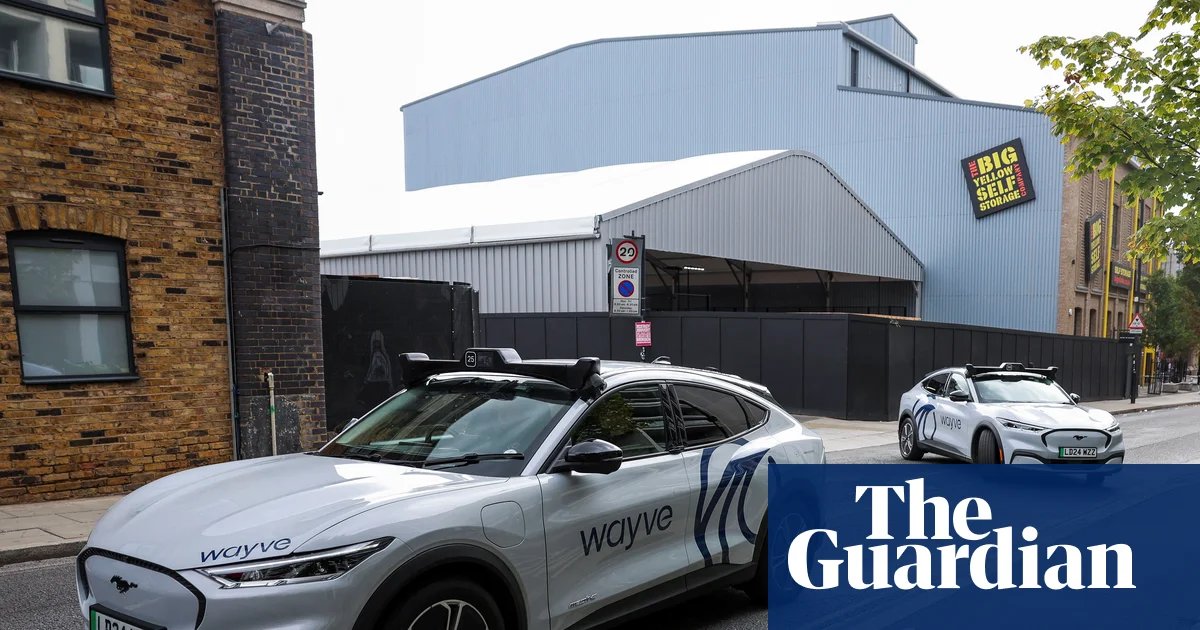
For passengers in Britain who want to try the latest ride, robotaxis are eagerly awaited: more than 100,000 are on Uber’s waitlist in London after the first UK services started in September.
Others view them with trepidation. “I think we should all be worried,” said Florentina Ghiuzan, an Uber driver from Essex. “I was shocked TfL approved it so soon. I knew change would come. But I thought it would come with a solution for us.”
London’s rollout is facing mounting opposition, from drivers fearing for their future and the capital’s politicians, with a critical report demanding Transport for London (TfL) is given full powers to permit or suspend operations.
Drivers will this weekend protest outside the headquarters and depot of Wayve, which has partnered with Uber to supply London’s first autonomous cabs for hire.
The direct action marks the latest salvo between unions and the global tech companies, whose driverless cars trials expanded this week to Manchester, with fears that hundreds of thousands of driver jobs could be lost.
Although only a handful of driverless cars now ply the streets, Uber has announced plans to deploy 100,000 Nvidia robotaxis worldwide starting next year, and its senior executives have talked about all new cars being autonomous by 2040. In San Francisco, Waymo’s fully autonomous cars already operate more than a quarter of all rides.
The mayor of London, Sadiq Khan, and bosses at TfL have expressed unease, and the London assembly’s transport committee has called for the government to devolve authority over autonomous taxi services.
In a report published this week, the committee said there was “considerable uncertainty around many of the claimed benefits of autonomous passenger vehicles”, and fears over the impact on public transport and congestion, as well as safeguarding and accessibility for disabled passengers.
The chair, Caroline Russell, said they were not convinced that London should welcome robotaxis. “Rather than just accepting the autonomous passenger service model proposed by operators, London should be looking at the transport problems it is trying to solve and then considering what solutions this technology could provide,” she said.
TfL is understood to see little benefit in the addition of robotaxi services to its crowded city streets, even if the numbers turn out to be relatively few in comparison to the wider traffic.
For the robotaxi companies, London is a tempting challenge to crack. Commercially, it is one of the biggest private hire markets in the world and a foothold in Europe; logistically, it is a tricky test bed to prove their vehicles are viable anywhere. Compared with the grid system of US cities in particular, it presents narrower, twisting and unruly streets, without the kind of rules on jaywalking that give cars priority on the road.
Under current rules, TfL licenses passenger services, but the government decides whether autonomous vehicles can operate. TfL has approved the start of Uber and Wayve’s limited robotaxi services, which retain a human safety driver in the front seat.
As it stands, when it comes to fully autonomous passenger services, the Department for Transport would issue permits for robotaxis with TfL only able to grant or refuse consent, rather than regulate their usage on London’s streets.
That has alarmed TfL, which sees parallels with when Uber first started business in London, creating problems few had considered, and was twice rebuffed in licence renewals as not a “fit and proper” operator. Quite how driverless cars will affect the capital’s transport ecosystem is unknown – and TfL wants to retain the power to intervene.
City hall is also concerned about the social implications of more than 100,000 licensed drivers losing income or a living. Those at the frontline in the App Drivers and Couriers Union (ADCU) are planning protests outside Wayve’s London base from this Saturday.
Their members include Ghiuzan, 42, who started working as a driver four years ago after going back to college. She said: “Our earnings are the same or even lower since I started – and with the robotaxis on the market it could get even worse.”
Ghiuzan said she was notified of the start of autonomous services as an Uber customer – but received no notification as a driver. She thinks people will switch to robotaxis: “Young people like them, it’s new, and you don’t have to pay the driver … I might have other skills, but for lots of drivers who are older and have done it their whole life, it’s going to be quite a challenge.”
Faisal Osman, 51, from east London, has been an Uber driver for 12 years, after switching from a long commute to an IT engineering job to allow him to work nights when he had children. He knows four other engineers who joined Uber: “We all used to talk about AI taking our jobs in IT. We thought, we’re not earning as much driving but we’ll be safe for a while, support the family, pay the bills. But robocabs are a massive concern.
“People might be interested but it will decimate the livelihoods of many people including me – I really wanted some authorities to say no.”
after newsletter promotion
Abdurzak Hadi, an Uber driver and theLondon chair of the ADCU, said Saturday’s protests would follow a similar action held at Waymo’s base in Park Royal in August. He said: “For me as a driver, I’m thinking about competing with a machine that’s not going to get tired, and could work 24 hours a day.
“But as a Londoner with family, I’m thinking about safety. As licensed drivers we’re taught by TfL about safeguarding, looking out for a vulnerable child, or for abuse. Or looking after passengers who can only read your lips. We’re a safety net. But losing my job – that’s also losing a safety net for my family.”
A recent report from the Centre for British Progress thinktank said more than 400,000 UK drivers (121,000 in London) would soon find “much of this work obsolete”, and urged the government to tax autonomous vehicles to help pay for the social consequences and economic losses.
The GMB union has demanded a “just transition” to help drivers reskill and find new work. Speaking at the Labour conference last month, the GMB’s Mark Betteridge said the union was not against change but added: “The people who do these jobs will know the reality far better of what change will look like … Drivers tell us they want some sort of transition plan to get through this.”
The roads minister, Justin Madders, told the meeting that autonomous vehicles could bring “opportunities for well-paid and unionised jobs” and the government wanted Britain to be a “world leader” in the technology. But, he added: “Sometimes government hasn’t worked on the impact on workers … We’re absolutely committed to making sure that doesn’t happen that time.”
An Uber spokesperson said: “Drivers and AVs [automated vehicles], which we believe will also offer considerable benefits to cities, are both expected to grow side by side for quite some time. That said, we shouldn’t hide that autonomous mobility will impact workers, riders, and the communities they live in.
“We are in conversations with the government and local stakeholders to ensure we can realise the promise of AVs while not leaving drivers and communities behind.”
Uber said it had not significantly increased its share of fares in London but VAT changes meant drivers were keeping less of the fares customers paid, and it said it was the only private hire operator in the UK recognising its drivers as workers with employment protections.
Wayve said that with Uber it was taking a “deliberately phased approach”, and had engaged extensively with political leaders, community organisations and accessibility advocates. A spokesperson said its robotaxis could “make a positive contribution to London’s transport system, helping to improve road safety, expand connectivity and give people more ways to travel.
“There is clear excitement in the potential for this technology to support safer, more accessible journeys, provided it is introduced responsibly and in partnership with the city. We have a positive, constructive relationship with TfL and we’re working pragmatically together to ensure any future services meet its expectations.”
A spokesperson for Khan said the mayor was committed to ensuring that Londoners benefitted from the opportunities new technologies could bring but shared “concerns about potential impacts on safety, congestion and jobs”, as any changes needed to “work for our world-leading transport system – including taxi and private hire services, and those who drive them”.
Traffic & Transport
Number of cloned number plates on UK roads at record high, data shows | Transport
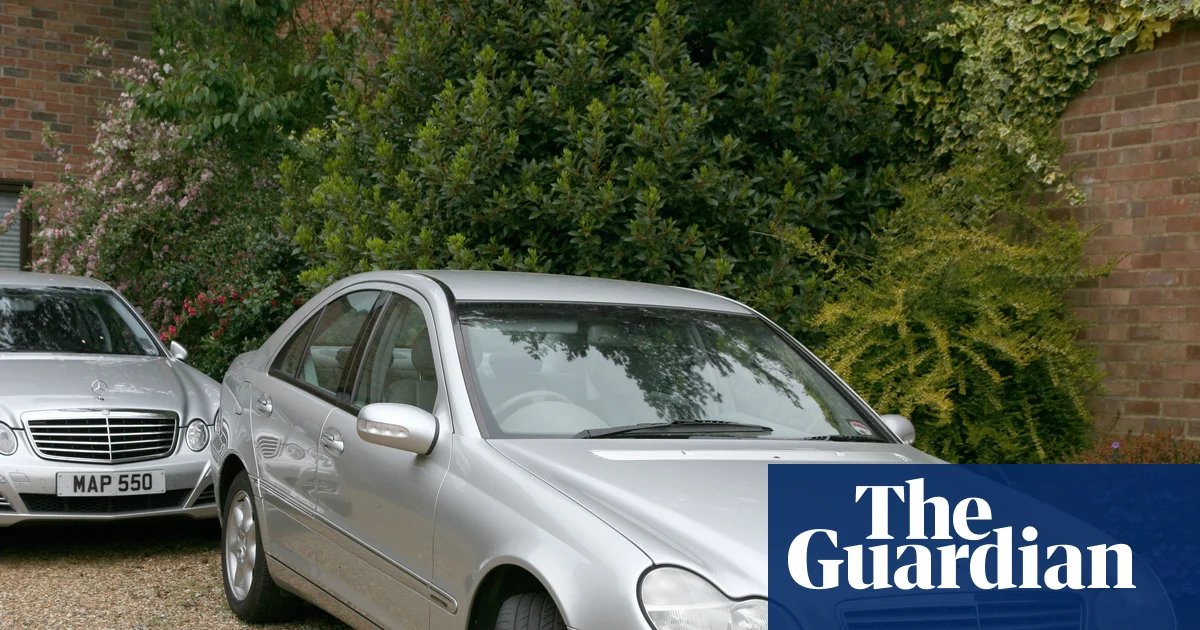
The number of reported “cloned” vehicles involved in offences on UK roads has reached a record high, official data shows.
More than 11,400 drivers contacted the DVLA last year after being issued with fines for offences they said they did not recognise or accept responsibility for – most of which are believed to be down to cloning, where a number plate is copied fraudulently on similar vehicles to avoid enforcement cameras.
The number of complaints about misattribution was 9% higher than in 2024 and almost double the figure recorded in 2018, according to the RAC motoring organisation, which analysed data obtained under freedom of information requests.
The rising figures underscore concerns about the number of illegal number plates in use, allowing criminals to evade detection and dangerous drivers to avoid being caught.
Although drivers should provide number plate suppliers with the V5C vehicle logbook and proof of identity, an investigation last year uncovered more than 130 official suppliers in the UK willing to sell cloned versions, which allow drivers to dodge police and congestion charges.
Cloning vehicles has left many innocent car owners having to struggle to prove they were not responsible when enforcement camera images apparently caught their vehicle committing offences.
A parallel concern is the use of “ghost” plates which are designed to be unreadable by the UK’s 18,000 automatic number plate recognition (ANPR) cameras, which enforce safety measures such as speed limits or lane closures on smart motorways.
The RAC said the UK needed to overhaul an outdated and poorly regulated number plate system. Its head of policy, Simon Williams, said: “If number plate suppliers were carrying out all the checks they’re supposed to, it would be much harder for dodgy drivers to buy cloned plates in the first place. It’s only when a fine arrives at a vehicle keeper’s home address that they realise someone else is driving around using their vehicle’s number plate illegally.”
He said that more also needed to be done to catch drivers with ghost plates, “whether that’s more police officers being equipped with handheld devices that can detect if plates are unreadable, updating ANPR cameras and introducing higher security standards for number plates and for those who produce them”.
The government last month said there would be a new nationwide crackdown on illegal number plates, with funding from the Department for Transport for a new roads policing team. A new National Roads Policing Coordination Centre would share intelligence as well as trialling new technology such as specialised goggles to detect number plates that have been designed to be unreadable by cameras.
after newsletter promotion
Drivers using an incorrectly displayed number plate can be fined up to £1,000.
A Department for Transport spokesperson said: “We’re cracking down on illegal number plates with significant investment in a new roads policing team and innovative tech to stamp out the scourge of cloned numberplates.
“Illegal number plates help facilitate crime, and we are supporting the police to work with the DVLA to make it easier to report these crimes and support victims through a new digital tool.”
Traffic & Transport
‘A big responsibility’: Clifton Suspension Bridge master hails £7.6m renovation | Bristol
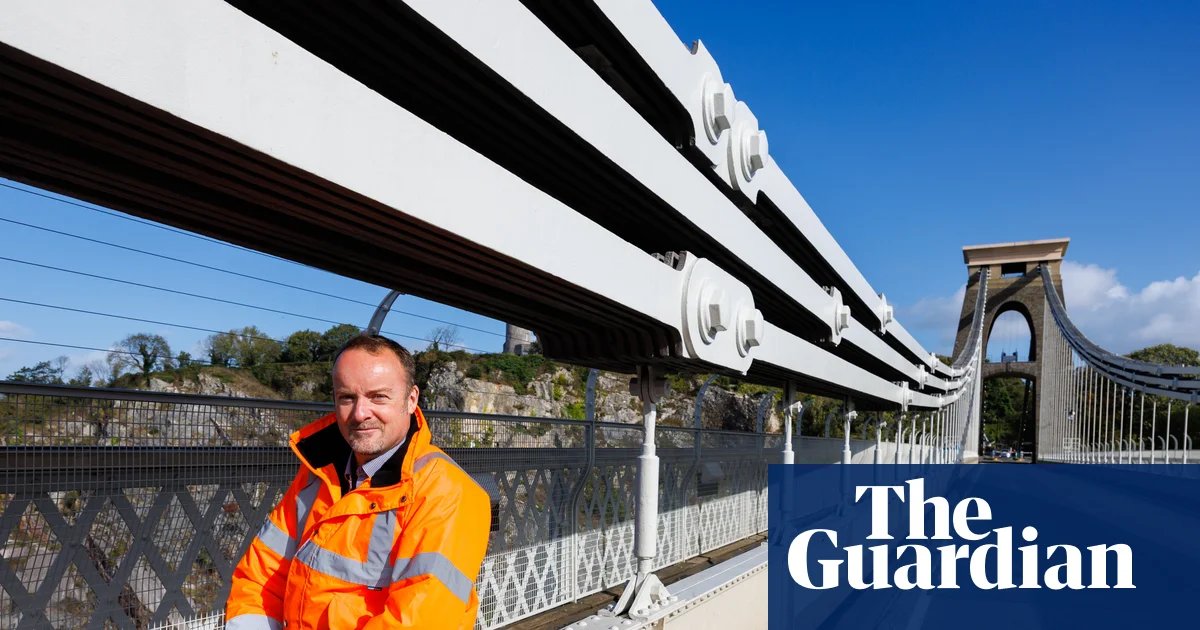
The job does not give the holder age-old perks such as the right to drive sheep across the great structure, but the title “bridge master” does have a certain ring to it.
“I don’t tend to say I’m the bridge master when I’m at a party,” said Tristan Ralph, the current holder of the title. “But people do seem to know and bring it up. It’s a job less ordinary, isn’t it? It’s a Victorian sounding title and people are really, really interested.”
There is, however, nothing ceremonial about the title. Ralph is in charge of maintaining and running the Clifton Suspension Bridge, a UK feat of engineering, without any public money.
“It does feel a big responsibility,” said Ralph. “When the chairman of the trustees rang to say we’d like you to do it, you suddenly feel the pressure. It’s so famous and people in Bristol, quite rightly, are proud and almost possessive of it. Bristolians think: ‘It’s our bridge.’”
The bridge master – and the not-for-profit charity the Clifton Suspension Bridge Trust – have the task of maintaining the bridge “in perpetuity”. “I’m a temporary custodian,” Ralph said. “When I’m finished, I have to make sure it is handed on in just [as] good a condition or better than I inherited it.”
Ralph, a bridge engineer by profession, was speaking to mark the conclusion of a large refurbishment project that has taken two and a half years and involved hand-painting more than 4,000 original iron chain links and installing an energy-efficient lighting system. It has cost about £7.5m. “It’s been a big job,” he said. “But it’s come pretty much bang on budget, which is rare these days.”
That is important because, to many visitors’ surprise, the bridge does not receive public funding. “The upkeep of the bridge, the running of it, the salary costs and everything are all paid only by our toll money,” said Ralph. “People think that we might get something from local or central government. But, no, it’s just the toll money.”
Motorised vehicles – including motorcycles – pay £1 to cross the bridge. There is no charge for pedestrians, cyclists or horse riders. As well as being a beautiful structure, it is also a vital part of Bristol and North Somerset’s transport system.
Ralph said: “It draws the tourists in. We get visitors from hundreds of countries every year but primarily, it’s still a vital piece of local infrastructure. If the bridge wasn’t here, the difference it would make to Bristol traffic would be incredible. We average over 8,000 vehicles a day still. Maintaining it as a transport link is utterly vital.”
The end of the refurbishment does not mean Ralph can rest on his laurels and spend more time hobnobbing with members of the Bridge Owners Forum.
“In a few years, we’ll need to paint the underside of the bridge. The under-bridge gantry unit itself will be replaced over the coming years. So there’s always something. We need to keep on top of things. It’s like your house or your car. If you just ignore it, don’t do things for a couple of years, they start breaking down.”
As in most walks of life, the climate emergency is a challenge Ralph and the trust are having to face. “We were monitoring the bridge daily in the summer with the very hot weather. And maybe if the bridge was being designed today, there would be a little bit more robustness around wind.”
The prevailing south-west wind is not usually a problem and the bridge rarely has to close but if it blows directly through the Avon Gorge it can be more difficult. “We need to keep an eye at both the magnitude of any wind events but also their frequency,” Ralph said.
The engineer admires the bridge’s designers, including Isambard Kingdom Brunel. “It’s remarkably advanced for its time.”
And there is no sign that its days are numbered, largely because the Victorians did not skimp. Ralph said: “There are three layers of chains. The original Brunel design only had two, but because it went from a timber design to a cast-iron deck, they upped it to three.
“There’s a little bit of comfort in there. Today there might be pressure to say, well, can you keep it to two, but in Victorian times they did like to add a little bit of meat on the bones.
“It doesn’t have a finite life. There’s no end date in our plans. We all just keep it going in the highest standards as we can. It’s in really good condition as long as we keep doing what we need to do, keep our attention on it and don’t let things drift. Forever is a long time but there’s no reason why we have any need to worry at the moment.”



-

 Oxford united FC4 weeks ago
Chris Gunter steps away Wales role to focus on Oxford United
-

 Oxford University3 weeks ago
New to the Oxford English Dictionary this September
-

 Oxford united FC1 week ago
LIVE: Exeter City vs Oxford United – Jersey Mike's Trophy group stage
-
 Traffic & Transport2 weeks ago
How poor public transport policy is putting the brake on cities | Road transport
-

 Student Life3 weeks ago
Oxford partnership allows OpenAI to use rare Bodleian texts to train ChatGPT
-
 Traffic & Transport2 weeks ago
Why should I have to pay more for buses if I don’t use a smartphone? | Bus fares
-

 Oxford united FC2 weeks ago
Northern Ireland fans laud Oxford United defender Ciaron Brown
-

 Oxford Events4 weeks ago
Four days of equestrian spectacle at 2026 Blenheim Palace International Horse Trials