
UK News
Books Q&A live: we answer your questions about our 100 top novels lists | Books

Key events
Too much Austen not enough Conrad?
PurpleCanary asks: This will make me sound like an angry man but four or was it five Jane Austen books? A talented but limited writer who didn’t venture beyond a certain familiar milieu. By contrast only one Conrad – no Nostromo, for example – and not one Patrick White? The Tree of Man, for starters.
Liese: As someone who put Jane Austen’s Emma as their no.1 book I’d have to disagree with you about Austen, and celebrate the genius of her “two inches of ivory”. The top 100 reflects the choices of our voters but also inevitably the fashions now – so no Patrick White but no William Golding or Iris Murdoch either …
Terry Pratchett was missing. How about a list of top authors?
Alex42 asks: Would you ever do a favourite authors list, as opposed to favourite books? Terry Pratchett was noticeable by his absence from both lists, but this could be because he doesn’t have a book that’s agreed by general consensus to be his best. Therefore the vote was probably split. This would apply to many other authors too, so it would be interesting to see how the list would work out.
Liese: I agree that if it had been favourite authors it would probably have produced a different list (which might have included Stephen King, Douglas Adams and Martin Amis as well as Terry Pratchett). Though we did have multiple entries for Virginia Woolf, Jane Austen and Charles Dickens. I’m not sure we’d do a separate list, but do check out our Where to Start With … and Ranked! columns for more focused takes on the works of individual authors.
Jotierney asks: Anything that gets people talking about and discovering new books is great but I felt a standard best 100 list misses out on how the world of literature is evolving. I would love to see you do a companion list which would help people discover less well known but equally influential and important authors, and highlight the contributions of more female writers and those from beyond the global north. While I love many of the books on the list and see them all as important, it felt stale, predictable and does not represent the current state of literature. Would you consider an alternative 100 list?
Liese: I think a list of the greatest novels of all time is probably always going to be canon-heavy. Having said that there were some in our top 100 such as Pedro Paramo and The Known World that I didn’t know and am really looking forward to discovering. Others such as Ragtime and The Left Hand of Darkness I was reminded to put to the top of my reading pile … And watch this space for some alternative lists.
Would ‘favourite’ or ‘greatest’ have created a different top 100?
Escoppycoppy asks: What was the actual question you asked the contributors? Did you ask for “best” novels, “greatest”, “favourite”? The wording would influence the choices eg “greatest” primes people to think of big, ambitious books, ‘best’ less so. “Favourite” would be very different- more personal choices, possibly children’s books. I think “favourite” would have produced a very different final list. Might even be a good follow-up?
David: The wording said we were looking for the “best novels of all time published in English”, asking for contributors for the “top 10”. It was interesting to see how different people responded to that and I’m not sure if anyone set their own favourites entirely to one side – a completely dispassionate assessment is probably impossible and not really the point. A lot of the comments we received, which are really interesting and you can explore by clicking on the individual voters on the novel list, suggest that it was a combination of critical merit and personal significance.
Benjamin Myers, for example, said “I have chosen 10 titles that I feel have advanced what it is the novel can – and should – do, while also taking into consideration the influence each has had on my own reading enjoyment and writing career”.
Tom Crewe’s guiding rule “was to choose the books that have left the strongest impression in my memory”. I agree, if we’d gone simply for “favourites” that would probably have produced a different kind of list – with each top 10 almost being like a fingerprint or mini-biography of the contributor
Do books read in our youth hit hardest?
BuddSchulberg asks: I wonder whether the greatest books one has read are those that are read when at an impressionable age? For indeed Alice in Wonderland, Dune, The Day of the Triffids etc are typically books one reads (and rereads over and over again) at a young age. Precisely because they are so immensely readable. On the other hand, does this also mean that we should include the likes of Alistair MacClean and Desmond Bagley – which I devoured in my youth? Or should we draw the line somewhere?
Liese: I think many voters – including this one! – chose many books that they read at an impressionable age, because those are the ones that hit the hardest (also possibly the ones that you study at school ending up staying with you). When you’re reading as a young adult novels can really be life-changing. I was struck by a comment from a reader who voted for George Orwell’s Animal Farm on our Readers’ top 100: “Reading this as a teen was my entry-level book to socialism. It opened my eyes to injustice, oppression and abuse of power. My parents always blamed my ‘communist’ English teachers for introducing me to Orwell!”
What are the future classics?
Dworth asks: Surprised The Count of Monte Cristo didn’t make the list – was it mentioned by anyone? Also thought David Copperfield would have been higher. It’s a phenomenal book. Any thoughts on why not?
In 200 years’ time would such a list look similar or would it be full of modern books future generations consider classics and the books we consider classics are just too old to be relatable or will it always been the same old classics with a few modern books for a small bit of balance?
Liese: I’d hope that in 200 years’ time there would be some exciting new classics on such a list (I put Normal People by Sally Rooney on to my list to inject a bit of modernity although it didn’t make the final cut.) Who knows which novels will ultimately stand the test of time? It was interesting on our top 100 novels to see which modern classics had already fallen out of fashion – no American Pastoral by Philip Roth, no Money by Martin Amis, no To Kill a Mockingbird by Harper Lee which I’d argue would have been unthinkable even 20 years ago!
Are audiobooks cheating?
ZodKneelsFirst asks: Does “listened to an unabridged audiobook” count as “read”? I would say it does – but there are probably a few books where it doesn’t. I’m thinking of ones written in a heightened style, where the language itself is meticulously constructed and demands careful parsing.
David: Ha! This is a good question. As a keen audiobook listener, I would have to agree with you. But you’re right that not every book lends itself to the audio treatment. I’m not sure about the meticulously constructed aspect – I think things can fall apart a bit when there’s a lot of formal experimentation in the novel. I once tried Lincoln in the Bardo on audiobook and the multiple voices made it very confusing – even though they were performed by a cast of actors. I find traditional novels much easier to follow as they tend to proceed in a fairly conventional manner, with the scenes carefully set, dialogue easy to follow etc. So I find it’s a good way to consume classics.
Why so much Virginia Woolf while Catch-22 so low?
Namdam asks: Four Virginia Woolf novels in the top hundred of all time defies some belief. There are 98 novels better than Catch-22? I dispute that. I personally don’t think there are any. It caught me as a teenager and supplied a lifetime of pleasure from reading. I am surely not alone. I guess the greatest story ever told doesn’t qualify as a novel. Fair enough. So no Iliad. Or Odyssey.
Speaking of adventures that take forever (although not quite 10 years): War and Peace, Anna Karenina, À la recherchu and Ulysses all in the top seven? I guess there is no requirement to be choate … but I feel therefore that this is signifying the achievement rather than enjoyment.
Liese: You’re in good company loving Catch-22 which was voted one of the top 100 novels of all time by our fiction editor Justine Jordan. Interestingly it was catapulted up the list by readers who put it at (joint) number 8 on their top 100 … and yes the Iliad and the Odyssey didn’t qualify as they’re epic poems.
I voted for Mrs Dalloway but was also surprised by Woolf’s strong showing – but that’s how the votes fell! There are definitely some challenging reads in the top 10 but I think many of the critics and authors who voted for them would argue that as well as reflecting some dazzling literary achievements they are also books that reward the (quite significant) work of reading … Something readers seem to agree with as Ulysses and Anna Karenina also placed pretty highly in the readers’ top 100, just outside the top 10. At our Guardian Live event novelist Guy Gunaratne said that having struggled to take it on solo he really enjoyed reading Ulysses as part of an online group. I think there are a few places that do read-alongs around Boomsday, but he recommends the Friends of Shakespeare and co. podcast.
Photograph: HA/THA/Shutterstock
What first reads led you to a lifelong love of literature?
Sevensisters asks: What were your first books as a very, very young reader that drew you to a lifelong love of reading? I have to say here it was Enid Blyton.
David: So many to choose from! Green Smoke by Rosemary Manning was an early one, with its magic spells and the idea of the enchanted version of reality that only the child protagonist has access to. A little later on Alan Garner’s The Weirdstone of Brisingamen and Ursula K Le Guin’s Earthsea trilogy introduced me to the darker elements of storytelling. I also remember being a bit obsessed by Leon Garfield’s historical fiction for children, including The Pleasure Garden and The Sound of Coaches. But probably the strongest very early influences were the Moomin books, particularly Comet in Moominland which my mum read to me at bedtime. That was probably the first time I remember being desperate to know what happened next – a very basic lesson in the power of narrative.
Should we take re-readability into account?
MomDoc asks: I would like to see a division of the best 100 novels that you would read and read again. Versus the best 100 novels that you would read and know immediately that you would never want to read again because it was a little bit traumatising to read them?
David: It’s interesting to think about what makes a book re-readable – and what kind of book you feel glad to have read but aren’t drawn back to again and again. You mention being traumatised, and it could certainly be that, but some books are more admirable than they are magnetic. I don’t think I’d re-read Madame Bovary, for example. Anyway, there are lots of reasons, and in our Books of my life Q&A each week, authors share the books they return to, as well as the book they’d never read again. Virginia Evans, who just won the Women’s prize for fiction for her novel The Correspondent, recently told us she couldn’t go back to the Millennium series by Stieg Larsson because it was so disturbing!
Where are all the children’s books?
Matthewrosedon asks: While it was not quite the usual suspects, when is children’s and genre fiction going to be taken seriously? Where were the Alice books, Wind in the Willows? Aren’t these great works of fiction? Where’s The War of the Worlds or The Time Machine? No Dune or Day of the Triffids. No Chandler or Hammett. No Asimov or Arthur C Clarke. If one of the purposes of such a list is to encourage reading then it helps if more of the books are actually readable.
Liese: I think there are many children’s books that are great works of fiction and some of our voters did select them in their top 10s. Novelist Katherine Rundell, for example, put Alice’s Adventures in Wonderland at number six on her list while regretting that she did not have space for Northern Lights by Philip Pullman, The Wizard of Earthsea and Pippi Longstocking. But when the votes were tallied up they did not get enough to make the final top 100.
As for genre, it was interesting to see a few more in our readers’ top 100 with Dune making the cut along with Stephen King’s The Stand. Ultimately it’s subjective as to what makes a novel one of the “greatest of all time”. I put Riddley Walker by Russell Hoban on my list which is a brilliant SF novel – partly because I loved his book The Mouse and His Child as a kid – but that too failed to make the final list!
Photograph: National Media Museum/SSPL/Getty
Why isn’t my favourite book on the list?
Greencorn asks: Why is Céline’s Journey to the End of the Night not on there?
Liese: Not enough votes!
Welcome to the Conversation
Hello and welcome to the latest Guardian Conversation, a new series of Q&As with our journalists. At 12pm BST we will be joined by Liese Spencer and David Shariatmadari who are ready to take your questions about all things bookish, including our huge recent project to rank the 100 greatest novels of all time – and last weekend’s corresponding list of readers’ favourites.
The books team have also been working hard to prepare their annual list of top reads for the (northern hemisphere) summer which is published tomorrow. (David is also the inventor of the Guardian’s Wordiply game should you wish to ask him about that).
Comments are open now (please sign up for a Guardian account below to join in) and, in the meantime, here’s some of the best of the 100 novels project.
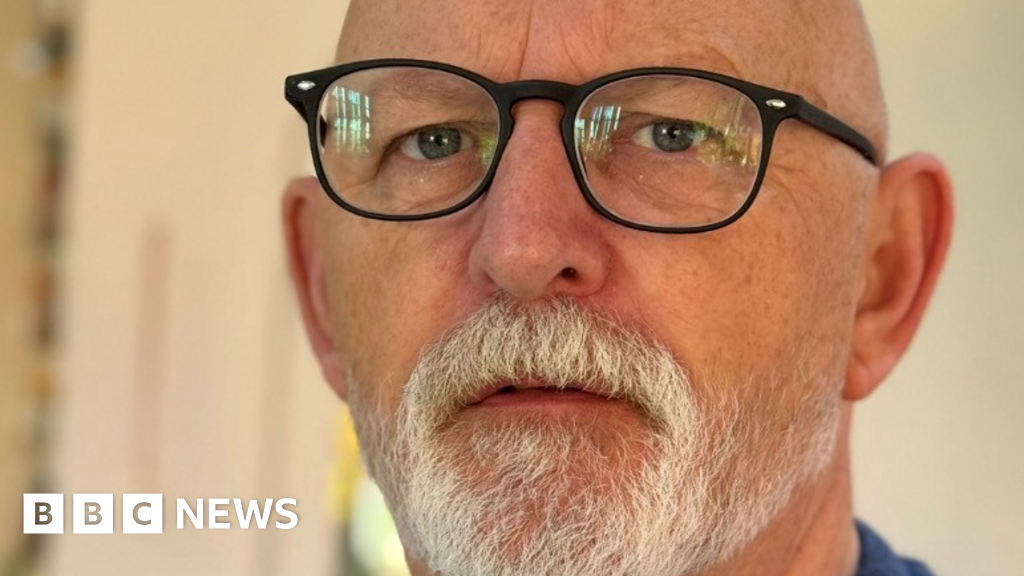
The family of Shaun Burton, say they are “devastated” by the loss.
Source link

Key events
In the opening half an hour against Cape Verde, Mikel Oyarzabal, the centre-forward, did not get a single touch.
Kyle Green gets in touch: “Your highlighting of Lalas and his absurdity is something that has prevented me from wanting to watch the coverage on Fox. While every channel has its pros and cons I just can’t.
“I’m 45 and probably the youngest of anyone who remembers him as a player instead of an opinionated insert insult here. As for the match this could be more competitive than it looks on paper Spain need a win the pressure is on them. Saudi Arabia could hold out for a draw and see what happens in their last match. “
News from the England camp, and it seems to be good news on Declan Rice.
“I’m ready and fit, raring to go. I was feeling a little bit of neural pain in my hamstring, which I was managing from after Christmas with Arsenal for a very long time. Obviously, not a lot of people would have known that. It was all behind-the-scenes stuff but it was a smart decision.
“In the end, that last 20 minutes is probably where you pick up the most, and it’s where you play a 70-minute match. But that last 20 is where you really feel your body going for it. And I think it was a smart decision because the last few days I felt really, really good.”
Alex Reid has penned today’s weekend special Football Daily.
Portugal v Uzbekistan on Tuesday enticingly pits the incredibly nice, incredibly 41-year-old-superstar-tolerant Roberto Martínez against Fabio Cannavaro, who’s won a Ballon d’Or as a player and the Chinese Super League as a coach. While the fixture following that game really does see the dream of Thomas Tuchel – in his first international job with England – taking on Queiroz, who is in charge of his ninth national side with Ghana.
The expected formations are 4-2-3-1 for Spain, and 5-3-2 for the Saudi Arabians.
The Saudi team features two Donis changes: Ali Lajami, a defender, and Nasser Al Dawsari, a midfielder, are preferred to Mohammed Abu Al Shamat and Mohamed Kanno. You may recall Salem Al Dawsari, the Saudi captain, as the man who scored the winner against Argentina.
An entertaining read, even for those of us who have just seen the clips.
In a conversation where his co-panelist is casually reminiscing about his days playing alongside Messi or exchanging shirts with Ronaldo Nazário at the World Cup, what exactly is Lalas going to talk about – coming on as a second-half substitute for Earnie Stewart in a friendly against Scotland in 1998? Helping the Kansas City Wizards finish last in the 1999 MLS Western Conference? Did Lalas enjoy an elite playing career? No. But does he do the background reading that could compensate for his relative lack of standing in a conversation with titans like Henry and Zlatan? Also no. But is he charming or funny or charismatic or otherwise magnetic on screen? Eh, no.
For the record, I once interviewed Alexi Lalas on the challenge of playing against Romario in the 1994 World Cup. He had this to say:
“He could kill you in so many different ways. If you remember from that World Cup, he scored so many types of goals. That ranged from solo adventures to an outside-of-the-right-foot half-volley off a corner kick. Romario was both the most difficult to play against and the best that I have faced.
“Roberto Baggio was doing his thing, but in terms of consistency and living up to the hype, he [Romario] was the best. As with all stars, there was a moment when the fans sit up in their seats, and that was a feeling I got with Romario. When it got close to him and the potential for his involvement in a play was there, everybody sat up in their seat. They knew that something spectacular would be happening.”
Saturday’s match reports here.
The Saudi Arabia coach, and Blackburn legend, Georgios Donis, spoke about the challenges facing his team: “Spain is not the same team when Yamal or Williams are on the bench.
“While they still have plenty of possession, they lack the individual one-on-one penetration when these two are missing. I’m not saying it’s a problem for Spain, but when those players are missing, they play in a different way. We saw this very clearly against Cape Verde.
“We are playing against one of the best teams in the world, and it’s very important that when you play against these kinds of teams, you should enjoy the experience and respect the opponent, but not too much.
“It is very hard for any team playing against Spain to have any time in possession. So what we must do is to be more in control of our movement and compact, and when the ball goes through the lines, be able to defend dynamically.
“It’s nice to see miracles in football, and we’ve seen favourites losing against underdogs. Of course, it’s great for Saudi football to have a great memory of the result against Argentina, but we aren’t drawing anything from that.
“I think we’ll feel more pressure in that [Cape Verde] game than we will against Spain.”
The Spain coach, Luis De La Fuente had this to say in his Saturday press conference: “This generation of footballers is highly competitive and really fired up… It’s going to be a completely different story,” he said at his pre-match press conference on Saturday. There is no drama or crisis. The bottom line is simply that we need to win tomorrow.”
Four changes for Spain: Lamine Yamal, Pedro Porro, Dani Olmo and Alex Baena also come into the side with Marcos Llorente, Fabian Ruiz, Ferran Torres and Gavi dropping out.
The teams – Lamine Yamal starts
Spain: Simon, Porro, Cubarsi, Laporte, Cucurella, Gonzalez, Rodri, Yamal, Olmo, Baena, Oyarzabal. Subs: Raya, Joan Garcia, Pubill, Grimaldo, Eric Garcia, Llorente, Merino, Torres, Fabian, Gavi, Pino, Williams, Zubimendi, Munoz, Iglesias.
Saudi Arabia: Al Owais, Abdulhamid, Tambakti, Lajami, Al Amri, Al Harbi, Nasser Al Dawsari, Al Khaibari, Al Juwayr, Al Buraikan, Salem Al Dawsari. Subs: Al Aqidi, Al Kassar, Majrashi, Yahya, Al Shehri, Al Boushal, Kadesh, Al Johani, Al Ghannam, Al Hajji, Al Hamdan, Mandash, Kanno, Thakri, Abu Al Shamat.
Referee: Raphael Claus (Brazil)
Perhaps one of the Saudi -players can write themselves into this high-grade selection?
Perhaps it can be their goalkeeper.
Madrid screening of Spain v Saudi Arabia cancelled due to heat
The public screening of Spain’s World Cup match against Saudi Arabia in Madrid on Sunday has been cancelled because of extreme heat forecast for the Spanish capital, officials said.
The match, due to kick off at 6pm local time on Sunday, had been scheduled to be shown on a giant screen installed by the Spanish football federation (RFEF) at a fan zone in Plaza de Colón in central Madrid.
Madrid city council and the federation decided to cancel the screening after national weather agency AEMET issued an orange heat warning – the second-highest level – for the Madrid region, with temperatures forecast to reach 40C.
“The decision has been taken with the aim of protecting the health of attendees, event staff and support services involved in the event,” Madrid city hall said in a statement, apologising for any inconvenience.
Officials urged supporters to watch the match indoors in air-conditioned spaces and avoid prolonged exposure to the heat.
Large parts of Spain are experiencing unusually high temperatures for June as a mass of hot air from North Africa moves across the Iberian Peninsula.
A total of 13 of Spain’s 17 regions are on orange alert for heat on Sunday, while the northern Basque Country bordering France is on red alert, the highest level.
Authorities advised residents and visitors to take precautions during the heatwave, including drinking water regularly, staying in cool environments, limiting outdoor physical activity during the hottest hours of the day and taking extra care of vulnerable people. AFP
Can Saudi Arabia repeat the magic of 2022?
Argentina arrived in Qatar on a 36-game unbeaten run. When Lionel Messi opened the scoring from the penalty spot after 10 minutes, a comfortable afternoon seemed in the offing. Saleh al-Shehri and Salem al-Dawsari had other ideas, Argentina had three goals disallowed for offside in the space of 13 minutes and the greatest comeback in Saudi Arabia football history was made. Argentina went on to lift the trophy, while defeats to Poland and Mexico meant the Saudis did not reach the knock-out stage.
Unai Simon over David Raya is a controversial choice for De la Fuentes. The Arsenal keeper could lay claim to being Europe’s best this season.
“Those at the Champions League final had a few more days, so I got there on the Wednesday night,” Raya says. “I arrived a bit before Fabián [Ruiz]. I was saying hello to some of the others in reception when he arrived. I went to say congratulations; that was almost the first thing I did. I couldn’t really talk [to him] after the final; I just didn’t have it in me. The next day we talked about the game properly. Just two mates chatting … I was happy for him that he could lift the trophy for a second time.”
A high pressure game for the European champions, as Sid Lowe reports.
“If we had scored one, the game would have changed,” Martín Zubimendi said. Immediately after the game, De la Fuente had offered a simple analysis: when the ball doesn’t want to go in it doesn’t want to go in, he insisted. Spain had racked up 27 shots, after all. Ferran Torres had hit the bar and seen another clear opportunity saved. Vozinha, the 40-year-old goalkeeper who stopped that, saved six more and was named the man of the match. “There’s nothing to reproach the team for,” Rodri said. “We generated chances but couldn’t put it away; the good thing is they created almost nothing.”
We wait to see what role Lamine Yamal will play today. His coach would surely like to be able to use him.
The worst mistake we could make would be to compare him to anyone. He is the midst of a process. He has exceptional footballing maturity and lives it all with total naturalness. He has great serenity and strength. We have to let him follow his path but those players who have something different are ready for that. They’re geniuses, like Dalí [who] can paint a picture, or Michelangelo. They’re different. What is exceptional to us, isn’t to them. In those extremes, they feel comfortable. Why? Because they are different. What we think is exceptional, they consider normal.
Preamble
Spain’s campaign did not get off to a flying start, and Luis de la Fuentes may wake up in the night to visions of Cape Verde’s Vozinha. He will have Georgia on his mind ever since Monday. Saudi Arabia are no pushovers and gave Uruguay a scare in their opening match. Memories of downing Argentina four years ago still abound, and so Spain might beware. They can ill afford to go into the final game with Uruguay at a disadvantage. All eyes on Lamine Yamal, whose fitness situation remains opaque, though Spain need their other forwards to come to the party.
Kick-off 5pm UK, 1pm ET, 2am AEST. Join me.

A topless man can be seen driving erratically in Edinburgh before abandoning his car and attacking a black man and a delivery rider.
Source link


Oxford United player ratings in bizarre Mansfield Town draw

Number of cloned number plates on UK roads at record high, data shows | Transport

LIVE: Mansfield Town 1-1 Oxford United – Two red cards as U's down to nine men
-
 Oxford united FC4 weeks ago
Chris Gunter steps away Wales role to focus on Oxford United
-

 Oxford University3 weeks ago
New to the Oxford English Dictionary this September
-

 Traffic & Transport2 weeks ago
How poor public transport policy is putting the brake on cities | Road transport
-
 Student Life3 weeks ago
Oxford partnership allows OpenAI to use rare Bodleian texts to train ChatGPT
-
 Oxford united FC1 week ago
LIVE: Exeter City vs Oxford United – Jersey Mike's Trophy group stage
-

 Traffic & Transport2 weeks ago
Why should I have to pay more for buses if I don’t use a smartphone? | Bus fares
-

 Oxford united FC2 weeks ago
Northern Ireland fans laud Oxford United defender Ciaron Brown
-
 Oxford Events4 weeks ago
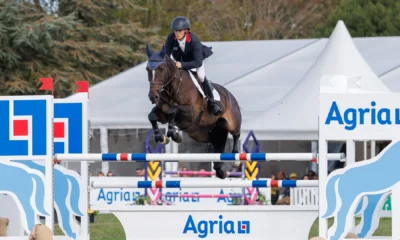
Four days of equestrian spectacle at 2026 Blenheim Palace International Horse Trials