Connect with us

Business & Technology

CFOs urged to use finance AI roadmaps, Gartner says

Published

on


KAREN JOY BACUDO

Finance Editor

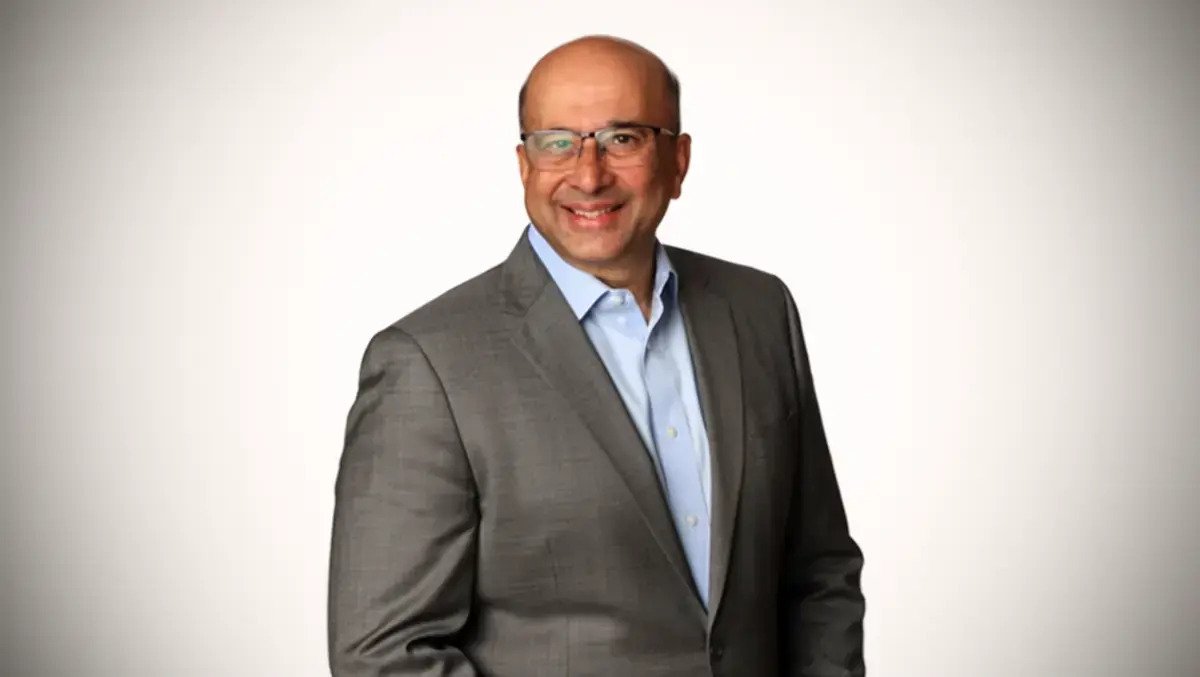
Chief Financial Officers need structured finance AI roadmaps to improve results from artificial intelligence projects, according to guidance presented by Gartner Analyst Ash Mehta at the firm’s finance gathering in London.

Data shared by Gartner showed a wide gap between AI activity and reported outcomes in finance teams. In a June 2025 survey of 183 Chief Financial Officers, 84% of finance organisations said they had implemented or were planning to implement AI, yet only 7% reported a high or very high impact.

Mehta argued that the mismatch shows spending alone does not explain success. Instead, finance functions with the strongest results tend to follow a more disciplined process that links AI work to business outcomes.

“Organisations that succeed with AI are not necessarily smarter, luckier or better funded. Rather, they follow a structured and disciplined roadmap that connects finance AI initiatives to business outcomes,” said Mehta, Senior Director Analyst at Gartner.

Gartner’s approach has three stages: set a vision and identify current maturity, build a roadmap, and execute and scale use cases.

Set the vision

The first step is to define what an AI-enabled finance function should look like. That vision should answer three questions: the desired end state for finance, how finance will use AI to support enterprise objectives, and what value AI in finance should deliver to the wider business.

This emphasis on vision reflects a broader issue for finance teams that have launched pilots without agreeing on how success will be measured. Without that clarity, organisations can struggle to decide which projects deserve more funding and which should be dropped.

Maturity model

Gartner also urged finance leaders to assess organisational maturity before expanding AI use. Its finance AI maturity model sets out five phases: avoid, experiment, stabilize, expand and transform.

The model covers four workstreams: culture and leadership, strategy and governance, skills and organization, and software and data. Chief Financial Officers can use the framework to identify gaps holding back progress and turn those findings into a sequenced roadmap.

That roadmap should be modular rather than fixed, with priority given to workstreams where finance is lagging. Actions can then be staged across foundation and quick wins, scale and optimization, and innovation and leadership.

Use-case discipline

The final stage focuses on how finance teams select and run AI projects. The roadmap should be translated into a use-case cycle built around identifying, prioritising, executing, scaling and refining projects.

Under that process, finance leaders are advised to create clear intake and approval routes for new ideas. Proposed use cases should include documented objectives, costs and benefits, and should be assessed on net business value, feasibility and scalability.

Mehta said finance teams should avoid pursuing too many projects at once, a common problem in organisations that have rushed to test AI tools across multiple functions.

“If everything is a priority, nothing gets funded. CFOs should identify 3-5 use cases to pilot at a time,” said Mehta.

The recommendation points to a narrower, more selective approach than some finance teams have taken during the recent rush to trial generative AI and automation tools. Limiting the number of pilots can help finance leaders compare outcomes more clearly and decide which use cases to expand.

Gartner also said the roadmap should not be treated as a static document. As business priorities and AI tools change, finance teams should revisit assumptions, update the sequence of actions and scale the projects that show results.

“The strongest roadmaps are living plans, not static documents. Finance leaders should customize the roadmap to their organization, review it as AI capabilities and business priorities evolve, and aggressively scale the use cases that succeed,” said Mehta.


Source link

Continue Reading
Click to comment

Leave a Reply

Your email address will not be published. Required fields are marked *

Business & Technology

UK construction company ceases trading after 11 years

Published

on


Torsion Construction Limited, based in Leeds and founded in 2015, specialised in residential and living sector developments and employed 115 people.

The firm had delivered £287 million worth of projects across the UK, including in major cities such as York, Birmingham, Manchester, and Newcastle.

At the time of its collapse, a further £303 million worth of work was still under construction, according to the Torsion Construction website.

Torsion Construction ceases trading after falling into administration

After more than 11 years in business, Torsion Construction has ceased trading, having fallen into administration.

James Clark and Howard Smith of Interpath were appointed joint administrators on July 29.

Like many firms in the construction sector, Torsion had been under liquidity pressures linked to delayed capital events, contract margin pressure, and rising input costs.

A broader downturn in the market compounded the company’s financial difficulties, Interpath explained.


Mr Clark, managing director at Interpath and joint administrator of Torsion Construction, said: “Torsion Construction has faced many of the immense challenges that have confronted leadership teams right across the sector.

“Despite its efforts to find a sustainable solution and protect its clients from those pressures, the business’ liquidity ran out of road.

“With regret, Torsion Construction could not continue in its current form and was left with no other option but to cease trading.

“We have a team providing the appropriate information and support to staff as we work through an orderly wind down of operations.”


The business ceased trading upon entering administration, with the majority of staff made redundant.

A small number of employees have been retained to support the administrators during the winding-down process.

Other UK companies that have closed or entered administration/liquidation in 2026

It has been a tough year for the UK high street, with several other retailers entering administration or liquidation and others announcing widespread store closures.

Major high street brands LK Bennett, Claire’s, and Quiz have been forced to close all their remaining stores after falling into administration.

UK fashion retailer Leading Labels is also set to close its remaining 15 stores after falling into liquidation.

Whitbread recently confirmed it will be closing all its UK restaurants in September:

  • Brewers Fayre (89 locations) – September 7
  • Beefeater (106) – September 10
  • Bar + Block – September 3
  • Table Table – September 3
  • Cookhouse + Pub – September 3

TG Jones and the British Heart Foundation will also both be closing around 150 stores across the UK.

Other retailers have been forced to close stores this year, including:


The company responsible for iconic British bikemaker Raleigh, Accell Group, also filed for administration this week, putting the 139-year-old British bikemaker at risk of closing.

Several UK travel companies have also ceased trading or entered administration in 2026:

Meanwhile, four UK airlines have fallen into administration or liquidation:

UK delivery company Yodel is set to be phased out after being acquired by InPost.

It’s also been reported that Morrisons is looking to sell some of its in-store pharmacies as it continues to cut costs.

It hasn’t all been bad news for the UK high street, with several major brands announcing new store openings for 2026, including Aldi, M&S, and Superdrug.

Meanwhile, brands including Evans and Bodycare have returned to the UK high street this year after previously closing all their stores.

Which business/store closure in 2026 has impacted you the most? Let us know in the comments below.


Source link

Continue Reading

Business & Technology

Oxford Vaccine Group seeks volunteers for world-first Ebola trial

Published

on


The trial, known as BD-Ebov, is testing a candidate vaccine called ChAdOx1 Ebola BDBV Vaccine, developed at the University of Oxford using the same platform technology that underpinned the Oxford-AstraZeneca Covid-19 vaccine.

The backdrop is a serious one. In May 2026 the World Health Organisation declared a public health emergency of international concern after cases of severe fever and death linked to Bundibugyo virus were detected in the Democratic Republic of the Congo. The virus, normally carried by fruit bats, can cross into humans through contact with infected animals and then spread between people through direct contact with body fluids.

Until now, there has been no licensed vaccine specifically targeting this strain. The Oxford trial is the first attempt to change that.

Researchers are recruiting healthy adults aged 18 to 55 who are in good health and able to attend regular face-to-face appointments in Oxford. The study runs for a year, with up to 12 visits at the Headington site. Volunteers have blood tests at each visit, are reviewed by a study clinician, and log any symptoms in an electronic diary.

The first 10 participants form Group 1 and receive an initial dose followed by a six-month booster. The following 40 participants make up Group 2 and receive either a single dose of the vaccine or a saltwater placebo. The team is looking at both the safety of the vaccine and the immune response it triggers.

Volunteers are reimbursed for their time, travel and inconvenience. Group 1 participants can receive up to £1,200 and Group 2 participants up to £790 across the year.

The Oxford Vaccine Group has been part of the University of Oxford’s Department of Paediatrics for more than 30 years. In that time it has run trials involving over 150,000 participants around the world, and its work on typhoid conjugate vaccines and the Oxford-AstraZeneca Covid-19 vaccine has contributed to millions of lives saved.

The Ebola trial fits that pattern: a small group of volunteers in one Oxford building, taking part in something that could eventually matter thousands of miles away.

The team’s message to prospective volunteers is a simple one. One volunteer today, potentially millions protected tomorrow.

Further details about eligibility, the schedule of visits and what taking part involves are set out in the participant information sheet, and expressions of interest can be registered through the study’s sign-up page.

More background on the group’s history and its current portfolio of studies is available on the Oxford Vaccine Group website.

For a research centre tucked away on a quiet street in Headington, it is a reminder of how much of the world’s vaccine science still runs through Oxford.


Source link

Continue Reading

Business & Technology

Couple at town fabrics shop celebrate its 30th anniversary

Published

on


On one such day, a customer asked for “a five-metre high, Italian strung, theatre-type curtain”.

That may sound a challenge, but not for the Batemans, who immediately set to work and provided the necessary goods.

READ MORE: UK restaurant chain bids farewell in emotional goodbye

That has been the aim throughout at Freelance Fabrics, which this year celebrates its 30th anniversary in Kidlington shopping centre, off High Street.

It was one of about 30 outlets under the Fabric Warehouse name that opened in towns and cities throughout the country. The store in Kidlington is the only one that has survived.

It opened in 1996 and three years later, was taken over by David Cox who ran it until Mr and Mrs Bateman succeeded him on New Year’s Day 2022.

A recent article in a trade magazine gave them a glowing tribute: “Under them, it has maintained its reputation for good-value curtain and upholstery fabrics while expanding its quilting cottons, dressmaking fabrics, wool, sewing machines and overlockers. That growth reflects its customers’ habits.”

Mr Bateman served in the Royal Electrical and Mechanical Engineers (REME) and as a fire alarm salesman in his early career.

He admits he knew “absolutely nothing” about the fabrics trade when he and his wife moved into it.

He tells me: “We took over the shop just as Covid was ending, not knowing what was going to happen. Four and a half years later, we are still here and going strong.

“We have increased stock levels considerably, taken on sewing machine contracts and increased the range of fabrics and haberdashery.

“Fabrics, threads and wool are not easy to match online. Many customers still want to see and feel materials before buying. Equally important is the advice.

“While other stores around have unfortunately closed, we are setting up to be here for the future.”


Source link

Continue Reading

Trending