Connect with us

Business & Technology

TiVo Ads partners Tunnl for local TV audience data

Published

on


SOFIAH NICHOLE SALIVIO

News Editor

TiVo Ads has partnered with Tunnl to bring TiVo viewership data into Tunnl’s audience intelligence platform.

The tie-up targets local and regional television markets, where advertisers and agencies often want clearer evidence of how audiences watch content in different areas.

Under the arrangement, TiVo’s television viewing data will be integrated into the Tunnl Platform, giving users access to information on audience behaviour across linear and streaming television. The addition is expected to expand Tunnl’s coverage of local and regional programming and improve planning for campaigns running across multiple markets.

Media planners use this type of data to decide where to place advertising and how often viewers are likely to see it. The partnership is intended to help users understand audience composition more accurately, assess reach and frequency across viewing channels, and make market-level spending decisions with greater confidence.

Local variation has become more important for advertisers as television viewing has fragmented across broadcast, pay-TV and streaming services. That has increased demand for datasets that show how audiences behave in specific places rather than relying only on national averages.

TiVo Ads said its dataset is based on opted-in viewership information and framed the partnership as a way to broaden the use of that data in day-to-day media planning. For Tunnl, the agreement adds another source of television intelligence to a platform that combines historical data, current signals and identity matching.

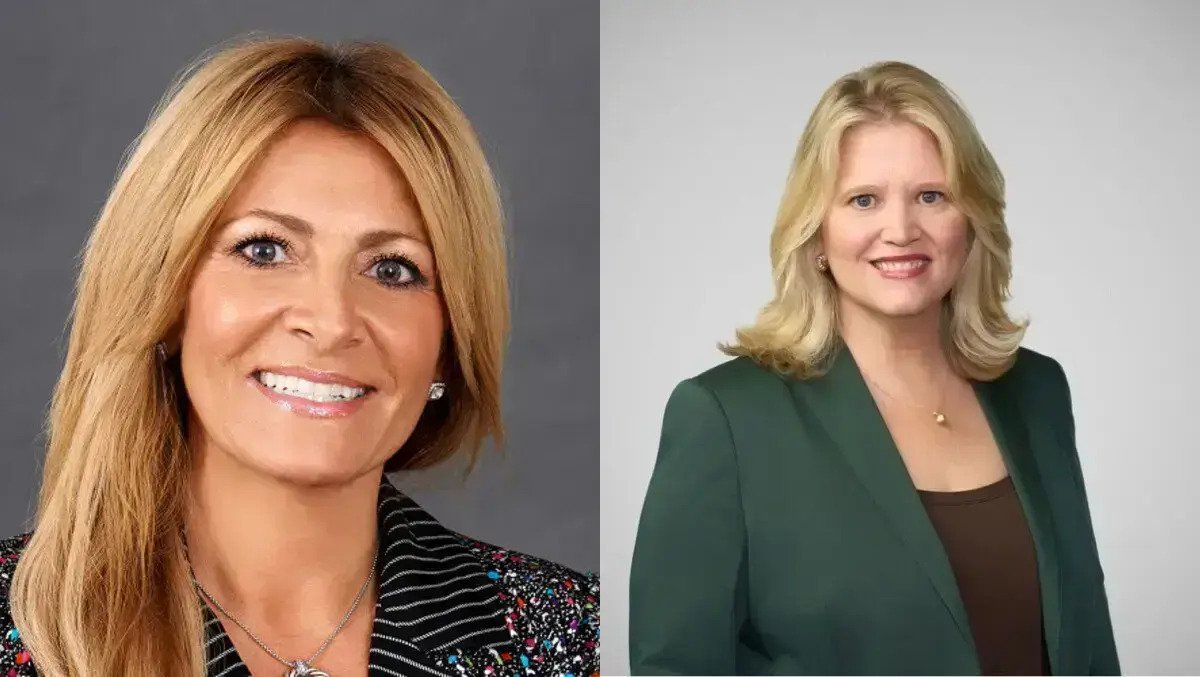
Fariba Zamaniyan, Senior Vice President of Global Data Monetization at TiVo Ads, said the deal reflects changing viewing habits and the need for stronger local insight.

“Marketers need a more complete, reality-based view of how audiences consume television today-especially at the local level, where viewing behaviors can vary dramatically market to market,” said Fariba Zamaniyan, Senior Vice President of Global Data Monetization at TiVo Ads.

“By integrating TiVo’s deterministic, privacy-first viewership data within Tunnl’s Platform, we’re deepening the reach and utility of its ability to drive more impactful campaign activations,” Zamaniyan said.

Planning focus

The integration is intended to provide a fuller picture of television engagement across networks, formats and geographies. That includes both local and national programming, where agencies often need comparable data to balance broader brand campaigns with more targeted regional activity.

According to the companies, Tunnl serves brands, agencies, advocacy groups and media companies. Adding TiVo’s data is intended to strengthen the platform’s role in media planning by improving visibility into actual viewing patterns.

The partnership also reflects a broader shift in advertising towards privacy-compliant datasets. Companies handling audience data have faced increasing scrutiny over how they collect, combine and use consumer information, prompting many providers to emphasise consent-based and privacy-led approaches.

Tunnl Chief Executive Officer Sara Fagen said including TiVo’s data would help the platform present a more complete record of audience movement across media.

“Adding TiVo’s local TV coverage is a major step forward in delivering a true system of record for how audiences move across media,” said Sara Fagen, Chief Executive Officer at Tunnl.

“TiVo’s scale and granularity-particularly at the local level-gives our clients a clearer, more actionable understanding of real viewing behavior, which ultimately leads to smarter planning and better results,” Fagen said.

TiVo Ads said it draws on one of the larger pools of opted-in television viewership data in the market. The partnership places that information within a planning workflow used by advertisers and agencies, extending its use beyond measurement into campaign design and media allocation.

The collaboration was built around privacy-first data sharing, with the aim of supporting advanced audience analysis without compromising consumer trust.


Source link

Continue Reading
Click to comment

Leave a Reply

Your email address will not be published. Required fields are marked *

Business & Technology

UK construction company ceases trading after 11 years

Published

on


Torsion Construction Limited, based in Leeds and founded in 2015, specialised in residential and living sector developments and employed 115 people.

The firm had delivered £287 million worth of projects across the UK, including in major cities such as York, Birmingham, Manchester, and Newcastle.

At the time of its collapse, a further £303 million worth of work was still under construction, according to the Torsion Construction website.

Torsion Construction ceases trading after falling into administration

After more than 11 years in business, Torsion Construction has ceased trading, having fallen into administration.

James Clark and Howard Smith of Interpath were appointed joint administrators on July 29.

Like many firms in the construction sector, Torsion had been under liquidity pressures linked to delayed capital events, contract margin pressure, and rising input costs.

A broader downturn in the market compounded the company’s financial difficulties, Interpath explained.


Mr Clark, managing director at Interpath and joint administrator of Torsion Construction, said: “Torsion Construction has faced many of the immense challenges that have confronted leadership teams right across the sector.

“Despite its efforts to find a sustainable solution and protect its clients from those pressures, the business’ liquidity ran out of road.

“With regret, Torsion Construction could not continue in its current form and was left with no other option but to cease trading.

“We have a team providing the appropriate information and support to staff as we work through an orderly wind down of operations.”


The business ceased trading upon entering administration, with the majority of staff made redundant.

A small number of employees have been retained to support the administrators during the winding-down process.

Other UK companies that have closed or entered administration/liquidation in 2026

It has been a tough year for the UK high street, with several other retailers entering administration or liquidation and others announcing widespread store closures.

Major high street brands LK Bennett, Claire’s, and Quiz have been forced to close all their remaining stores after falling into administration.

UK fashion retailer Leading Labels is also set to close its remaining 15 stores after falling into liquidation.

Whitbread recently confirmed it will be closing all its UK restaurants in September:

  • Brewers Fayre (89 locations) – September 7
  • Beefeater (106) – September 10
  • Bar + Block – September 3
  • Table Table – September 3
  • Cookhouse + Pub – September 3

TG Jones and the British Heart Foundation will also both be closing around 150 stores across the UK.

Other retailers have been forced to close stores this year, including:


The company responsible for iconic British bikemaker Raleigh, Accell Group, also filed for administration this week, putting the 139-year-old British bikemaker at risk of closing.

Several UK travel companies have also ceased trading or entered administration in 2026:

Meanwhile, four UK airlines have fallen into administration or liquidation:

UK delivery company Yodel is set to be phased out after being acquired by InPost.

It’s also been reported that Morrisons is looking to sell some of its in-store pharmacies as it continues to cut costs.

It hasn’t all been bad news for the UK high street, with several major brands announcing new store openings for 2026, including Aldi, M&S, and Superdrug.

Meanwhile, brands including Evans and Bodycare have returned to the UK high street this year after previously closing all their stores.

Which business/store closure in 2026 has impacted you the most? Let us know in the comments below.


Source link

Continue Reading

Business & Technology

Oxford Vaccine Group seeks volunteers for world-first Ebola trial

Published

on


The trial, known as BD-Ebov, is testing a candidate vaccine called ChAdOx1 Ebola BDBV Vaccine, developed at the University of Oxford using the same platform technology that underpinned the Oxford-AstraZeneca Covid-19 vaccine.

The backdrop is a serious one. In May 2026 the World Health Organisation declared a public health emergency of international concern after cases of severe fever and death linked to Bundibugyo virus were detected in the Democratic Republic of the Congo. The virus, normally carried by fruit bats, can cross into humans through contact with infected animals and then spread between people through direct contact with body fluids.

Until now, there has been no licensed vaccine specifically targeting this strain. The Oxford trial is the first attempt to change that.

Researchers are recruiting healthy adults aged 18 to 55 who are in good health and able to attend regular face-to-face appointments in Oxford. The study runs for a year, with up to 12 visits at the Headington site. Volunteers have blood tests at each visit, are reviewed by a study clinician, and log any symptoms in an electronic diary.

The first 10 participants form Group 1 and receive an initial dose followed by a six-month booster. The following 40 participants make up Group 2 and receive either a single dose of the vaccine or a saltwater placebo. The team is looking at both the safety of the vaccine and the immune response it triggers.

Volunteers are reimbursed for their time, travel and inconvenience. Group 1 participants can receive up to £1,200 and Group 2 participants up to £790 across the year.

The Oxford Vaccine Group has been part of the University of Oxford’s Department of Paediatrics for more than 30 years. In that time it has run trials involving over 150,000 participants around the world, and its work on typhoid conjugate vaccines and the Oxford-AstraZeneca Covid-19 vaccine has contributed to millions of lives saved.

The Ebola trial fits that pattern: a small group of volunteers in one Oxford building, taking part in something that could eventually matter thousands of miles away.

The team’s message to prospective volunteers is a simple one. One volunteer today, potentially millions protected tomorrow.

Further details about eligibility, the schedule of visits and what taking part involves are set out in the participant information sheet, and expressions of interest can be registered through the study’s sign-up page.

More background on the group’s history and its current portfolio of studies is available on the Oxford Vaccine Group website.

For a research centre tucked away on a quiet street in Headington, it is a reminder of how much of the world’s vaccine science still runs through Oxford.


Source link

Continue Reading

Business & Technology

Couple at town fabrics shop celebrate its 30th anniversary

Published

on


On one such day, a customer asked for “a five-metre high, Italian strung, theatre-type curtain”.

That may sound a challenge, but not for the Batemans, who immediately set to work and provided the necessary goods.

READ MORE: UK restaurant chain bids farewell in emotional goodbye

That has been the aim throughout at Freelance Fabrics, which this year celebrates its 30th anniversary in Kidlington shopping centre, off High Street.

It was one of about 30 outlets under the Fabric Warehouse name that opened in towns and cities throughout the country. The store in Kidlington is the only one that has survived.

It opened in 1996 and three years later, was taken over by David Cox who ran it until Mr and Mrs Bateman succeeded him on New Year’s Day 2022.

A recent article in a trade magazine gave them a glowing tribute: “Under them, it has maintained its reputation for good-value curtain and upholstery fabrics while expanding its quilting cottons, dressmaking fabrics, wool, sewing machines and overlockers. That growth reflects its customers’ habits.”

Mr Bateman served in the Royal Electrical and Mechanical Engineers (REME) and as a fire alarm salesman in his early career.

He admits he knew “absolutely nothing” about the fabrics trade when he and his wife moved into it.

He tells me: “We took over the shop just as Covid was ending, not knowing what was going to happen. Four and a half years later, we are still here and going strong.

“We have increased stock levels considerably, taken on sewing machine contracts and increased the range of fabrics and haberdashery.

“Fabrics, threads and wool are not easy to match online. Many customers still want to see and feel materials before buying. Equally important is the advice.

“While other stores around have unfortunately closed, we are setting up to be here for the future.”


Source link

Continue Reading

Trending