
UK News
Tonight the Music Seems So Loud by Sathnam Sanghera review – a heartbreaking portrait of George Michael | Biography books


In 1998, George Michael was arrested for public lewdness in an LA lavatory, an incident that finally led the singer to publicly come out. The following day, Sathnam Sanghera found himself unable to leave his room at university: the doorway had been mockingly plastered with tabloid newspaper headlines – “ZIP ME UP BEFORE YOU GO-GO!” – by fellow students aware of his longstanding fandom. As a writer, Sanghera is best known for a series of award-winning books on the British empire, which he calls his “specialist subject”. Judging by Tonight the Music Seems So Loud – not a biography so much as a miscellany, a set of themed essays that tend to digress in all kinds of intriguing directions – the life and work of one Georgios Panayiotou runs imperialism and its legacy a very close second.
It is an unashamedly partisan book, although not an uncritical one. Sanghera is as alive to Michael’s personal and professional failings (whether the naffness of some of his early work as one half of Wham! or his high-handed treatment of the duo’s other half, Andrew Ridgeley) as he is in love with his artistic triumphs. These, of course, range from Careless Whisper and Wham!’s annually inescapable Last Christmas to the 1996 solo masterpiece Older, a peculiar and peculiarly effective cocktail of raw grief at the Aids-related death of his lover Anselmo Feleppa and unrepentant horniness.
Sanghera’s love for his subject is evidently sharpened by the opprobrium of others. Indeed if the book has a flaw, it’s that the author is old enough to remember an era when George Michael was deemed insufferably uncool by some arbiters of taste (incredibly, when Wham! performed at a 1984 benefit show for striking miners, the only mainstream pop act to show support for the cause, they were received stone-faced by the audience and savaged by the music press for their trouble), and thus has a tendency to underestimate how much both he and his music have been critically re-evaluated in the 21st century.
He says one of the spurs to write the book was his belief that “most truly popular music is not generally deemed worthy of serious analysis and George Michael’s music most certainly is not”. That might have been true once, but certainly not of late: when he died, this newspaper alone ran six features by critics analysing different aspects of his music. “He sang so exquisitely about the marrow of life, about the vital, corporeal things”, wrote one, which definitely doesn’t amount to taking George Michael insufficiently seriously.
But if Sanghera occasionally seems like a man doughtily fighting a battle that’s already won, it doesn’t really impede his narrative, which traces Michael’s progress from pudgy, acne-ridden teen, to pop star girls screamed at, to gay icon, and is packed with anecdotes, sharp analysis and context. Sanghera is very good on the climate of homophobia in the 80s, which might have given any gay public figure serious qualms about coming out, and fascinating on Michael’s family background: how growing up embedded in north London’s Greek Cypriot community impacted on everything from Wham!’s image – not camp, Sanghera suggests, but “the vision of two children of immigrants imagining a kind of glamour they had not actually experienced before” – to his work ethic and control freakery. His dad made good in England by working exceptionally hard, running such a tight ship at his restaurant that he summarily fired his only son for messing up the drinks orders. The fact that the same son went on to hire 12 different saxophonists before finding one that could play the solo on Careless Whisper to his satisfaction doesn’t come as a huge surprise.
This my-way-or-the-highway perfectionism could yield hugely impressive results – Careless Whisper’s sax hook may well be the most famous in pop history – but it could equally lead to intransigence and self-sabotage. Michael worked incredibly hard to transform himself from a member of a teen pop band into a more adult-facing solo artist, but having sold a staggering 25m copies of his 1987 solo debut Faith, he refused to promote its follow-up Listen Without Prejudice Vol. 1, or even make videos for its singles: a better album than its predecessor, it achieved only a fraction of its sales as a result. It was evidence of a deeply contradictory nature that occasionally has Sanghera throwing up his hands in bewilderment.
Michael was a polymath, keen to be duly credited as the sole singer, writer, producer and musician on a succession of tracks, but also had a weird habit of talking down his abilities, claiming he couldn’t play instruments he was perfectly capable of playing. He was a Stakhanovite who increasingly worked at an agonisingly glacial pace, endlessly fussing over details, a state of affairs not much helped by his gargantuan appetite for marijuana: coupled with bouts of writers’ block, it meant he released only six albums of original material in a career that lasted 34 years. He was a Labour voter, booster of the NHS and famously generous philanthropist who also engaged in tax avoidance. After being publicly outed, he became a notoriously frank interviewee (“as if nothing can embarrass him anymore” the Guardian’s Simon Hattenstone suggested when he met him in 2009). But even as he skinned up in front of journalists and freely discussed his drug use and sex life, he was concealing the extent of the addictions that eventually killed him.
Michael emerges as a messy, unpredictable but ultimately hugely likable figure, which makes the essay about his demise particularly tough reading. Listed starkly on the page, the facts of his final 10 years make it obvious that he was a deeply unwell man whose life had spun wildly out of control: drug busts, medical emergencies, visits to rehab, rumours of breakdowns and suicide bids and seven incidents in which he either crashed his car or was found comatose at the wheel.
That it somehow didn’t appear obvious at the time – that his death at 53 felt like a shock rather than a grim inevitability – seems remarkable, but as Sanghera points out, Michael’s professionalism did a lot to paper over the cracks. He was always available to the media and always smart, funny and self-effacing: to use a modern turn of phrase, he controlled the narrative. He was punctilious about his appearance – the star certainly never looked like an ailing drug addict – and unfailingly superb onstage.
Behind the scenes, it was a different story. He struggled to make new music: at one juncture he booked six months of recording sessions but never turned up to the studio once. His once-acute commercial instincts seemed to desert him: even Sanghera can’t muster much enthusiasm for the handful of still-unreleased songs he completed in his final years. He cut off close friends and family who tried to intervene. No one who knew him seems to have been particularly surprised by his death: the list of adjectives used to describe him on his official website now includes not just “icon” “legend” “soul singer” and “philanthropist” but “addict” “repeat offender” and “depressive”.
As the book draws to a close, Sanghera offers a heartbreaking alternative history. He imagines Michael conquering his addictions, coming to a complete accommodation with his musical past (to the end of his life, he was dismissive of Wham!, describing their oeuvre as an exercise in “ignoring my own intelligence” and declining to play most of their hits live) and headlining Glastonbury, “getting pleasure from the audience reaction to Club Tropicana”.
It’s affecting because you can imagine it so vividly: the endless succession of hits that anyone with even a passing interest in pop music knows, the pandemonium in the crowd when he breaks out Careless Whisper, the encore of Freedom ’90. You don’t have to be a fan on Sanghera’s level to understand what a triumph it would have been.
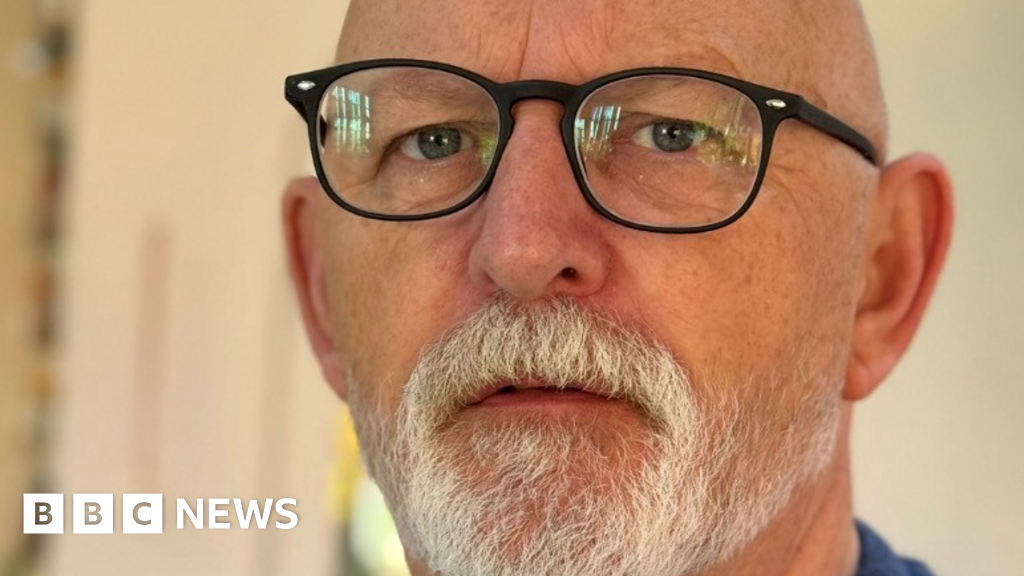
The family of Shaun Burton, say they are “devastated” by the loss.
Source link

Key events
In the opening half an hour against Cape Verde, Mikel Oyarzabal, the centre-forward, did not get a single touch.
Kyle Green gets in touch: “Your highlighting of Lalas and his absurdity is something that has prevented me from wanting to watch the coverage on Fox. While every channel has its pros and cons I just can’t.
“I’m 45 and probably the youngest of anyone who remembers him as a player instead of an opinionated insert insult here. As for the match this could be more competitive than it looks on paper Spain need a win the pressure is on them. Saudi Arabia could hold out for a draw and see what happens in their last match. “
News from the England camp, and it seems to be good news on Declan Rice.
“I’m ready and fit, raring to go. I was feeling a little bit of neural pain in my hamstring, which I was managing from after Christmas with Arsenal for a very long time. Obviously, not a lot of people would have known that. It was all behind-the-scenes stuff but it was a smart decision.
“In the end, that last 20 minutes is probably where you pick up the most, and it’s where you play a 70-minute match. But that last 20 is where you really feel your body going for it. And I think it was a smart decision because the last few days I felt really, really good.”
Alex Reid has penned today’s weekend special Football Daily.
Portugal v Uzbekistan on Tuesday enticingly pits the incredibly nice, incredibly 41-year-old-superstar-tolerant Roberto Martínez against Fabio Cannavaro, who’s won a Ballon d’Or as a player and the Chinese Super League as a coach. While the fixture following that game really does see the dream of Thomas Tuchel – in his first international job with England – taking on Queiroz, who is in charge of his ninth national side with Ghana.
The expected formations are 4-2-3-1 for Spain, and 5-3-2 for the Saudi Arabians.
The Saudi team features two Donis changes: Ali Lajami, a defender, and Nasser Al Dawsari, a midfielder, are preferred to Mohammed Abu Al Shamat and Mohamed Kanno. You may recall Salem Al Dawsari, the Saudi captain, as the man who scored the winner against Argentina.
An entertaining read, even for those of us who have just seen the clips.
In a conversation where his co-panelist is casually reminiscing about his days playing alongside Messi or exchanging shirts with Ronaldo Nazário at the World Cup, what exactly is Lalas going to talk about – coming on as a second-half substitute for Earnie Stewart in a friendly against Scotland in 1998? Helping the Kansas City Wizards finish last in the 1999 MLS Western Conference? Did Lalas enjoy an elite playing career? No. But does he do the background reading that could compensate for his relative lack of standing in a conversation with titans like Henry and Zlatan? Also no. But is he charming or funny or charismatic or otherwise magnetic on screen? Eh, no.
For the record, I once interviewed Alexi Lalas on the challenge of playing against Romario in the 1994 World Cup. He had this to say:
“He could kill you in so many different ways. If you remember from that World Cup, he scored so many types of goals. That ranged from solo adventures to an outside-of-the-right-foot half-volley off a corner kick. Romario was both the most difficult to play against and the best that I have faced.
“Roberto Baggio was doing his thing, but in terms of consistency and living up to the hype, he [Romario] was the best. As with all stars, there was a moment when the fans sit up in their seats, and that was a feeling I got with Romario. When it got close to him and the potential for his involvement in a play was there, everybody sat up in their seat. They knew that something spectacular would be happening.”
Saturday’s match reports here.
The Saudi Arabia coach, and Blackburn legend, Georgios Donis, spoke about the challenges facing his team: “Spain is not the same team when Yamal or Williams are on the bench.
“While they still have plenty of possession, they lack the individual one-on-one penetration when these two are missing. I’m not saying it’s a problem for Spain, but when those players are missing, they play in a different way. We saw this very clearly against Cape Verde.
“We are playing against one of the best teams in the world, and it’s very important that when you play against these kinds of teams, you should enjoy the experience and respect the opponent, but not too much.
“It is very hard for any team playing against Spain to have any time in possession. So what we must do is to be more in control of our movement and compact, and when the ball goes through the lines, be able to defend dynamically.
“It’s nice to see miracles in football, and we’ve seen favourites losing against underdogs. Of course, it’s great for Saudi football to have a great memory of the result against Argentina, but we aren’t drawing anything from that.
“I think we’ll feel more pressure in that [Cape Verde] game than we will against Spain.”
The Spain coach, Luis De La Fuente had this to say in his Saturday press conference: “This generation of footballers is highly competitive and really fired up… It’s going to be a completely different story,” he said at his pre-match press conference on Saturday. There is no drama or crisis. The bottom line is simply that we need to win tomorrow.”
Four changes for Spain: Lamine Yamal, Pedro Porro, Dani Olmo and Alex Baena also come into the side with Marcos Llorente, Fabian Ruiz, Ferran Torres and Gavi dropping out.
The teams – Lamine Yamal starts
Spain: Simon, Porro, Cubarsi, Laporte, Cucurella, Gonzalez, Rodri, Yamal, Olmo, Baena, Oyarzabal. Subs: Raya, Joan Garcia, Pubill, Grimaldo, Eric Garcia, Llorente, Merino, Torres, Fabian, Gavi, Pino, Williams, Zubimendi, Munoz, Iglesias.
Saudi Arabia: Al Owais, Abdulhamid, Tambakti, Lajami, Al Amri, Al Harbi, Nasser Al Dawsari, Al Khaibari, Al Juwayr, Al Buraikan, Salem Al Dawsari. Subs: Al Aqidi, Al Kassar, Majrashi, Yahya, Al Shehri, Al Boushal, Kadesh, Al Johani, Al Ghannam, Al Hajji, Al Hamdan, Mandash, Kanno, Thakri, Abu Al Shamat.
Referee: Raphael Claus (Brazil)
Perhaps one of the Saudi -players can write themselves into this high-grade selection?
Perhaps it can be their goalkeeper.
Madrid screening of Spain v Saudi Arabia cancelled due to heat
The public screening of Spain’s World Cup match against Saudi Arabia in Madrid on Sunday has been cancelled because of extreme heat forecast for the Spanish capital, officials said.
The match, due to kick off at 6pm local time on Sunday, had been scheduled to be shown on a giant screen installed by the Spanish football federation (RFEF) at a fan zone in Plaza de Colón in central Madrid.
Madrid city council and the federation decided to cancel the screening after national weather agency AEMET issued an orange heat warning – the second-highest level – for the Madrid region, with temperatures forecast to reach 40C.
“The decision has been taken with the aim of protecting the health of attendees, event staff and support services involved in the event,” Madrid city hall said in a statement, apologising for any inconvenience.
Officials urged supporters to watch the match indoors in air-conditioned spaces and avoid prolonged exposure to the heat.
Large parts of Spain are experiencing unusually high temperatures for June as a mass of hot air from North Africa moves across the Iberian Peninsula.
A total of 13 of Spain’s 17 regions are on orange alert for heat on Sunday, while the northern Basque Country bordering France is on red alert, the highest level.
Authorities advised residents and visitors to take precautions during the heatwave, including drinking water regularly, staying in cool environments, limiting outdoor physical activity during the hottest hours of the day and taking extra care of vulnerable people. AFP
Can Saudi Arabia repeat the magic of 2022?
Argentina arrived in Qatar on a 36-game unbeaten run. When Lionel Messi opened the scoring from the penalty spot after 10 minutes, a comfortable afternoon seemed in the offing. Saleh al-Shehri and Salem al-Dawsari had other ideas, Argentina had three goals disallowed for offside in the space of 13 minutes and the greatest comeback in Saudi Arabia football history was made. Argentina went on to lift the trophy, while defeats to Poland and Mexico meant the Saudis did not reach the knock-out stage.
Unai Simon over David Raya is a controversial choice for De la Fuentes. The Arsenal keeper could lay claim to being Europe’s best this season.
“Those at the Champions League final had a few more days, so I got there on the Wednesday night,” Raya says. “I arrived a bit before Fabián [Ruiz]. I was saying hello to some of the others in reception when he arrived. I went to say congratulations; that was almost the first thing I did. I couldn’t really talk [to him] after the final; I just didn’t have it in me. The next day we talked about the game properly. Just two mates chatting … I was happy for him that he could lift the trophy for a second time.”
A high pressure game for the European champions, as Sid Lowe reports.
“If we had scored one, the game would have changed,” Martín Zubimendi said. Immediately after the game, De la Fuente had offered a simple analysis: when the ball doesn’t want to go in it doesn’t want to go in, he insisted. Spain had racked up 27 shots, after all. Ferran Torres had hit the bar and seen another clear opportunity saved. Vozinha, the 40-year-old goalkeeper who stopped that, saved six more and was named the man of the match. “There’s nothing to reproach the team for,” Rodri said. “We generated chances but couldn’t put it away; the good thing is they created almost nothing.”
We wait to see what role Lamine Yamal will play today. His coach would surely like to be able to use him.
The worst mistake we could make would be to compare him to anyone. He is the midst of a process. He has exceptional footballing maturity and lives it all with total naturalness. He has great serenity and strength. We have to let him follow his path but those players who have something different are ready for that. They’re geniuses, like Dalí [who] can paint a picture, or Michelangelo. They’re different. What is exceptional to us, isn’t to them. In those extremes, they feel comfortable. Why? Because they are different. What we think is exceptional, they consider normal.
Preamble
Spain’s campaign did not get off to a flying start, and Luis de la Fuentes may wake up in the night to visions of Cape Verde’s Vozinha. He will have Georgia on his mind ever since Monday. Saudi Arabia are no pushovers and gave Uruguay a scare in their opening match. Memories of downing Argentina four years ago still abound, and so Spain might beware. They can ill afford to go into the final game with Uruguay at a disadvantage. All eyes on Lamine Yamal, whose fitness situation remains opaque, though Spain need their other forwards to come to the party.
Kick-off 5pm UK, 1pm ET, 2am AEST. Join me.

A topless man can be seen driving erratically in Edinburgh before abandoning his car and attacking a black man and a delivery rider.
Source link



-
 Oxford united FC4 weeks ago
Chris Gunter steps away Wales role to focus on Oxford United
-

 Oxford University3 weeks ago
New to the Oxford English Dictionary this September
-

 Oxford united FC2 weeks ago
LIVE: Exeter City vs Oxford United – Jersey Mike's Trophy group stage
-

 Traffic & Transport2 weeks ago
Why should I have to pay more for buses if I don’t use a smartphone? | Bus fares
-

 Traffic & Transport2 weeks ago
How poor public transport policy is putting the brake on cities | Road transport
-
 Student Life3 weeks ago
Oxford partnership allows OpenAI to use rare Bodleian texts to train ChatGPT
-

 Oxford united FC3 weeks ago
Northern Ireland fans laud Oxford United defender Ciaron Brown
-

 Oxford united FC2 weeks ago
Oxford United lose to Exeter City on penalties in Jersey Mike’s Trophy